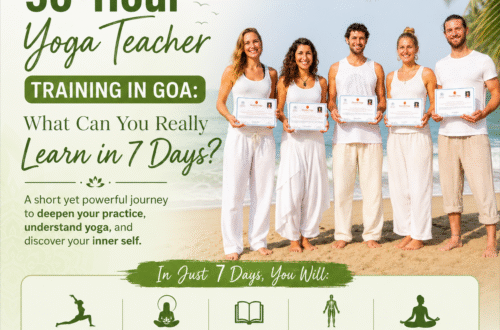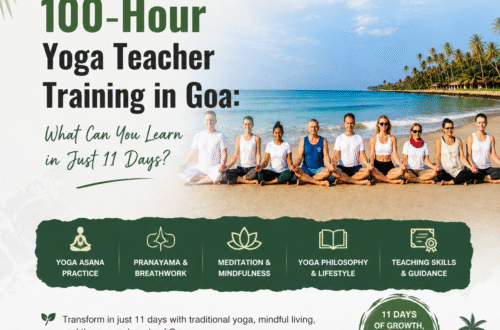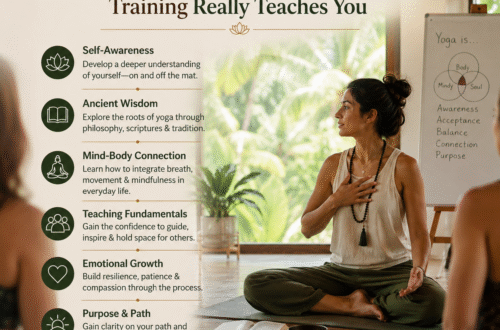
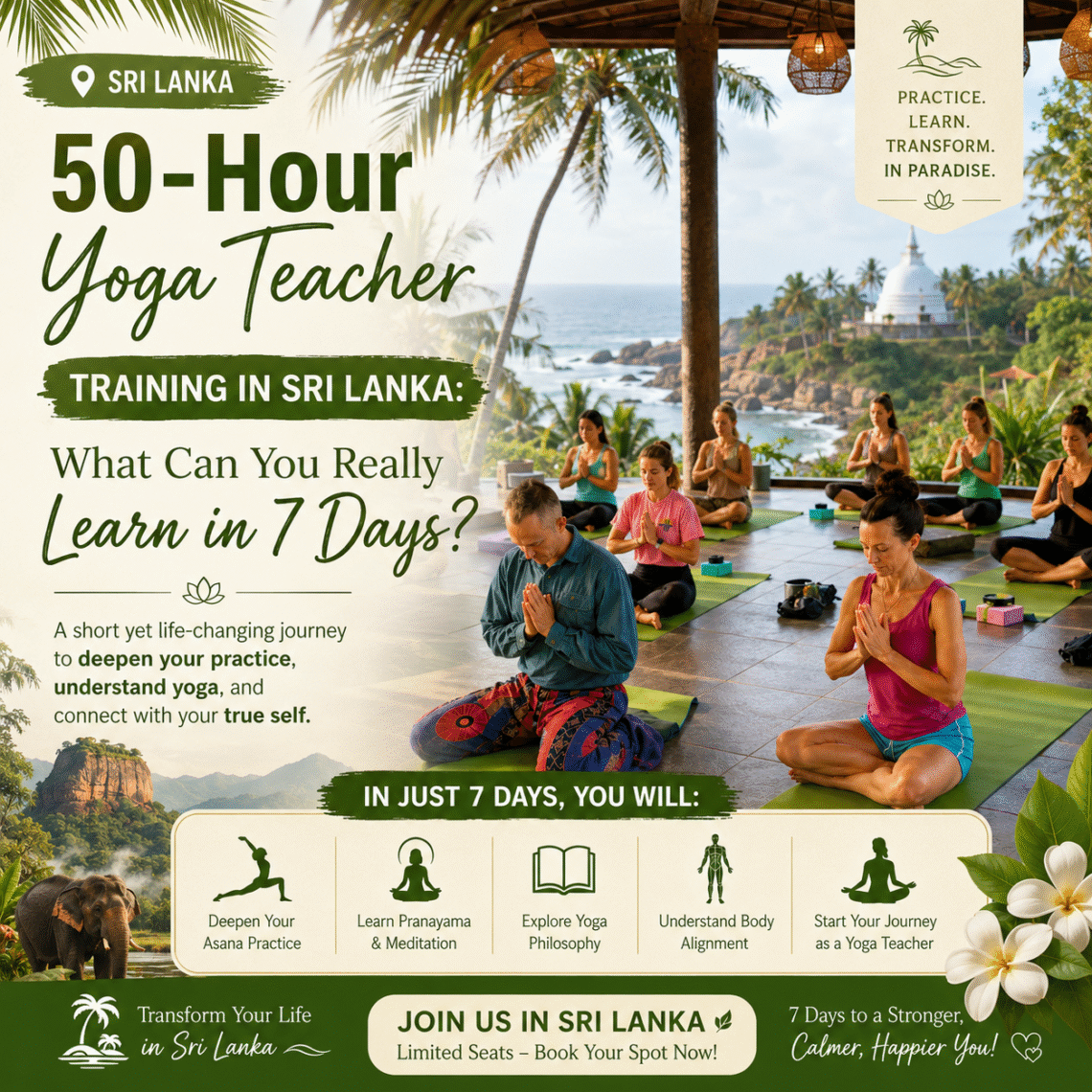
What Can You Really Learn in 7 Days, A seven-day yoga teacher training may sound short. But seven focused days of practice, study, breathwork, meditation, philosophy, and personal guidance can become a meaningful beginning to a much deeper yoga journey.
At Diksha Yoga School, our 50-hour Yoga Teacher Training in Sri Lanka is designed as an intensive introduction to the traditional and practical dimensions of yoga. Held at Green Serene Villa in Galle, Southern Sri Lanka, the training brings together Hatha Yoga, Vinyasa Flow, Ashtanga foundations, pranayama, meditation, yoga philosophy, anatomy, alignment, sequencing, and introductory teaching methodology.
The purpose is not to pretend that seven days can teach you everything about yoga.
It cannot.
The purpose is to give you a strong foundation, meaningful personal experience, practical knowledge, and a clear direction for continuing your education.
Table of Contents
What Can You Really Learn in Seven Days?
Yoga is a lifelong discipline.
No seven-day course can replace years of personal practice, observation, study, and teaching experience.
What an intensive 50-hour immersion can do is help you begin connecting the different dimensions of yoga:
Body → Breath → Mind → Awareness → Philosophy → Teaching
Instead of learning postures as shapes to copy, you begin asking deeper questions:
- Why is this posture practiced?
- How should the body be aligned?
- What is the role of the breath?
- How can a posture be modified?
- What should a teacher observe?
- How can a sequence be structured?
- What is the purpose of pranayama?
- How does meditation change our relationship with the mind?
- How can yoga philosophy become part of everyday life?
These questions are where meaningful yoga education begins.
1. Build a Strong Foundation in Hatha Yoga
Traditional Hatha Yoga forms an important foundation of the training at Diksha Yoga School.
You explore foundational asanas through breath, awareness, alignment, stability, mobility, strength, and mindful movement.
Your practice may include:
- Standing postures
- Seated postures
- Forward folds
- Twists
- Hip-opening postures
- Backbends
- Balancing postures
- Core-strengthening practices
- Relaxation postures
- Surya Namaskar
The focus is not simply on going deeper into a posture.
It is on understanding what you are doing.
Alignment Is More Than Looking Correct
Every student has a different body.
Different proportions.
Different mobility.
Different strengths.
Different limitations.
Different histories.
This is why we believe alignment should create awareness rather than fear.
The goal is not to make every student look identical.
The goal is to help students understand their own body and find an appropriate expression of the practice.
Sometimes going deeper is progress.
Sometimes staying where you are is progress.
And sometimes knowing when to stop is the most important lesson of all.
2. Discover the Intelligence of Vinyasa Flow
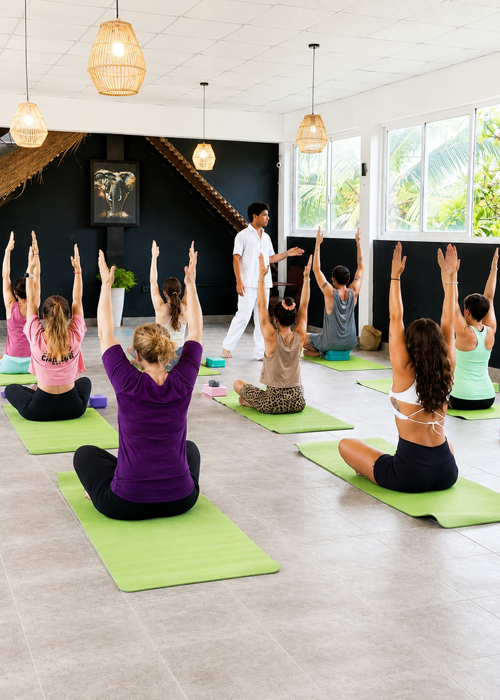
Vinyasa is not simply moving quickly from one posture to another.
It is the art of connecting breath, movement, rhythm, awareness, and intelligent sequencing.
During the training, students begin exploring:
- Breath-to-movement coordination
- Safe transitions
- Basic sequencing principles
- Class progression
- Preparation for a peak posture
- Counterposes
- Balancing effort and recovery
- Creating short sequences
- Using breath as an anchor
You begin to understand that a beautiful yoga class is not simply a collection of beautiful postures.
Good sequencing has a purpose.
3. Explore the Foundations of Ashtanga Yoga
The program also introduces students to foundational principles of Ashtanga Yoga, including aspects of traditional practice such as:
- Surya Namaskar A
- Surya Namaskar B
- Standing postures
- Selected seated postures
- Breath awareness
- Drishti
- Bandha awareness
- Traditional practice structure
The goal is not to master an entire Ashtanga Primary Series in seven days.
The goal is to understand the discipline, structure, breath, and awareness behind the practice.
4. Learn the Deeper Role of Pranayama
Yoga is not only movement.
The breath creates a bridge between the physical practice and the mind.
During the 50-hour immersion, students may be introduced to traditional pranayama practices including:
- Nadi Shodhana
- Kapalabhati
- Bhastrika
- Ujjayi
- Bhramari
- Sheetali
- Sheetkari
You also begin exploring:
- Breath awareness
- Inhalation and exhalation
- Preparation for pranayama
- Breath and concentration
- Appropriate application of techniques
- Developing steadiness and awareness
Pranayama should not become a collection of breathing techniques to perform mechanically.
The deeper purpose is to develop a more conscious relationship with the breath.
5. Experience Meditation Beyond “Sitting Quietly”
For many people, meditation begins with a simple question:
“How do I stop my thoughts?”
Yoga offers another perspective.
Rather than fighting the mind, meditation can teach us to observe, concentrate, and become aware.
The training may introduce:
- Breath meditation
- Concentration practices
- Mantra awareness
- Dharana
- Dhyana
- Guided meditation
- Yoga Nidra
- Mindfulness practices
The intention is not to force the mind to become completely empty.
It is to develop a more stable relationship with attention and awareness.
6. Understand the Philosophy Behind Yoga
Yoga is much more than physical postures.
At Diksha Yoga School, students are introduced to foundational yogic philosophy, including the Eight Limbs of Yoga:
- Yama
- Niyama
- Asana
- Pranayama
- Pratyahara
- Dharana
- Dhyana
- Samadhi
The training also introduces key ideas from Patanjali’s Yoga Sutras and the broader principles of yogic living.
But philosophy is not taught simply for memorization.
The more important question is:
How can these teachings become part of our life?
Patience can be practiced when a posture challenges us.
Non-judgment can be practiced when we stop comparing ourselves with another student.
Discipline can be practiced when we continue showing up.
Contentment can be practiced when we stop believing that we need to become someone else before we can appreciate ourselves.

This is where yoga philosophy becomes lived experience.
7. Learn Basic Yoga Anatomy & Safe Practice
You do not need to become a medical professional to begin teaching yoga.
But you do need to develop enough body awareness to understand that every student is different.
The training introduces foundational concepts such as:
- Major muscle groups
- Basic skeletal structure
- Joint movement
- Mobility and stability
- Common movement patterns
- Functional alignment
- Modifications
- Safe practice principles
- Basic injury-awareness concepts
One principle remains important throughout:
Yoga is practiced by bodies—not by photographs.
A posture that looks simple may feel completely different from one student to another.
A responsible teacher learns to observe before correcting.
8. Begin Learning How to Sequence a Yoga Class
Knowing yoga postures is not the same as knowing how to teach a class.
Students begin exploring how a yoga session can progress through:
Centering → Breath Awareness → Warm-Up → Sun Salutations → Standing Asanas → Main Sequence → Cool Down → Relaxation → Meditation
You begin considering:
- Preparation
- Progression
- Peak posture
- Counterposes
- Transitions
- Timing
- Energy levels
- Student experience
- Relaxation
- Integration
The objective is not to memorize one sequence.
It is to understand why a sequence works.
9. Develop Your Teaching Voice
A strong personal practice does not automatically make someone a strong teacher.
Teaching requires communication.
You begin learning how to:
- Give clear instructions
- Demonstrate effectively
- Use appropriate terminology
- Observe students
- Offer modifications
- Use your voice effectively
- Manage the rhythm of a class
- Create a supportive atmosphere
- Guide students with confidence
Students may also have opportunities to teach short sections and receive teacher feedback.
This is an important transition.
You move from asking:
“Can I perform this posture?”
to asking:
“Can I help another person experience this posture safely and meaningfully?”
10. Learn the Difference Between Performing and Teaching
This is one of the most important lessons in yoga education.
Someone may be able to perform an advanced asana without understanding how to teach it.
Teaching requires:
Observation + Communication + Adaptation + Awareness
A teacher needs to notice the person—not simply the posture.
If a student cannot comfortably reach the floor in a forward fold, the answer is not automatically:
“Go deeper.”
A teacher learns to ask:
- Would a modification help?
- Would a prop help?
- Should the knees bend?
- Is the student compensating?
- Is another variation more appropriate?
- Does the student need encouragement?
- Or do they need permission not to go further?
This is where responsible teaching begins.
11. Experience Yoga as a Way of Living
A residential yoga immersion allows you to experience yoga beyond individual classes.
The practice becomes part of your daily rhythm.
You practice.
You eat mindfully.
You rest.
You observe.
You study.
You meditate.
You interact with other practitioners.
You slow down.
The intention is to create space for students to experience aspects of a yogic lifestyle, rather than simply attending isolated yoga classes.
What Makes a 50-Hour Training Different From a 200-Hour Training?
This distinction matters.
A 50-hour training is an intensive foundation and immersion.
A 200-hour teacher training provides substantially more time for anatomy, philosophy, teaching methodology, sequencing, observation, practicum, and deeper integration.
A seven-day course should not promise to turn a complete beginner into an experienced professional yoga teacher overnight.
At Diksha Yoga School, we prefer to be honest about this.
The 50-hour program can be an excellent choice if you want to:
- Deepen your personal practice
- Experience immersive yoga education
- Understand traditional yoga more deeply
- Explore teaching before committing to a longer course
- Develop foundational teaching skills
- Learn pranayama and meditation
- Explore yoga philosophy
- Prepare for further yoga education
The 50-hour course can be the beginning—not the end—of your education.
What 16+ Years of Teaching Yoga Has Taught Me
By Yogini Manisha, Founder of Diksha Yoga School
After more than 16 years of teaching, training, and mentoring students, I have learned that yoga is rarely about what it looks like from the outside.
The most meaningful changes often happen quietly.
They happen when a student who once believed they were “not flexible” begins to understand their own body.
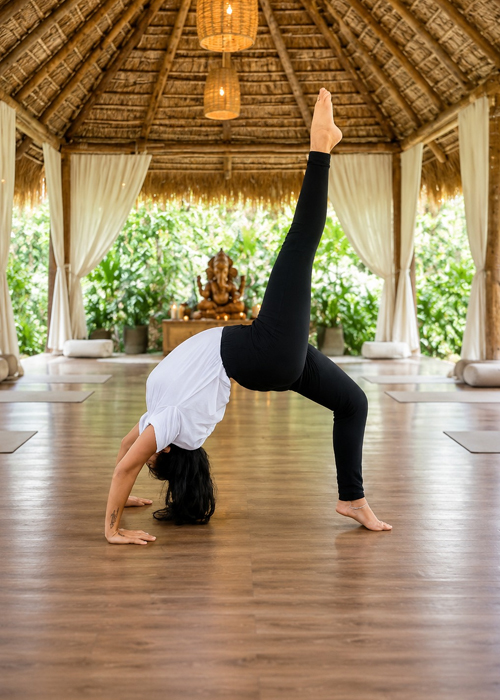
When someone stops forcing a posture and starts listening to their breath.
When a student realizes that teaching yoga is not about demonstrating the most advanced asana, but about helping another person practice with awareness and confidence.
These are some of the lessons my years of teaching have taught me.
Flexibility Is Not the Same as Progress
Many students arrive believing that becoming more flexible is the main measure of progress.
It is not.
A student may touch their toes and still be disconnected from their breath.
Another student may have limited flexibility but develop extraordinary awareness, stability, concentration, and presence.
Over the years, I have learned to look beyond how deeply someone enters a posture.
I look at how they breathe.
How they listen.
How they move.
How they respond to difficulty.
And whether they are becoming more aware of themselves through practice.
Yoga is not a competition to see who can go further. It is a practice of becoming more conscious.
Alignment Should Create Awareness, Not Fear
Students can sometimes become so focused on getting a posture “right” that they forget to feel what is happening inside their body.
I teach alignment as a tool for awareness—not as a rigid shape that every body must reproduce.
Every student has a different structure, mobility, strength, experience, and way of moving.
The teacher’s role is therefore not to make every student look identical.
It is to help each person understand their own body and find an appropriate expression of the practice.
Sometimes the most valuable adjustment is not asking a student to go deeper.
Sometimes it is teaching them when to stop.
The Breath Should Never Become Secondary
One of the first things I encourage students to understand is that the breath is not something added to yoga after the posture.
The breath is part of the practice itself.
When students become aware of their breathing, they often begin noticing things they previously overlooked—tension, rushing, effort, resistance, distraction, and when they are pushing beyond what is appropriate.
Over years of teaching, I have seen how returning attention to the breath can completely change the quality of practice.
The posture may remain the same, but the experience of the posture can change completely.
Performing an Asana and Teaching an Asana Are Two Different Skills
Being able to perform an advanced posture does not automatically mean someone knows how to teach it.
Teaching requires observation, communication, timing, adaptation, patience, and the ability to see the person rather than simply the posture.
A teacher needs to ask:
What does this student need today?
Perhaps they need a modification.
Perhaps they need a prop.
Perhaps they need a different verbal cue.
Perhaps they need encouragement.
Or perhaps they need permission not to go further.
Teaching begins when we stop thinking only about what we can do and start understanding what our students need.
Every Body Learns Differently
There is no single body that represents the “correct” yoga student.
Over the years, I have taught people with very different levels of flexibility, strength, coordination, confidence, age, experience, and physical structure.
This has taught me that good teaching cannot be completely rigid.
A sequence that feels wonderful for one student may need modification for another.
A verbal cue that makes sense to one person may not work for someone else.
A posture that looks simple can feel completely different from one body to another.
This is why I encourage teachers to develop:
Observation before correction.
First see.
Then understand.
Then guide.
Philosophy Becomes Meaningful When We Live It
Yoga philosophy should not remain only inside a textbook.
The teachings become more meaningful when we begin recognizing them in our own lives.
For me, this is where yoga becomes much more than physical exercise.
The mat becomes a place where we learn how to meet ourselves—and those lessons can travel with us far beyond the practice room.

What I Hope Students Take From Their Training
After many years of teaching, I do not measure a student’s progress only by how many postures they can perform.
I hope they leave with better questions.
Can I listen to my body?
Can I observe my mind without immediately reacting?
Can I breathe through difficulty?
Can I guide another person with patience and awareness?
Can I continue learning even after the course has finished?
A 50-hour training cannot teach someone everything about yoga.
It should not try to.
What it can do is give a student a meaningful foundation and help them understand that becoming a good yoga teacher is a journey of continuous learning.
That is the approach I bring to Diksha Yoga School.
We do not teach students simply to perform yoga.
We guide them to understand it, experience it, and eventually share it with awareness.
Why Choose Diksha Yoga School for Your 50-Hour Training in Sri Lanka?
Choosing a yoga teacher training is not only about choosing a beautiful destination.
It is about who is guiding you, what you will learn, how you will be supported, and what kind of experience you will take home.
At Diksha Yoga School, our 50-hour training in Galle is designed to combine traditional yogic knowledge with practical learning, personal guidance, and an immersive residential experience. Our current course information highlights small-group training, experienced teachers, Hatha and Vinyasa practice, pranayama, meditation, philosophy, alignment, accommodation, meals, arrival assistance, and a certificate of completion.
Learn From Experienced Teachers
The training is led by experienced yoga teachers, with Yogini Manisha bringing more than 16 years of teaching, training, and mentoring experience.
Her approach has been shaped through years of working with students at different levels.
The focus is not simply on completing a syllabus.
It is on helping students understand what they are practicing and why.
Small-Group Learning & Personal Attention
Yoga is personal.
You should not feel like just another person in a large classroom.
Diksha Yoga School emphasizes small-group learning and personalized guidance, allowing students to ask questions, receive feedback, and interact directly with teachers.
More Than Asana
Your seven days are not built around physical postures alone.
You explore:
Ashtanga Foundations
Sequencing
Teaching Methodology
This allows you to experience yoga both as a personal practice and as a discipline you can begin to understand and share.
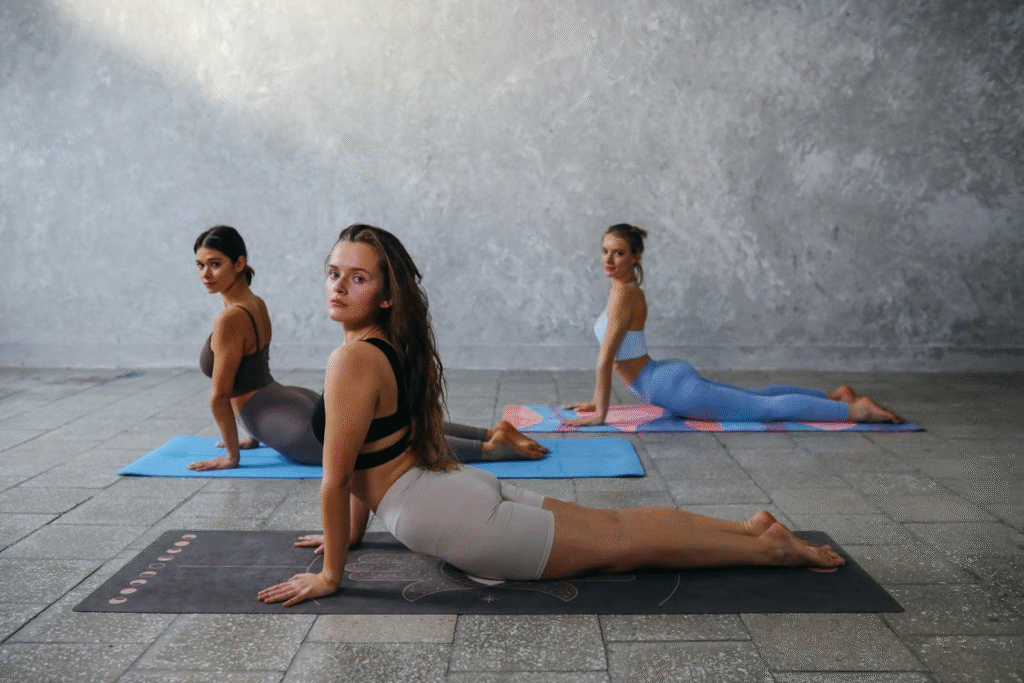
Practice, Learn, Teach, Receive Feedback
One of the most valuable parts of an immersive training is moving beyond simply listening to a teacher.
You practice.
You observe.
You ask questions.
You begin teaching.
And you receive guidance.
This practical experience can help you discover your strengths and identify where you want to continue developing.
Why Galle, Sri Lanka?
Your yoga training takes place at Green Serene Villa in Galle, Southern Sri Lanka, a peaceful setting surrounded by tropical nature and designed to support yoga, meditation, study, and a slower daily rhythm.
Galle and the surrounding southern coast also give students the opportunity to experience Sri Lankan culture, nature, beaches, and the relaxed atmosphere of the island beyond the training room.
But the destination is only one part of the experience.
The real value comes from the quality of teaching, the depth of practice, the people you learn with, and the attention you receive.
Your Home During the Training: Green Serene Villa, Galle
The training takes place at Green Serene Villa in Galle, with comfortable accommodation options and a peaceful environment for study and practice. Current course information lists accommodation, vegetarian/vegan-friendly meals, Wi-Fi, hot water, and a garden environment among the available facilities.



The intention is simple:
Create an environment where you can focus on yoga.
Wake up.
Practice.
Study.
Eat.
Rest.
Reflect.
Connect.
Repeat.
For seven days, yoga becomes part of your daily rhythm.
Nourishing Vegetarian & Vegan-Friendly Meals
Food is another part of a yogic lifestyle.
The current Sri Lanka program offers vegetarian and vegan-friendly meal options, using fresh local ingredients and yogic dietary principles.
Meals are designed to support the rhythm of the training while allowing students to experience simple, nourishing food during their stay.
The intention is not complicated eating.
It is conscious eating.
What Is Included?
Exact inclusions should always be confirmed against the current course package, but the current Diksha Yoga School Sri Lanka program lists:
- 50 hours of intensive yoga training
- 7-day residential training
- Accommodation
- Daily yoga practices and theory
- Hatha, Vinyasa and Ashtanga foundations
- Pranayama and meditation
- Yoga philosophy
- Anatomy and alignment
- Teaching methodology
- Training materials
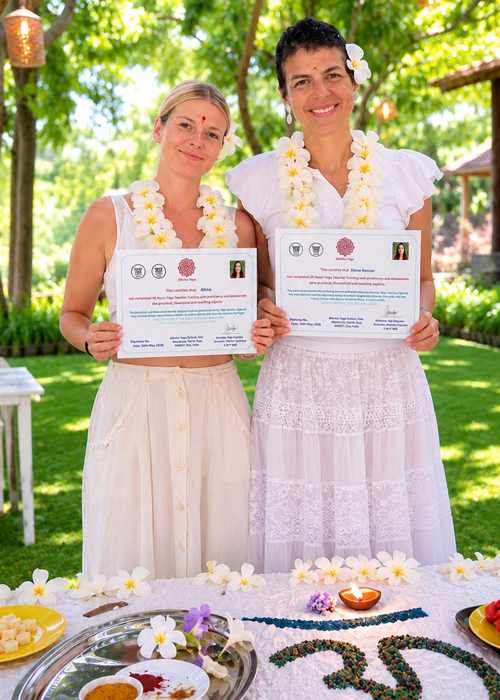
- Certificate of completion
- Vegetarian/vegan-friendly meals
- Personal guidance and teacher feedback
- Arrival/airport assistance
Always check the current package for the exact accommodation, meal plan, transfers, and inclusions before booking.
Is This 50-Hour Training Right for You?
This immersion may be a good choice if you are thinking:
“I want to deepen my personal yoga practice.”
“I want to understand yoga beyond physical postures.”
“I want to experience traditional yoga in Sri Lanka.”
“I am curious about becoming a yoga teacher but I am not ready for a 200-hour program.”
“I want seven focused days away from my normal routine.”
“I want to learn in a small and personal environment.”
You do not need to be extremely flexible.
You do not need to perform advanced postures.
And you do not need to know everything before you arrive.
You simply need the willingness to learn.
What Can You Take Home After Seven Days?
The most important changes may not be visible in a photograph.
You may leave with:
More awareness in your practice.
A deeper relationship with your breath.
A clearer understanding of alignment.
Greater appreciation for yoga philosophy.
More confidence in teaching fundamentals.
A stronger personal practice.
A new connection with yourself and your fellow practitioners.
And perhaps most importantly:
a desire to continue learning.
Because authentic yoga education does not end when the seven days are finished.
That is where the next chapter begins.
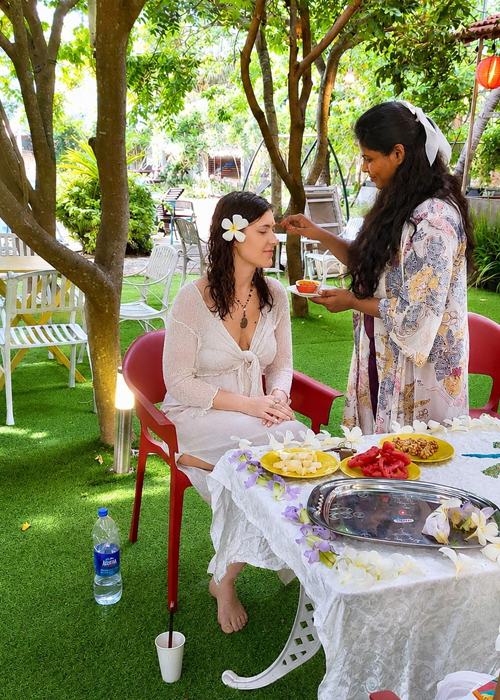
Ready to Begin Your Yoga Journey in Sri Lanka?
You do not need to arrive as an experienced yogi.
You do not need to be flexible.
You do not need to have your future as a yoga teacher completely planned.
Come with curiosity.
Come with an open mind.
Come ready to practice.
50-Hour Yoga Teacher Training in Galle, Sri Lanka
7 Days • 50 Hours • Green Serene Villa • Traditional Yoga • Practical Teaching • Personal Guidance
Upcoming Dates: 5th Sep -5th Dec 2026
Course Fee: Private Room €1330 Twin Shared Room €1000 Triple Shared Room €700
Location: Green Serene Villa, Galle, Southern Sri Lanka
Accommodation: PRIVATE ROOM / TWIN SHARED ROOM / TRIPLE SHARED ROOM
Certification: 50-Hour Yoga Training Certificate
Ready to take the first step?
Not sure whether the 50-hour, 100-hour, or 200-hour program is right for you?
Contact Diksha Yoga School and we will help you choose the training that best fits your experience, goals, and yoga journey.
What Students Say About Diksha Yoga School
“The course provided the perfect balance of yoga practice, philosophy, pranayama, and meditation. Yogini Manisha and the teaching team created a supportive learning environment that helped me deepen my understanding of yoga and build confidence in my practice.”
— Sarah, United Kingdom
“My 50 Hour Yoga Teacher Training at Diksha Yoga School was truly transformative. The guidance from Yogini Manisha, the supportive community, and the beautiful setting of Green Serene Villa at Galle helped me deepen my practice and gain confidence as a yoga teacher.”
— Jasmine, Australia
Only publish testimonials with the student’s permission and accurate wording. Your existing Sri Lanka page currently contains testimonials from Sarah, Jasmine and another former student, so these can be used if they are genuine and approved for publication.
Frequently Asked Questions
Is 50 hours enough to become a yoga teacher?
A 50-hour program provides an introductory foundation and should not be presented as equivalent to a comprehensive 200-hour foundational teacher-training program. If your goal is to build a professional teaching career, a longer training pathway is more appropriate.
Can beginners join the 50-hour Yoga Teacher Training in Sri Lanka?
Yes. The program is designed to welcome different experience levels, including beginners and practitioners who want to deepen their understanding of yoga.
Where is the 50-hour training held?
The training takes place at Green Serene Villa in Galle, Southern Sri Lanka.
What styles of yoga will I learn?
The program introduces Traditional Hatha Yoga, Ashtanga foundations, Vinyasa Flow, pranayama, meditation, yoga philosophy, anatomy, alignment, sequencing, and teaching methodology.
Will I practice teaching?
The program includes introductory teaching methodology and practical guidance, with opportunities to develop confidence in sequencing, cueing, observation, communication, and teaching fundamentals.
Can I join if I am not flexible?
Absolutely. Flexibility is not a requirement for beginning yoga education. The emphasis is on awareness, appropriate practice, and understanding your own body.
Is accommodation included?
The current Sri Lanka course information lists residential accommodation, with available room options depending on the selected package. Confirm the current room category and inclusions before booking.
Are meals included?
The current course information lists vegetarian and vegan-friendly meals. The exact number of meals should be confirmed with the current course package before booking.
Is the course Yoga Alliance registered?
Diksha Yoga School identifies itself as a Yoga Alliance Registered Yoga School, and its current Sri Lanka course page describes the 50-hour program as Yoga Alliance standards-based. For any specific credential or registration outcome, students should confirm the current Yoga Alliance details directly with the school.
What is the difference between the 50-hour and 200-hour training?
The 50-hour program is an intensive introductory immersion. A 200-hour program provides substantially more time for comprehensive teacher education, including deeper anatomy, philosophy, teaching methodology, sequencing, practicum, and integration.
Final Thought
Seven days cannot teach you everything about yoga.
And they should not try to.
What seven focused days can give you is something more valuable:
a genuine foundation from which deeper learning can grow.
In Galle, surrounded by the peaceful atmosphere of Southern Sri Lanka, your practice can become more than a daily class.
You can practice.
You can study.
You can breathe.
You can question.
You can observe.
You can teach.
And you can begin discovering what yoga means to you.
Yoga is a journey of years, not a destination reached through a certificate.
Your seven days can be the beginning of that journey.
Come to Sri Lanka to learn.
Stay to experience.
Leave with something you can carry far beyond the mat.