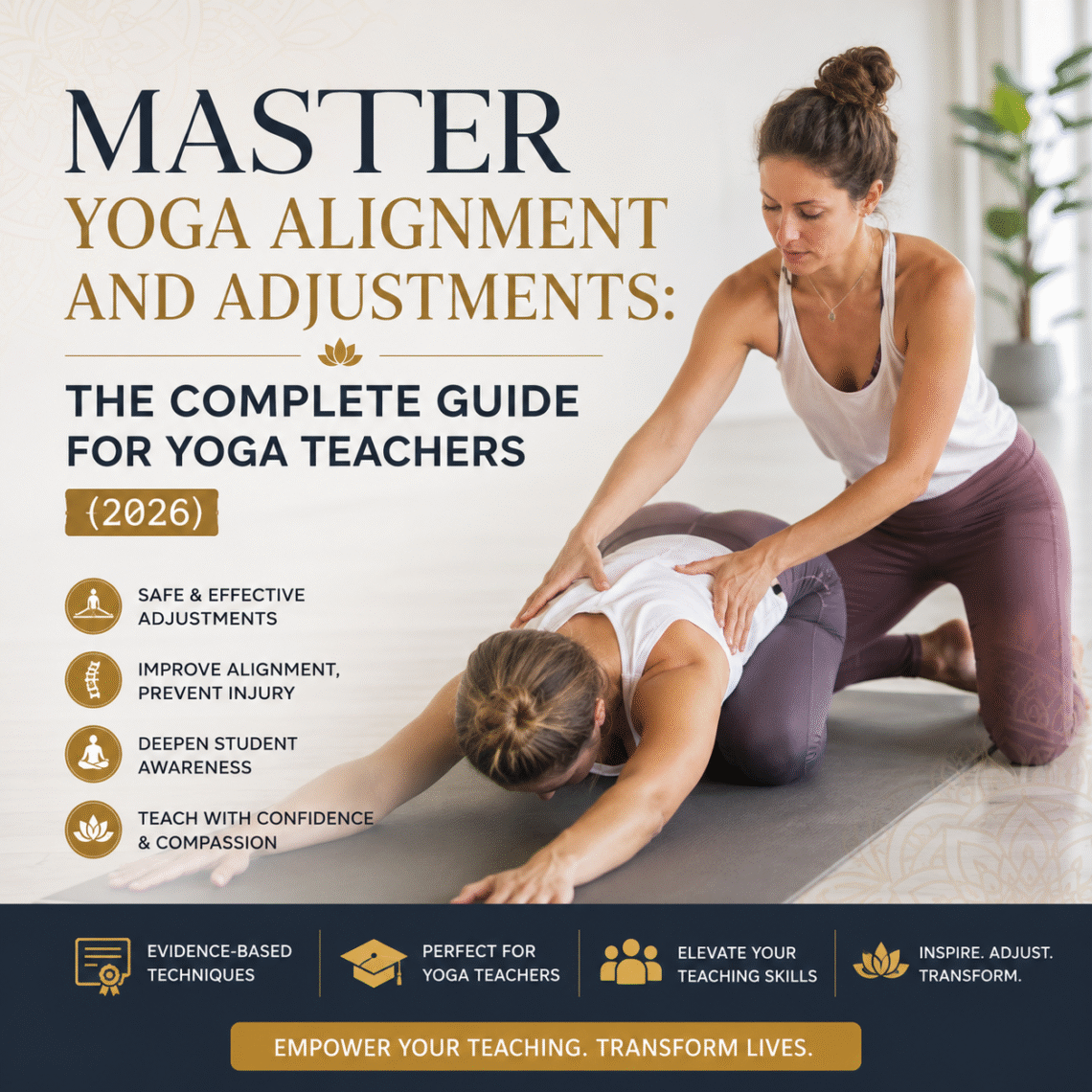
Part 1: Master Yoga Alignment and Adjustments
Why Alignment Is the Foundation of Every Great Yoga Teacher
Master Yoga Alignment and Adjustments, One of the questions I hear almost every month during our Yoga Teacher Trainings is,
“Manisha, how do I know if I’m doing the pose correctly?”
It doesn’t matter whether the student has been practising yoga for six months or six years. At some point, almost everyone asks this question.
And every time, my answer is a little different from what they expect.
I don’t usually begin by talking about where the foot should go or how straight the back should be.
Instead, I ask them another question.
Table of Contents
“Can you breathe comfortably?”
If they stop for a moment and smile, we’re already moving in the right direction.
Because after teaching yoga for many years, I’ve realised something very important.
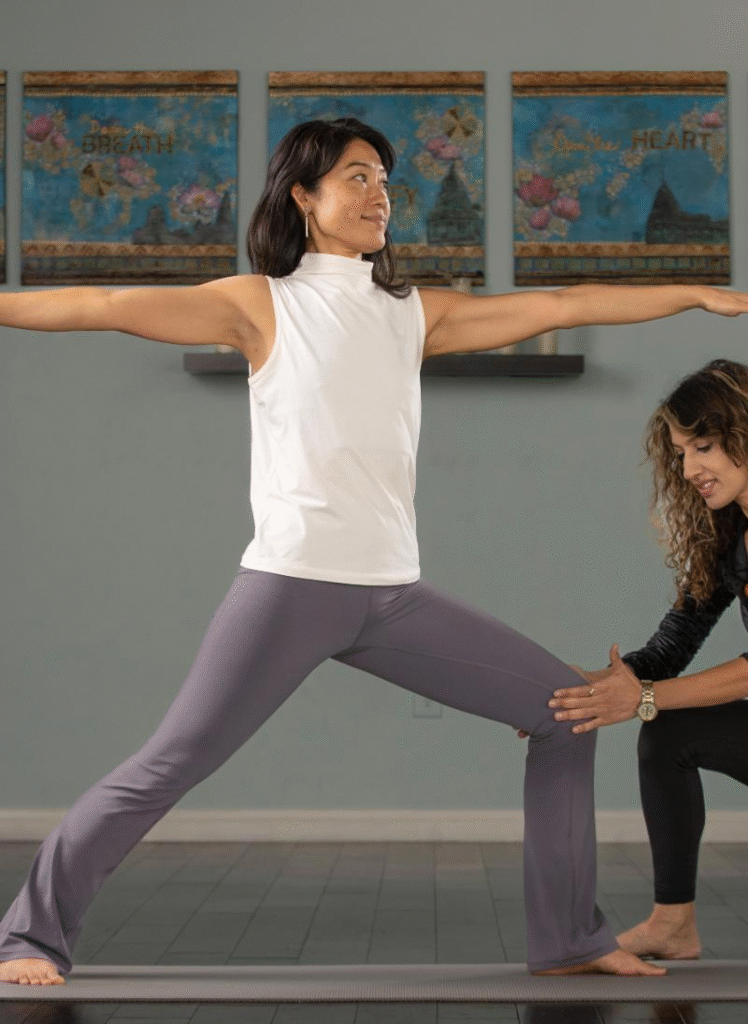
Alignment is not about creating perfect-looking yoga poses. It’s about creating a body that feels balanced, supported, and free to breathe.
Unfortunately, modern yoga often tells a different story.
Open Instagram or Pinterest and you’ll see beautiful photographs of people performing incredible backbends, effortless Handstands, and perfect Lotus Pose.
There’s nothing wrong with those photographs.
The problem begins when we believe that yoga should look exactly the same on every body.
I’ve watched hundreds of students arrive at their first Yoga Teacher Training believing they simply need to become more flexible.
By the end of the course, they realise something much more valuable.
Yoga was never asking them to become someone else’s version of perfect.
It was inviting them to understand their own body.
And that understanding begins with alignment.
My First Lesson About Alignment
When I first started teaching, I thought alignment meant helping students make every posture look beautiful.
It seemed logical.
If the pose looked correct, surely everything else would naturally follow.
Experience quickly taught me otherwise.
I remember teaching a simple Warrior II posture to two students.
From the outside, one looked absolutely textbook perfect.
The other had a slightly shorter stance and was using a yoga block.
If someone had walked past the room, they probably would have chosen the first student as having the “better” posture.
But when I looked more closely, I noticed something different.
The first student was holding their breath.
Their shoulders were tense.
Their front knee looked uncomfortable.
The second student was breathing softly.
Their spine was relaxed.
Their face looked peaceful.
That day reminded me of something I still share with every teacher training.
The body doesn’t care how beautiful a posture looks.
It only cares how safely it moves.
That simple observation completely changed the way I teach alignment today.
So, What Is Yoga Alignment Really?
If you ask ten yoga teachers to define alignment, you’ll probably hear ten slightly different answers.
For me, alignment is much simpler than people imagine.
It is the relationship between your body, your breath, and your awareness.
When those three begin working together, movement becomes lighter.
Breathing becomes easier.
The mind becomes quieter.
Yes, alignment includes understanding where the hands, feet, hips, and shoulders are positioned.
But those details only become meaningful when they help the body move more intelligently.
A posture isn’t successful because it looks impressive.
It’s successful because it allows your body to move without unnecessary strain.
Every Body Tells a Different Story
This is probably one of the biggest lessons our students learn during their Yoga Teacher Training.
No two bodies are ever the same.
I’ve taught dancers with incredibly open hips.
I’ve taught runners with powerful legs but tight hamstrings.
I’ve taught office workers whose shoulders carried years of tension from sitting behind a computer.
I’ve taught students recovering from injuries who were nervous about moving again.
Should all of these people practise exactly the same posture?
Of course not.
That would completely ignore what makes each human body unique.
Instead of trying to fit every student into one perfect shape, we learn to adapt the posture to the individual standing in front of us.
That is what experienced yoga teachers do every day.
And honestly…
that’s one of the most rewarding parts of teaching.
The Biggest Myth in Modern Yoga
If I could remove one misconception from the yoga world, it would probably be this:
There is no such thing as one perfect version of every yoga pose.
Your skeleton is different from mine.
Your hip joints are different.
Your shoulders rotate differently.
Even something as simple as the length of your arms and legs changes the way a posture looks.
This is why comparison is so unhelpful.
I’ve watched students become frustrated because their Lotus Pose doesn’t look like someone else’s.
What they didn’t realise was that their hip anatomy simply works differently.
There was never anything “wrong” with their body.
It was simply asking to be respected.
Real yoga begins the moment we stop forcing our body to imitate someone else’s.
Alignment Begins With Listening
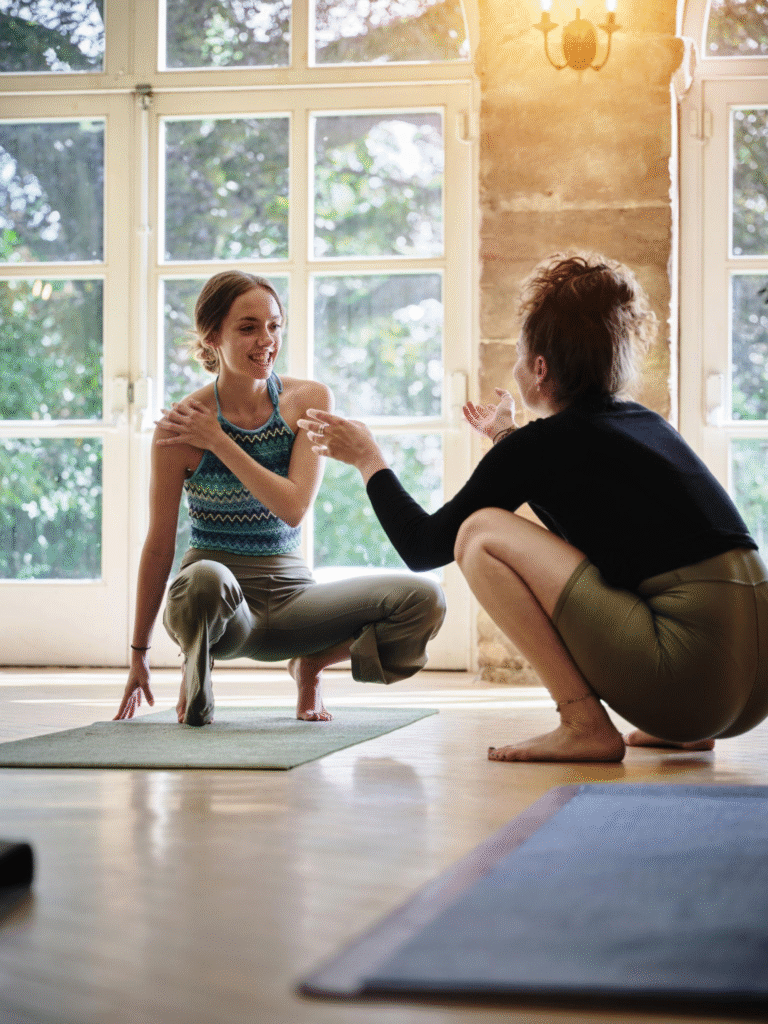
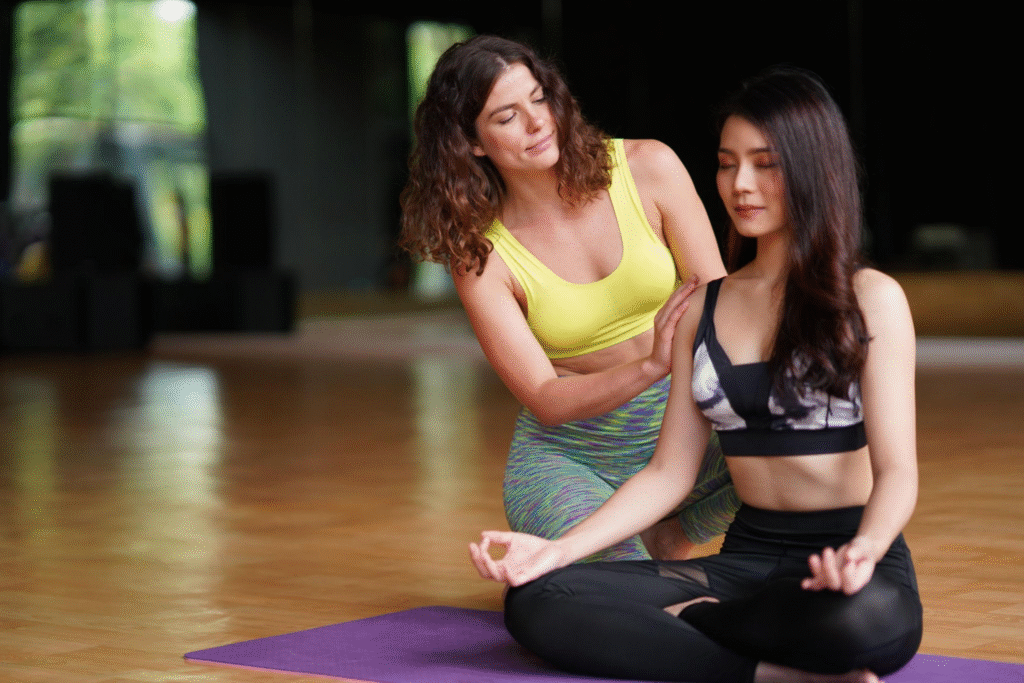
One thing I often tell our students is this:
Your body is always talking to you.
The question is…
are you listening?
Sometimes it whispers.
A little tightness in the shoulders.
A slightly uncomfortable knee.
A shallow breath.
Other times it speaks much louder.
Sharp pain.
Loss of balance.
Exhaustion.
Alignment isn’t about ignoring these signals.
It’s about learning to understand them.
One of the greatest skills a yoga teacher develops is noticing these small messages before they become injuries.
That awareness protects both the teacher and every future student they guide.
Breath Is the Greatest Alignment Teacher
If someone asked me to choose just one alignment cue that works in almost every posture…
I’d choose the breath.
Not because breathing makes a posture easier.
Because breathing tells the truth.
I’ve seen students standing in what looked like a beautiful Triangle Pose.
But they were barely breathing.
I’ve also seen beginners using yoga blocks with bent knees who looked completely relaxed.
Which student do you think was experiencing better alignment?
For me, the answer is always the one who can continue breathing naturally.
Whenever your breath becomes strained, your body is asking you to adjust.
That’s why I often remind students,
“Never sacrifice your breath just to make a posture look deeper.”
Strength Before Flexibility
This is something that surprises many people.
Most students arrive hoping to become more flexible.
Very few arrive hoping to become more stable.
Yet stability is what allows flexibility to become safe.
Imagine building a beautiful house.
Would you begin with the roof?
Of course not.
You begin with the foundation.
The body works exactly the same way.
Strong feet.
Stable legs.
An active core.
Balanced breathing.
These foundations allow flexibility to develop naturally over time.
Without them, flexibility can easily become instability.
Why We Spend So Much Time on Alignment at Diksha Yoga School
Sometimes students wonder why we spend so much time refining simple postures like Mountain Pose or Warrior II.
The answer is simple.
Everything else grows from there.
A confident Headstand begins with understanding how to stand.
A graceful Backbend begins with understanding how to breathe.
A safe Arm Balance begins with understanding how to distribute weight.
We don’t teach alignment because we want students to memorise rules.
We teach alignment because we want them to understand movement.
When you understand movement, you stop relying on memorised instructions.
You begin teaching from observation.
From experience.
From compassion.
And that’s exactly the kind of yoga teacher we hope every student becomes.
What I Hope Every Future Yoga Teacher Understands
If there is one lesson I hope stays with every student long after they leave Diksha Yoga School, it is this:
Yoga isn’t about creating perfect postures.
It’s about helping people feel more at home in their own bodies.
Some students will become professional yoga teachers.
Some will never teach a single class.
That doesn’t matter.
Because the gift of alignment isn’t only for teaching.
It’s for everyday life.
You’ll notice yourself sitting differently.
Walking differently.
Breathing differently.
Even responding to stress differently.
And perhaps that’s the most beautiful thing about yoga.
The more aware you become on the mat, the more present you become in life.
Why This Approach Makes Better Yoga Teachers
At Diksha Yoga School, alignment isn’t a separate subject taught for a few hours—it’s woven into every practice, every adjustment, and every conversation throughout the training.
We combine traditional yogic wisdom with modern anatomy, but we never lose sight of the most important teacher in the room: your own experience.
Through daily practice, observation, partner teaching, hands-on guidance, and constructive feedback, our students learn far more than how to place a foot or straighten a leg.
They learn how to truly see the person standing in front of them.
Because at the end of the day, the best yoga teachers aren’t remembered for their perfect poses.
They’re remembered for making people feel safe, supported, and inspired.
And in my experience…
that’s the deepest alignment of all.
Part 2: The Science Behind Yoga Alignment – Understanding Your Body Before You Teach Others
One morning during one of our Yoga Teacher Trainings, a student raised her hand with a thoughtful expression and asked,
“Manisha, why do yoga teachers always tell us to keep the knee above the ankle in Warrior II?”
Everyone in the room nodded.
It was a question they had all heard before, yet very few had ever questioned why.
I smiled because I knew this wasn’t really a question about the knee.
It was the moment she had stopped memorising yoga cues and started wanting to understand the body.
For me, this is one of the most exciting moments in every teacher training.
Students arrive wanting to know where to place their hands, feet, and hips.
But somewhere along the journey, something shifts.
They stop asking,
“Where should my body go?”
And begin asking,
“Why does my body move this way?”
That single change transforms not only their personal practice but also the way they teach.
Because once you understand the body, you no longer rely on memorised instructions.
You begin teaching with confidence, observation, and compassion.
That is why anatomy and biomechanics are such an important part of our Yoga Teacher Training at Diksha Yoga School.
Not because we want students to become doctors or physiotherapists.
But because understanding the body allows us to guide every student safely, intelligently, and respectfully.
The Day Anatomy Changed the Way I Taught Yoga
When I first began teaching yoga many years ago, I believed good teaching meant remembering lots of alignment cues.
Lift the chest.
Square the hips.
Straighten the leg.
Relax the shoulders.
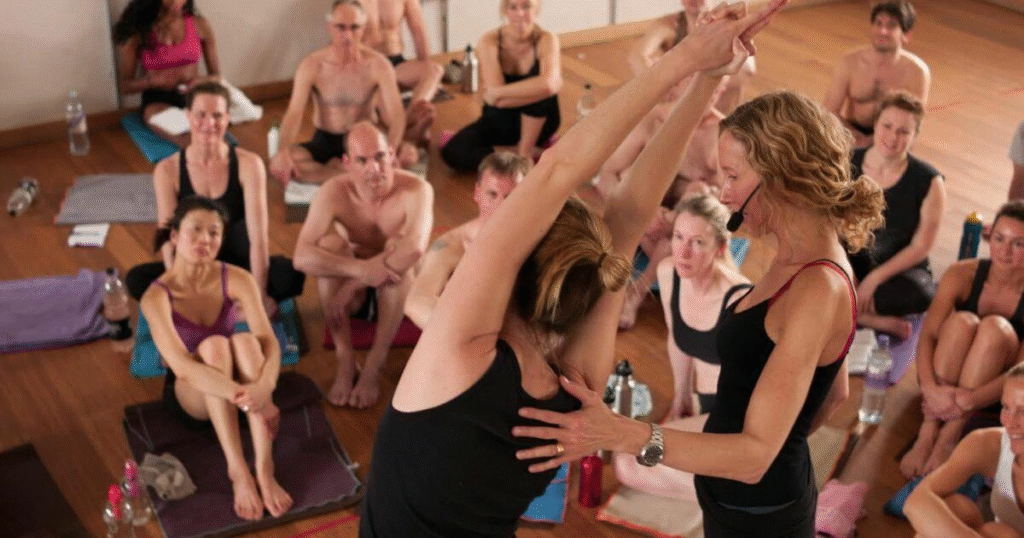
I thought the more instructions I gave, the better teacher I would become.
Then one day, a simple experience completely changed my perspective.
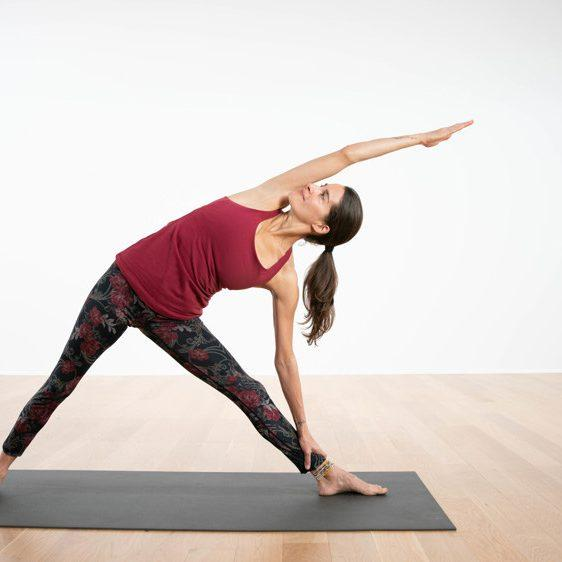
Two students were practicing Triangle Pose.
I offered them exactly the same verbal cues.
One student immediately found stability and ease.
The other looked uncomfortable no matter how many adjustments I suggested.
At first, I wondered if I wasn’t explaining clearly enough.
But as I observed more carefully, I realised something important.
Their bodies weren’t built the same.
One had naturally open hips.
The other had a very different pelvic structure and tighter hamstrings.
The posture wasn’t the problem.
My assumption that every body should move the same way was.
That lesson has stayed with me ever since.
It reminded me that yoga isn’t about fitting every person into the same shape.
It’s about understanding how each individual body is designed to move.
That is the real purpose of anatomy in yoga.
Anatomy Doesn’t Make Yoga More Complicated
Sometimes students become nervous when they hear the word “anatomy.”
They imagine thick medical textbooks filled with complicated Latin names.
I always reassure them.
“Don’t worry.”
“We’re not here to become surgeons.”
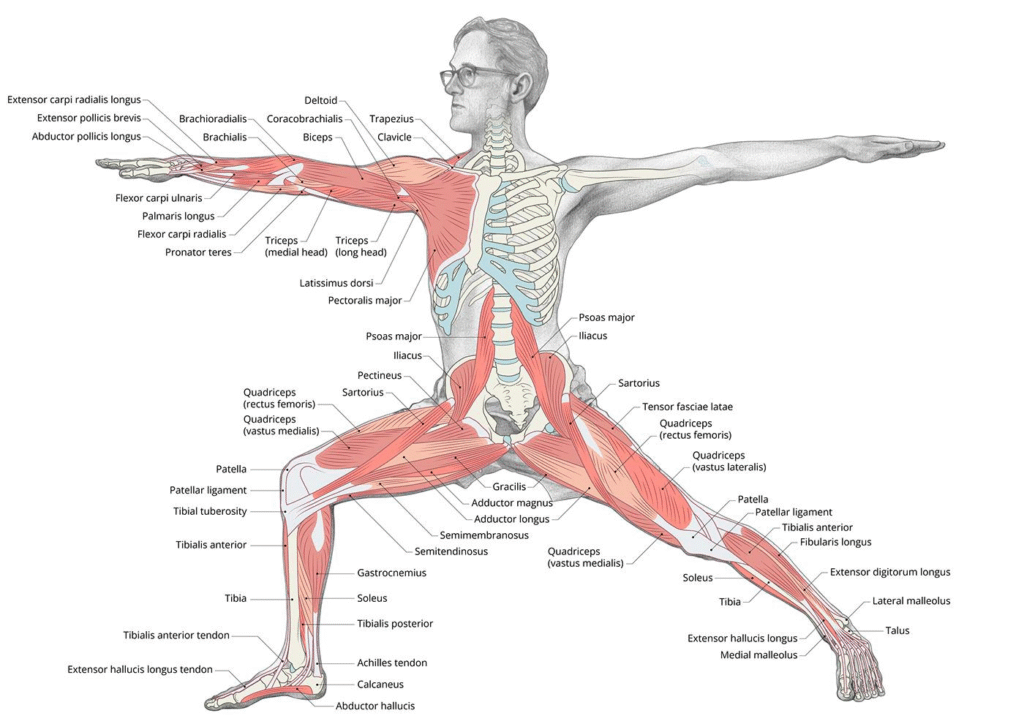
We’re here to become better observers.
The purpose of learning anatomy isn’t to memorise every muscle in the body.
It’s to understand simple questions like:
Why does one student feel comfortable in Pigeon Pose while another experiences discomfort?
Why does someone’s lower back hurt during Camel Pose?
Why do certain students naturally balance with ease while others struggle?
Why can two people practice the same posture and have completely different experiences?
When we begin understanding these questions, yoga becomes far less confusing.
Instead of guessing, we begin teaching with knowledge.
And knowledge creates confidence.
Every Body Has Its Own Story
This is probably one of the most important lessons I share during every teacher training.
No two skeletons are ever identical.
Over the years, I’ve taught dancers, runners, swimmers, office workers, athletes, retirees, teenagers, and people who had never exercised before.
Every single one of them moved differently.
Some students naturally had deep hip mobility.
Others had beautifully stable shoulders.
Some found balancing effortless.
Others needed weeks to feel comfortable standing on one leg.
None of these differences meant someone was “better” at yoga.
They simply reflected the incredible diversity of the human body.
This is why comparing ourselves to others rarely serves us.
Yoga is not a competition between bodies.
It is a conversation with your own.
Why Biomechanics Matters More Than Memorising Cues
One of my favourite subjects to teach is biomechanics.
The word sounds complicated, but the idea is actually very simple.
Biomechanics is the science of how the body moves.
It helps us understand why movement feels smooth in some situations and difficult in others.
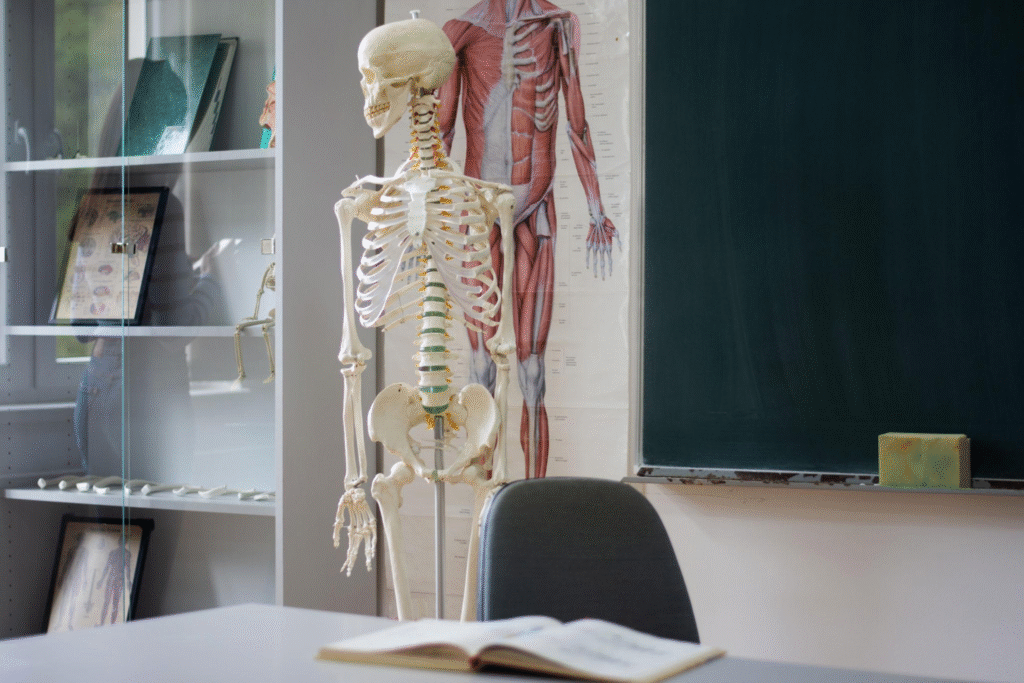
Imagine Warrior II.
From the outside, it may appear that the body is simply standing still.
But inside, an incredible conversation is taking place.
The feet are grounding into the earth.
The legs are creating strength.
The hips are stabilising the pelvis.
The core is supporting the spine.
The shoulders are working to keep the arms light and steady.
The breath is helping everything move together.
Nothing is happening in isolation.
Everything is connected.
When future teachers begin seeing movement this way, their understanding of yoga changes completely.
Flexibility Isn’t Always the Answer
Many people join Yoga Teacher Training believing flexibility is the ultimate goal.
I understand why.
Social media has convinced us that the deepest backbend or the highest leg must represent the best yoga.
Experience has taught me something very different.
Some of the most flexible students I’ve ever taught actually needed to become stronger.
Their joints moved beautifully, but they lacked stability.
At the same time, students with tighter muscles often developed excellent alignment because they learned how to create strong foundations before moving deeper.
That’s why I constantly remind our trainees:
“Don’t chase flexibility.”
“Build stability first.”
When stability is present, flexibility develops naturally.
And more importantly, it develops safely.
The Breath Never Lies
If someone asked me what the greatest anatomy teacher is, I wouldn’t point to a textbook.
I’d point to the breath.
The breath tells us everything.
Whenever I walk around the room, I don’t just look at people’s postures.
I listen.
If someone is breathing slowly and steadily, I know their body is probably working efficiently.
If I notice shallow breathing or someone holding their breath completely, I know something needs attention.
Perhaps they’re pushing too hard.
Perhaps they’re forcing a range of motion that isn’t available today.
Perhaps they’re simply nervous.
The breath always tells the truth.
This is why I encourage students to let the breath guide the posture rather than allowing the posture to control the breath.
When breathing remains calm, the nervous system relaxes.
And when the nervous system relaxes, the body begins moving more naturally.
Your Foundation Determines Everything
One lesson I repeat almost every week is this:
Every posture begins from the ground up.
Whether you’re standing in Mountain Pose, balancing in Tree Pose, or preparing for Handstand, your foundation matters.
I often ask students to pause before moving deeper into a posture.
“Can you feel all four corners of your feet?”
That simple question changes everything.
Instead of chasing the final shape, they begin creating stability from the ground.
The same principle applies to arm balances.
Instead of collapsing into the wrists, we learn to spread the fingers, activate the hands, and share the work throughout the entire upper body.
When the foundation is stable, the rest of the posture feels surprisingly effortless.
Why Pain Is Never the Goal
One of the biggest misconceptions I still hear is,
“No pain, no gain.”
That philosophy has never belonged in yoga.
A healthy stretch may feel challenging.
It may ask you to stay present.
It may invite you to breathe through discomfort.
But sharp pain is different.
Pain is information.
It is the body’s way of asking us to slow down, adjust, or stop.
As teachers, one of our greatest responsibilities is helping students recognise that difference.
When people feel safe, they become more willing to explore.
When they feel pressured, they begin disconnecting from their own body.
Yoga should always deepen awareness—not silence it.
Teaching Anatomy Through Experience at Diksha Yoga School
At Diksha Yoga School, we don’t believe anatomy should be learned only from diagrams.

We believe it should be experienced.
Our students don’t spend their days memorising complicated terminology.
Instead, they explore movement through practice, observation, partner work, posture analysis, and real teaching situations.
They learn to ask meaningful questions.
Why does this posture feel different today?
Why does one student need a block while another doesn’t?
How can I modify this pose without changing its intention?
How can I help someone feel more stable without asking them to go deeper?
These are the questions that create thoughtful teachers.
By the end of the training, our students are no longer relying on memorised scripts.
They are observing.
Listening.
Adapting.
Teaching with confidence rooted in understanding rather than imitation.
The Greatest Lesson Anatomy Has Taught Me
After years of teaching thousands of students, one truth continues to inspire me.
The body is incredibly intelligent.
It is constantly communicating with us through breath, movement, balance, and sensation.
Our job as yoga teachers is not to force it into perfect shapes.
Our job is to learn its language.
When we begin listening instead of controlling, everything changes.
Movement becomes more fluid.
Breathing becomes more natural.
Confidence grows.
And yoga transforms from something we perform into something we truly experience.
That, to me, is the real science behind yoga alignment.
It’s not just about muscles, joints, or biomechanics.
It’s about understanding the extraordinary wisdom of the human body and learning how to honour it with every breath, every movement, and every posture.
I still remember one of the first hands-on adjustments I ever gave as a yoga teacher.
Part 3: Hands-On Yoga Adjustments – Teaching with Compassion, Consent, and Confidence
I had only been teaching for a short time, and like many new teachers, I believed that offering physical adjustments was part of being a “good” instructor.
During a standing forward fold, I gently pressed a student’s back, hoping to help her experience a deeper stretch.
She smiled politely, but after class she came to speak with me.
She said something that has stayed with me ever since.
“Thank you for trying to help me, but I actually felt uncomfortable when you touched me.”
She wasn’t angry.
She wasn’t upset.
She was simply being honest.
That conversation completely changed the way I think about yoga adjustments.
It taught me one of the most important lessons of my teaching journey.
An adjustment is never about changing someone’s body.
It is about supporting someone’s experience.
Since that day, I have realised
that the best yoga teachers are not the ones who touch every student.
They are the ones who know when touch is helpful, when words are enough, and when simply observing is the greatest gift they can offer.
This is exactly how we teach adjustments at Diksha Yoga School.
Not as a technique to master.
But as a responsibility built on trust, awareness, and respect.
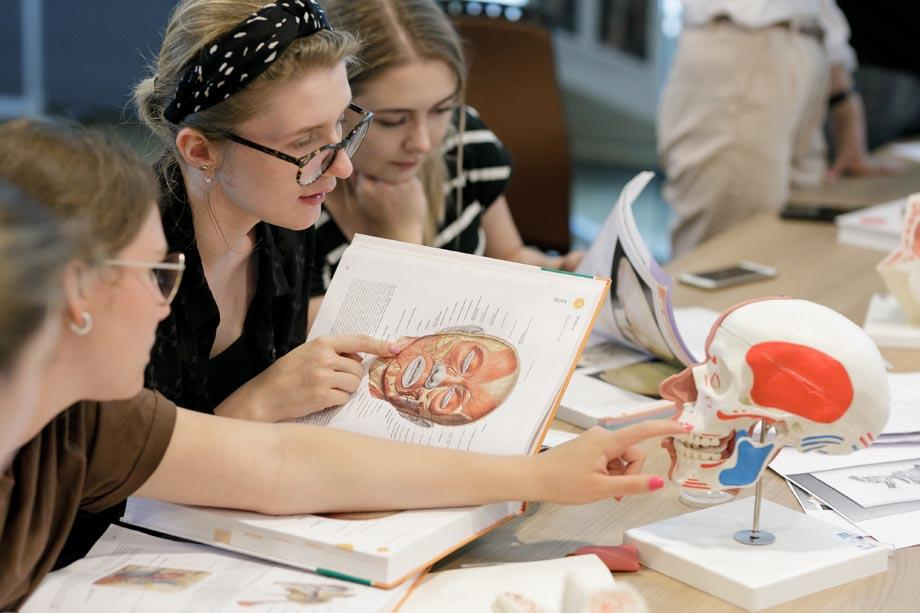
What Is a Yoga Adjustment?
Many people think a yoga adjustment means physically moving a student into a deeper version of a posture.
In reality, that is only a small part of it—and often not the most important part.
To me, a yoga adjustment is any guidance that helps a student understand their body more clearly.
Sometimes that guidance comes through your words.
Sometimes through a demonstration.
Sometimes through a prop.
And only occasionally through gentle physical touch.
When students first begin their Yoga Teacher Training, they are often surprised to hear me say,
“The best adjustment you’ll ever give might not involve your hands at all.”
At first they look confused.
By the end of the course, they completely understand.
Because teaching is not about doing more.
It is about offering exactly what the student needs.
Nothing more.
Nothing less.
Observation Comes Before Action
One thing I always tell our trainees is this:
“Before you adjust a student, learn to observe them.”
Observation is one of the greatest skills a yoga teacher can develop.
When I walk around the room, I am not searching for mistakes.
I am looking for information.
Is the student breathing comfortably?
Do they appear relaxed or anxious?
Are they forcing the posture?
Is their weight evenly distributed?
Could one simple verbal cue solve the problem?
These small observations tell me far more than the posture itself.
In fact, there are many classes where I don’t offer a single physical adjustment.
Not because students don’t need help.
But because another form of guidance serves them better.
Sometimes the most compassionate thing a teacher can do is simply allow a student to explore the posture without interruption.
Every Student Experiences Touch Differently
One lesson every yoga teacher learns with experience is that physical touch is deeply personal.
For one student, a gentle adjustment may create confidence.
For another, it may create anxiety.
Neither response is right or wrong.
They are simply different.
Our students come from different countries, cultures, families, and life experiences.
Some have experienced injuries.
Some carry emotional trauma.
Some simply prefer personal space.
As teachers, we may never know someone’s full story.
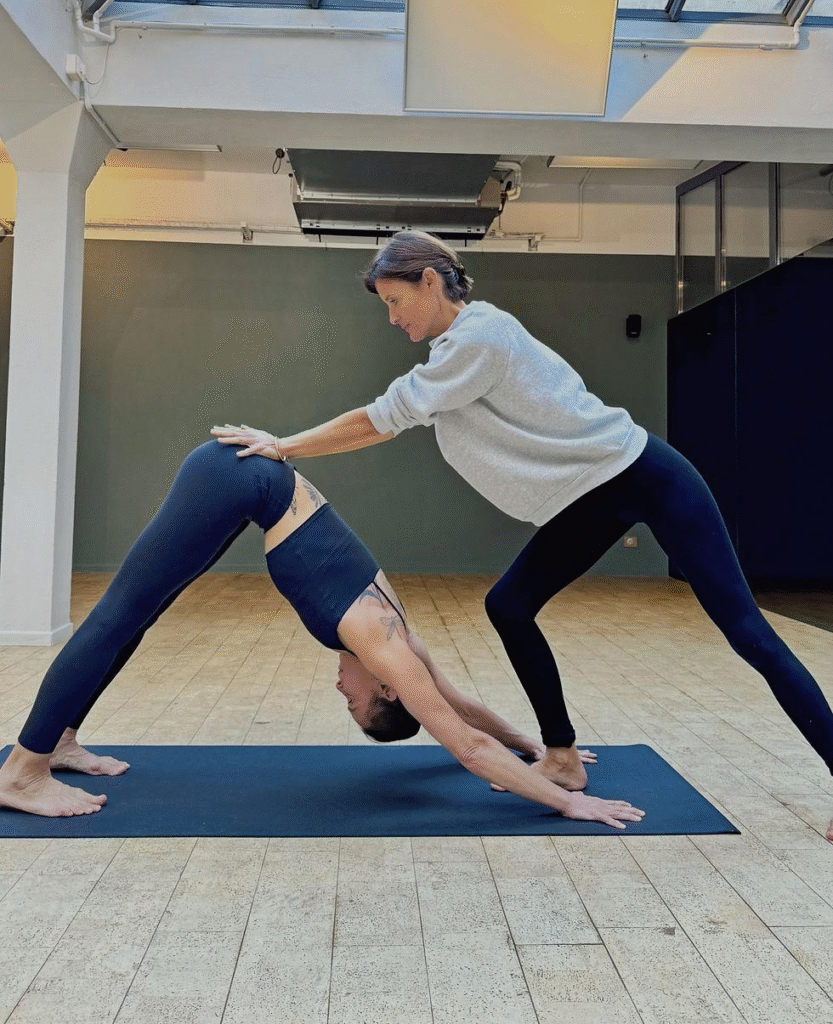
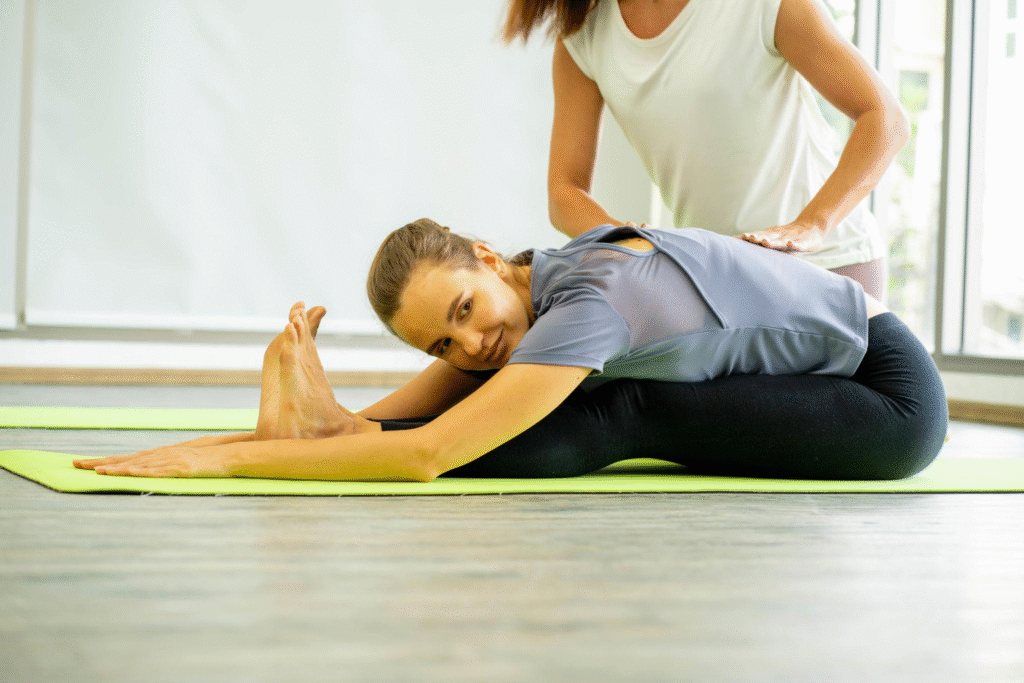
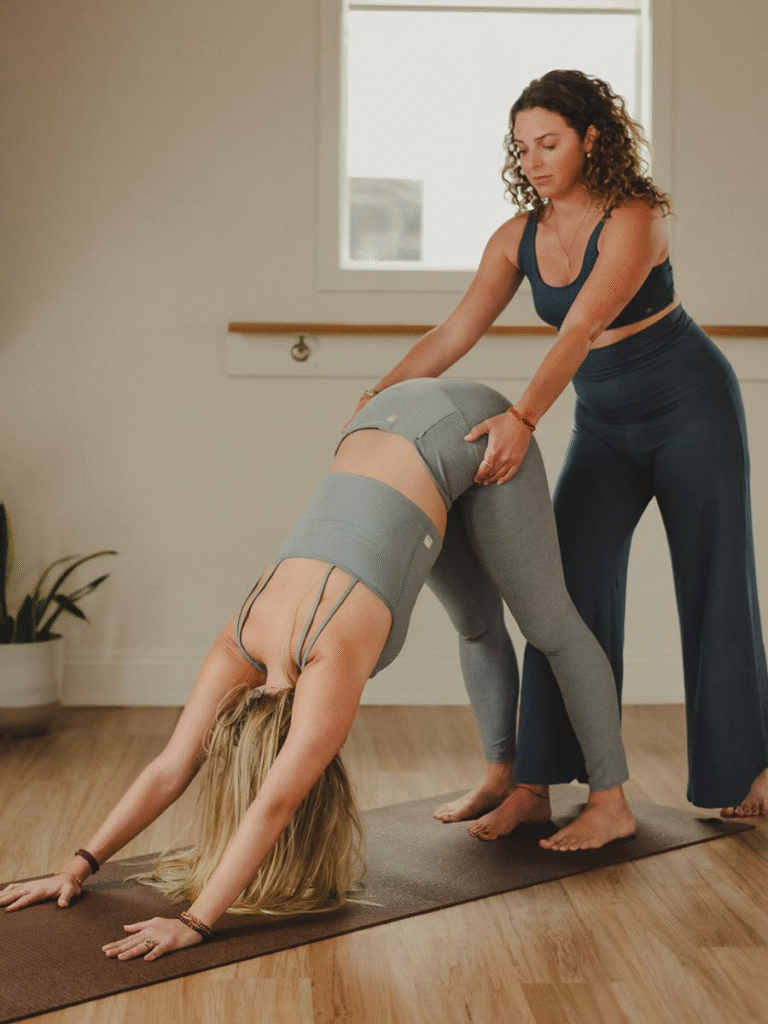
And honestly…
we don’t need to.
Respect begins with recognising that every student deserves the freedom to choose what feels comfortable for them.
That is why consent is not simply a professional guideline.
It is an expression of kindness.
Consent Is More Than Asking Permission
Modern yoga has evolved beautifully over the years.
Today, we understand something that perhaps wasn’t discussed enough in the past.
Consent is ongoing.
Just because a student accepted an adjustment yesterday doesn’t mean they want one today.
Just because someone agreed before class doesn’t mean they feel comfortable in every posture.
This is why I encourage future teachers to think of consent as a conversation rather than a one-time question.
A simple,
“Would you be comfortable if I offered a gentle adjustment?”
can completely change how a student experiences your class.
Even more importantly, we must always respect the answer.
Without hesitation.
Without disappointment.
Without taking it personally.
Students should never feel guilty for protecting their own boundaries.
In fact, when they feel safe enough to say “no,” we know we have created an environment built on trust.
Verbal Adjustments Are a Teacher’s Greatest Skill
If I had to choose only one adjustment technique for the rest of my teaching career, I would choose verbal cueing.
Words are incredibly powerful.
A single sentence can completely transform how a posture feels.
Instead of walking over and moving someone’s shoulders, I might simply say,
“Imagine creating more space between your shoulders and your ears.”
Rather than pushing someone’s hips lower in Warrior II, I might invite them to,
“Press evenly through both feet and notice how the legs become stronger.”
These cues encourage students to become curious rather than dependent.
They begin solving movement challenges themselves.
And that is one of the greatest gifts we can offer as teachers.
Because our goal isn’t to create students who need us forever.
Our goal is to help them develop awareness they can carry into every future practice.
Sometimes Demonstration Is More Powerful Than Touch
Not everyone learns in the same way.
Some students understand immediately when they hear instructions.
Others need to see the movement.
This is where visual teaching becomes incredibly valuable.
Rather than correcting every student individually, I often demonstrate a small change with my own body.
Perhaps I show how engaging the legs creates stability in Triangle Pose.
Or how softening the shoulders changes the experience of Downward Facing Dog.
Suddenly the whole room understands.
No physical adjustment was needed.
Just a clear visual example.
Teaching is not about using one method.
It is about choosing the method that helps the greatest number of people learn safely.
Coming Up in Part 3B
In the next section, we’ll explore:
- How to give safe hands-on adjustments
- When not to touch a student
- The biggest mistakes new yoga teachers make
- How props often work better than physical adjustments
- Why trust is always more important than flexibility
- How we teach ethical adjustments at Diksha Yoga School
Because the most meaningful adjustment you’ll ever give isn’t the one that changes a posture…
It’s the one that helps a student feel safe enough to trust themselves.
Part 3B: Hands-On Yoga Adjustments – Teaching Through Trust, Not Force
There is something I tell every group of trainees before we begin learning hands-on adjustments.
I ask them to stand beside their partner, take a deep breath, and keep their hands by their sides.
Then I say,
“Today, your greatest teaching tool isn’t your hands.”
They usually smile because they assume I’m joking.
After all, we’ve just started the section on physical adjustments.
Surely this is the moment we begin learning techniques.
Instead, I ask them to spend the next few minutes simply watching.
Watch how their partner breathes.
Watch how they distribute their weight.
Notice whether one shoulder sits higher than the other.
Observe whether they look relaxed or tense.
Without touching anyone, they begin seeing details they had never noticed before.
That exercise teaches one of the biggest lessons in yoga teaching.
Observation always comes before adjustment.
A teacher who can truly observe rarely needs to make dramatic corrections.
They understand what the body is asking for before they ever place a hand on a student.
The Best Adjustment Is Often the Smallest One
When people first imagine hands-on adjustments, they often picture teachers helping students move into deeper backbends or stronger stretches.
Over the years, I’ve learned that the opposite is usually true.
The most effective adjustments are often so subtle that someone watching the class might not even notice them.
Sometimes all it takes is a gentle reminder for a student to ground through the outer edge of the back foot in Warrior II.
Sometimes it’s softly encouraging the crown of the head to lengthen upward in Mountain Pose.
Sometimes it’s simply placing a reassuring hand near the shoulder to help a student feel where stability begins.
Those tiny moments often create the biggest changes.
The student doesn’t feel pushed.
They feel supported.
That is the difference between adjusting a posture and guiding a person.
Your Hands Should Never Force the Body
One of the biggest myths in modern yoga is that a deeper adjustment creates a better posture.
I couldn’t disagree more.
Our bodies are incredibly intelligent.
When they feel threatened, they instinctively protect themselves.
Muscles tighten.
Breathing becomes shallow.
The nervous system moves into a state of defence.
No meaningful learning happens from that place.
I’ve seen students pushed into stretches that looked impressive from the outside but left them feeling uncomfortable, vulnerable, or even injured.
Yoga should never ask someone to surrender their sense of safety.
As teachers, our responsibility isn’t to make postures deeper.
It’s to make students feel safer inside them.
Whenever I place my hands on someone, I remind myself of one simple question:
“Am I helping this person feel more supported?”
If the answer isn’t completely clear, I step back.
Learning to Read the Body
One of my favourite parts of teaching Yoga Teacher Training is watching students develop what I call “teacher’s eyes.”
At first, everyone notices only the obvious things.
A bent knee.
A rounded back.
A lifted shoulder.
But after days of practice, something changes.
They begin seeing much more.
They notice a student holding their breath.
They notice fingers gripping the mat too tightly.
They notice weight collapsing into one hip.
They notice tension in the jaw.
These small details tell us far more than whether a posture looks beautiful.
Because the body is constantly communicating.
The question is whether we have learned to listen.
This is why I often tell our trainees,
“Don’t just look at the posture. Look at the person inside the posture.”
That single shift changes everything.
Every Adjustment Should Have a Purpose
Before I offer any physical guidance, I quietly ask myself,
“Why am I doing this?”
If the only answer is,
“Because that’s what yoga teachers do,”
then I don’t adjust.
Every adjustment should have a clear intention.
Perhaps I’m helping someone find a stronger foundation in Tree Pose.
Perhaps I’m encouraging awareness through the feet in Triangle Pose.
Perhaps I’m helping a student feel the difference between relaxing and collapsing.
Whatever the reason, it should always serve the student’s learning—not the teacher’s habit.
Hands should never move simply because they can.
They should move because they genuinely help.
Props Often Teach Better Than Hands
This surprises many new teachers.
They spend weeks learning adjustment techniques, only to discover that a yoga block or strap often solves the problem far more effectively.
I remember a student who struggled in Triangle Pose.
She kept reaching toward the floor, and every time she did, her chest collapsed and her breathing became restricted.
Instead of adjusting her body, I quietly placed a yoga block beneath her hand.
Immediately her spine lengthened.
Her shoulders relaxed.
She smiled and said,
“That feels completely different.”
Nothing magical had happened.
We hadn’t changed her flexibility.
We had simply given her body the support it needed.
That day she learned an important lesson.
Yoga props aren’t signs of weakness.
They’re tools that help us experience the posture with greater awareness.
I often tell students,
“A yoga block is one of the wisest teachers you’ll ever meet.”
Some Students Need Encouragement More Than Correction
This is something I wish every new teacher understood.
Not every student who struggles needs another alignment cue.
Sometimes they simply need confidence.
I remember teaching a woman who apologised before almost every posture.
“I’m sorry, I’m not very good at yoga.”
After hearing this several times, I stopped correcting her completely.
Instead, I began celebrating what she was already doing well.
“Your breathing is beautiful.”
“Your balance has improved so much.”
“You stayed present through that entire sequence.”
Over the following weeks, something remarkable happened.
Her movement became more confident.
Her posture improved naturally.
Not because I gave more corrections.
Because she finally believed she was capable.
Sometimes encouragement is the most powerful adjustment we can ever offer.
Knowing When Not to Touch
One of the greatest skills a yoga teacher develops is restraint.
There are many situations where physical adjustments simply aren’t appropriate.
A student recovering from surgery.
Someone living with chronic pain.
A pregnant practitioner.
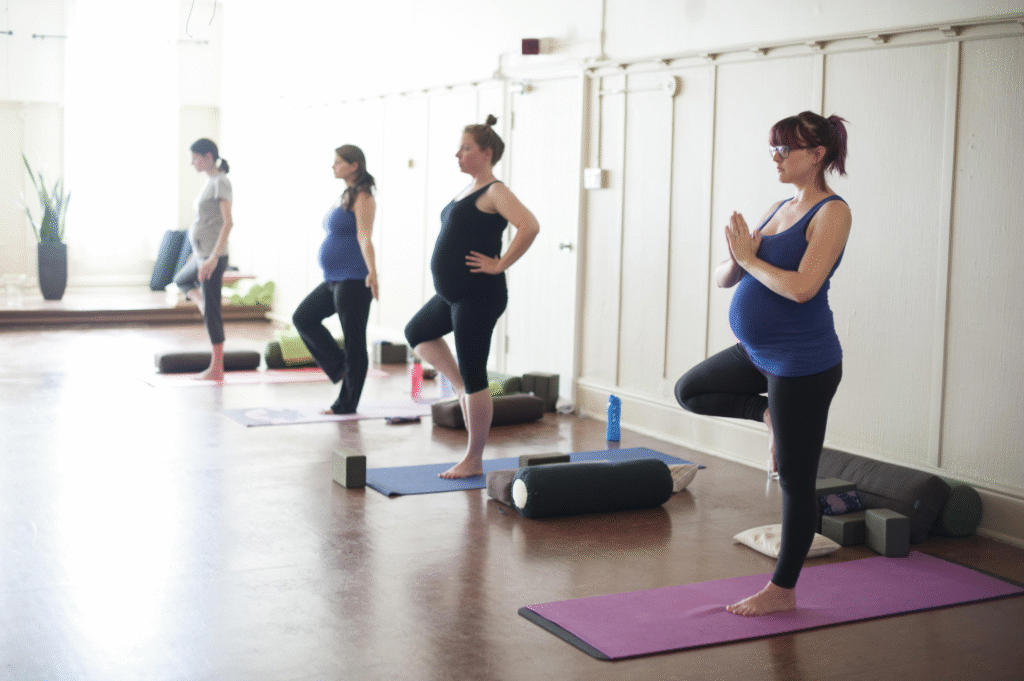
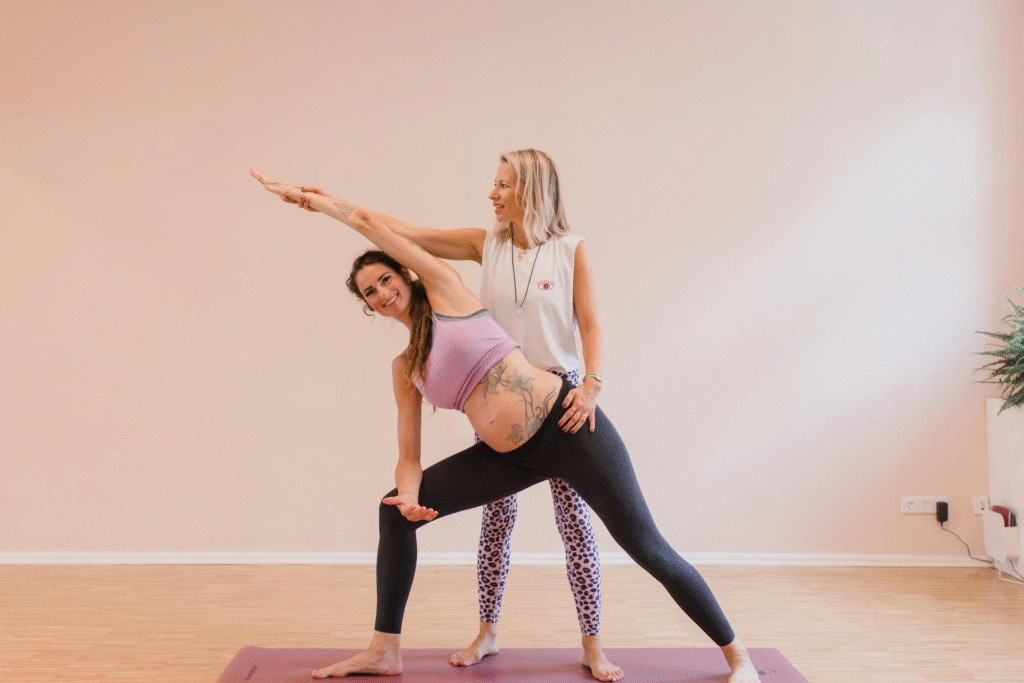
A student with hypermobile joints.
Someone who has declined physical touch.
Or perhaps a person who simply looks emotionally overwhelmed that day.
In each of these moments, kindness asks us to step back.
Yoga isn’t about proving how much we know.
It’s about responding to the person standing in front of us.
Every class is different.
Every body is different.
Every day is different.
And that is exactly what makes teaching such a beautiful practice.
Trust Is Built One Class at a Time
When students walk into a yoga room, they bring much more than their bodies.
They bring their fears.
Their hopes.
Their injuries.
Their stress.
Their life experiences.
Every interaction we have with them either strengthens or weakens their trust.
Trust isn’t created through impressive adjustments.
It’s created through consistency.
Through respect.
Through listening.
Through asking permission.
Through accepting “no” without hesitation.
I’ve had many students tell me years later that they returned to my classes because they always felt safe.
To me, there is no greater compliment.
Because students may forget the sequence you taught.
They may forget the playlist.
They may even forget the posture.
But they will always remember how you made them feel.
And that is the true art of teaching.
Part 3C: Becoming a Yoga Teacher Students Trust
If there is one thing I’ve learned after many years of teaching Yoga Teacher Trainings, it is this:
Students don’t remember every adjustment you gave them.
They remember how you made them feel.
They remember whether they felt safe enough to ask questions.
They remember whether they felt embarrassed after being corrected.
They remember whether your guidance helped them become more confident or more self-conscious.
That is why I believe adjustments are never just physical.
They are emotional.
Every time we choose our words, offer a demonstration, or place our hands on a student, we are shaping their experience of yoga.
As teachers, that is a responsibility we should never take lightly.
The Most Common Mistakes New Yoga Teachers Make
One of my favourite parts of every Yoga Teacher Training is watching students teach their very first class.
They are excited.
A little nervous.
Sometimes they try so hard to do everything perfectly that they forget the simplest part of teaching.
Connecting with people.
Over the years, I’ve noticed a few patterns that almost every new teacher experiences.
And honestly…
I experienced many of them myself.
Trying to Correct Everyone
In the beginning, many teachers feel responsible for fixing every posture they see.
The moment someone lifts a shoulder or bends a knee differently, they immediately want to correct it.
I gently remind them,
“Not every difference is a mistake.”
Sometimes the posture is working beautifully for that person’s body.
Sometimes the student is simply exploring.
Sometimes the best teaching happens when we allow people to discover the answer themselves.
Learning when not to adjust is one of the biggest signs that a teacher is growing.
Giving Too Many Instructions
Have you ever been in a yoga class where the teacher spoke continuously?
Lift your chest.
Relax your shoulders.
Straighten your leg.
Engage your core.
Lengthen your spine.
Soften your jaw.
Breathe.
Smile.
Before long, the student is no longer experiencing yoga.
They’re simply trying to remember a list of instructions.
I’ve learned that one thoughtful cue often creates far more change than ten different corrections.
Students need space to feel.
Not just to listen.
Believing Every Student Should Look the Same
This is probably the biggest mistake I see.
Two students can practice the same posture beautifully while looking completely different.
One may need a wider stance.
Another may naturally bend the knee less.
Someone with long legs will move differently from someone with a shorter torso.
That doesn’t mean one posture is better.
It simply means their bodies tell different stories.
As teachers, our role isn’t to erase those differences.
It’s to honour them.
Forgetting to Celebrate Progress
When teachers first begin, they often focus only on what needs improvement.
It’s understandable.
We want to help.
But students also need encouragement.
Sometimes I’ll notice a trainee give five corrections without saying a single positive word.
After class, I’ll ask,
“Did you notice how much your student improved today?”
Often they smile and say,
“I didn’t even think about that.”
Encouragement builds confidence.
Confidence builds trust.
And trust allows real learning to happen.
Confidence Doesn’t Come From Memorising Adjustments
Many students ask me,
“How long will it take before I feel confident teaching?”
I always tell them the same thing.
Confidence isn’t something you suddenly wake up with one morning.
It grows quietly.
One class at a time.
One conversation at a time.
One student at a time.
The teachers who appear calm and confident today were once beginners too.
They also forgot cues.
They also felt nervous.
They also questioned themselves.
Experience doesn’t remove uncertainty.
It teaches us how to move through it with kindness.
Every Student Is Your Teacher
One of the greatest gifts yoga has given me is the understanding that teaching is never one-sided.
People often tell me,
“You must have taught thousands of students.”
That may be true.
But those students have taught me just as much.
One student taught me patience.
Another taught me humility.
Someone recovering from an injury taught me that healing is never linear.
A mother returning to yoga after many years reminded me how courageous it is simply to begin again.
Every person who walks into the yoga room brings a lesson.
When we remain open to learning from them, we continue growing as teachers ourselves.
That is why I still consider myself a student.
And I hope I always will.
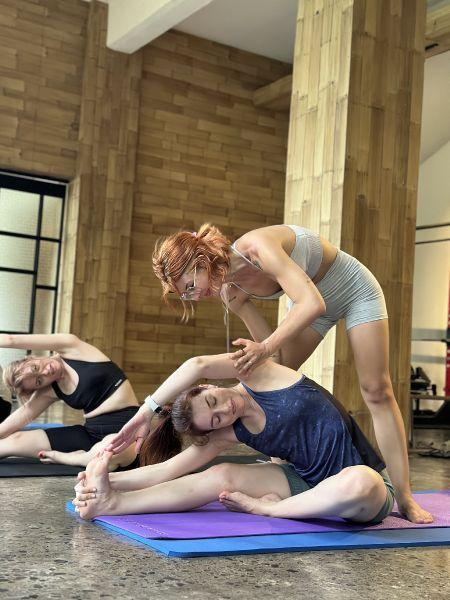
How We Teach Adjustments at Diksha Yoga School
At Diksha Yoga School, we don’t begin by teaching students where to place their hands.
We begin by teaching them how to observe.
Before anyone offers a physical adjustment, they learn to watch movement carefully.
They learn to notice breathing patterns.
They learn to recognise stability.
They learn to understand anatomy.
Only then do we introduce gentle hands-on guidance.
Our trainees spend time practising with partners, discussing different body types, and exploring how small changes can completely transform a posture.
They also learn something equally important.
Sometimes the wisest adjustment is not touching at all.
Instead, a clear verbal cue, a simple demonstration, or placing a yoga block beneath a student’s hand creates a safer and more meaningful experience.
By the end of the course, our students understand that teaching isn’t about performing impressive adjustments.
It’s about helping people move with confidence, awareness, and ease.
The Philosophy We Hope Every Teacher Carries Forward
Long after students receive their Yoga Alliance certificate, I hope they remember one simple idea.
People don’t come to yoga because they want perfect alignment.
They come because they want to feel better.
Some arrive carrying stress from work.
Some are recovering from injuries.
Some are searching for confidence.
Others simply need one quiet hour where they can breathe.
As teachers, we have the privilege of becoming part of that journey.
That privilege deserves humility.
Every adjustment should communicate,
“I see you.”
“I respect your body.”
“I will never ask you to move beyond what feels safe.”
When students feel that level of trust, something beautiful happens.
They stop worrying about getting every posture right.
They begin enjoying the practice.
And in my experience…
that is where yoga truly begins.
A Lesson I Still Carry With Me
I often think back to the student who thanked me for listening when she said she didn’t want physical adjustments.
She probably doesn’t realise how much she changed my teaching.
Because of her, I became more mindful.
I asked permission more often.
I listened more carefully.
I realised that respect is the foundation of every adjustment.
Years later, that lesson continues to shape every Yoga Teacher Training we offer.
Sometimes our greatest teachers aren’t the ones standing at the front of the room.
Sometimes they’re quietly practising on the mat beside us.
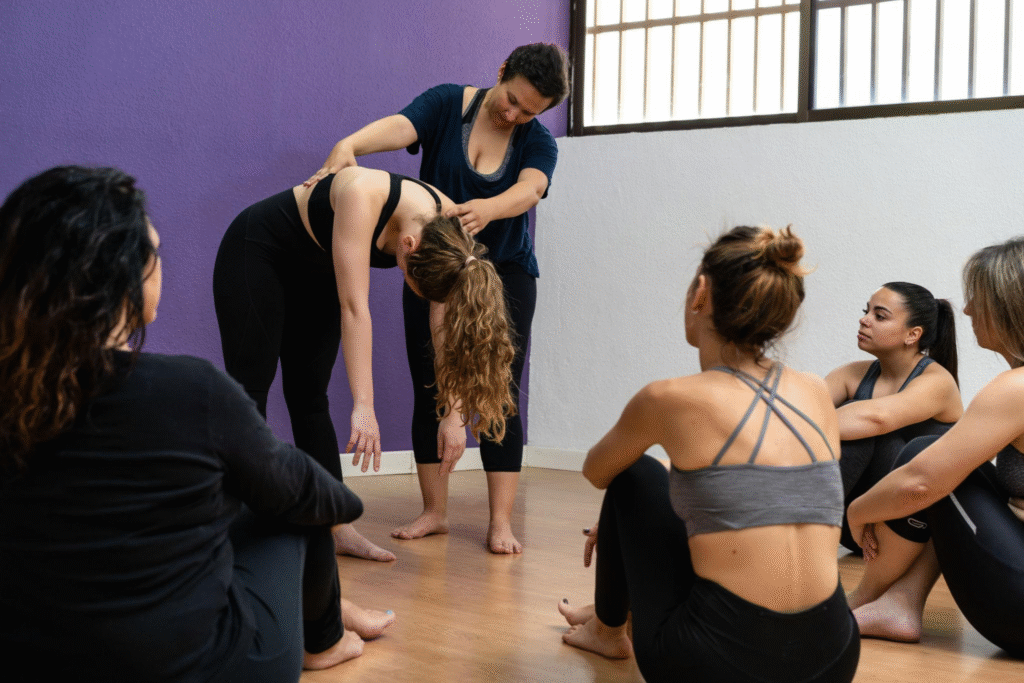
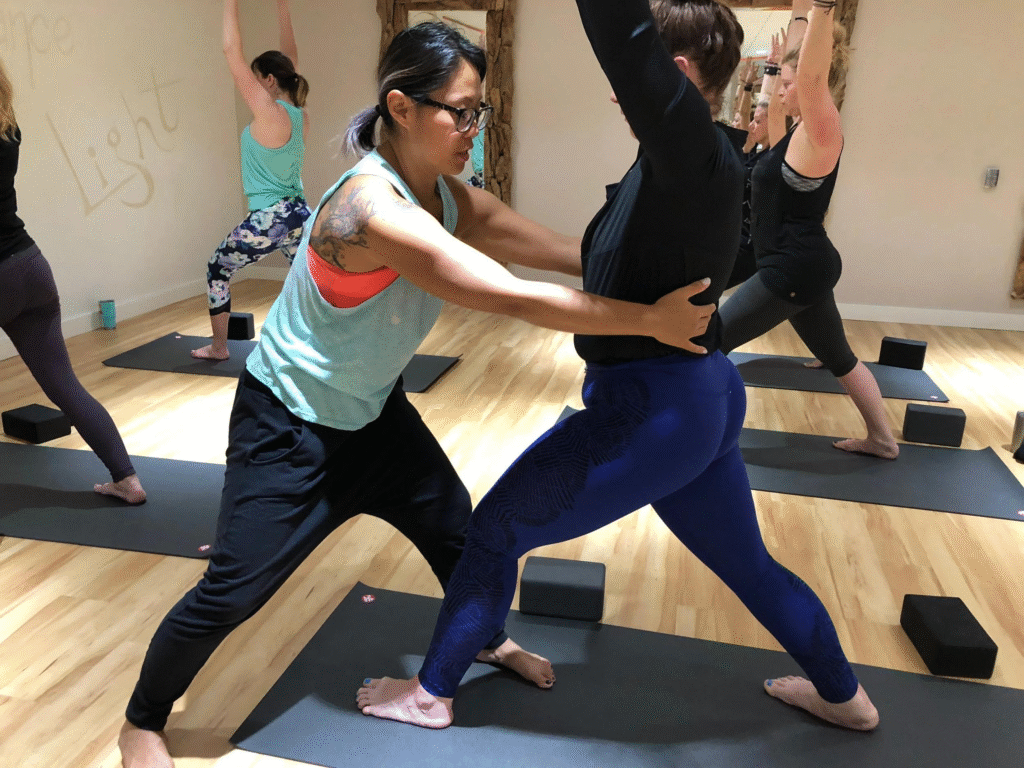
Part 4: Alignment in Standing Poses – Where Every Strong Yoga Practice Begins
If there is one thing I have learned after teaching thousands of yoga students over the years, it is this:
Almost every challenging posture becomes easier when your foundation is strong.
Many students arrive at their first yoga class dreaming about handstands, arm balances, or deep backbends. That’s completely natural—we’re often inspired by the beautiful images we see online. But after years of teaching Yoga Teacher Trainings, I’ve noticed something interesting.
The students who become the strongest teachers are rarely the ones who rush into advanced poses.
They are the ones who learn how to stand.
That may sound simple, but standing well is one of the greatest lessons yoga offers.
Every standing posture teaches you something valuable. It teaches you how to root into the earth without becoming rigid. It teaches you how to activate your muscles without creating tension. It teaches you how to stay steady while breathing calmly, even when the posture becomes challenging.
These are not just lessons for yoga.
They are lessons for life.
At Diksha Yoga School, we spend a great deal of time helping students understand these foundations because every inversion, every arm balance, and every advanced posture is built upon them.
Your Feet Tell the Whole Story
Whenever I walk around the yoga shala during teacher training, I don’t look at people’s hands first.
I look at their feet.
Why?
Because the feet tell me almost everything I need to know.
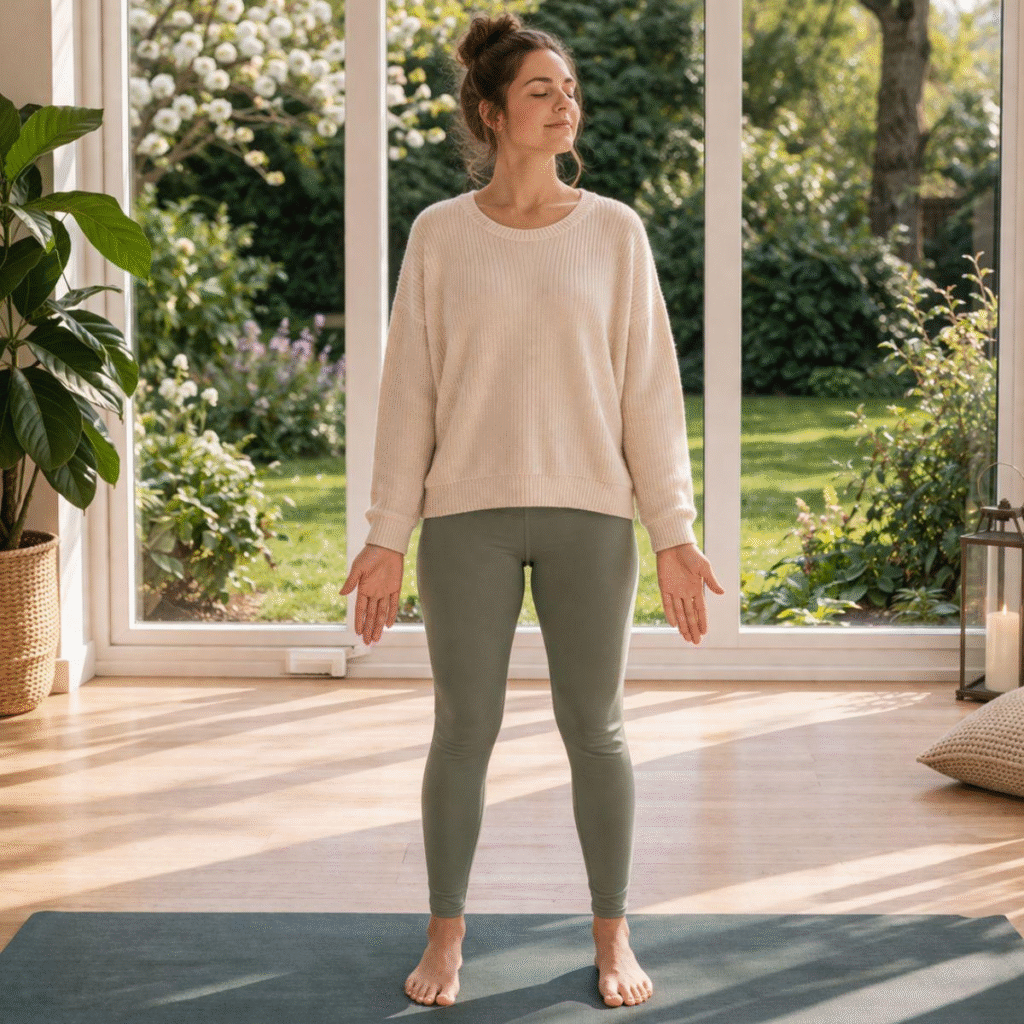
If someone is collapsing into the inner arches, I already know the knees will probably drift inward.
If they are putting all their weight into their heels, I know balance will become more difficult.
If they grip the floor with their toes, I know unnecessary tension is travelling all the way up into the hips and shoulders.
Our body works as one connected system.
Small habits at the feet often become much bigger patterns higher in the body.
That’s why good alignment always begins from the ground up.
Mountain Pose Isn’t “Just Standing”
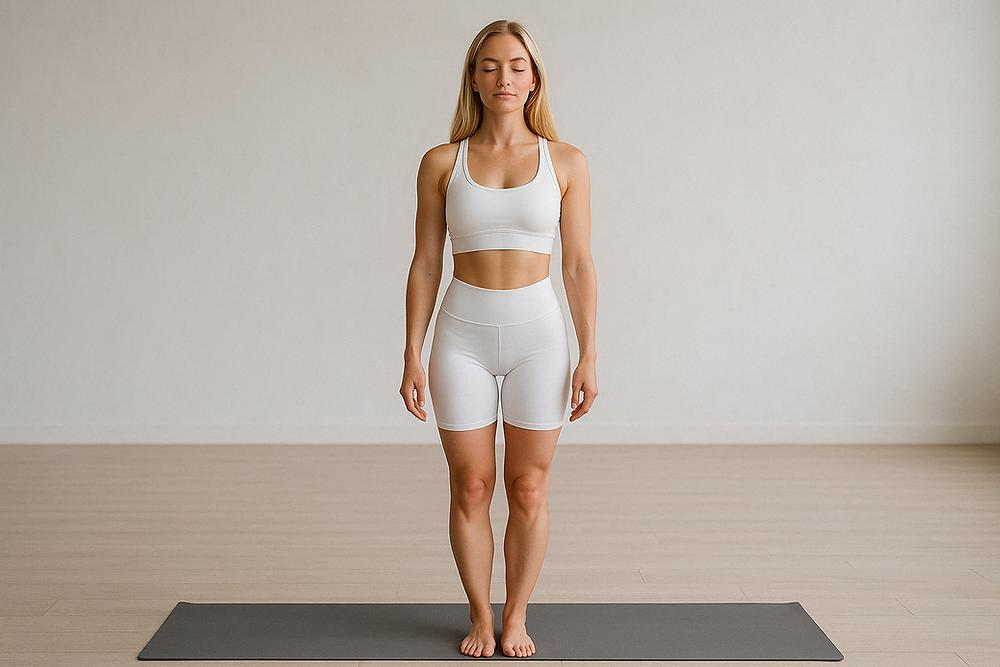
One of the biggest surprises for many students is how much they learn from Tadasana (Mountain Pose).
On the first day of training, some students smile and ask,
“Are we really spending so much time just standing?”
A few weeks later, those same students understand why.
Mountain Pose teaches awareness.
It teaches patience.
It teaches balance.
Most importantly, it teaches you to feel your own body instead of simply copying someone else’s.
When you truly understand Mountain Pose, every other posture starts making sense.
My Favourite Cue for Standing Poses
Instead of telling students,
“Stand straight,”
I often invite them to imagine something different.
I ask them to picture themselves as a mountain.
The feet are deeply rooted into the earth.
The legs become steady like the base of the mountain.
The spine rises effortlessly toward the sky.
The shoulders soften.
The breath flows naturally.
Suddenly the posture changes.
Not because they forced their body into position…
but because they created stability from within.
This is the difference between doing yoga and experiencing yoga.
The Goal Is Never a Perfect Shape
This is one of the first beliefs we gently challenge during our Yoga Teacher Training.
Yoga is not about making everyone look identical.
If twenty students stand in Warrior II, I don’t expect twenty identical Warriors.
Why?
Because no two bodies are identical.
Some students have long femurs.
Others have tighter hips.
Some have previous injuries.
Some have naturally greater mobility.
A good teacher doesn’t ask,
“Why doesn’t your Warrior look like mine?”
A good teacher asks,
“How can I help your body find its strongest, safest expression of this posture?”
That question changes everything.
Alignment Is About Feeling, Not Just Looking
Sometimes a posture looks beautiful in a photograph but feels uncomfortable in the body.
Other times a pose may not look “Instagram perfect,” yet it feels incredibly stable, spacious, and relaxed.
As teachers, we learn to value the second experience far more.
Because yoga isn’t a performance.
It’s a conversation between your body, your breath, and your awareness.
When those three are working together, alignment naturally improves.
Warrior I (Virabhadrasana I): Finding Strength Without Losing Ease
I still remember one of my students asking me during teacher training,
“Manisha, why does Warrior I feel so much harder than it looks?”
I smiled because almost every teacher has asked that question at some point.
Warrior I isn’t difficult because of the legs.
It’s difficult because it asks the entire body to work together.
Your feet are grounding.
Your legs are supporting.
Your hips are finding balance.
Your core is stabilizing.
Your spine is lifting.
Your arms are reaching.
And through all of this…
your breath should still remain calm.
That is yoga.
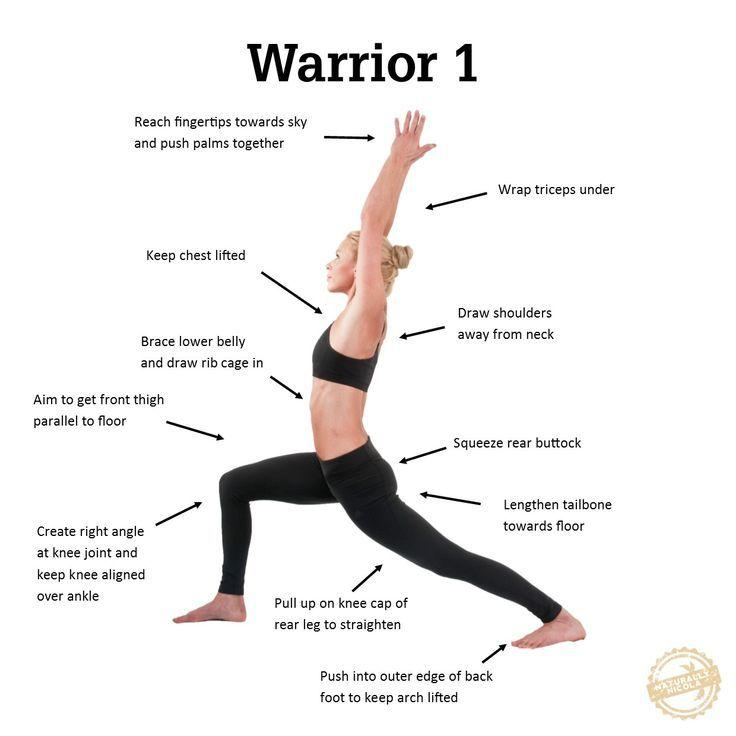
Many beginners think the goal is to bend the front knee as deeply as possible. They almost force themselves into the posture because they think “deeper” means “better.”
But after years of teaching, I’ve learned that depth is never the priority.
Stability comes first.
When I walk around the room, I often remind students,
“Don’t worry about how deep your lunge is. First ask yourself… can you breathe easily?”
If the answer is yes, you’re already practicing well.
The Most Common Mistake I See
Almost every teacher has seen this happen.
A student steps into Warrior I and immediately arches the lower back while trying to lift the arms higher.
From the outside the pose looks impressive.
Inside the body…
the lower back is carrying far more work than it should.
Instead of asking students to lift higher, I encourage them to grow taller.
There is a beautiful difference between reaching upward and collapsing backward.
Once students understand this, Warrior I suddenly feels lighter.
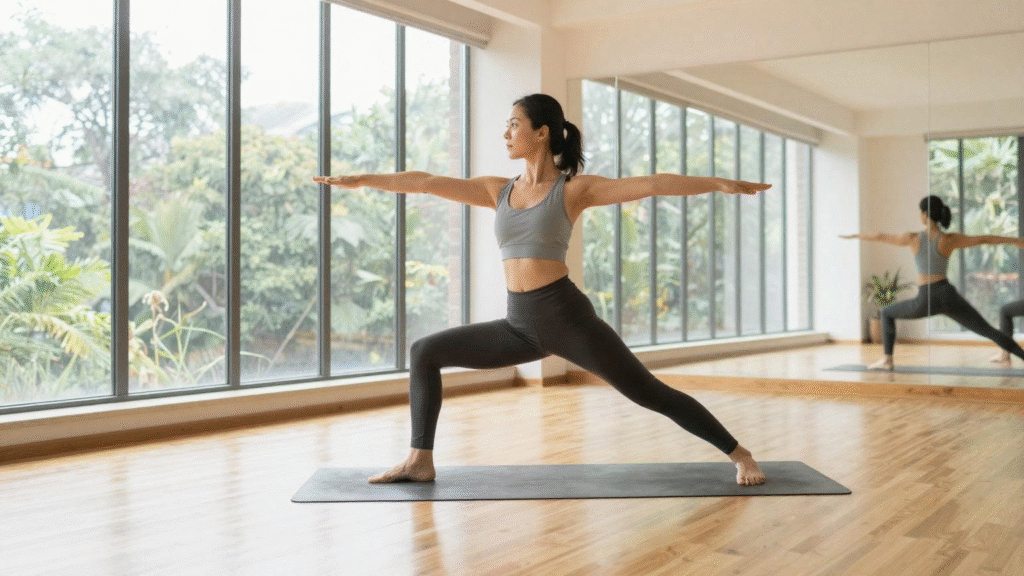
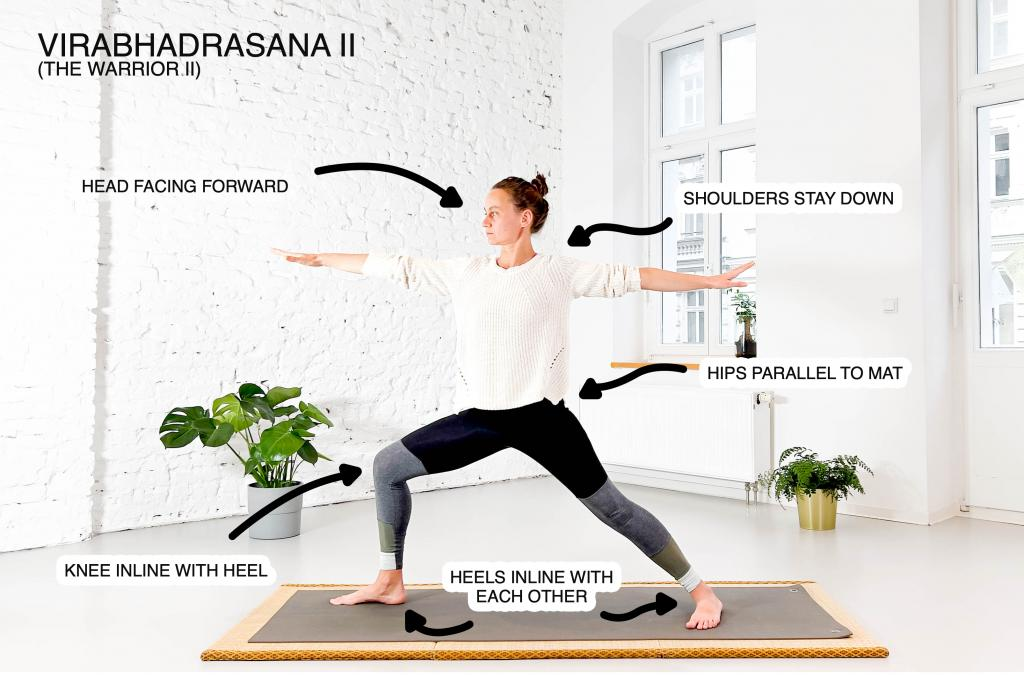
Warrior II (Virabhadrasana II): The Teacher That Never Lies
If Mountain Pose teaches awareness…
Warrior II teaches honesty.
This posture reveals everything.
It tells you where you avoid effort.
It shows you which leg is stronger.
It shows you whether you’re truly present or simply waiting for the pose to end.
I often tell our students,
“Stay in Warrior II for just a few extra breaths and notice what your mind starts saying.”
Usually the conversation becomes interesting.
“I can’t.”
“My legs are shaking.”
“This is uncomfortable.”
And then, a few breaths later…
they realize they are much stronger than they believed.
Yoga has a beautiful way of introducing us to ourselves.
Alignment Begins at the Feet
One of the first things I observe isn’t the front knee.
It’s the back foot.
Many students forget about it completely.
The moment the back leg becomes passive, the entire posture loses its energy.
Imagine trying to build a house on one strong pillar and one weak pillar.
Eventually the structure becomes unstable.
The same thing happens in Warrior II.
When both legs actively support the body, the posture suddenly feels balanced instead of exhausting.
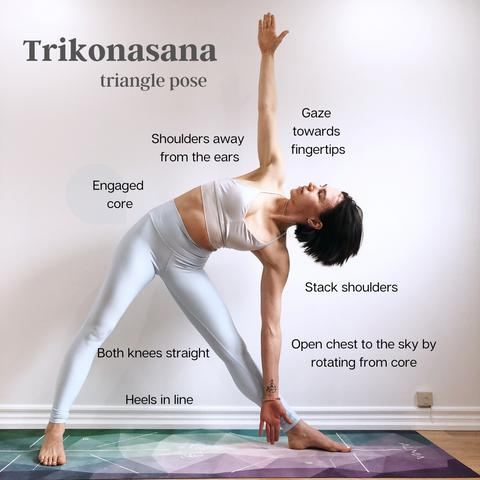
Triangle Pose (Trikonasana): Less Is Often More
Triangle Pose taught me an important lesson as a teacher.
Students are usually far more interested in touching the floor than lengthening the spine.
I understand why.
Touching the floor feels like an achievement.
But reaching the floor isn’t actually the purpose of the pose.
I’ve watched students sacrifice beautiful spinal alignment simply to place their fingertips on the mat.
When I quietly place a yoga block beneath their hand, they sometimes look disappointed.
Then something wonderful happens.
Their chest opens.
Their breathing becomes easier.
Their neck relaxes.
Their spine becomes long again.
Suddenly they understand.
The yoga block wasn’t making the pose easier.
It was helping them experience the posture properly.
This is why I often remind future teachers,
“Never remove someone’s ego by taking away their challenge. Remove their struggle by improving their alignment.”
Chair Pose (Utkatasana): Where Strength Meets Humility
Chair Pose has a funny way of making everyone humble.
Even experienced practitioners sometimes begin smiling after a few breaths because their legs start shaking.
Students often ask me,
“Is shaking bad?”
Not at all.
Shaking simply tells us the muscles are learning.
The important question is whether the shaking comes from healthy effort or poor alignment.
When students shift too much weight into the toes, the knees begin working much harder than necessary.
A tiny adjustment changes everything.
I simply invite them to sit back a little more.
Immediately the heels become heavier.
The hips engage.
The spine lengthens.
And the posture becomes surprisingly comfortable.
Small adjustments often create the biggest transformations.
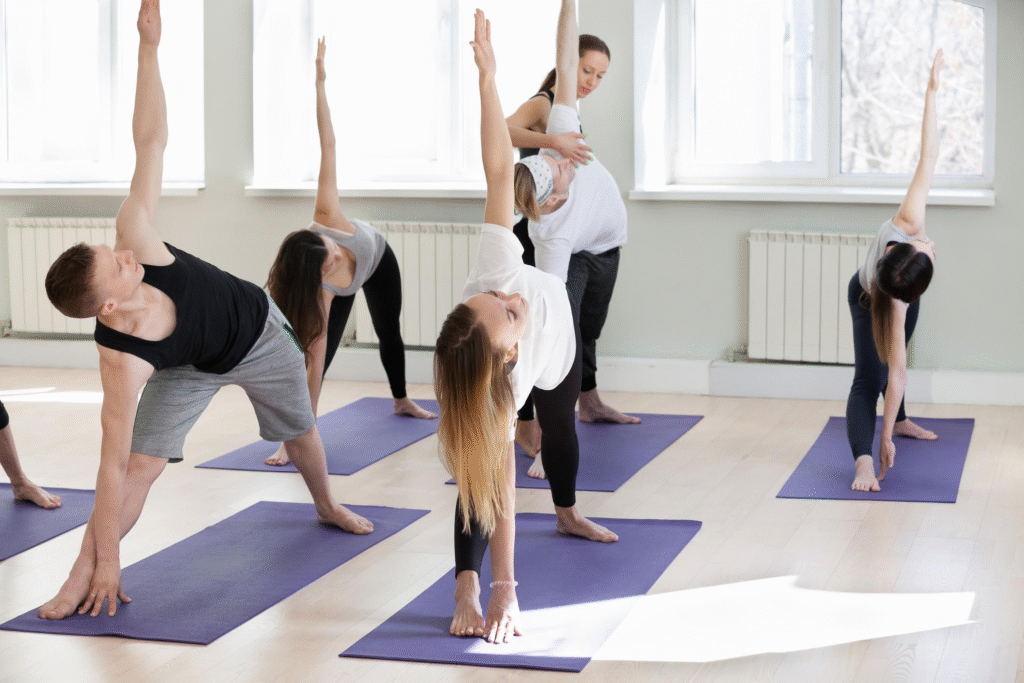
Teaching Isn’t About Correcting Everyone
This is one of the biggest lessons we share during our Yoga Teacher Training.
New teachers often feel responsible for correcting every student in every class.
I used to feel the same many years ago.
With experience, I discovered something different.
Sometimes the greatest gift we can give a student is space.
Space to explore.
Space to notice.
Space to make small mistakes.
Because awareness grows much faster through personal experience than constant correction.
Instead of immediately saying,
“Move your foot here.”
I might simply ask,
“What do you notice in your feet right now?”
Almost every time…
the student finds the answer themselves.
That is real learning.
Your Eyes Become Your Greatest Teaching Tool
When students first begin teaching, they naturally focus on remembering sequences.
As they gain confidence, something changes.
They begin seeing.
They notice when someone’s shoulders are holding tension.
They notice when one hip sits higher than the other.
They notice when breathing becomes shallow.
They notice confidence.
They notice fear.
These observations don’t come from memorizing anatomy books.
They come from presence.
Teaching yoga isn’t only about seeing postures.
It’s about seeing people.
And once you begin teaching from that place, your classes naturally become more meaningful.
What We Teach at Diksha Yoga School
One of the things our students often tell us after graduation is that they stopped seeing yoga as a collection of poses.
Instead, they began seeing movement.
They began seeing breath.
They began understanding people instead of memorizing alignment rules.
That is exactly our intention.
Throughout the training, we encourage students to ask questions.
Why does this posture feel different today?
Why does one student need a block while another doesn’t?
Why does someone’s breathing change in Warrior II?
These conversations help future teachers develop confidence—not because they memorize hundreds of cues, but because they learn to observe, understand, and respond with compassion.
When you teach from understanding rather than habit, every class becomes unique, and every student feels seen.
Part 5: Forward Bends – Learning to Let Go Without Forcing the Body
There is something beautifully quiet about forward bends.
Unlike Warrior poses that ask us to be strong and courageous, forward folds invite us to slow down. They encourage us to listen instead of achieving, to soften instead of striving. Yet, over the years, I have noticed that these are the very poses where students are most likely to force themselves.
I can’t count how many times I’ve seen someone pull on their feet, round their spine, hold their breath, and proudly say,
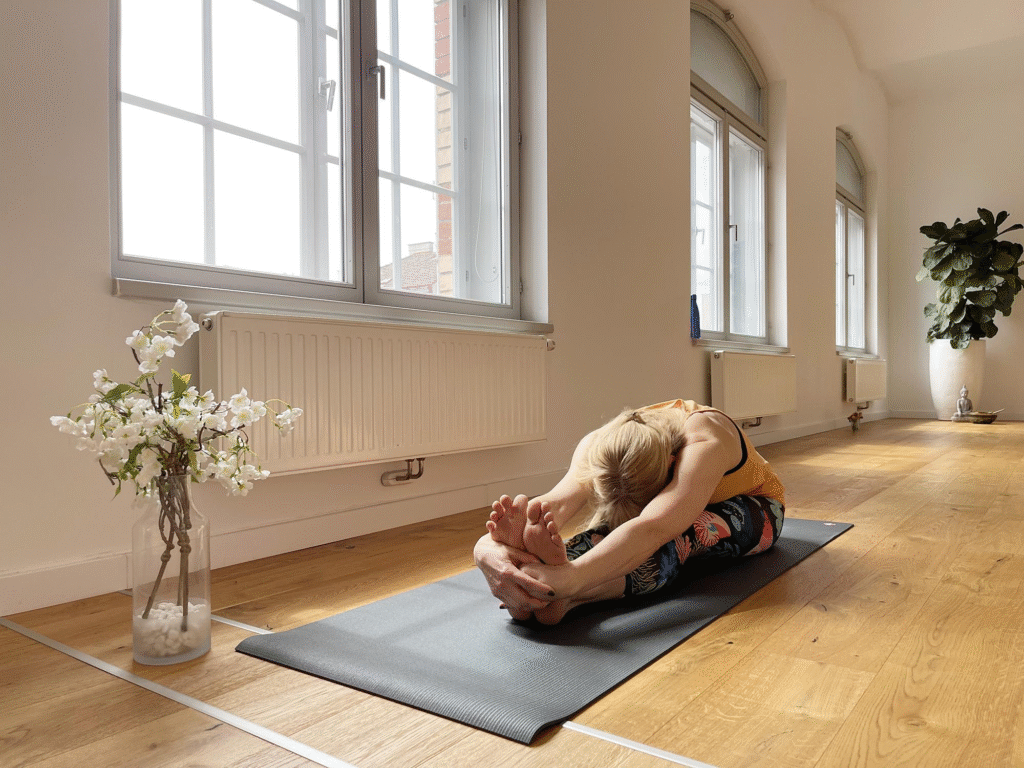
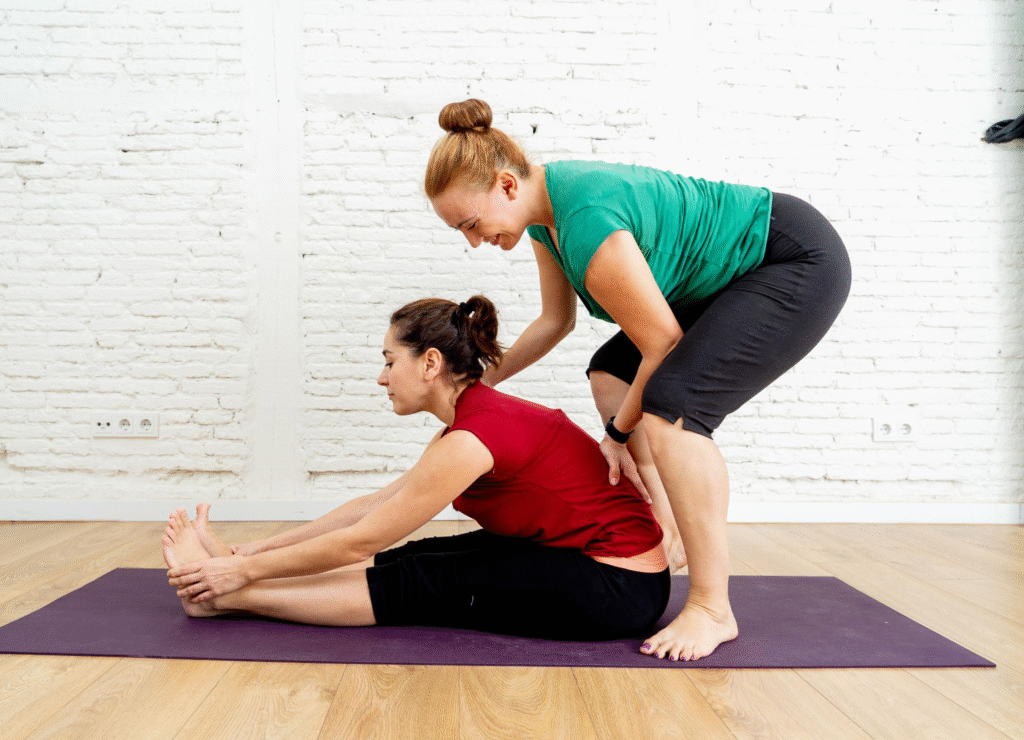
“Look, I can touch my toes!”
I always smile because touching your toes has never been the goal of yoga.
If reaching your toes means your back is collapsing, your neck is tense, and your breathing has disappeared, then you’ve missed the real experience of the posture.
One of the most valuable lessons yoga teaches us is this:
The destination is never more important than the journey.
Forward bends remind us of that every single day.
One Lesson I Wish Every Student Knew
When students first join our Yoga Teacher Training, many believe tight hamstrings are the biggest obstacle in forward folds.
Surprisingly, they usually aren’t.
More often than not, the challenge comes from trying to move from the wrong place.
Instead of hinging from the hips, students round their lower back.
Instead of creating length, they create compression.
The body isn’t resisting because it lacks flexibility.
It’s simply asking for a different approach.
I often place my hands gently on a student’s hips and say,
“Imagine your pelvis is a bowl of water. Slowly pour the water forward.”
Almost instantly, something changes.
The spine becomes longer.
The chest stays open.
The breath relaxes.
And suddenly the posture feels completely different.
Sometimes a simple image teaches more than ten technical instructions.
Flexibility Is Earned Through Patience, Not Force
This is probably one of the biggest misunderstandings in modern yoga.
Many people believe flexibility comes from stretching harder.
In reality, flexibility grows when the body feels safe.
Think about how your shoulders tighten when you’re stressed.
Or how your jaw clenches without you noticing.
The same thing happens throughout the body.
When we force a stretch, our nervous system often responds by protecting us.
The muscles tighten even more.
But when we breathe slowly, move mindfully, and allow time, the body begins to trust the movement.
That trust creates space.
And that space is where flexibility naturally develops.
This is why I often remind students,
“Be patient with your body. It has been carrying you through life long before you stepped onto a yoga mat.”
Uttanasana (Standing Forward Fold): More Than Touching the Floor
Whenever I teach Uttanasana, I invite students to forget about their hands for a moment.
Instead, I ask them to notice their spine.
Is it long?
Is the breath moving freely?
Are the shoulders relaxed?
Most people immediately focus on reaching the floor.
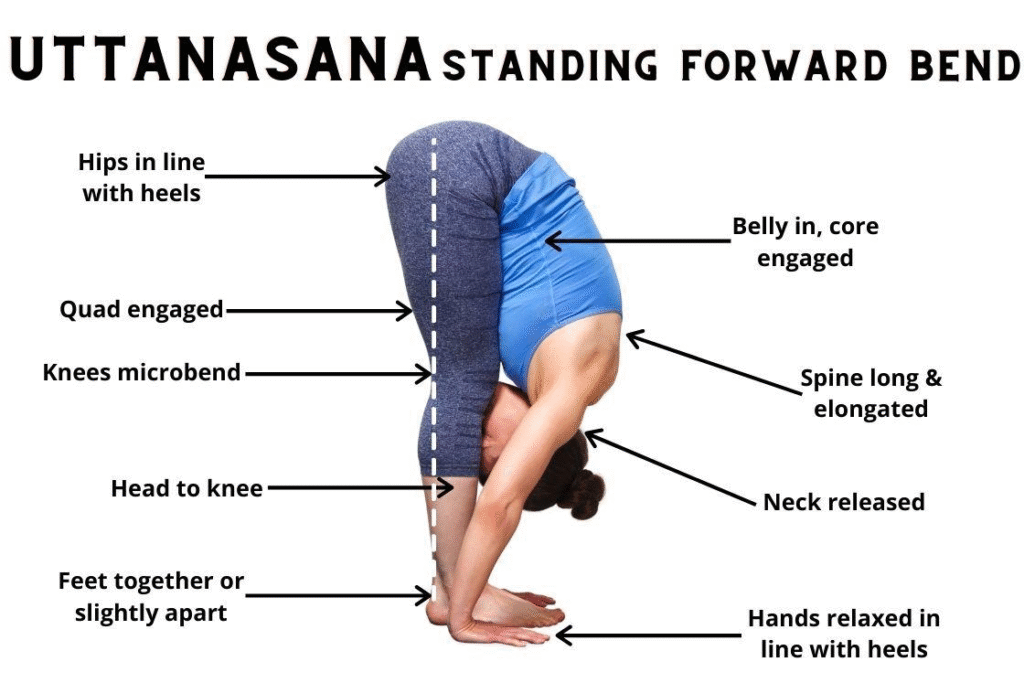
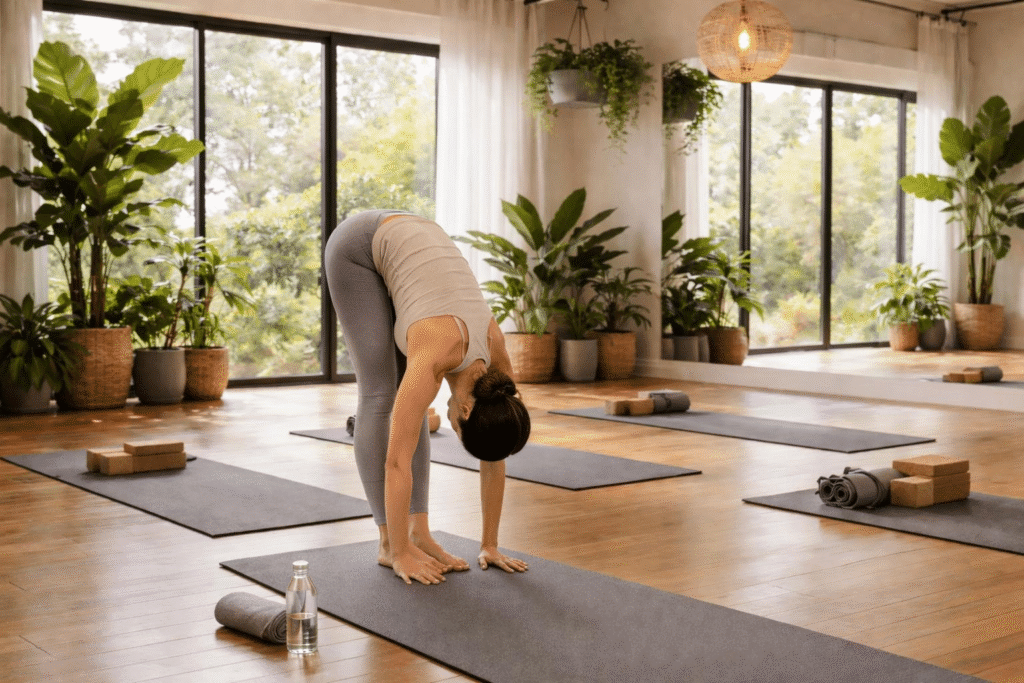
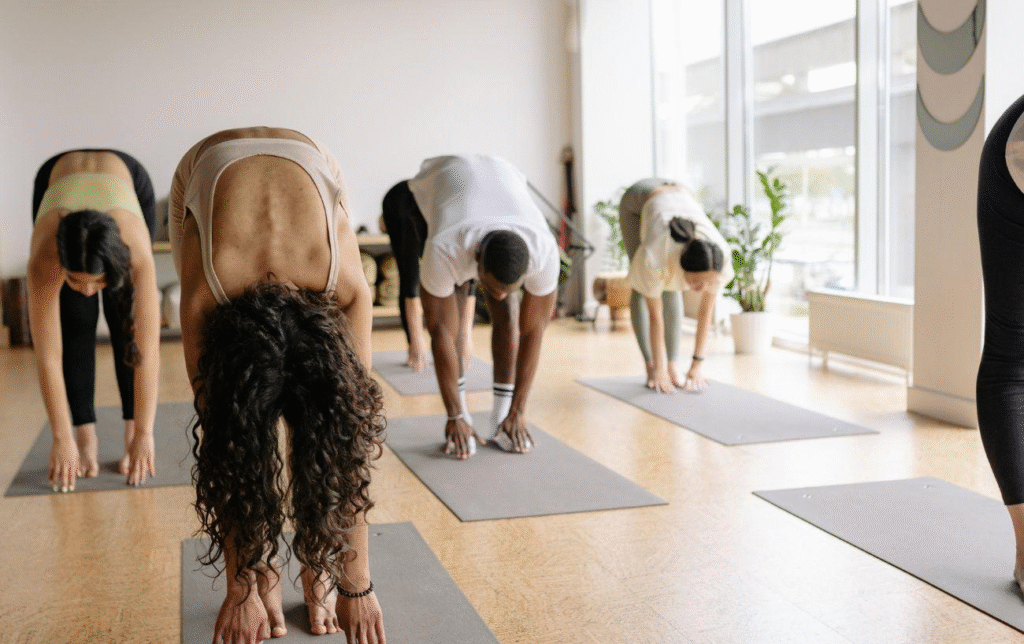
But I would much rather see someone with bent knees and beautifully long spine than straight legs with a rounded back.
There is no prize for touching the mat.
The real reward is moving with awareness.
One of my favourite reminders during this pose is,
“Let gravity do the work. You don’t have to pull yourself deeper.”
Yoga becomes much easier when we stop fighting gravity and begin working with it.
Bent Knees Are Not a Sign of Weakness
I remember a student who apologized every morning because she couldn’t keep her legs straight in forward folds.
She thought she was “doing yoga wrong.”
After a few days, I asked her to bend her knees generously.
At first she hesitated.
Then something beautiful happened.
Her spine lengthened for the first time.
Her breathing softened.
The tension disappeared from her face.
When she slowly came out of the posture, she smiled and said,
“That felt easier… and deeper.”
Exactly.
Sometimes bending the knees isn’t making the posture easier.
It’s making the posture wiser.
This is why, at Diksha Yoga School, we encourage students to let go of comparison and listen to what their own body is asking for.
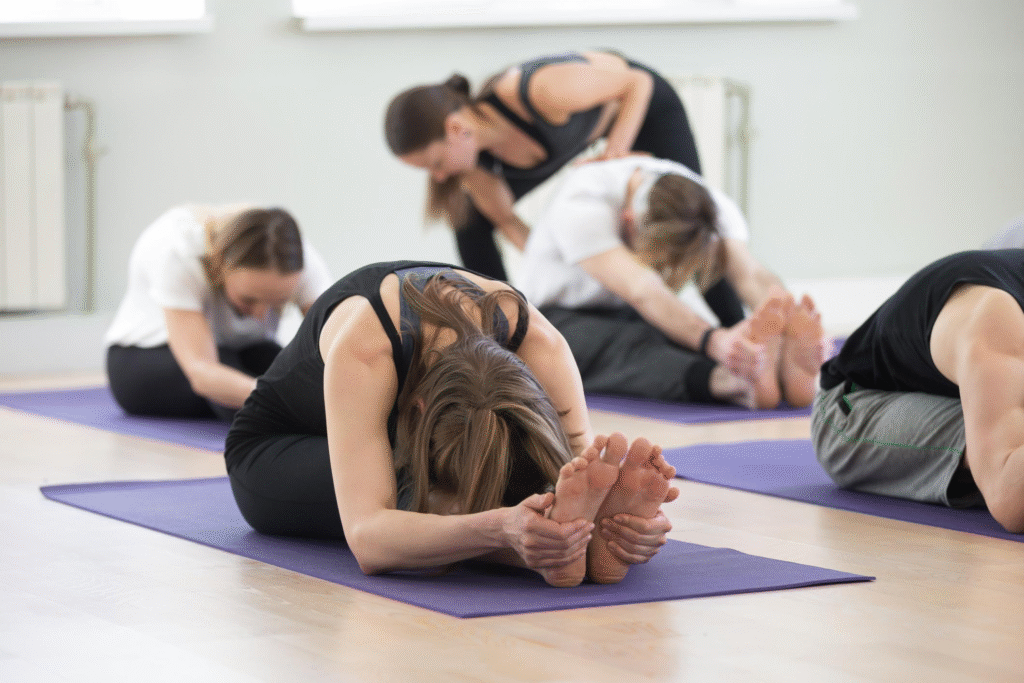
Paschimottanasana (Seated Forward Fold): A Conversation With Yourself
Paschimottanasana is often called one of the great calming postures in yoga.
But if you’ve ever watched beginners practice it, you’ll know it rarely looks calm.
People pull on their feet.
They strain their neck.
Their shoulders creep toward their ears.
And somewhere along the way, they forget to breathe.
Whenever I teach this posture, I ask students to imagine they are folding over their legs with curiosity rather than ambition.
Not because they have to reach somewhere…
but because they want to understand their body a little better today than they did yesterday.
Every forward fold feels different.
Some mornings the body feels open.
Other days it feels tight.
Neither experience is right or wrong.
Both simply tell us where we are.
Yoga begins when we accept that without judgement.
Your Breath Is the Best Teacher
One thing I learned very early in my teaching journey is that the breath never lies.
Students can tell me a posture feels comfortable.
Their body language can say something different.
But their breathing always tells the truth.
If someone is holding their breath during a forward fold, I know they’re pushing beyond their comfortable edge.
That’s my invitation to guide them back.
I often say,
“If your breathing becomes difficult, come out slightly. The pose will still be there tomorrow.”
There is no rush in yoga.
Your body isn’t going anywhere.
The Role of Props: They Don’t Make You Less of a Yogi
This is a conversation I have almost every training.
Some students avoid yoga blocks because they believe using props means they’re not flexible enough.
I always ask them,
“Would you refuse to wear glasses because your eyes need support?”
Of course not.
Props simply give the body what it needs today.
Tomorrow it may need something different.
And that’s perfectly okay.
Using a block beneath your hands, sitting on a folded blanket, or looping a strap around your feet isn’t a shortcut.
It’s intelligent practice.
In fact, many experienced teachers use props every single day.
Not because they can’t do the pose…
but because they understand it more deeply.
Every Body Has Its Own Story
One of the most beautiful parts of teaching is realizing that every student walks into the yoga shala carrying a different story.
One person has spent years sitting at a desk.
Another has recovered from an injury.
Someone else danced for twenty years.
Another has never exercised before.
How could we possibly expect all of those bodies to move in exactly the same way?
We can’t.
And we shouldn’t.
As teachers, our responsibility isn’t to create identical postures.
Our responsibility is to help each student discover the healthiest version of the posture for their own body.
That is what real alignment means.
The Moment Students Stop Comparing
There is always a beautiful moment during every Yoga Teacher Training.
It usually happens sometime in the second week.
Students stop looking around the room.
Instead of wondering how flexible everyone else is, they begin paying attention to themselves.
That is when real progress begins.
Yoga was never meant to be a competition.
It was always meant to be a relationship.
A relationship with your breath.
Your body.
Your mind.
Your awareness.
When comparison disappears, learning becomes effortless.
How We Teach Forward Bends at Diksha Yoga School
During our training, we don’t simply teach students how to “go deeper” into a forward fold. We teach them how to move intelligently.
Students learn to recognize the difference between stretching and straining. They practice initiating movement from the hips, maintaining length through the spine, and allowing the breath to guide the posture rather than forcing the body with the hands.
We also spend time exploring the use of props, modifications for different body types, and common movement patterns that can place unnecessary stress on the lower back or hamstrings.
By the end of the course, our trainees understand that the deepest forward bend is not the one where the head reaches the knees.
It’s the one where the body feels supported, the breath remains calm, and the mind becomes quiet.
And in many ways, that’s what yoga is really about.
Part 6: Backbends – Opening the Heart Without Compressing the Spine
There is something magical about the first time a student experiences a backbend that feels effortless.
Not because they bend deeper.
But because, for the first time, they stop fighting their own body.
Over the years, I have met many students who arrive with mixed feelings about backbends.
Some absolutely love them. They enjoy the feeling of opening the chest and stretching the front of the body.
Others become nervous the moment they hear the words, “Let’s practice Camel Pose.”
And honestly, I understand both reactions.
Backbends ask us to do something we rarely do in everyday life.
Most of our day is spent moving forward—working on a laptop, looking at our phones, driving, cooking, or sitting at a desk. Our shoulders gradually round forward, the chest becomes tight, and the upper back loses mobility.
So when we suddenly ask the body to bend backwards, it’s no surprise that it feels unfamiliar.
But here’s something I remind every student during teacher training:
A beautiful backbend is never created by forcing the spine. It is created by creating space.
That single understanding changes everything.
It’s Not About How Far You Bend
One afternoon during a teacher training, a student stayed back after class.
She looked a little frustrated and asked,
“Why does everyone else’s Camel Pose look deeper than mine?”
Instead of answering immediately, I asked her another question.
“How does your Camel Pose feel?”
She paused for a moment and smiled.
“Actually… it feels comfortable.”
I smiled back.
“Then you’re already doing yoga.”
That conversation has stayed with me because it reflects something many practitioners struggle with.
We often judge a posture by what it looks like.
Yoga invites us to judge it by how it feels.
A backbend that allows you to breathe freely is far more valuable than one that simply looks impressive in a photograph.
The Biggest Mistake I See in Backbends
If I had to choose one mistake that appears again and again, it would be this:
Students try to bend from the lower back.
The lower back is naturally more mobile than the upper back.
Because of that, the body takes the easiest path.
Without realizing it, students create a sharp bend in the lumbar spine while the chest hardly opens at all.
The result?
The posture feels uncomfortable.
Sometimes even painful.
Instead of thinking,
“How can I bend further?”
I encourage students to ask,
“How can I create more length?”
When the spine lengthens first, the backbend naturally becomes safer and much more enjoyable.
Think About Lifting Before Leaning
This is one of my favourite teaching cues.
Before moving backwards…
lift upward.
Imagine someone is gently drawing the crown of your head toward the sky.
The front of the body becomes longer.
The ribs create space.
The spine feels lighter.
Only then do you begin exploring the backbend.
It’s amazing how such a small change completely transforms the experience.
Students often tell me,
“I don’t feel the pressure in my lower back anymore.”
Exactly.
Because they stopped collapsing and started lengthening.
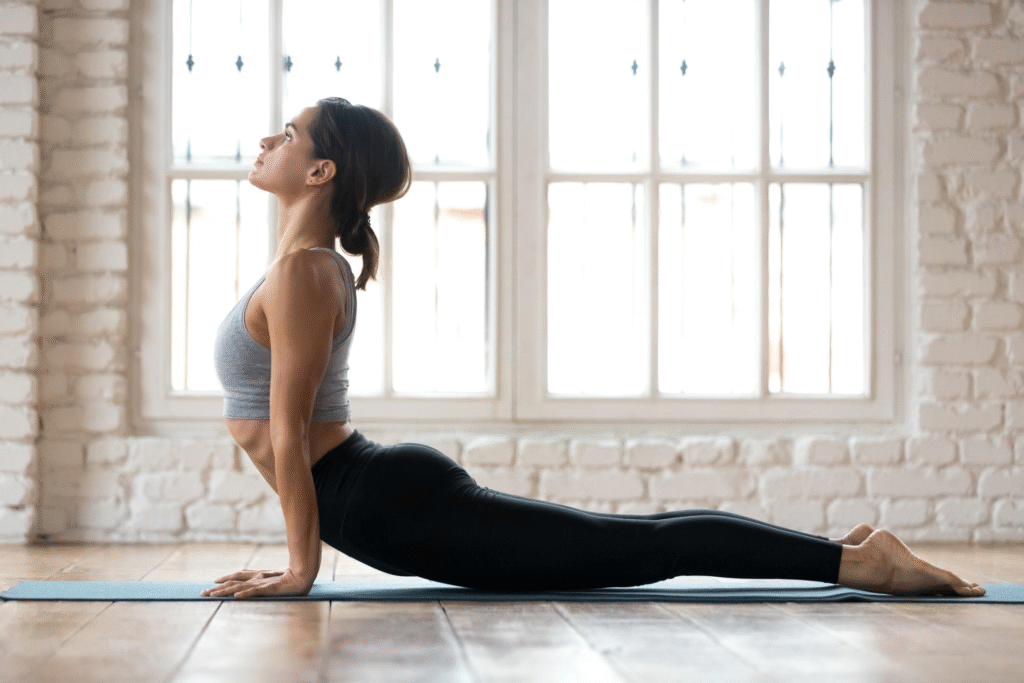
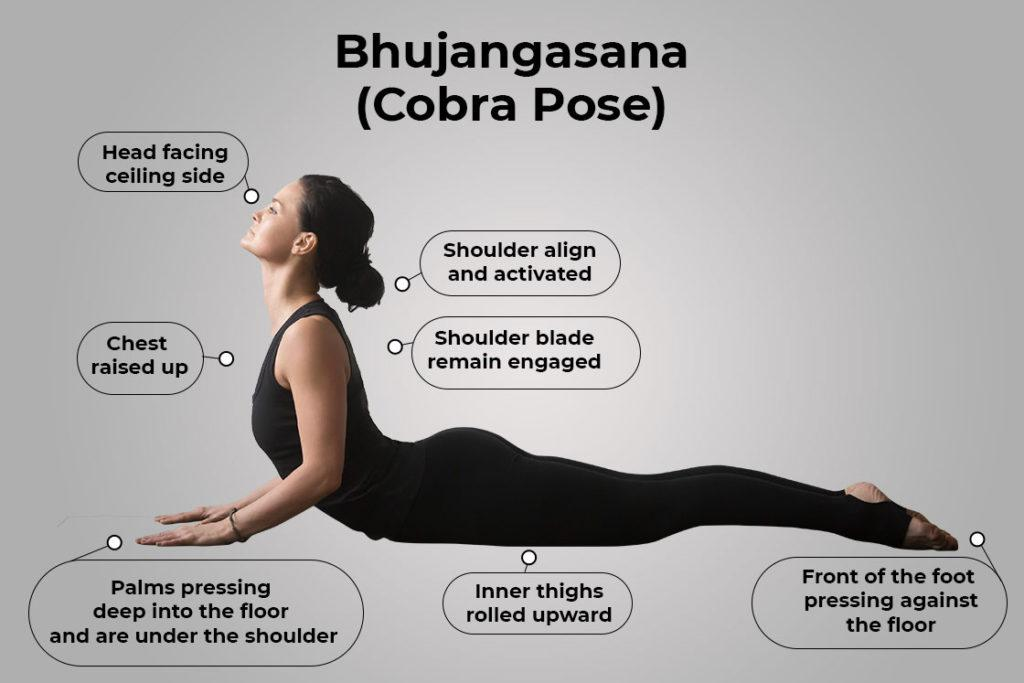
Bhujangasana (Cobra Pose): One of the Most Misunderstood Postures
Cobra Pose looks simple.
But it teaches one of the most important lessons in yoga.
Many beginners push strongly into their hands, trying to lift the chest as high as possible.
What usually happens?
The shoulders rise toward the ears.
The elbows lock.
The neck becomes tense.
And the lower back begins doing all the work.
Whenever I teach Cobra, I remind students,
“Your hands are here to support you, not to lift you.”
Instead of pushing harder, I ask them to activate the muscles of the back.
Suddenly the posture changes.
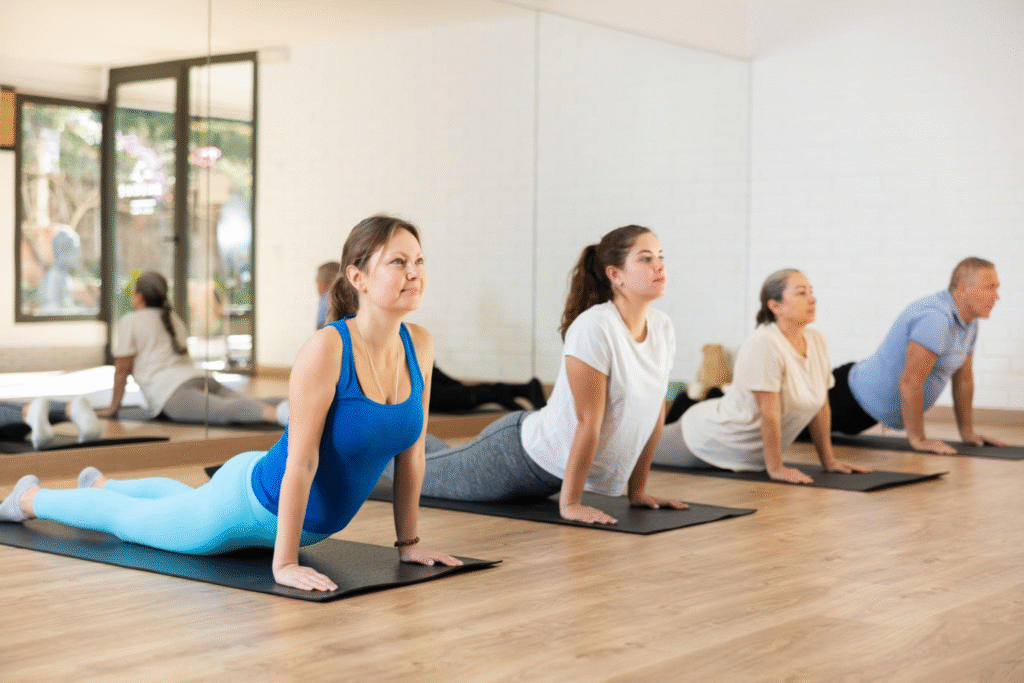
The chest lifts naturally.
The shoulders relax.
The breath flows more freely.
Students are often surprised that using less effort actually creates a stronger posture.
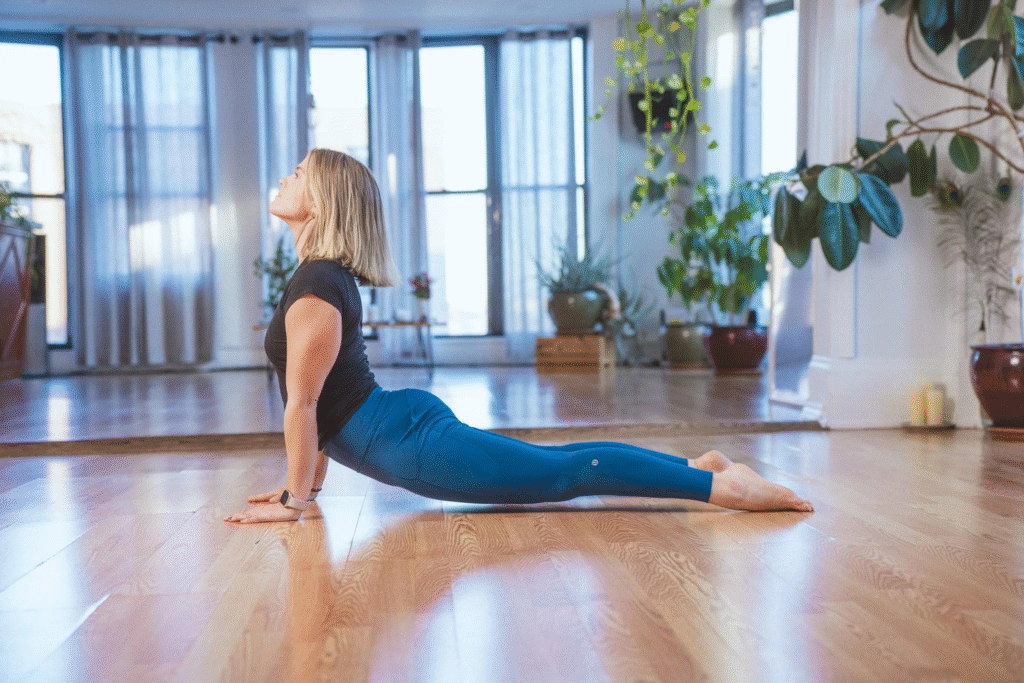
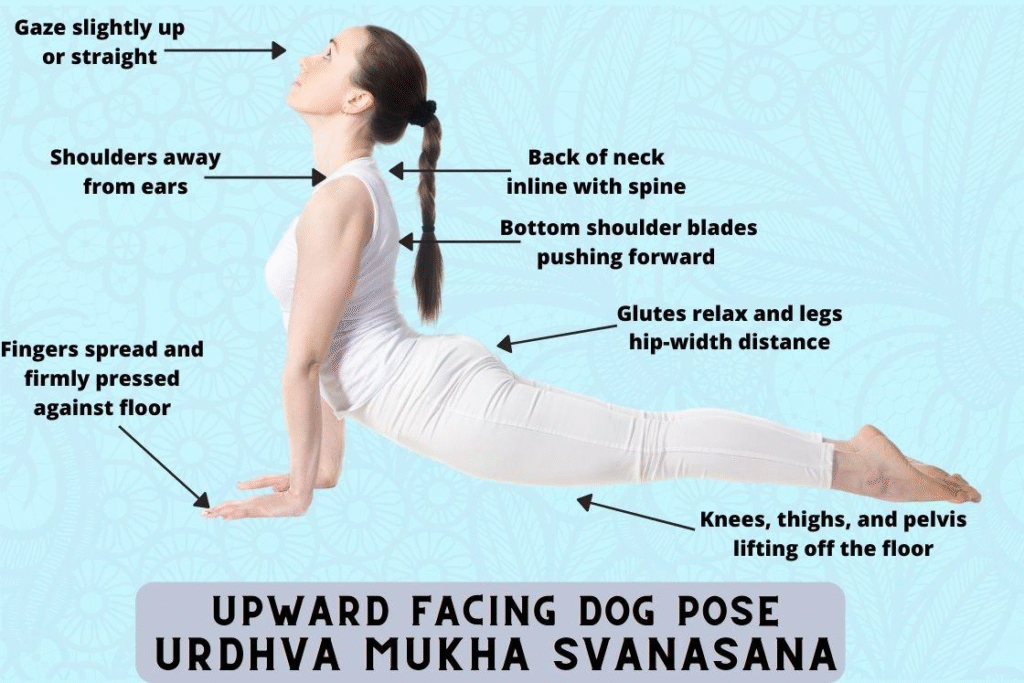
Upward-Facing Dog Isn’t a Bigger Cobra
This is something many new practitioners believe.
Although the two postures look similar, they feel completely different.
In Upward-Facing Dog, the legs are active.
The thighs lift away from the floor.
The arms become strong.
The chest broadens.
The whole body participates.
This is why I encourage trainees not to rush into advanced versions.
Master Cobra first.
When your body understands that movement, Upward Dog becomes much more accessible.
Yoga has a beautiful way of rewarding patience.
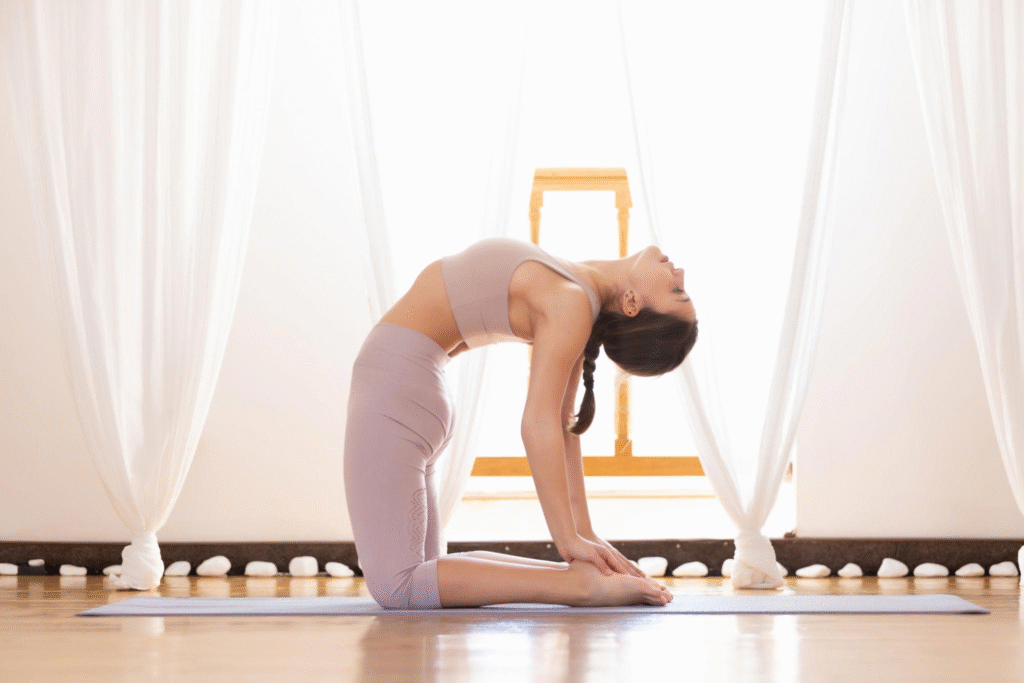
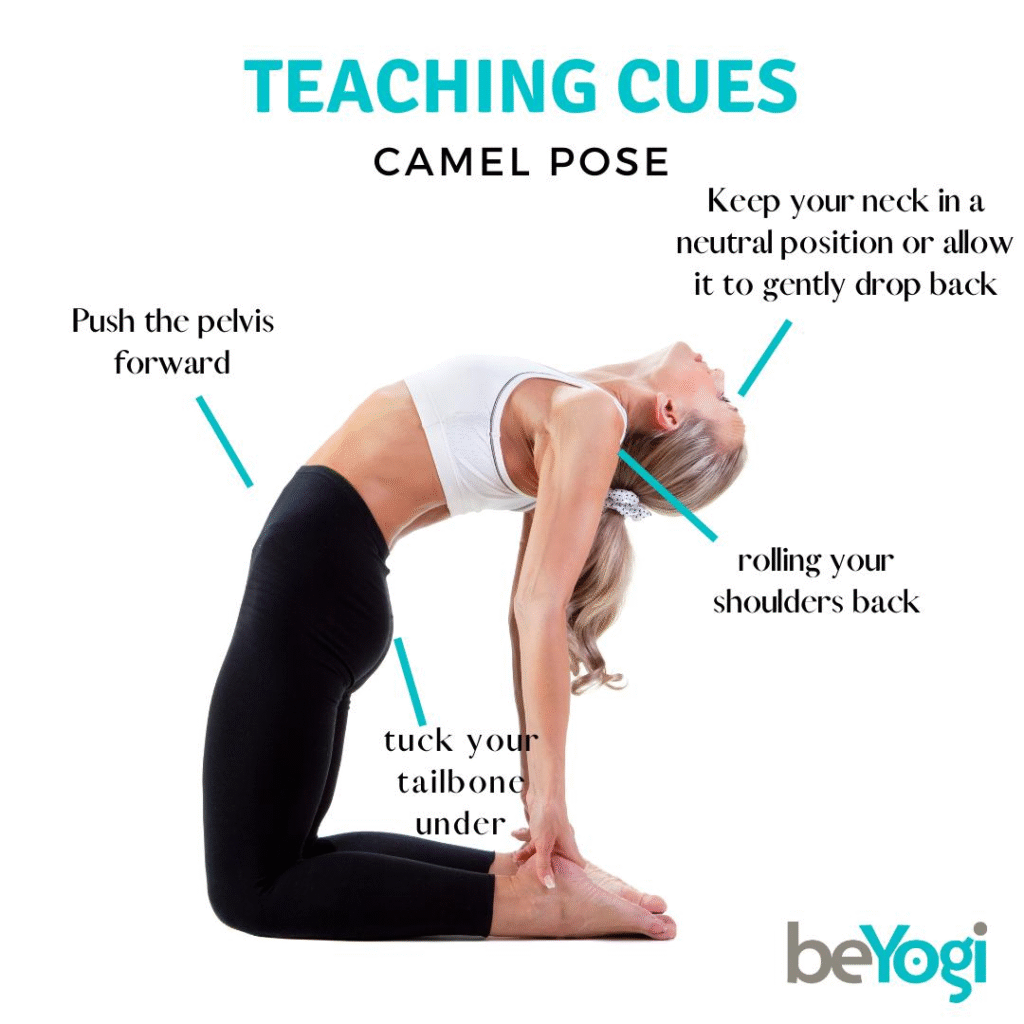
Camel Pose is one of the most emotional postures I teach.
Camel Pose (Ustrasana): Learning to Trust Yourself
Not because it is physically difficult.
But because it asks us to become vulnerable.
The front of the body opens.
The heart lifts.
The throat softens.
Many students instinctively want to pull themselves backwards as quickly as possible.
I gently encourage the opposite.
Slow down.
Take one breath.
Feel your feet.
Notice your thighs.
Lift your chest.
Then maybe…
if the body feels ready…
reach for one heel.
There is no hurry.
Some students never touch their heels during the entire course.
That doesn’t matter.
Because the purpose of Camel Pose isn’t touching your heels.
It’s opening your heart without losing your breath.
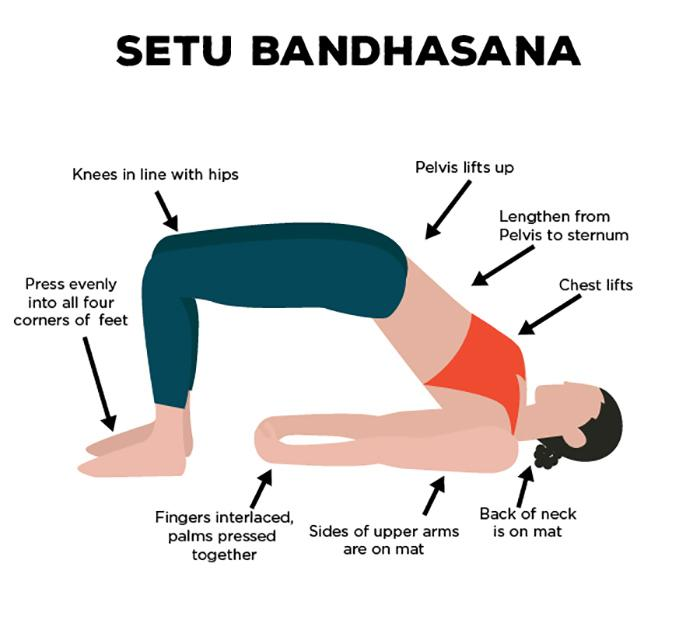
Bridge Pose: A Beautiful Reminder That Strength Creates Flexibility
Bridge Pose is often introduced early in yoga practice.
Many students think of it as an easy posture.
Then they discover how much awareness it actually requires.
Whenever I teach Bridge, I ask students to notice something very simple.
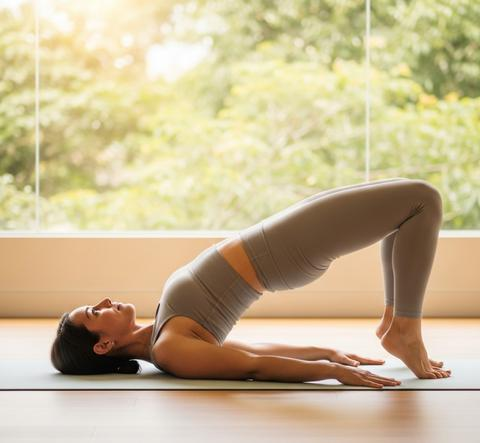
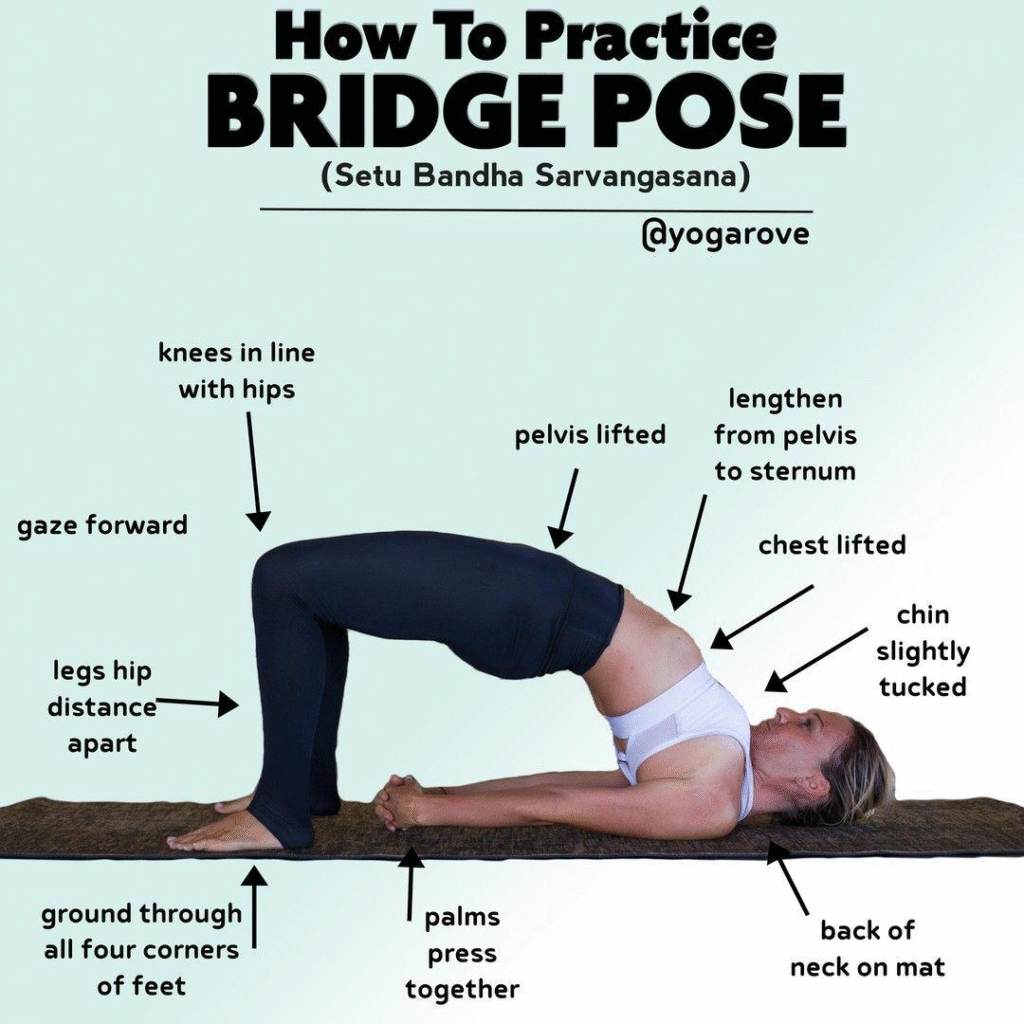
What are your legs doing?
Most people immediately think about lifting the hips.
Very few think about pressing firmly through the feet.
But that’s where the magic begins.
The stronger the foundation…
the lighter the lift becomes.
Yoga constantly reminds us that strength and flexibility are partners, not opposites.
Backbends Teach Courage
Over the years, I’ve noticed something interesting.
Students who are afraid of backbends are rarely afraid because of flexibility.
They’re afraid because backbends ask us to move into the unknown.
We can’t easily see where we’re going.
We have to trust.
And trust is something yoga develops little by little.
Every gentle backbend teaches us that we are capable of opening, even when life has encouraged us to protect ourselves.
Perhaps that’s why so many people describe backbends as “heart-opening.”
They’re not just opening muscles.
They’re opening possibilities.
One Thing I Always Tell Future Yoga Teachers
When you begin teaching, never encourage students to chase depth.
Encourage them to chase awareness.
If a student comes out of Camel Pose smiling because they felt confident, comfortable, and supported…
that is a successful class.
If another student bends much deeper but leaves with pain in their lower back…
the posture has missed its purpose.
As teachers, we are not helping students collect advanced poses.
We are helping them build a lifelong relationship with their bodies.
That perspective changes the way you teach forever.
How We Teach Backbends at Diksha Yoga School
During our Yoga Teacher Training, students quickly discover that backbends are not about becoming more flexible—they’re about learning how to move with intelligence and awareness.
We begin with simple spinal movements, helping trainees understand how to lengthen before bending and how to engage the legs and core to support the spine. As confidence grows, we gradually introduce deeper postures, always emphasizing breath, stability, and individual anatomy over achieving a dramatic shape.
Students also learn how to observe common movement patterns, offer supportive verbal cues, and adapt backbends for practitioners with different levels of mobility and experience.
One of the most rewarding moments is watching students realize that a safe, comfortable backbend often feels far more powerful than the deepest one they have ever done.
That understanding stays with them long after the course has ended.
A Thought I’d Like to Leave You With
Backbends have taught me something that goes far beyond yoga.
They’ve taught me that opening doesn’t require force.
Whether we’re opening the chest, opening the heart, or opening ourselves to new experiences, the process is always gentler than we imagine.
The body responds beautifully when it feels supported.
So do we.
Perhaps that’s one of yoga’s greatest lessons.
Part 7: Twists and Hip Openers – Learning to Create Space, Not Force
There are certain yoga postures that quietly teach us some of life’s greatest lessons.
Twists and hip openers are among them.
When new students join our Yoga Teacher Training, many expect these poses to be all about flexibility. They think the goal is to twist a little deeper or stretch the hips a little further.
But after a few days of practice, they begin to realise something much more important.
These postures aren’t asking us to push harder.
They’re asking us to become more aware.
Some of the most meaningful moments I’ve witnessed as a teacher have happened in these poses—not because someone finally achieved a difficult shape, but because they stopped fighting their body and started listening to it.
That is where yoga truly begins.
Twisting Is Not About How Far You Turn
Whenever I introduce seated twists, I usually tell students something that surprises them.
“The deepest twist isn’t always the healthiest twist.”
They often laugh, thinking I’m joking.
But I’m completely serious.
Many people believe they should rotate as far as possible. They pull with their hands, force the shoulder backwards, and hold their breath just to turn a few centimetres more.
The irony is that the more we force a twist, the tighter the body often becomes.
A healthy twist feels spacious.
It never feels aggressive.
I like to think of the spine as a young tree.
If you bend it gently, it moves beautifully.
If you try to force it, something eventually gives way.
The spine deserves the same respect.
Every Twist Begins With Length
One of the simplest changes that transforms every twisting posture is remembering one thing:
Length before rotation.
Imagine trying to wring out a towel.
If the towel is bunched up, it hardly twists.
But if you stretch it out first, the movement becomes smooth and effortless.
The spine works in much the same way.
Before asking students to rotate, I encourage them to sit tall.
Grow through the crown of the head.
Relax the shoulders.
Take a slow breath.
Only then do we begin turning.
Suddenly the twist feels lighter.
The breath becomes easier.
The posture almost creates itself.
Breath Guides Every Twist
One of my favourite moments during class is watching students discover how much easier twisting becomes when they stop holding their breath.
Instead of rushing into the posture, we move slowly.
Inhale…
Lengthen the spine.
Exhale…
Allow the body to rotate a little.
Not because we’re pushing.
Because we’re allowing.
Sometimes students ask me,
“Should I twist as much as I can?”
I usually answer,
“Twist only as much as you can continue smiling and breathing.”
That simple reminder changes everything.
Yoga should challenge us.
It should never take away our breath.
Ardha Matsyendrasana: A Lesson in Patience
Half Lord of the Fishes Pose is one of those postures that teaches patience more than flexibility.
The first time many students try it, they become focused on where their elbow should go or how far their shoulder can turn.
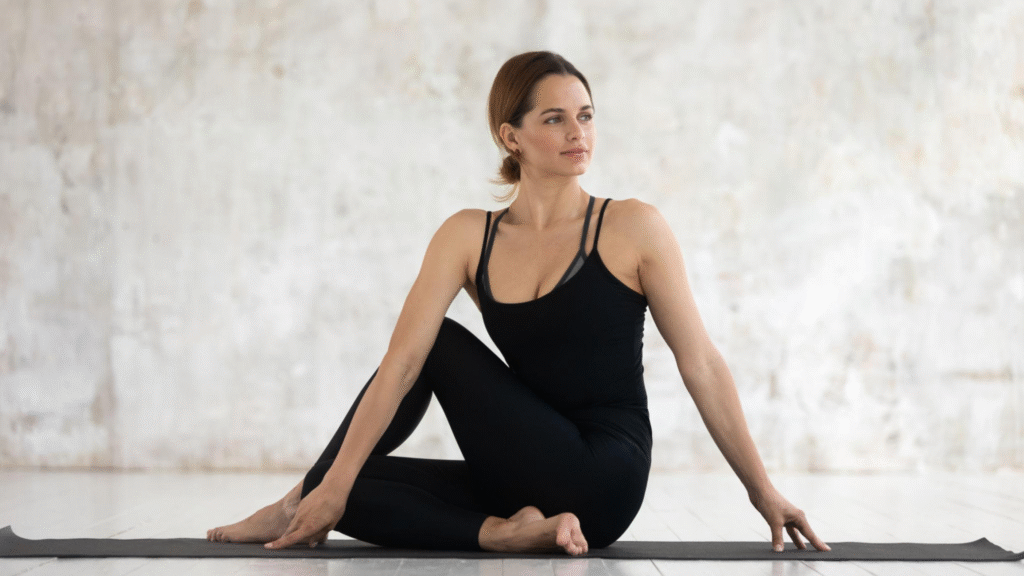
But the real work begins much earlier.
Can you sit evenly on both sitting bones?
Can you keep the spine long?
Can you soften your jaw?
Can you breathe without rushing?
These small details often make a much bigger difference than twisting another few degrees.
I’ve learned over the years that when students stop chasing the shape, the posture naturally becomes deeper.
The Hips Have Their Own Story
If you’ve taught yoga for long enough, you’ve probably heard someone say,
“I carry all my emotions in my hips.”
Students often ask me if that’s really true.
My answer is always honest.
Every person experiences their body differently.
Some people feel nothing unusual in hip openers.
Others notice a surprising sense of release, calm, or even emotion.
Rather than trying to explain every experience, I encourage students to simply observe.
Yoga isn’t about analysing every feeling.
It’s about making space for whatever is present.
The hips spend years supporting us as we walk, stand, run, sit, and move through life.
They deserve the same kindness we offer every other part of the body.
Baddha Konasana: Stop Pushing Your Knees Down
This is probably one of the most common things I see.
A student sits in Butterfly Pose and immediately starts pressing the knees toward the floor.
Sometimes with their hands.
Sometimes with their elbows.
I gently walk over and ask,
“Why are you in such a hurry?”
Usually they laugh.
Then they stop pushing.
Within a few breaths, the shoulders relax.
The breathing softens.
The body begins opening naturally.
The hips don’t respond well to force.
They respond to time.
One of the greatest gifts we can give ourselves is patience.
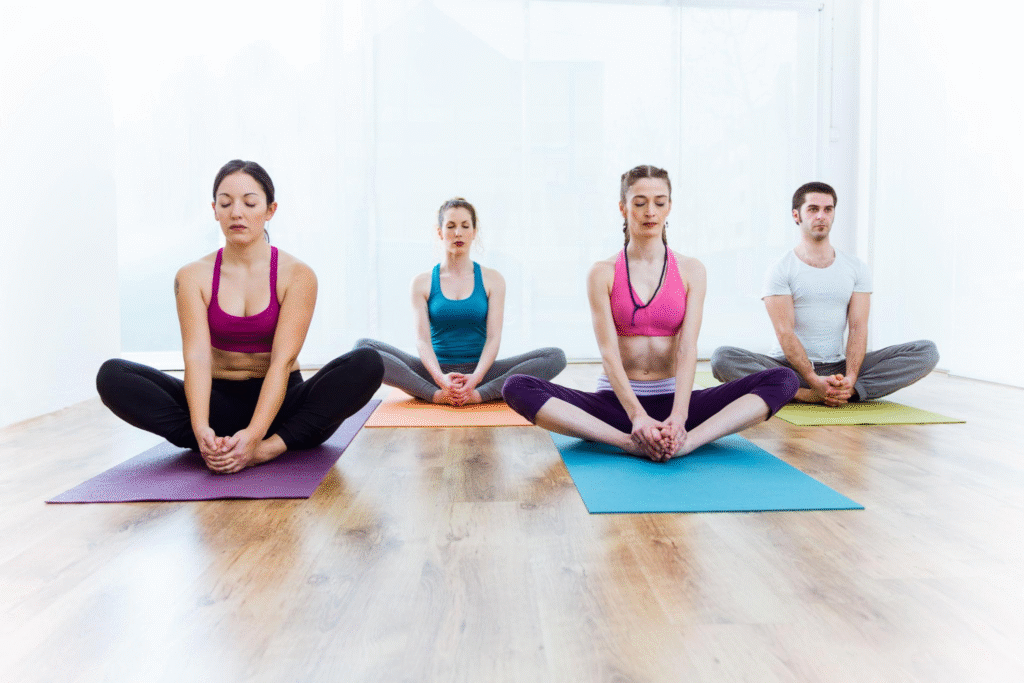
Pigeon Pose: The Posture That Teaches Acceptance
If there is one posture that students either love or avoid, it’s Pigeon Pose.
Some people melt into it.
Others feel like every muscle in the body is resisting.
And that’s perfectly okay.
I always remind students,
“Your Pigeon Pose doesn’t have to look like anyone else’s.”
For some people, placing a folded blanket beneath the hip creates enough support to completely change the experience.
Others prefer a gentler variation on their back.
Neither option is better.
Yoga isn’t about proving flexibility.
It’s about respecting where your body is today.
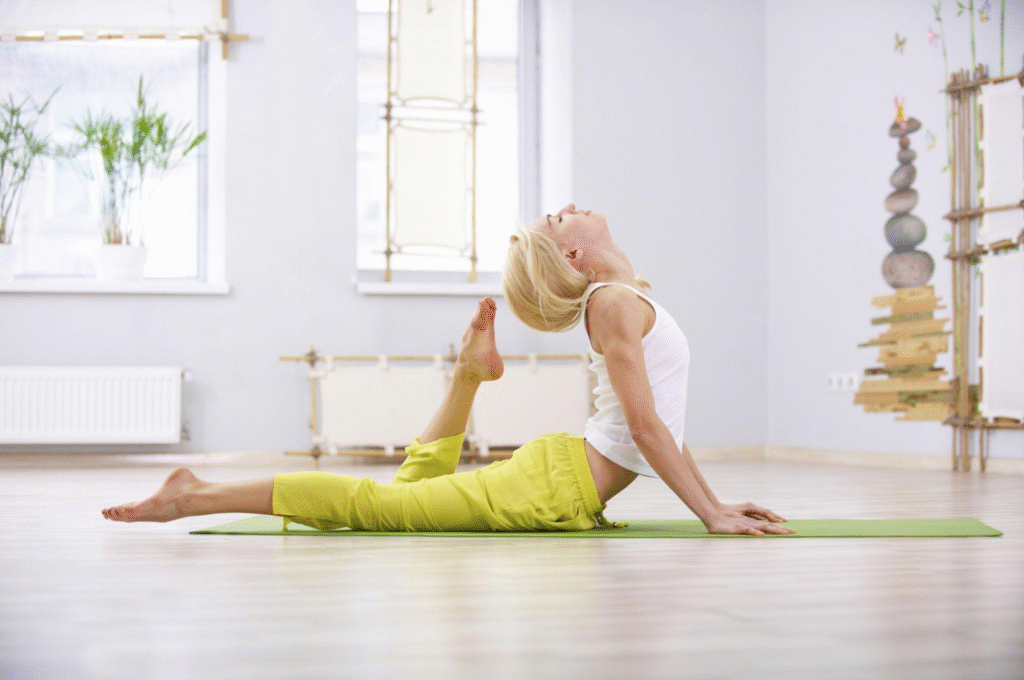
Every Body Opens Differently
This is something every future yoga teacher needs to remember.
Not everyone has the same hip structure.
Some students naturally have more external rotation.
Others simply don’t.
No amount of determination will change someone’s bone structure.
And it shouldn’t have to.
When we understand this, comparison disappears.
We stop asking,
“Why can’t I do this pose?”
And we begin asking,
“What version of this pose serves my body best today?”
That question leads to much healthier practice.
Twists Can Teach Us to Slow Down
Modern life encourages speed.
Faster emails.
Faster workouts.
Faster results.
Yoga gently asks us to move differently.
Twists don’t reward rushing.
They reward patience.
Every slow inhale creates length.
Every relaxed exhale creates space.
Little by little…
the body responds.
This rhythm has become one of my favourite reminders both on and off the mat.
Some of life’s greatest changes happen slowly.
Yoga simply helps us notice them.
One Conversation I’ll Never Forget
A student once came to me after class and said,
“I’ve been trying to force my body into Lotus Pose for years. Today was the first time I realised I don’t actually need to.”
That sentence stayed with me.
Not because of Lotus Pose.
But because it represented something much bigger.
She had stopped fighting herself.
Sometimes the greatest transformation during a Yoga Teacher Training has nothing to do with mastering advanced postures.
It’s learning to meet yourself exactly where you are.
That lesson stays with you long after the course finishes.
How We Teach Twists and Hip Openers at Diksha Yoga School
During our Yoga Teacher Training, students discover that these postures are far more than stretches.
They are opportunities to understand how the spine moves safely, how the hips function differently from person to person, and how breath can transform the entire experience of a pose.
Rather than encouraging students to achieve the deepest expression, we teach them to find the most balanced expression for their body.
Our trainees practice observing movement patterns, using props confidently, and offering thoughtful modifications that help every student feel supported.
Most importantly, they learn to teach without judgement.
Because when students feel accepted, they learn more.
And when teachers understand that every body is unique, their classes become places where people feel safe to grow.
Yoga Has Never Been About Perfect Shapes
If there is one message I hope every future yoga teacher carries forward, it is this:
People won’t remember how deep your twist was.
They won’t remember whether you could do Lotus Pose.
But they will remember how you made them feel.
If your class helps someone breathe a little easier…
Move a little more freely…
And accept themselves a little more kindly…
Then you’ve already succeeded as a yoga teacher.
That, to me, is the real practice of yoga.
Part 8: Inversions and Arm Balances – It’s Never About Getting Upside Down
I’ll let you in on a little secret.
Almost every Yoga Teacher Training begins the same way.
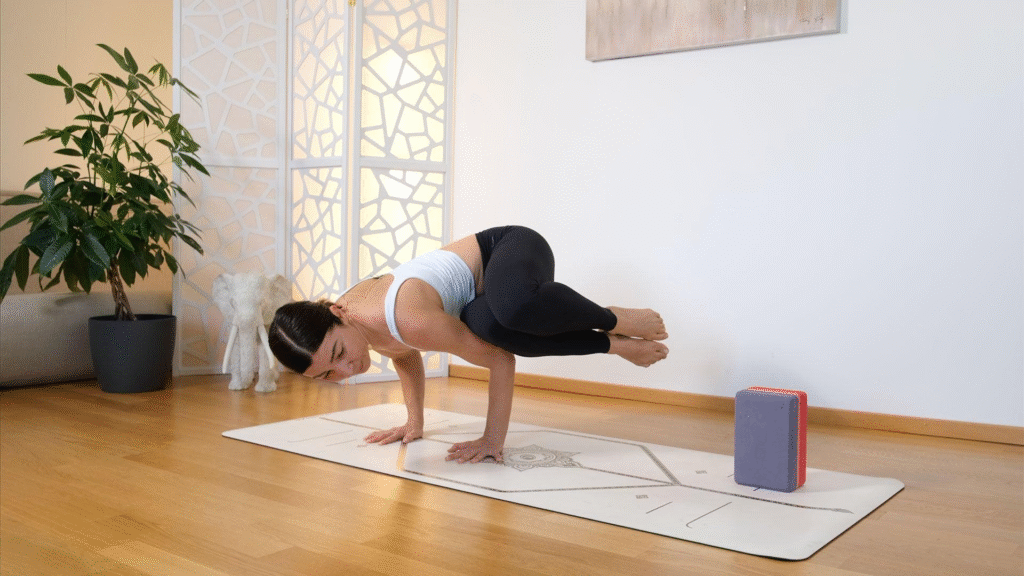
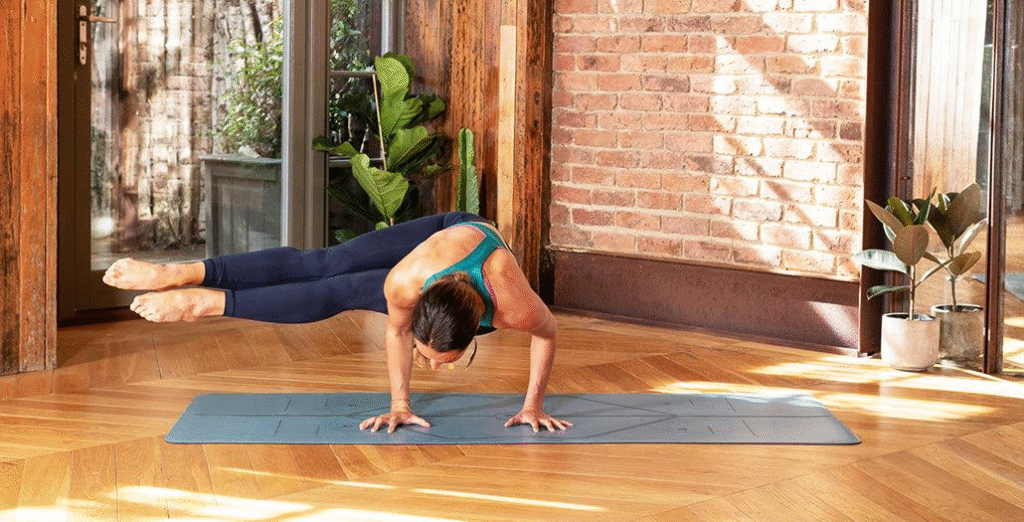
Within the first few days, someone quietly asks me,
“Will we learn handstands?”
Or,
“Do I need to be able to do Crow Pose before I become a yoga teacher?”
I always smile because I already know what they’re really asking.
They’re not asking about Handstand.
They’re asking,
“Am I good enough?”
And my answer is always the same.
You do not become a great yoga teacher because you can balance on your hands.
You become a great yoga teacher because you understand people.
Yes, inversions and arm balances are exciting. They’re playful, challenging, and they teach incredible body awareness. But after many years of teaching, I’ve realised they also teach something much deeper.
They teach humility.
Because no matter how strong you are, these postures refuse to be rushed.
Crow Pose Was Never About Balance
I still remember learning Crow Pose myself.
I thought the hardest part would be balancing.
It wasn’t.
The hardest part was trusting myself enough to lean forward.
That’s what most students discover too.
Their arms are often strong enough.
Their core is often strong enough.
But the mind keeps whispering,
“What if I fall?”
That little voice is usually the biggest obstacle.
Whenever I teach Crow Pose, I don’t begin by talking about the arms.
I begin by talking about trust.
Because once the mind begins to relax, the body often surprises itself.
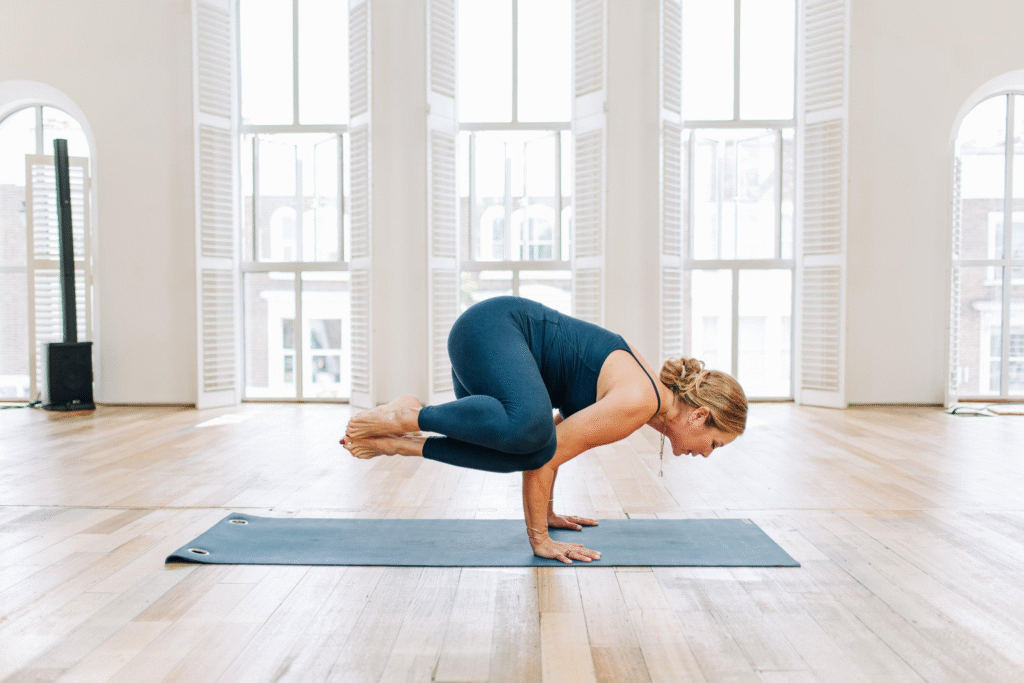
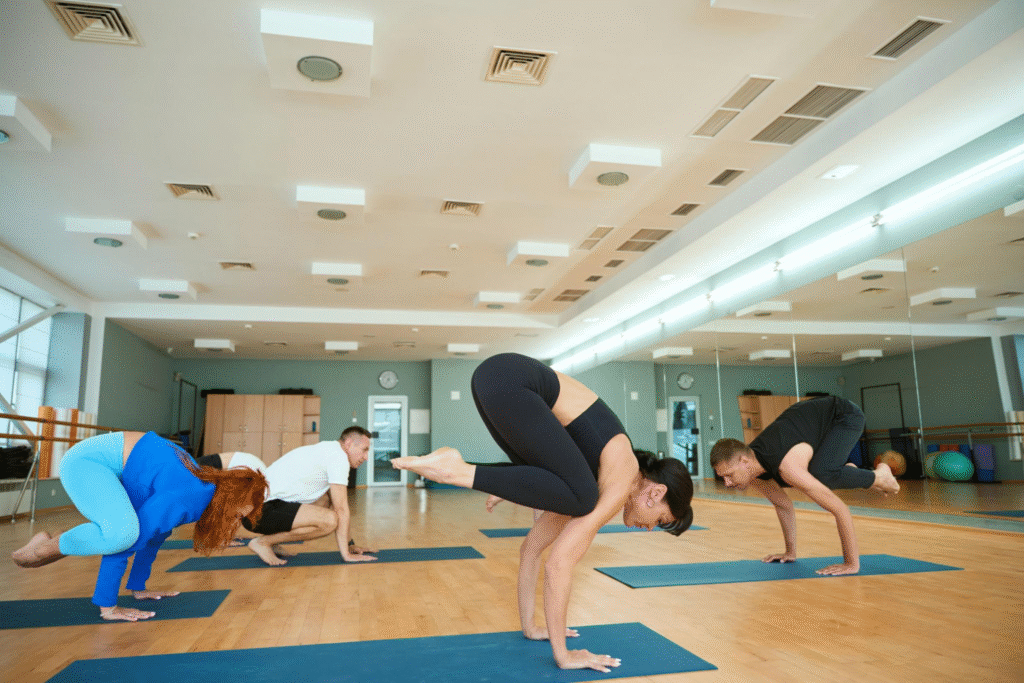
Falling Isn’t Failure
This is one of my favourite conversations to have with students.
Someone tries Crow Pose.
They wobble.
Their feet come back to the floor.
They immediately apologise.
“I’m sorry, I couldn’t do it.”
I gently laugh and ask,
“Did you fall?”
“Yes.”
“Wonderful.”
They look confused.
But here’s why I celebrate it.
If you never lean far enough to lose your balance, you’ll never discover where your balance actually is.
Falling isn’t proof that you’re failing.
It’s proof that you’re learning.
Some of the best yoga teachers I know have spent years falling.
They simply stopped being afraid of it.
Strength Is Only Half the Story
Students often think arm balances are all about building stronger arms.
Strong arms certainly help.
But strength alone isn’t enough.
Arm balances require something much quieter.
Awareness.
You begin noticing where your weight is moving.
You notice whether you’re gripping the floor with your fingers.
You notice whether your shoulders are collapsing or supporting you.
Most importantly…
you begin noticing your breath.
Whenever students hold their breath before lifting into Crow Pose, I know exactly what’s happening.
They’re trying to control the posture.
Instead, I remind them,
“Take one slow breath first. Let the body feel safe.”
Amazing things happen when we stop trying to force success.
Your Hands Become Your Feet
This is one idea that completely changes how students approach arm balances.
When we stand, we instinctively trust our feet.
We know how to spread our weight.
We know how to make tiny adjustments without thinking.
In an arm balance, your hands become your new foundation.
The fingers wake up.
The palms become active.
The wrists learn to share the work with the shoulders.
It’s a completely different relationship with gravity.
At first it feels unfamiliar.
Then one day…
it feels natural.
And that’s one of the most beautiful moments to witness as a teacher.
Headstand Taught Me Patience
Headstand is often called the king of the asanas.
But I think it should also be called the teacher of patience.
I’ve seen students spend weeks preparing before their feet ever leave the floor.
And honestly…
that’s exactly how it should be.
There is no prize for getting upside down quickly.
The body needs time.
The shoulders need strength.
The core needs awareness.
The mind needs confidence.
When those pieces come together naturally, Headstand becomes far less intimidating.
The journey matters far more than the final shape.
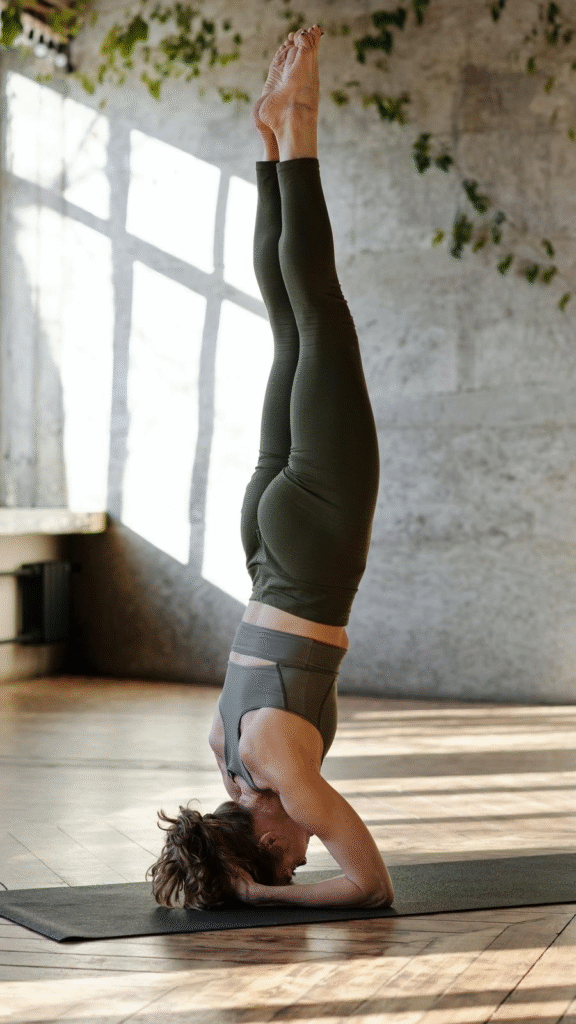
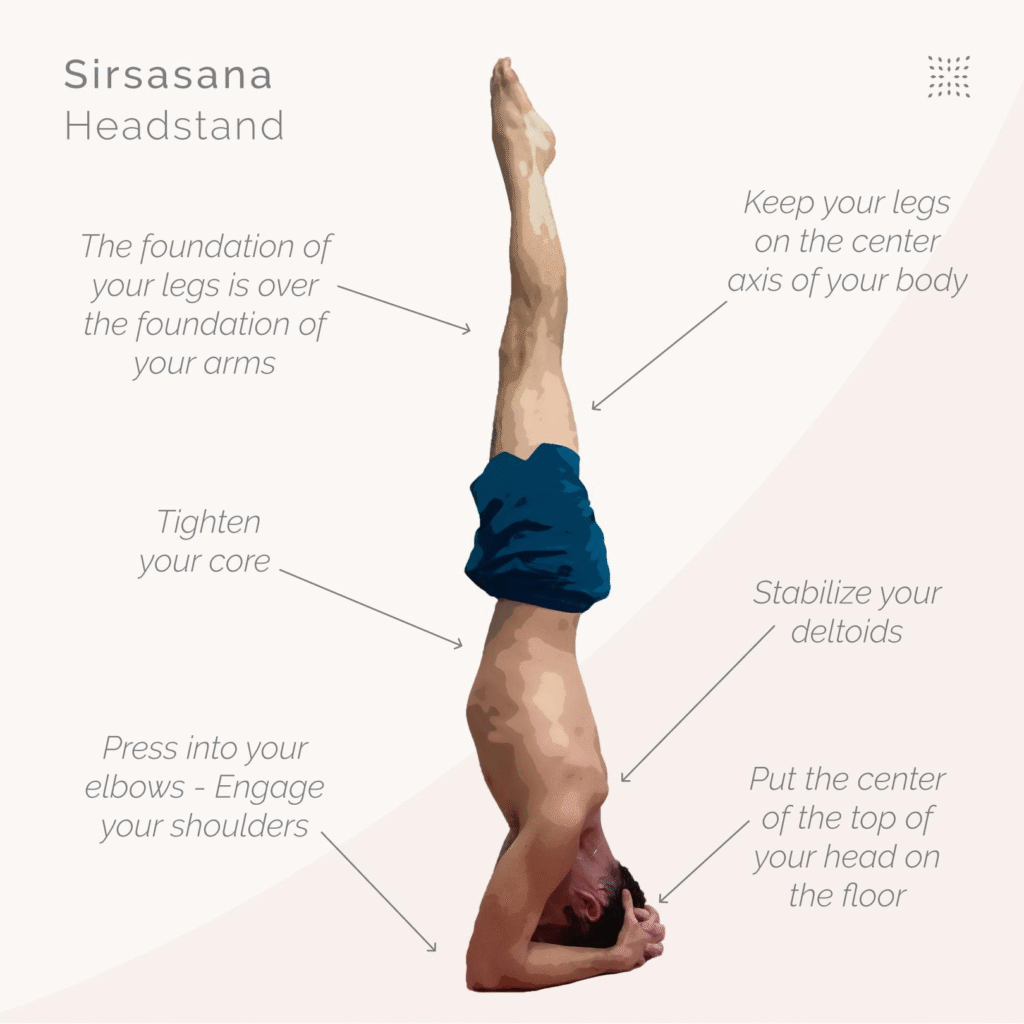
Not Every Body Needs Every Pose
This is something I wish every yoga student heard more often.
Just because a posture exists doesn’t mean every body needs to practice it.
Some students have wrist injuries.
Others have shoulder limitations.
Some have high blood pressure or medical conditions that make certain inversions inappropriate.
That doesn’t make their yoga practice incomplete.
It simply makes it personal.
One of the greatest responsibilities we have as teachers is knowing when to encourage and when to modify.
There is wisdom in both.
The Ego Loves Advanced Poses
Yoga has an interesting way of revealing the ego.
Sometimes it appears very quietly.
It whispers,
“Everyone else is doing Handstand. I should be able to do it too.”
I’ve heard that thought many times.
Perhaps you’ve had it yourself.
But yoga isn’t asking us to compete.
It’s asking us to become aware.
Whenever I notice students becoming frustrated, I remind them,
“The purpose of Handstand isn’t to impress someone watching you.”
It’s to understand yourself a little better than you did yesterday.
That’s a very different practice.
Sometimes the Strongest Student Doesn’t Lift Off
One memory has stayed with me for years.
During one teacher training, there was a student who never managed to hold Crow Pose.
Not once.
But every single day she smiled.
She kept practising.
She encouraged everyone around her.
She celebrated other people’s progress without comparing herself.
At the end of the course, she became one of the most compassionate teachers I’ve ever trained.
That experience reminded me of something important.
Success in yoga isn’t measured by what your body can do.
It’s measured by who you’re becoming through the practice.
And that lesson is far more valuable than any arm balance.
Fear Deserves Respect, Not Criticism
Whenever someone tells me they’re afraid of going upside down, I never try to convince them otherwise.
Fear isn’t something to fight.
It’s something to understand.
Sometimes fear is protecting us.
Sometimes it’s asking us to prepare more carefully.
Sometimes it’s simply unfamiliarity.
The best teachers don’t push students through fear.
They walk beside them.
One small step at a time.
That approach creates confidence that lasts.
The Most Beautiful Handstand I Ever Saw
You might expect me to describe someone balancing perfectly in the middle of the room.
But that’s not the handstand I remember most.
The one I remember was from a student who spent nearly three weeks working against the wall.
Every day she practised.
Every day she laughed when she came down.
And on the final morning, she held the posture for only three breaths.
When she came down, she had tears in her eyes.
Not because of the handstand.
Because she had stopped believing she wasn’t capable.
That’s what made it beautiful.
Yoga has a way of changing our relationship with ourselves.
Sometimes that’s the greatest achievement of all.
How We Teach Inversions at Diksha Yoga School
At Diksha Yoga School, we never begin with the final posture.
We begin with the foundation.
Students first build strength in the shoulders, wrists, and core. They learn how to distribute weight safely, how to engage the body intelligently, and how to recognise when they’re ready to progress.
We use walls, props, partner support, and step-by-step progressions to create an environment where students feel confident rather than pressured.
Most importantly, we remind every trainee that becoming a skilled yoga teacher isn’t about performing advanced postures.
It’s about understanding the journey that leads to them.
Because when you understand the journey, you can guide others with patience, empathy, and confidence.
A Lesson I’ll Never Forget
If yoga has taught me one thing over the years, it’s this:
Life isn’t asking us to have all the answers before we begin.
It’s asking us to trust the process.
Inversions simply make that lesson impossible to ignore.
You lean forward before you know whether you’ll balance.
You practise before you know whether you’ll succeed.
You fall.
You laugh.
You try again.
And somewhere along the way…
you realise the practice was never about getting upside down.
It was about discovering that you were capable all along.
Part 9: The Most Common Alignment Mistakes I See as a Yoga Teacher (And How We Can Prevent Them)
If someone asked me,
“After teaching for so many years, what is the biggest mistake students make in yoga?”
My answer would probably surprise them.
It isn’t poor flexibility.
It isn’t weak muscles.
It isn’t even incorrect alignment.
The biggest mistake is believing that yoga is something we have to achieve instead of experience.
That belief changes everything.
When students think they have to achieve a pose, they start forcing.
They compare themselves.
They ignore their breath.
They stop listening to their body.
And that’s usually when discomfort begins.
I’ve watched this happen hundreds of times over the years.
The good news is that almost every alignment mistake can be corrected—not with more effort, but with more awareness.
Mistake #1: Chasing the Shape Instead of the Feeling
One afternoon, during a teacher training, I noticed two students practicing Triangle Pose.
From a distance, one looked absolutely perfect.
The other was using a yoga block.
If someone had taken a photograph, they probably would have chosen the first student.
But as I walked closer, I noticed something different.
The first student was holding their breath.
Their neck looked tense.
Their shoulders were gripping.
The second student, with the yoga block, looked relaxed.
Their breathing was calm.
Their spine was beautifully long.
At that moment, I was reminded once again…
Yoga isn’t judged by photographs.
It’s experienced through the body.
Whenever I teach, I encourage students to ask themselves one simple question:
“How does this posture feel?”
That question is far more valuable than,
“How does this posture look?”
Mistake #2: Holding the Breath
If I could walk into every yoga class in the world and give only one reminder, it would probably be this:
Don’t forget to breathe.
It sounds obvious.
Yet it’s amazing how quickly the breath disappears when a posture becomes challenging.
Students hold their breath without even noticing.
The moment that happens, the body starts working much harder than it needs to.
I’ve learned to watch the breath more than the posture itself.
Because breathing tells me everything.
It tells me whether someone feels safe.
It tells me whether they’re forcing.
It tells me whether the nervous system is relaxed or stressed.
Whenever I see someone struggling, I rarely ask them to go deeper.
Instead, I quietly say,
“Take one slow breath.”
Most of the time…
that’s all they needed.
Mistake #3: Believing Pain Means Progress
This is one idea I gently challenge during every Yoga Teacher Training.
Some students arrive believing that if a posture hurts, it must be “working.”
I understand where that belief comes from.
Many forms of exercise encourage us to push through discomfort.
Yoga asks something different.
Yoga teaches discernment.
A healthy stretch often feels spacious.
A little challenging.
Sometimes intense.
But sharp pain?
That is the body’s way of asking us to stop.
Listening to that message isn’t weakness.
It’s wisdom.
One of the greatest qualities a yoga teacher can develop is knowing the difference.
Mistake #4: Comparing Yourself to the Person Next to You
Comparison is incredibly common.
And honestly…
it’s completely human.
I’ve watched students glance around the room before almost every posture.
“Why can she fold deeper?”
“Why is his balance so much better?”
“Why am I the only one using a block?”
Then, somewhere around the second week of training, something beautiful happens.
They stop looking sideways.
They begin looking inward.
That is usually when their practice begins to transform.
Yoga has never asked us to become someone else.
It gently invites us to become more ourselves.
Mistake #5: Forgetting That Rest Is Part of Practice
One of the hardest lessons for many students is accepting rest.
I remember offering Child’s Pose during a strong Vinyasa class.
Almost everyone took it.
One student stayed in Downward Dog because they felt guilty about resting.
After class they said,
“I didn’t want people to think I was giving up.”
I smiled and replied,
“Resting isn’t giving up. Sometimes it’s the most intelligent choice you can make.”
That conversation has stayed with me ever since.
Because life teaches us to keep going.
Yoga teaches us to know when to pause.
And there is incredible wisdom in that pause.
Mistake #6: Ignoring the Foundation
Whenever a student tells me a posture feels unstable, I rarely look at the top of the body first.
I look at the foundation.
The feet.
The hands.
The knees.
The sitting bones.
Because almost every posture begins there.
Imagine trying to build a beautiful house on unstable ground.
No matter how impressive the roof looks, the structure won’t feel secure.
The body works exactly the same way.
Strong foundations create effortless movement.
Weak foundations create unnecessary compensation.
This is why we spend so much time refining the basics during our teacher training.
Not because they’re simple…
but because they’re essential.
Mistake #7: Thinking Advanced Poses Make Better Teachers
This might be my favourite myth to challenge.
I’ve met yoga teachers who could perform incredible arm balances but struggled to explain Mountain Pose.
I’ve also met teachers who couldn’t demonstrate every advanced posture…
yet transformed hundreds of lives through their kindness, clarity, and presence.
Which one would I rather learn from?
The answer is easy.
Students rarely remember the most flexible teacher.
They remember the teacher who made them feel seen.
The teacher who remembered their name.
The teacher who created a safe space to grow.
That is real teaching.
What Experience Has Taught Me
After teaching for many years, I no longer believe the best teachers are the ones who know the most Sanskrit names.
Or the ones who can demonstrate the most advanced poses.
The teachers who leave the deepest impression are the ones who remain curious.
They keep learning.
They keep listening.
They aren’t afraid to say,
“Let’s explore this together.”
There is something beautiful about that humility.
Students feel it immediately.
And trust begins to grow.
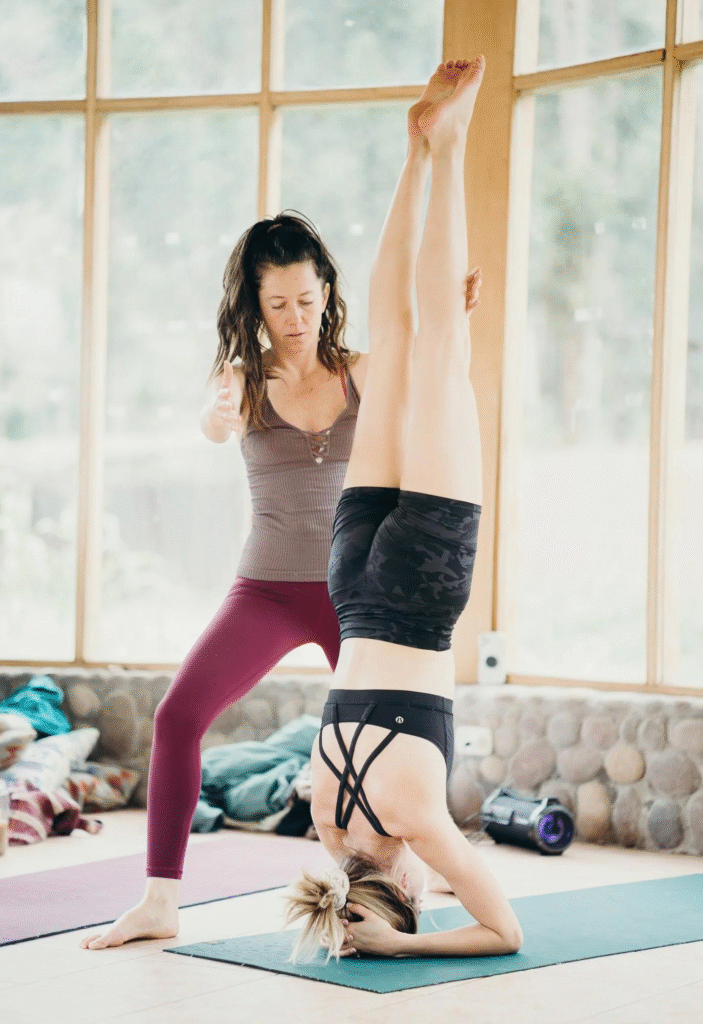
Creating a Safe Space Is Part of Alignment Too
When we talk about alignment, we usually think about knees, hips, shoulders, or the spine.
But I believe there is another kind of alignment.
Creating emotional safety.
A student who feels judged will naturally become tense.
A student who feels accepted begins to relax.
And a relaxed body learns much more easily.
That’s why I believe kindness is also an alignment cue.
The way we speak matters.
The way we observe matters.
The way we encourage matters.
Everything we do as teachers influences how students experience their bodies.
What We Hope Every Student Takes Home
Of course, we want our students to leave with strong teaching skills.
We want them to understand anatomy.
We want them to know alignment.
We want them to teach safely.
But more than anything…
I hope they leave with a different relationship to themselves.
I hope they stop measuring success by flexibility.
I hope they stop comparing.
I hope they trust their own body a little more.
Because if that happens, they’ll naturally help their future students do the same.
And that creates a ripple effect far beyond the yoga studio.
How We Teach Injury Prevention at Diksha Yoga School
One of the things our students often say after graduating is that they no longer feel the need to “push through” a posture.
Instead, they understand how to adapt, observe, and respond with awareness.
Throughout the training, we encourage questions like:
“What is this posture trying to teach?”
“Is there another way to experience the same benefit?”
“Can I support this student without asking them to go deeper?”
These questions create thoughtful teachers.
Teachers who understand that preventing injury isn’t about creating fear.
It’s about creating confidence.
When students feel safe, they become more willing to explore.
And that is where real growth begins.
A Final Reflection Before We Move On
Every Yoga Teacher Training eventually comes to an end.
Certificates are handed out.
Photographs are taken.
Students hug each other goodbye.
But when I think about the graduates I’ve stayed in touch with over the years, very few talk about mastering a particular posture.
Instead, they tell me things like,
“I trust myself more now.”
“I’m kinder to my body.”
“I stopped trying to be perfect.”
To me…
those are the greatest achievements yoga can offer.
Because alignment isn’t only about the body.
It’s also about aligning with who we truly are.
And that journey continues long after we roll up the yoga mat.
Part 10: How We Teach Alignment and Adjustments at Diksha Yoga School – More Than a Certification, It’s a Personal Journey
If you’ve read this guide from the beginning, you’ve probably realised something.
For us, alignment isn’t simply about where your foot goes in Warrior II or how high you lift your chest in Cobra Pose.
It’s about awareness.
It’s about learning to understand your own body before trying to teach someone else’s.
And that’s exactly how we approach every Yoga Teacher Training at Diksha Yoga School.
People often ask me,
“What makes your training different?”
Of course, I could talk about our curriculum, our Yoga Alliance certification, or the number of hours we spend studying anatomy.
Those things are important.
But if I’m being completely honest…
I don’t think that’s what students remember most.
What they remember is how they felt.
Every Student Has a Different Story
One of my favourite moments happens on the very first day of every training.
We all sit together in a circle.
Some students are excited.
Some are nervous.
Some have travelled halfway across the world.
Others have never travelled alone before.
As everyone begins introducing themselves, something beautiful happens.
You realise very quickly that no two people have arrived for the same reason.
One student wants to become a yoga teacher.
Another is recovering from burnout.
Someone else is searching for more balance after years of working in a stressful career.
I’ve even had students who joined simply because they wanted to reconnect with themselves after a difficult chapter in life.
And do you know what I’ve learned?
Every reason is the right reason.
Yoga has a wonderful way of meeting people exactly where they are.
Small Groups Change Everything
Over the years, we’ve made a very conscious decision not to fill our classes with large numbers of students.
People sometimes ask,
“Wouldn’t it be easier to teach bigger groups?”
Perhaps.
But easier isn’t always better.
When the group is small, I begin noticing the little things.
I notice when someone looks confused but doesn’t want to ask.
I notice when a student’s shoulders have finally relaxed after days of carrying tension.
I notice when someone who was too shy to speak on the first day suddenly begins teaching confidently by the final week.
Those moments are easy to miss in a crowded room.
They become possible when every student receives individual attention.
And honestly…
those moments are the reason I still love teaching after all these years.
We Don’t Expect You to Know Everything
One thing I always tell new students is,
“You’re not here because you’re already a teacher.”
“You’re here because you’re ready to learn.”
Some students arrive worried because they aren’t flexible.
Others apologise because they’ve only been practising yoga for a short time.
I always reassure them.
None of those things determine whether someone will become a wonderful teacher.
Curiosity matters more.
Kindness matters more.
A willingness to learn matters more.
Everything else develops with practice.
Learning Happens Through Experience
Of course, we study anatomy.
We explore philosophy.
We practice alignment.
We learn sequencing.
But some of the most valuable lessons happen in unexpected moments.
A student finally understands how to support someone safely.
Someone discovers that using a yoga block actually improves the posture.
A trainee teaches their very first class and realises,
“I can actually do this.”
Those experiences can’t be memorised from a book.
They have to be lived.
That’s why our training places so much emphasis on practice, observation, partner work, and real teaching experience.
Confidence grows through doing.
Not simply through listening.
One Memory I’ll Always Treasure
There is one student I still think about often.
She arrived on the first day convinced she wasn’t good enough to become a yoga teacher.
She spoke very quietly.
She constantly compared herself to everyone else.
Whenever it was her turn to teach, she would apologise before she even started.
Over the weeks, something gradually changed.
Not because she suddenly became the most flexible student.
Not because she mastered every advanced posture.
She changed because she stopped doubting herself.
On graduation day, she taught a beautiful class.
Afterwards she hugged me and said,
“For the first time in my life, I believe in myself.”
Moments like that remind me why I teach.
The certificate was important.
But confidence…
that was the real graduation.
Alignment Is Also About How We Speak
Something we discuss often during training is the language we use as teachers.
Words matter.
Imagine hearing these two instructions.
“You’re doing it wrong.”
Or…
“Let’s see if we can make this posture feel a little more comfortable.”
Both sentences aim to improve alignment.
But they create completely different experiences.
Students blossom when they feel encouraged.
They become tense when they feel judged.
That’s why we encourage future teachers to teach with compassion before correction.
Because people remember how you made them feel long after they forget the exact sequence you taught
Becoming a Teacher Means Becoming a Lifelong Student
One thing yoga has taught me is that learning never really ends.
Even after years of teaching, I still attend workshops.
I still learn from other teachers.
I still discover new things about my own body.
And I hope that never changes.
The day we believe we’ve learned everything…
we stop growing.
One of the greatest gifts you can give your future students is your willingness to remain curious.
They don’t need a perfect teacher.
They need an honest one.
What We Hope You Take Home
Of course, you’ll leave with a certificate.
You’ll understand anatomy more clearly.
You’ll know how to sequence classes.
You’ll learn alignment and adjustments.
You’ll practise teaching.
But if you asked me what I hope you truly take home…
It would be something much simpler.
I hope you leave feeling more connected to yourself.
More patient with your body.
More confident in your voice.
And more compassionate toward others.
Because those qualities create extraordinary yoga teachers.
Not perfect poses.
Why Alignment Is Really About Awareness
When people hear the word alignment, they often imagine straight lines and perfect posture.
After years of teaching, I’ve come to see it differently.
Alignment is awareness.
It’s noticing when you’re holding unnecessary tension.
It’s recognising when you’re pushing too hard.
It’s understanding when your body needs rest instead of effort.
The beautiful thing is that once you develop this awareness on the yoga mat, it naturally begins appearing in everyday life.
You notice your posture while sitting at your desk.
You breathe more deeply during stressful moments.
You become kinder to yourself.
And perhaps that’s the greatest adjustment yoga ever offers.
It gently adjusts the way we move through life.
An Invitation From Our Yoga Family
If you’re considering joining a Yoga Teacher Training, I’d like to leave you with one thought.
Don’t choose a school simply because of the schedule.
Or the location.
Or even the certificate.
Choose a place where you feel supported.
Choose teachers who genuinely care about your growth.
Choose an environment where you feel comfortable asking questions, making mistakes, and discovering your own path.
Because Yoga Teacher Training isn’t just another course.
For many people, it’s the beginning of a completely new chapter.
We would be honoured to be part of that journey.
Whether your dream is to teach yoga professionally, deepen your personal practice, or simply reconnect with yourself, you’ll always find a warm welcome at Diksha Yoga School.
We look forward to meeting you, practising with you, and sharing this beautiful journey together.
Namaste. 🙏
Frequently Asked Questions
Do I need to be flexible before joining a Yoga Teacher Training?
Not at all. Flexibility is not a requirement. During our training, we work with students of different ages, body types, and experience levels. What matters most is an open mind, a willingness to learn, and a consistent practice.
Will I learn hands-on adjustments during the course?
Yes. We teach safe and ethical adjustment techniques alongside anatomy, alignment principles, verbal cueing, and the importance of consent. Our goal is to help you become a thoughtful and confident teacher who knows when—and when not—to offer physical guidance.
Can beginners join the training?
Absolutely. Many of our students join with only a few months or years of personal practice. The course is designed to support both aspiring teachers and dedicated practitioners who want to deepen their understanding of yoga.
Why is alignment so important in yoga?
Alignment helps create stability, improves body awareness, supports healthy movement, and reduces the risk of unnecessary strain. More importantly, it teaches you to practise with awareness rather than simply trying to achieve a particular shape.
Final Thoughts
The more I teach, the more I realise that yoga has very little to do with perfection.
It has everything to do with presence.
Some days your balance feels effortless.
Some days your hamstrings feel tight.
Some days your mind is quiet.
Other days it isn’t.
Yoga welcomes all of those experiences.
If this guide has one message, I hope it’s this:
Your body is not a problem to be fixed. It is a teacher to be understood.
When you begin practising from that place, alignment stops being a list of rules.
It becomes a lifelong conversation with yourself.
And in my experience, that’s where the real practice begins.
Bonus Chapter: The Day I Stopped Teaching Yoga Poses
There is a moment that every yoga teacher remembers.
For me, it didn’t happen during a perfect Headstand.
It didn’t happen while teaching an advanced workshop.
And it certainly didn’t happen because someone mastered an arm balance.
It happened during an ordinary morning class.
One of my students had been attending regularly for several months. She was always smiling, always eager to learn, but she constantly apologized.
“I’m sorry, my balance isn’t very good.”
“I’m sorry, I’m not flexible.”
“I’m sorry, I can’t do this pose like everyone else.”
One morning, after class, she quietly came over to me.
She said,
“Manisha, something has changed.”
I asked her what she meant.
She smiled and replied,
“For the first time in years, I stopped apologizing to myself.”
I don’t think she realized how powerful those words were.
That day reminded me why I became a yoga teacher.
We often think yoga changes our bodies.
Sometimes it does.
But the greatest changes happen in the way we speak to ourselves.
And no certificate can measure that.
The Best Teachers Aren’t Always the Most Flexible
Over the years, I’ve had the privilege of training students from every corner of the world.
Some arrived already able to practice beautiful advanced postures.
Others struggled to sit comfortably with crossed legs.
Interestingly, that difference rarely mattered by the end of the course.
Because flexibility doesn’t make someone a compassionate teacher.
Presence does.
Listening does.
Patience does.
I’ve seen students who couldn’t balance in Crow Pose become extraordinary teachers because they knew how to make every person in the room feel welcome.
I’ve also seen naturally talented practitioners realise that teaching requires much more than demonstrating beautiful asanas.
Teaching is about connection.
And connection cannot be learned from a photograph.
Every Student Becomes My Teacher
People often ask me how many students I’ve taught.
The truth is, I don’t think about the number anymore.
What I think about are the lessons they have given me.
One student taught me patience.
Another taught me resilience after recovering from an injury.
Someone else reminded me that it’s never too late to begin something new.
Teaching yoga has shown me that every class is a conversation.
Yes, I may guide the practice.
But my students continue teaching me how to become a better teacher.
That is one of the greatest gifts of this profession.
Yoga Doesn’t End When the Course Finishes
Graduation day is always emotional.
There are hugs.
There are photographs.
There are certificates.
There are promises to stay in touch.
But I always remind our students of one thing.
“Today isn’t the end of your journey.”
“It’s the beginning.”
When you return home, life will look the same.
Your family will still be there.
Your work will still be waiting.
Your responsibilities won’t disappear.
But something inside you will have changed.
You’ll begin noticing your breath when life feels overwhelming.
You’ll recognise when your body needs rest instead of pushing harder.
You’ll move through the world with a little more awareness.
That is where yoga becomes a way of life.
If You Decide to Become a Yoga Teacher…
I hope you remember one simple thing.
Your students are not looking for perfection.
They’re looking for someone who understands them.
Someone who creates a safe space.
Someone who listens.
Someone who teaches with honesty.
You don’t have to know every Sanskrit word.
You don’t need the deepest backbend.
You don’t need the most impressive Handstand.
You simply need to care.
Because when students feel cared for, they naturally become more confident.
And confidence is one of the greatest gifts a teacher can offer.
A Personal Invitation
If you’ve read this guide from beginning to end, thank you for spending this time with me.
I hope you’ve learned something about alignment.
But even more than that, I hope you’ve learned something about yourself.
If your heart is telling you that it’s time to deepen your practice, explore the path of teaching, or simply step away from the noise of everyday life for a while, we would love to welcome you to Diksha Yoga School.
Our Yoga Teacher Training isn’t about creating perfect yoga teachers.
It’s about helping real people become confident, knowledgeable, and compassionate practitioners who can share yoga with authenticity.
Whether you’re joining us in Goa, Sri Lanka, Bali, or Koh Samui, you’ll become part of a community that believes yoga is far more than a physical practice.
It’s a lifelong journey of learning, growing, and returning to yourself.
We hope to meet you on the mat one day.
Until then, keep practicing.
Keep breathing.
And remember…
The most beautiful alignment you’ll ever discover isn’t in a yoga posture.
It’s the moment your body, your breath, and your heart begin moving in the same direction.
Master Yoga Alignment and Adjustments with Expert Teachers – Enroll in Our Yoga Teacher Training Today and Build the Skills to Teach with Confidence.