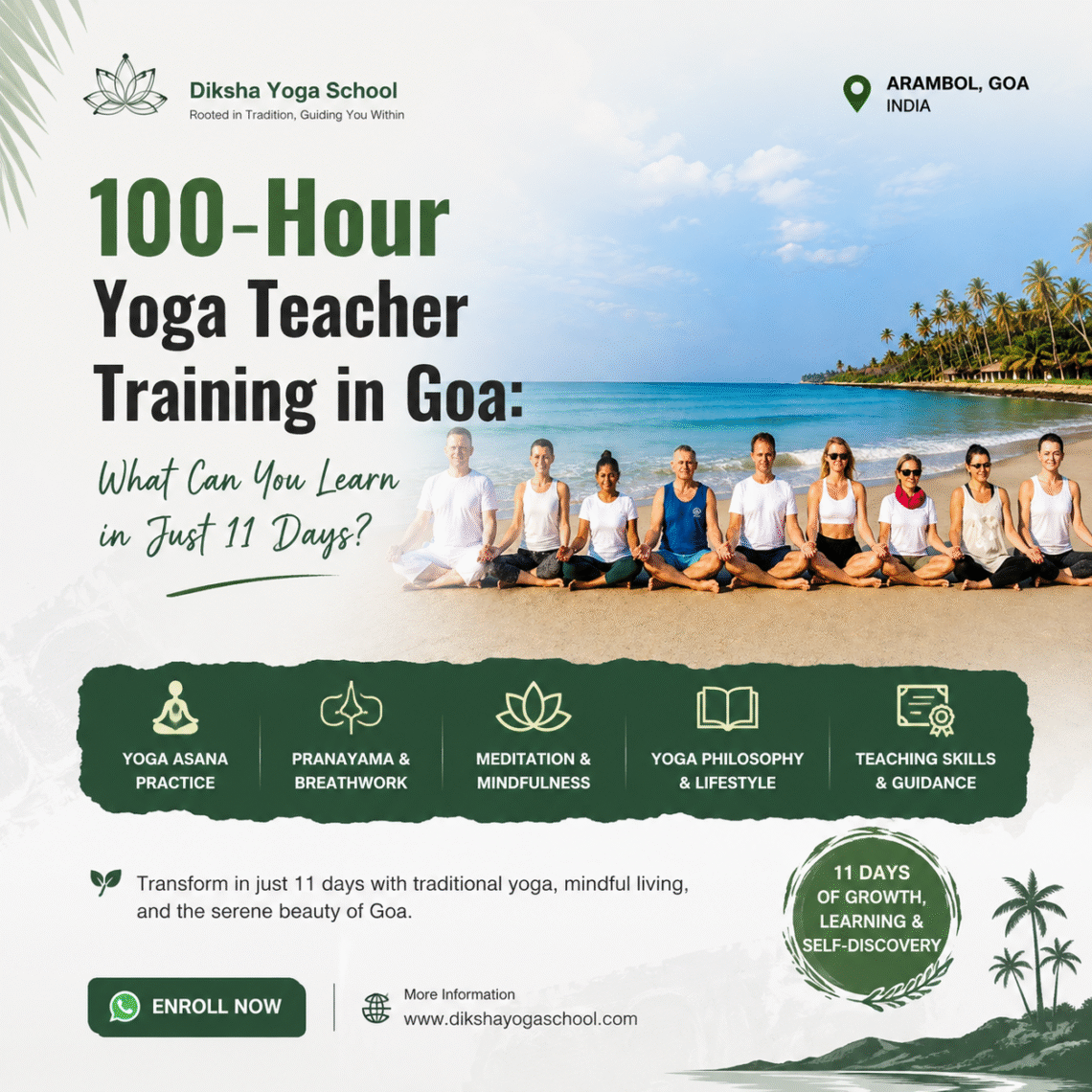
What Can You Learn in Just 11 Days, If you have been searching for a 100-hour yoga teacher training in Goa, you may have asked yourself this question.
A 100-hour program is shorter than a traditional 200-hour teacher training, so it is natural to wonder what you can realistically learn in such a limited amount of time.
Table of Contents
Can you actually deepen your practice?
Can you learn to teach?
Will you study more than asana?
And is 11 days enough to make the experience worthwhile?
The honest answer is:
It depends on what you expect from the training.
An 11-day intensive is not a shortcut to becoming an experienced yoga teacher.
It is an opportunity to step away from your normal routine, immerse yourself in yoga and build a stronger foundation through focused practice and study.
At Diksha Yoga School in Goa, our 100-hour training brings together traditional Hatha Yoga, Vinyasa Flow, Pranayama, meditation, yoga philosophy, anatomy and teaching methodology in an intensive residential environment.
The goal is not to rush through 100 hours simply to receive a certificate.
The goal is to make those hours meaningful.
What Can You Really Learn in 11 Days?
Let’s start with the most important question.
You cannot become an experienced yoga teacher in 11 days.
But you can make significant progress.
You can develop a more consistent personal practice.
You can understand yoga beyond physical postures.
You can become more comfortable with basic teaching principles.
You can learn how breath, movement, awareness and sequencing work together.
And you can discover whether deeper yoga education is something you genuinely want to pursue.
For some students, a 100-hour course is a focused immersion.
For others, it is a bridge toward a longer teacher-training journey.
The value comes from how deeply you engage with the 11 days, not simply from the number printed on the certificate.
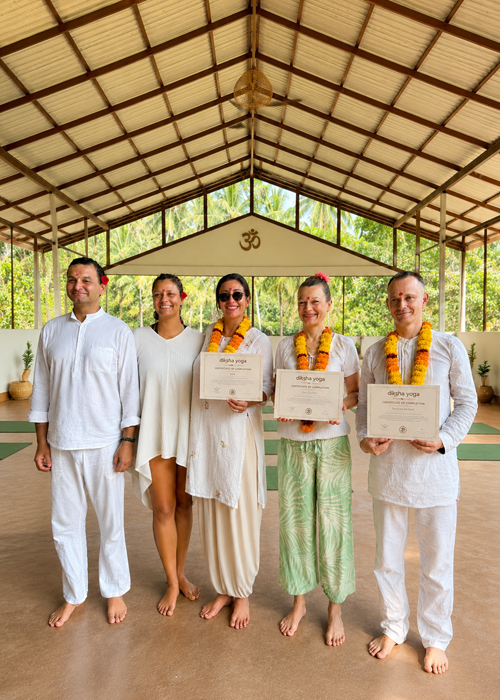
What Makes a 100-Hour Training Different From a 200-Hour Course?
A 100-hour program should not pretend to replace a comprehensive 200-hour teacher training.
The two serve different purposes.
| What to consider | 100-Hour Yoga Teacher Training | 200-Hour Yoga Teacher Training |
| Main purpose | Intensive immersion and deeper foundation | Comprehensive foundation for yoga teaching |
| Duration | Shorter, focused format | Longer, more extensive study |
| Asana | Develop and refine foundational practice | Broader and deeper study of asana and teaching |
| Pranayama | Build understanding of foundational practices | More extensive study and application |
| Meditation | Establish or deepen regular practice | More comprehensive exploration |
| Yoga philosophy | Introduction and deeper reflection on key concepts | Broader and more detailed philosophical study |
| Anatomy | Build practical foundational understanding | More comprehensive anatomy for teaching |
| Teaching methodology | Introduction to teaching principles | More extensive teacher-development training |
| Teaching practice | Begin developing teaching confidence | More opportunities for structured teaching practice |
| Personal practice | Intensive opportunity to deepen your practice | Long-form development of practice and teaching |
| Best suited for | Practitioners seeking an intensive immersion or additional training | Students seeking a more comprehensive teacher-training pathway |
So, is 100 hours enough?
Enough for what?
That is the better question.
If you want a complete professional foundation for teaching yoga, you should carefully consider a comprehensive 200-hour program.
If you want to deepen your practice, study traditional yoga more seriously, develop foundational teaching skills or continue your education without committing to a longer program, a 100-hour immersion can be a very meaningful option.
Being honest about this difference is important.
A good yoga school should help you choose the program that fits your goals—not simply encourage you to book the longest course.
What You’ll Study at Diksha Yoga School’s 100-Hour Training
At Diksha Yoga School, the 100-hour training is designed as an intensive immersion rather than a collection of disconnected classes.
Across the training, students explore several dimensions of yoga.
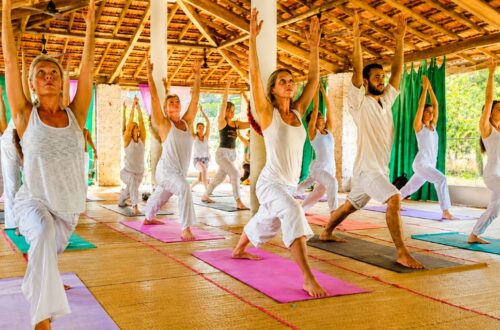
Hatha Yoga provides an important foundation for understanding the relationship between posture, breath, awareness and stability.
You work with asana practice while developing greater awareness of alignment and mindful movement.
The objective is not simply to perform more postures.
It is to understand the practice more clearly.
Vinyasa introduces the relationship between breath and movement.
Students learn how postures can be connected into purposeful sequences rather than practiced as isolated movements.
This also gives you an introduction to the thinking behind sequencing a yoga class.
Breath is central to the traditional practice of yoga.
During the training, students explore Pranayama practices and develop greater awareness of the breath and its relationship to concentration and the quality of practice.
Rather than treating breathing exercises as something added to an asana class, the training encourages students to understand Pranayama as an important part of yoga practice.
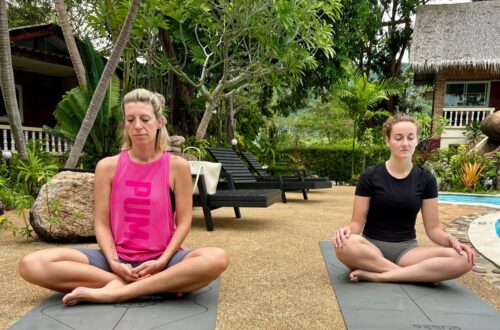
Meditation gives students space to move beyond physical practice.
Through regular practice, you can begin developing greater concentration, awareness and stillness.
For many students, this becomes one of the most valuable parts of an intensive residential training because there is time to establish a consistent practice rather than trying to meditate occasionally at home.
Yoga teacher training should not be only about physical postures.
The 100-hour curriculum introduces students to important yogic concepts and philosophical teachings, helping connect the practice on the mat with everyday life.
This can change the way you understand yoga.
You begin asking not only:
“How do I perform this posture?”
but also:
“Why am I practicing it?”
and:
“How does yoga influence the way I live and interact with others?”
Anatomy and Alignment
You don’t need to become an anatomy expert in 11 days.
But you can develop a better understanding of the body and learn why alignment, stability and individual differences matter.
This foundation can help you practice more consciously and begin thinking more carefully about how you might guide another person.
Teaching Methodology
One of the most useful parts of a 100-hour training can be learning how to communicate yoga.
You may explore:
- Basic sequencing
- Verbal instruction
- Demonstration
- Teaching presence
- Observation
- Clear communication
- Basic adaptations
- Giving and receiving feedback
This does not mean that 11 days will turn you into an experienced teacher.
It gives you an introduction to the skills you will continue developing through practice and further education.
A Note From Yogini Manisha
After more than 16 years of teaching and mentoring yoga practitioners, I have seen students arrive at teacher training with very different expectations.
Some want to deepen their personal practice.
Some want to learn how to teach.
Some are simply curious about traditional yoga and want to experience it more seriously.
And some are not yet sure what they are looking for.
A 100-hour training can be valuable for all of these students—but only when they understand what the training can realistically provide.
“I don’t believe the value of a yoga training is measured only by how much information we can fit into a certain number of days. What matters is what a student actually understands, experiences and takes home with them.
Eleven days can be intensive, but they can also create a powerful space for learning when a student is fully present. You have the opportunity to practice consistently, study with experienced teachers, ask questions, receive feedback and experience yoga as part of your daily life rather than as something you fit into an occasional class.
For me, the purpose of a 100-hour training is not to convince students that they have learned everything. It is to give them a stronger foundation and, hopefully, the curiosity to continue.”
— Yogini Manisha
Founder & Lead Yoga Teacher, Diksha Yoga School
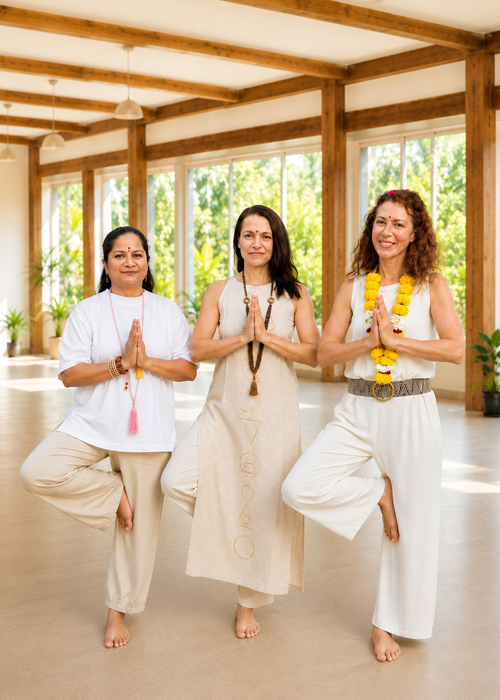
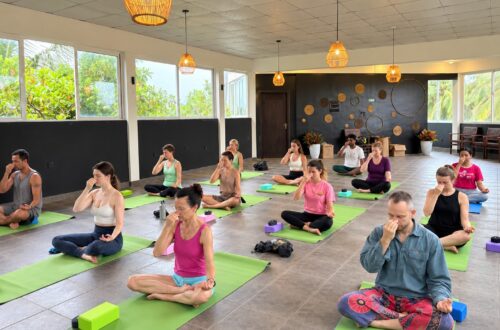
What an 11-Day Residential Experience Actually Feels Like
This is something course descriptions often don’t explain.
An intensive training is not a holiday with a few yoga classes added to the itinerary.
Your days have structure.
You practice.
You study.
You eat together.
You rest.
You reflect.
You meet people from different backgrounds.
And then you return to practice again.
That repetition matters.
You don’t simply learn something once and move on.
You hear an instruction in the morning and may understand it differently after practicing it yourself.
You discuss philosophy and then notice how it relates to your own experience.
You teach something and realize that explaining a posture is very different from performing it.
That is how an intensive course becomes more than a timetable.
What Can Change in Your Personal Practice in 11 Days?
Eleven days won’t transform your body overnight.
And that shouldn’t be the expectation.
But intensive practice can change your relationship with practice.
You may begin to notice:
- Your breath more clearly
- Your alignment more carefully
- Your habits more honestly
- Your tendency to rush
- Your relationship with challenging postures
- Your ability to stay present
- The difference between effort and unnecessary strain
Sometimes the most valuable change is not doing a more advanced pose.
It is learning how to practice the pose you already know with greater awareness.
Can Beginners Join a 100-Hour Yoga Teacher Training in Goa?
This depends on the specific program’s entry requirements.
A 100-hour course can be suitable for practitioners who have some previous yoga experience and want to deepen their understanding without immediately committing to a full 200-hour teacher-training pathway.
However, students should always check the school’s prerequisites before booking.
If you are completely new to yoga, ask the school directly whether the program is appropriate for your experience level.
At Diksha Yoga School, we believe it is better to have an honest conversation before booking than to place a student in a program that doesn’t match their needs.
Who Is a 100-Hour Training Best For?
A 100-hour program may be a good fit if you:
- Already practice yoga and want to deepen your understanding
- Want an intensive residential yoga experience
- Want to study traditional yoga more seriously
- Want an introduction to yoga teaching
- Want to improve your personal practice
- Have completed other yoga education and want to continue learning
- Are considering eventually completing a 200-hour or more advanced training
It may not be the right choice if your only goal is to become a fully prepared professional yoga teacher as quickly as possible.
In that case, compare it carefully with a comprehensive 200-hour yoga teacher training in Goa.
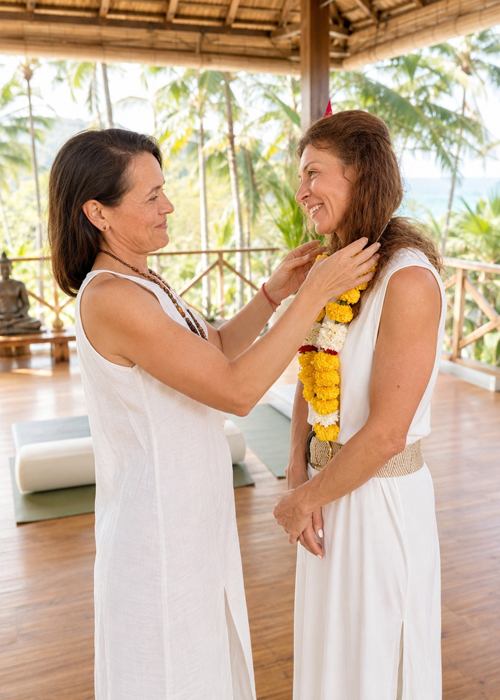
How to Choose a 100-Hour Yoga Teacher Training in Goa
Don’t choose your course based only on photographs, price or the number of hours.
Ask what those hours actually contain.
| What to compare | What you should check |
| Teacher experience | Who actually teaches the program? What is their teaching background? |
| Curriculum | Does it include more than asana—such as Pranayama, meditation, philosophy, anatomy and teaching methodology? |
| Daily schedule | How are the 100 hours distributed across practice, study and teaching? |
| Teaching practice | Will you actually have opportunities to practice teaching? |
| Group size | Will you receive personal guidance and feedback? |
| Accommodation | What type of accommodation is included? |
| Meals | Are meals included and what type of food is provided? |
| Certification | What certificate is provided and what does it represent? |
| Student support | Can you ask questions before arriving? |
| Student experiences | Can you find genuine reviews and photographs from previous students? |
| Total cost | What is included in the advertised price? |
| Next step | Does the school help you understand what training could follow your 100 hours? |
Ask this before paying your deposit
“What will I actually be able to understand or practice better after these 11 days?”
A good school should be able to answer this clearly.
Why Diksha Yoga School Takes a Different Approach
At Diksha Yoga School, we don’t believe an intensive course should mean rushing through information.
The aim is to create a focused environment where students can practice, study, ask questions, receive feedback and reflect.
Our approach combines traditional yoga with practical teaching skills.
Students explore Hatha Yoga, Vinyasa Flow, Pranayama, Meditation, Yoga Philosophy, Anatomy, Alignment and Teaching Methodology within an intensive residential setting.
The emphasis is on understanding rather than simply collecting techniques.
And because the training is led by Yogini Manisha, students learn within a teaching approach shaped by more than 16 years of experience in yoga teaching, training and mentoring.
Why Goa Can Be a Powerful Place for an 11-Day Immersion
There is a reason people travel to Goa for yoga.
The combination of nature, coastal surroundings and an established yoga community can make it easier to step away from everyday distractions.
But the location should support your learning—not become the reason you choose a school.
At Diksha Yoga School, the training takes place in Arambol, North Goa, providing students with an environment where they can focus on practice while still experiencing the character of Goa.
The beach is part of the experience.
But the practice remains the purpose.
Is a 100-Hour Yoga Teacher Training Worth It?
For the right student, yes.
But don’t ask whether 100 hours is “enough.”
Ask whether 100 hours is right for your current goal.
If you want a focused immersion, deeper personal practice and an introduction to teaching, it can be a meaningful investment.
If your goal is a comprehensive foundation for teaching yoga professionally, a 200-hour program may be more appropriate.
And if you already have substantial teacher-training experience and want to continue your development, an advanced program may make more sense.
The best course is not necessarily the longest one.
It is the one that matches where you are now.
What Makes 11 Days Valuable?
The number 11 isn’t what creates the transformation.
Immersion does.
For 11 days, yoga becomes part of your daily rhythm.
You wake up and practice.
You study.
You observe.
You eat.
You rest.
You return to the mat.
You discuss.
You teach.
You reflect.
And gradually, things that seemed complicated begin to make more sense.
That is the real value of an intensive.
Not that you learned everything in 11 days.
But that you had 11 days to slow down enough to learn differently.
Ready to Begin Your 100-Hour Yoga Journey in Goa?
If you are looking for a 100-hour yoga teacher training in Goa, take time to compare the curriculum, teachers, daily schedule, accommodation, meals, teaching practice and overall approach before booking.
Don’t choose a program simply because it looks beautiful online.
Choose the place where you believe you will actually learn.
At Diksha Yoga School in Goa, our 11-day 100-hour immersion is designed for students who want to deepen their practice, explore traditional yoga and develop a stronger foundation in teaching.
You don’t need 100 days to begin going deeper.
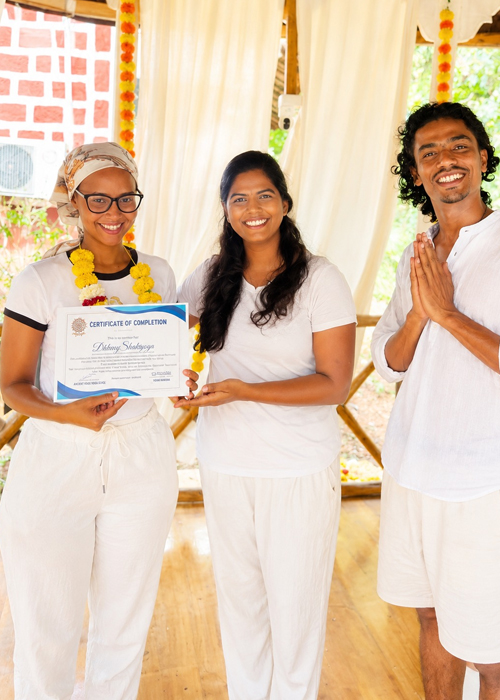
Sometimes, 11 focused days can be the beginning of a much longer journey.
Explore the 100-Hour Yoga Teacher Training in Goa
Check upcoming dates, course fees, accommodation, curriculum and inclusions—or contact Diksha Yoga School to discuss whether the 11-day program is right for your experience and goals.
Frequently Asked Questions
What is a 100-hour yoga teacher training in Goa?
A 100-hour yoga teacher training is an intensive yoga education program designed to deepen practice and introduce or develop foundational teaching skills. It is shorter than a comprehensive 200-hour teacher training.
Can I learn to teach yoga in 11 days?
You can begin developing teaching skills in 11 days, including sequencing, communication, observation and basic teaching practice. However, becoming an experienced yoga teacher requires continued practice, teaching experience and ongoing education.
Is a 100-hour yoga teacher training enough to become a yoga teacher?
A 100-hour program should not automatically be considered equivalent to a comprehensive 200-hour teacher-training pathway. If your goal is professional yoga teaching, carefully compare the program’s certification, curriculum and intended outcomes.
What do you study in a 100-hour yoga teacher training?
Depending on the school, subjects can include Hatha Yoga, Vinyasa Flow, Pranayama, meditation, yoga philosophy, anatomy, alignment, sequencing and teaching methodology.
Is a 100-hour yoga teacher training suitable for beginners?
This depends on the school’s entry requirements and your previous yoga experience. Contact the school before booking if you are new to yoga.
What is the difference between 100-hour and 200-hour yoga teacher training?
A 100-hour course is generally a shorter, focused immersion, while a 200-hour program provides a more comprehensive foundation for yoga teaching.
Why choose Goa for a 100-hour yoga teacher training?
Goa offers a peaceful coastal environment and an established yoga community, making it a popular setting for residential yoga study and intensive practice.
How do I choose the best 100-hour yoga teacher training in Goa?
Compare teacher experience, curriculum, practical teaching, group size, accommodation, meals, certification, student reviews, daily schedule and total course inclusions rather than choosing based only on price.
Final Thought From the Yoga Shala
You don’t have to know exactly where your yoga journey is going before you begin.
You only need to know that you want to go deeper.
Eleven days won’t make you an expert.
They won’t replace years of practice.
And they shouldn’t promise to.
But they can give you something equally important:
time to practice, space to learn and the opportunity to see yoga differently.
Perhaps you arrive in Goa thinking you are coming to learn more postures.
You may leave realizing that yoga has much more to teach you than that.
The 100 hours are the beginning. What you do with what you learn is where the real journey starts.
Top of Form
Bottom of Form