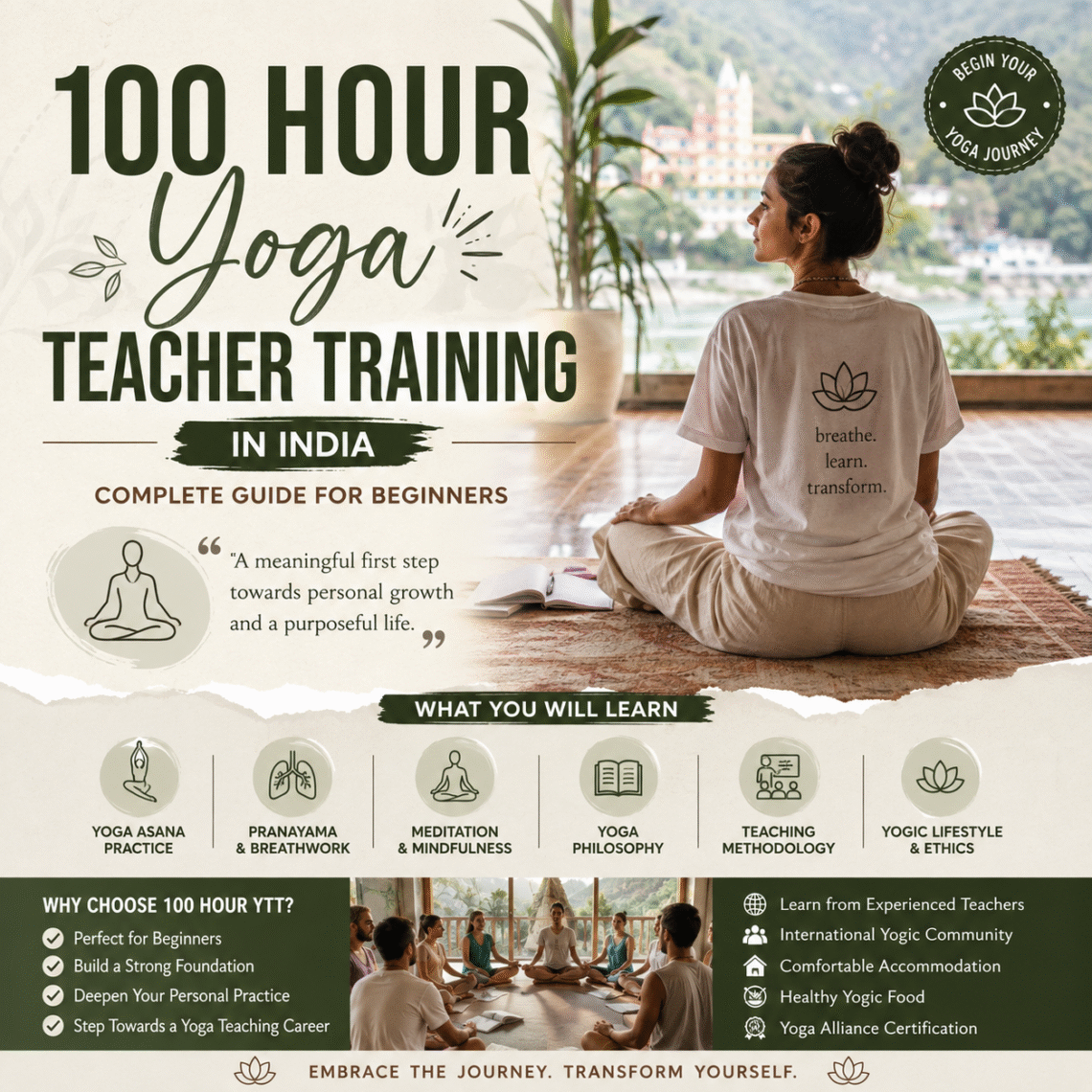
If you are new to yoga and want to build a strong foundation in both practice and teaching, a 100 Hour Yoga Teacher Training in India can be an excellent starting point.
Designed especially for beginners, this training offers a deeper understanding of yoga beyond physical postures, including Hatha Yoga, Asana practice, Pranayama, Meditation, Yoga Philosophy, anatomy, and teaching techniques. Studying yoga in India also allows you to experience its traditional roots while learning in a peaceful and supportive environment. Whether your goal is personal growth, improving your practice, or taking your first step toward becoming a yoga teacher, a 100-hour course provides a structured and meaningful introduction to the yogic lifestyle.
Table of Contents
About the Author
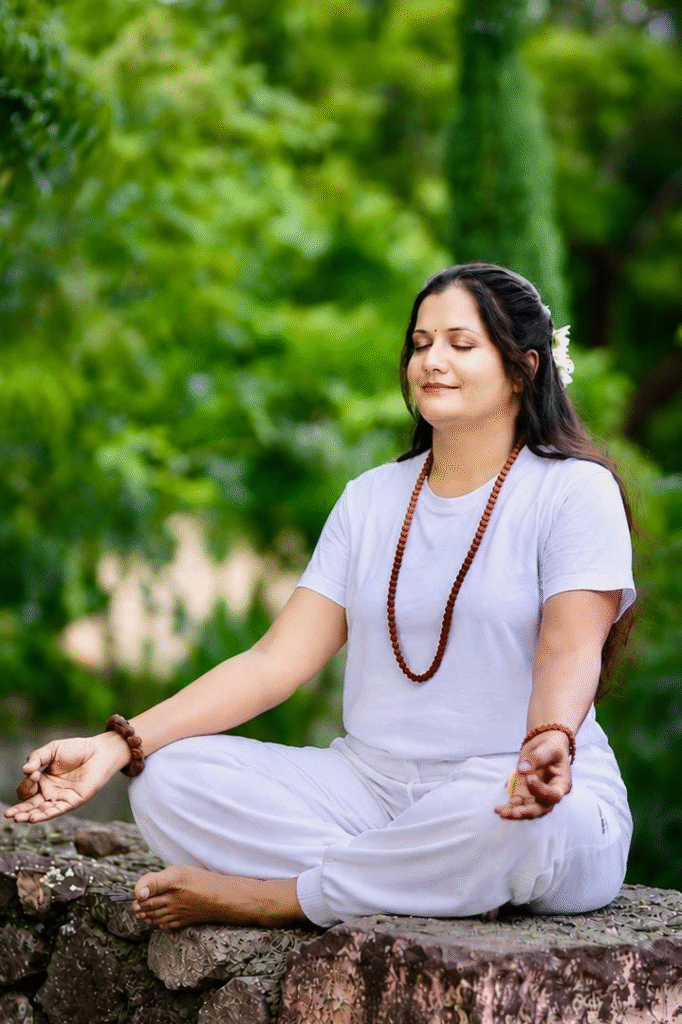
Yogini Manisha
Founder & Lead Teacher, Diksha Yoga School
Yogini Manisha has more than 16 years of experience teaching, training and mentoring yoga practitioners. She founded Diksha Yoga School and teaches Traditional Hatha Yoga, Vinyasa Flow, Pranayama, Meditation, Yoga Philosophy, Anatomy, Alignment and Yoga Teacher Training.
[Read Yogini Manisha’s Full Profile →]
That is enough.
You do not need another long biography here, because you already have the longer personal author section later.
Thinking about joining a 100 Hour Yoga Teacher Training in India but wondering whether you are ready?
Perhaps you have been practising yoga for a few months or several years. Maybe you want to understand the practice beyond the physical postures, develop a stronger personal practice, or explore whether teaching yoga could eventually become part of your life.
A 100-hour training can be a meaningful place to begin.
Unlike a regular yoga retreat, a teacher training introduces you to the principles behind the practice. You do not only learn how to perform an asana. You begin to understand how posture, breath, meditation, philosophy, anatomy and teaching skills fit together.
India offers a particularly meaningful environment for this kind of study because yoga developed within Indian philosophical and contemplative traditions. Goa adds another dimension: a relaxed coastal setting, an international community and an established yoga culture.
At Diksha Yoga School in Goa, the 100 Hour Yoga Teacher Training in India is currently presented as an 11-day, English-language, beginner-level training, with private and shared accommodation options and a multi-style curriculum.
But before choosing a course, it is worth understanding what 100 Hour Yoga Teacher Training in India really means, what you can expect to learn, how it differs from a 200-hour program, what certification you receive, and how to choose a school that genuinely fits your goals.
This guide walks you through all of it.
100-Hour Yoga Teacher Training in Goa at a Glance
Duration: 11 days
Level: Beginner-friendly
Location: Goa, India
Teaching language: English
Accommodation: Private & shared options
Focus: Hatha, Vinyasa, Pranayama, Meditation, Philosophy, Anatomy & Teaching Methodology
Ideal for: Beginners, practitioners and students exploring yoga teaching
A Note From the Author
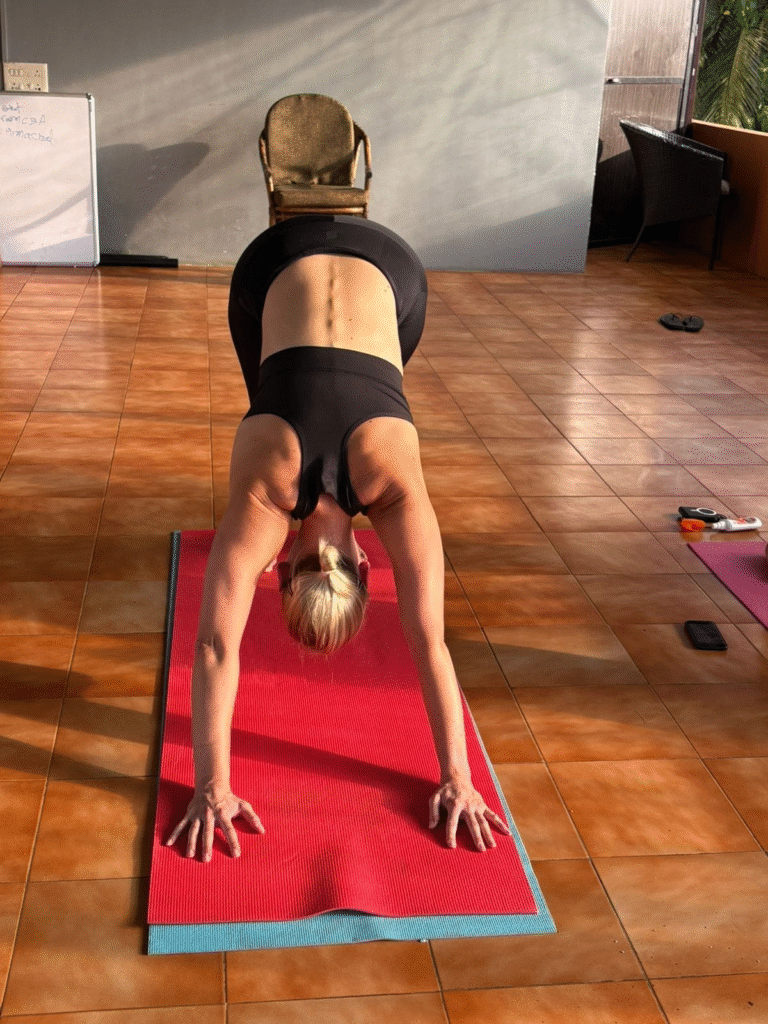
Yogini Manisha — Founder & Lead Teacher, Diksha Yoga School
Yoga teacher training is not something I approach only from a syllabus or a textbook.
I have spent more than 16 years teaching, training and mentoring yoga practitioners, and my experience has taught me that students arrive at teacher training for very different reasons.
Some want to become teachers. Others want to understand their own practice more deeply. Some are completely new to structured yoga education, while others have been practising for years but feel that they are ready to go deeper.
That is why I believe a good teacher training should not focus only on how a posture looks.
Students need to understand the body, the breath, the mind and the principles behind the practice. They also need space to ask questions, make mistakes, receive guidance and gradually develop confidence.
At Diksha Yoga School, my teaching approach brings together Traditional Hatha Yoga, Vinyasa Flow, Pranayama, Meditation, Yoga Philosophy, Anatomy, Alignment and Teaching Methodology, while keeping the learning experience practical and student-centred.
The goal is not to make every student practise in exactly the same way.
It is to help each person understand yoga well enough to continue learning long after the course has finished.
What Is a 100 Hour Yoga Teacher Training in India?
A 100-hour Yoga Teacher Training is an intensive educational program that combines practical yoga with theoretical and experiential learning.
The exact curriculum differs between schools, but a well-structured foundation course may include:
- Hatha Yoga
- Vinyasa Flow
- Asana practice
- Pranayama
- Meditation
- Yoga philosophy
- Anatomy and physiology
- Alignment
- Sequencing
- Teaching methodology
- Practical teaching
The difference between a normal yoga class and teacher training is the depth of questioning.
Instead of simply asking:
“How do I do this pose?”
you begin asking:
- Why is this posture practised?
- What is the purpose of the posture?
- How can it be approached safely?
- How does breathing influence the practice?
- What changes when bodies are different?
- How can a teacher explain the posture clearly?
- How can several postures be connected into a meaningful sequence?
- What does yoga philosophy have to do with everyday life?
That shift—from practising yoga to understanding yoga—is one of the most valuable parts of teacher education.
What Does “100 Hour Yoga Teacher Training in India” Actually Mean?
The 100 Hour Yoga Teacher Training in India refer to the structured learning included in the program.
However, the number itself does not tell you everything about the quality or professional recognition of a course.
A 100-hour certificate should not automatically be understood as equivalent to the Yoga Alliance RYT 200 credential.
If your goal is eventually to become an internationally registered yoga teacher, you should understand the difference between:
- a school’s own 100-hour certificate,
- a Yoga Alliance-registered 200-hour training,
- and the RYT 200 teacher credential.
The current Yoga Alliance pathway for RYT 200 is based on completing a qualifying 200-hour training with a registered school. A shorter 100-hour course should therefore be viewed according to what it actually offers rather than as a shortcut to a 200-hour credential.
This distinction is important when comparing schools and deciding where to invest your time and money.
Is a 100 Hour Yoga Teacher Training in India Suitable for Beginners?
Yes—if the particular course is genuinely designed for beginners.
You do not need to arrive with years of yoga experience or advanced flexibility.
You also do not need to be able to:
- perform a handstand,
- sit comfortably in lotus,
- touch your toes,
- perform advanced backbends,
- hold difficult inversions,
- or look like an experienced yoga practitioner.
Yoga teacher training should not be a physical competition.
For a beginner, the more important qualities are curiosity, consistency, willingness to learn and the ability to listen to guidance.
At a beginner-level training, you should gradually develop a better understanding of your own body rather than trying to force yourself into advanced shapes.
This is also one of the reasons anatomy and alignment are important parts of teacher education.
Who Can Benefit From a 100 Hour Yoga Teacher Training in India?
A 100-hour course can be appropriate for several different types of students.
Beginners
You may have attended yoga classes but never studied yoga systematically.
A residential training can introduce you to the practice in a more structured way.
Regular Practitioners
Perhaps you already practise several times a week but want to understand what you are doing rather than simply following instructions.
You may be interested in teaching but are not yet sure whether a professional teaching path is right for you.
A shorter foundation can help you experience the rhythm of teacher training before committing to a longer program.
Wellness Professionals
People working in fitness, wellness, coaching or related fields may find yoga education useful as an additional area of knowledge, provided they understand the limits of yoga training and do not treat it as a replacement for regulated healthcare qualifications.
Students Seeking Personal Growth
You do not have to become a yoga teacher.
For some people, the purpose is simply to develop a stronger practice, study meditation and philosophy, or spend several days away from the distractions of everyday life.
What Do You Learn During a 100 Hour Yoga Teacher Training in India?
A strong foundation course should balance physical practice with education.
Hatha provides an important foundation for understanding individual postures.
Students can explore standing, seated, balancing, forward-bending, twisting and back-bending postures while developing awareness of breathing, stability and alignment.
The emphasis should not be on forcing the body into a particular shape.
Instead, students learn to understand how a posture works and how it may need to be adapted for different bodies.
Vinyasa introduces a more dynamic relationship between breath and movement.
Students begin to understand how postures can be connected into a sequence rather than treated as unrelated exercises.
This also introduces the fundamentals of sequencing:
Preparation → Movement → Peak → Recovery → Relaxation
A future teacher needs to understand not only which postures to teach but why they appear in a particular order.
Pranayama introduces the yogic approach to conscious breathing.
Depending on the course curriculum, students may explore breath awareness, diaphragmatic breathing, alternate nostril breathing and other foundational techniques.
For beginners, the important lesson is not learning as many techniques as possible.
It is learning how, when and why a breathing practice is used.
Responsible instruction also means understanding when a technique should be modified or avoided.
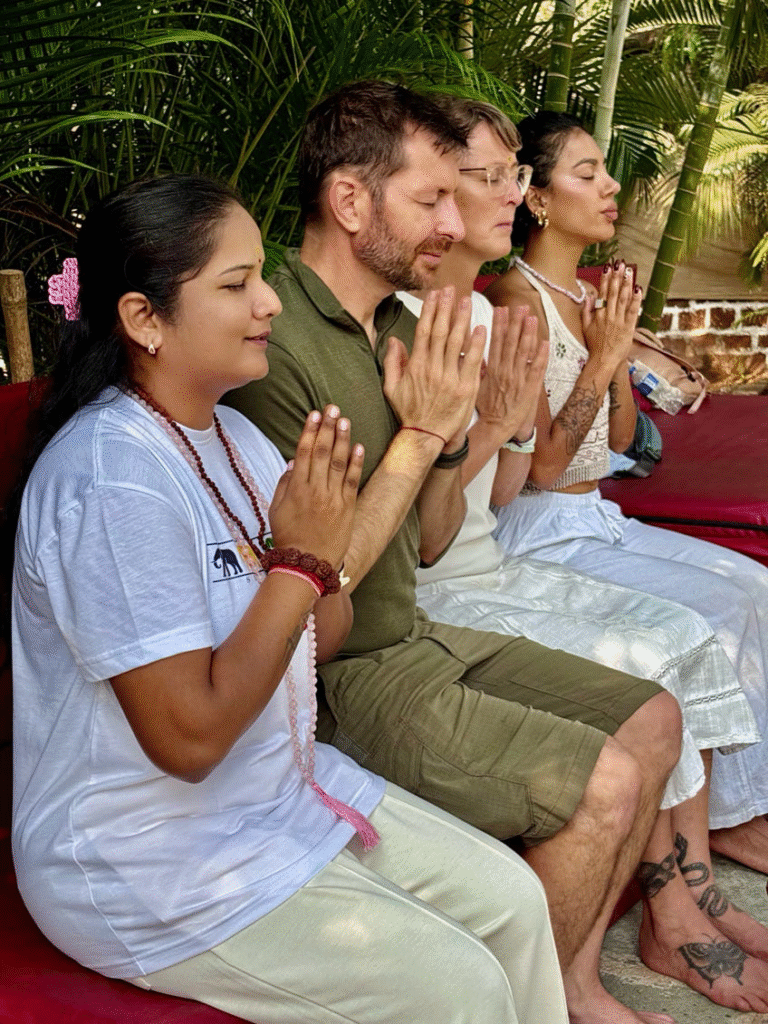
Meditation introduces another dimension of yoga.
Students may explore concentration, awareness, observation and stillness.
Meditation is not necessarily about forcing the mind to become completely empty.
For a beginner, learning to observe thoughts without immediately reacting to them can already be a valuable practice.
Yoga has never been limited to physical postures.
A foundation course may introduce students to subjects such as:
- Patanjali’s Yoga Sutras
- the Eight Limbs of Yoga
- Yamas and Niyamas
- meditation
- self-discipline
- awareness
- traditional perspectives on the mind
The purpose is not simply to memorise Sanskrit terminology.
The more useful question is:
How can yoga philosophy influence the way I live?
Every student has a different body.
Two people can perform the same asana while experiencing very different sensations because of differences in mobility, proportions, strength and movement patterns.
Basic anatomy helps future teachers understand:
- joints and movement
- major muscle groups
- skeletal structure
- range of motion
- alignment principles
- modifications
- common limitations
- safe movement
This creates a more intelligent approach to teaching.
Teaching Methodology
Knowing how to perform a posture is not the same as knowing how to teach it.
Teaching methodology introduces students to skills such as:
- clear verbal instructions
- demonstrations
- cueing
- sequencing
- observation
- class structure
- time management
- modifications
- communication
- practical teaching
This is often the point where students begin to understand what it really means to stand in front of a class.
100 Hour Yoga Teacher Training in India vs 200 Hour Yoga Teacher Training
One of the most important decisions is whether a 100-hour or 200-hour course is more appropriate.
| Your Goal | Better Starting Point |
| Explore yoga education | 100 Hour Yoga Teacher Training in India |
| Deepen your personal practice | 100 Hour Yoga Teacher Training in India |
| Experience residential training | 100 Hour Yoga Teacher Training in India |
| Test whether teaching interests you | 100 Hour Yoga Teacher Training in India |
| Build a comprehensive foundation for teaching | 200 Hour |
| Pursue the Yoga Alliance RYT 200 pathway | 200 Hour RYS 200 |
| Continue advanced professional education | 300 Hour |
A 100-hour course can be an excellent introduction, but it should not be presented as equivalent to a comprehensive 200-hour teacher-training qualification.
If you already know that becoming a professional yoga teacher is your main objective, going directly into a 200-hour program may make more sense.
If you are still exploring, 100 Hour Yoga Teacher Training in India can provide valuable experience before making a longer commitment.
Why Study Yoga in India?
For many students, studying yoga in India is about more than travelling to a different country for a course.
Yoga developed within Indian philosophical, spiritual and contemplative traditions, and studying here can provide an opportunity to encounter those traditions within their broader cultural setting.
That does not mean every school in India provides the same quality of education.
The teacher, curriculum, teaching standards, student support and learning environment still matter.
India provides the setting.
The quality of your education depends on where and how you study.
Why Choose Goa for Yoga Teacher Training?
Goa offers a combination that appeals to many international students:
Yoga + Indian culture + coastal surroundings + international community + residential learning
For an intensive training, the environment can influence the experience.
You wake up, practise, study, eat, rest and spend time with your classmates in the same setting.
Goa also has an established yoga and wellness community, making it possible to experience yoga beyond the classroom.
At the same time, students should understand that a teacher training is not simply a beach holiday.
An intensive program may involve early mornings, several hours of study, physical practice, philosophy, anatomy and teaching practice.
The beauty of Goa is part of the experience—but the learning remains the purpose.
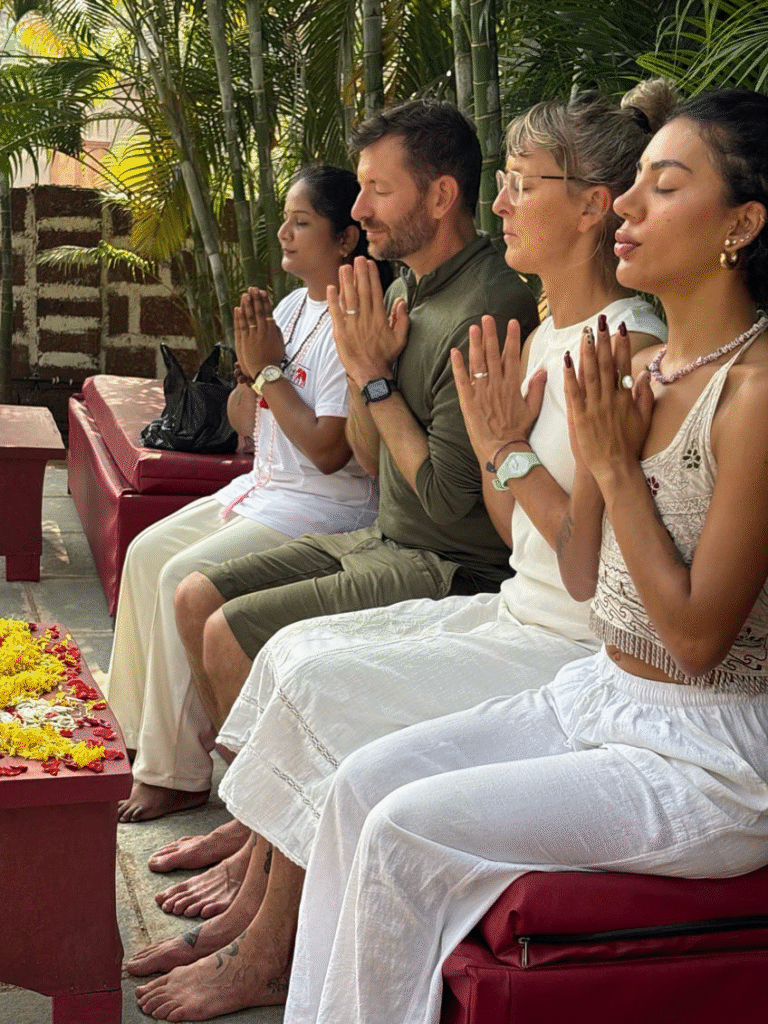
What Is a Typical Day Like?
The exact schedule depends on the school and course.
A residential training may combine:
- morning yogic practices
- asana
- pranayama
- breakfast
- philosophy
- anatomy
- alignment
- meditation
- teaching methodology
- practical teaching
- evening reflection or meditation
The important point is that not every training hour is physical exercise.
You may spend one session moving through postures and another sitting with a notebook discussing anatomy or philosophy.
That is what makes teacher training different from attending a daily yoga class.
Is a 100 Hour Yoga Teacher Training in India Physically Difficult?
It can be demanding, particularly if you are not accustomed to practising every day.
You may experience tiredness or muscle soreness during the first few days as your body adjusts to a new routine.
However, discomfort should not be treated as a measure of progress.
A responsible teacher should encourage students to communicate when something does not feel appropriate and should provide modifications when necessary.
The purpose is not to prove how much discomfort you can tolerate.
The purpose is to develop awareness, discipline and intelligent practice.
What Is Included in a Residential Yoga Teacher Training?
Inclusions vary between schools, so always check the exact package.
A residential program may include:
- yoga classes
- meditation
- pranayama
- philosophy
- anatomy
- alignment
- teaching methodology
- practical teaching
- accommodation
- meals
- course materials
- certificate
Depending on the school, additional services may include airport assistance, transportation, excursions or yoga equipment.
Do not assume that something is included simply because it appears in photographs.
Before paying a deposit, ask for a clear written list of inclusions.
Accommodation: Private or Shared?
Residential accommodation becomes important during an intensive course because you need a comfortable place to rest between sessions.
Private Room
A private room may suit students who:
- prefer personal space,
- sleep lightly,
- want more privacy,
- need quiet time,
- or simply prefer their own room.
Shared Room
Shared accommodation may be suitable if you:
- enjoy meeting other students,
- want to reduce the cost,
- like a more social environment,
- or enjoy sharing the experience with another student.
Diksha Yoga School’s Goa programs currently provide private and shared accommodation options, depending on the course.
Always confirm the exact room category and accommodation arrangements for your chosen intake before booking.
What Food Can You Expect?
Residential yoga programs commonly provide vegetarian or yogic meals designed to support students through an intensive daily routine.
Meals may include foods such as:
- rice
- dal
- vegetables
- fruits
- salads
- roti
- soups
- herbal drinks
The purpose should not be extreme dietary restriction.
Food should support your practice and help you maintain energy throughout the training.
If you have specific dietary requirements or allergies, communicate them with the school before arrival.
How Much Does a 100 Hour Yoga Teacher Training in India Cost?
There is no single standard price.
The cost depends on factors such as:
- location
- course duration
- accommodation
- private or shared room
- curriculum
- teacher experience
- group size
- meals
- course materials
- certification
- transfers
- additional activities
When comparing two schools, do not compare only the headline price.
A less expensive course may include training only, while another price may include accommodation, meals, materials and additional services.
The better question is:
What am I actually receiving for the total course fee?
Is a 100 Hour Yoga Teacher Training in India Certificate the Same as RYS 200?
No.
This is one of the most important things to understand before booking.
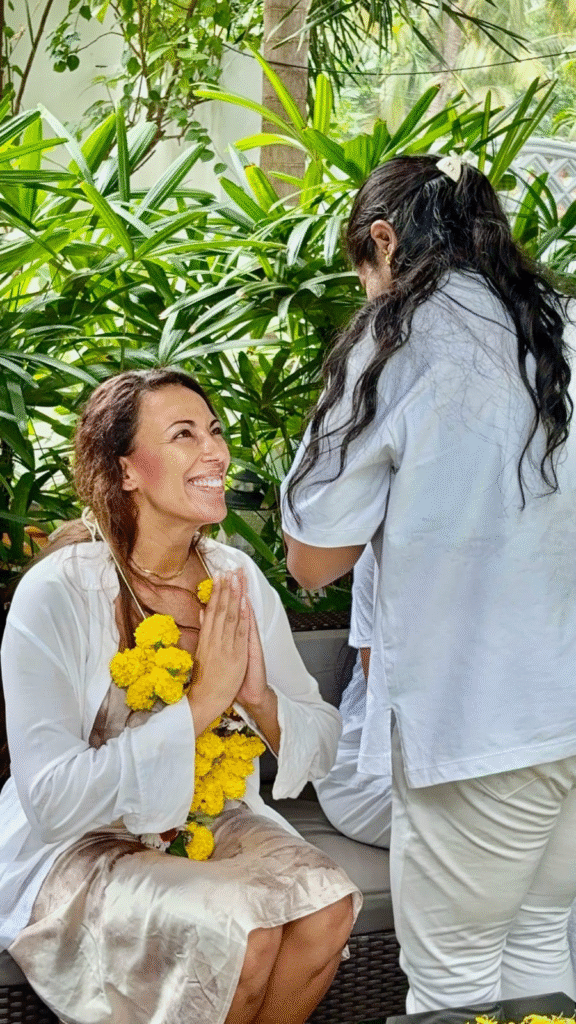
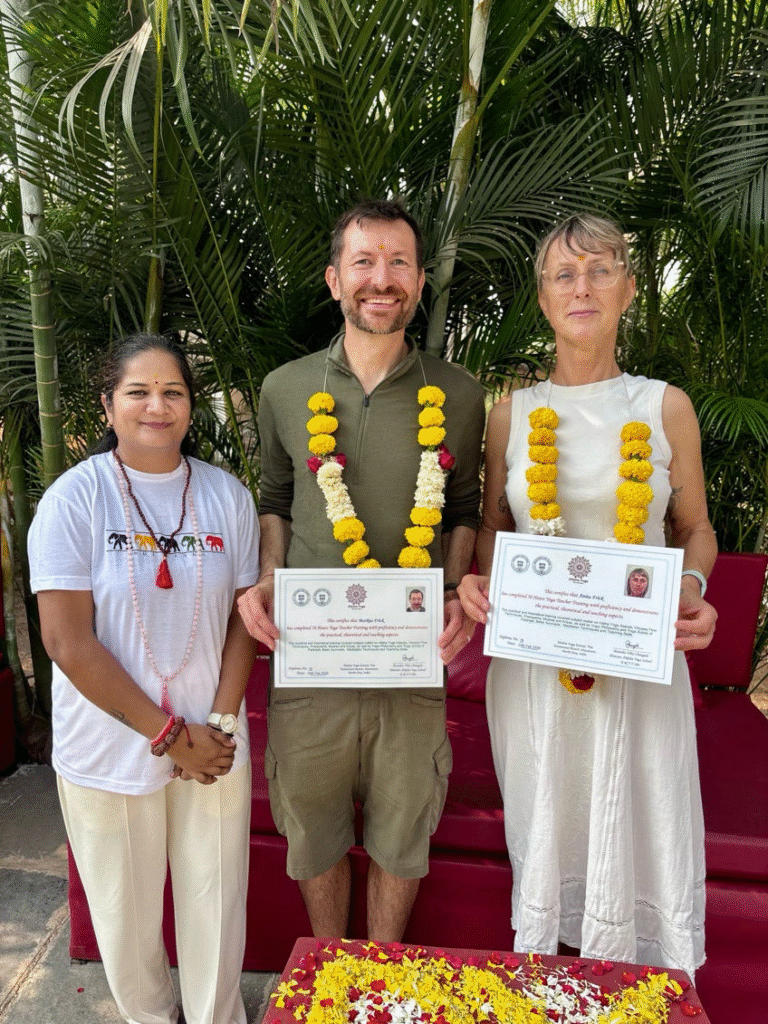
A school may issue its own 100-hour Yoga Teacher Training Certificate after successful completion of the program.
That certificate is not automatically equivalent to the Yoga Alliance RYS 200 credential.
If your goal is specifically to pursue RYS 200, look for a qualifying 200-hour training registered as an RYS 200 and verify the school’s current registration and credential pathway.
A 100-hour course can still be valuable for personal development, foundational knowledge and exploring teaching, but students should understand exactly what the certificate represents.
Can You Teach Yoga After 100 Hour Yoga Teacher Training in India?
A 100-hour program can introduce you to teaching methodology, sequencing, communication, alignment and practical teaching.
However, completing 100 Hour Yoga Teacher Training in India does not automatically make someone a fully qualified professional yoga teacher in every country or under every professional system.
Teaching requirements can depend on:
- the country where you teach,
- the employer,
- professional organisations,
- insurance requirements,
- your training,
- and your practical experience.
If your long-term goal is professional teaching, think of your education as a progression:
Foundation → Deeper Training → Teaching Practice → Experience → Continued Education
The certificate is one part of that journey.
How to Choose the Right 100 Hour Yoga Teacher Training in India
Instead of searching only for the school claiming to be “the best,” compare the things that actually affect your education.
1. Meet the Teachers
Find out:
- who teaches the course,
- where they studied,
- how long they have taught,
- what traditions they teach,
- and whether they personally teach your program.
The teacher standing in front of you will have a greater impact on your experience than a marketing slogan.
2. Read the Complete Curriculum
Look for a clear syllabus covering areas such as:
- Asana
- Pranayama
- Meditation
- Anatomy
- Philosophy
- Alignment
- Sequencing
- Teaching methodology
Avoid choosing a course based only on vague promises of transformation.
3. Ask About Practical Teaching
If you want to teach eventually, ask:
Will I actually practise teaching?
You need opportunities to give instructions, create sequences, observe others and receive feedback.
4. Check the Group Size
Smaller groups can make it easier for teachers to observe students and provide individual guidance.
Ask for the expected maximum group size rather than relying only on the phrase “small group.”
5. Understand the Certification
Ask exactly what certificate you receive.
If a school mentions Yoga Alliance, ask whether it is the school registration, a teacher credential, or both.
6. Check What the Fee Includes
Ask about:
- accommodation
- meals
- course materials
- transfers
- equipment
- excursions
- additional charges
- cancellation policies
Transparency is a positive sign.
Red Flags to Watch For
Be cautious if a school:
Guarantees instant transformation
Yoga can be deeply meaningful, but no responsible school can guarantee that a particular number of days will completely change your life.
Guarantees a career
A certificate does not guarantee employment.
Teaching requires experience, communication, professionalism and continued learning.
Makes medical claims
Yoga education should not be presented as a replacement for medical treatment.
Is unclear about certification
If a school cannot clearly explain what its certificate means, ask more questions before paying.
Hides the curriculum
You should know what you are paying to study.
Uses “Yoga Alliance Certified” without explanation
RYS and RYT are different concepts. Ask exactly what the school’s registration means and what credential your particular course provides.
Why Diksha Yoga School Can Be a Good Starting Point
For beginners looking for an immersive yoga education in Goa, Diksha Yoga School offers a multi-style approach that brings together traditional practices and modern teaching methodology.
The broader educational approach includes:
Hatha Yoga • Vinyasa Flow • Pranayama • Meditation • Yoga Philosophy • Anatomy • Alignment • Teaching Methodology
The Goa program is currently presented as beginner level, with English instruction and private/shared accommodation options.
The school also offers a wider progression of yoga teacher training, allowing students who discover that they want to continue their education to explore longer programs.
What matters most, however, is not simply choosing a school.
It is choosing the right course for your current stage of learning.
A Beginner Does Not Need to Be Flexible
This deserves its own answer because it is one of the most common concerns students have.
You do not need to touch your toes to study yoga.
You do not need to perform advanced inversions.
And you do not need to look like a professional yoga teacher.
In fact, learning as a beginner can teach you something important about future students: everybody has a different body.
A good teacher learns to work with differences rather than expecting every student to create the same shape.
That understanding can become one of the most valuable lessons of teacher training.
What Should You Do Before Arriving?
You do not need to become an advanced practitioner before the course begins.
A few simple preparations can help.
Practise consistently
If you currently practise once a week, gradually develop a more regular routine.
Adjust your sleep
Residential programs often begin early, so getting used to an earlier bedtime can help.
Read a little
You can familiarise yourself with basic concepts such as Hatha Yoga, Patanjali, the Eight Limbs, Pranayama and Meditation.
Prepare mentally
Most importantly, arrive ready to learn.
You are not expected to know everything before entering teacher training.
What Should You Pack?
Keep your packing practical.
Yoga clothing
- leggings or yoga pants
- comfortable trousers
- breathable tops
- lightweight clothing
- sleepwear
Personal items
- reusable water bottle
- yoga mat if required
- towel
- notebook
- pens
- sunscreen
- mosquito repellent
- sunglasses
- comfortable sandals
- light layer or shawl
- personal medication
Always check with the school about what equipment is already provided.
What Happens After a 100 Hour Yoga Teacher Training in India?
Your next step depends on why you joined.
You may simply return home and continue your personal practice.
You may decide that you want to study for a 200-hour teacher training.
Or you may discover an interest in a particular area such as:
- meditation
- pranayama
- restorative yoga
- Yin Yoga
- Ayurveda
- yoga philosophy
- advanced Hatha
- Vinyasa sequencing
Some students eventually develop careers in studios, retreats, wellness centres, private teaching, online classes or other settings.
But there is no requirement to turn your first training into a career.
Sometimes the most valuable outcome is simply becoming a more knowledgeable and consistent student.
Is a 100 Hour Yoga Teacher Training in India Worth It?
For the right student, yes.
The value is not only in the number printed on your certificate.
It is in what you understand by the end of the training.
Can you approach asana with more awareness?
Do you understand the relationship between breath and movement?
Can you explain basic yoga concepts?
Can you recognise when a posture needs to be modified?
Have you become more comfortable with meditation?
Do you have a clearer understanding of whether you want to continue into deeper teacher education?
If the answer to some of these questions is yes, then the course has already provided something valuable.
Frequently Asked Questions
Is a 100-hour Yoga TTC suitable for beginners?
Yes, when the specific program is designed for beginners. You do not need years of yoga experience or advanced flexibility.
Do I need to be flexible?
No. Flexibility is not a prerequisite for learning yoga.
Do I need previous yoga experience?
Not necessarily. A beginner-level program should explain the foundations progressively.
Can people over 40 or 50 join?
Age alone should not prevent someone from studying yoga. The important considerations are the course level, physical abilities and individual circumstances.
Can couples join together?
Yes, provided both meet the course requirements. Ask the school about room arrangements and whether both students can join the same intake.
Is 100 Hour Yoga Teacher Training in India enough for RYS 200?
No. A 100-hour course is not automatically equivalent to the Yoga Alliance RYS 200 pathway. Students specifically seeking RYS 200 should investigate a qualifying 200-hour RYS 200 program.
Can I teach yoga after 100 Hour Yoga Teacher Training in India?
A 100-hour course can introduce teaching skills, but professional teaching requirements vary. Further education and practical experience may be necessary depending on your goals and location.
How long does a 100-hour course take?
There is no universal duration. Intensive residential programs may complete the training over a shorter period, while other programs may spread the hours over several weeks.
Is Goa a good place for yoga teacher training?
Goa can be an excellent environment for students who want to combine structured yoga education with India’s coastal culture and international yoga community.
Should I choose private or shared accommodation?
That depends on your budget and personal preference. Private rooms offer more privacy, while shared rooms can be more social and economical.
Final Thoughts: Begin as a Student
A 100-hour Yoga Teacher Training is not meant to teach you everything about yoga.
Yoga is a lifelong discipline.
The purpose of a foundation course is to give you enough understanding to continue exploring it with greater awareness.
You may arrive wanting to learn more asanas.
You may leave thinking more deeply about your breath.
You may arrive wanting to become a teacher.
You may discover that you first need to become a better student.
You may arrive looking for a new experience in India and leave with a completely different relationship with your practice.
There is no single correct outcome.
What matters is that your training gives you a strong foundation, honest guidance and the desire to keep learning.
Students Testimonials
Lukas M. — Germany
“Joining the 100 Hour Yoga TTC India at Diksha Yoga School in Goa was a wonderful experience. I came with a basic understanding of yoga, but the course helped me understand the practice on a much deeper level. I especially enjoyed the Hatha Yoga, Pranayama, meditation, and philosophy classes. The teachers were patient and approachable, and I always felt comfortable asking questions. Staying in Goa made the experience even more special. I would definitely recommend Diksha Yoga School to anyone looking for a meaningful introduction to yoga in India.”
Claire R. — France
“My 100 Hour Yoga Teacher Training in India at Diksha Yoga School was exactly the experience I was hoping for. The course was well structured, and I loved how the teachers connected the physical practice with breathing, meditation, and the traditional philosophy of yoga. As a beginner, I sometimes felt nervous about my practice, but the supportive environment helped me become more confident. The peaceful atmosphere of Goa and the warm community made the whole training very memorable. I left with a stronger practice and a completely new appreciation for yoga.”
Begin Your 100 Hour Yoga Teacher Training Journey in Goa
If you are searching for a 100 Hour Yoga Teacher Training in India, Goa offers a unique combination of focused yoga education, Indian culture, coastal surroundings and residential learning.
At Diksha Yoga School, the approach goes beyond physical postures, bringing together traditional yoga practices with anatomy, philosophy, pranayama, meditation, alignment and teaching methodology.
Whether you are completely new to structured yoga education or already have an established practice, the first step remains the same:
Begin as a student.
Learn patiently.
Practise consistently.
Ask questions.
Stay curious.
And allow your understanding of yoga to develop naturally.
Your first 100 Hour Yoga Teacher Training in India will not teach you everything about yoga.
They are not supposed to.
They can give you something more important:
a strong foundation and a reason to keep learning.
Start Your Yoga Journey in Goa — Enroll Today