If you have already completed a 200-hour Yoga Teacher Training and feel ready to deepen your knowledge, a 300 Hour Yoga Teacher Training Syllabus can take your practice and teaching to a more advanced level.
A 200-hour program gives you a foundation.
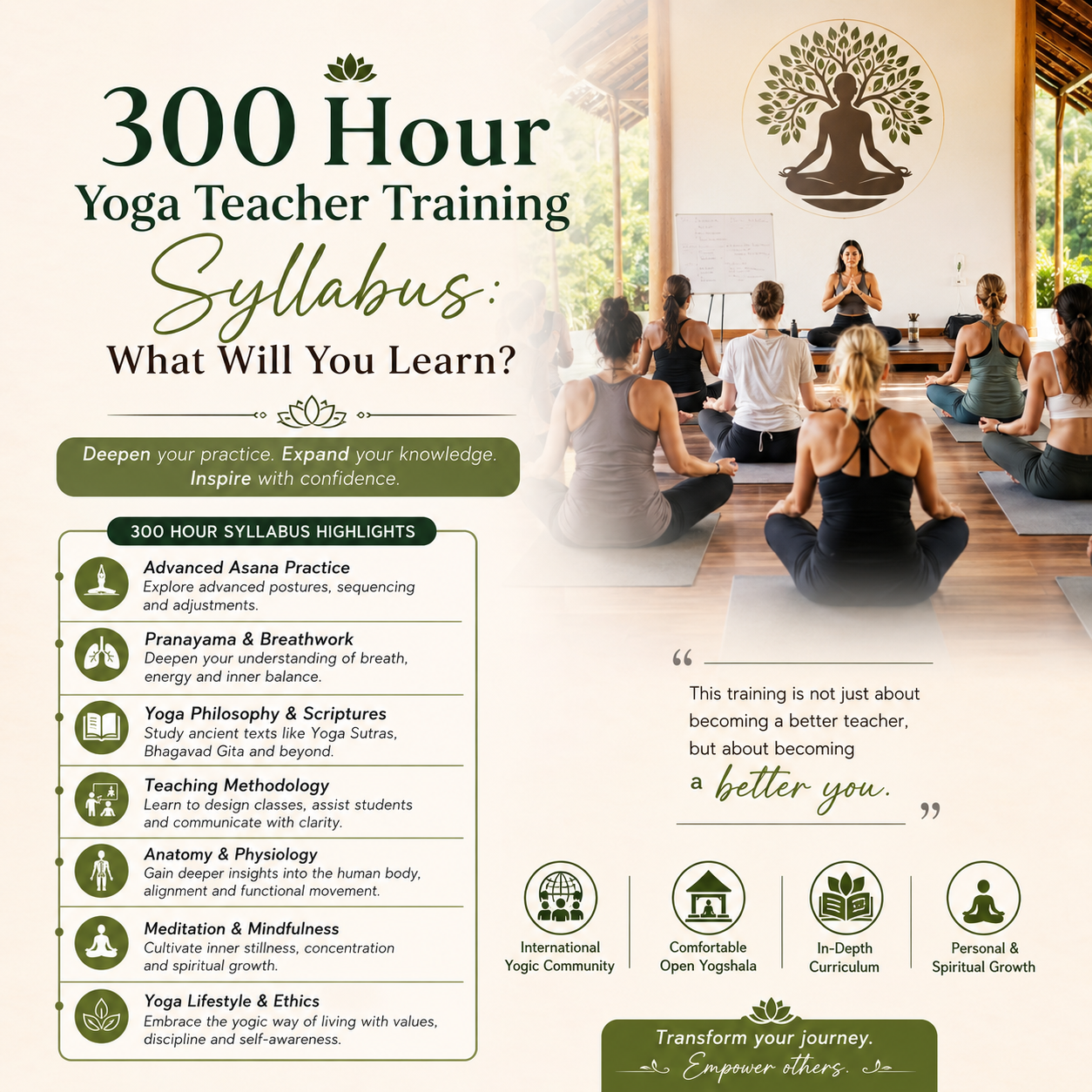
A 300-hour program gives you the opportunity to go deeper into that foundation—with more time for advanced asana, sequencing, anatomy, pranayama, meditation, yoga philosophy, teaching methodology and practical application.
But what exactly do you study during 300 Hour Yoga Teacher Training Syllabus?
What makes a 300-hour course different from a 200-hour training?
And how can you tell whether a syllabus is genuinely advanced rather than simply a longer version of a beginner course?
This guide explains the key areas you should expect to explore in a 300 Hour Yoga Teacher Training Syllabus, including the learning experience at Lotus Sutra, Arambol Beach, Goa.
Table of Contents
About the Author
Founder & Lead Teacher, Diksha Yoga School
Yogini Manisha has more than 16 years of experience teaching, training and mentoring yoga practitioners. Her teaching brings together Traditional Hatha Yoga, Vinyasa Flow, Pranayama, Meditation, Yoga Philosophy, Anatomy, Alignment and practical Teaching Methodology.
Her approach to advanced teacher education focuses not simply on performing more difficult postures, but on developing the understanding, awareness and teaching skills required to guide different students responsibly.
[Read Yogini Manisha’s Full Profile →]
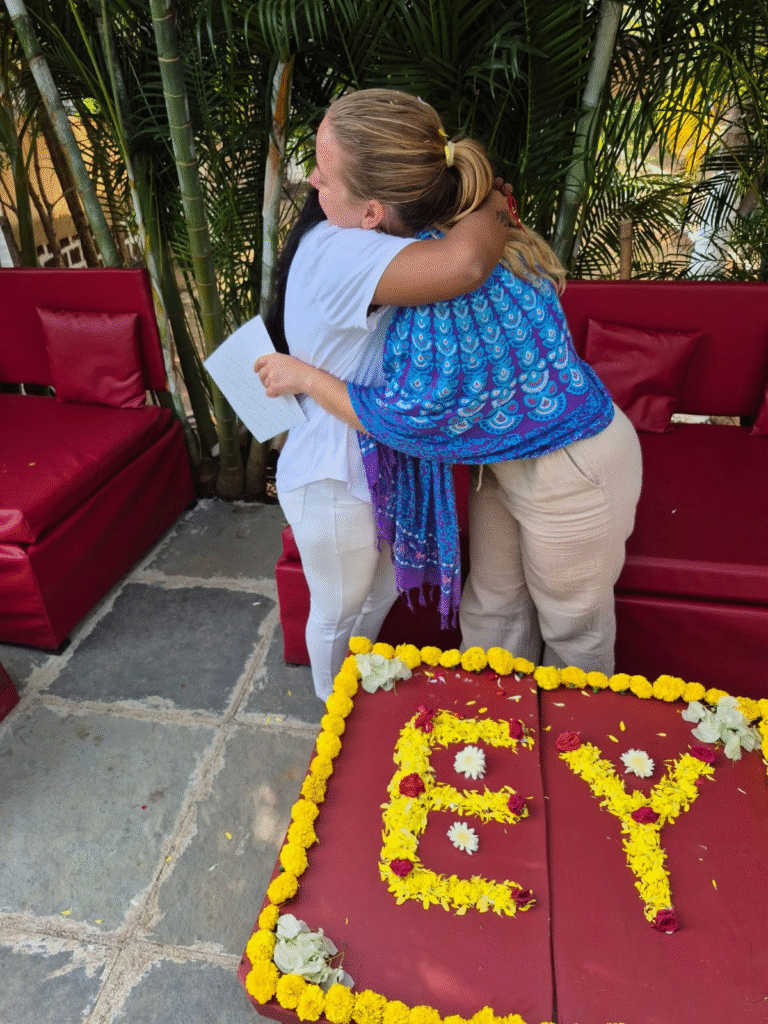
300 Hour Yoga Teacher Training Syllabus at a Glance
| Course Detail | Information |
| Program | 300 Hour Yoga Teacher Training Syllabus |
| Location | Lotus Sutra, Arambol Beach, Goa, India |
| Level | Advanced / Continuing Education |
| Ideal For | Graduates of 200-hour teacher training and experienced practitioners |
| Main Focus | Advanced practice, teaching, philosophy, anatomy and professional development |
| Learning Format | Intensive, immersive training |
| Teaching Language | English |
| Certificate | 300-Hour Yoga Teacher Training Certificate, according to the school’s applicable program requirements |
The exact curriculum, schedule and certification requirements should always be confirmed with the school before booking.
What Is a 300 Hour Yoga Teacher Training Syllabus?
A 300-hour Yoga Teacher Training is generally designed for students who already have a foundation in yoga and want to develop greater depth as practitioners and teachers.
It is not simply:
“200 hours + 100 more hours.”
The purpose is to move from basic understanding toward greater depth, refinement and independence.
By this stage, students should already be familiar with foundational asanas, basic pranayama, meditation and yoga philosophy.
The focus can therefore shift toward questions such as:
- How can I teach more effectively?
- How can I work with different levels of students?
- How can I build intelligent sequences?
- How can I understand advanced asana more deeply?
- How can anatomy influence my teaching?
- How can I adapt a practice without losing its purpose?
- How can I develop my own authentic teaching voice?
- How can traditional yoga philosophy inform modern teaching?
These questions form the foundation of advanced teacher education.
Who Is a 300 Hour Yoga Teacher Training Syllabus For?
A 300-hour program is generally most appropriate for students who already have substantial yoga education and practice experience.
It may be suitable for:
200-Hour Yoga Teacher Training Graduates
If you have completed a recognised 200-hour teacher training and want to continue your education, a 300-hour program can provide the next level of study.
Experienced Yoga Teachers
Teachers who have already started teaching may use advanced training to improve their sequencing, anatomy knowledge, communication and teaching confidence.
Dedicated Practitioners
Some experienced practitioners want to deepen their understanding without necessarily making teaching their full-time profession.
Teachers Seeking Specialisation
A 300-hour program can provide space to explore areas that were introduced only briefly during foundational training.
The exact entry requirements vary by school, so students should confirm eligibility before enrolling.
What Will You Learn in a 300 Hour Yoga Teacher Training Syllabus?
A strong 300-hour syllabus should build on the foundation of previous training rather than simply repeat it.
The following areas form the core of advanced study.
1. Advanced Asana Practice
Advanced asana does not simply mean performing the most difficult posture possible.
The deeper study is about understanding why a posture is practised, how the body moves into it, and how it can be taught safely.
Students may explore more advanced:
- standing postures
- balancing postures
- hip-opening practices
- forward bends
- twists
- backbends
- arm balances
- inversions
- transitions
- advanced variations
The emphasis should remain on awareness, preparation, alignment and appropriate progression.
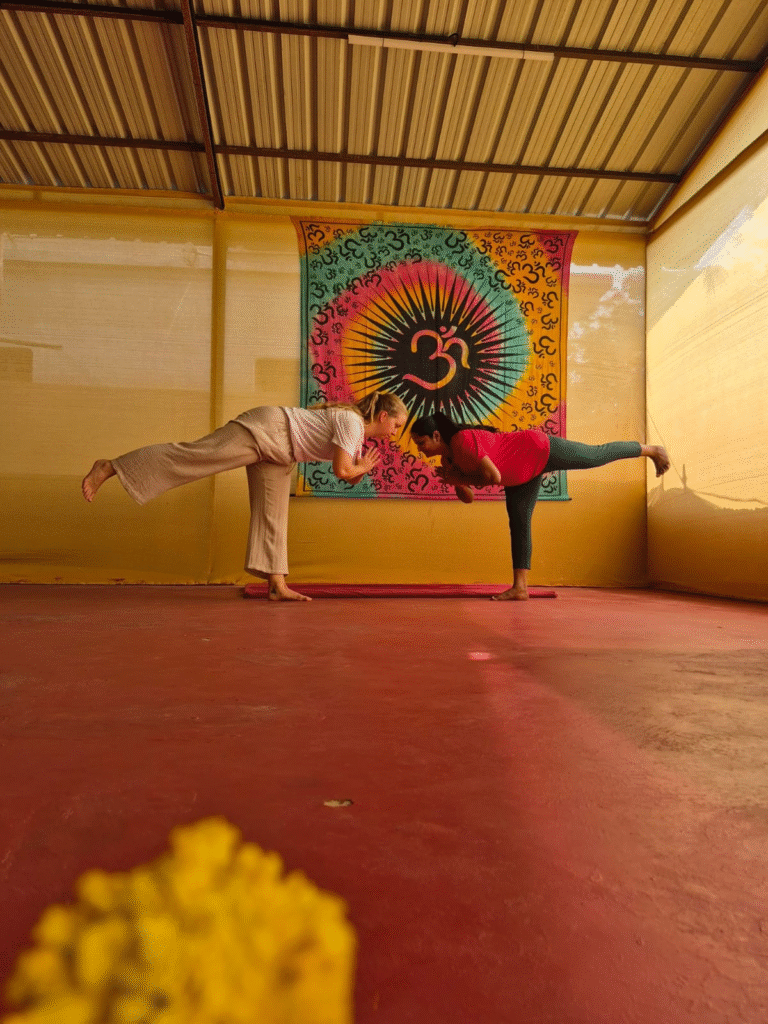
A difficult posture without understanding does not automatically represent advanced yoga.
Hatha Yoga provides an opportunity to revisit familiar practices with greater depth.
Rather than simply learning a list of postures, students can explore:
- alignment
- breath coordination
- energetic awareness
- sequencing
- variations
- preparation for advanced postures
- longer holds
- mindful transitions
- teaching adaptations
Advanced Hatha practice can help students become more observant and precise.
3. Advanced Vinyasa Sequencing
At the 300-hour level, sequencing becomes much more sophisticated.
Students can explore how to design classes around:
- a specific intention
- a peak posture
- movement patterns
- anatomical preparation
- energetic progression
- appropriate counterposes
- transitions
- different student levels
You may learn to build a sequence from the beginning rather than simply memorising a teacher’s class.
For example:
Intention → Warm-up → Preparation → Progressive Sequence → Peak → Counterposes → Integration → Savasana
The goal is to create classes that feel purposeful rather than simply physically demanding.
4. Advanced Pranayama
Pranayama can be studied in greater depth during advanced teacher education.
Depending on the school’s curriculum, students may explore more detailed approaches to:
- Nadi Shodhana
- Ujjayi
- Kapalabhati
- Bhastrika
- Sheetali
- Sheetkari
- breath retention
- bandha integration
- preparation for meditation
Advanced study should also include an understanding of when techniques should be modified or avoided.
A knowledgeable teacher needs to understand both how to teach a technique and when not to teach it.
5. Bandhas and Mudras
Students may explore the traditional use of:
Bandhas
- Mula Bandha
- Uddiyana Bandha
- Jalandhara Bandha
- integration of bandhas with pranayama and practice
Mudras
Mudras can be studied in relation to traditional yogic practices, meditation and energetic awareness.
The emphasis should be on understanding the traditional context rather than treating mudras as simple hand gestures.
At 300 Hour Yoga Teacher Training Syllabus, meditation can move beyond introductory concentration practices.
Students may explore:
- Dharana
- Dhyana
- mindfulness and awareness
- mantra meditation
- Japa
- contemplative practices
- meditation preparation
- longer periods of stillness
- approaches to developing a personal meditation practice
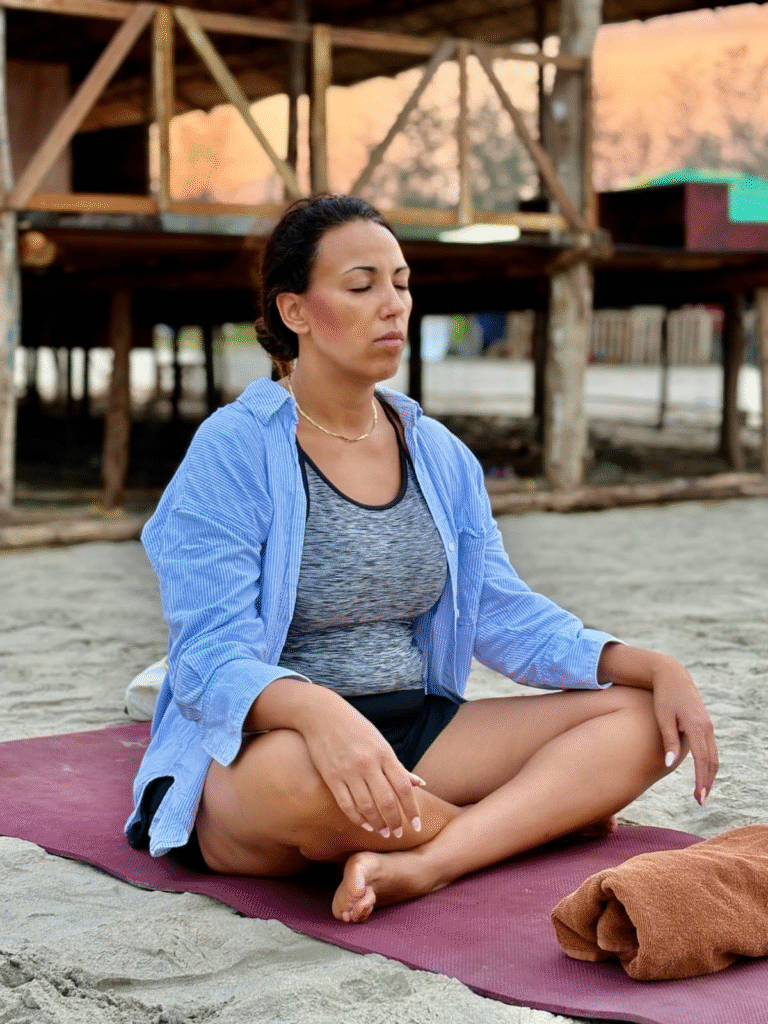
The purpose is not simply to meditate for longer.
It is to understand the process of meditation more deeply and learn how to guide others appropriately.
7. Deeper Yoga Philosophy
A 300-hour program provides an opportunity to revisit philosophy with greater depth.
Possible areas of study include:
Patanjali’s Yoga Sutras
Students can explore selected sutras in relation to practice, mind and teaching.
Traditional Hatha Yoga teachings can be examined in greater detail.
Bhagavad Gita
Students may explore themes such as:
- Dharma
- Karma Yoga
- self-discipline
- detachment
- action
- awareness
Eight Limbs of Yoga
At an advanced level, the Eight Limbs can be considered not simply as a list of concepts but as an integrated approach to yogic living.
The goal is to connect philosophy with practice.
8. Advanced Anatomy and Physiology
Anatomy becomes increasingly important as teaching becomes more advanced.
Students can develop a deeper understanding of:
- skeletal structure
- joints
- muscular actions
- fascia
- movement patterns
- range of motion
- mobility and stability
- common limitations
- posture and alignment
- injury awareness
- modifications
A deeper understanding of anatomy can help teachers avoid forcing every student into the same visual shape.
Instead, teachers learn to observe the individual in front of them.
9. Functional Approach to Alignment
Advanced alignment should move beyond memorising rigid rules.
Students can explore questions such as:
What is the purpose of this alignment?
Does every body need the same alignment?
What happens when a student cannot create the traditional shape?
How can the posture be adapted while preserving its intention?
This encourages teachers to think rather than simply repeat instructions.
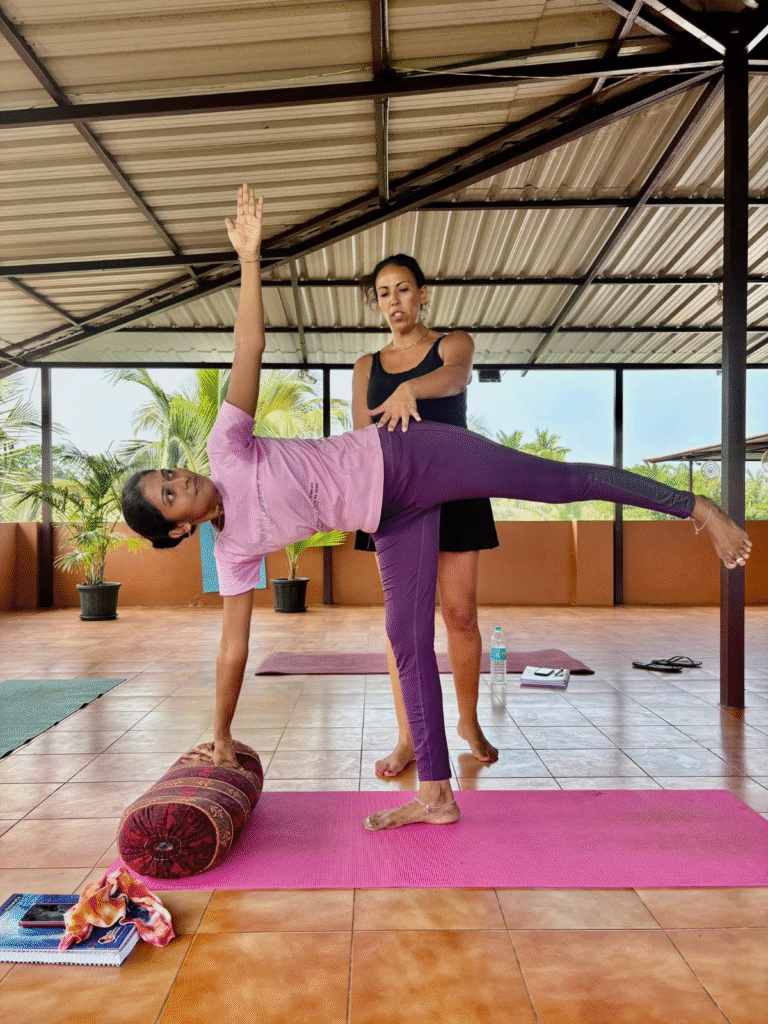
10. Advanced Teaching Methodology
Teaching methodology is one of the most important areas of a 300-hour program.
Students can refine:
- verbal cueing
- demonstrations
- sequencing
- observation
- class management
- voice modulation
- teaching presence
- timing
- communication
- modifications
- use of props
- student feedback
- hands-on teaching approaches where appropriate
At this level, the question changes from:
“Can I teach a yoga class?”
to:
“Can I teach different students effectively and responsibly?”
11. Advanced Sequencing and Class Design
A 300-hour teacher should be able to create classes independently.
Students can practise designing sequences for different purposes and levels, such as:
- beginner-friendly classes
- intermediate practices
- advanced sessions
- peak-pose sequences
- backbend-focused classes
- hip-opening practices
- balancing practices
- restorative sessions
- pranayama and meditation sessions
The teacher should be able to explain why each element appears in the sequence.
12. Teaching Practicum
Practice teaching is essential.
Students may be asked to:
- prepare complete classes
- teach sections of a sequence
- observe classmates
- provide constructive feedback
- receive feedback from teachers
- modify classes for different levels
- reflect on their own teaching
This is where theory becomes practical experience.
A student may know the correct Sanskrit name for an asana but still struggle to explain it clearly.
Teaching practicum helps close that gap.
13. Working With Different Student Levels
An experienced teacher rarely teaches a room where everybody has the same body, ability and experience.
Advanced teacher training should therefore explore how to adapt practices for:
- beginners
- intermediate practitioners
- experienced students
- students with limited mobility
- students who need modifications
- mixed-level classes
The objective is not to teach everyone the same way.
It is to understand how to offer an appropriate practice within the same class environment.
14. Restorative and Recovery Practices
Advanced yoga education should also include an understanding of recovery.
Students may explore:
- restorative postures
- relaxation
- supported asana
- conscious breathing
- Yoga Nidra
- recovery practices
- appropriate use of props
A good teacher understands that every class does not need to be physically intense.
15. Yoga Nidra
Yoga Nidra can provide another approach to deep relaxation and guided awareness.
Students may explore:
- preparation
- body awareness
- breath awareness
- rotation of consciousness
- guided relaxation
- appropriate teaching language
The emphasis should be on developing the ability to guide the practice clearly and calmly.
16. Ayurveda and Yogic Lifestyle
Depending on the curriculum, advanced students may also explore introductory principles of Ayurveda and yogic lifestyle.
Possible topics include:
- Doshas
- Dinacharya
- seasonal routines
- food and lifestyle
- daily discipline
- relationship between lifestyle and practice
These subjects should be presented as traditional educational frameworks rather than substitutes for medical care.
17. Teaching Ethics and Professional Development
Becoming a more experienced yoga teacher also means becoming more responsible.
Students can explore:
- teacher-student boundaries
- professional conduct
- communication
- inclusivity
- respecting individual differences
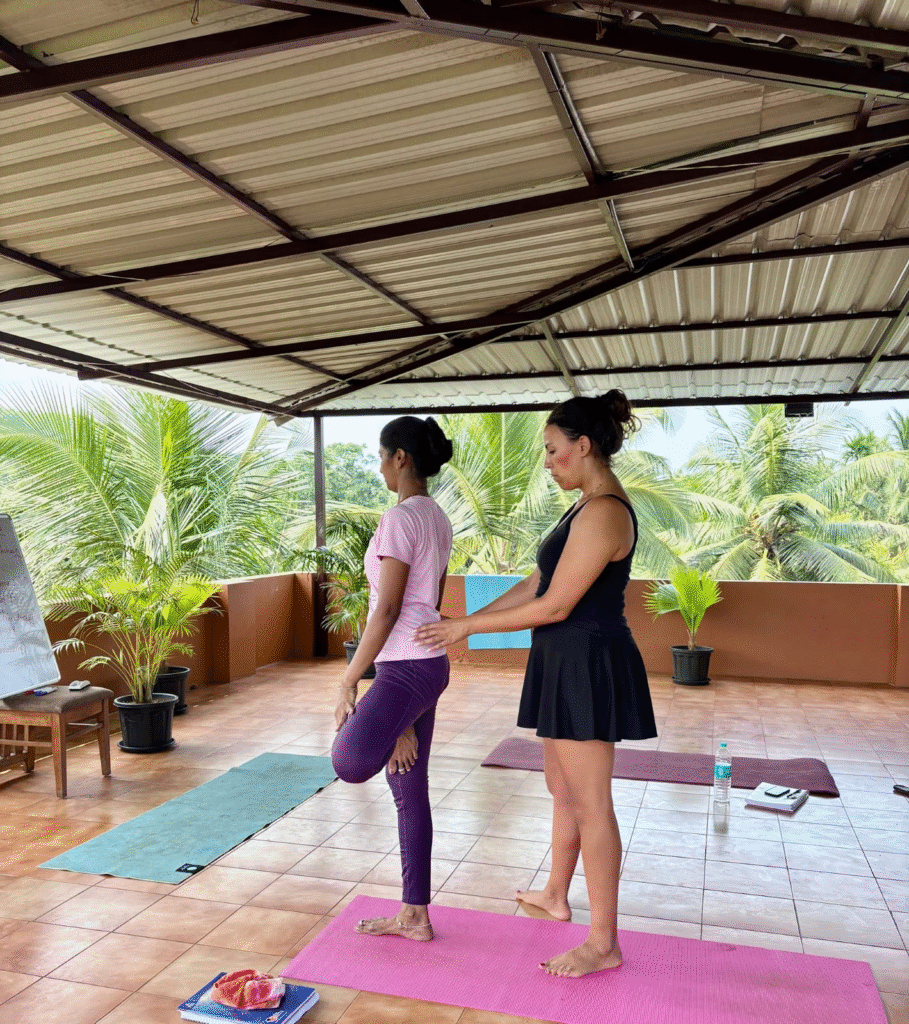
- appropriate adjustments
- responsible use of authority
- continuing education
- professional development
A teacher’s responsibility extends beyond the yoga mat.
18. Developing Your Own Teaching Voice
One of the most valuable outcomes of advanced teacher training is independence.
At the beginning of a teaching journey, students often imitate teachers they admire.
That is a normal stage of learning.
With experience, however, a teacher should gradually develop a personal voice.
You may discover that your strengths lie in:
- clear alignment instruction
- traditional Hatha
- flowing Vinyasa
- meditation
- pranayama
- philosophy
- anatomy
- therapeutic-informed movement
- working with beginners
- advanced practitioners
The goal is not to copy someone else’s teaching style.
It is to become an informed teacher who can teach authentically and responsibly.
300 Hour Yoga Teacher Training Syllabus vs 200 Hour Yoga Teacher Training
The simplest way to understand the difference is:
200 hours = foundational teacher education
300 Hour Yoga Teacher Training Syllabus = advanced and continuing education
| Area | 200 Hour Training | 300 Hour Yoga Teacher Training Syllabus |
| Asana | Foundation | Advanced exploration |
| Anatomy | Foundational | Deeper study |
| Philosophy | Foundation | More detailed study |
| Pranayama | Foundation | Advanced exploration |
| Meditation | Foundation | Deeper practice |
| Sequencing | Developing | Advanced |
| Teaching | Foundation | Refinement |
| Practicum | Introduction | Greater responsibility |
| Student adaptation | Basic | More advanced |
| Professional development | Foundation | Expanded |
| Teaching voice | Beginning | Refinement |
A 300-hour program should therefore build on previous education rather than repeat the same introductory material.
Why Study Advanced Yoga in Goa?
Goa offers a very different environment from a conventional classroom.
For an immersive teacher-training experience, the combination of yoga education, nature, Indian culture and a strong international community can create a valuable setting for deeper study.
Arambol is particularly known for its relaxed coastal atmosphere and international wellness community.
The location can provide space to step away from normal routines and devote more attention to practice and study.
But the setting is only part of the experience.
The quality of the teachers, curriculum, practical teaching and student support remains much more important than the location itself.
300 Hour Yoga Teacher Training Syllabus at Lotus Sutra, Arambol Beach, Goa
The training environment matters when you are spending several weeks studying advanced yoga.
Lotus Sutra at Arambol Beach, Goa provides a coastal setting for an immersive training experience.
Students can combine structured study with time for rest, reflection and connection with the surrounding environment.
Being close to the beach can also create a natural contrast to intensive classroom and practice sessions.
However, an advanced teacher training should not be approached as a holiday.
Students should expect:
- regular yoga practice
- concentrated study
- teaching practice
- philosophy
- anatomy
- self-reflection
- assignments or preparation
- and active participation
The purpose of travelling to Goa is to create the space to study yoga deeply, not simply to practise yoga beside the sea.
A Note From Yogini Manisha
After more than 16 years of teaching, I believe that advanced yoga education should change the way a teacher sees a student.
At the beginning, we often focus on whether a posture looks correct.
With experience, we start asking different questions.
What does this student’s body need?
What is the purpose of this posture?
Can I offer another approach?
Is my instruction clear?
Am I helping the student develop awareness, or simply asking them to copy my shape?
For me, the 300-hour journey is about developing that deeper level of observation.
Advanced does not simply mean harder.
It means more understanding, more awareness and greater responsibility.
The more we learn, the more carefully we should teach.
— Yogini Manisha
Founder & Lead Teacher, Diksha Yoga School
What Should You Look for in a 300 Hour Yoga Teacher Training Syllabus?
Before booking a program, don’t look only at the number of hours.
Look carefully at the syllabus.
Ask:
Does it go beyond the 200-hour foundation?
A 300-hour course should offer meaningful advanced study.
Is there practical teaching?
You should have opportunities to teach and receive feedback.
Are anatomy and alignment developed further?
Advanced teaching requires more than basic anatomical knowledge.
Is philosophy studied deeply?
Look for meaningful exploration rather than simply memorising terminology.
Are different student levels addressed?
A professional teacher needs to understand adaptation.
Who teaches the program?
Research the teachers’ experience and areas of expertise.
What is included?
Check accommodation, meals, course materials, certification and other services.
What is the learning environment?
If residential, understand where you will stay and study for the duration of the course.
Is a 300 Hour Yoga Teacher Training Syllabus Worth It?
For an experienced practitioner or teacher who wants to continue developing, it can be a valuable next step.
The value is not simply another certificate.
It can give you time to:
- refine your personal practice
- deepen your understanding of yoga philosophy
- improve your teaching
- study anatomy more carefully
- develop advanced sequences
- work with different student levels
- gain more teaching experience
- discover your own teaching voice
A 300-hour course should leave you with more questions as well as more knowledge.
That is often a sign of meaningful education.
What Can You Do After a 300 Hour Yoga Teacher Training Syllabus?
Your next step depends on your goals.
You may continue teaching group classes.
You may specialise in a particular area of yoga.
You may begin offering private sessions.
You may teach retreats or workshops.
You may continue studying philosophy, meditation, pranayama, anatomy or another specialised field.
Or you may simply use the deeper understanding to continue developing your own practice.
Yoga education does not have a final destination.
Frequently Asked Questions
What is included in a 300 Hour Yoga Teacher Training Syllabus?
A comprehensive program may include advanced asana, Hatha Yoga, Vinyasa sequencing, pranayama, meditation, yoga philosophy, anatomy, alignment, teaching methodology, practicum, student adaptation and professional development.
Who should join a 300 Hour Yoga Teacher Training Syllabus?
It is generally designed for students who already have substantial yoga education and practice, often including graduates of a 200-hour teacher training.
Can beginners join a 300-hour Yoga Teacher Training?
A 300-hour course is generally not intended as a beginner’s first teacher training. Check the school’s specific entry requirements before booking.
Is a 300-hour course harder than a 200-hour course?
It can be more demanding academically and practically because students are expected to build on an existing foundation. “Advanced” does not necessarily mean every practice is physically harder.
What is the difference between 200 and 300 Hour Yoga Teacher Training Syllabus?
A 200-hour course generally provides foundational teacher education, while a 300-hour program is intended to deepen and refine knowledge and teaching skills.
Do I need to complete 200 hours first?
Entry requirements vary by school. Many advanced programs are designed for students who have already completed a 200-hour teacher training.
Will I learn advanced asanas?
A 300-hour curriculum may include advanced postures, variations, transitions and preparation work, but the exact asana syllabus depends on the school.
Will there be teaching practice?
A strong advanced program should include opportunities to teach, receive feedback and refine your methodology.
Is the 300-hour course in Goa residential?
The exact format depends on the program. Check the current Diksha Yoga School course details for the latest residential arrangements at Lotus Sutra, Arambol Beach.
Why choose Goa for advanced yoga teacher training?
Goa offers a combination of an established yoga community, Indian cultural context and a coastal environment that can support an immersive learning experience.
Students Testimonials
Camille D. — France
“My 300 Hour Yoga Teacher Training with Diksha Yoga School in Goa was a deeply meaningful experience. The teaching team was supportive, knowledgeable, and always willing to help us improve. Yogini Manisha especially created a warm and positive atmosphere where I felt comfortable learning and asking questions.
I really appreciated that the training was not only about asana practice but also about yoga philosophy, pranayama, meditation, alignment, and teaching methodology. The accommodation was comfortable and peaceful, and the food was fresh, healthy, and perfect for a long day of yoga practice. Living and learning together with students from different countries made the experience even more special. I left Goa with more confidence, beautiful memories, and a much deeper connection with yoga.”
Jonas K. — Germany
“Choosing Diksha Yoga School for my 300 Hour Yoga Teacher Training in Goa was one of the best decisions I made for my yoga journey. The whole team was kind, professional, and genuinely interested in every student’s progress. Yogini Manisha has a very warm teaching style and made the training feel both disciplined and enjoyable.
The accommodation gave us a comfortable place to relax after intensive classes, and I was pleasantly surprised by the quality of the vegetarian food. Having fresh meals every day made a big difference during the training. What I enjoyed most was the beautiful community we created with people from different parts of the world. The combination of experienced teachers, peaceful surroundings, good food, and a supportive environment made my 300-hour journey in Goa truly unforgettable.”
Final Thoughts: Advanced Does Not Simply Mean More Difficult
A 300-hour Yoga Teacher Training is an opportunity to go deeper.
You may learn more advanced postures.
You may study anatomy in greater detail.
You may explore pranayama and meditation more deeply.
You may become more confident at sequencing and teaching.
But the deepest change can be simpler:
You begin to see yoga—and your students—with greater awareness.
The purpose of advanced teacher education is not to prove that you can perform the most difficult posture in the room.
It is to become a more knowledgeable, observant and responsible teacher.
At Lotus Sutra, Arambol Beach, Goa, the setting provides an opportunity to step away from everyday distractions and dedicate time to deeper study.
With the right curriculum, experienced teachers and a willingness to continue learning, 300 Hour Yoga Teacher Training Syllabus can become an important chapter in your development as a yoga practitioner and teacher.
Continue Your Yoga Journey in Goa
If you have already completed your foundational teacher training and are ready to deepen your knowledge, explore the 300 Hour Yoga Teacher Training Syllabus at Lotus Sutra, Arambol Beach, Goa.
Review the current course dates, syllabus, accommodation, inclusions and eligibility requirements before booking.
Your 200 hours gave you a foundation.
The next 300 Hour Teacher Training can help you refine how you practise, understand and teach.
Discover the Transformative Power of Yoga — Join Our Goa TTC