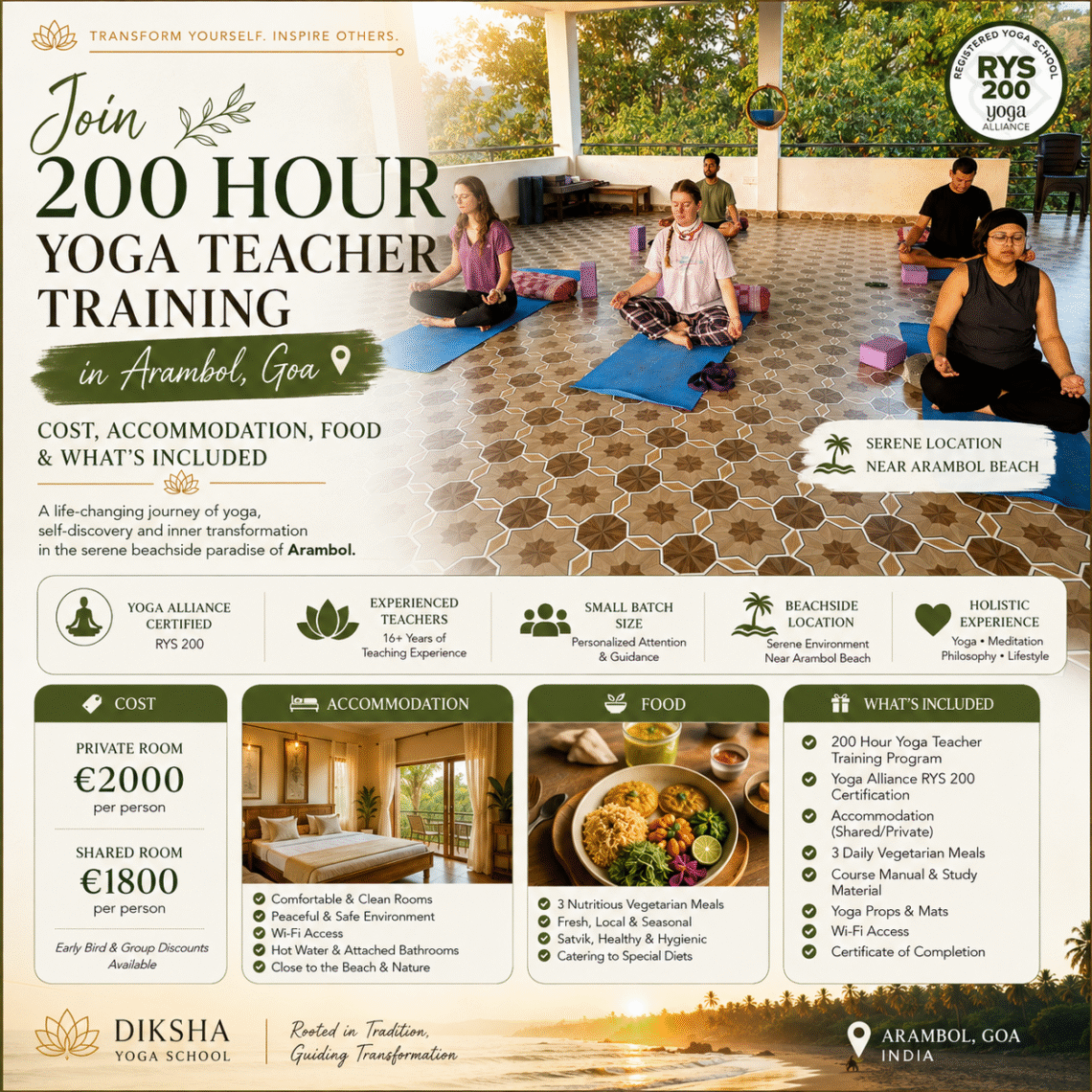
Join 200 Hour Yoga TTC in Goa is a meaningful investment. For most students, the decision is not only about the course fee. You also need to understand what you are paying for, where you will stay, what food is included, how intensive the training is, and whether the program gives you genuine preparation to teach yoga.
At Diksha Yoga School, the 200-hour program is designed as a 23-day residential training with 22 nights of accommodation. The course combines traditional Hatha Yoga with Vinyasa Flow and Ashtanga foundations, alongside Pranayama, Meditation, Yoga Philosophy, Anatomy, Alignment, Ayurveda and Teaching Methodology. Practical teaching is also part of the training, so students can begin developing the skills needed to lead a class rather than only studying theory.
The current published course information lists three meals per day, accommodation, course materials, assessment, teaching practicum and a 200-hour completion certificate from the registered school among the program inclusions.
Table of Contents
About the Author
Yogini Manisha — Founder & Lead Teacher, Diksha Yoga School
Yogini Manisha is the founder and lead teacher of Diksha Yoga School, with more than 16 years of experience in yoga teaching, teacher training and student mentorship. Her teaching combines traditional yogic practices with practical methods for developing confident, knowledgeable yoga teachers.
This guide is based on Diksha Yoga School’s current Goa 200-hour program information and is intended to help students understand the course fee, accommodation, food, curriculum and practical training before making a booking.
How Much Does 200 Hour Yoga Teacher Training in Goa Cost?
For the currently published 2026 course information, Diksha Yoga School lists:
| Accommodation | Current Published Fee | Program |
| Private Deluxe | €1,800 | 23-day residential 200-hour training |
| Shared Deluxe | €1,600 | 23-day residential 200-hour training |
The price difference gives students a choice between greater privacy and a lower-cost shared residential experience.
Price note: Course fees, dates, room availability and inclusions can change. Always confirm the current price for your chosen intake directly with the school before booking.
What Are You Actually Paying For?
A residential yoga teacher training should not be judged only by the headline tuition price. Your total experience can include:
- 23 days of structured yoga education
- 22 nights of accommodation
- Three meals per day
- Traditional and multi-style yoga practices
- Pranayama and meditation
- Yoga philosophy
- Anatomy and alignment
- Teaching methodology
- Practical teaching experience
- Course materials
- Assessment
- Completion certification
- Student support
This is why comparing two schools simply by their advertised course fee can be misleading. One program may have a lower tuition price but charge separately for accommodation, meals, course materials or other services.

What is included in the total price, and what will I need to pay separately?
For international students especially, understanding the complete package before booking can make it much easier to plan the real cost of a 200-hour yoga teacher training in Goa.
At Diksha, the intention is to make the residential experience about more than completing 200 hours. The training brings together personal practice, traditional yogic knowledge, teaching skills and daily immersion so students can leave with a stronger foundation for both their own practice and their future teaching.
Accommodation for 200 Hour Yoga Teacher Training in Goa
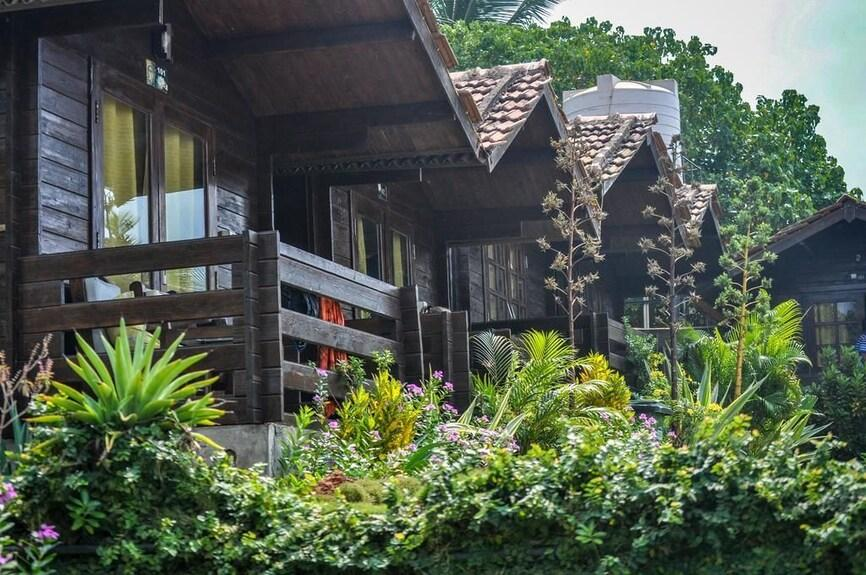
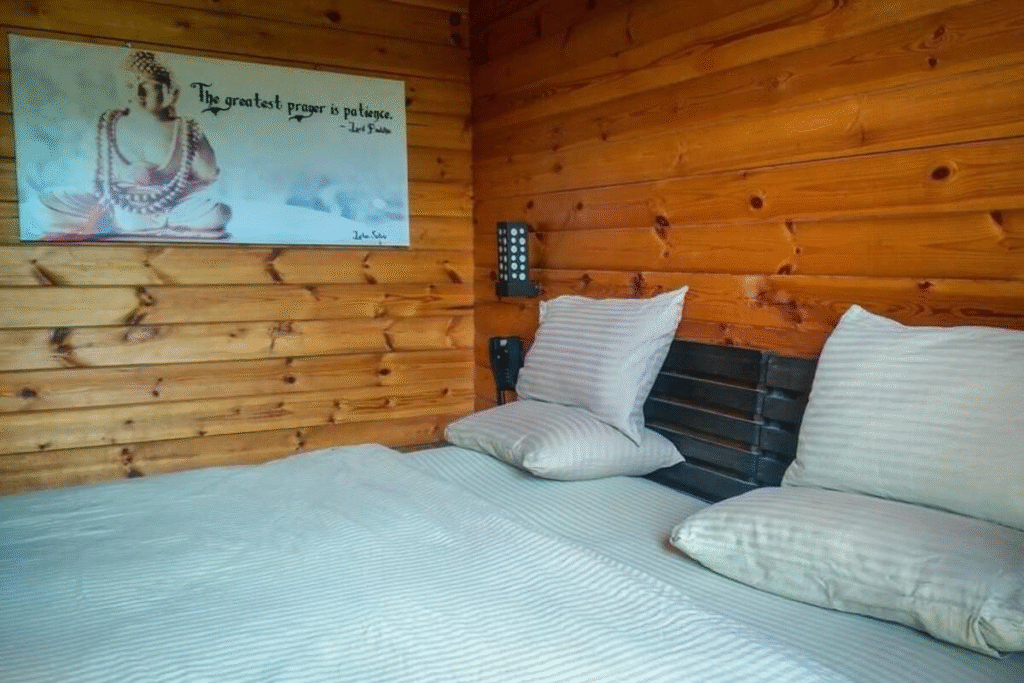
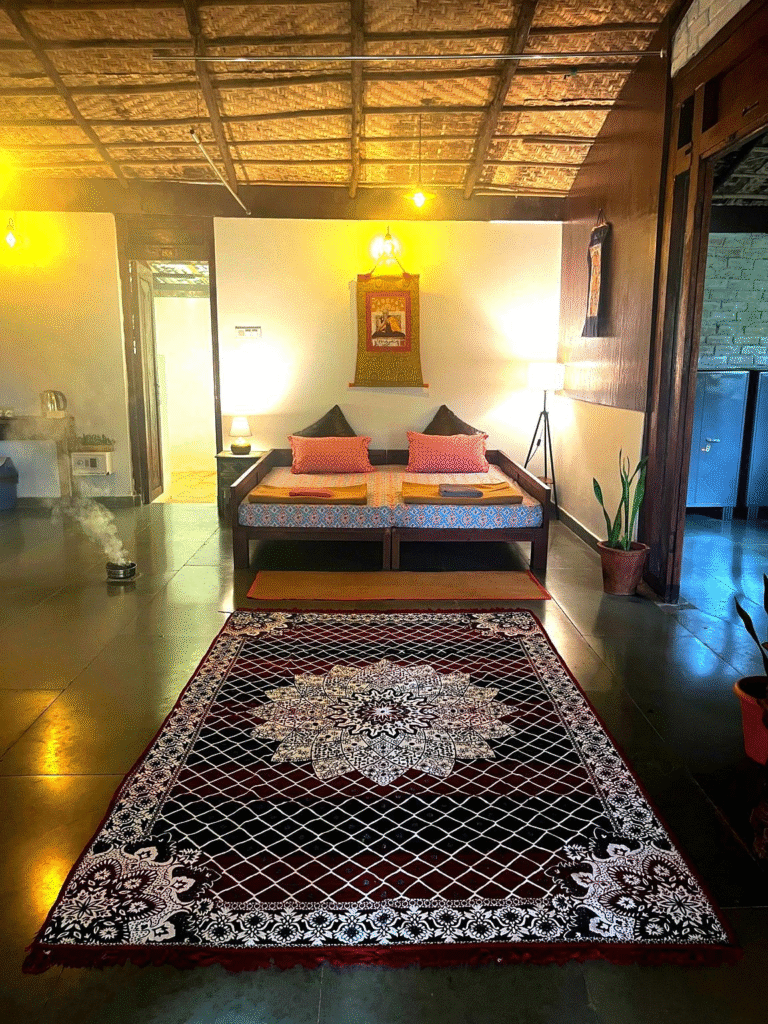
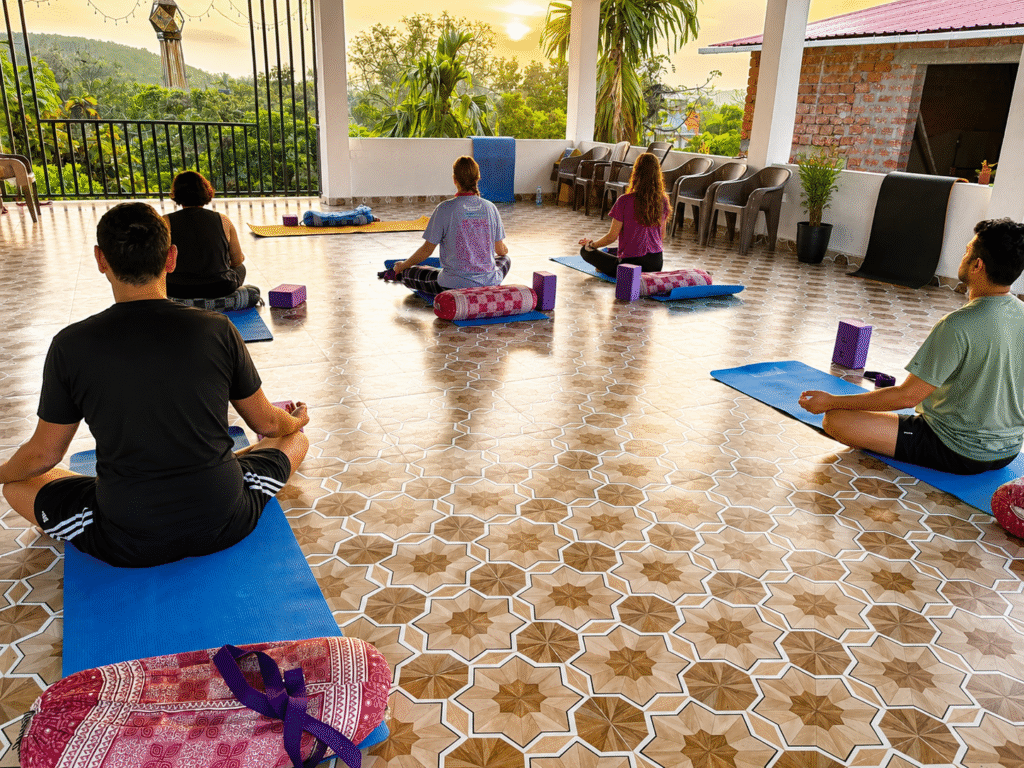
Accommodation becomes an important part of a residential yoga teacher training because you are not simply staying for a weekend. You are living, practicing, studying and resting in the same environment for several weeks.
Diksha Yoga School’s current Goa program includes 22 nights of residential accommodation, with private and shared options available. The choice allows students to balance privacy, comfort and overall course cost.
Private vs. Shared Accommodation
| Private Deluxe | Shared Deluxe | |
| Published course fee | €1,800 | €1,600 |
| Accommodation | Private | Shared |
| Best suited for | Students who value privacy and quiet | Students who enjoy community living and want a lower course cost |
| Residential stay | 22 nights | 22 nights |
| Learning environment | More personal space | More opportunity to connect with fellow students |
Neither option is automatically better. A private room may be worth the additional cost if you prefer quiet time after an intensive training day. Shared accommodation can be a good choice if you enjoy meeting other students and want to keep your overall budget lower.
Before booking, ask the school about the exact room category, facilities and availability for your chosen intake, because accommodation details can change.
What Should You Check About Your Accommodation?
When comparing yoga teacher training programs in Goa, don’t look only at photographs. Ask practical questions:
- How many nights are included?
- Is the room private or shared?
- What facilities are provided?
- Is Wi-Fi available?
- Is hot water available?
- How close is the accommodation to the training space?
- Is there a place to keep personal belongings?
- What support is available if an accommodation issue occurs?
These details can make a significant difference during an intensive residential program.
What Food Is Included in the 200 Hour Yoga Teacher Training?
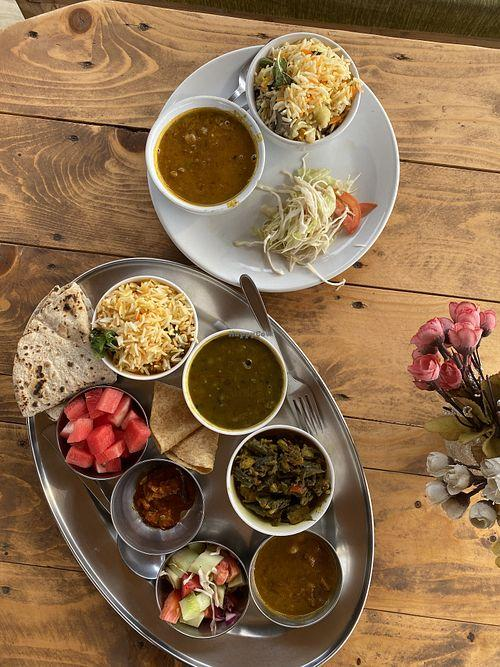
Food is another important part of the residential experience. Students are practicing and studying for much of the day, so having regular meals available means you don’t have to arrange food independently between training sessions.
The current Diksha Goa course information lists three meals per day and describes the food as vegetarian and sattvic.
For a 23-day program, three meals per day represents approximately 69 meals across the training period.
Food and Meal Comparison
| What to Check | Diksha’s Current Program |
| Meals per day | 3 |
| Food approach | Vegetarian / Sattvic |
| Meals included | Yes |
| Training period | 23 days |
| Approximate meals | 69 |
If you have allergies, medical dietary requirements or specific food restrictions, communicate them to the school before booking rather than assuming they will automatically be accommodated.
Why Food Matters During Teacher Training
A residential yoga course is different from attending a weekly class at home. Your daily routine includes physical practice, pranayama, meditation, theory and teaching work.
Having meals provided as part of the residential program allows students to focus more fully on the training instead of planning every meal around the course schedule.
For many students, this simple aspect of residential learning becomes an important part of the overall experience.
The goal is not simply to find a course with the lowest advertised price. It is to understand what your fee covers and whether the complete living and learning environment suits your needs.

What Certification Do You Receive?
Certification is an important part of choosing a 200-hour yoga teacher training, but it should not be the only factor you consider.
Diksha Yoga School’s current Goa program is offered through a Yoga Alliance Registered Yoga School (RYS 200). Students who successfully complete the program receive the school’s 200-hour completion certificate. Graduates can then use qualifying training documentation when pursuing the RYT 200 credential, subject to Yoga Alliance’s current registration requirements.
When comparing schools, ask exactly what certification is provided, what the completion requirements are, and whether assessment and practical teaching are part of the program. A certificate is valuable, but the education and teaching ability you develop during the training are what you carry forward.
What Does a Typical Training Day Look Like?
A 200-hour residential program is an intensive learning experience rather than a holiday with occasional yoga classes.
The current Diksha course schedule begins in the morning and combines physical practice, pranayama, meditation, theory and teaching-related study throughout the day. The exact timetable can be adjusted by the teachers according to the needs of the group.
Example Daily Schedule
| Time | Training |
| 6:00 AM | Wake up |
| 7:00–7:30 AM | Pranayama, meditation & chanting |
| 7:30–9:00 AM | Asana practice |
| 9:00–10:00 AM | Breakfast |
| 10:00–11:45 AM | Teaching methodology / alignment |
| 11:45 AM–1:00 PM | Yoga philosophy / theory |
| 1:00–2:00 PM | Lunch |
| 2:30–4:00 PM | Anatomy / physiology |
| 4:00–5:45 PM | Asana / teaching practice |
| 6:00–7:00 PM | Meditation |
| 7:30 PM | Dinner |
This schedule is an example based on the currently published program information. Daily timings and activities may change according to the teachers and the needs of the training group.
The structure gives students time to experience yoga from different perspectives: as a personal practice, a traditional discipline and a skill that must eventually be communicated to other people.
What Do You Learn During a 200 Hour Yoga Teacher Training?
A strong 200-hour program should give you more than a list of yoga poses. You should develop an understanding of practice, teaching, philosophy, breath, meditation, anatomy and how to work responsibly with different students.
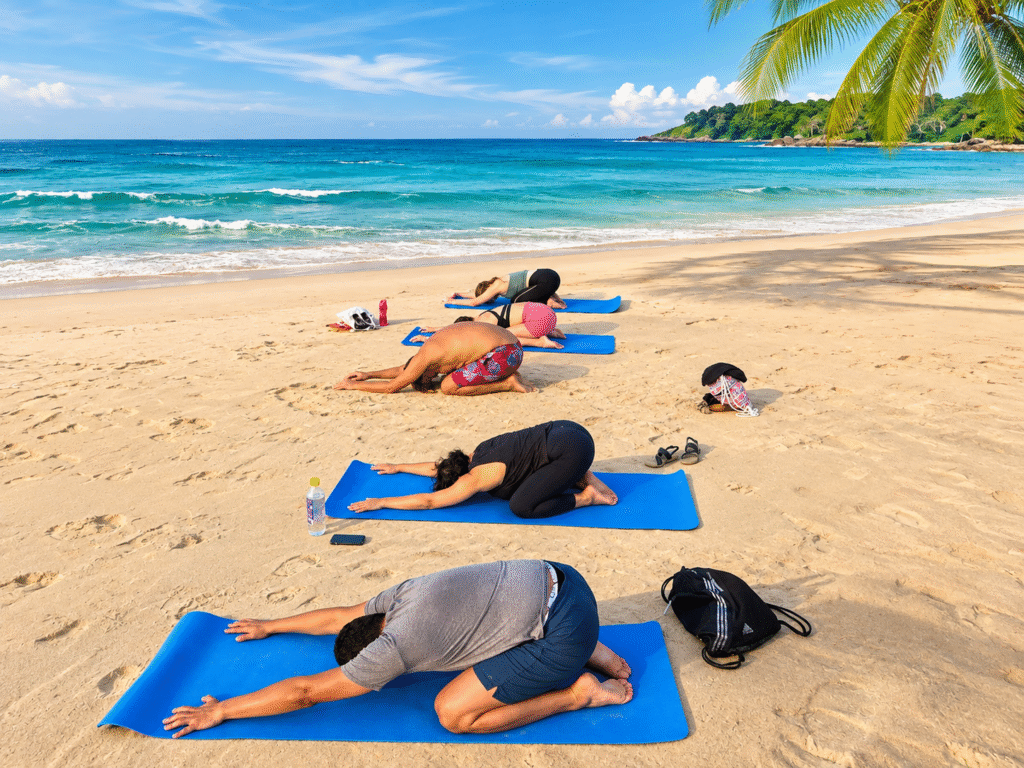
Diksha’s current Goa curriculum combines several areas of study:
| Area of Study | What Students Explore |
| Hatha Yoga | Foundations, alignment and traditional practice |
| Vinyasa Flow | Movement, transitions and sequencing |
| Ashtanga | Foundational practices and discipline |
| Pranayama | Traditional breathing practices and breath awareness |
| Meditation | Concentration, awareness and meditation practices |
| Yoga Philosophy | Classical yogic teachings and philosophy |
| Anatomy | Understanding the body in relation to movement |
| Alignment | Safer and more informed practice |
| Teaching Methodology | Cueing, sequencing and class planning |
| Teaching Practicum | Practicing teaching and receiving feedback |
| Ayurveda | Foundational concepts and yogic lifestyle |
The purpose of combining these subjects is to help students understand why they are practicing something, not simply memorize what comes next in a sequence.
From Practicing Yoga to Teaching Yoga
One of the biggest differences between a regular yoga retreat and teacher training is the responsibility of learning how to guide another person.
During teacher training, students begin working with:
- Clear verbal instructions
- Sequencing
- Demonstration
- Alignment awareness
- Modifications
- Observation
- Teaching presence
- Communication
- Feedback
This practical component matters because knowing how to perform an asana yourself does not automatically mean you know how to teach it safely and clearly.
At Diksha, the aim is to help students develop a stronger foundation for teaching while continuing to deepen their own personal practice.
Cost vs. Value: What Should You Really Compare?
When comparing a 200 Hour Yoga Teacher Training in Goa, it is easy to look only at the advertised course fee. A better comparison looks at everything included in the residential experience.
A program with a lower headline price may charge separately for accommodation, meals, course materials or other services. Another program may include most of these costs in one package.
The important question is therefore not simply:
Which course is cheapest?
Instead, ask:
What am I actually receiving for the total amount I will spend?
What Does €1,600–€1,800 Cover During 23 Days?
For the currently published Diksha Yoga School Goa program, the shared option is €1,600 and the private option is €1,800. The residential program runs for 23 days and includes 22 nights of accommodation.
The package represents more than classroom teaching alone.
| Included Value | What It Covers |
| 22 nights accommodation | Residential stay during the training |
| 3 meals per day | Approximately 69 meals across 23 program days |
| Yoga education | Daily practical and theoretical training |
| Teaching practice | Opportunities to develop teaching skills |
| Course materials | Training and study resources |
| Assessment | Evaluation during the program |
| Completion certificate | Issued after successful completion |
| Student support | Guidance throughout the residential experience |
The exact services and schedule should always be confirmed for your chosen intake.
Why This Matters
If you compare only €1,600 with another school’s advertised tuition fee, you may not be comparing equivalent packages.
For example, if another program advertises a lower tuition price but accommodation and meals are additional, its eventual total cost may be considerably different.
That is why a transparent comparison should include:
Training + accommodation + food + certification + materials + practical teaching + additional expenses.
What Costs May Be Extra?
Even when a residential course includes accommodation and meals, you should create a separate personal budget for expenses outside the course package.
These may include:
- International flights
- Visa expenses
- Travel insurance
- Personal transportation
- Airport transfers if not included in your specific package
- Laundry or personal services
- Personal shopping
- Extra nights before or after the course
- Personal excursions
- Additional food or drinks outside the included meals
Before paying a deposit, ask the school for a clear list of what is included and what is not included.
This is particularly important for international students because the course fee is only one part of the total cost of travelling to Goa.
A Simple 200 Hour Yoga Teacher Training Goa Budget Checklist
| Expense | Check Before Booking |
| Course tuition | ✓ |
| Accommodation | ✓ |
| Number of nights | ✓ |
| Daily meals | ✓ |
| Certification | ✓ |
| Course materials | ✓ |
| Teaching practicum | ✓ |
| Airport transfer | ✓ |
| Flights | ✓ |
| Visa | ✓ |
| Travel insurance | ✓ |
| Extra nights | ✓ |
| Personal expenses | ✓ |
The Better Way to Compare Prices
Before choosing between two yoga schools, write down the complete cost of each program.
Then compare:
- What education is included?
- How many days and nights are included?
- What accommodation is provided?
- How many meals are included?
- Is practical teaching included?
- What certification is provided?
- What materials are included?
- What expenses will you pay separately?
This gives you a much clearer picture than comparing two headline prices.
For a residential 200 Hour Yoga Teacher Training in Goa, the best value is not necessarily the cheapest option. It is the program whose education, accommodation, food, practical experience and overall support match what you actually need.
That is the real difference between comparing price and comparing value.
Cost vs. Value: What Should You Really Compare?
When comparing a 200 Hour Yoga Teacher Training in Goa, it is easy to look only at the advertised course fee. A better comparison looks at everything included in the residential experience.
A program with a lower headline price may charge separately for accommodation, meals, course materials or other services. Another program may include most of these costs in one package.
The important question is therefore not simply:
Which course is cheapest?
Instead, ask:
What am I actually receiving for the total amount I will spend?
What Does €1,600–€1,800 Cover During 23 Days?
For the currently published Diksha Yoga School Goa program, the shared option is €1,600 and the private option is €1,800. The residential program runs for 23 days and includes 22 nights of accommodation.
The package represents more than classroom teaching alone.
| Included Value | What It Covers |
| 22 nights accommodation | Residential stay during the training |
| 3 meals per day | Approximately 69 meals across 23 program days |
| Yoga education | Daily practical and theoretical training |
| Teaching practice | Opportunities to develop teaching skills |
| Course materials | Training and study resources |
| Assessment | Evaluation during the program |
| Completion certificate | Issued after successful completion |
| Student support | Guidance throughout the residential experience |
The exact services and schedule should always be confirmed for your chosen intake.
Why This Matters
If you compare only €1,600 with another school’s advertised tuition fee, you may not be comparing equivalent packages.
For example, if another program advertises a lower tuition price but accommodation and meals are additional, its eventual total cost may be considerably different.
That is why a transparent comparison should include:
Training + accommodation + food + certification + materials + practical teaching + additional expenses.
What Costs May Be Extra?
Even when a residential course includes accommodation and meals, you should create a separate personal budget for expenses outside the course package.
These may include:
- International flights
- Visa expenses
- Travel insurance
- Personal transportation
- Airport transfers if not included in your specific package
- Laundry or personal services
- Personal shopping
- Extra nights before or after the course
- Personal excursions
- Additional food or drinks outside the included meals
Before paying a deposit, ask the school for a clear list of what is included and what is not included.
This is particularly important for international students because the course fee is only one part of the total cost of travelling to Goa.
A Simple 200 Hour Yoga Teacher Training Goa Budget Checklist
| Expense | Check Before Booking |
| Course tuition | ✓ |
| Accommodation | ✓ |
| Number of nights | ✓ |
| Daily meals | ✓ |
| Certification | ✓ |
| Course materials | ✓ |
| Teaching practicum | ✓ |
| Airport transfer | ✓ |
| Flights | ✓ |
| Visa | ✓ |
| Travel insurance | ✓ |
| Extra nights | ✓ |
| Personal expenses | ✓ |
The Better Way to Compare Prices
Before choosing between two yoga schools, write down the complete cost of each program.
Then compare:
- What education is included?
- How many days and nights are included?
- What accommodation is provided?
- How many meals are included?
- Is practical teaching included?
- What certification is provided?
- What materials are included?
- What expenses will you pay separately?
This gives you a much clearer picture than comparing two headline prices.
For a residential 200 Hour Yoga Teacher Training in Goa, the best value is not necessarily the cheapest option. It is the program whose education, accommodation, food, practical experience and overall support match what you actually need.
That is the real difference between comparing price and comparing value.
Questions to Ask Before Booking a 200 Hour Yoga Teacher Training in Goa
Before paying a deposit, take a few minutes to confirm the details that matter most to you. A clear answer from the school can prevent unexpected costs or misunderstandings later.
Course
- How many days is the training?
- How many accommodation nights are included?
- What styles of yoga are taught?
- How much practical teaching is included?
- What are the assessment requirements?
- Is the room private or shared?
- What facilities are included?
- Is the accommodation at or close to the training venue?
- What happens if an accommodation problem occurs?
Food
- How many meals are included each day?
- Is the food vegetarian?
- Is a sattvic meal approach followed?
- Can dietary requirements or allergies be discussed before arrival?
Certification
- Is the school currently registered with Yoga Alliance?
- What certificate is issued after successful completion?
- What are the requirements for receiving the certificate?
Payment
- What is the current course price?
- What amount is required as a deposit?
- What costs are excluded?
- What is the cancellation or refund policy?
- Can the course date be changed?
Getting these details in writing before booking gives you a clearer picture of the actual commitment.
200 Hour Yoga Teacher Training in Goa: Frequently Asked Questions
How much does 200 Hour Yoga Teacher Training in Goa cost?
Diksha Yoga School’s currently published 2026 Goa pricing is €1,800 for private deluxe accommodation and €1,600 for shared deluxe accommodation. Prices and availability can change, so confirm the current fee for your chosen intake before booking.

Is accommodation included?
Yes. The current program is residential and includes 22 nights of accommodation. Private and shared options are available.
Are meals included?
Yes. The current course information includes three meals per day and describes the food as vegetarian and sattvic.
How long is the program?
The current Goa program is structured as a 23-day residential 200-hour training with 22 nights of accommodation.
Is the program registered with Yoga Alliance?
The program is offered through a Yoga Alliance Registered Yoga School (RYS 200). Students who successfully complete the training receive the school’s completion certificate. Any subsequent RYT 200 registration is subject to Yoga Alliance’s current requirements.
Does the course include teaching practice?
Yes. Practical teaching and teaching methodology form part of the program, allowing students to develop skills in sequencing, communication and class instruction.
Is private accommodation worth the additional cost?
That depends on your priorities. Private accommodation may suit students who value privacy and quiet time, while shared accommodation can provide a lower-cost option and more opportunity to connect with other students.
What should I budget for besides the course fee?
Consider flights, visa expenses, travel insurance, personal transportation, extra nights, personal purchases and any services that are not included in your specific course package.
Final Checklist Before Booking
Before making your reservation, make sure you have confirmed:
- ✓ Current course price
- ✓ Course dates
- ✓ Number of training days
- ✓ Accommodation type
- ✓ Number of nights
- ✓ Number of meals
- ✓ Curriculum
- ✓ Teaching practicum
- ✓ Assessment requirements
- ✓ Certification
- ✓ Course materials
- ✓ Extra costs
- ✓ Deposit and payment terms
- ✓ Cancellation policy
- ✓ Any dietary requirements
- ✓ Current room availability
Taking a few minutes to check these details can make your decision much easier.
Why Choose a 200 Hour Yoga Teacher Training in Goa with Diksha?
A 200-hour teacher training is more than a certificate or a few weeks away from home. It is an opportunity to build a deeper understanding of yoga while developing the practical skills required to share it with others.
Diksha Yoga School’s Goa program combines traditional Hatha Yoga, Vinyasa Flow and Ashtanga foundations with Pranayama, Meditation, Yoga Philosophy, Anatomy, Alignment, Ayurveda and Teaching Methodology.
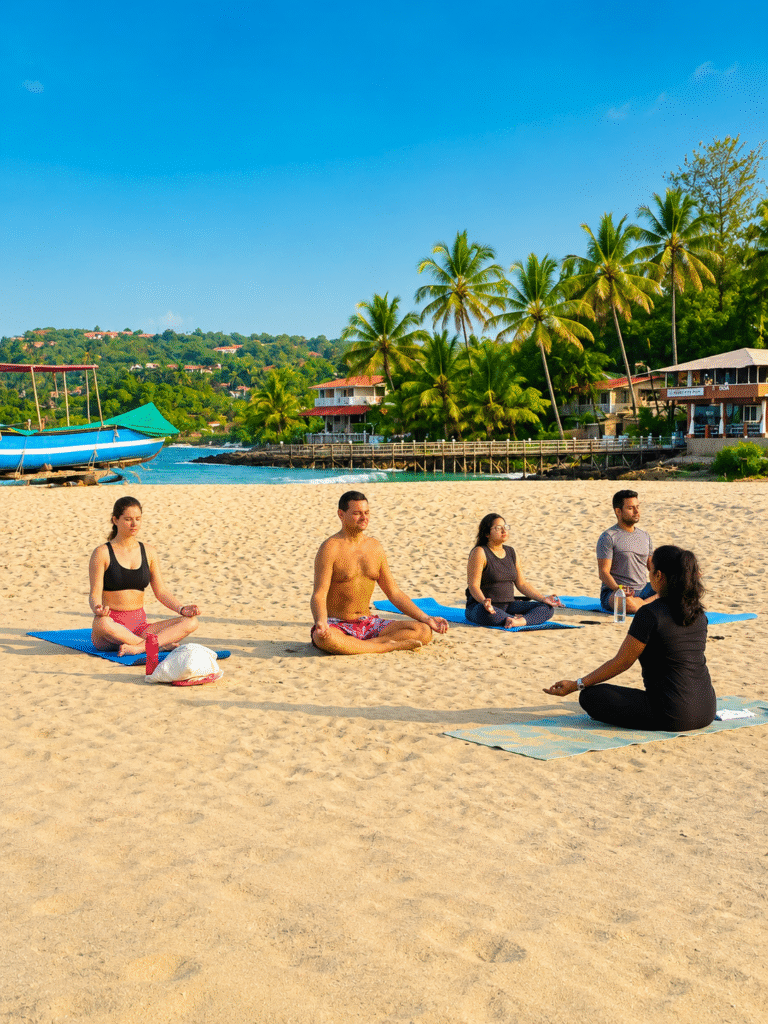
The residential format brings practice, study, meals, community and reflection into one structured experience.
For students comparing programs, the most important question is not simply:
“Which course has the lowest price?”
It is:
“Which training gives me the education, practical experience, accommodation and support that match my goals?”
If Diksha’s approach matches what you are looking for, you can explore the full [200 Hour Yoga Teacher Training in Goa] program for current dates, accommodation options, course details and booking information.
Your teacher-training journey begins with choosing the right learning environment.