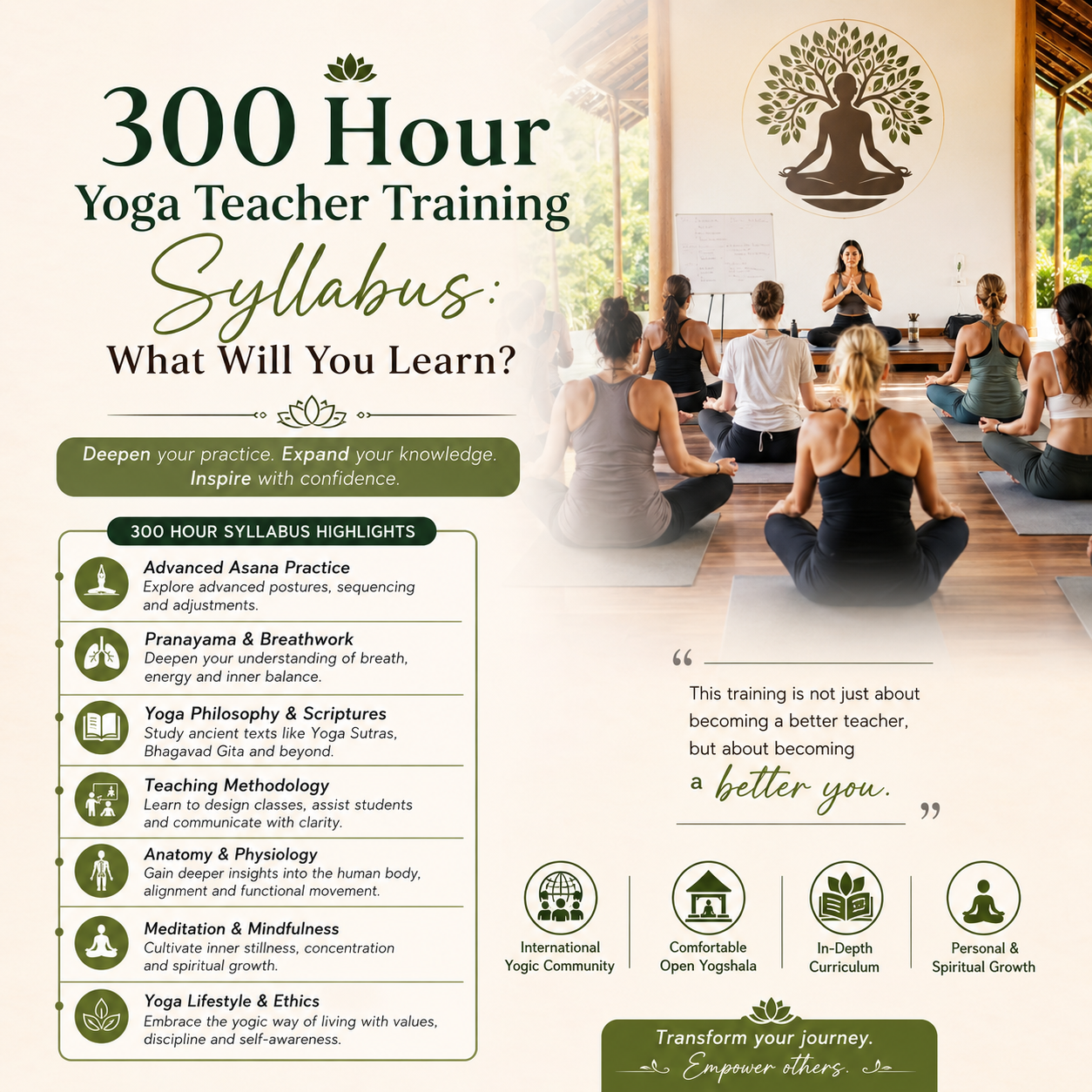

Planning to join a 200 Hour Yoga TTC Goa Cost Guide and wondering how much it really costs?
You may have already seen courses advertised for ₹60,000, €800, $1,000, €1,500 or even considerably more.
So which price is actually reasonable?
The truth is that there is no single fixed price for a 200 Hour Yoga TTC Goa Cost Guide .
The cost depends on what kind of program you choose, where you stay, whether accommodation and meals are included, the experience of the teachers, the size of the group, the curriculum, teaching practice, certification and the overall residential experience.
Current 2026 Goa programs show a wide range. For example, one school currently lists a non-residential 200 Hour Yoga TTC Goa Cost Guide at ₹60,000, while another Goa school lists its 200 Hour Yoga TTC Goa Cost Guide packages at €1,500–€1,900, depending on accommodation.
This means that comparing courses only by their advertised price can be misleading.
A ₹60,000 course and a €1,600 residential course may both say “200 Hour Yoga TTC Goa Cost Guide,” but they may offer very different experiences.
Table of Contents
So in this guide, we will look at the real cost—not just the tuition fee.
Quick Answer: How Much Does a 200 Hour Yoga TTC Goa Cost Guide?
For students planning a 200 Hour Yoga TTC Goa Cost Guide in 2026, a practical planning range is approximately:
₹60,000 to ₹2,00,000+
Some non-residential programs are available around the lower end of this range, while residential programs with accommodation, meals and more comfortable rooms can cost considerably more.
Premium or luxury programs can be higher still.
There is therefore no single “average” price that accurately represents every 200 Hour Yoga TTC Goa Cost Guide .
A useful way to think about the market:
200 Hour Yoga TTC Goa Cost Guide : 2026 Price Comparison
There is no single fixed price for a 200 Hour Yoga TTC Goa Cost Guide . The total cost depends on whether the program is residential, the type of accommodation, meals, course duration, teaching resources and other services included in the package.
Thefollowing comparison gives a general picture of the different price levels students may encounter when researching yoga teacher training in Goa.
| Type of 200 Hour Yoga TTC Goa Cost Guide | Typical Course Fee Range | Accommodation | Meals | Overall Cost Level |
| Non-residential / course only | ₹60,000–₹1,00,000+ | Usually separate | Usually separate | Lower |
| Residential — shared accommodation | ₹1,00,000–₹1,50,000+ | Included | Often included | Moderate |
| Residential — private accommodation | ₹1,40,000–₹2,00,000+ | Included | Often included | Moderate–Higher |
| Premium residential programs | ₹2,00,000+ | Included | Included | Higher |
| International-priced residential programs | €1,400–€2,000+ | Usually included | Usually included | Higher |
Important: These are broad market ranges rather than fixed prices. Actual fees vary between schools and intake dates. Students should compare the complete package—including accommodation, meals, certification, teaching practice and additional services—before deciding which course offers the best value.
Why the Price Difference Can Be So Large
A course advertised at ₹60,000 may not be directly comparable with a residential program priced at €1,600.
The lower-priced option may require you to arrange:
Daily meals
Transportation
Airport transfers
Course materials
Additional activities
A residential package may include many of these costs in one price.
For this reason, the most useful question is not simply:
“Which 200 Hour Yoga TTC Goa Cost Guide is cheapest?”
It is:
“What is the total cost of the experience, and what am I receiving for that investment?”
About the Author
Yogini Manisha
Founder & Lead Teacher, Diksha Yoga School
Yogini Manisha is the Founder and Lead Teacher of Diksha Yoga School, with 16+ years of experience in yoga teaching, training and mentoring. Her approach is rooted in the traditional foundations of yoga while also preparing students with the practical knowledge and teaching skills needed to guide others responsibly.
Her areas of teaching and mentorship include:
- Traditional Hatha Yoga
- Vinyasa Yoga
- Pranayama
- Meditation
- Yoga Philosophy
- Anatomy & Alignment
- Teaching Methodology
- Yoga Teacher Training & Mentoring
Through years of working with yoga practitioners and teacher-training students, Yogini Manisha has focused on helping students understand yoga beyond the physical practice — developing awareness, discipline, understanding and the ability to communicate yoga clearly to others.
Why You Can Trust This Guide
This guide is written from the perspective of a yoga teacher-training school with direct experience in residential yoga education in Goa. It combines practical observations about 200 Hour Yoga TTC Goa Cost Guide, course structure, accommodation, meals, teaching practice and certification with information about the current Goa training market.
Because course fees, dates, accommodation options and inclusions can change, students should always confirm the latest details directly with the school before making a booking or paying a deposit.
Why Is There Such a Big Difference in 200 Hour Yoga TTC Goa Cost Guide ?
This is one of the most important things to understand before you start comparing schools.
Two schools may both advertise:
“200 Hour Yoga TTC Goa Cost Guide ”
but one may provide only the training, while another may provide an entire residential experience.
The price can be influenced by:
- Accommodation
- Room type
- Meals
- Location
- Teacher experience
- Group size
- Curriculum
- Teaching practice
- Certification
- Course duration
- Study materials
- Yoga equipment
- Airport transfer
- Excursions
- Facilities
- Personal attention
This is why the cheapest advertised course is not necessarily the cheapest overall experience.
The First Question to Ask: Residential or Non-Residential?
Before comparing prices, find out whether the course is residential.
This single difference can completely change the cost.
Non-Residential 200 Hour Yoga TTC Goa Cost Guide
A non-residential program generally means you attend the training during the day but arrange your own accommodation.
You may also need to arrange your own meals and transportation.
For some students, this is an excellent way to reduce the cost.
For example, a current Goa provider lists its 200 Hour Yoga TTC Goa Cost Guide at ₹60,000 and describes the training as non-residential, meaning students arrange their own accommodation nearby.
A non-residential course may suit you if:
- You already live in Goa
- You have family or friends nearby
- You already have accommodation
- You prefer choosing your own hotel or guesthouse
- You want to keep tuition costs lower
- You prefer an independent lifestyle during the training
But if you are travelling from another country, remember that the advertised course price is only one part of your total trip budget.
You still need somewhere to sleep.
You still need food.
You still need transportation.
And you may need airport transfers.
Residential 200 Hour Yoga TTC Goa Cost Guide in Goa
A residential Yoga Teacher Training combines your education with accommodation and, usually, meals.
This creates a completely different experience.
Instead of leaving the school after class and travelling somewhere else, you live within the environment of the training.
You wake up and practise.
You study.
You eat with your fellow students.
You attend philosophy and anatomy sessions.
You practise teaching.
You return to your room.
And the following morning, the process begins again.
For many international students, this immersion is one of the main reasons for choosing a residential 200 Hour Yoga TTC Goa Cost Guide .
Current Goa residential programs show significant price differences depending on accommodation and package type. For example, Goa Yogshala currently lists 200 Hour Yoga TTC Goa Cost Guide at €1,500 for a non-AC single room, €1,700 for an AC shared room and €1,900 for an AC single room, with a lower-priced package available without accommodation.
That is a good example of why room type and inclusions matter when comparing prices.
What Does the Price of a 200 Hour Yoga TTC Goa Cost Guide Actually Cover?
When you see a course advertised at a particular price, don’t immediately assume that everything is included.
Ask what you are actually paying for.
A residential course may include:
Yoga Training
The actual 200 Hour Yoga TTC Goa Cost Guide educational program.
Shared, twin, private or deluxe accommodation depending on the package.
Some residential schools provide daily vegetarian or sattvic meals.
Study Materials
Manuals, notebooks or other course resources.
Yoga Equipment
Some schools provide mats, blocks or other equipment.
Certification
The school should clearly explain the certificate you will receive and any relevant Yoga Alliance registration.
Teaching Practice
Opportunities to practise teaching under supervision.
Excursions
Some schools include cultural or local excursions.
Airport Transfer
Some programs include airport pickup, while others charge separately.
The important point is:
Never assume an inclusion. Ask.
The Difference Between Course Price and Total Cost
Imagine you find two courses.
School A
₹60,000
School B
€1,600
At first glance, School A looks dramatically cheaper.
But then you discover that School A is non-residential.
You need to pay separately for:
- 22–25 nights of accommodation
- Breakfast
- Lunch
- Dinner
- Local transportation
- Airport transfer
- Study materials
- Other personal expenses
School B may already include many of those costs.
Suddenly, the comparison looks very different.
This is why I recommend looking at:
Total Cost of the Experience
rather than simply:
Advertised Course Fee
How to Calculate the Real Cost of Your Yoga Teacher Training
Before booking, make a simple calculation.
Course fee
Food
Airport transfer
Local transportation
Flights
Visa
Travel insurance
Personal expenses
Extra nights
=’
Your Actual Yoga Teacher Training Budget
This gives you a much more realistic number.
200 Hour Yoga TTC Goa Cost Guide: What Should You Budget?
If you are comparing courses for 2026, you can use this as a starting point:
Around ₹60,000–₹1,00,000
Consider this the lower-cost end of the market, particularly for non-residential or simpler programs.
Around ₹1,00,000–₹1,50,000
This can be a useful planning range for a more complete residential experience, depending on accommodation and inclusions.
Around ₹1,50,000–₹2,00,000+
This is more typical of higher-comfort residential packages and international-facing programs.
₹2,00,000+
This may apply to premium or luxury experiences with higher-end accommodation and additional services.
Again, these are planning ranges rather than fixed industry prices. Current published Goa programs vary considerably.
Is a More Expensive Yoga Teacher Training Better?
Not necessarily.
This is important.
A high price does not automatically mean high-quality teaching.
And a low price does not automatically mean poor teaching.
Instead, look at what the price represents.
Ask:
Who will teach me?
How experienced are the teachers?
How many students are in the group?
How much teaching practice is included?
Will I receive individual feedback?
Is anatomy included?
Is yoga philosophy included?
Are pranayama and meditation included?
What accommodation am I receiving?
Are meals included?
What certificate will I receive?
Are there any additional mandatory costs?
These questions tell you much more than the number on the price page.
The Real Value of a 200 Hour Yoga TTC Goa Cost Guide
A 200 Hour Yoga TTC Goa Cost Guide course is a substantial commitment.
You are not simply buying a certificate.
You are investing several weeks of your life in:
Practice
Study
Observation
Teaching
Self-reflection
Community
Learning
For someone who wants to become a yoga teacher, those weeks can become the foundation for years of continued practice and education.
That is why I would encourage students to look beyond the cheapest available course.
Instead, ask:
“Which school will give me the education and experience I actually need?”
A Note From Diksha Yoga School
At Diksha Yoga School, we believe that the value of a 200 Hour Yoga TTC Goa Cost Guide should be measured by the quality of learning and the depth of the experience, not simply by the number printed on the price page.
Our approach brings together traditional yoga practices with practical teacher education.
Students study areas such as:
- Traditional Hatha Yoga
- Vinyasa
- Pranayama
- Meditation
- Yoga Philosophy
- Anatomy
- Alignment
- Sequencing
- Teaching Methodology
- Practice Teaching
The intention is not simply to help students finish 200 Hour Yoga TTC Goa Cost Guide
It is to help them develop a stronger personal practice, understand the foundations of yoga and begin learning how to share those teachings responsibly.
Before You Choose a 200 Hour Yoga TTC Goa Cost Guide
Don’t book the first course you find.
Don’t choose only because it is cheap.
And don’t choose only because the photographs look beautiful.
Instead, compare:
Price
Teachers
Curriculum
Teaching practice
Certification
Group size
Reviews
What is actually included
When you compare all of these together, you can make a much more informed decision.
And that is the real purpose of understanding the 200 Hour Yoga TTC Goa Cost Guide .
It isn’t simply about finding the lowest number.
It is about understanding what that number represents.
Coming Next: What Does the Course Fee Include?
In the next part, we will break down the cost of a residential vs non-residential 200 Hour Yoga TTC Goa Cost Guide, including:
- Accommodation
- Meals
- Course materials
- Certification
- Airport transfers
- Excursions
- Hidden costs
- Personal expenses
- And how to calculate your true total budget before booking.
Part 2: What Does the 200 Hour Yoga TTC Goa Cost Guide Actually Include?
When comparing the cost of a 200 Hour Yoga TTC Goa Cost Guide, the course fee is only the beginning.
Two schools may advertise completely different prices while offering a similar number of training hours.
One may provide only the classes.
Another may include accommodation, three meals a day, study materials, certification, excursions and airport transfers.
This is why a lower advertised price does not always mean a lower total cost.
Before choosing your Yoga Teacher Training in Goa, you need to understand exactly what you are paying for.
Residential vs Non-Residential 200 Hour Yoga Teacher Training
One of the biggest differences between Yoga Teacher Training programs is whether the course is residential or non-residential.
This can have a major impact on your total budget.
What Is a Non-Residential Yoga Teacher Training?
A non-residential 200 Hour Yoga TTC Goa Cost Guide program means that you attend the training during the day but arrange your own accommodation.
Depending on the school, you may also arrange your own meals and transportation.
For students already living , this can be an economical option.
For example, Yoga Mandir currently lists its 200 Hour Yoga TTC Goa Cost Guide at ₹60,000 and states that the program is non-residential, with students arranging their own accommodation nearby.
A non-residential course may be suitable if you:
- Already live in Goa
- Have your own accommodation
- Have friends or family nearby
- Prefer choosing your own hotel or guesthouse
- Want to keep the tuition fee lower
- Prefer more independence during the training
But there is one important consideration.
Your course fee is not your total cost.
If accommodation, meals and transportation are separate, you need to add them to your budget.
What Is a Residential Yoga Teacher Training?
A residential Yoga Teacher Training means that your accommodation is arranged as part of the course package.
You live in or near the training environment throughout the program.
For an international student travelling specifically to Goa for yoga teacher training, this can make the experience much easier.
You don’t need to spend time travelling between your hotel and the school every day.
Instead, your days can be centred around:
Practice → Study → Teaching → Reflection → Rest
A number of Goa schools offer residential 200 Hour Yoga TTC Goa Cost Guide with different room categories and prices. For example, Goa Yogshala currently lists 200-hour residential packages ranging from €1,500 for a non-AC single room to €1,900 for an AC single room, with a shared AC option at €1,700.
This demonstrates an important point:
Even within the same school, accommodation can significantly change the price.
Shared Room vs Private Room
If you are travelling alone, accommodation is often one of the biggest decisions you will make.
A shared room is generally the more economical option.
You may share with one other student or, depending on the school, more students.
The advantages include:
- Lower cost
- Meeting another student immediately
- More social interaction
- Sharing the residential experience
For many students, shared accommodation becomes part of the community experience.
A private room costs more, but gives you your own personal space.
This may be particularly valuable after an intensive day of yoga practice and study.
A private room can offer:
- More privacy
- Quiet personal time
- Your own space for rest
- Greater comfort
- More independence
There is no right or wrong choice.
The question is:
What kind of environment will help you learn best?
Why Accommodation Should Be Compared Carefully
When comparing two Yoga Teacher Training prices, don’t simply compare:
€900 vs €1,600
Ask:
What room does €900 include?
What room does €1,600 include?
How many nights?
Are meals included?
Is the room air-conditioned?
Is there a private bathroom?
How far is it from the training hall?
Are there additional accommodation charges?
These details can explain a large difference in the advertised price.
Are Meals Included in a 200 Hour Yoga TTC Goa Cost Guide?
This is another important question.
Many residential yoga schools include daily meals, but the number and type of meals can differ.
Some programs include:
- Breakfast
- Lunch
- Dinner
Others may include fewer meals.
Some may provide vegetarian meals.
Some may describe their meals as sattvic.
Others may allow students to arrange their own food.
Always check before booking.
If meals are not included, you need to calculate the cost of eating in Goa for the entire training period.
Over three or four weeks, this can become a significant part of your overall budget.
What Does “Sattvic Food” Mean?
Many yoga schools in India describe their meals as sattvic.
In a traditional yogic context, sattvic food is generally associated with food that is fresh, simple and supportive of a calm and balanced lifestyle.
At a residential Yoga Teacher Training, meals are not only about saving money.
They also become part of the rhythm of the training.
You practise.
You eat.
You rest.
You study.
You practise again.
The food becomes part of the residential experience.
However, students should always check the actual menu and dietary arrangements with their chosen school, particularly if they have allergies or specific dietary requirements.
Are Course Materials Included?
Course materials are another cost that students sometimes overlook.
Depending on the school, your package may include:
- Training manual
- Printed notes
- Yoga philosophy material
- Anatomy material
- Notebook
- Stationery
- Yoga kit
- T-shirt
- Water bottle
- Other course resources
For example, Goa Yogshala currently states that its packages include study material and necessary stationery, as well as a yoga kit with a T-shirt and stainless-steel water bottle.
These may seem like small things, but when you are comparing several programs, they contribute to the overall value of the package.

Is Yoga Alliance Certification Included?
This is a question you should always ask before paying a deposit.
Do not assume that the words:
“200 Hour Yoga TTC Goa Cost Guide”
automatically mean the same thing at every school.
Ask the school:
What exact certificate will I receive?
And if Yoga Alliance registration is important to you:
What is the school’s current Yoga Alliance registration status?
Some Goa schools explicitly include a Yoga Alliance certificate within their course packages. Goa Yogshala, for example, currently lists a Yoga Alliance certificate among its package inclusions.
The important thing is to verify the specific school and specific program, rather than relying only on advertising language.
RYS 200 and RYT 200: Why It Matters
You may see two terms when researching a 200 Hour Yoga TTC Goa Cost Guide:
RYS 200
This refers to a Registered Yoga School offering a foundational 200 Hour Yoga TTC Goa Cost Guide under Yoga Alliance’s framework.
RYT 200
This refers to the individual teacher credential.
They are not the same thing.
A simple way to remember it:
RYS = School
RYT = Teacher
If your goal is to pursue the RYT 200 pathway, check the school’s current registration and the requirements that apply to you before booking.
Is Airport Transfer Included?
Airport transfer is another difference between packages.
Some residential schools include airport pickup and drop-off.
Others charge separately.
For an international student arriving in Goa for the first time, having a pickup arranged can be particularly convenient.
For example, some current residential Goa programs explicitly list airport pickup and drop-off among their package inclusions.
If your chosen school does not include it, add the expected transportation cost to your budget.
Are Excursions Included?
Some Yoga Teacher Training programs include excursions as part of the residential experience.
These might include visits to:
- Beaches
- Temples
- Waterfalls
- Cultural sites
- Local markets
- Nature areas
However, excursions differ from school to school.
Some are included.
Some are optional.
Some schools may provide transportation while students pay entrance fees separately.
Ask before booking:
“Which excursions are included in my course fee?”
This prevents surprises later.
What About Extra Nights?
This is one of the easiest costs to forget.
Your course might begin on the 5th, but your flight may arrive on the 4th.
Or your course might finish on the 27th while your flight leaves on the 28th.
That means you may need:
One extra night
or sometimes more.
Ask the school:
Can I arrive early or stay after the course?
How much does an additional night cost?
This is especially important for international students booking flights well in advance.
Other Costs You Should Budget For
Your Yoga Teacher Training fee is only one part of your Goa trip.
Depending on your circumstances, you may also need to budget for:
International or domestic flights
Your journey to Goa.
Visa
International students should check the current Indian visa requirements and applicable fees.
Travel insurance
A sensible part of an international trip budget.
Airport transportation
If not included by the school.
Personal expenses
For example:
- Laundry
- SIM card
- Snacks
- Cafés
- Personal shopping
- Toiletries
If your flights do not match the course dates.
Optional activities
Anything outside the included course program.
Your Real 200 Hour Yoga TTC Goa Cost Guide Budget
Here is a simple way to calculate your complete budget:
| Expense | Estimated Cost |
| Yoga Teacher Training | Included |
| Accommodation | Included |
| Meals | Included |
| Flights | Included |
| Visa | Included |
| Airport transfer | Included |
| Travel insurance | Included |
| Extra nights | Included |
| Personal expenses | Included |
| Optional activities | Included |
| Estimated Total | Included |
This is the number you should use when comparing schools.
Not simply the course fee.
Example: Why a Lower Course Fee May Not Be Cheaper
Imagine:
Option A — Non-Residential
Course: ₹60,000
But you need to pay separately for:
- Accommodation
- Food
- Transportation
- Airport transfer
- Study materials
Option B — Residential
Course package: €1,600
But the package includes:
- Training
- Accommodation
- Meals
- Study materials
- Certification
- Residential facilities
You cannot fairly compare the two prices without calculating the complete cost.
The cheapest advertised course is not necessarily the cheapest complete experience.
What Should You Ask a Yoga School Before Booking?
Before paying your deposit, send the school these questions:
About the course
How many training hours are included?
What subjects are taught?
How much teaching practice is included?
Who teaches the course?
About accommodation
Is accommodation included?
How many nights?
Is it shared or private?
Is the bathroom private?
Is air conditioning available?
About food
How many meals are included each day?
Are vegetarian meals provided?
Can dietary requirements be accommodated?
About certification
What certificate will I receive?
Is the school currently registered with Yoga Alliance?
About additional costs
Is airport pickup included?
Are excursions included?
Are course materials included?
Are there any mandatory additional fees?
A transparent school should be comfortable answering these questions.
What Makes a Residential Yoga Teacher Training Worth Paying More For?
A residential course can cost more because you are paying for more than classroom instruction.
You are paying for an environment in which your entire day can be organised around learning.
There is less commuting.
Less daily planning.
Less time searching for food.
Less uncertainty about accommodation.
And more time with your teachers and fellow students.
For some students, that immersion is worth the additional investment.
For others—especially students already living in Goa—a non-residential course may make more financial sense.
There is no universal answer.
The best choice is the one that matches your priorities.
The Most Important Question: What Are You Actually Buying?
When you book a 200 Hour Yoga TTC Goa Cost Guide, you are not simply buying:
200 Hour Yoga TTC Goa Cost Guide × price per hour.
You are choosing:
A teacher
A curriculum
A learning environment
A community
A place to practise
An opportunity to teach
A period of focused study
And, if residential:
A place to live while you learn.
That is why two courses with the same number of hours can have very different prices.
A Note for International Students
If you are travelling to Goa from another country, I recommend creating your budget before you book your course.
Include:
Course fee
Flights
Visa
Accmodation
Food
Travel insurance
Airport transfer
Personal expenses
Emergency buffer
This allows you to choose a course based on your real financial comfort, rather than looking only at the advertised tuition.
What About Diksha Yoga School?
At Diksha Yoga School, the 200 Hour Yoga TTC Goa Cost Guide is designed as a residential learning experience rather than simply a series of classes that students attend and leave.
The current published program is:
23 Days / 22 Nights
with private and shared accommodation options.
The published package includes residential accommodation, meals, study materials, a course manual/yoga kit, excursions and Yoga Alliance USA certification, alongside the teacher-training curriculum.
For students comparing prices, this distinction is important.
The question is not simply:
“Is Diksha more expensive than a course-only program?”
The more useful question is:
“What is included in the complete residential experience?”
That is the comparison we will make in the next part.
Part 3: Why Do 200 Hour Yoga TTC Goa Cost Guide Prices Differ in Goa?
If you have started comparing 200 Hour Yoga TTC Goa Cost Guide , you may have noticed something confusing.
One school may advertise a course for around ₹60,000.
Another may charge €1,000.
Another may charge €1,500.
And another may charge €1,800 or more.
At first, it can seem as though the schools are charging completely different prices for the same thing.
But a 200 Hour Yoga TTC Goa Cost Guide is not defined only by the number 200.
The quality of the education, the teachers, accommodation, group size, teaching practice, curriculum and overall learning environment can be very different.
That is why the better question is:
What is behind the price?
1. Teacher Experience Can Affect the Value of a Course
A yoga teacher training is an educational experience.
The person teaching you matters.
Before choosing a school, find out:
- Who is the lead teacher?
- How long have they been teaching?
- What yoga traditions do they teach?
- Do they teach the course themselves?
- How much practical experience do they have?
- Will they personally observe your teaching?
- Can you ask questions outside the scheduled sessions?
A beautiful location cannot replace an experienced teacher.
And a long list of subjects cannot replace good teaching.
At Diksha Yoga School
Diksha Yoga School is led by Yogini Manisha, who brings more than 16 years of experience in yoga teaching, training and mentoring.
Her approach combines Traditional Hatha Yoga with Vinyasa, pranayama, meditation, yoga philosophy, anatomy, alignment and practical teaching methodology.
The intention is not simply to show students how to perform yoga postures.
It is to help them understand what they are practising and eventually learn how to communicate it to another person.
That distinction matters.
2. Curriculum Depth Matters More Than the Number “200”
Two schools can both advertise a 200 Hour Yoga TTC Goa Cost Guide while spending those hours very differently.
One program may place most of its emphasis on physical practice.
Another may include substantial study of:
- Hatha Yoga
- Vinyasa
- Asana
- Pranayama
- Meditation
- Yoga Philosophy
- Anatomy
- Physiology
- Alignment
- Sequencing
- Teaching Methodology
- Practice Teaching
The current Yoga Alliance RYS 200 framework is organised around four educational categories:
- Techniques, Training and Practice
- Anatomy and Physiology
- Yoga Humanities
- Professional Essentials
So when comparing a 200 Hour Yoga TTC Goa Cost Guide, don’t simply ask:
“How many hours?”
Ask:
“How are those hours being used?”
3. Teaching Practice Is One of the Biggest Differences
This is something students often discover only after they start teacher training.
Knowing yoga and teaching yoga are different skills.
You may know the Sanskrit name of an asana.
You may understand its alignment.
You may be able to demonstrate it beautifully.
But can you explain it clearly to another person?
Can you see when a student is struggling?
Can you offer an appropriate modification?
Can you create a logical sequence?
Can you manage the pace of a class?
Can you speak clearly while observing the entire room?
These skills require practice.
What Should Teaching Practice Look Like?
A strong teacher-training program should give students opportunities to actually teach.
For example, a student might:
Step 1 — Prepare
Create a short sequence or class plan.
Step 2 — Teach
Stand in front of other students and guide the practice.
Step 3 — Observe
Learn to watch the students instead of focusing only on their own performance.
Step 4 — Receive Feedback
A teacher identifies what worked and what needs improvement.
Step 5 — Teach Again
The student applies the feedback.
This process is much more valuable than simply watching a teacher demonstrate a class.
When comparing 200 Hour Yoga TTC Goa Cost Guide , ask:
“How much supervised teaching practice is included?”
4. Anatomy and Alignment Matter
A yoga teacher works with real human bodies.
Every student is different.
One person may have excellent mobility.
Another may have limited range of motion.
One student may find a posture comfortable.
Another may need a modification.
This is why anatomy and alignment are important parts of teacher education.
Students should develop a basic understanding of:
- Major joints
- Movement patterns
- Muscles
- Stability and mobility
- Range of motion
- Individual differences
- Safe progression
- Appropriate modifications
The goal should not be to make every student’s body look identical.
Good teaching begins with observation.
5. Traditional Yoga Philosophy Adds Another Dimension
A 200 Hour Yoga TTC Goa Cost Guide should not be reduced to physical exercise.
Traditional yoga includes much more.
Depending on the curriculum, students may study:
- Patanjali’s Yoga Sutras
- The eight limbs of yoga
- Yamas and Niyamas
- Dharana
- Dhyana
- Samadhi
- Self-study
- Discipline
- Awareness
- The purpose of yoga
This is one of the areas where a teacher training can become much deeper than a normal yoga retreat.
You are not only asking:
“How do I perform this posture?”
You begin asking:
“Why am I practising?”
“What is happening in my mind?”
“How does yoga influence the way I live?”
That is a very different kind of education.
6. Pranayama and Meditation Should Not Be Afterthoughts
Another difference between programs is the amount of attention given to practices beyond asana.
A comprehensive yoga education can include traditional pranayama and meditation alongside physical practice.
Depending on the school’s curriculum, students may explore practices such as:
- Breath awareness
- Nadi Shodhana
- Ujjayi
- Kapalabhati
- Bhastrika
- Sheetali
- Sheetkari
- Concentration
- Mantra
- Japa
- Meditation
The important point is not simply how many techniques appear on the syllabus.
It is how they are taught.
Students should understand when and how practices are appropriate rather than simply memorising a list of techniques.
7. Group Size Can Change the Learning Experience
A school may advertise:
“Small groups.”
But what does that actually mean?
Ask for the number.
A group of 10 is very different from a group of 30.
With a smaller group, teachers may have more opportunity to:
- Observe students individually
- Correct alignment
- Answer questions
- Watch teaching practice
- Give feedback
- Understand students’ strengths and weaknesses
However, don’t choose a school solely because it advertises small groups.
Ask:
“How many students are actually in my batch?”
That is much more useful.
8. Personal Attention Has Real Value
Imagine two teacher-training programs.
Program A
30 students
2 teachers
Limited individual feedback
Program B
12 students
Experienced teachers
Regular individual feedback
The second program may cost more.
But for a student who wants to become a confident teacher, the additional personal attention may be worth considerably more than a cheaper room or extra excursion.
This is why price per day is not always the best way to compare Yoga TTCs.
9. Course Duration Can Also Affect Price
A 200 Hour Yoga TTC Goa Cost Guide does not necessarily mean every school takes exactly the same number of calendar days.
Current Goa programs demonstrate different schedules and structures. One Goa provider currently publishes a 26-day200 Hour Yoga TTC Goa Cost Guide, while another publishes a 23-day residential format.
A longer residential program can mean:
- More accommodation nights
- More meals
- More time for study
- More opportunities for practice
- More opportunities for teaching
- More time to absorb the material
But again:
Longer does not automatically mean better.
The question is how those additional days are used.
10. Accommodation Quality Can Make a Big Difference
This is one of the easiest price differences to understand.
Consider:
Option 1
Shared room
Basic facilities
Option 2
Private room
Air conditioning
Private bathroom
More personal space
Naturally, the second option may cost more.
Current Goa programs publish different prices for non-AC single rooms, AC shared rooms and AC single rooms, demonstrating how accommodation alone can change the overall course fee.
So when comparing:
€900 vs €1,700
don’t assume you are comparing two equivalent programs.
11. Food Is Part of the Residential Experience
Food is another component that can affect the price.
A residential program may include daily meals, while a non-residential program may not.
If meals are included, ask:
- How many meals per day?
- Vegetarian?
- Sattvic?
- Can dietary requirements be accommodated?
- Is drinking water included?
- Are meals served every day?
Three weeks of meals is not an insignificant expense.
It also means you don’t have to spend part of your training day searching for food.
12. Certification Should Be Compared Carefully
This is one of the most important areas when comparing a 200 Hour Yoga TTC Goa Cost Guide .
Do not assume that every certificate carrying the words:
“200 Hour Yoga TTC Goa Cost Guide”
has the same meaning.
Ask the school:
What certificate will I receive?
Is the school currently registered with Yoga Alliance?
What is the school’s RYS designation?
Does this particular course qualify for the pathway I am seeking?
Yoga Alliance’s RYS 200 framework provides a structured foundation for 200-hour teacher training, including techniques, anatomy and physiology, yoga humanities and professional essentials.
If Yoga Alliance registration matters to you, verify the school’s current status before paying your deposit.
13. Excursions and Extra Experiences Affect the Package
Some residential schools include excursions.
These might involve:
- Goa’s beaches
- Waterfalls
- Temples
- Cultural sites
- Local markets
- Nature experiences
These can make the overall residential experience more enjoyable.
But they should not be the reason you choose a teacher-training school.
Your priority should be:
Teacher → Curriculum → Teaching Practice → Student Support → Accommodation → Extras
not:
Excursion → Beach photo → Price
14. A Beautiful Location Does Not Equal a Good Teacher Training
Goa is beautiful.
But a beautiful yoga shala does not automatically make a good teacher.
When you are comparing schools, look beyond photographs.
Ask:
Who teaches?
What is taught?
How is it taught?
How much do I practise?
How much do I teach?
How much feedback do I receive?
What happens if I struggle?
Those answers are more important than an Instagram feed.
15. What Does “Traditional” Actually Mean?
Many Yoga Teacher Training websites use the word:
Traditional
But students should ask what that actually means.
For Diksha Yoga School, the traditional foundation is reflected through the inclusion of:
- Hatha Yoga
- Pranayama
- Meditation
- Yoga Philosophy
- Mantra
- Self-awareness
- Discipline
- Conscious practice
At the same time, students also need practical modern teaching skills.
That means learning:
We don’t see these approaches as opposites.
Traditional knowledge gives the foundation.
Practical methodology helps you communicate that knowledge.
16. Why Diksha Does Not Treat Yoga as Only Physical Exercise
This is an important part of our teaching philosophy.
A student may come to teacher training thinking:
“I want to learn more asanas.”
That is understandable.
But over time, the questions can become deeper.
How is your breath?
How is your concentration?
Can you remain aware when the posture becomes uncomfortable?
Can you observe your own reactions?
Can you teach without making the class about yourself?
Can you meet a beginner where they are?
These are also parts of learning yoga.
For us, the physical practice is important.
But it is one part of a much larger tradition.
17. What 16+ Years of Teaching Has Taught Us
After years of teaching, one thing becomes very clear:
The student who performs the most advanced posture is not automatically the best future teacher.
A good teacher needs more than flexibility.
They need:
Observation
Patience
Communication
Humility
Understanding
Awareness
Consistency
Responsibility
During teacher training, students gradually begin to move from:
“How do I do this?”
toward:
“How do I help another person understand this?”
That is a significant shift.
And it is one reason practical teaching experience matters so much.
18. What Should You Look for in a 200 Hour Yoga TTC Goa Cost Guide?
Before comparing prices, create a checklist.
| Factor | What to Ask |
| Teacher | Who teaches the course? |
| Experience | How many years have they taught? |
| Curriculum | What exactly is included? |
| Hatha | How deeply is it taught? |
| Vinyasa | Is sequencing included? |
| Pranayama | Which practices are taught? |
| Meditation | How often do students practise? |
| Philosophy | Which traditional texts/concepts are covered? |
| Anatomy | How much anatomy is included? |
| Alignment | Is individual guidance provided? |
| Teaching practice | How often do students teach? |
| Feedback | Do teachers give individual feedback? |
| Group size | How many students are in the batch? |
| Accommodation | What room type is included? |
| Meals | How many meals per day? |
| Certification | What exact certificate is issued? |
| Extras | What excursions/services are included? |
| Support | What happens after graduation? |
Now compare schools.
This will tell you far more than comparing the advertised price alone.
19. The Cheapest Course Is Not Always the Best Value
There is nothing wrong with choosing a budget course.
For some students, affordability is the most important consideration.
But understand what you are choosing.
A lower-cost program may offer:
- Basic accommodation
- Larger groups
- Fewer included services
- Non-residential training
- Fewer personalised sessions
A higher-cost program may offer:
- Residential accommodation
- Smaller groups
- More personal attention
- Better facilities
- More included services
- More structured support
Neither is automatically better.
The best value is the program that matches your priorities.
20. The Most Expensive Course Is Not Automatically the Best Either
This is equally important.
A premium price does not guarantee:
- Better teachers
- Better curriculum
- Better teaching
- Better certification
- Better student support
You should always ask for evidence.
Read genuine reviews.
Look at the curriculum.
Research the teachers.
Ask questions.
Understand the accommodation.
And if possible, speak directly with the school before booking.
How to Compare the Real Value of Three Goa Yoga Schools
Instead of making a comparison like this:
| School | Price |
| School A | ₹60,000 |
| School B | €1,000 |
| School C | €1,800 |
Create a more meaningful comparison:
| Factor | School A | School B | School C |
| Residential | ✓ / ✗ | ✓ / ✗ | ✓ / ✗ |
| Accommodation | Basic / Premium | Basic / Premium | Basic / Premium |
| Meals | Included? | Included? | Included? |
| Teacher experience | Check | Check | Check |
| Group size | Check | Check | Check |
| Anatomy | Check | Check | Check |
| Philosophy | Check | Check | Check |
| Pranayama | Check | Check | Check |
| Meditation | Check | Check | Check |
| Teaching practice | Check | Check | Check |
| Feedback | Check | Check | Check |
| Certification | Verify | Verify | Verify |
| Study material | Included? | Included? | Included? |
| Excursions | Included? | Included? | Included? |
| Airport transfer | Included? | Included? | Included? |
Now you are comparing value, not simply price.
A Simple Rule for Choosing Your Yoga Teacher Training
Before booking, ask yourself five questions:
1. Who am I learning from?
2. What exactly will I learn?
3. How much practical teaching will I receive?
4. What is included in the price?
5. What kind of teacher do I want to become?
If you can answer these five questions, choosing between courses becomes much easier.
Why Diksha Yoga School Focuses on Both Tradition and Teaching Skills
At Diksha Yoga School, we don’t believe students should have to choose between traditional yoga and practical teaching education.
A future teacher needs both.
Traditional foundation
Mantra
Self-awareness
Practical foundation
Sequencing
Cueing
Communication
Observation
Teaching Practice
This combination helps students move beyond simply knowing yoga postures.
The goal is to begin understanding how to teach yoga to different people in a responsible and meaningful way.
What Should You Expect to Take Home?
At the end of a strong 200 Hour Yoga TTC Goa Cost Guide, the certificate should not be the only thing you carry home.
You should ideally leave with:
A stronger personal practice
You understand your own body and breath better.
A foundation in yoga philosophy
You understand that yoga is more than physical movement.
Teaching experience
You have actually stood in front of students.
Better communication
You know how to give clearer instructions.
Greater awareness
You have learned to observe yourself and others.
Confidence
You are more comfortable guiding a practice.
Humility
You understand that becoming a teacher does not mean you have finished learning.
Before You Pay the Deposit
Take one final look at the course.
Don’t ask only:
“How much does it cost?”
Ask:
“What will I receive for that cost?”
Then ask:
“Will this education help me become the kind of yoga teacher I want to be?”
That is the question that matters most.
Part 4: Why Choose Goa for a 200 Hour Yoga TTC Goa Cost Guide?
When people search for a 200 Hour Yoga TTC Goa Cost Guide , they are often looking for more than a course.
They are looking for a place where they can step away from their usual routine, practise every day, study yoga seriously and experience India at the same time.
Goa offers a distinctive combination of:
Yoga
Nature
Coastal living
Indian culture
International community
and a slower rhythm of life.
But there is an important distinction.
Goa can provide the environment.
The school provides the education.
A beautiful location should support your teacher-training experience—not replace a strong curriculum or experienced teachers.
That is why we recommend looking at both.
Why Is Goa Popular for Yoga Teacher Training?
Goa has developed a strong international yoga and wellness community over many years.
Students come here from different countries to study yoga, practise meditation, explore Ayurveda and spend time away from their normal routines.
For a residential student, this can create a very different experience from attending a yoga course while continuing with everyday work and responsibilities.
Instead of fitting yoga into your schedule, for several weeks:
Yoga becomes your schedule.
You wake up early.
You practise.
You study.
You eat mindfully.
You learn.
You teach.
You rest.
And you repeat the process.
That immersion can be one of the most valuable parts of a 200 Hour Yoga TTC Goa Cost Guide.
Goa vs Rishikesh for 200 Hour Yoga TTC Goa Cost Guide
When researching yoga teacher training in India, you will probably come across two major destinations:
Goa
and
Rishikesh
Both have strong yoga communities, but the experience can be quite different.
| Goa | Rishikesh |
| Coastal environment | Himalayan / Ganges environment |
| Tropical climate | More seasonal mountain climate |
| International wellness community | Strong spiritual and traditional identity |
| Beaches and nature | Ganges and Himalayan surroundings |
| Relaxed coastal lifestyle | Pilgrimage and ashram culture |
| Residential yoga schools | Large variety of yoga schools |
| Strong retreat culture | Strong traditional yoga association |
Neither location is automatically better.
The right choice depends on what you want from your training.
Choose Goa If You Want a Coastal Yoga Experience
Goa may be especially attractive if you want to combine serious yoga study with:
- Beach surroundings
- Tropical weather
- Nature
- An international community
- A relaxed atmosphere
- Wellness and Ayurveda
- Residential learning
You can study in the morning, spend time in nature later in the day and return to your studies without the feeling of being in a conventional classroom environment.
For some students, that balance makes the training easier to sustain over several intensive weeks.
Choose Rishikesh If You Want a More Traditional Pilgrimage Environment
Rishikesh has a different character.
It is closely associated with India’s spiritual and yoga traditions and sits along the Ganges at the foothills of the Himalayas.
For some students, that environment is exactly what they are looking for.
So the question should not be:
“Which city is the best?”
Instead ask:
“Which environment is right for the experience I want?”
What Makes Goa Different From a Normal Yoga Holiday?
A yoga holiday and a 200 Hour Yoga TTC Goa Cost Guide are not the same thing.
A retreat may allow you to:
Practise
Relax
Meditate
Explore
A teacher training asks you to go deeper.
You study:
Sequencing
Teaching methodology
You also begin teaching.
That means your days can be physically, mentally and intellectually demanding.
Goa can provide the environment for that experience, but the quality of your education still depends on the school you choose.
What Is a Residential Yoga Teacher Training Experience Really Like?
One of the advantages of residential training is that your classmates become part of your daily life.
You practise together.
You eat together.
You study together.
You teach one another.
You receive feedback.
You sometimes struggle together.
And you celebrate small improvements together.
This creates something that is difficult to reproduce when students simply arrive for class and return home afterwards.
A residential teacher training becomes a temporary community.
For many students, friendships formed during those weeks continue long after they return home.
A Typical Day During a Residential Yoga Teacher Training
The exact schedule differs between schools, but a residential program often begins early.
A typical structure may include:
| Time | Activity |
| Early morning | Meditation / Pranayama |
| Morning | Hatha / Vinyasa / Asana Practice |
| Breakfast | Sattvic or vegetarian meal |
| Late morning | Anatomy / Alignment / Teaching Methodology |
| Midday | Yoga Philosophy |
| Afternoon | Self-study / Practice / Teaching |
| Evening | Meditation / Pranayama / Asana |
| Night | Dinner / Rest |
Current Goa programs publish similarly intensive schedules combining pranayama, asana, anatomy, philosophy, meditation and other study periods.
At Diksha, the exact daily timetable can vary according to the course and teaching requirements.
That flexibility is important because teacher training is not simply about following a clock.
It is about allowing enough time for students to understand and practise what they are learning.
Why the Environment Matters
There is a reason many students choose to travel for yoga teacher training instead of completing everything at home.
Changing your environment can change your attention.
When you step away from:
Work
Emails
Meetings
Household routines
Daily responsibilities
you may find it easier to focus on your practice.
That does not mean Goa magically makes someone a better yoga teacher.
It means that a supportive environment can make it easier to dedicate yourself to learning.
Why Choose a Residential School Near Nature?
Nature can become part of the rhythm of the training.
You practise indoors.
You walk outside.
You breathe fresh air.
You have time to reflect.
You watch the sunset.
You return to study.
These simple experiences can help create space between intensive classes.
But again, the location should support your education—not distract from it.
The Role of Traditional Yoga in Teacher Training
At Diksha Yoga School, we believe that teacher training should not begin and end with physical postures.
Traditional yoga gives us a broader framework.
It includes:
Asana
Working with the body.
Working with the breath.
Pratyahara
Turning awareness inward.
Dharana
Developing concentration.
Dhyana
Samadhi
A deeper state of absorption described within the yogic tradition.
These teachings give students a broader understanding of yoga beyond fitness.
Hatha Yoga as a Foundation
Traditional Hatha Yoga is an important part of our approach.
Students learn to work with:
- Posture
- Breath
- Alignment
- Stability
- Awareness
- Concentration
But the purpose is not simply to collect more asanas.
A student may learn dozens of postures.
The deeper question is:
Can you practise them with awareness?
And later:
Can you teach them with understanding?
That is a different level of learning.
Vinyasa: Learning to Connect Breath and Movement
Vinyasa introduces another dimension.
Instead of treating every posture as an isolated exercise, students begin learning how postures can connect through movement and breath.
This introduces the principles of:
Preparation
Progression
Transition
Peak
Counterpose
Integration
Rest
This becomes particularly important when students begin creating their own classes.
A good sequence is not simply a list of poses.
It has a reason.
Pranayama: More Than Breathing Exercises
Pranayama is another important part of a traditional yoga education.
Students may explore practices such as:
- Nadi Shodhana
- Ujjayi
- Kapalabhati
- Bhastrika
- Sheetali
- Sheetkari
- Breath awareness
But learning the name of a pranayama technique is not enough.
Students should understand:
How it is practised
When it may be appropriate
How it should be introduced
How to guide another student
When to modify or stop
That is why pranayama should be taught progressively.
Meditation and Inner Practice
Teacher training can be physically demanding.
There are long practice sessions.
There is anatomy.
There is philosophy.
There is teaching practice.
There is constant learning.
Meditation creates a different rhythm.
It gives students the opportunity to slow down and observe.
The aim is not necessarily to “empty the mind.”
It is to develop the ability to sit, observe and return attention.
For a future teacher, that personal experience can be valuable.
It is difficult to guide someone into stillness if you have never spent time developing your own relationship with stillness.
Why Yoga Philosophy Matters to a Future Teacher
Imagine two teachers.
One knows hundreds of postures.
The other understands fewer postures but has developed a deeper understanding of:
awareness
discipline
self-study
compassion
non-harming
truthfulness
Which teacher would you rather learn from?
Asana knowledge is important.
But yoga philosophy can influence the way a teacher behaves, communicates and makes decisions.
That is why philosophy belongs in a serious teacher-training curriculum.
Learning to Teach, Not Just Practise
One of the biggest changes during a 200 Hour Yoga TTC Goa Cost Guide happens when students move from:
“I am practising yoga.”
to:
“I am responsible for guiding someone else’s practice.”
That is a significant transition.
Suddenly, you need to think about:
- Your language
- Your voice
- Your pace
- Your sequence
- Your students
- Their abilities
- Their limitations
- Their questions
- Their safety
- Their experience
This is why teaching practice is so important.
What Makes Diksha Yoga School Different?
We don’t want students to leave training knowing only how to reproduce the classes they experienced.
We want them to understand why they are teaching what they are teaching.
Our approach combines:
Traditional Foundation
Mantra
Practical Teacher Education
Sequencing
Cueing
Teaching Methodology
Practice Teaching
This combination allows students to explore both the traditional roots of yoga and the practical skills needed to communicate it in a modern classroom.
Learning With Yogini Manisha
The teacher is one of the most important factors to investigate before choosing a Yoga Teacher Training.
At Diksha Yoga School, the training is led by Yogini Manisha, Founder and Lead Teacher.
She brings more than 16 years of experience in yoga teaching, training and mentoring.
Her teaching approach is grounded in Traditional Hatha Yoga while also incorporating Vinyasa, pranayama, meditation, philosophy, anatomy, alignment and teaching methodology.
But experience is not simply a number.
What matters is how that experience influences the classroom.
Over years of teaching, one lesson becomes particularly clear:
Students do not all learn in the same way.
Some need more physical explanation.
Some need more time.
Some understand a posture immediately but struggle with teaching.
Some are confident physically but nervous when speaking.
A teacher-training environment needs space for these differences.
From Student to Teacher: A Change in Perspective
One of the most important changes we see during teacher training is a change in attention.
At the beginning, students often ask:
“Am I doing the posture correctly?”
As they begin teaching, the question changes:
“Does my student understand what I am asking?”
That is the beginning of teaching.
You stop looking only at yourself.
You start observing someone else.
You learn to notice:
Breath
Comfort
Confusion
Confidence
Difficulty
And you learn to respond.
Why Personal Attention Matters
Teacher training is not only about listening to lectures.
Students need opportunities to practise.
They need to ask questions.
They need corrections.
They need feedback.
They need to teach.
And sometimes they need someone to tell them:
“Try explaining that differently.”
That kind of feedback can be difficult to receive.
But it is often where real improvement begins.
A teacher-training school should create an environment where students feel comfortable making mistakes and learning from them.
What Does a Good Teacher Training Environment Feel Like?
There is no perfect classroom.
But a healthy learning environment should encourage:
Questions
Students should feel comfortable asking when they don’t understand.
Curiosity
Students should be encouraged to explore rather than blindly copy.
Discipline
Teacher training requires consistency.
Respect
Students and teachers should respect one another.
Humility
Nobody finishes a 200 Hour Yoga TTC Goa Cost Guide knowing everything about yoga.
Practice
Knowledge becomes useful when it is applied.
Why We Believe a Certificate Is Only the Beginning
Completing 200 Hour Yoga TTC Goa Cost Guide does not mean you have finished learning yoga.
It means you have completed an important stage.
After graduation, you still need:
Practice
Observation
Teaching
Feedback
Study
Experience
Continued learning
A certificate can document what you completed.
Your teaching develops through what you do afterwards.
That is why we encourage students to remain curious long after their graduation day.
What Should You Look for When Visiting a Yoga School ?
If you are able to visit a school before booking, pay attention to the environment.
Ask yourself:
Do teachers seem approachable?
Are students encouraged to ask questions?
Does the teaching feel organised?
Is the environment clean and comfortable?
Do students appear engaged?
Is there enough space for practice?
Does the school feel more interested in teaching or selling?
That last question is worth asking.
A strong school should be willing to answer difficult questions about its curriculum, teachers, certification and fees.
Don’t Choose Goa Only Because It Looks Beautiful
This deserves repeating.
Beautiful photographs are not enough.
Before booking your 200 Hour Yoga TTC Goa Cost Guide , investigate:
Teacher
Curriculum
Teaching practice
Certification
Meals
Group size
Reviews
Student support
Then consider the location.
Goa should be part of your decision.
It should not be the entire decision.
Why Diksha Yoga School?
For students looking for an immersive residential experience, Diksha Yoga School combines a Goa setting with a curriculum centred on traditional and practical yoga education.
The current 200 Hour Yoga TTC Goa Cost Guide is published as a 23-day / 22-night residential course, with private and shared accommodation options. The school’s course information includes Hatha, Vinyasa, pranayama, meditation, philosophy, anatomy, alignment and teaching methodology.
The school also describes its wider community as international, with students from many countries.
For us, the goal is simple:
Give students a strong foundation in yoga—and help them begin developing the ability to share it responsibly.
Goa Is the Setting. Your Practice Is the Journey.
A beach cannot teach you yoga.
A beautiful room cannot teach you yoga.
A certificate cannot teach you yoga.
A teacher can guide you.
A school can create the environment.
But ultimately, the learning comes through your own:
Practice
Discipline
Attention
Questions
Experience
That is what makes a teacher-training journey meaningful.
Is Goa the Right Place for Your 200 Hour Yoga TTC Goa Cost Guide?
Goa may be right for you if you want:
✓ A residential yoga experience
✓ A tropical environment
✓ International students
✓ Traditional yoga education
✓ Daily practice
✓ Time away from your normal routine
✓ A combination of study and nature
✓ A supportive learning community
If you are looking for a quieter, more pilgrimage-oriented environment, Rishikesh may appeal to you more.
Neither is universally better.
Choose the environment in which you believe you can learn best.
The Real Reason to Choose a School
After comparing prices, locations and photographs, come back to one question:
Who will I become through this training?
Not:
“How many Instagram photos will I take?”
Not:
“How cheap is the course?”
Not even:
“How impressive is the certificate?”
But:
“Will this school help me become the kind of yoga teacher I want to be?”
That is the question we believe every student should ask before booking.
200 Hour Yoga TTC Goa Cost Guide at Diksha Yoga School
After comparing prices and understanding what can make one Yoga Teacher Training more expensive than another, the next question is naturally:
What does the 200 Hour Yoga TTC Goa Cost Guide at Diksha Yoga School actually include?
Diksha Yoga School’s 200 Hour Yoga TTC Goa Cost Guide is designed as an immersive residential training for students who want to deepen their personal practice, study traditional yoga and develop the practical skills required to begin teaching.
The current course is a 23-day residential program in Arambol, Goa, with private and shared accommodation options and three meals per day included. The program is described as beginner-to-intermediate level and combines Hatha, Vinyasa and Ashtanga with pranayama, meditation, yoga philosophy, anatomy, alignment and teaching methodology.
This makes it important to look at the complete package rather than only the headline price.
How Much Does Diksha’s 200 Hour Yoga TTC Goa Cost Guide ?
For the 2026 dates currently published by Diksha Yoga School, the listed course fees are:
| Accommodation | Published 2026 Price |
| Private Deluxe | €1,800 |
| Shared Deluxe | €1,600 |
The current course page lists these prices for the published 2026 October, November and December intakes.
Private Deluxe — €1,800
This option is designed for students who prefer their own private accommodation and personal space during the training.
Shared Deluxe — €1,600
This option allows students to share their accommodation and reduce the overall course cost while experiencing the residential community.
Which one should you choose?
If privacy and personal space are important to you, the private option may be the better fit.
If you enjoy meeting other students and want to keep your overall investment lower, shared accommodation can be an excellent choice.
There is no universally better option.
It depends on how you want to experience your training.
What Is Included in the Diksha 200 Hour Yoga TTC Goa Cost Guide?
The current course information lists the following as part of the program:
✓ 23 Days / 22 Nights
A residential training experience designed to immerse students in daily yoga practice and study.
Private and shared accommodation options are available.
✓ Three Yogic Meals Per Day
Meals are included throughout the residential program.
✓ Yoga Teacher Training
The complete 200 Hour Yoga TTC Goa Cost Guide curriculum combines practical and theoretical learning.
✓ Study Material
Course study material is included.
✓ Course Manual / Yoga Kit
The published facilities include a course manual or yoga kit.
✓ Weekly Excursion
A weekly excursion is included in the residential experience.
✓ Yoga Alliance USA Certification
The course page identifies the program as Yoga Alliance certified and lists RYT 200 / Yoga Alliance certification. Students should verify the current registration and credential requirements applicable to them before booking.
23 Days of Immersive Yoga Education
The duration matters.
This is not a weekend workshop.
It is not a short yoga retreat.
The current Diksha program runs for 23 days / 22 nights, allowing students to remain within the training environment for almost an entire month.
That gives students time to experience the rhythm of:
Practice
Study
Reflection
Teaching
Feedback
Rest
Community
The intention is to create enough continuity for students to move beyond simply attending individual classes.
Who Can Join the 200 Hour Yoga TTC Goa Cost Guide?
The current Diksha program is listed as beginner to intermediate level.
That means you do not need to arrive as an advanced yoga practitioner.
You do, however, need to be prepared for an intensive learning environment.
A 200 Hour Yoga TTC Goa Cost Guide requires commitment.
You will practise regularly.
You will study theory.
You will learn anatomy.
You will explore philosophy.
You will practise teaching.
And you will receive feedback.
The purpose is not to test how flexible you are.
It is to help you build a foundation from which you can continue developing as a practitioner and teacher.
What Yoga Styles Are Taught?
The program is described as a multi-style yoga teacher training.
The main physical practices include:
Developing strength, stability, awareness, alignment and conscious movement.
Learning to connect movement and breath while developing intelligent sequences.
Exploring traditional sequences and the discipline of a structured practice.
These practices are supported by:
Teaching Methodology
The goal is not to make students practise only one style.
It is to give them a broader foundation from which they can understand different approaches to yoga.
The Hatha Yoga Foundation
Hatha Yoga provides an important foundation within the program.
Students explore asana with attention to:
- Alignment
- Breath
- Stability
- Flexibility
- Awareness
- Concentration
- Safe progression
The practice is not simply about achieving a difficult posture.
Students learn to understand the relationship between:
Body
Breath
Mind
and Awareness.
This becomes particularly important when students begin teaching other people.
Vinyasa Flow and Sequencing
Vinyasa introduces students to the art of creating movement-based sequences.
Students learn that a class should have structure.
A sequence can be designed around:
- A theme
- A peak posture
- A particular movement pattern
- Hip opening
- Backbending
- Arm balancing
- Strength
- Mobility
- Breath awareness
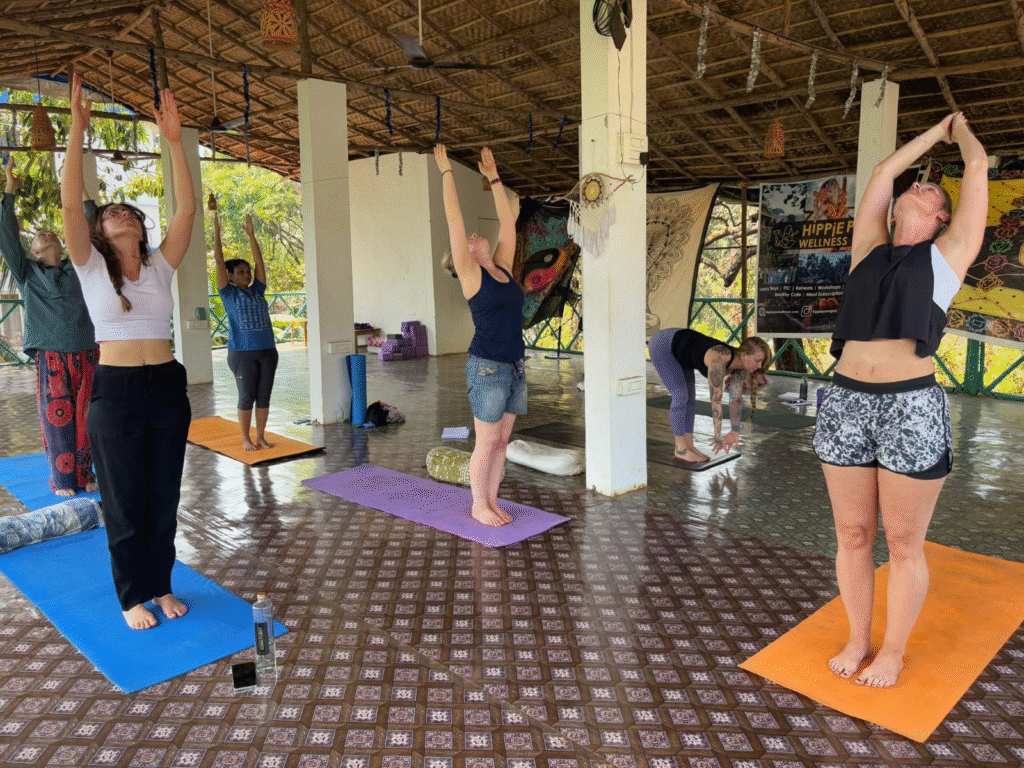
The important question is not:
“How many poses can I put into one class?”
It is:
“Why am I teaching these poses in this order?”
That is the beginning of intelligent sequencing.
Ashtanga Yoga
Ashtanga forms another component of the multi-style approach.
Students explore the traditional practice and its relationship with:
- Breath
- Movement
- Discipline
- Sequence
- Concentration
This gives students another perspective on structured yoga practice.
The intention is not to force every student into the same physical expression.
It is to help students understand the principles behind the practice.
Breathwork is an important part of traditional yoga.
The program incorporates pranayama alongside asana and meditation.
Students develop an understanding of conscious breathing and traditional pranayama practices as part of their broader yoga education.
The emphasis is on learning the practice properly rather than treating breathing techniques as something separate from yoga.
Meditation is integrated into the training rather than being treated simply as an optional evening activity.
Students explore practices designed to develop:
Concentration
Awareness
Stillness
Observation
Inner focus
This is particularly valuable for future teachers.
A teacher is constantly observing students.
Developing the ability to observe your own mind can become an important part of that process.
Yoga is much more than physical movement.
The philosophy component gives students the opportunity to explore the ideas and traditions behind the practice.
Depending on the curriculum, this includes study of subjects such as:
- Yoga history
- Classical yoga principles
- Patanjali’s Yoga Sutras
- The Eight Limbs of Yoga
- Yogic ethics
- Self-discipline
- Self-study
- The broader purpose of yoga
This helps students understand that the posture is only one part of a much larger tradition.
A future yoga teacher needs a basic understanding of the human body.
The anatomy component helps students explore how the body moves during yoga practice.
Topics include areas such as:
- Muscles
- Joints
- Movement
- Alignment
- Stability
- Flexibility
- Safe practice
- Individual differences
The objective is not to turn students into medical professionals.
It is to help them become more informed and responsible yoga teachers.
Students also learn how to observe posture and guide practitioners.
This can include:
- Verbal instructions
- Demonstration
- Alignment awareness
- Use of props
- Modifications
- Hands-on adjustment principles
The most important lesson is that every student is different.
A teacher should learn to observe the person in front of them rather than trying to force every body into an identical shape.
Teaching Methodology
This is where personal practice begins to become teaching.
Students learn how to:
Give clear instructions
Instead of assuming students understand what you mean.
Use appropriate cues
Helping students understand what to do and how to do it.
Sequence a class
Creating a logical beginning, middle and end.
Manage time
Learning how to complete a class without rushing.
Use your voice
Developing clarity, pace and confidence.
Observe students
Learning to see what is happening in the room.
Offer modifications
Helping students with different abilities and needs.
These are practical skills that develop through repetition.
Practice Teaching: From Student to Teacher
One of the most important parts of the training is actually teaching.
You can study yoga philosophy for hours.
You can memorise Sanskrit names.
You can practise advanced asanas.
But eventually you need to stand in front of another person and teach.
That experience can feel uncomfortable at first.
Your voice may shake.
You may forget your sequence.
You may speak too quickly.
You may realise that a cue that made perfect sense in your head was unclear to your students.
And that is okay.
Teaching practice is where those lessons become visible.
With feedback and repetition, students can gradually become more confident.
A Typical Day at Diksha Yoga School
The published Diksha schedule shows an intensive day beginning early in the morning and combining practical and theoretical education.
A typical schedule is:
| Time | Session |
| 6:00 AM | Wake Up |
| 7:00–7:30 AM | Pranayama / Meditation / Chanting |
| 7:30–9:00 AM | Asana Practice |
| 9:00–10:00 AM | Breakfast |
| 10:00–11:45 AM | Art of Teaching / Adjustment & Alignment |
| 11:45 AM–1:00 PM | Yoga Philosophy / Theory |
| 1:00–2:00 PM | Lunch |
| 2:30–4:00 PM | Anatomy / Physiology |
| 4:00–5:45 PM | Asana Practice / Teaching Asanas |
| 6:00–7:00 PM | Meditation |
| 7:30 PM | Dinner |
The school notes that the daily schedule is subject to change at the teacher’s discretion.
This is important to understand before booking.
A 200 Hour Yoga TTC Goa Cost Guide is intensive.
You should arrive prepared to practise, study and participate fully.
Accommodation During the Course
Accommodation is an important part of the residential experience.
The current Diksha course information describes private and shared accommodation options and lists facilities such as comfortable rooms, hot water, Wi-Fi and other basic amenities.
The intention is to give students a place where they can rest after a demanding day of practice and study.
That matters.
A teacher training can be physically and mentally intensive.
Your accommodation should therefore provide enough space for you to rest and recover.
Yogic Meals During the Training
Food is also part of the residential experience.
Diksha describes its meals as vegetarian and yogic/sattvic, with fresh ingredients used to support students throughout their training.
A typical yogic meal may include foods such as:
- Fresh vegetables
- Rice
- Lentils
- Seasonal fruits
- Whole grains
- Salads
- Herbal drinks
The purpose is not to create a restrictive diet.
It is to provide nourishing food that fits naturally into the rhythm of an intensive yoga program.
Students with allergies or specific dietary requirements should confirm arrangements with the school before arrival.
Weekly Excursion
The residential package also includes a weekly excursion.
These experiences provide a change from the training environment and allow students to experience more of Goa.
For many students, this becomes an important part of the overall journey.
Teacher training is intensive.
A little time outside the classroom can provide space to relax, connect with classmates and experience the destination.
What Makes the Course Different From a Normal Yoga Retreat?
A retreat and a teacher training serve different purposes.
A retreat may focus primarily on:
Relaxation
Personal practice
Wellness
A 200 Hour Yoga TTC Goa Cost Guide goes further.
You study:
Teaching methodology
Sequencing
and practice teaching.
You are not simply attending classes.
You are learning how to eventually guide other people through them.
Who Is This Course Best Suited For?
Diksha’s current program is listed for beginner-to-intermediate practitioners.
It can be suitable for someone who wants to:
Become a yoga teacher
Build the foundation needed to begin teaching.
Deepen an existing practice
Understand the principles behind what you already practise.
Study traditional yoga
Explore philosophy, pranayama, meditation and Hatha Yoga.
Take time for personal growth
Step away from everyday life and dedicate several weeks to practice.
Build confidence
Develop the ability to speak, demonstrate and guide a class.
You do not need to be able to perform advanced handstands or complicated inversions to begin.
What Should You Expect From the Training?
You should expect:
Early mornings
Regular physical practice
Theory
Meditation
Teaching practice
Feedback
Self-study
Community
It is not always easy.
There may be days when you feel tired.
There may be days when your body feels challenged.
There may be moments when teaching in front of your classmates feels uncomfortable.
But these experiences are part of the learning process.
What Can You Take Home With You?
At the end of the program, the goal is not simply to leave with a certificate.
You should leave with:
A stronger personal practice
You understand your body, breath and mind more deeply.
A foundation in yoga philosophy
You have begun exploring the teachings behind the physical practice.
Teaching experience
You have actually guided classes.
Better communication
You understand how to explain and demonstrate more clearly.
Greater confidence
You become more comfortable standing in front of students.
A community
You have spent several weeks learning with people from different backgrounds and countries.
A foundation for continued learning
You understand that becoming a yoga teacher is a journey rather than a final destination.
What Is the Current Diksha 200 Hour Yoga TTC Goa Cost Guide?
For the currently published 2026 Goa dates:
Private Deluxe — €1,800
Shared Deluxe — €1,600
The course is listed as:
23 Days / 22 Nights
Residential
Beginner to Intermediate
Multi-style
English
Arambol, Goa
Three meals daily
Yoga Alliance certification
View the current 200 Hour Yoga TTC Goa Cost Guide course page
These prices and dates can change, so students should confirm the current availability and package details before booking.
Is the €1,600–€1,800 Price Worth It?
That depends on what you are comparing it with.
If you compare Diksha only with a ₹60,000 non-residential course, the price difference is substantial.
But you are not necessarily comparing the same package.
The Diksha residential program includes:
23 days / 22 nights
Three meals per day
Training
Study material
Course manual / yoga kit
Weekly excursion
Certification
and the complete residential learning environment.
That is why students should compare the complete package, not simply the tuition number.
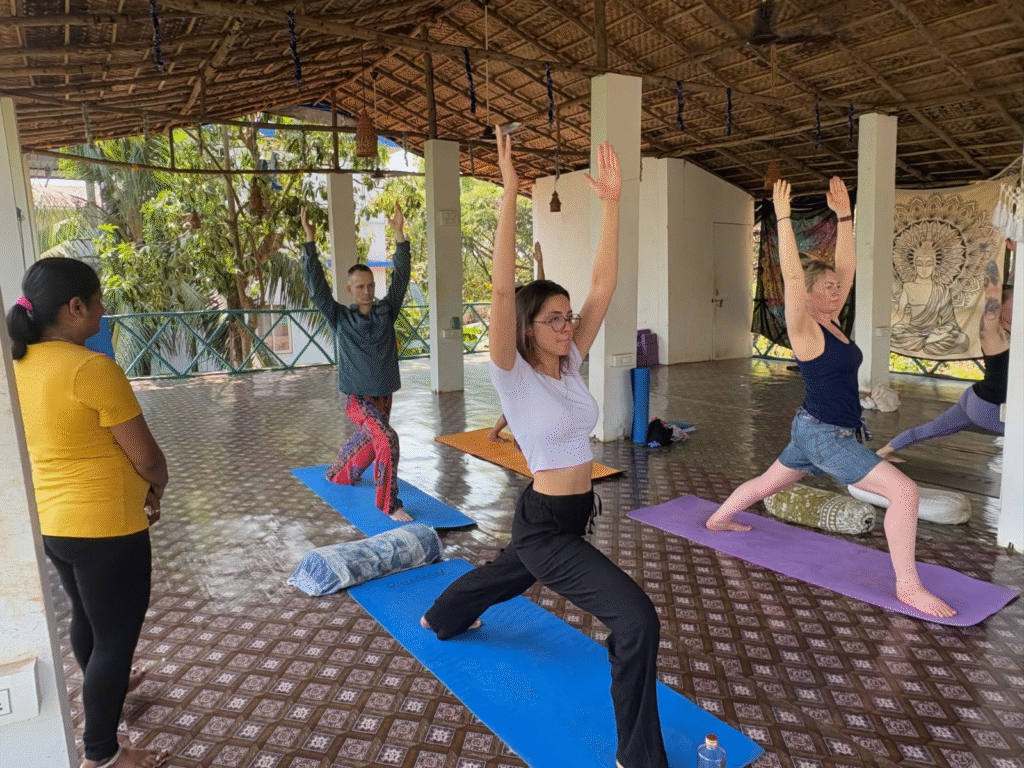
Why Students Choose Diksha Yoga School
The school’s current information highlights several elements of its approach:
Traditional Yoga Education
A foundation in Hatha Yoga, philosophy, pranayama and meditation.
Multi-Style Learning
Hatha, Vinyasa and Ashtanga are incorporated into the program.
Practical Teacher Training
Students learn sequencing, alignment and teaching methodology.
Residential Immersion
Students live and learn within the same environment.
International Community
Diksha describes its school as an international yoga community with students from different countries.
Experienced Teaching Team
The school identifies Yogini Manisha and other experienced teachers across different areas of the curriculum.
Learn With Yogini Manisha
The person guiding your teacher training matters.
At Diksha Yoga School, Yogini Manisha is the Founder and Lead Teacher.
The school’s current About page describes the school’s journey from its beginnings and highlights 16+ years of authentic yoga sharing.
Her approach brings together traditional yoga with practical teaching methodology.
For students, this means the training is not only about:
How to perform an asana
but also:
How to understand it
How to observe it
How to explain it
How to modify it
and ultimately:
How to teach it.
What Former Students Say
Real student experiences can provide useful context when researching a Yoga Teacher Training.
Diksha’s current 200 Hour Yoga TTC Goa Cost Guide page includes testimonials from former students.
For example, Leigh Hughes describes learning not only asanas but also a deeper understanding of what yoga means and how it could influence her life.
Another former student, Jasmine St Cliere, describes the teacher training as a valuable personal journey and highlights the support of Yogini Manisha and the teaching team.
These testimonials should be considered alongside the curriculum, teachers, facilities and other evidence when making your decision.
Before You Book Your 200 Hour Yoga TTC Goa Cost Guide
Before sending a deposit, make sure you know:
Your course dates
Choose dates that work with your travel plans.
Your room
Private or shared?
What is included
Ask for the complete package in writing.
Airport arrangements
Confirm whether pickup is included.
Dietary requirements
Tell the school about allergies or special requirements in advance.
Payment terms
Understand the deposit and cancellation conditions before paying.
Certification
Confirm the exact certification pathway applicable to your course.
This makes the booking process much easier and avoids unnecessary surprises.
Ready to Begin Your 200 Hour Yoga TTC Goa Cost Guide ?
If you have been researching:
200 Hour Yoga TTC Goa Cost Guide Goa
200 Hour Yoga TTC Goa Cost Guide India
Yoga Teacher Training Goa fees
Residential Yoga Teacher Training Goa
and Yoga Alliance 200 Hour Yoga TTC Goa Cost Guide, the next step is to compare the complete experience rather than just the advertised price.
At Diksha Yoga School, the current program offers:
23 Days / 22 Nights
Private Deluxe — €1,800
Shared Deluxe — €1,600
Traditional Hatha + Vinyasa + Ashtanga
Alignment + Teaching Methodology
Practice Teaching
Three Yogic Meals Daily
Study Materials
Weekly Excursion
Yoga Alliance Certification
Your Yoga Journey Can Begin in Goa
You don’t need to arrive as an expert.
You don’t need perfect flexibility.
You don’t need to know everything about yoga.
You need:
Commitment
Curiosity
Discipline
An open mind
and a willingness to learn.
The 200 Hour Yoga TTC Goa Cost Guide is not the end of your yoga journey.
It can be the beginning of a much deeper one.
Come to Goa to practise.
Stay to learn.
Leave ready to continue the journey.
Check the current 200 Hour Yoga TTC Goa Cost Guide
Student Testimonials – 200-Hour Yoga TTC
🇩🇪 Germany — Anna
“Joining the 200-Hour Yoga Teacher Training at Diksha Yoga School in Goa was a transformative experience. The teachers at Diksha Yoga School were knowledgeable, supportive, and made every class meaningful. I gained confidence in both my personal yoga practice and my teaching skills.”
🇫🇷 France — Sophie
“The 200-Hour Yoga Teacher Training at Diksha Yoga School gave me a deeper understanding of yoga beyond asana practice. I especially enjoyed the philosophy, pranayama, meditation, and teaching practice. Diksha Yoga School created a warm and welcoming atmosphere that made the entire experience special.”
🇺🇸 USA — Michael
“I came to Goa hoping to improve my yoga practice and chose Diksha Yoga School for my 200-Hour Yoga Teacher Training. The teachers were patient and encouraging throughout the course. I left Diksha Yoga School with greater confidence, practical teaching skills, and an unforgettable experience of learning and personal growth.”
Frequently Asked Questions About 200 Hour Yoga TTC Goa Cost Guide
If you have reached this point, you probably have a more important question than simply:
“How much does a 200 Hour Yoga TTC Goa Cost Guide ?”
You may also be wondering:
Is it worth the investment?
Which school should I choose?
Do I need previous yoga experience?
What is included?
Will I be able to teach after the course?
The answers below are designed to help you make a more informed decision.
How Much Does a 200 Hour Yoga TTC Goa Cost Guide ?
The cost varies considerably depending on whether the course is residential or non-residential, the accommodation, school, curriculum and inclusions.
Current published Goa programs range from around ₹60,000 for some non-residential programs to well above ₹1,50,000 for residential and premium programs. Some international programs are priced higher depending on accommodation and services.
The important thing is to compare the complete package, rather than only the advertised tuition.
What Is the Cost of a 200 Hour Yoga TTC Goa Cost Guide at Diksha Yoga School?
Diksha Yoga School currently publishes its 2026 Goa 200 Hour Yoga TTC Goa Cost Guide residential program at:
€1,600 — Shared Deluxe
€1,800 — Private Deluxe
The program is listed as 23 days / 22 nights and includes residential accommodation, meals and the training components described on the school’s current course page.
Always confirm the current price and availability for your selected intake before booking.
Is Accommodation Included at Diksha Yoga School?
Yes.
The current 200 Hour Yoga TTC Goa Cost Guide program is residential and offers private and shared accommodation options.
The published program is 23 days / 22 nights. This means students can live within the training environment rather than arranging accommodation independently.
This can be particularly convenient for international students travelling specifically to Goa for their Yoga Teacher Training.
Are Meals Included?
Yes.
The current Diksha course information lists three meals per day as part of the residential program.
The school describes the meals as vegetarian/yogic and designed to support students during the intensive training.
If you have allergies or specific dietary requirements, it is best to discuss them with the school before arrival.
Do I Need Previous Yoga Experience?
Not necessarily.
Diksha’s current 200 Hour Yoga TTC Goa Cost Guide program is listed at beginner-to-intermediate level.
You do not need to arrive with advanced flexibility, difficult inversions or years of yoga experience.
What you do need is a willingness to practise consistently and learn.
A 200 Hour Yoga TTC Goa Cost Guide is an intensive educational experience, so physical ability is only one part of being prepared.
Can Complete Beginners Join a 200 Hour Yoga TTC Goa Cost Guide?
Yes, many Goa schools accept beginners.
For example, current Goa Yoga School information explicitly states that its 200 Hour Yoga TTC Goa Cost Guide does not require prior experience and is designed for beginners.
However, every school’s admission expectations are different.
If you are a complete beginner, ask the school:
“Is this program genuinely suitable for someone with little or no previous yoga experience?”
Do I Need to Be Flexible to Join a 200 Hour Yoga TTC Goa Cost Guide?
No.
Flexibility should not be treated as an entry requirement for becoming a yoga teacher.
In fact, one of the reasons people study yoga is to develop a better understanding of their own body.
A teacher-training course should teach you how to work with different bodies—not only flexible ones.
Your ability to teach should not be measured by how deeply you can place your foot behind your head.
Do I Need to Be Able to Do a Headstand or Handstand?
No.
Advanced inversions are not a requirement for becoming a thoughtful yoga teacher.
You may practise inversions during your training depending on your level and the curriculum, but you should never feel that you need to perform advanced poses simply to prove that you belong in a 200 Hour Yoga TTC Goa Cost Guide
Understanding, awareness, communication and responsible teaching are far more important.
Is a 200 Hour Yoga TTC Goa Cost Guide Only for People Who Want to Become Teachers?
No.
A 200 Hour Yoga TTC Goa Cost Guide can also be valuable for people who want to deepen their own practice and understanding of yoga.
Some students join because they want to teach professionally.
Others join because they want:
- Deeper knowledge
- Personal development
- Traditional yoga philosophy
- Better understanding of asana
- Meditation practice
- Pranayama
- A period of focused study
Current Goa Yoga School FAQ information similarly notes that students do not have to be committed to teaching after the course and may join to deepen their yoga journey.
Can I Join a 200 Hour Yoga TTC Goa Cost Guide Just for Personal Growth?
Yes.
You do not have to decide your entire future before beginning the course.
You may arrive thinking:
“I want to become a yoga teacher.”
You may leave with that goal strengthened.
Or you may discover that your main interest is personal practice, philosophy, meditation or another area of yoga.
A good teacher training gives you the space to learn before making long-term decisions.
How Long Is a 200 Hour Yoga TTC Goa Cost Guide ?
The calendar duration differs between schools.
Many residential programs run for approximately three to four weeks.
Diksha’s current program is:
23 Days / 22 Nights
Other Goa schools publish programs with different durations, including 24–26 day formats.
Therefore, when comparing programs, look at both:
Total training hours
and
Total calendar days.
What Will I Learn During a 200 Hour Yoga Teacher Training?
A comprehensive program may include:
Asana
Hatha, Vinyasa and other foundational practices.
Traditional breathing practices and breath awareness.
Concentration, awareness and meditative practices.
The foundations and traditional teachings of yoga.
Understanding the body and movement.
Learning how to observe and guide posture.
Sequencing
Creating intelligent yoga classes.
Teaching Methodology
Learning how to communicate and guide students.
Practice Teaching
Actually teaching classes and receiving feedback.
The current Diksha program includes Hatha, Vinyasa, Ashtanga, pranayama, meditation, philosophy, anatomy, alignment and teaching methodology.
How Much Teaching Practice Should a 200 Hour Yoga TTC Goa Cost Guide Course Include?
This is one of the most important questions to ask before booking.
You should not assume that every 200 Hour Yoga TTC Goa Cost Guide provides the same amount of practical teaching.
Ask:
How many times will I teach?
Will I teach complete classes?
Will teachers observe me?
Will I receive individual feedback?
Will I have an opportunity to teach different styles or sequences?
Teaching is a skill.
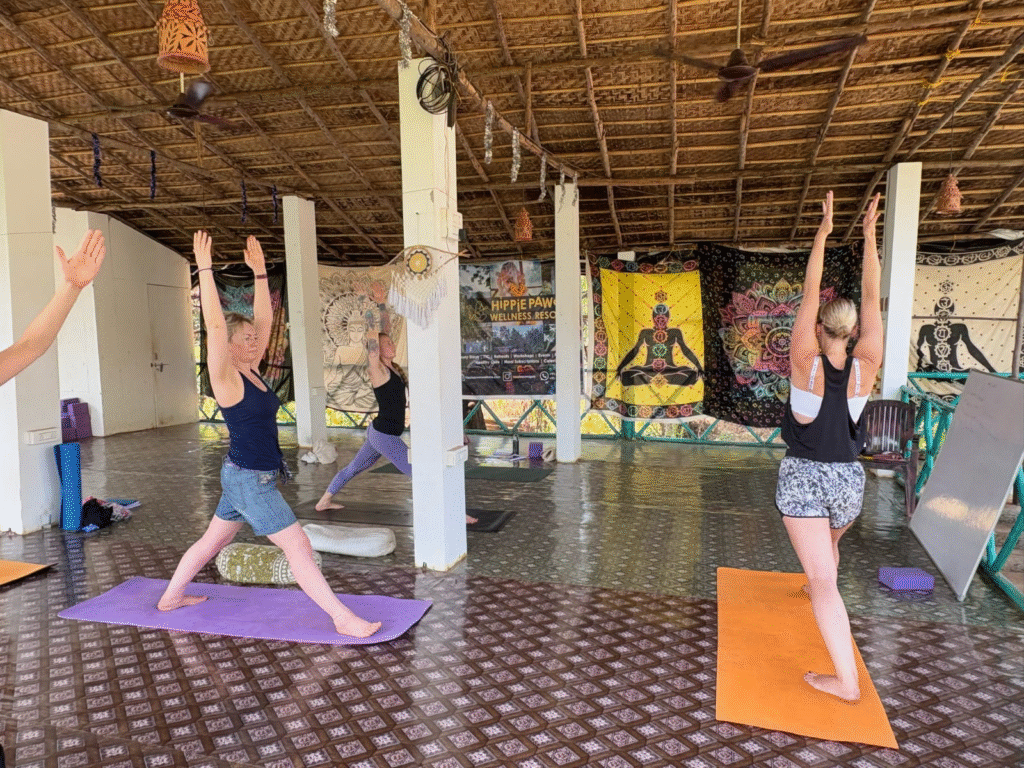
It develops through practice.
Is Anatomy Included in a 200 Hour Yoga TTC Goa Cost Guide?
It should be part of a comprehensive foundational teacher-training curriculum.
The exact depth varies by school.
At Diksha, anatomy and physiology form part of the published 200 Hour Yoga TTC Goa Cost Guide curriculum.
Students explore the relationship between the human body and yoga practice, including alignment, movement and individual differences.
Is Yoga Philosophy Included?
Yes.
Yoga philosophy is an important part of the Diksha curriculum.
Students explore the philosophical foundations behind the physical practice, including traditional yogic concepts and teachings.
This is important because yoga is not simply a collection of physical postures.
Understanding philosophy can influence the way a future teacher approaches:
Practice
Discipline
Awareness
Self-study
Teaching
Is Pranayama Included?
Yes.
Pranayama forms part of the training.
Students are introduced to traditional breath practices progressively and learn how conscious breathing relates to yoga practice.
The exact practices and teaching sequence may vary according to the course schedule and teacher.
Is Meditation Included?
Yes.
Meditation is incorporated into the program alongside asana and pranayama.
The purpose is to help students develop concentration, awareness and a deeper relationship with their own practice.
Is Yoga Alliance Certification Included?
Diksha’s current course page lists Yoga Alliance USA certification as part of the program.
However, students should understand the distinction between the school’s registration and an individual’s registration.
RYS
Registered Yoga School.
RYT
Registered Yoga Teacher.
If your goal is to pursue the RYT 200 credential, verify the school’s current RYS status and the current requirements that apply to you before booking.
Do not rely solely on the phrase “internationally recognised certificate.”
Ask exactly what the course provides.
Can I Become a Yoga Teacher After Completing a 200 Hour Yoga TTC Goa Cost Guide Course?
A 200 Hour Yoga TTC Goa Cost Guide is generally considered a foundational teacher-training level.
However, completing a course does not mean that you instantly become an experienced teacher.
You still need:
Practice
Observation
Teaching experience
Continued study
Feedback
Professional development
If you want to pursue Yoga Alliance’s RYT 200 credential, check the current requirements directly with Yoga Alliance and confirm that the training you choose meets the relevant requirements.
Can I Teach Yoga Internationally After a 200 Hour Yoga TTC Goa Cost Guide?
Be careful with this question.
A certificate does not automatically give you legal permission to teach in every country.
Teaching requirements, insurance, professional rules and work or visa regulations can differ by country and employer.
If you are planning to teach abroad, check the rules of the country where you intend to work.
Your Yoga Teacher Training is one part of becoming a professional teacher.
Is Goa Better Than Rishikesh for Yoga Teacher Training?
Neither is universally better.
Choose Goa if you prefer:
- Coastal surroundings
- Tropical weather
- International community
- Beach and nature
- A relaxed residential atmosphere
Choose Rishikesh if you prefer:
- Ganges surroundings
- Himalayan environment
- Strong pilgrimage culture
- Traditional ashram atmosphere
- A more spiritually focused setting
The right destination is the one in which you feel you can learn and practise most deeply.
Is Residential Yoga Teacher Training Worth the Extra Cost?
For many international students, it can be.
Residential training means that your:
Accommodation
Training
Meals
and daily routine
can all be organised around the course.
You spend less time commuting and more time within the learning environment.
But if you already live in Goa and have your own accommodation, a non-residential program may be more economical.
Is a Cheap 200 Hour Yoga TTC Goa Cost Guide Worth It?
It can be.
A lower price is not automatically a warning sign.
But investigate what is included.
Ask:
- Is it residential?
- Is accommodation included?
- Are meals included?
- Who teaches?
- How large is the group?
- How much teaching practice is included?
- What certificate do you receive?
- What is the school’s current registration status?
- Are there additional costs?
Current Goa programs show that lower-cost non-residential options and more expensive residential options coexist in the market.
The difference is often the package, not simply the quality.
Is an Expensive 200 Hour Yoga TTC Goa Cost Guide Automatically Better?
No.
Price is not a reliable measure of teaching quality.
A premium course should be able to explain what you are receiving for the additional cost.
Look at:
Teachers
Curriculum
Practice
Accommodation
Group size
Feedback
Certification
Student reviews
Support
Then decide.
200 Hour Yoga TTC Goa Cost Guide Goa: Final Comparison Checklist
Before booking any school, use this checklist.
| Question | Why It Matters |
| Who teaches? | Teacher experience affects learning |
| How many students? | Helps you understand potential personal attention |
| How long is the course? | Calendar duration affects immersion |
| Is it residential? | Changes your total budget |
| What room do I receive? | Accommodation can significantly affect price |
| Are meals included? | Avoid unexpected daily expenses |
| What styles are taught? | Ensures the curriculum matches your goals |
| Is anatomy included? | Important for responsible teaching |
| Is philosophy included? | Provides traditional context |
| Is pranayama included? | Important part of yogic education |
| Is meditation included? | Supports inner practice |
| How much teaching practice? | Essential for developing teaching skills |
| Do teachers give feedback? | Helps you improve |
| What certificate do I receive? | Avoid confusion about credentials |
| Is Yoga Alliance registration current? | Important if this matters to your goal |
| Are airport transfers included? | Helps calculate total cost |
| Are excursions included? | Clarifies the package |
| Are there additional fees? | Prevents surprises |
| What happens after graduation? | Shows whether the school supports continued learning |
The 10 Questions You Should Ask Before Booking
If you only have time to ask a school ten questions, ask these:
1. Who is the lead teacher?
2. How many students will be in my batch?
3. How much teaching practice is included?
4. What exactly does the course fee include?
5. Is accommodation included?
6. Are three meals included every day?
7. What certificate will I receive?
8. What is the school’s current Yoga Alliance registration status?
9. Are there any additional mandatory costs?
10. What happens if I need help during the training?
The answers will tell you a great deal about the school.
Is Diksha Yoga School Right for You?
Diksha may be a good fit if you are looking for:
A Residential Experience
You want to live and study in the same environment for several weeks.
Traditional Yoga
You want to study Hatha, pranayama, meditation and philosophy alongside physical practice.
Multi-Style Learning
You want exposure to Hatha, Vinyasa and Ashtanga.
Practical Teaching Skills
You want to learn sequencing, alignment, cueing and teaching methodology.
You want to learn alongside students from different backgrounds.
Experienced Guidance
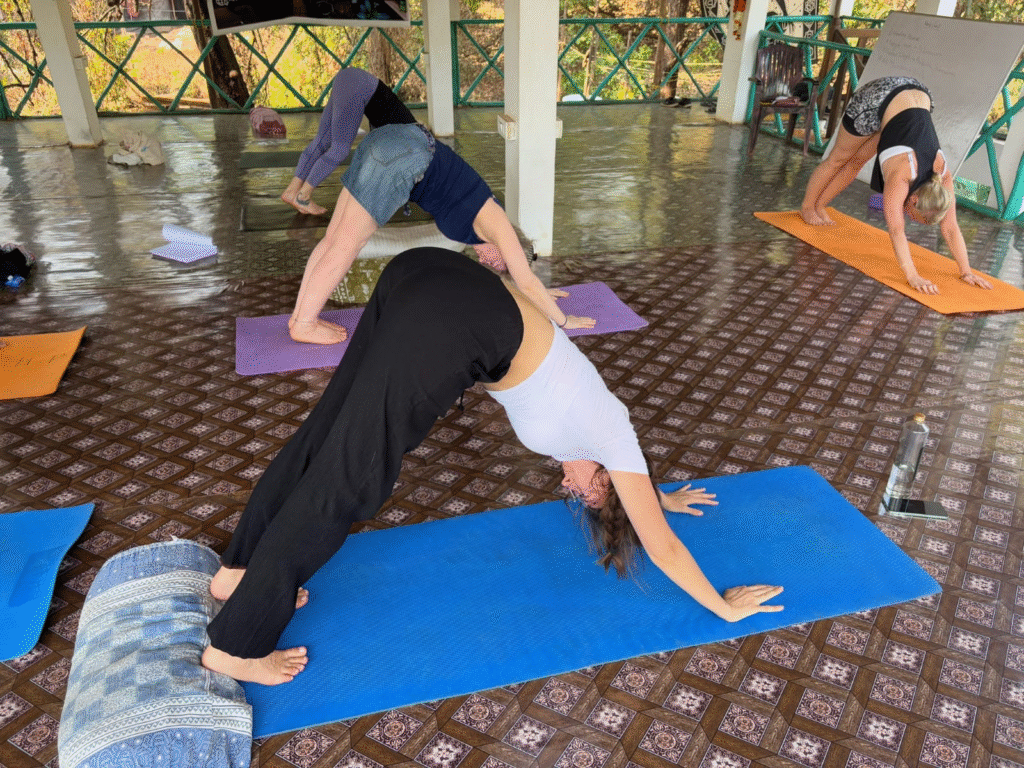
You value learning from teachers with substantial teaching experience.
Personal Transformation
You want the training to deepen your own practice, not simply provide a certificate.
When Should You Choose a Different Type of Program?
Diksha may not be the right choice for everyone.
A different program could make more sense if:
You already live in Goa
A non-residential course may reduce your accommodation costs.
You want a very specific yoga style
A specialised school may be better if you want to focus exclusively on one tradition.
You have a very limited budget
A simpler course may fit your finances better.
You prefer a shorter program
A 100-hour or shorter immersion may suit your schedule better.
Choosing honestly is important.
The right school is the one that fits your goals.
Why We Don’t Say “The Cheapest Is the Best”
Yoga teacher training is an investment.
But it should be an informed investment.
At Diksha Yoga School, our focus is not to compete only on the lowest price.
Our focus is on creating an environment where students can:
Practise deeply
Study sincerely
Ask questions
Teach
Receive feedback
Understand traditional yoga
and continue learning.
The price needs to make sense in relation to the complete experience.
Your 200 Hour Yoga TTC Goa Cost Guide Is More Than a Certificate
At the beginning, you may think you are travelling to Goa to earn a certificate.
By the end, you may realise that the certificate is only one small part of what happened.
You have spent weeks waking before sunrise.
You have practised when you were tired.
You have studied philosophy.
You have learned anatomy.
You have taught your classmates.
You have made mistakes.
You have received corrections.
You have laughed.
You have struggled.
You have become more aware.
And perhaps most importantly:
You have started to understand yourself as a student of yoga.
That is something you can continue long after the course ends.
Final Answer: How Much Does a 200 Hour Yoga TTC Goa Cost Guide?
There is no single price.
For 2026, published Goa programs range broadly from around ₹60,000 for some non-residential programs to ₹1,50,000–₹2,00,000+ for residential and premium experiences, with some international programs priced differently depending on accommodation and inclusions.
At Diksha Yoga School, the current published 2026 price is:
€1,600 Shared Deluxe
€1,800 Private Deluxe
for the 23-day / 22-night residential 200 Hour Yoga TTC Goa Cost Guide
The current package includes accommodation, three meals per day and the published training and course facilities.
But the most important question remains:
What are you receiving for your investment?
If your priority is simply finding the lowest course fee, there are cheaper options.
If your priority is finding a residential environment where you can study, practise and begin developing your teaching skills, then you should compare the complete experience.
Ready to Begin Your 200 Hour Yoga TTC Goa Cost Guide ?
If you feel that Goa is the right environment for your journey, the next step is simple.
Tell us:
Your preferred course dates
Your yoga experience
Private or shared accommodation
Your main reason for joining
and our team can help you understand the available options.
Explore the 200 Hour Yoga TTC Goa Cost Guide
23 Days / 22 Nights
Private Deluxe — €1,800
Shared Deluxe — €1,600
Teaching Methodology
Practice Teaching
Study Materials
Weekly Excursion
Yoga Alliance Certification
Check Course Dates & Availability
Begin Your Journey in Goa
You don’t need to be perfect.
You don’t need to be extremely flexible.
You don’t need to know everything about yoga.
You simply need to be willing to learn.
Come to Goa with curiosity.
Practise with discipline.
Study with an open mind.
Learn from your teachers.
Teach with humility.
And continue your journey long after the 200 Hour Yoga TTC Goa Cost Guide are complete.
Practice deeply. Learn traditionally. Teach responsibly.