What to Pack for Best Yoga TTC in Goa 2026-27
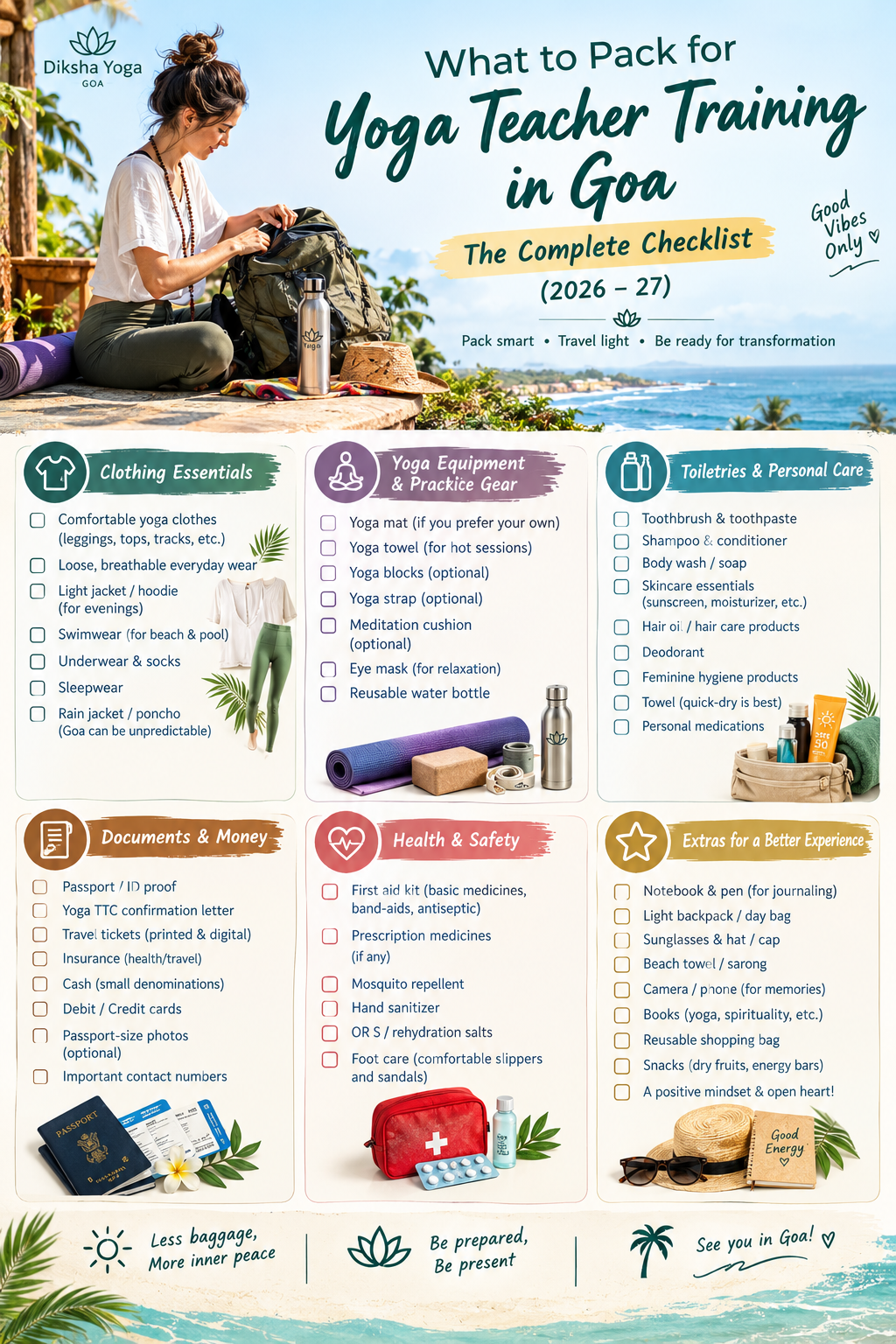
Quick answer: for a yoga teacher training in Goa, pack 5–7 sets of breathable yoga clothes (you’ll practise twice a day), light cotton clothes that cover your shoulders and knees for the village and temples, sunscreen and mosquito repellent, a refillable water bottle, a notebook, your passport and e-Visa, and any personal medication. Your room, three vegetarian meals a day, yoga mats, neti pots, towels, toiletries and laundry service are all provided, so you can travel light.
Packing for a month in Goa is easier than most people expect. You’ll spend most of your time in yoga clothes, the weather is warm from November to May, and anything you forget can be bought in Arambol. This checklist covers exactly what to bring for our residential training at The Lotus Sutra on Arambol Beach, what we already provide, and what to leave at home.
About the author. Written by Yogini Manisha, founder of Diksha Yoga School, whose main school is at The Lotus Sutra, Arambol Beach, North Goa. She is an E-RYT 500 with Yoga Alliance with 16+ years of teaching. This list comes from what our students actually use, and what they wish they’d packed, every season.
What we provide, and what you need to bring
Start here. It saves a lot of space in your bag.
| Already provided at The Lotus Sutra | You bring |
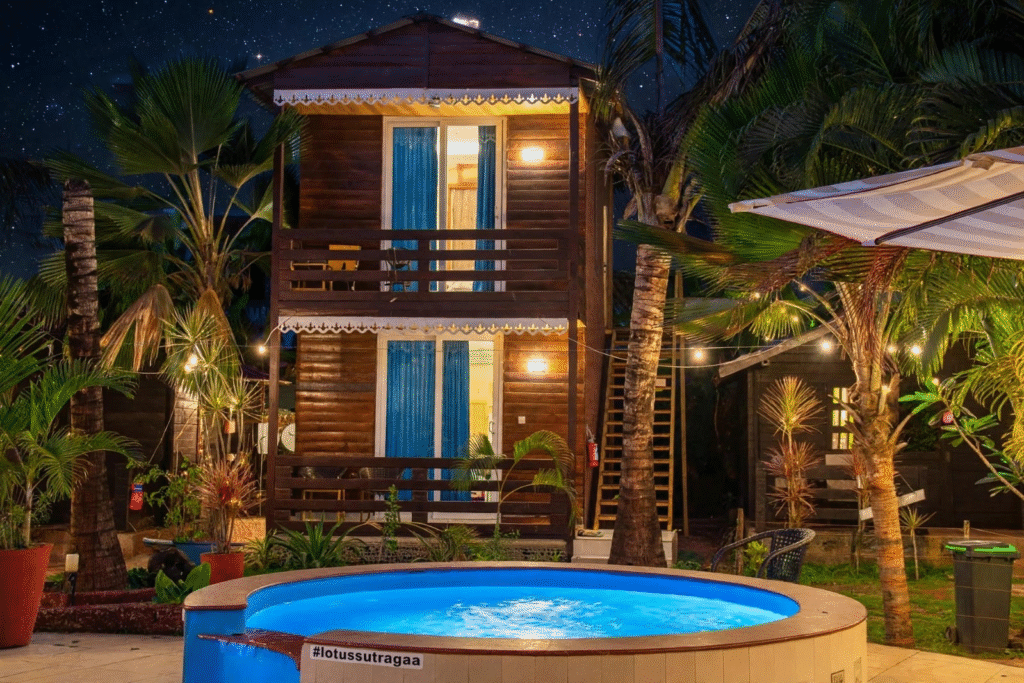
| Air-conditioned garden cottage with a private balcony | Yoga clothes (5–7 sets) |
| Yoga mats in the shala | Your own sunscreen and repellent |
| Neti pot for morning Jal Neti | Personal skincare and medication |
| Towels | A small sweat towel for practice (optional) |
| Bathroom with hot water and free basic toiletries | Phone, charger and India plug adapter |
| Laundry service | A refillable water bottle |
| Wi-Fi, tea and coffee making facilities | A notebook and pens |
| Daily housekeeping | Light clothes for town and temples |
| Three sattvic vegetarian meals a day, with vegan, gluten-free and lactose-free options | Snacks you can’t live without |
| Airport pickup from Mopa or Dabolim | Passport, e-Visa and insurance documents |
See the details on our Food & Accommodation page. Not sure if something is provided? Ask us on WhatsApp before you pack it.
1. Documents and money
- Passport, valid for at least 6 months when you apply for your visa, with two blank pages
- India e-Visa (ETA), printed or saved on your phone. See our India e-Visa guide
- e-Arrival Card QR code, submitted within 72 hours before you land
- Travel and medical insurance details, covering your whole stay
- Flight tickets, including your return or onward ticket, which immigration can ask to see
- Booking confirmation and our course letter
- Copies of everything, stored in your email or cloud as well as on paper
- A debit or credit card that works abroad. Tell your bank you’re travelling
- Some cash: euros, US dollars or rupees to change on arrival. Small shops, local taxis and markets in Arambol mostly take cash; ATMs are in Arambol and Mapusa
- Passport photos (2–3), handy for a local SIM card
2. Yoga clothes and props
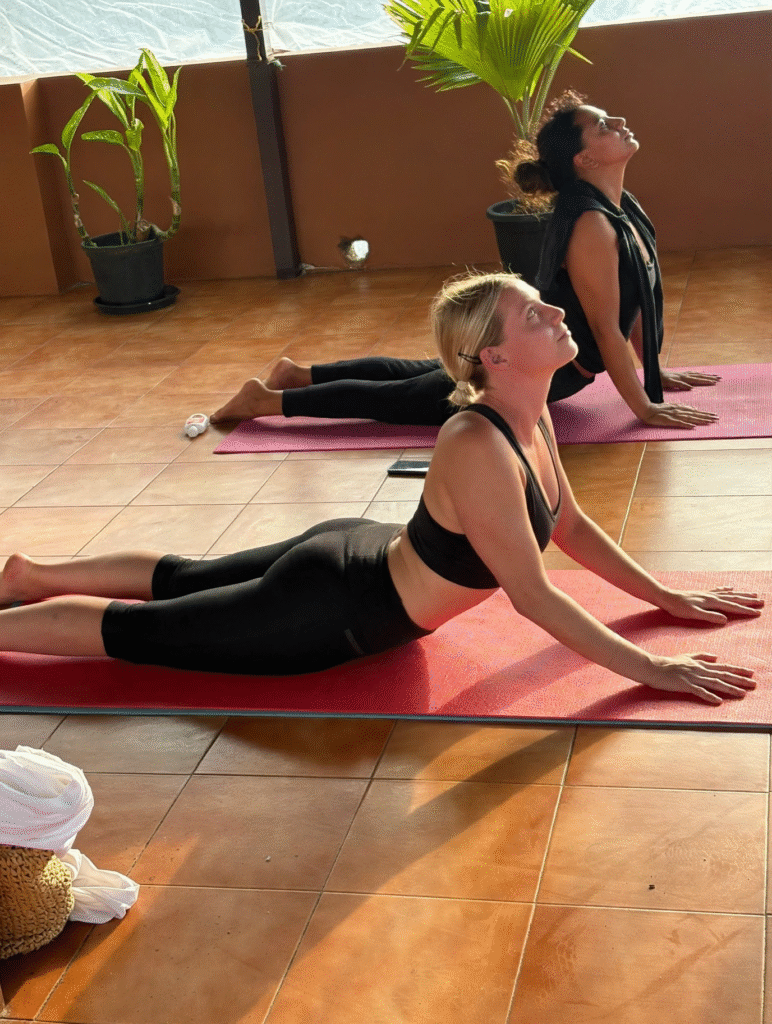
You’ll practise twice a day, six days a week, in tropical heat. Clothes dry quickly in Goa’s sun, but you’ll still go through them fast.
- 5–7 sets of yoga clothes: leggings or loose yoga pants, plus tops or sports bras. Choose breathable, quick-dry or cotton fabrics
- One or two pairs of loose, light trousers for meditation, philosophy and anatomy classes
- A light shawl or long-sleeved layer for early-morning meditation, especially in December and January
- A refillable water bottle. You’ll drink a lot, and it saves plastic
- A small sweat towel (optional) for hot afternoon practices
- Your own travel mat (optional). Mats are provided in the shala, so only bring one if you prefer your own
- No need to bring a neti pot. We provide one, and our teachers guide you through Jal Neti on the first morning
Not sure about other props, such as blocks or meditation cushions? Ask us on WhatsApp before you pack anything bulky.
Tip: avoid very sheer leggings and loose tops that fall over your head in inversions. You’ll be upside down more than you expect.
3. Everyday clothes for Goa’s climate and culture
Goa is relaxed, and beachwear is normal on the beach. In the village, shops, markets and temples, though, people dress more modestly. Covering your shoulders and knees is respectful, and it also protects you from the sun.
- 3–4 light cotton or linen tops, including at least one that covers your shoulders
- 2–3 loose trousers, long skirts or knee-length shorts
- A long cotton dress or kurta (optional). You can also buy one cheaply in Arambol
- A scarf or sarong. It covers your shoulders at a temple, works as a beach towel and keeps the sun off
- Swimwear for the beach on your free Sundays
- Underwear and socks for about a week. Laundry service is provided
- Light pyjamas
- Flip-flops or sandals. You’ll take shoes off often, at the shala and temples
- One pair of walking shoes or trainers for travel days and exploring
- A hat or cap and sunglasses
- A light rain jacket if you’re coming in late May, when pre-monsoon showers can start
Visiting a temple? Cover your shoulders and knees, take your shoes off at the entrance, and follow any signs about photography.
4. Health, toiletries and first aid
Basic toiletries are provided in your cottage, so bring only what you prefer to use yourself.
Toiletries:
- High-SPF sunscreen, reef-safe if possible. The Goa sun is strong even in winter
- Mosquito repellent containing DEET or picaridin, especially for dusk and evenings
- After-sun or aloe vera gel
- Your usual shampoo, conditioner and skincare, if you prefer your own brands
- Toothbrush, toothpaste and deodorant
- Hair ties and a small hairbrush
- Period products. Pads are easy to find in Goa; tampons and menstrual cups are harder, so bring your own
Small first-aid kit:
- Your prescription medication, enough for the whole trip, in its original packaging, with a copy of the prescription
- Oral rehydration salts (ORS), very useful in the heat
- Pain relief, such as paracetamol or ibuprofen
- Antihistamines, for bites or allergies
- Plasters and blister plasters
- An anti-diarrhoea remedy, just in case
- Muscle rub or balm. After two practices a day, you’ll be glad of it
- Hand sanitiser
Health tips: see a travel clinic 6–8 weeks before you fly to check recommended vaccinations for India. Drink bottled or filtered water, and tell us about any injury or health condition when you book, so our teachers can adapt your practice.
5. Study supplies and tech
The course includes anatomy, philosophy, sequencing and practice teaching, so come ready to take notes.
For study:
- A notebook, A5 or larger. Many students fill one and start a second
- Pens and a few coloured highlighters, useful for anatomy diagrams
- One book from our reading list, such as the Yoga Sutras of Patanjali. See the list in our How to Prepare post
- A small journal (optional), for reflections after practice
Tech:
- Phone and charger
- A universal travel adapter. India uses Type C, D and M plugs at 230 volts. Check that your devices accept 230 V
- A power bank for travel days
- An unlocked phone for a local SIM, or an eSIM with data
- Earplugs and an eye mask, for light sleepers and long flights
- A laptop or tablet (optional). Handy for study and planning your practice classes, but not essential
A gentle suggestion: plan a digital pause. Tell family and work you’ll be less available for a few weeks. Students who put their phones away get more from the training.
What not to bring
The most common mistake is overpacking. You’ll live in yoga clothes and sandals for most of the month.
- Too many “going out” clothes. Days start at 6 AM and evenings end with satsang and meditation.
- Heavy jeans and thick fabrics. They’re uncomfortable in the heat and slow to dry.
- A yoga mat unless you prefer your own. Mats are provided in the shala.
- Lots of toiletries or bath towels. Basic toiletries and towels are provided, and Arambol’s shops stock most everyday items.
- Expensive jewellery and valuables. Leave them at home.
- Hair dryers and straighteners. Many are made for one voltage only, and you won’t need them.
- Big bottles of liquids in hand luggage. Check your airline’s liquid rules.
- Snacks that are allowed at home but not in India. Fresh fruit, seeds and meat products may be restricted, so buy snacks locally.
Forgot something? Arambol has pharmacies, mini-markets and plenty of shops selling cotton clothes, sarongs and yoga wear. Mapusa market, about 30 minutes away, has almost everything else.
Packing by month: November to May
Our Goa trainings run every month from November to May, during the dry season. The basics stay the same all season, with a few changes:
| Your batch | Weather in brief | Add to your bag |
| November | Warm, drying out after the monsoon; some humidity | Extra repellent; a light layer for air-conditioned rooms |
| December – January | Peak season: sunny days, cooler early mornings and evenings | A shawl or light fleece for 6:30 AM pranayama and evening satsang |
| February | Dry and pleasant, warming up | Standard list |
| March – April | Hot and more humid | More yoga sets (you’ll sweat more), ORS sachets, high-SPF sunscreen |
| May | The hottest month; pre-monsoon showers can start late in the month | Quick-dry clothes, a light rain jacket, a small umbrella |
Not sure which month suits you? See the dates and fees on our 200 Hour YTT in Goa page.
Frequently asked questions
What should I wear for yoga teacher training in Goa?
Breathable yoga clothes for practice, 5–7 sets for two practices a day, and light, loose cotton clothes for lectures and town. Cover your shoulders and knees in the village and at temples.
Do I need to bring my own yoga mat?
No. Yoga mats are provided in the shala. Bring a travel mat only if you prefer your own, and ask us about other props before packing anything bulky.
How many yoga outfits do I need for a 23-day course?
About 5–7 sets. Clothes dry quickly in the Goa sun, and laundry service is provided.
Are towels and toiletries provided?
Yes. Towels, basic toiletries, hot water, laundry service and daily housekeeping are all provided at The Lotus Sutra. Just bring your own sunscreen, repellent and any skincare you prefer.
What plug type is used in Goa?
India uses Type C, D and M plugs at 230 volts. A universal adapter covers them.
Can I buy things I forget in Arambol?
Yes. Arambol has pharmacies, mini-markets and shops selling cotton clothes, sarongs and yoga wear. Mapusa market, about 30 minutes away, has almost everything else.
Is it cold in Goa in December and January?
Days are warm and sunny, but early mornings and evenings can feel cool, so a shawl or light fleece is useful for early meditation.
Should I bring cash to Goa?
Yes, some. Small shops, taxis and markets mostly take cash. ATMs are available in Arambol and Mapusa.
Packed and ready? Choose your dates
Our 23-day 200 Hour Yoga Teacher Training in Goa runs every month from November to May at The Lotus Sutra on Arambol Beach, from €1,800 with your garden cottage, three sattvic meals a day and airport pickup included. Prefer something shorter? The 11-day 100 Hour YTT in Goa starts from €1,200. There are only 10 places per batch.
| Course | Length | Twin-shared | Private |
| 100 Hour YTT Goa | 11 days | €1,200 | €1,400 |
| 200 Hour YTT Goa | 23 days | €1,800 | €2,000 |
“I had the most amazing and most special time of my life with you guys!” — Célina Schimanski, 200 Hour YTT graduate
Reserve your place → · View the 200 Hour YTT in Goa · Ask us a packing question on WhatsApp
Next steps before you fly: apply for your India e-Visa, plan your journey to Arambol, follow our 6-week preparation plan, and see the full cost of training in Goa.