
Reviewed by Master Nirakar E-RYT 500 · Updated October 2026
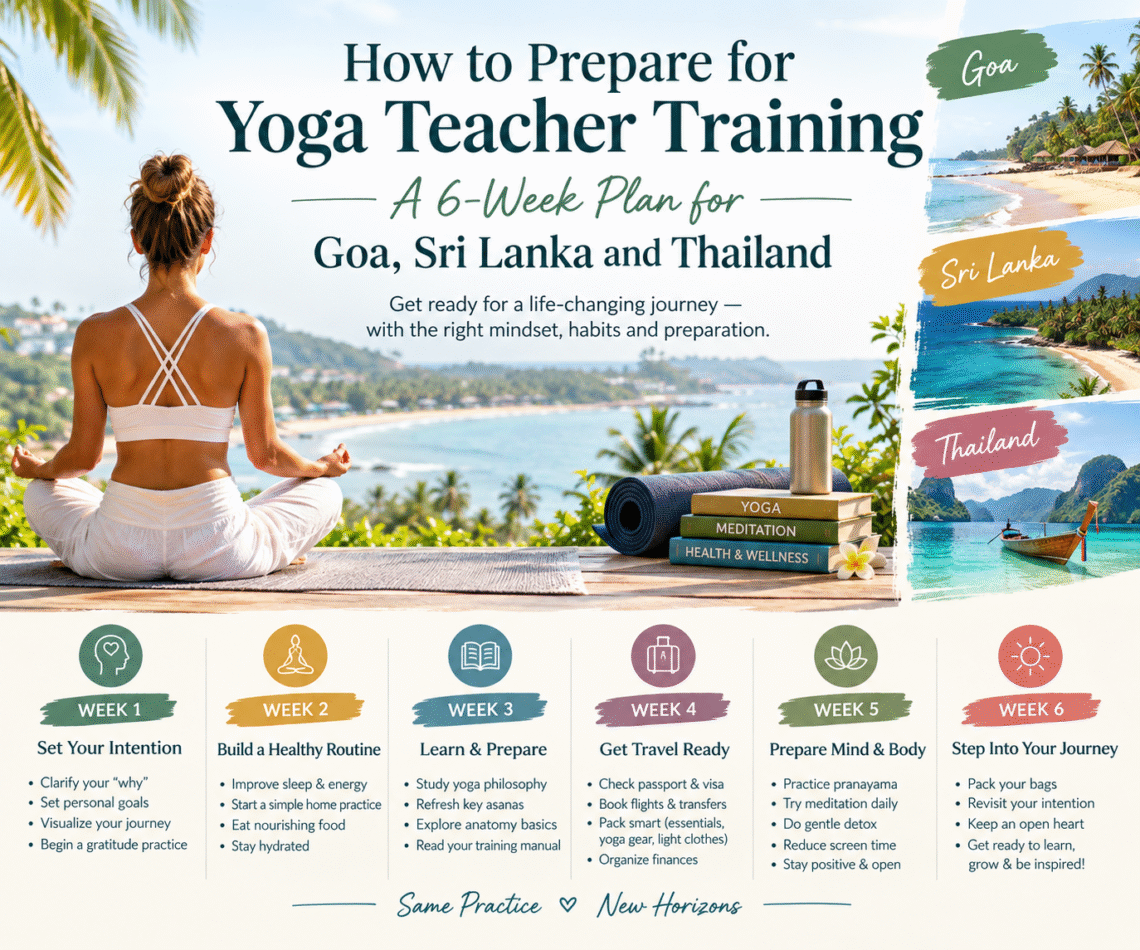
You’ve paid your deposit, your dates are fixed, and now a new question arrives: how to prepare for yoga teacher training so that you arrive ready, not anxious.
How to Prepare for Yoga Teacher Training, The honest answer is simpler than most people expect. You don’t need to touch your toes, hold a handstand or memorise Sanskrit. What helps most is a steady daily practice, a body used to early mornings, and a mind that is curious rather than tense.
This guide gives you a 6-week plan, week by week, based on what our teachers see in every batch at Diksha Yoga School in Arambol (Goa), Galle (Sri Lanka) and Koh Samui (Thailand). The plan is the same wherever you train. Near the end, you’ll find the practical details that change by location: airports, visas, meals and what to pack.
Table of Contents
If your course starts sooner than 6 weeks, start from the week that matches the time you have.
What you don’t need before yoga teacher training
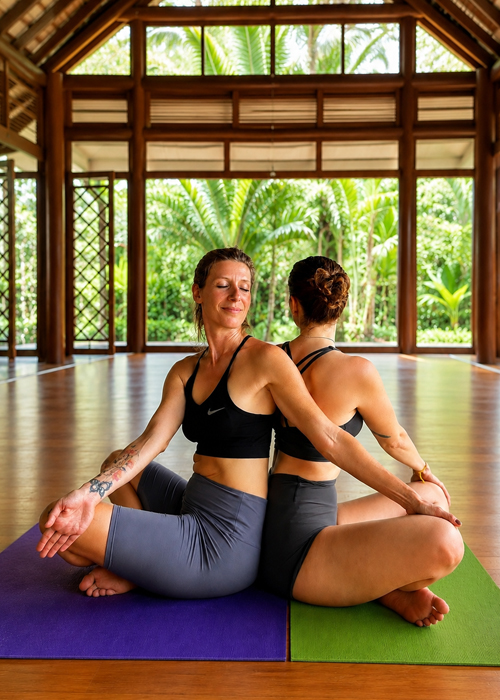
Many students almost don’t book because they think they aren’t “good enough” yet. So let’s clear that up first. Before you arrive, you do not need:
- Flexibility. Flexibility comes from practice. Training is where you learn how to practise safely.
- Advanced postures. Arm balances and inversions are taught during the course, step by step.
- Teaching experience. Most of our students have never taught a class before. You start practice teaching in week two, with support.
- Sanskrit or philosophy knowledge. You will learn the names, the texts and the ideas as part of the course.
- A “perfect” lifestyle. You don’t need to be vegetarian, sober or meditating for an hour a day before you arrive.
What you do need is a sincere interest in yoga and the willingness to show up every morning. Our 200-hour yoga teacher training in Goa, Sri Lanka and Thailand is open to beginners and intermediate students for exactly this reason.
What you are preparing for: a real training day
Good preparation starts with knowing what your days will actually hold. This is our daily schedule, Monday to Saturday, for the 23-day residential training in all three locations:
| Time | Session |
| 6:00 AM | Wake up |
| 6:30 AM | Jal Neti and pranayama |
| 7:00 AM | Asana: Hatha (Mon, Wed, Fri) or Ashtanga foundations (Tue, Thu, Sat) |
| 9:00 AM | Breakfast |
| 10:00 AM | Yoga philosophy |
| 11:00 AM | Alignment and adjustments |
| 12:00 PM | Meditation |
| 1:00 PM | Lunch and rest |
| 3:00 PM | Anatomy |
| 4:30 PM | Teaching methodology and sequencing |
| 5:30 PM | Vinyasa Flow, with student-led teaching from week two |
| 8:30 PM | Satsang and meditation |
Sundays are free. That adds up to two asana practices a day, plenty of sitting for lectures and meditation, and early mornings for more than three weeks. So the best way to prepare for yoga teacher training is to build exactly these things: stamina, comfort sitting, an early body clock, and familiarity with the basics.
Read More:- How to Choose the Best Yoga Teacher Training Destination in Asia (2026 Complete Guide)
How to prepare for yoga teacher training: the 6-week plan
The plan builds slowly. Each week adds one new habit while keeping the ones before. Don’t worry if you miss a day. Consistency over six weeks matters far more than any single session.
Week 6 before: Build a daily habit
- Practise yoga 5 days a week, even if only for 20–30 minutes.
- Choose simple, steady classes. Hatha or slow flow is ideal.
- Start a notebook. Write down how your body feels after each practice. This becomes useful during training.
Week 5 before: Learn Sun Salutations properly
- Practise Surya Namaskar A and B daily. They open every Ashtanga class you’ll take with us.
- Focus on linking breath and movement, not on speed.
- Add 5 minutes of quiet sitting after practice, eyes closed, simply watching your breath.
Week 4 before: Add breathwork and sitting
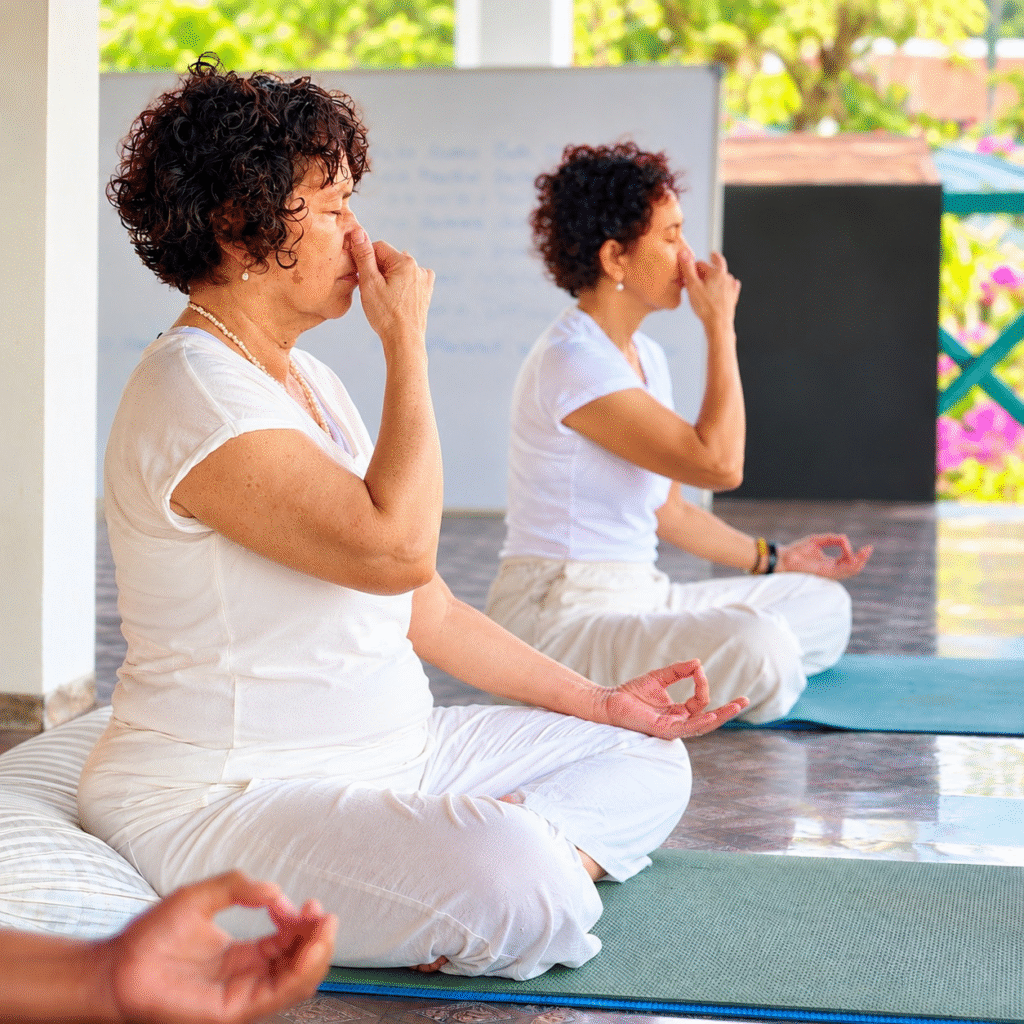
- Practise 5–10 minutes of simple pranayama each day, such as alternate nostril breathing (Nadi Shodhana). Our guide to pranayama techniques is a good starting point.
- Build up to sitting cross-legged for 15 minutes. Use a cushion or folded blanket under your hips. Lectures and meditation involve a lot of sitting.
- Begin one of the books from the reading list below.
Week 3 before: Shift your body clock
- Move your wake-up time 15 minutes earlier every few days, aiming for around 6:00 AM by the time you fly.
- Practise in the morning instead of the evening when you can.
- Try a second short practice 2–3 times this week, such as a gentle evening flow. This prepares your body for two classes a day.
Week 2 before: Get comfortable speaking
- Teach a 5-minute sequence to a friend, a family member, or even your phone camera. Say the instructions out loud.
- Don’t aim for perfect. The goal is simply to get used to hearing your own voice guide someone else.
- Learn the names of 10 common postures in English and Sanskrit. Our post on 5 yoga poses every beginner should know is a gentle place to begin.
Final week: Rest, pack and arrive calm
- Ease off. Keep practising, but gently. Don’t try to “cram” postures in the last few days.
- Sleep well, drink plenty of water, and avoid heavy food and alcohol in the last 2–3 days.
- Pack using the location checklist below, and send your flight details to us so we can arrange your airport pickup.
Only have 2–3 weeks? Focus on three things: practise daily, wake up earlier, and practise sitting comfortably. That covers most of what matters.
What to read before you arrive
You don’t need to finish all of these. Reading even one or two chapters means the lectures will feel familiar instead of new. These texts and themes appear throughout our philosophy and anatomy classes.
| Book | Why it helps |
| The Yoga Sutras of Patanjali (any clear modern translation and commentary) | The foundation of yoga philosophy and the eight limbs of yoga |
| Hatha Yoga Pradipika (Bihar School of Yoga edition, commentary by Swami Muktibodhananda) | The classical source for the asana, pranayama and shatkarma you’ll practise |
| Light on Yoga by B.K.S. Iyengar | A detailed reference for postures and alignment |
| Yoga Anatomy by Leslie Kaminoff and Amy Matthews | Clear illustrations that make the anatomy lectures easier to follow |
If you only have time for one, start with the Yoga Sutras. Read slowly, a few sutras at a time, and write down any questions. Bring them to class. Our teachers love questions. You can also read our introduction to essential yoga philosophy principles.
Preparing your body: injuries, stamina and food
If you have an injury or health condition
Speak to your doctor or physiotherapist before you travel, and tell the school when you book. With a maximum of 10 students per batch, our teachers can offer modifications, but only if they know. Hiding an injury to “keep up” is one of the most common reasons students struggle in the first week.
Build stamina, not intensity
Two practices a day for six days a week is a big change. Walking, swimming and gentle practice all build stamina. Hard workouts and new personal records in the weeks before training mostly build soreness.
Start eating more simply
During training you’ll eat sattvic vegetarian meals: fresh, light and simply cooked. If you usually drink a lot of coffee, eat heavy meals or drink alcohol, reduce them gradually over a couple of weeks. Stopping caffeine suddenly on arrival often means headaches in the first days.
Try Jal Neti before you arrive (optional)
Every training morning starts with Jal Neti, a traditional nasal rinse with lukewarm salt water using a small neti pot. It feels strange the first time. If you’d like, buy a neti pot and try it a few times at home so it feels familiar. If not, don’t worry: our teachers guide every student through it step by step on the first morning.
Preparing your mind
The physical side gets most of the attention, but the mental side is often harder. Twenty-three days of living, studying and practising together brings things up for almost everyone. Some days you’ll feel inspired. Some days you’ll feel tired, emotional or doubtful. Both are normal.
- Come as a student, not a performer. Training is for learning. You don’t need to prove anything to your teachers or your group.
- Write down your intention. Why are you doing this training? Keep the answer in your notebook. Read it on a hard day.
- Plan a digital pause. Tell family and work you’ll be less available. Fewer messages means more presence.
- Expect week one to be tiring. Your body adjusts to the schedule over the first few days. By the second week, the rhythm usually feels natural.
As our founder Yogini Manisha says: “Flexible yoga teachers are easy to find. A meditative, authentic one is much harder to find.” The best preparation is not a stronger body but a quieter, more attentive mind.
How to prepare for yoga teacher training in Goa, Sri Lanka and Thailand
The 6-week plan above is the same wherever you train. These are the practical details that change by location.
| Arambol, Goa, India | Galle, Sri Lanka | Koh Samui, Thailand | |
| Venue | The Lotus Sutra, Arambol Beach | Green Serene Villa, Galle | Health Oasis Resort, Bang Por Beach |
| Fly into | Mopa (GOX), 45–60 min away, or Dabolim (GOI), 2–2.5 hours | Colombo (CMB), about 2.5–3.5 hours by road | Koh Samui (USM), about 30 minutes |
| Airport pickup | Included | Included | Included |
| Visa | Check India’s e-Visa rules for your passport | Check Sri Lanka’s ETA rules for your passport | Many passports enter visa-free; check the official Thai e-Visa site |
| Meals included | 3 sattvic vegetarian meals daily | 3 sattvic vegetarian meals daily | Breakfast and lunch; dinner at nearby cafés |
| Pack extra | A light shawl for cooler December–January mornings | A rain layer, especially for November and May | A rain layer for November–December |
Six to eight weeks before, for every location
- Check your visa and make sure your permitted stay covers all 23 days.
- Book flights that land the day before, or the morning of, your course start on the 5th.
- Buy travel and medical insurance that covers your whole stay.
- Training in Thailand? Dinner isn’t included, so budget a little extra for evening meals near Bang Por Beach.
Packing checklist
| For | Bring |
| Practice | Enough yoga clothes for two practices a day (5–7 sets), a travel yoga mat, a reusable water bottle |
| Study | A notebook, pens and highlighters |
| Climate | Light breathable clothes, sunscreen, mosquito repellent |
| Temples and town | Something that covers shoulders and knees, comfortable sandals |
| Essentials | Personal medication, a travel adapter, toiletries |
Not sure which location suits your dates? Our guide to the best time for yoga teacher training in Goa, Sri Lanka and Thailand compares the weather month by month.
Five common preparation mistakes
- Trying to master advanced postures first. This often leads to strain before you even arrive.
- Practising hard in the final week. Arrive rested, not sore.
- Keeping an injury secret. Your teachers can only help with what they know about.
- Over-packing. You’ll mostly live in yoga clothes. Leave room for a book or two.
- Arriving with fixed expectations. The training rarely matches exactly what you imagined. Students who stay open usually get the most from it.
Real Student Experiences About Yoga Teacher Training Courses
Sophie Williams — United Kingdom 🇬🇧
February 2026
“Preparing for my yoga teacher training at Diksha Yoga School became much easier once I started following a structured routine. I focused on daily yoga practice, meditation, healthy eating, and improving my flexibility without putting too much pressure on myself. The experience helped me understand the importance of mental preparation as well as physical readiness before beginning my training in Goa. I would recommend planning ahead and arriving with an open mind.”
Lukas Schneider — Germany 🇩🇪
March 2026
“My yoga teacher training journey with Diksha Yoga School taught me the value of consistency and self-discipline. Preparing in advance with simple asana practice, breathwork, and mindfulness helped me feel more organised before my course. I also learned that you do not need to be an expert in yoga to begin; a willingness to learn and a positive attitude are equally important. The experience made my yoga journey in Sri Lanka more meaningful.”
Read More:- Reviews from Our Yoga Teacher Training Students
Frequently asked questions
How long does it take to prepare for yoga teacher training?
Six weeks is ideal, but two to three weeks of daily practice, earlier mornings and sitting practice is enough for most people. What matters is consistency, not the number of weeks.
Do I need to be flexible to join yoga teacher training?
No. Flexibility is not a requirement. Our 200-hour training welcomes beginners, and teachers offer modifications for every body.
How many years of yoga practice do I need?
There is no fixed minimum. A regular practice of at least a few months helps, but a sincere interest and willingness to learn matter more.
What should I read before yoga teacher training?
Start with the Yoga Sutras of Patanjali. If you have more time, add the Hatha Yoga Pradipika and an anatomy book such as Yoga Anatomy by Leslie Kaminoff and Amy Matthews.
Is preparing for yoga teacher training different in Goa, Sri Lanka and Thailand?
The practice preparation is the same in all three. Only the travel details change: the airport, the visa, the meals included and what to pack for the weather. See the location table above.
Should I change my diet before yoga teacher training?
You don’t have to, but reducing caffeine, alcohol and heavy food gradually over a few weeks makes the switch to sattvic vegetarian meals easier.
What if I have an injury?
Check with your doctor first, then tell the school when you book. With a maximum of 10 students, teachers can adapt your practice.
Is the first week of yoga teacher training hard?
The first week is usually the most tiring, because your body is adjusting to early mornings and two practices a day. Most students find their rhythm by the second week.
Arrive ready, not perfect
Knowing how to prepare for yoga teacher training comes down to small, steady steps: a daily practice, earlier mornings, a little breathwork, a little reading, and an open mind. Arrive like that, in Goa, Galle or Koh Samui, and the training will do the rest.
If you have a question about preparing for your course, our team is happy to help. Message us on WhatsApp any time before you arrive.
- 200-Hour Yoga Teacher Training in Goa
- 200-Hour Yoga Teacher Training in Sri Lanka
- 200-Hour Yoga Teacher Training in Thailand
- See all dates and fees
You might also like: 7 Things Nobody Tells You Before Joining a Yoga Teacher Training in Goa
About the author
Yogini Manisha is the founder and lead teacher of Diksha Yoga School. She is an E-RYT 500 and Yoga Alliance Continuing Education Provider (YACEP) with more than 16 years of teaching experience. She has trained 20000+ teachers in Goa, Sri Lanka and Thailand, and helps every graduate through their Yoga Alliance registration.