Yoga Teacher Training in Sri Lanka: 3 Best Places (2026)
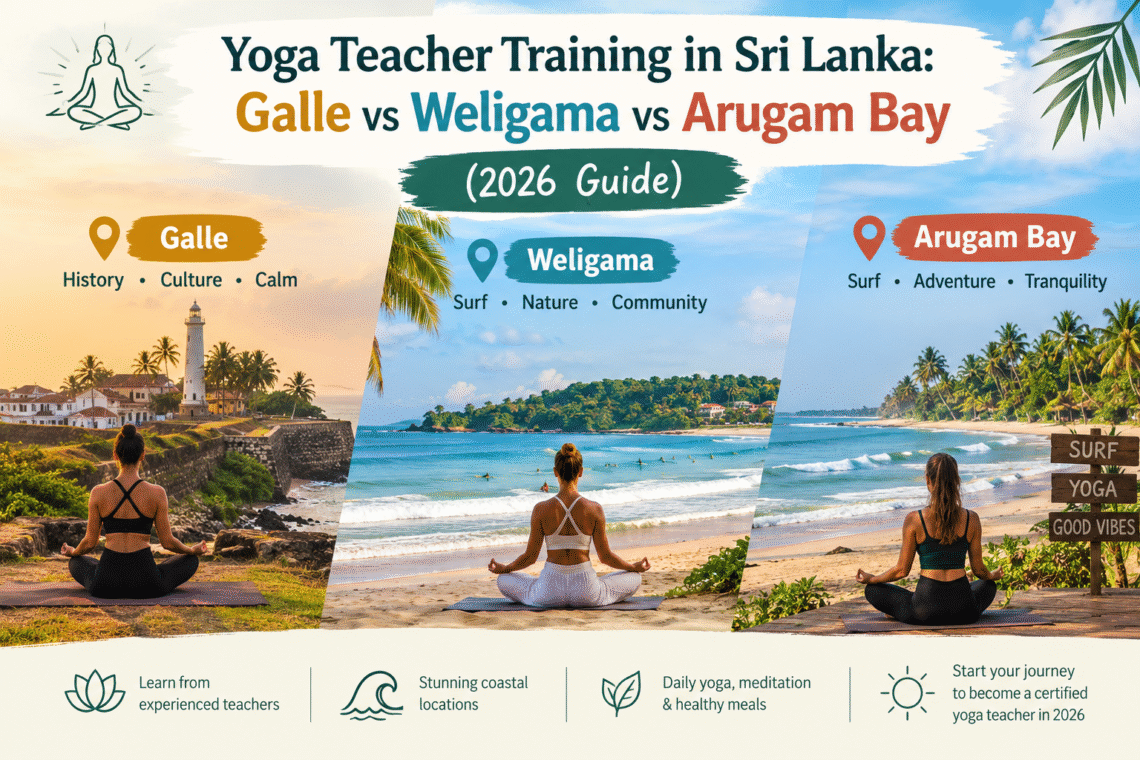
Choosing where to do your yoga teacher training in Sri Lanka is one of the biggest decisions of your yoga journey. The island offers three very different bases: Galle, Weligama and Arugam Bay. Each one shapes your month in its own way, from the weather and noise level to how well you rest between long training days.
Quick answer:
- Galle: the best all-round choice. Calm, easy to reach and rich in culture.
- Weligama: best if daily surfing matters as much as yoga.
- Arugam Bay: best only from May to September, for confident surfers who like remote places.
Sri Lanka has quickly become one of Asia’s favourite places to earn a 200-hour Yoga Alliance certification. The island is compact and affordable, the food is fresh and plant-based, and yoga sits naturally beside its Buddhist and Ayurvedic traditions.
In this guide, we compare all three locations side by side on season, travel time, vibe, cost and distractions. By the end, you’ll know exactly where your yoga teacher training in Sri Lanka should happen, and what to look for in a school.
Table of Contents
Galle vs Weligama vs Arugam Bay: quick comparison
This table compares the three most popular places for yoga teacher training in Sri Lanka.
| Galle | Weligama | Arugam Bay | |
| Coast | South-west | South | East |
| Drive from Colombo airport (approx.) | 2–2.5 hours by expressway | 2.5–3 hours | 7–8 hours |
| Best training season | December to April (dry); comfortable year-round | December to April | May to September |
| Vibe | Calm, cultural, green countryside near a UNESCO fort town | Busy, social surf town | Remote, laid-back surf village |
| Distractions | Low | Medium to high | Medium, mostly surf |
| Day-off activities | Galle Fort, temples, Unawatuna, Jungle Beach, cinnamon estates | Beginner surf, whale watching from Mirissa | Surf, lagoon safaris, Kumana National Park |
| Healthcare and services | Strong: hospitals, banks, pharmacies | Good | Basic |
| Best for | Serious students who want depth and rest | Surf-and-yoga combos | Experienced surfers in the east-coast season |
Yoga teacher training in Galle: depth, calm and culture
Galle is the best all-round location for yoga teacher training in Sri Lanka. It is the easiest of the three to reach, it has the most reliable services, and its quiet inland villages give you the space to study, rest and integrate what you learn.
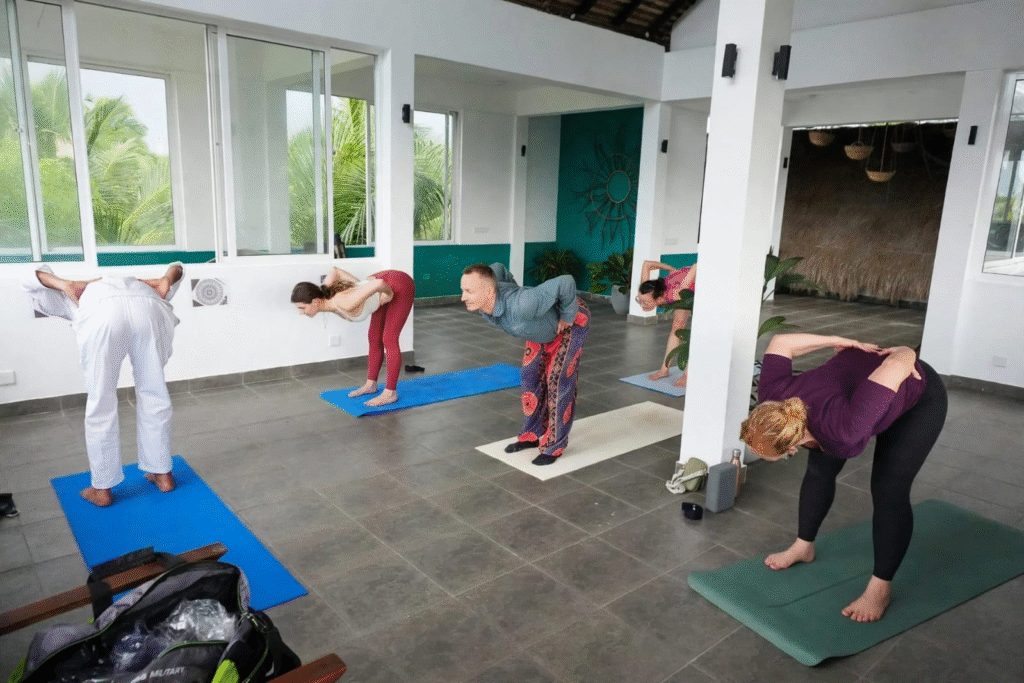
The town is famous for Galle Fort, a 17th-century fort and UNESCO World Heritage Site with ramparts, cafés, boutiques and sunset walks. Just outside the fort, palm-covered hills, paddy fields and small Buddhist temples make a peaceful backdrop for early-morning meditation and pranayama.
Why students choose Galle
- Focus: there are far fewer party bars and surf crowds than in Weligama or Arugam Bay. You sleep well and keep your energy for 6–8 hours of daily training.
- Easy logistics: Galle is about two hours from Bandaranaike International Airport via the Southern Expressway. Hospitals, banks, pharmacies and supermarkets are all close by.
- Rich days off: walk the fort walls, swim at Unawatuna or Jungle Beach, visit a temple, or tour a cinnamon or tea estate.
- Longer season: the south-west coast is driest from December to April. Outside those months, green-season trainings run comfortably with short, warm showers.
- Safety for solo travellers: a busy, well-connected town with plenty of other travellers makes Galle easy for first-timers and women travelling alone.
Things to keep in mind
Galle is not a surf hub. If catching waves matters to you, Weligama is only 30–40 minutes down the coast and makes an easy day trip on your day off. The fort area can also be busy with day visitors in peak season, which is why many schools train a short drive inland.
Yoga teacher training in Weligama: surf, social life and energy
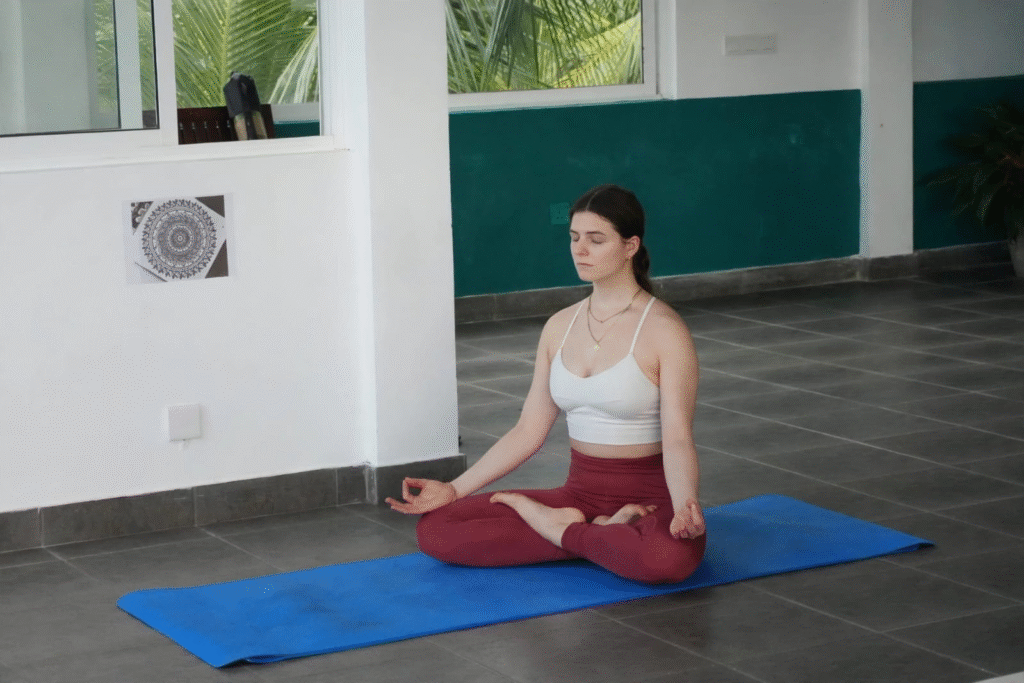
Weligama suits students who want yoga and surfing in the same month. Its wide, sandy bay has gentle, consistent waves, which has made it one of Sri Lanka’s best-known beginner surf spots.
What works well in Weligama
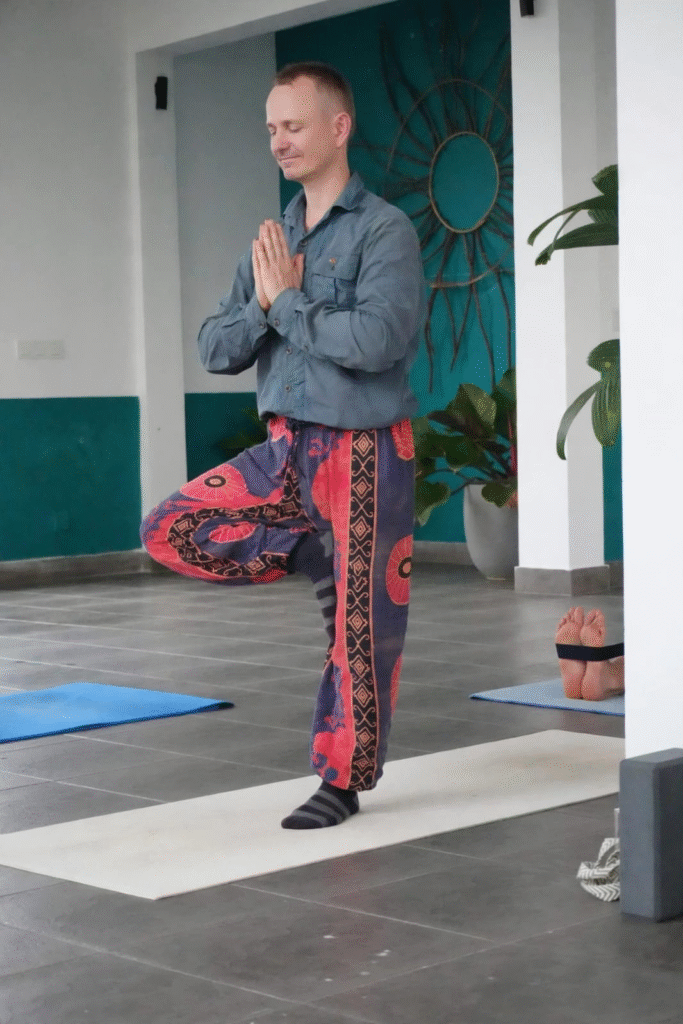
- Beginner-friendly surf right outside many shalas and guesthouses.
- A lively café, co-working and digital-nomad scene, so it is easy to make friends.
- Close to Mirissa for whale watching (roughly December to April) and to Galle for culture.
What to weigh up
- Busier and noisier, especially in peak season. Expect traffic on the coastal road and beach parties at weekends.
- Easy to get distracted. A 200-hour course is demanding. Surfing every day on top of 6–8 hours of training can leave you tired for asana practice, study and teaching practicums.
- Higher peak-season prices for rooms and food around the bay.
Weligama is a fun base, but many students find they learn more by training somewhere quieter, then visiting Weligama on their days off.
Yoga teacher training in Arugam Bay: a remote east-coast surf village
Arugam Bay is a beautiful setting for a summer training, but it is the most seasonal and the hardest to reach of the three. It sits on the east coast, where the dry season runs roughly from May to September, the opposite of Galle and Weligama.
What works well in Arugam Bay
- A world-famous right-hand point break for intermediate and advanced surfers.
- A small, barefoot village feel, with jungle, lagoons and wildlife nearby, including Kumana National Park.
- A great option if you can only travel during the European summer.
What to weigh up
- Long journey: around 7–8 hours by road from Colombo airport, which can eat into a short trip.
- Short season: many shalas, cafés and guesthouses slow down or close from about November to March, when the north-east monsoon brings rain.
- Basic services: hospitals, ATMs and pharmacies are limited, so you need to plan ahead.
If your dates fall between December and April, Arugam Bay is usually off the table. In those months, the south coast is the clear winner for yoga teacher training in Sri Lanka.
Best time for yoga teacher training in Sri Lanka
Sri Lanka has two monsoons that hit different coasts at different times, so the right location depends on your month. As a simple rule: south coast (Galle, Weligama) from December to April; east coast (Arugam Bay) from May to September.
| Your training month | Best choice | Why |
| December – April | Galle or Weligama | Dry, sunny south coast; east coast is wet and quiet |
| May – September | Galle (green season) or Arugam Bay | The south gets short tropical showers but stays warm, lush and quieter, often with lower prices; the east coast is dry |
| October – November | Galle | Inter-monsoon rain island-wide; Galle’s services and transport make it the most comfortable option |
A good school trains in all weather. Rain usually comes as short afternoon showers, and the green season is often the most peaceful time to train.
How much does yoga teacher training in Sri Lanka cost?
The price of a 200-hour yoga teacher training in Sri Lanka depends less on the town and more on what the course includes. When you compare schools, check these five things:
- Accommodation type: shared or private room, and whether it is on site or a drive away.
- Meals: whether all meals are included. Three fresh vegetarian meals a day saves both money and planning time.
- Season: December to April is peak season on the south coast, so prices for rooms and flights are usually higher.
- Course length and hours: a 23-day residential 200-hour course gives you more time to absorb the material than a rushed 14-day one.
- Extras: airport transfers, manuals, excursions and Ayurvedic treatments may or may not be included.
As a rule, Weligama and Arugam Bay can cost more in peak season because demand from surfers pushes up room prices. A residential training near Galle, with meals and accommodation in one package, is usually the most predictable option for your budget.
How to choose the right yoga school in Sri Lanka
The location matters, but the school matters more. Use this checklist before you book any yoga teacher training in Sri Lanka:
- Yoga Alliance registration: the school should be a Registered Yoga School (RYS) with Yoga Alliance, so you can register as an RYT 200 after graduating.
- Lead teachers’ experience: look for E-RYT 500 teachers with many years of teaching and training experience.
- A balanced syllabus: asana, alignment, anatomy, philosophy, pranayama, meditation and plenty of supervised teaching practice.
- Group size: smaller groups mean more personal feedback.
- Real reviews: read independent reviews from past students, not only testimonials on the school’s own site.
- Food and accommodation: clean, quiet rooms and nourishing meals make a huge difference over three to four weeks.
- Support after graduation: ask whether the school helps with teaching opportunities, mentoring or further courses such as a 300-hour training.
Which location is right for you?
- Choose Galle if you want to go deep into philosophy, anatomy and teaching skills, you value good sleep and quiet, you’re travelling solo, or you’d like culture and nature on your days off.
- Choose Weligama if surfing is as important to you as yoga and you enjoy a busy social scene.
- Choose Arugam Bay if you’re an experienced surfer, you can only travel from May to September, and you’re comfortable in a remote place.
Most first-time trainees, especially on a 200-hour course, get the most from a calm environment. That is why many serious yoga schools choose quieter spots around Galle rather than the busiest surf towns.
Diksha Yoga School: yoga teacher training in Sri Lanka, near Galle
At Diksha Yoga School, we run our south-coast trainings at Green Serene Villa near Galle. It gives you the best of both worlds: a peaceful, green place to study, with beaches, surf and Galle Fort close enough for your days off.
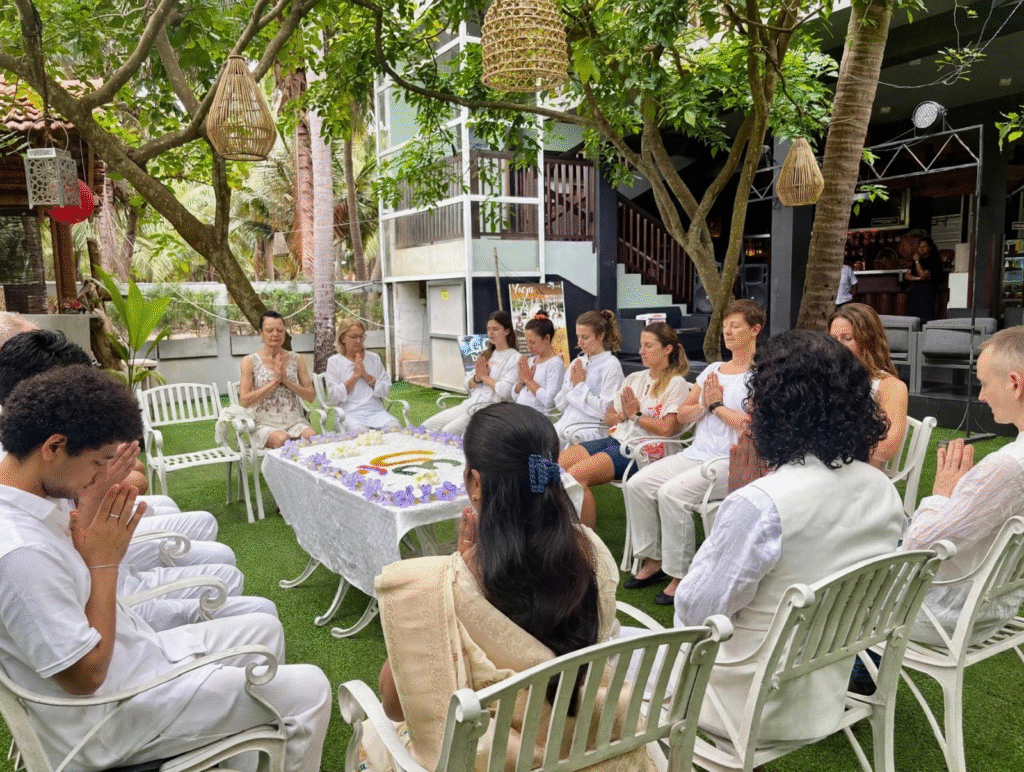
What you get with Diksha Yoga School
- Yoga Alliance (USA) Registered School offering 200-hour and 300-hour yoga teacher training, plus a 100-hour yoga teacher training and a 50-hour Breathwork & Pranayama Teacher Training.
- Experienced E-RYT 500 teachers, led by Yogini Manisha and Yogi Abhay.
- Authentic Hatha and Vinyasa yoga, rooted in tradition, with philosophy, meditation, pranayama, anatomy and teaching practice.
- Full residential immersion: comfortable accommodation, nourishing vegetarian meals, and daily yoga and meditation.
- A small-group, family feel: past students often say they found a yoga family for life.
- A second Sri Lankan location in Kalpitiya, on the north-west coast, if you’d prefer lagoon and kitesurf country.
Ready to begin? Explore our 200-hour Yoga Teacher Training in Galle, check upcoming dates, or contact us to find the course and month that suit you best.
FAQs about yoga teacher training in Sri Lanka
Where is the best place to do yoga teacher training in Sri Lanka?
For most students, Galle. It is about two hours from the airport, quiet enough to study, has good services, and offers culture and beaches on your days off. Weligama suits surf lovers, and Arugam Bay suits east-coast summer trips.
When is the best time for yoga teacher training in Sri Lanka?
December to April on the south coast (Galle and Weligama) and May to September on the east coast (Arugam Bay). Trainings near Galle run comfortably all year.
Is a 200-hour yoga teacher training in Sri Lanka Yoga Alliance certified?
Only if the school is a Registered Yoga School (RYS) with Yoga Alliance. Diksha Yoga School is Yoga Alliance registered, so graduates can register as RYT 200 teachers.
Do I need to be advanced to join?
No. A regular practice and an open mind are enough. Many students join to deepen their own practice, not only to teach.
Can I surf during yoga teacher training in Galle?
Yes. Weligama’s beginner waves are 30–40 minutes away, and nearby beaches have smaller breaks for your days off.
Do I need a visa to train in Sri Lanka?
Most visitors need an Electronic Travel Authorization (ETA) or visa before arrival. Rules change, so check the latest requirements on the official Sri Lanka Tourism website before booking flights.
How do I get to Galle from Colombo airport?
By taxi or private transfer via the Southern Expressway in about two to two and a half hours, or by train along the coast for a slower, scenic trip.
Is Sri Lanka safe for solo female travellers on a yoga course?
Generally yes, especially on a residential course where you live, eat and train with your group. Take normal travel precautions, dress modestly at temples, and use registered taxis or ride apps at night.
Final verdict: where should you do yoga teacher training in Sri Lanka?
All three locations are beautiful, but they serve different students. Weligama is for surf lovers, and Arugam Bay is for experienced surfers travelling between May and September. For most people, though, Galle is the best place for yoga teacher training in Sri Lanka. It is easy to reach, calm enough to study, safe for solo travellers, and full of culture and nature for your days off.
“The location is beautiful, the teachers are incredible, and the entire experience truly captures the spirit of yoga!” — Emily Carter, 200 Hour YTT Graduate
If you’re ready to deepen your practice and become a confident, certified teacher, join us at Diksha Yoga School. View our upcoming 200-hour yoga teacher training dates in Galle and save your place today.
View the 200 Hour YTT in Sri Lanka → · Book your place · Ask us about your arrival on WhatsApp
Wondering why Galle? Read why Galle is a great place for yoga teacher training.