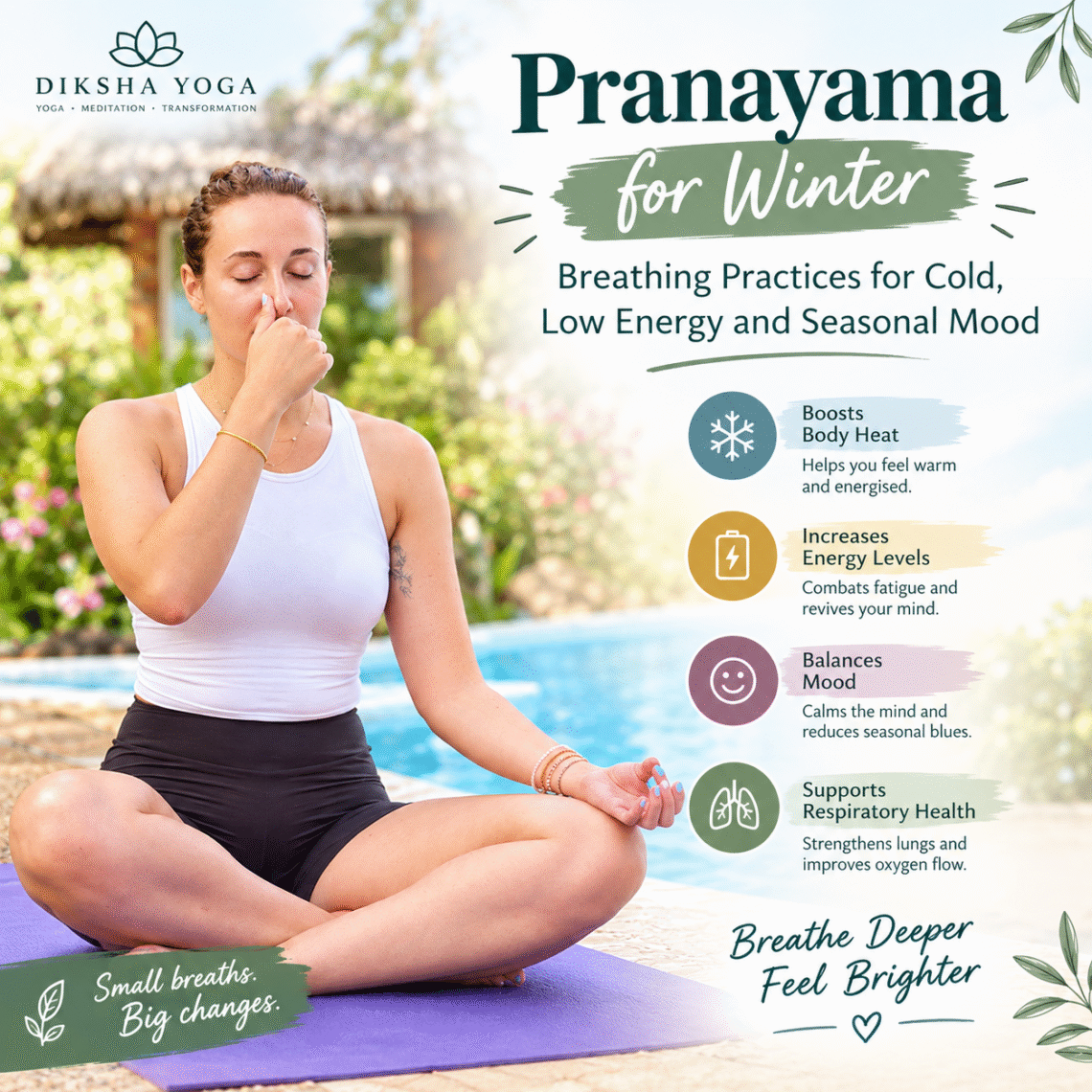
Reviewed by Master Nirakar E-RYT 500 · Updated October 2026
Pranayama Winter Breathing Practices, asks something different of us. The mornings are dark, the body feels stiff and cold, energy dips in the afternoon, and for many people mood drops along with the temperature.
Yoga offers a simple, natural tool to support your winter wellness: your breath. In this guide, you’ll discover six classical pranayama practices for winter that can help you feel more relaxed, mindful, and energised. Some techniques encourage warmth and alertness, while others promote calmness and prepare the mind for restful sleep. At Diksha Yoga School, our Yoga Alliance–registered 200 Hour Yoga Teacher Training helps students develop a deeper understanding of traditional yoga practices, including pranayama, breath awareness, and meditation. You’ll also learn how to combine these breathing techniques into a simple morning and evening routine to support your daily yoga practice throughout winter.
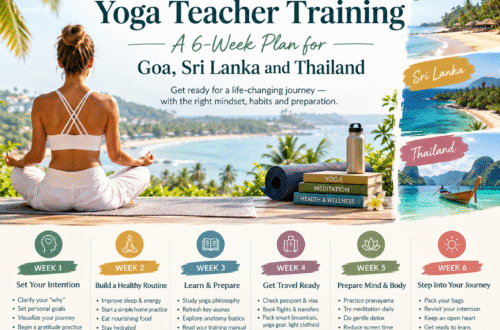
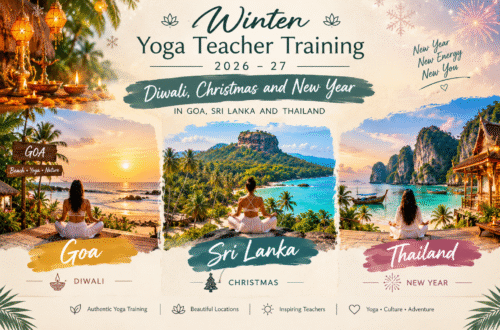
These are the same practices our students learn in the daily pranayama sessions of our Yoga teacher trainings in Goa, Sri Lanka and Thailand.
Table of Contents
From Yogini Manisha: “In our December and January batches in Arambol, mornings can be surprisingly cool, and students arrive at the 6:30 AM pranayama session still half-asleep. We always begin with Ujjayi before any fast breathing. Five minutes of it, and the room is warm and awake.
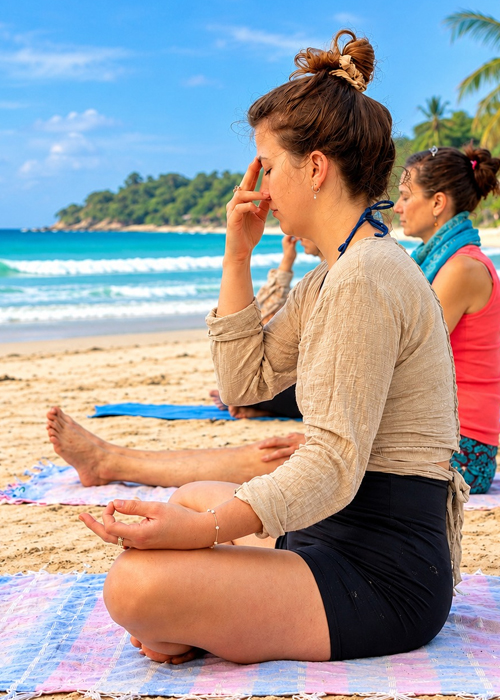
Why pranayama for winter works
In yoga, prana is life energy, and pranayama means the extension or regulation of that energy through the breath. In practical terms, changing how you breathe changes how you feel:
- Faster, more active breathing tends to wake the body up and generate warmth. It’s useful on cold, sluggish mornings.
- Slow, steady breathing with longer exhalations tends to calm the nervous system. It’s useful on anxious days and before sleep.
- Balanced breathing through alternate nostrils helps steady the mind when you feel scattered.
In Ayurveda, winter is associated with heaviness, cold and stillness. Traditional advice is to balance this with warming, enlivening practices in the morning and grounding ones in the evening. The routine in this guide follows exactly that rhythm.
Read More:- Why Breathwork Is Essential in Yoga: A Complete Guide to Pranayama and Mindful Breathing
Before you start: safety first
Pranayama is gentle, but some practices are powerful. Please read this before you begin:
- Practise on an empty stomach, ideally in the morning or at least 2–3 hours after a meal.
- Sit comfortably with a long spine, on a cushion, a chair or your mat.
- Never strain. If you feel dizzy, light-headed or anxious, stop and breathe normally.
- Skip the fast practices (Kapalabhati, Bhastrika and Surya Bhedana) if you are pregnant or have high blood pressure, a heart condition, epilepsy, a hernia, glaucoma, or recent abdominal surgery. Gentle Ujjayi, Nadi Shodhana and Bhramari are usually suitable alternatives, but check with your doctor first.
- If you have any medical or mental health condition, speak to your doctor before starting a new breathing practice.
6 pranayama practices for winter
1. Ujjayi: the warming “ocean breath”
Best for: warming up gently, focus, the start of any practice.
Ujjayi creates a soft sound in the throat, like distant waves, and a gentle sense of inner warmth. It’s the foundation of many other practices.
How to practise:
- Sit tall and breathe in and out through the nose.
- Gently narrow the back of your throat, as if you were about to whisper.
- Breathe slowly, letting the breath make a soft, even sound on the inhale and exhale.
- Continue for 2–5 minutes, keeping the sound smooth and quiet.
2. Kapalabhati: the “skull-shining” breath
Best for: dull, heavy mornings and the mid-afternoon slump.
Kapalabhati is a cleansing practice of short, active exhalations and passive inhalations. It wakes you up quickly and creates warmth in the belly.
How to practise:
- Sit tall with your hands on your knees.
- Take a normal inhale.
- Exhale sharply through the nose by drawing the lower belly in quickly.
- Let the inhale happen on its own as the belly releases.
- Beginners: 3 rounds of 20–30 exhalations, resting with normal breathing between rounds.
Caution: not suitable in pregnancy or with the conditions listed above. Stop if you feel dizzy.
3. Bhastrika: the “bellows” breath
Best for: cold mornings, low energy and motivation.
Bhastrika uses forceful inhalations and exhalations, like a blacksmith’s bellows fanning a fire. Of all the practices here, it’s the most warming.
How to practise:
- Sit tall with a straight spine.
- Inhale deeply and forcefully through the nose, expanding the belly and chest.
- Exhale forcefully through the nose, drawing the belly in.
- Keep the pace slow at first: about one breath per second.
- Beginners: 1–3 rounds of 10 breaths, then breathe normally for a minute between rounds.
Caution: the same as for Kapalabhati. Build up slowly over weeks, not days.
4. Surya Bhedana: right-nostril “sun” breath
Best for: feeling cold, sluggish or heavy.
In yogic tradition, the right nostril is linked with the sun (surya) and with warming, active energy. Surya Bhedana breathes in through the right nostril only.
How to practise:
- Sit tall. Bring your right hand up and close the left nostril with your ring finger.
- Inhale slowly through the right nostril.
- Close the right nostril with your thumb and exhale slowly through the left.
- Repeat for 5–10 rounds, always inhaling through the right side.
Caution: skip this practice if you have high blood pressure or a heart condition, and practise in the morning rather than before bed.
5. Nadi Shodhana: alternate-nostril breathing
Best for: balance, a scattered mind and winter restlessness.
Nadi Shodhana balances the warming “sun” and cooling “moon” energies of the right and left sides. It’s one of the most widely practised pranayamas and suits almost everyone.
How to practise:
- Sit tall. Close the right nostril with your thumb and inhale through the left.
- Close the left nostril with your ring finger, release the thumb, and exhale through the right.
- Inhale through the right.
- Close the right, release the left, and exhale through the left. That’s one round.
- Practise 5–10 rounds, keeping the breath slow and even.
6. Bhramari: the humming “bee” breath
Best for: low mood, anxiety and trouble sleeping.
Bhramari uses a gentle humming sound on the exhale. Many people find it quickly soothing, and it’s a lovely practice for dark winter evenings.
How to practise:
- Sit comfortably and close your eyes.
- Optionally, place your index fingers gently on the cartilage at the front of your ears.
- Inhale through the nose.
- With your mouth closed, exhale slowly while making a steady, low humming sound, like a bee.
- Repeat for 5–10 breaths, then sit quietly and notice how you feel.
Read More:- Pranayama: Complete Guide to Yogic Breathing Techniques, Benefits, Types & Practice Methods
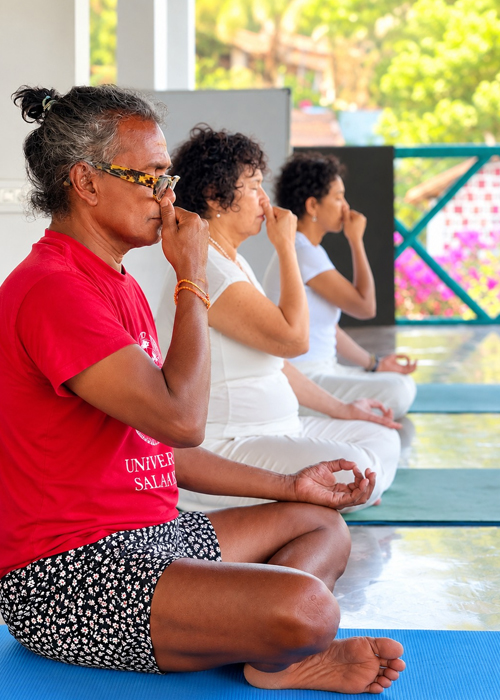
Your 10-minute winter pranayama routine
| Morning: warm and energise | Evening: calm and settle | |
| Start | 2 minutes Ujjayi | 2 minutes Ujjayi (very slow) |
| Main practice | 2–3 rounds of Kapalabhati or Bhastrika | 5–10 rounds of Nadi Shodhana |
| Then | 5–10 rounds of Surya Bhedana | 5–10 breaths of Bhramari |
| Finish | 2 minutes of sitting quietly | 2–3 minutes of sitting quietly, then bed |
If you have any of the conditions listed in the safety section, replace Kapalabhati, Bhastrika and Surya Bhedana with extra Ujjayi and Nadi Shodhana.
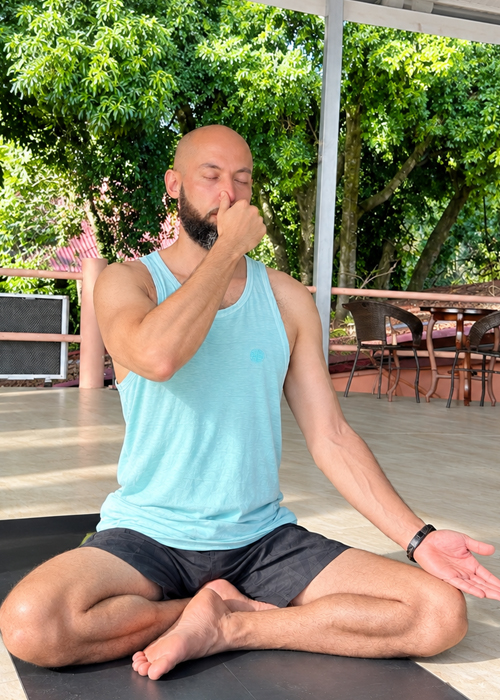
Tip: if you can, do your morning practice near a window or outside in daylight. Morning light and active breathing together are a powerful winter wake-up.
Pranayama and seasonal low mood
Many people notice their mood dips in the darker months. A regular breathing practice can be a supportive part of your day. Calming practices like Bhramari and slow Nadi Shodhana help many people feel more settled, and energising practices can lift a heavy morning.
But pranayama is not a treatment for depression or seasonal affective disorder. If your low mood lasts more than a couple of weeks, affects your sleep, appetite or daily life, or you have thoughts of harming yourself, please speak to a doctor or mental health professional. Breathwork can sit alongside proper care, not replace it.
Learn pranayama in depth: train with Diksha in Goa, Sri Lanka or Thailand
Many students first fall in love with pranayama during our daily morning practice and want to take it further. At Diksha Yoga School, pranayama is part of every day of our teacher trainings, taught by our founder, Yogini Manisha, and our teaching team.
You can train with us in three warm, peaceful locations:
- Arambol, Goa, India: our main school at The Lotus Sutra, on Arambol Beach in North Goa.
- Galle, Sri Lanka: on Sri Lanka’s south coast.
- Koh Samui, Thailand: at Health Oasis Resort, on an island in the Gulf of Thailand
For a deeper focus on the breath, explore our Breathwork Teacher Training.
👉 See all course dates and fees
Student Reviews Winter Pranayama and Breathwork Experience
1. Emily Carter — United Kingdom 🇬🇧
April 2025
“Practicing pranayama at Diksha Yoga School helped me understand how breathing exercises can support relaxation and mindfulness during the colder months. I especially enjoyed learning gentle breathing techniques that I could include in my daily winter routine. The teachers were supportive, patient, and explained each practice clearly. It was a meaningful experience for my yoga journey.”
2. Daniel Müller — Germany 🇩🇪
January 2026
“My experience at Diksha Yoga School was truly valuable. I learned how to approach pranayama practice with more awareness, especially during winter when low energy and changes in mood can be challenging. The sessions helped me build a calmer morning routine and deepen my understanding of breathwork. I appreciated the peaceful atmosphere and the teachers’ guidance.”
Read More:- Reviews from Our Yoga Teacher Training Students
Frequently asked questions
What is the best pranayama for winter?
For cold, low-energy mornings, warming practices like Bhastrika, Kapalabhati and Surya Bhedana are traditionally recommended. For evenings, calming practices like Nadi Shodhana and Bhramari help you settle and sleep. Ujjayi is a gentle warming breath that suits almost everyone.
Which pranayama warms the body?
Bhastrika (bellows breath), Kapalabhati and Surya Bhedana (right-nostril breathing) are traditionally considered warming. Ujjayi creates a gentler warmth.
When is the best time to practise pranayama in winter?
Morning, on an empty stomach, is ideal for warming and energising practices. Calming practices like Bhramari and Nadi Shodhana work well in the evening, before sleep.
Can pranayama help with winter low mood?
Many people find regular breathing practice supportive, especially calming practices like Bhramari. But it’s not a treatment for depression or seasonal affective disorder. If low mood persists or affects daily life, speak to a doctor.
Who should avoid Kapalabhati and Bhastrika?
Skip them if you’re pregnant or have high blood pressure, a heart condition, epilepsy, a hernia, glaucoma or recent abdominal surgery. Gentler practices like Ujjayi, Nadi Shodhana and Bhramari are usually better choices, but check with your doctor first.
How long should I practise pranayama each day?
Start with 10 minutes a day. Consistency matters more than length.
Breathe your way through winter
Winter doesn’t have to mean heaviness. A few minutes of conscious breathing each morning and evening can bring warmth, energy and calm to the darkest months.
Start tomorrow morning with 2 minutes of Ujjayi. Notice how you feel.
And if you’re ready to go deeper into the breath, we’d love to welcome you to Goa, Sri Lanka or Thailand.
👉 Explore our teacher trainings
👉 See all course dates and fees
Pregnant or have a health condition? Skip the fast breaths and check with your doctor.
Diksha Yoga School · Goa · Sri Lanka · Thailand · WhatsApp . Chat With Us . Booking Form
About the author
Yogini Manisha is the founder and lead teacher of Diksha Yoga School. She is an E-RYT 500 and Yoga Alliance Continuing Education Provider (YACEP) with more than 16 years of teaching experience. She has trained 20000+ teachers in Goa, Sri Lanka and Thailand, and helps every graduate through their Yoga Alliance registration.