
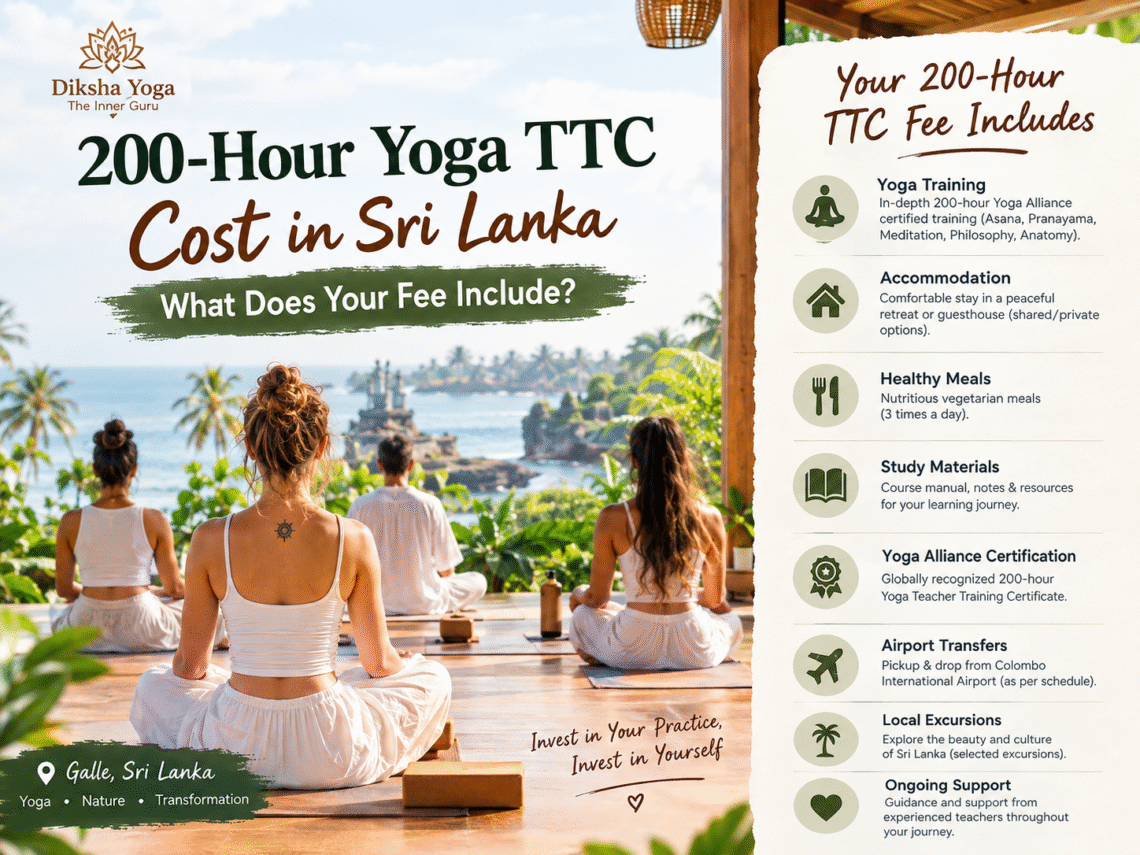
Choosing a Best 200 Hour Yoga TTC Cost in Sri Lanka is a significant investment of time, money and personal energy. If you are comparing programs in Sri Lanka, one of the first questions you may have is:
How much does a 200-hour yoga TTC cost, and what should be included in the fee?
The advertised price is only one part of the decision.
Two yoga teacher training programs can have very different prices because one may include accommodation, meals, course materials, airport pickup and practical teaching, while another may charge for these separately.
For this reason, it is more useful to compare the total value of the training package rather than simply looking for the lowest price.
This guide explains what can affect the cost of a 200-hour yoga TTC in Sri Lanka, what to check before booking and how to compare programs more fairly.
Table of Contents
Quick Answer
The cost of a 200-hour yoga TTC in Sri Lanka varies depending on the course duration, accommodation, meals, teachers, curriculum, certification and other inclusions. When comparing programs, look at the total package cost rather than tuition alone. A residential program that includes accommodation, meals, course materials and practical teaching may offer different overall value from a lower-priced course where these expenses are charged separately.
Before booking, check exactly what is included in the fee, what is excluded, whether there are additional mandatory costs, and what type of accommodation and certification are provided. This will help you compare 200-hour yoga teacher training programs more accurately and choose one that fits your goals and budget.
200 Hour Yoga Teacher Training in Sri Lanka — Upcoming Dates & Fees
| Batch | Start Date | End Date | Private Room | Shared Room | Triple Shared Room |
|---|---|---|---|---|---|
| October 2026 | 5 October 2026 | 27 October 2026 | €3,200 | €2,500 | €2,000 |
| November 2026 | 5 November 2026 | 27 November 2026 | €3,200 | €2,500 | €2,000 |
| December 2026 | 5 December 2026 | 27 December 2026 | €3,200 | €2,500 | €2,000 |
| January 2027 | 5 January 2027 | 27 January 2027 | €3,200 | €2,500 | €2,000 |
| February 2027 | 5 February 2027 | 27 February 2027 | €3,200 | €2,500 | €2,000 |
| March 2027 | 5 March 2027 | 27 March 2027 | €3,200 | €2,500 | €2,000 |
| April 2027 | 5 April 2027 | 27 April 2027 | €3,200 | €2,500 | €2,000 |
| May 2027 | 5 May 2027 | 27 May 2027 | €3,200 | €2,500 | €2,000 |
Reserve Your Place in Sri Lanka
Deepen Your Practice. Strengthen Your Teaching. Transform Your Journey.
Join our 200 Hour Yoga Teacher Training in Sri Lanka for an immersive 23-day experience combining yoga practice, meditation, pranayama, philosophy, and teaching methodology.
How Much Does a 200-Hour Yoga TTC Cost in Sri Lanka?
There is no single price for every 200-hour yoga teacher training in Sri Lanka.
The total cost can vary depending on:
- Course duration
- Accommodation
- Private or shared room
- Number of meals included
- Teacher experience
- Curriculum
- Practical teaching hours
- Class size
- Certification
- Course materials
- Airport transfers
- Excursions
- Location and facilities
- Additional services included in the package
A program with a lower advertised tuition fee may not necessarily be less expensive overall if accommodation, food or other essential costs are charged separately.
Likewise, a residential program with a higher upfront price may include several services that you would otherwise need to pay for separately.
The important question is:
What is included in the total fee?
200-Hour Yoga TTC Cost: What Should You Compare?
When comparing different programs, use the complete package rather than tuition alone.
| What to Compare | Why It Matters |
| Training fee | Covers the educational component of the program |
| Accommodation | Check whether a private or shared room is included |
| Meals | Confirm how many meals are provided each day |
| Course materials | Check whether manuals and study materials are included |
| Certification | Understand what certificate you receive |
| Teaching practice | Find out how much practical teaching experience is included |
| Airport transfer | Check whether pickup is included or charged separately |
| Excursions | Ask which activities are included in the package |
| Class size | Smaller groups may provide more opportunities for feedback |
| Additional costs | Ask about any mandatory charges not included in the advertised fee |
This comparison gives you a clearer picture of the actual cost of your training.
Affordable vs. Cheap: What Is the Difference?
When researching an affordable yoga teacher training, it is useful to distinguish between low price and good value.
A low-cost course may look attractive initially, but the final cost can increase if you need to pay separately for accommodation, meals, course materials, transfers or other essentials.
Good value means that the overall package is appropriate for the investment.
For a 200-hour teacher training, consider:
Education + teachers + practical experience + accommodation + meals + certification + student support + total cost
rather than looking only at the advertised tuition.
The cheapest program is not automatically the most suitable program, and a higher price does not automatically mean better education.
The goal is to find a program that matches your learning goals, expectations and budget.
What Makes a 200-Hour Yoga TTC Good Value?
A 200-hour training should be more than a certificate at the end of several weeks.
You are investing in your understanding of yoga, your personal practice and your ability to communicate what you learn to other students.
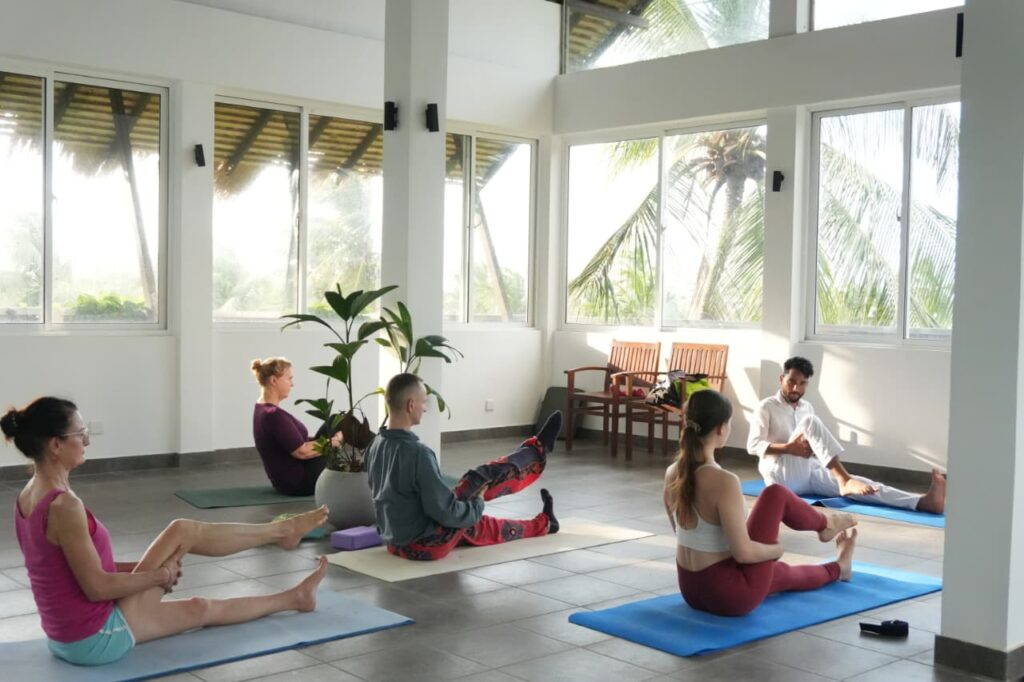
When comparing programs, look at the following areas.
Research the teachers who will actually be teaching your course.
Look at:
- Teaching experience
- Teacher training experience
- Qualifications
- Areas of specialization
- Approach to students
- Experience working with different levels of practitioners
The lead teacher can have a significant influence on the learning experience.
2. A Complete Curriculum
A well-structured 200-hour program should cover more than physical postures.
Depending on the school, the curriculum may include:
- Hatha Yoga
- Vinyasa Flow
- Ashtanga foundations
- Pranayama
- Meditation
- Yoga Philosophy
- Anatomy and Physiology
- Alignment
- Adjustments
- Teaching Methodology
- Sequencing
- Class planning
- Verbal cueing
- Practical teaching
Look for a program that combines personal practice, theoretical study and practical teaching skills
3. Practical Teaching Experience
One of the most important questions to ask before booking is:
How much actual teaching practice will I receive?
Learning how to teach yoga requires more than observing a teacher.
A useful teacher training should provide opportunities to practise:
- Creating class sequences
- Giving verbal instructions
- Demonstrating asanas
- Teaching sections of a class
- Observing other trainees
- Receiving teacher feedback
- Modifying practices
- Building confidence in front of a group
Practical teaching helps connect what you learn in theory with the experience of actually teaching.
What Should Be Included in the Training Fee?
Every school structures its package differently, so it is important to check the exact inclusions before paying a deposit.
A residential 200-hour yoga TTC may include:
- Yoga teacher training
- Accommodation
- Meals
- Course manual
- Practical teaching
- Assessment
- Certificate
- Airport pickup
- Selected excursions
- Student support
Some programs include all of these services, while others charge separately.
Before booking, ask for a complete list of inclusions and exclusions.
That one step can make it much easier to compare different programs.
Accommodation: An Important Part of the Total Cost
For a residential yoga teacher training, accommodation is not a minor detail.
You may spend several weeks living, studying, practising and resting in the same environment.
When comparing accommodation, check:
- Private or shared room
- Number of nights included
- Bathroom arrangements
- Cleanliness
- Distance from the yoga practice space
- Wi-Fi
- Laundry arrangements
- Quiet areas
- Any additional accommodation charges
A shared room may reduce the overall cost, while a private room may provide more personal space.
The right choice depends on your budget and preferences.
Are Meals Included?
Food can also make a significant difference to your total spending during a residential training.
Ask:
- How many meals are included?
- Are meals vegetarian?
- Are vegan options available?
- Can dietary requirements be accommodated?
- Is drinking water included?
- Are snacks included?
- Is dinner included?
At Diksha Yoga School’s current Sri Lanka residential program, meals are included in the training package. Exact inclusions should always be confirmed for your selected course date and package.
What About Yoga Alliance Registration?
If Yoga Alliance registration is important to you, check the school’s current registration status before booking.
Diksha Yoga School’s Sri Lanka 200-hour program is offered through a Yoga Alliance Registered School (RYS 200). The training covers areas including yoga practice, philosophy, anatomy, pranayama, meditation, alignment and teaching methodology.
It is important, however, to understand the difference between:
A school’s registration
and
an individual’s future registration or professional status.
Completing a teacher training does not automatically guarantee employment or registration in every country. Professional requirements can vary depending on where and how you intend to teach.
Is a 200-Hour Yoga TTC Suitable for Beginners?
A 200 hour program can be suitable for students who are relatively new to yoga, depending on the school’s admission requirements and teaching approach.
You do not necessarily need advanced flexibility or years of teaching experience.
More important qualities can include:
- Willingness to practise consistently
- Openness to learning
- Commitment to the full training
- Interest in yoga philosophy and theory
- Ability to participate in practical sessions
- Willingness to receive feedback
If you are a beginner, ask the school:
- Is previous yoga experience required?
- Is teaching experience required?
- How physically demanding is the course?
- Are modifications taught?
- Is individual guidance available?
- How much practical teaching is included?
- What support is available if I struggle with a particular practice?
The answers can help you decide whether the program matches your current level.

Why Consider Sri Lanka for a Yoga Teacher Training?
Sri Lanka offers a combination of tropical surroundings, beaches, nature and cultural experiences that can suit an immersive training environment.
For students spending several weeks away from their normal routine, the destination can become an important part of the overall experience.
Southern Sri Lanka and the Galle area offer access to:
- Beaches
- Tropical surroundings
- Nature
- Local culture
- Historic sites
- Coastal environments
- Opportunities to explore outside training hours
For many students, stepping away from their normal routine can create more space for study, practice and personal reflection.
How to Compare 200-Hour Yoga TTC Programs
Instead of asking only:
Which course is cheapest?
ask:
Which program offers the overall experience I am looking for within my budget?
Here are ten areas worth comparing.
1. Accreditation and Certification
Check the school’s current registration and understand what certificate you will receive.
2. Teachers
Research the qualifications and teaching experience of the instructors.
3. Curriculum
Check whether the course covers practice, philosophy, anatomy and teaching methodology.
4. Practical Teaching
Find out how much time students actually spend teaching.
Compare private and shared options and check the number of nights included.
6. Meals
Check how many meals are included and whether your dietary requirements can be accommodated.
7. Class Size
Ask how many students are expected in each group and how much individual feedback is provided.
8. Location
Consider whether you prefer a beach, city, countryside or retreat environment.
9. Additional Costs
Ask about airport transfers, course materials, excursions, laundry, drinks and other personal expenses.
10. Student Reviews
Read recent reviews and pay attention to comments about:
- Teachers
- Teaching quality
- Accommodation
- Food
- Organization
- Student support
Look for detailed experiences rather than relying only on overall star ratings.
How to Avoid Unexpected Costs
Before paying your deposit, ask the school to clarify all included and excluded expenses.
Ask these questions:
Is accommodation included?
How many nights are included?
Are meals included every day?
Is the certificate included?
Are course materials included?
Is airport pickup included?
Are excursions included?
Are there registration or examination fees?
Are there taxes or mandatory additional charges?
What personal expenses should I budget for?
A transparent answer to these questions makes it easier to compare programs accurately.
What Other Expenses Should You Budget For?
The course fee is not necessarily your entire travel budget.
If you are travelling internationally for a residential yoga TTC, you may also need to consider:
- Flights
- Visa or entry requirements
- Travel insurance
- Airport transportation
- Personal spending
- Laundry
- Additional meals or drinks
- Local sightseeing
- Personal yoga equipment
These expenses are different for every student, so it is useful to create your own complete travel budget before booking.
200-Hour Yoga TTC in Sri Lanka: A Simple Value Checklist
Before choosing a program, ask yourself:
Education
- Does the curriculum match my goals?
- Are both theory and practical teaching included?
- Will I receive feedback?
- Who teaches the course?
- What is their experience?
- Will I receive individual guidance?
Accommodation
- Private or shared?
- How many nights?
- What facilities are included?
Food
- How many meals?
- Are dietary requirements accommodated?
Certification
- What certificate will I receive?
- Is the school currently registered with the relevant organization?
Cost
- What is included?
- What is excluded?
- Are there additional mandatory charges?
Experience
- Does the location suit me?
- Is the training environment appropriate for several weeks of intensive study?
This checklist can help you compare programs more objectively.
About Diksha Yoga School’s Sri Lanka 200-Hour Training
Diksha Yoga School offers a residential 200-hour yoga teacher training in Galle, Sri Lanka through a Yoga Alliance Registered School (RYS 200).
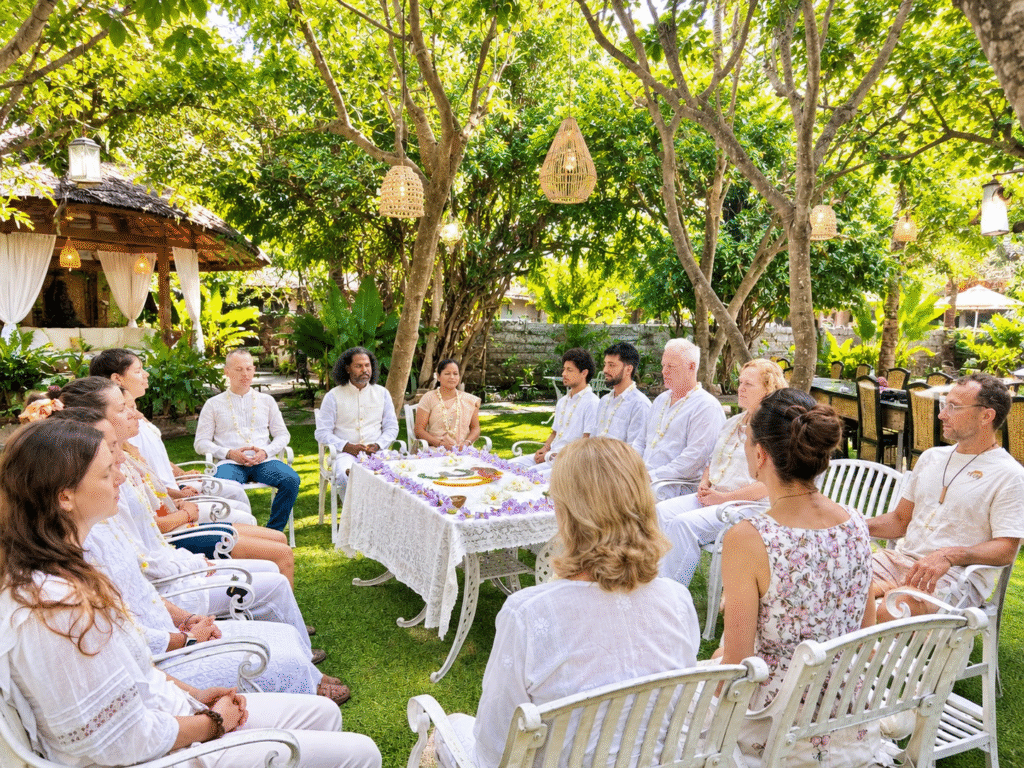
The program combines traditional yoga practices with practical teaching methodology and includes areas such as:
- Hatha Yoga
- Vinyasa Flow
- Ashtanga foundations
- Pranayama
- Meditation
- Yoga Philosophy
- Anatomy
- Alignment
- Teaching methodology
- Practical teaching
The current course page contains the full curriculum, residential details, current inclusions and course information.
Explore the 200-Hour Yoga Teacher Training in Sri Lanka.
For current dates, room options and fees, use the school’s dedicated schedule and fees page rather than relying on older blog information.
Frequently Asked Questions
How much does a 200-hour yoga TTC cost in Sri Lanka?
The cost varies between schools and programs. Accommodation, meals, course duration, teachers, facilities, certification and additional inclusions can all affect the total price.
The best way to compare programs is to look at the complete package rather than tuition alone.
What is included in an affordable 200-hour yoga TTC?
Inclusions vary between schools. A residential package may include training, accommodation, meals, course materials, practical teaching, assessment and certification. Airport transfers and excursions may also be included depending on the program.
Always confirm the current inclusions before booking.
Is an affordable yoga teacher training suitable for beginners?
It can be. Beginners should check the school’s requirements, teaching approach and level of student support before booking.
Advanced flexibility or previous teaching experience is not necessarily required, but requirements vary by school.
How do I choose a good-value yoga teacher training?
Compare the teachers, curriculum, teaching practice, certification, accommodation, meals, class size, student support and total cost.
Do not choose a program based solely on the lowest advertised price.
Does a 200-hour yoga TTC qualify me to teach yoga?
A 200-hour teacher training can provide a foundation for teaching yoga. However, professional requirements vary by country, employer and registration organization.
Check the requirements that apply to your intended teaching path.
Is Sri Lanka a good destination for yoga teacher training?
Sri Lanka offers beaches, nature, tropical surroundings and cultural experiences that can provide a peaceful environment for intensive study and practice.
The suitability of a particular program depends on your personal preferences, goals and the quality of the school you choose.
Should I choose a private or shared room?
A shared room can reduce the overall accommodation cost, while a private room provides more personal space.
The best choice depends on your budget and personal preference.
What should I ask a yoga school before paying a deposit?
Ask about the teachers, curriculum, practical teaching hours, certification, accommodation, meals, airport transfers, additional costs, cancellation policy and exact course dates.
Getting these details in writing before booking can help prevent misunderstandings.
Final Thoughts: Choose Value, Not Just the Lowest Price
Finding an affordable 200-hour yoga TTC does not necessarily mean choosing the cheapest course available.
A better approach is to compare the complete value of the training.
Look at:
Teachers + curriculum + practical teaching + certification + accommodation + meals + student support + total cost
Then consider whether the program fits your learning goals, experience level and budget.
If you are considering Sri Lanka, the Galle area offers a coastal environment where students can step away from their normal routine and dedicate several weeks to yoga practice, study and teaching development.
If you are interested in the Diksha Yoga School program, you can review the complete course details, curriculum, accommodation and current training information on the dedicated course page.
Explore the 200-Hour Yoga Teacher Training in Sri Lanka →Take your time, compare the complete packages and ask questions before making your decision. The right program is not necessarily the cheapest one—it is the one whose education, experience and inclusions make sense for your goals and budget.


