“Your breath is more than air filling your lungs—it is the quiet force that connects your body, mind, and spirit.”
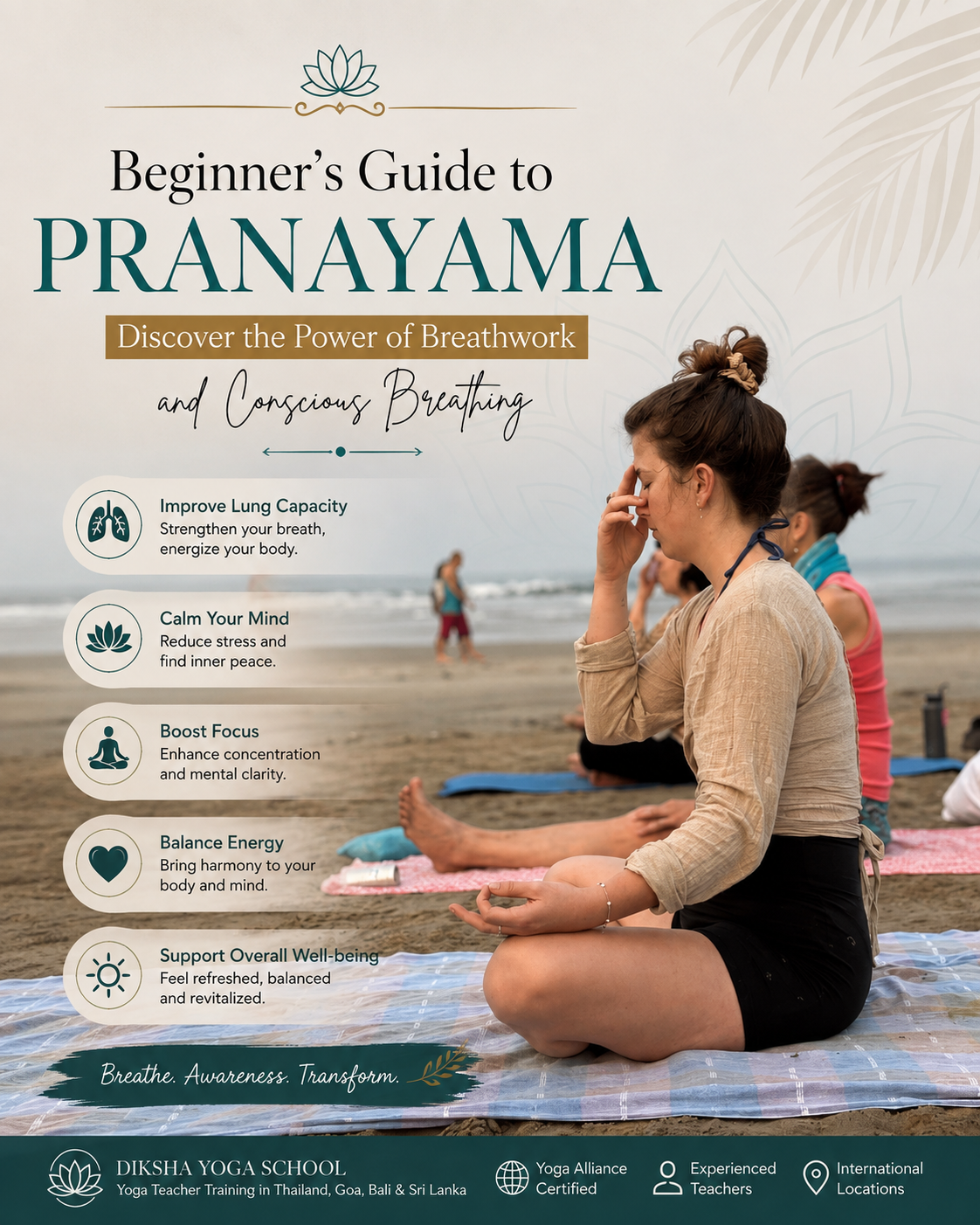
Beginner’s Guide to Pranayama, Every day, we take nearly 20,000 breaths without giving them much thought. Breathing happens automatically from the moment we are born, so it’s easy to assume we’re doing it correctly. Yet, many of us breathe too quickly, too shallowly, or without awareness. Over time, these unconscious habits can contribute to stress, fatigue, anxiety, poor concentration, and even physical discomfort.
Yoga offers a different perspective.
Rather than seeing the breath as a simple biological function, yogic wisdom recognizes it as a source of vitality, awareness, and transformation. This is where Beginner’s Guide to Pranayama begins.
Whether you are stepping onto a yoga mat for the first time, exploring breathwork to manage stress, or preparing to join a Yoga Teacher Training program, learning to breathe consciously can become one of the most valuable practices in your life.
Unlike fitness trends that come and go, Beginner’s Guide to Pranayama has been practiced for thousands of years. It remains just as relevant today because it addresses something every human being shares—the breath.
Table of Contents
What Is Pranayama?
The word Beginner’s Guide to Pranayama comes from the ancient Sanskrit language.
- Prana means life force, vital energy, or the subtle energy that animates all living beings.
- Ayama means expansion, regulation, or conscious extension.
Together, Beginner’s Guide to Pranayama can be understood as the practice of expanding and directing life energy through conscious breathing.
While many people describe it simply as “breathing exercises,” this definition barely scratches the surface.
In yoga, breathing is not only about oxygen entering the lungs. It is about influencing the body’s energy, calming the nervous system, sharpening mental focus, and creating the inner stillness needed for meditation.
Each breath becomes an opportunity to reconnect with yourself.
Breathwork vs. Beginner’s Guide to Pranayama : Are They the Same?
One of the most common questions beginners ask is whether breathwork and Beginner’s Guide to Pranayama are the same.
The short answer is not exactly.
Today, the word breathwork is often used as an umbrella term for many conscious breathing practices. These may include therapeutic breathing, mindfulness techniques, athletic breathing methods, relaxation exercises, and modern wellness approaches.
Beginner’s Guide to Pranayama , however, is rooted in the ancient yogic tradition.
It is one of the Eight Limbs of Yoga, described by the sage Patanjali in the Yoga Sutras. Rather than focusing only on physical or emotional benefits, Beginner’s Guide to Pranayama is designed to cultivate balance, increase awareness, regulate energy, and prepare the practitioner for deeper states of meditation.
Both breathwork and Beginner’s Guide to Pranayama encourage conscious breathing, but Pranayama carries a deeper philosophical and spiritual purpose that has been refined through centuries of yogic practice.
Think of it this way:
- Breathwork helps you breathe better.
- Beginner’s Guide to Pranayama teaches you to live with greater awareness through the breath.
Why Modern Life Has Changed the Way We Breathe
Pause for a moment.
Take a slow breath in.
Now notice how you normally breathe throughout the day.
Many people discover that they are:
- breathing only into the upper chest,
- holding their breath while working,
- taking rapid, shallow breaths,
- breathing through the mouth instead of the nose,
- or hardly noticing their breath at all.
These habits have become increasingly common.
Long hours at a desk, constant notifications, traffic, deadlines, emotional stress, and digital overload keep the nervous system in a state of alertness. When the mind feels rushed, the breath often follows.
This creates a cycle:
Stress changes your breathing.
Poor breathing increases stress.
Over time, this cycle may leave you feeling tired even after sleeping, mentally distracted during the day, or emotionally overwhelmed by situations that once felt manageable.
The beautiful news is that the breath is one of the few automatic functions of the body that you can consciously influence.
By changing the way you breathe, you can begin changing the way you feel.
The Science Behind Conscious Breathing
Ancient yogis understood the healing power of the breath long before modern science began studying it.
Today, researchers have found that slow, mindful breathing can influence the autonomic nervous system—the system responsible for regulating heart rate, digestion, blood pressure, and stress responses.
When breathing becomes slower and more rhythmic, several positive changes may occur:
- The heart rate begins to stabilize.
- Muscles gradually release tension.
- Oxygen exchange becomes more efficient.
- Mental clarity improves.
- The body shifts toward a calmer, more restorative state.
This is one reason why conscious breathing is increasingly incorporated into wellness programs, stress management practices, sports performance, and mental health support.
Yoga has been teaching this wisdom for thousands of years.
Why Yogis Call the Breath “Life Force”
Imagine two people standing side by side.
Both appear healthy.
Both are breathing.
Yet one feels vibrant, joyful, and energized, while the other feels exhausted and disconnected.
From a yogic perspective, the difference isn’t simply the amount of air entering the lungs—it is the quality and flow of Prana, or life energy.
According to yogic philosophy, Prana flows through subtle energy pathways known as Nadis.
When these pathways are balanced, we often experience:
- mental clarity,
- emotional stability,
- physical vitality,
- and a greater sense of inner peace.
When energy becomes disturbed through chronic stress, poor lifestyle habits, or emotional imbalance, we may feel restless, fatigued, or disconnected.
Beginner’s Guide to Pranayama is one of the traditional practices used to restore this natural flow of energy.
A Simple Experiment You Can Try Right Now
Before reading further, take one minute for yourself.
Sit comfortably.
Relax your shoulders.
Close your eyes if that feels comfortable.
Slowly inhale through your nose for a count of four.
Pause gently.
Then exhale slowly for a count of six.
Repeat this five times.
Now ask yourself:
- Does your body feel softer?
- Has your mind become quieter?
- Do you notice more space between your thoughts?
Nothing around you has changed.
The only thing that changed was your breathing.
That is the quiet power of conscious breath.
Beginner’s Guide to Pranayama Is a Practice, Not a Performance
One of the biggest misconceptions beginners have is believing they need to breathe perfectly.
You don’t.
Beginner’s Guide to Pranayama is not about taking the biggest breath possible.
It is not a competition.
It is not about forcing your lungs to work harder.
Instead, it is a gradual process of becoming aware.
Some days your breath will feel smooth and relaxed.
Other days it may feel short or uneven.
Both experiences are part of the journey.
Like yoga itself, Beginner’s Guide to Pranayama invites patience, consistency, and self-compassion.
The more gently you practice, the more naturally your breath begins to transform.
Beginning Your Breathwork Journey with Confidence
Every yoga journey starts with a single conscious breath.
You don’t need years of experience, advanced flexibility, or perfect posture to begin.
All you need is curiosity and the willingness to slow down.
At Diksha Yoga School, we introduce students to authentic Beginner’s Guide to Pranayama through a safe, progressive, and traditional approach. Whether you join us in the tropical serenity of Koh Samui (Thailand), the spiritual landscapes of Bali, the yogic heartland of Goa, or the peaceful coastline of Sri Lanka, you’ll learn how conscious breathing supports physical health, emotional resilience, meditation, and personal growth.
Beginner’s Guide to Pranayama is not simply another technique to master—it is a lifelong companion that can help you navigate both calm and challenging moments with greater awareness.
In the next part of this guide, we’ll explore the science-backed and traditional benefits of Beginner’s Guide to Pranayama , discover how different breathing techniques affect the body and mind, and explain why consistent breathwork has remained at the heart of yoga for thousands of years.
10 Life-Changing Benefits of Beginner’s Guide to Pranayama : Why Conscious Breathing Can Transform Your Health and Well-Being
If you’ve ever wondered why yoga places so much importance on the breath, the answer is simple: the quality of your breath often reflects the quality of your life.
When your breathing is rushed, your mind tends to feel scattered. When your breath is calm and steady, your body naturally begins to relax, your thoughts become clearer, and your emotions feel more balanced.
This is why Beginner’s Guide to Pranayama has been a cornerstone of traditional yoga for thousands of years. Long before wearable health trackers and scientific studies existed, yogis observed that conscious breathing could influence physical health, emotional resilience, mental clarity, and spiritual awareness.
Today, modern research is catching up with what ancient yogic traditions have long understood: how you breathe matters.
Let’s explore the remarkable benefits of developing a regular Beginner’s Guide to Pranayama practice.
1. Reduces Stress and Calms the Nervous System
Stress is one of the biggest challenges of modern life. Tight deadlines, constant notifications, financial pressures, and an always-connected lifestyle often leave the nervous system in a continuous state of alert.
When you’re stressed, your breathing naturally becomes faster and shallower. This signals your body to remain in “fight or flight” mode.
Beginner’s Guide to Pranayama helps interrupt this cycle.
Slow, controlled breathing encourages the body to activate its parasympathetic nervous system, often called the “rest and digest” response. As your breathing slows, your heart rate begins to settle, muscles relax, and the mind feels less reactive.
Many students at Diksha Yoga School notice that after just a few minutes of gentle breathing practice, they feel calmer, more present, and better equipped to handle the challenges of daily life.
2. Improves Lung Capacity and Breathing Efficiency
Most people use only a portion of their lung capacity during everyday breathing.
Shallow breathing limits oxygen exchange and may contribute to feelings of fatigue or low energy.
Beginner’s Guide to Pranayama encourages deeper, more efficient breathing by:
- Strengthening the diaphragm
- Expanding lung capacity
- Improving oxygen absorption
- Supporting healthier breathing patterns
Over time, these improvements can benefit not only your yoga practice but also everyday activities such as walking, hiking, swimming, and climbing stairs.
Remember, healthy breathing isn’t about taking the biggest breath possible—it’s about breathing with awareness and efficiency.
3. Increases Natural Energy Without Stimulants
How many times have you reached for another cup of coffee simply because you felt tired?
While caffeine offers temporary stimulation, conscious breathing works differently.
When oxygen circulates more efficiently and your breathing becomes balanced, your body can produce energy more naturally.
Many practitioners describe the feeling after Beginner’s Guide to Pranayama as:
- mentally refreshed,
- physically lighter,
- emotionally uplifted,
- and deeply awake.
Unlike artificial stimulants, this energy feels calm rather than restless.
It’s one of the reasons why traditional yoga classes often begin with breathing practices before moving into physical postures.
4. Enhances Mental Focus and Concentration
Have you ever tried reading a book while your mind keeps jumping from one thought to another?
Mental distraction has become increasingly common.
Beginner’s Guide to Pranayama trains attention by bringing awareness back to a single, continuous rhythm—the breath.
As you practice regularly, you may notice:
- better concentration,
- improved memory,
- greater creativity,
- increased productivity,
- and clearer decision-making.
Students often discover that they become more present, not only during yoga but also in conversations, work, and everyday life.
5. Supports Better Sleep and Deeper Relaxation
Poor sleep doesn’t always begin at bedtime.
Often, it begins with a mind that never truly slows down.
Conscious breathing creates a natural transition from activity to relaxation.
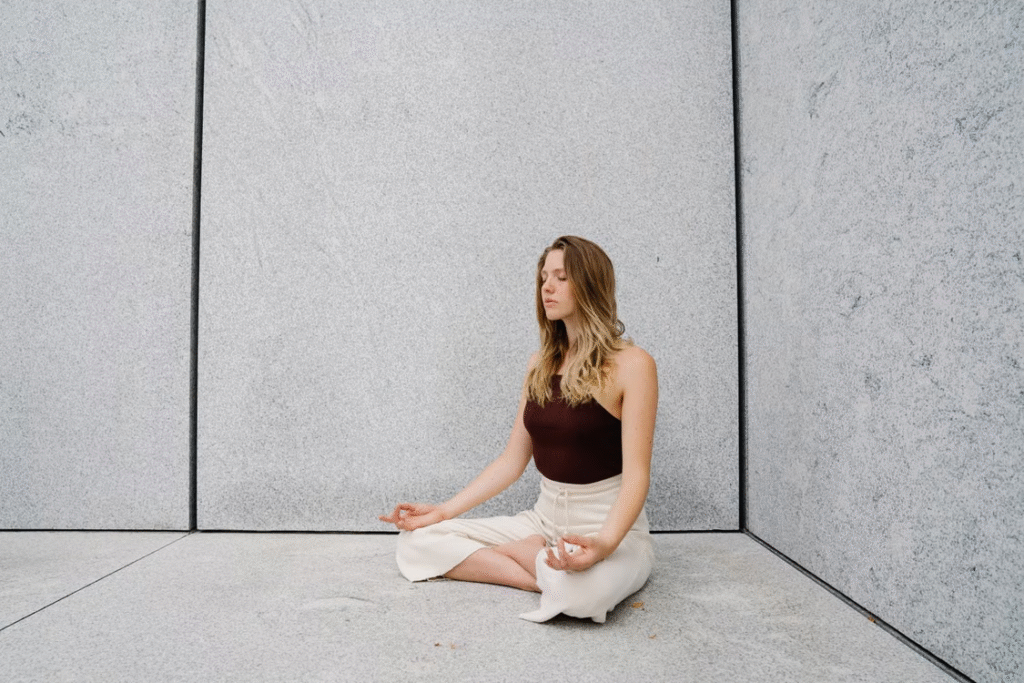
Gentle practices such as Nadi Shodhana (Alternate Nostril Breathing) and Bhramari (Bee Breath) can help quiet mental chatter before sleep.
Many practitioners include just 10 minutes of Beginner’s Guide to Pranayama in their evening routine and notice:
- falling asleep more easily,
- fewer nighttime awakenings,
- waking with greater freshness,
- and improved overall sleep quality.
Rather than forcing sleep, Beginner’s Guide to Pranayama prepares the body to rest naturally.
6. Improves Emotional Balance
Life brings moments of joy, uncertainty, excitement, and disappointment.
While we cannot always control external events, we can learn to regulate our internal responses.
One of the most beautiful aspects of Beginner’s Guide to Pranayama is that it teaches emotional awareness without suppression.
Instead of reacting impulsively, conscious breathing creates a small but powerful pause between stimulus and response.
Over time, many practitioners report feeling:
- less anxious,
- more patient,
- emotionally grounded,
- and better able to navigate challenging situations.
The breath becomes an anchor during both peaceful and difficult moments.
7. Strengthens Your Yoga Practice
Yoga is much more than physical flexibility.
The breath is what transforms movement into meditation.
Without conscious breathing, yoga can become little more than stretching.
When Beginner’s Guide to Pranayama is integrated into your practice, each posture feels more stable, balanced, and intentional.
Breath awareness helps you:
- move with greater control,
- improve alignment,
- build endurance,
- reduce unnecessary tension,
- and develop deeper body awareness.
This connection between movement and breath is one of the foundations taught during Yoga Teacher Training at Diksha Yoga School.
8. Prepares the Mind for Meditation
Many beginners believe meditation means immediately stopping every thought.
In reality, meditation becomes much more accessible when the breath is calm.
Traditional yoga teaches that Beginner’s Guide to Pranayama is the bridge between physical practice (Asana) and meditation (Dhyana).
When breathing becomes slower and more balanced:
- distractions decrease,
- mental restlessness softens,
- awareness naturally deepens,
- and meditation becomes less of a struggle.
This is why experienced yoga practitioners rarely skip breathwork before sitting in silence.
9. Encourages Mindful Living Beyond the Yoga Mat
The true purpose of Beginner’s Guide to Pranayama extends far beyond a daily breathing session.
Eventually, you begin carrying breath awareness into ordinary moments.
You may find yourself taking a slow breath before responding during a difficult conversation.
You may pause and breathe deeply before an important meeting.
You may notice stress building and consciously soften your breathing before it overwhelms you.
These small moments create lasting change.
Pranayama doesn’t simply improve your yoga practice—it changes the way you experience daily life.
10. Supports Your Journey as a Yoga Teacher
If your goal is to become a certified yoga instructor, understanding Beginner’s Guide to Pranayama is just as important as learning physical postures.
Teaching yoga means guiding students toward awareness, not simply demonstrating flexibility.
At Diksha Yoga School, Beginner’s Guide to Pranayama is woven throughout our Yoga Teacher Training programs.
Students learn:
- the philosophy behind yogic breathing,
- how different breathing techniques influence the body,
- safe teaching methods,
- traditional sequencing,
- contraindications and precautions,
- and how to confidently introduce breath awareness into yoga classes.
These skills help future teachers create classes that are calming, meaningful, and deeply transformative.
Quick Comparison of Traditional Beginner’s Guide to Pranayama Techniques
If you’re unsure which breathing practice to begin with, this comparison table provides a quick overview of the most common Beginner’s Guide to Pranayama techniques. Use it as a starting point before exploring the detailed explanations below.
Beginner’s Guide to Pranayama Comparison Table
| Technique | Level | Best For | Duration | Best Time | Main Benefit |
| Dirgha Pranayama | Beginner | Relaxation | 5–10 min | Morning | Deep breathing and lung expansion |
| Nadi Shodhana | Beginner | Stress & Focus | 5–10 min | Anytime | Balances the nervous system |
| Anulom Vilom | Beginner | Daily Wellness | 10 min | Morning | Improves breathing rhythm |
| Ujjayi Breath | Beginner | Yoga Practice | 5–10 min | Morning | Enhances concentration |
| Bhramari | Beginner | Anxiety & Sleep | 5 min | Evening | Calms the mind |
| Sama Vritti | Beginner | Meditation | 5–10 min | Anytime | Creates balanced breathing |
| Sheetali | Beginner | Cooling the Body | 5 min | Summer | Reduces body heat |
| Sheetkari | Beginner | Relaxation | 5 min | Afternoon | Cooling and calming |
| Surya Bhedana | Intermediate | Low Energy | 5 min | Morning | Increases vitality |
| Chandra Bhedana | Intermediate | Relaxation | 5 min | Evening | Promotes emotional balance |
| Kapalabhati | Intermediate | Energy & Cleansing | 3–5 min | Early Morning | Cleanses and energizes |
| Bhastrika | Advanced | Vitality | 3–5 min | Morning | Builds heat and stamina |
The Real Benefit of Beginner’s Guide to Pranayama Isn’t Perfect Breathing—It’s Greater Awareness
People often begin Beginner’s Guide to Pranayama hoping to reduce stress, improve sleep, or increase energy.
These benefits are certainly valuable.
But with consistent practice, many discover something even more meaningful.
They become more aware.
More aware of their thoughts.
More aware of their emotions.
More aware of how they respond to life’s challenges.
And perhaps most importantly, more aware of themselves.
That quiet awareness is where real transformation begins.
Whether you are practicing for five minutes each morning or embarking on a complete Yoga Teacher Training journey, every conscious breath is a step toward greater balance, resilience, and inner peace.
A Gentle Reminder Before You Begin
As exciting as these benefits are, remember that Beginner’s Guide to Pranayama is not about chasing quick results.
Like any meaningful practice, its greatest rewards come through patience, consistency, and mindful attention.
Even a few minutes of conscious breathing each day can gradually create profound changes over time.
In the next section of this Beginner’s Guide to Beginner’s Guide to Pranayama , you’ll learn the safest and most effective breathing techniques for beginners. We’ll walk through each practice step by step, explain common mistakes to avoid, discuss who should exercise caution with certain techniques, and help you build a simple daily breathwork routine that feels both practical and sustainable.
How to Practice Pranayama: A Step-by-Step Beginner’s Guide to Yogic Breathing
Now that you understand what Beginner’s Guide to Pranayama is and why it has been treasured for thousands of years, it’s time to experience it for yourself.
One of the biggest misconceptions about Beginner’s Guide to Pranayama is that it is complicated or reserved for advanced yoga practitioners. In reality, the most profound changes often begin with the simplest breath.
You don’t need exceptional flexibility, years of yoga experience, or long meditation sessions. All you need is a quiet space, a few minutes each day, and a willingness to observe your breath without judgment.
At Diksha Yoga School, every student—whether joining a retreat or a Yoga Teacher Training in Thailand, Bali, Goa, or Sri Lanka—starts with the same foundation: awareness before technique.
Mastering the basics creates the confidence to explore more advanced practices safely in the future.
Before You Begin: Preparing for Your Practice
Just as a gardener prepares the soil before planting seeds, preparing your body and mind creates the ideal environment for Beginner’s Guide to Pranayama .
Choose the Right Time
The traditional time to practice is early morning, when the mind is naturally quiet and the air feels fresh.
If mornings don’t fit your schedule, don’t worry. The best time is the time you can practice consistently.
Many students also enjoy practicing:
- Before yoga
- Before meditation
- After work to release stress
- Before bedtime for relaxation
Consistency matters far more than perfection.
Practice on an Empty or Light Stomach
Breathing deeply immediately after a heavy meal can feel uncomfortable.
Ideally practice:
- Before breakfast
- Or at least 2–3 hours after eating
A comfortable body allows the breath to move freely.
Create a Calm Environment
Your surroundings influence your experience.
Choose a place that feels peaceful.
It doesn’t need to be a yoga studio.
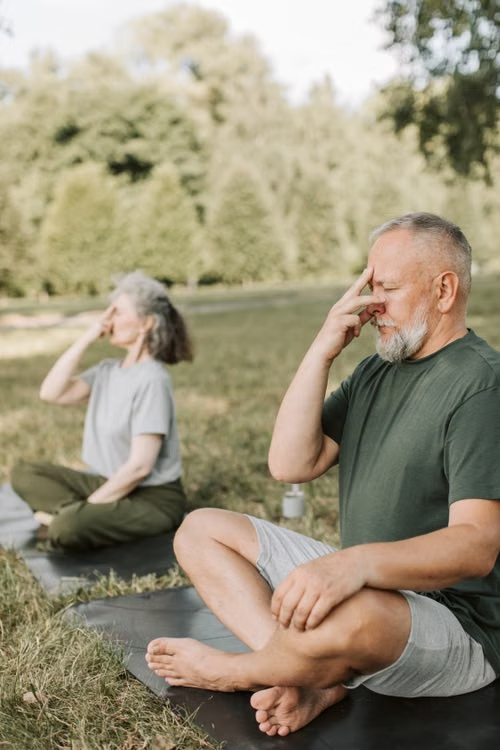
A quiet corner of your bedroom, a balcony overlooking nature, a garden, or a calm beach can become your personal breathing sanctuary.
Silence your phone.
Allow yourself permission to simply be present.
Find a Comfortable Sitting Position
Many beginners worry about sitting cross-legged.
The truth is, comfort is more important than appearance.
You can sit:
- Cross-legged on a yoga mat
- On a meditation cushion
- On a folded blanket
- On a chair with both feet grounded
The most important principle is simple:
Keep your spine comfortably upright without creating unnecessary tension.
Imagine a thread gently lifting the crown of your head toward the sky while your shoulders soften away from your ears.
Which Beginner’s Guide to Pranayama Should Beginners Practice First?
insert a second, simpler table focused on beginners.
Beginner’s Practice Guide
| Goal | Recommended Pranayama | Practice Time |
| Reduce Stress | Nadi Shodhana | 10 minutes |
| Better Sleep | Bhramari | 5–10 minutes before bed |
| Increase Energy | Kapalabhati* | 3–5 minutes (learn with guidance) |
| Improve Focus | Ujjayi | 10 minutes |
| Meditation Preparation | Sama Vritti | 5–10 minutes |
| Deep Relaxation | Dirgha Pranayama | 10 minutes |
*For beginners, Kapalabhati should be learned under the guidance of a qualified teacher.
Begin with Observation Before Control
Before trying to change your breathing, spend one or two minutes simply observing it.
Notice:
- Is your breath fast or slow?
- Is it smooth or uneven?
- Are you breathing through your chest or your abdomen?
- Does one nostril feel more open than the other?
There is no need to fix anything.
Observation itself is the first practice.
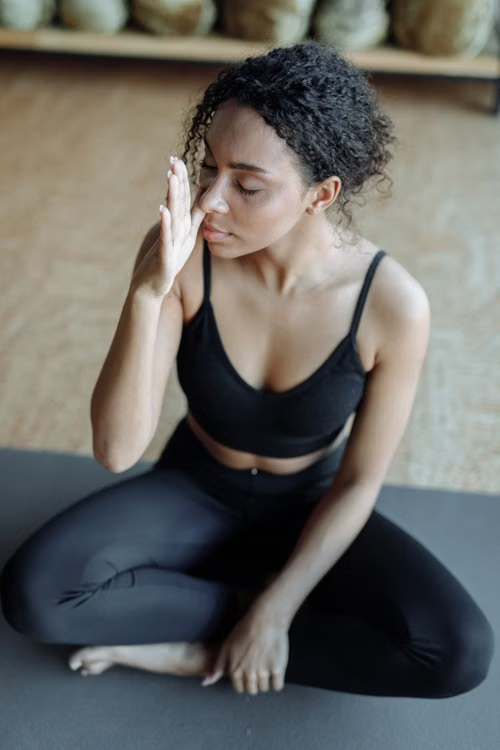
Technique 1: Diaphragmatic Breathing (Three-Part Yogic Breath)
This is the foundation of nearly every Beginner’s Guide to Pranayama practice.
Why It Matters
Many adults breathe only into the upper chest.
Diaphragmatic breathing encourages the lungs to expand more naturally while helping the body relax.
Step-by-Step Practice
- Sit comfortably with your spine tall.
- Place one hand on your abdomen.
- Place the other hand on your chest.
- Inhale gently through your nose.
- Allow your abdomen to rise first.
- Continue expanding the ribs.
- Finally allow the upper chest to lift slightly.
- Exhale slowly in reverse order.
- Repeat for 10 slow breaths.
What You May Notice
- Greater relaxation
- Reduced tension in the shoulders
- Deeper breathing
- Improved awareness of your body
Don’t force large breaths.
Smooth breathing is always better than deep breathing.
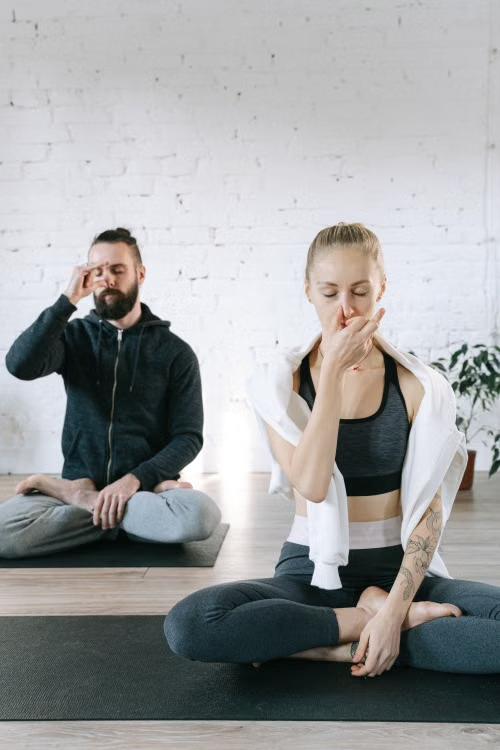
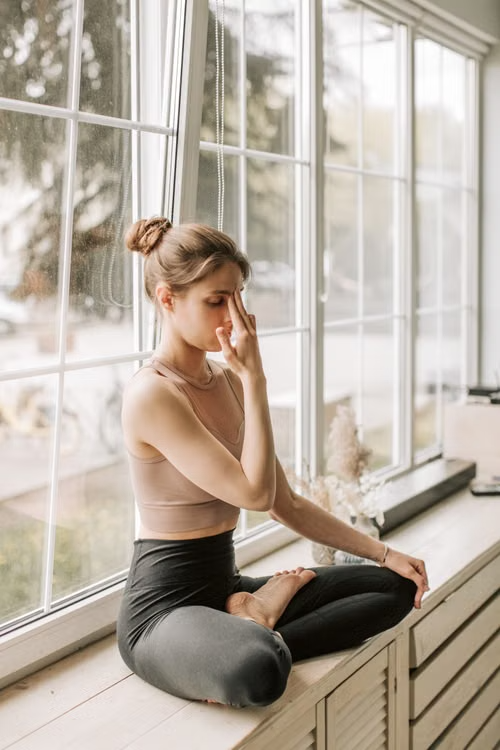
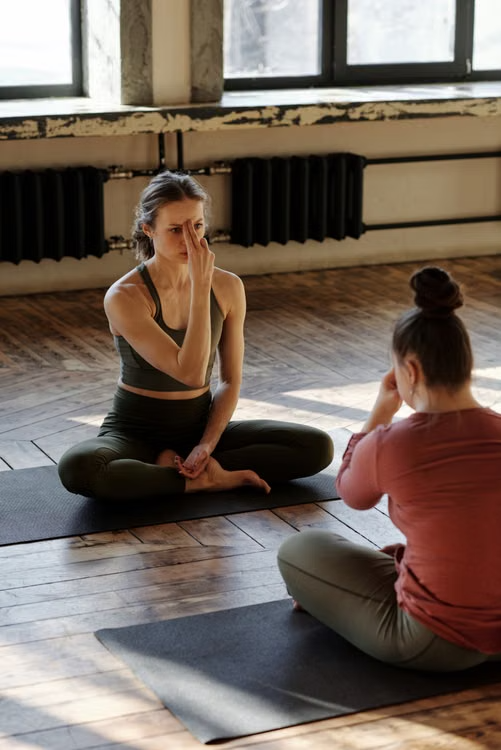
Technique 2: Nadi Shodhana (Alternate Nostril Breathing)
This is often the first traditional Beginner’s Guide to Pranayama taught in Yoga Teacher Training because it is gentle, effective, and suitable for most beginners.
Meaning
“Nadi” means energy channels.
“Shodhana” means purification.
Traditionally, this practice is believed to help balance the body’s subtle energy pathways.
How to Practice
- Sit comfortably.
- Relax your shoulders.
- Use your right thumb to gently close your right nostril.
- Inhale through the left nostril.
- Close the left nostril using your ring finger.
- Release the right nostril.
- Exhale through the right.
- Inhale through the right.
- Close the right nostril.
- Exhale through the left.
This completes one round.
Practice 5–10 rounds slowly.
Benefits
- Calms the nervous system
- Improves concentration
- Balances energy
- Prepares the mind for meditation
Technique 3: Ujjayi Breath (Ocean Breath)
If you’ve attended a Vinyasa Yoga class, you’ve probably heard this gentle ocean-like sound.
Ujjayi breathing creates a soft whisper in the throat while breathing through the nose.
Practice
- Inhale slowly through the nose.
- Slightly narrow the back of the throat.
- Exhale through the nose while maintaining the gentle sound.
The sound should remain soft and effortless.
Never strain.
Benefits
- Improves concentration
- Creates internal warmth
- Supports yoga movement
- Builds breath awareness
Technique 4: Bhramari Beginner’s Guide to Pranayama (Bee Breath)
This beautiful practice uses vibration to calm the mind.
How to Practice
- Sit comfortably.
- Close your eyes.
- Inhale slowly.
- Exhale while making a gentle humming sound like a bee.
Feel the vibration throughout your head and face.
Repeat five to seven rounds.
Why Beginners Love It
Many people notice an immediate sense of calm after only a few repetitions.
It’s especially helpful after stressful days.
Techniques to Learn Later
As your practice develops under qualified guidance, you may explore additional traditional techniques, including:
- Kapalabhati (Skull-Shining Breath)
- Bhastrika (Bellows Breath)
- Surya Bhedana (Right Nostril Breathing)
- Chandra Bhedana (Left Nostril Breathing)
- Sheetali (Cooling Breath)
- Sheetkari (Hissing Cooling Breath)
- Advanced breath retention (Kumbhaka)
These practices offer unique benefits but require proper instruction and should not be rushed.
Building a strong foundation first is the safest and most rewarding path.
Common Mistakes Beginners Should Avoid
Every beginner makes mistakes—and that’s completely normal.
Being aware of them can help your practice remain safe and enjoyable.
Breathing Too Forcefully
Beginner’s Guide to Pranayama should never feel like hard work.
Gentle breathing is far more effective than aggressive breathing.
Trying to Hold the Breath Too Soon
Breath retention is an advanced practice.
Beginners should focus first on developing smooth, natural breathing.
Practicing with Tension
Notice your:
- Jaw
- Neck
- Shoulders
- Hands
If these areas become tight, soften them.
Relaxation is part of the practice.
Expecting Instant Results
Some days your breath feels smooth.
Other days it doesn’t.
This is completely natural.
Progress comes through consistency rather than perfection.
When Should You Avoid Certain Pranayama Practices?
Although gentle breathing practices are suitable for most people, some techniques should be approached with care.
Consult a qualified healthcare professional before beginning advanced Beginner’s Guide to Pranayama if you have:
- uncontrolled high blood pressure,
- serious heart conditions,
- recent surgery,
- respiratory illness,
- dizziness,
- pregnancy (for certain techniques),
- or any medical condition affecting breathing.
At Diksha Yoga School, students are always encouraged to practice within their own comfort level and receive guidance appropriate to their individual needs.
Yoga is never about pushing through discomfort.
A Simple 10-Minute Daily Beginner’s Guide to Pranayama Routine
If you’re wondering where to begin, here’s an easy routine you can practice at home.
Minute 1–2
Quiet sitting and natural breath observation.
Minute 3–5
Diaphragmatic (Three-Part Yogic) Breathing.
Minute 6–8
Nadi Shodhana (Alternate Nostril Breathing).
Minute 9–10
Bhramari (Bee Breath), followed by one minute of silent observation.
This gentle sequence introduces awareness, balances the breath, and leaves you feeling calm without overwhelming the body.
Even ten minutes each day can become a meaningful ritual of self-care.
The Secret Isn’t Breathing More—It’s Breathing Better
One of the greatest lessons yoga teaches is that transformation rarely happens through force.
It happens through awareness.
The goal of Beginner’s Guide to Pranayama isn’t to take the deepest breath in the room.
It’s to develop a relationship with your breath that supports you during moments of stress, joy, uncertainty, and stillness.
Every conscious inhale invites presence.
Every slow exhale creates space.
Over time, these small moments accumulate into profound inner change.
In the final part of this guide, we’ll explore how Pranayama fits into a complete Yoga Teacher Training, answer the most frequently asked beginner questions, and share how you can continue your breathwork journey with authentic guidance at Diksha Yoga School in Thailand, Bali, Goa, and Sri Lanka.
Taking Your Practice Further: How Beginner’s Guide to Pranayama Becomes a Way of Life
By now, you’ve learned what Beginner’s Guide to Pranayama is, why conscious breathing matters, and how to begin a simple daily practice. But if there’s one lesson that experienced yogis discover over time, it’s this:
Beginner’s Guide to Pranayama isn’t just something you practice for ten minutes each morning—it gradually becomes a way of living.
You begin to notice your breath before reacting in an argument.
You take a slow inhale before making an important decision.
You use your breath to calm nervousness before teaching a class, speaking in public, or facing a challenge.
Eventually, conscious breathing is no longer confined to your yoga mat. It becomes part of your everyday life.
That is the true gift of Beginner’s Guide to Pranayama .
Why Beginner’s Guide to Pranayama Is Essential in Yoga Teacher Training
Many people associate Yoga Teacher Training with learning asanas, alignment, and sequencing.
While these are important, traditional yoga education is much broader.
A well-rounded Yoga Teacher Training introduces students to the philosophy, science, and practical application of breath.
Without understanding the breath, yoga becomes largely physical.
With Pranayama, yoga becomes transformative.
At Diksha Yoga School, Beginner’s Guide to Pranayama is woven into the daily rhythm of every Yoga Teacher Training program. Students don’t simply memorize techniques—they learn when to use them, why they work, and how to guide others safely.
Throughout your training, you’ll gradually develop an understanding of:
- The foundations of yogic breathing
- Traditional Beginner’s Guide to Pranayama techniques
- Breath awareness during asana practice
- The relationship between breath and the nervous system
- Preparing the mind for meditation
- Safe teaching methods for beginners
- Contraindications and modifications
- Integrating Pranayama into yoga classes
More importantly, you’ll experience these practices yourself.
That personal experience becomes the foundation of authentic teaching.
Learning Through Experience, Not Just Theory
Reading about Beginner’s Guide to Pranayama is valuable.
Practicing it is transformational.
One of the greatest differences between self-study and learning within a traditional Yoga Teacher Training is the opportunity to receive personal guidance.
A qualified teacher can help you:
- refine your breathing technique,
- correct unconscious habits,
- build confidence,
- answer questions,
- and adapt practices to your individual needs.
This guidance often makes the journey smoother, safer, and far more rewarding.
Why Environment Matters
Where you practice influences how you feel.
Imagine beginning your morning with the sound of waves, fresh tropical air, and a peaceful yoga shala instead of traffic and phone notifications.
An inspiring environment doesn’t create transformation on its own, but it can support consistency, presence, and deeper focus.
That’s why many students choose immersive Yoga Teacher Training experiences.
At Diksha Yoga School, you can deepen your practice in four beautiful destinations, each offering its own unique atmosphere while sharing the same commitment to authentic yoga education.
Surrounded by palm trees, warm ocean breezes, and a relaxed island lifestyle, Koh Samui offers a peaceful setting for cultivating mindfulness and conscious breathing.
The natural beauty of the island encourages students to slow down, reconnect with nature, and establish healthy daily routines.
Bali has long attracted people seeking spiritual growth and personal transformation.
Its vibrant culture, serene temples, and lush landscapes create an inspiring environment for exploring yoga, meditation, and Beginner’s Guide to Pranayama.
Goa – India
For many practitioners, learning yoga in India carries special significance.
Goa combines coastal tranquility with the rich heritage of traditional yoga, allowing students to experience ancient teachings in the country where yoga first evolved.
With its peaceful coastline, tropical greenery, and slower pace of life, Galle provides a calm environment for breathwork, meditation, and self-reflection.
Many students appreciate the balance between focused learning and restorative relaxation.
Frequently Asked Questions About Beginner’s Guide to Pranayama
Can complete beginners practice Pranayama?
Yes.
Most traditional breathing practices can be safely introduced to beginners when learned gradually and practiced without force.
The key is to begin with simple techniques such as diaphragmatic breathing, Nadi Shodhana, and Bhramari before exploring more advanced methods.
How long should I practice each day?
Quality matters more than quantity.
Even 10 to 15 minutes of consistent daily practice can make a noticeable difference over time.
As your confidence grows, your practice may naturally become longer.
Is Beginner’s Guide to Pranayama different from meditation?
Yes.
Pranayama uses the breath as its primary focus.
Meditation cultivates sustained awareness and observation.
Traditionally, Beginner’s Guide to Pranayama prepares the body and mind for meditation by creating steadiness and inner calm.
Should I practice before or after yoga?
Both approaches can be beneficial depending on the style of practice.
In traditional yoga, Beginner’s Guide to Pranayama is often practiced after asana and before meditation.
Gentle breathing awareness may also be used at the beginning of a class to help students become present.
Can Pranayama help reduce anxiety?
Many practitioners find that slow, mindful breathing helps them feel calmer and more emotionally balanced.
While Beginner’s Guide to Pranayama is not a replacement for medical or psychological care, it can be a valuable complementary practice for supporting overall well-being.
If you have significant health concerns, consult an appropriate healthcare professional before beginning any new practice.
Is it normal to find conscious breathing difficult at first?
Absolutely.
Many people discover that paying attention to their breath feels unfamiliar.
This is completely natural.
Like learning any new skill, Beginner’s Guide to Pranayama becomes more comfortable through regular, patient practice.
Do I need to become a yoga teacher to learn Beginner’s Guide to Pranayama?
Not at all.
Many students join Yoga Teacher Training primarily for personal growth rather than to teach professionally.
The knowledge gained can enrich your own practice regardless of your future plans.
A Daily Reminder You Can Carry With You
Life will always have busy days.
There will be deadlines, unexpected challenges, joyful moments, and periods of uncertainty.
Your breath will be there through all of them.
Every conscious inhale invites presence.
Every mindful exhale creates space.
Each breath offers an opportunity to return to yourself.
You don’t need perfect conditions to begin.
You only need this moment.
Begin Your Pranayama Journey with Diksha Yoga School
Whether your goal is to reduce stress, deepen your yoga practice, improve your breathing, or become a confident yoga teacher, Beginner’s Guide to Pranayama offers a lifelong path of self-discovery.
At Diksha Yoga School, our Yoga Teacher Training programs integrate traditional Pranayama, meditation, yoga philosophy, anatomy, alignment, and mindful movement into a supportive learning experience.
Students from around the world join us to explore authentic yoga in inspiring destinations, including Koh Samui (Thailand), Bali (Indonesia), Goa (India), and Galle (Sri Lanka).
No matter which location you choose, you’ll be welcomed into a community that values personal attention, experienced guidance, and the timeless wisdom of traditional yoga.
Your journey doesn’t begin when you master the perfect breathing technique.
It begins with one conscious breath.
Take that first breath today.
Final Thoughts
Pranayama reminds us that transformation doesn’t always arrive through dramatic changes.
Sometimes it begins quietly.
A slower inhale.
A softer exhale.
A calmer mind.
A more open heart.
These simple moments, practiced consistently, have the power to reshape how we experience ourselves and the world around us.
The breath has always been with you.
Now you know how to make it your greatest teacher.
30-Day Beginner Pranayama Challenge: Build a Daily Breathing Practice That Lasts
“A single conscious breath can change a moment. Thirty days of conscious breathing can begin to change a life.”
Learning Pranayama is much like planting a seed. You don’t see the full tree after the first day, but with regular care, something remarkable begins to grow.
One of the biggest mistakes beginners make is practicing intensely for a few days and then stopping altogether. The true benefits of Pranayama don’t come from occasional long sessions—they come from showing up consistently, even if it’s only for a few minutes each day.
This 30-Day Beginner Pranayama Challenge is designed to help you create a sustainable habit. The practices are simple, progressive, and suitable for anyone who is new to conscious breathing.
The goal isn’t perfection. The goal is consistency.
By the end of these 30 days, you’ll likely notice not only changes in your breathing but also in your energy, focus, sleep, emotional balance, and overall sense of well-being.
Before You Begin
Before starting the challenge, remember these simple guidelines:
- Practice on an empty or light stomach whenever possible.
- Choose a quiet place where you won’t be disturbed.
- Sit comfortably with a relaxed but upright posture.
- Breathe through the nose unless instructed otherwise.
- Never force the breath or hold it beyond your comfort level.
- If you feel dizzy or uncomfortable, return to natural breathing and rest.
Most importantly, approach each session with curiosity rather than expectation.
Week 1: Becoming Aware of Your Breath
Theme: Awareness Before Technique
Many of us spend years breathing unconsciously. During the first week, your goal is simply to notice your breath without trying to control it.
Daily Practice (5–10 Minutes)
- 2 minutes of natural breath observation
- 5 minutes of Dirgha Pranayama (Three-Part Yogic Breath)
- 2 minutes of quiet sitting
Your Focus This Week
Notice:
- Is your breathing fast or slow?
- Does your abdomen expand naturally?
- Are your shoulders relaxed?
- How does your body feel after each session?
Don’t judge your breath—just observe it.
Small moments of awareness lead to lasting transformation.
Week 2: Creating Balance
Theme: Calm the Mind, Balance the Breath
Now that you’ve become familiar with conscious breathing, it’s time to introduce rhythm and balance.
Daily Practice (10–12 Minutes)
- 2 minutes of natural breathing
- 5 minutes of Dirgha Pranayama
- 5 minutes of Nadi Shodhana (Alternate Nostril Breathing)
What You May Notice
Many practitioners begin experiencing:
- A calmer mind
- Better concentration
- Less emotional reactivity
- Improved relaxation
Some days will feel easier than others. That’s completely normal.
Consistency matters more than perfect practice.
Week 3: Deepening Awareness
Theme: Connecting Breath and Mind
This week introduces gentle sound and vibration through Bhramari Pranayama.
Daily Practice (12–15 Minutes)
- 2 minutes of breath observation
- 5 minutes of Nadi Shodhana
- 5 rounds of Bhramari (Bee Breath)
- 3 minutes of silent observation
Your Intention
Notice how your thoughts change before and after practice.
Rather than trying to “empty your mind,” simply allow your breath to become an anchor for your attention.
Many students report sleeping better during this stage of the challenge.
Week 4: Creating a Lifelong Habit
Theme: Confidence and Consistency
The final week brings together everything you’ve learned.
By now, breathing consciously should begin to feel more natural.
Daily Practice (15–20 Minutes)
- 2 minutes of quiet sitting
- 5 minutes of Dirgha Pranayama
- 5 minutes of Nadi Shodhana
- 5 rounds of Bhramari
- 3–5 minutes of silent meditation
If you’ve learned Ujjayi Breathing from a qualified teacher, you may gently include it before your meditation practice.
This isn’t the end of your journey.
It’s the beginning of a lifelong relationship with your breath.
Your Daily Challenge Tracker
Print this page or save it as a screenshot and celebrate each day you complete your practice.
| Day | Practice Completed | Energy (1–5) | Mood (1–5) | Sleep Quality (1–5) |
| 1 | ☐ | |||
| 2 | ☐ | |||
| 3 | ☐ | |||
| 4 | ☐ | |||
| 5 | ☐ | |||
| 6 | ☐ | |||
| 7 | ☐ | |||
| 8 | ☐ | |||
| 9 | ☐ | |||
| 10 | ☐ | |||
| 11 | ☐ | |||
| 12 | ☐ | |||
| 13 | ☐ | |||
| 14 | ☐ | |||
| 15 | ☐ | |||
| 16 | ☐ | |||
| 17 | ☐ | |||
| 18 | ☐ | |||
| 19 | ☐ | |||
| 20 | ☐ | |||
| 21 | ☐ | |||
| 22 | ☐ | |||
| 23 | ☐ | |||
| 24 | ☐ | |||
| 25 | ☐ | |||
| 26 | ☐ | |||
| 27 | ☐ | |||
| 28 | ☐ | |||
| 29 | ☐ | |||
| 30 | ☐ |
Remember, your progress isn’t measured by perfection—it’s measured by your willingness to return to the practice.
Weekly Reflection Journal
At the end of each week, spend five minutes answering these questions.
Week 1
- What surprised me about my breathing?
- When did I feel most relaxed?
- What was most challenging?
Week 2
- Has my breathing become smoother?
- Do I notice less tension during the day?
- What positive changes have I experienced?
Week 3
- Has my concentration improved?
- Am I sleeping differently?
- How has my mood changed?
Week 4
- Which breathing practice do I enjoy most?
- What benefits have I noticed over the past month?
- How will I continue practicing after this challenge?
Your journal becomes a powerful reminder of how small daily actions create meaningful long-term change.
Common Obstacles Beginners Face
Every beginner experiences challenges.
Knowing they’re normal can help you stay motivated.
“I Keep Forgetting to Practice.”
Pair your breathing practice with an existing habit, such as brushing your teeth, drinking your morning tea, or finishing your yoga session.
Habit stacking makes consistency much easier.
“My Mind Won’t Stop Thinking.”
That’s perfectly normal.
The goal isn’t to stop thinking.
The goal is simply to notice when your attention wanders and gently return to the breath.
Each return strengthens your awareness.
“I Don’t Have Enough Time.”
Even five minutes of conscious breathing is valuable.
Remember:
Five mindful minutes every day are more effective than one hour once a month.
“I’m Not Sure If I’m Doing It Correctly.”
Progress doesn’t require perfection.
Practice gently.
Stay curious.
If possible, learn from an experienced yoga teacher who can guide your technique and answer questions.
Tips for Building a Lifelong Pranayama Practice
Developing consistency is often more important than learning new techniques.
Here are a few simple habits that can make your practice sustainable:
- Practice at the same time each day to create a routine.
- Start with just five minutes and gradually increase your time.
- Keep your yoga mat or meditation cushion visible as a reminder.
- Turn off notifications during your practice.
- Celebrate consistency rather than duration.
- If you miss a day, begin again the next day without guilt.
Remember, one missed session doesn’t erase your progress. Returning to the practice is what matters.
Celebrate Your 30-Day Journey
Completing this challenge is more than checking off 30 days on a calendar.
It represents a commitment to your health, your awareness, and your personal growth.
Perhaps your breathing has become slower.
Perhaps your sleep has improved.
Perhaps you’re handling stressful situations with a little more patience.
Or perhaps you’ve simply discovered the joy of taking a conscious breath.
Whatever your experience, honor it.
Every mindful breath is a step toward a calmer mind, a healthier body, and a more balanced life.
If this challenge has inspired you to deepen your understanding of yoga and Pranayama, consider taking the next step through a Yoga Teacher Training or immersive retreat. At Diksha Yoga School, students in Koh Samui (Thailand), Bali (Indonesia), Goa (India), and Galle (Sri Lanka) learn these traditional practices through daily guided sessions, personal mentorship, and authentic yogic teachings.
Remember:
Your journey doesn’t end on Day 30. It begins with the next conscious breath.


