The Spirit of Ashtanga Practice
The true purpose of Ashtanga Vinyasa Flow Yoga Lessons is not simply achieving advanced postures. The deeper purpose is cultivating awareness, discipline, compassion, and a meaningful connection with oneself through consistent practice.
As the ancient yogic teaching reminds us:
“स्थिरसुखमासनम्”
Sthira Sukham Āsanam
“The posture should be steady and comfortable.”
— Patanjali Yoga Sutras (2.46)
This timeless teaching reflects the heart of Ashtanga Yoga: strength with softness, effort with ease, discipline with awareness, and movement guided by conscious breathing. Every posture becomes an opportunity to cultivate balance not only in the body but also in the mind and spirit.
Introduction
Ashtanga Vinyasa Flow Yoga Lessons is one of the world’s most respected and transformative traditional yoga systems. Rooted in the philosophy of Patanjali’s Eight Limbs of Yoga and popularised through the teachings of Sri K. Pattabhi Jois, this dynamic practice combines breath (Ujjayi Pranayama), movement (Vinyasa), gaze (Drishti), and energy locks (Bandhas) into a powerful moving meditation that develops physical strength, flexibility, endurance, mental clarity, and spiritual awareness.
Unlike many modern yoga styles where every class follows a different sequence, Traditional Ashtanga Yoga follows a structured and progressive series of postures. Each pose is intentionally designed to prepare the body and mind for the next, creating a safe, intelligent, and systematic path of growth. This disciplined methodology allows practitioners to build consistency, confidence, body awareness, and resilience while developing a lifelong yoga practice.
Whether you are completely new to yoga, an experienced practitioner seeking greater depth, an athlete looking to improve mobility and recovery, or an aspiring yoga teacher preparing for professional certification, Ashtanga Vinyasa Flow Yoga Lessons offers a complete system for personal transformation. Its carefully designed sequences improve posture, increase flexibility, build functional strength, enhance cardiovascular endurance, sharpen concentration, and promote emotional balance.
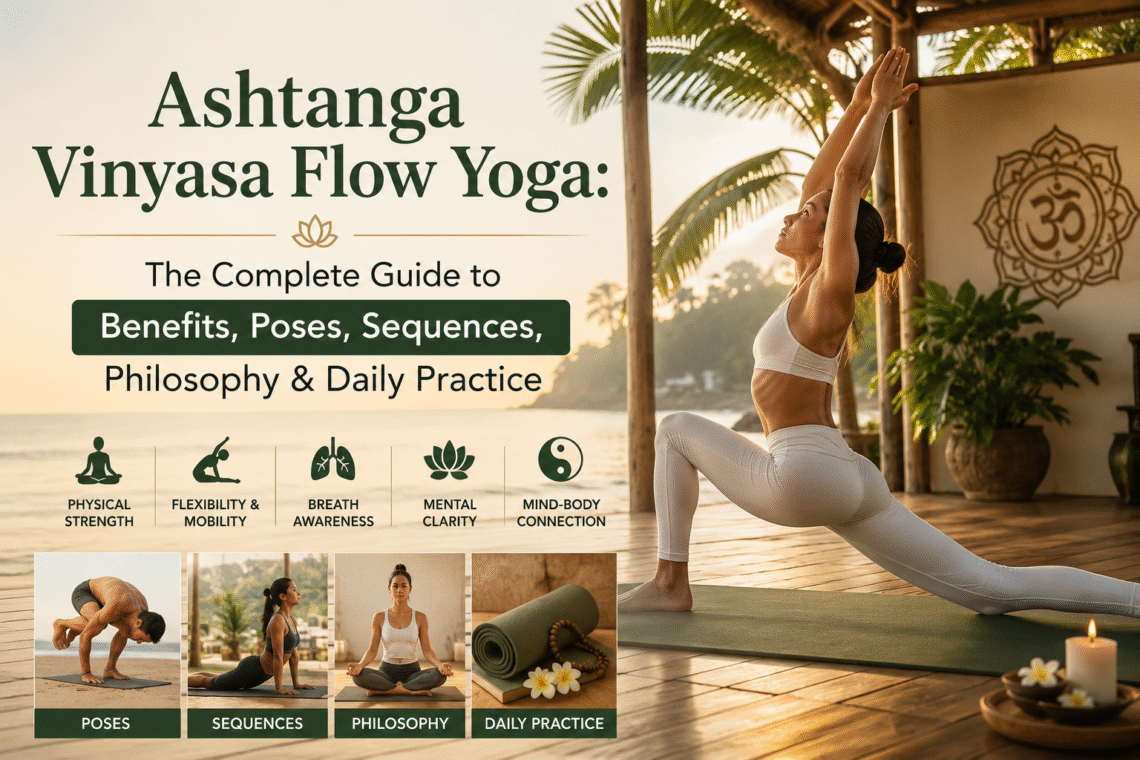
Ashtanga Vinyasa Flow Yoga: The Complete Guide to Benefits, Poses, Sequences, Philosophy & Daily Practice
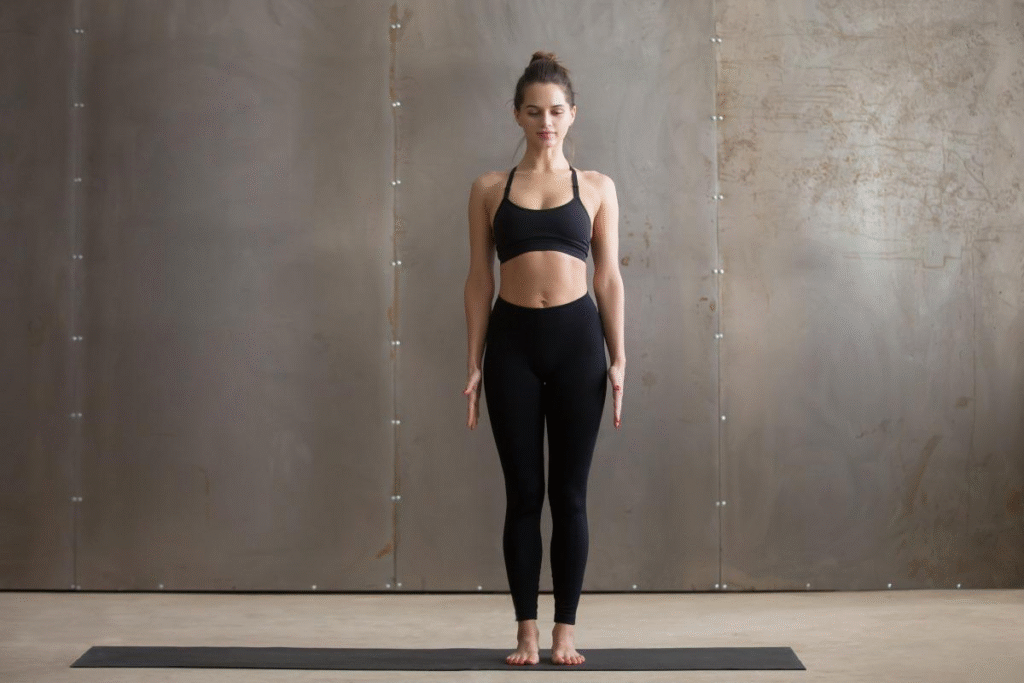
Standing Sequence
Ashtanga Vinyasa Flow Yoga images
The unique beauty of Ashtanga Yoga lies in its seamless synchronization of breath and movement. Every inhalation creates expansion, while every exhalation encourages stability and release. Practised with mindful awareness, this continuous flow transforms the physical practice into a form of meditation in motion, helping practitioners remain fully present throughout every sequence. Over time, this connection between body, breath, and mind extends beyond the yoga mat into everyday life.
Today, yoga is practised by more than 300 million people worldwide, with Ashtanga Yoga remaining one of the most respected traditional systems because of its disciplined structure, progressive methodology, and holistic approach to health and well-being. Practitioners around the world value Ashtanga Yoga not only for developing strength and flexibility but also for improving focus, reducing stress, supporting emotional resilience, enhancing mobility, and cultivating inner peace through consistent practice.
Table of Contents
Experience-Based Teaching at Diksha Yoga School
At Diksha Yoga School, we honour the authentic traditions of Ashtanga and Vinyasa Yoga while making them accessible to modern practitioners from around the world. Our experienced teachers have guided students from over 50 countries through internationally recognised Yoga Alliance Registered Yoga Teacher Training Courses, combining traditional yogic wisdom with modern anatomy, intelligent alignment principles, breath awareness, and mindful sequencing.
Rather than encouraging students to chase difficult postures, we emphasise safe progression, proper alignment, conscious breathing, consistency, and individual growth. This traditional teaching philosophy helps students minimise the risk of injury while developing a sustainable and rewarding lifelong yoga practice. Through years of teaching aspiring yoga teachers and dedicated practitioners, we have seen that regular Ashtanga practice often leads to improved posture, greater body awareness, enhanced mobility, increased confidence, deeper concentration, and a healthier relationship with both body and mind.
Throughout this comprehensive guide, you will also explore important aspects of traditional yoga practice, including Ujjayi Pranayama, Surya Namaskar, the Primary Series, Drishti, Bandhas, Tristhana, Yoga Philosophy, the Eight Limbs of Yoga, meditation, and Yoga Teacher Training, helping you develop a complete understanding of Ashtanga Vinyasa Flow Yoga Lessons beyond the physical postures.
Ashtanga Vinyasa Flow Yoga Lessons at a Glance
| Feature | Details |
| Style | Traditional Dynamic Yoga |
| Difficulty Level | Beginner to Advanced |
| Primary Focus | Breath, Strength, Flexibility, Discipline & Mindfulness |
| Breathing Technique | Ujjayi Pranayama |
| Practice Method | Fixed Sequential Series |
| Meditation | Moving Meditation |
| Best For | Beginners, Yoga Teachers, Athletes & Regular Practitioners |
| Strength Development | ★★★★★ |
| Flexibility Improvement | ★★★★★ |
| Balance & Coordination | ★★★★★ |
| Stress Relief | ★★★★★ |
| Spiritual Development | ★★★★★ |
| Traditional Foundation | Patanjali’s Eight Limbs of Yoga |
Who Should Read This Guide?
This guide is designed for:
Complete beginners starting their yoga journey.
Students interested in Ashtanga Yoga for beginners.
Yoga practitioners wanting to deepen their daily practice.
Aspiring Yoga Alliance-certified yoga teachers.
Fitness enthusiasts looking to improve flexibility and functional strength.
Athletes seeking better mobility, endurance, and recovery.
Individuals managing stress through mindful movement and breathwork.
Anyone interested in authentic yoga philosophy and traditional yogic practices.
Quick Facts About Ashtanga Vinyasa Flow Yoga Lessons
| Quick Information | Details |
| Traditional Roots | Patanjali’s Eight Limbs of Yoga |
| Modern System | Sri K. Pattabhi Jois |
| Place of Development | Mysore, India |
| Practice Style | Fixed Sequential Series |
| Main Principles | Breath, Bandha, Drishti & Vinyasa |
| Main Breathing Technique | Ujjayi Pranayama |
| Average Practice Time | 60–90 Minutes |
| Suitable For | Beginners to Advanced Practitioners |
| Primary Benefits | Strength, Flexibility, Focus, Balance & Inner Awareness |
Questions We’ll Answer in This Guide
Throughout this guide, you’ll discover answers to some of the most frequently asked questions about Ashtanga Yoga, including:
What is Ashtanga Vinyasa Flow Yoga Lessons?
What is the history and philosophy of Ashtanga Yoga?
Is Ashtanga Yoga suitable for beginners?
What is the Primary Series?
What are Ujjayi Breathing, Drishti, and Bandhas?
What is the difference between Ashtanga Yoga and Vinyasa Flow Yoga?
Can Ashtanga Yoga help improve flexibility, strength, posture, and weight management?
How often should you practise Ashtanga Yoga?
What are the common mistakes beginners should avoid?
How can you safely begin your Ashtanga Yoga journey?
Whether your goal is to improve flexibility, build strength, develop mental clarity, deepen your spiritual practice, or become a certified yoga teacher, this evidence-based guide combines traditional yogic wisdom, years of practical teaching experience, and modern movement science to help you build a safe, sustainable, and authentic Ashtanga Vinyasa Flow Yoga Lessons practice that supports lifelong health and personal transformation.
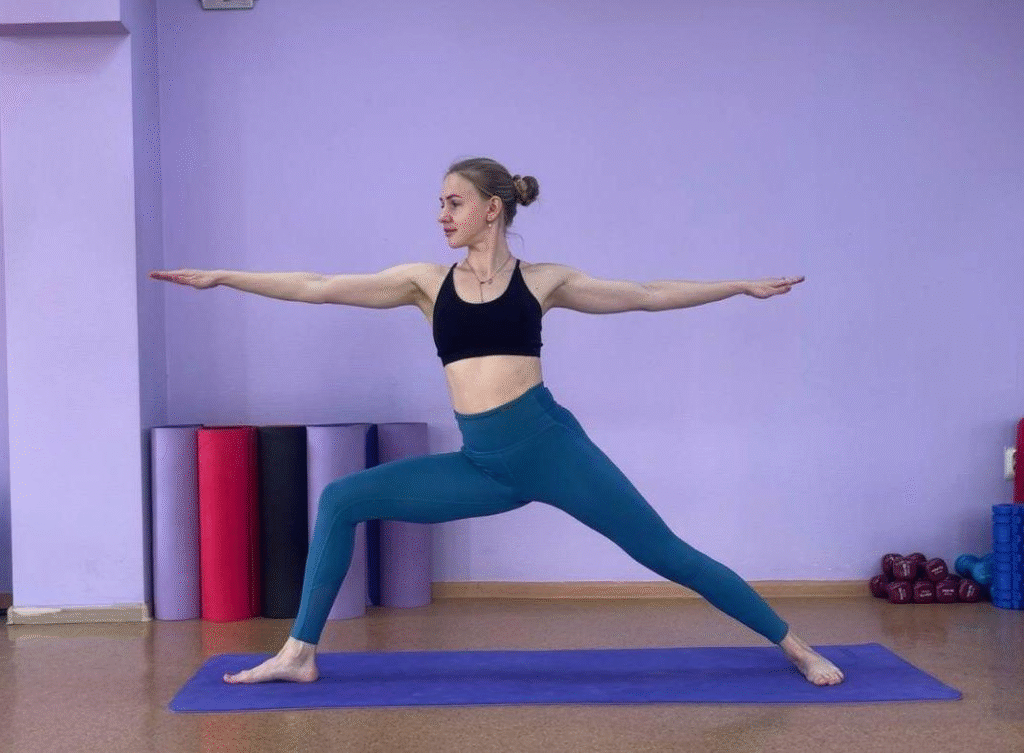
What Is Ashtanga Vinyasa Flow Yoga Lessons?
What is Ashtanga Vinyasa Flow Yoga Lessons?
Ashtanga Vinyasa Flow Yoga Lessons is a traditional and systematic style of yoga that combines a fixed sequence of yoga postures (asanas) with synchronised breathing (Ujjayi Pranayama) to create a continuous flow of movement, awareness, and meditation. Every posture and every transition is guided by the breath, allowing practitioners to move mindfully from one pose to the next while cultivating strength, flexibility, balance, concentration, and inner calm.
The word Ashtanga comes from Sanskrit, where “Ashta” means eight and “Anga” means limbs. These Eight Limbs of Yoga, described in Patanjali’s Yoga Sutras, provide the philosophical foundation of traditional yoga. They extend far beyond physical postures, offering a complete path for ethical living, self-discipline, breath control, concentration, meditation, and ultimately self-realisation.
The term Vinyasa means “to place in a special way” and refers to the mindful coordination of breath and movement. Rather than practising individual yoga poses in isolation, students move through a carefully designed sequence where every inhalation and exhalation supports the next movement. This seamless connection transforms the practice into a dynamic moving meditation, promoting both physical vitality and mental clarity.
Together, these principles create a holistic yoga practice that develops functional strength, flexibility, cardiovascular endurance, mobility, balance, body awareness, emotional resilience, and mindful presence. Regular practice also supports better posture, improved breathing efficiency, reduced stress, and greater overall well-being.
One of the defining characteristics of Traditional Ashtanga Yoga is its structured and progressive sequence. Unlike many modern yoga classes that vary from session to session, practitioners repeat the same series consistently. This repetition allows students to observe measurable improvements in alignment, mobility, stability, breath control, concentration, and confidence while developing a safe and sustainable long-term practice.
Unlike fitness-based exercise programmes that primarily focus on physical performance, Ashtanga Vinyasa Flow Yoga Lessons integrates the body, breath, and mind into a complete yogic discipline. The objective is not simply to master advanced postures but to cultivate patience, consistency, self-awareness, and inner balance through dedicated practice. Every session becomes an opportunity to deepen mindfulness while honouring the traditional principles of yoga.
At Diksha Yoga School, we teach Ashtanga Vinyasa Flow Yoga Lessons with respect for its authentic lineage while adapting our guidance to suit practitioners of different experience levels. Our experienced teachers emphasise proper alignment, intelligent sequencing, breath awareness, anatomy-based instruction, and gradual progression, ensuring students build a strong foundation before advancing to more challenging postures. This balanced teaching approach supports long-term growth while helping minimise the risk of injury.
The Three Pillars of Ashtanga Vinyasa Flow Yoga Lessons
Every traditional Ashtanga Yoga practice is built upon three essential principles that work together throughout every sequence.
1. Ujjayi Pranayama (Victorious Breath)
Ujjayi breathing is a slow, deep, and controlled breathing technique performed through the nose. It creates internal warmth, regulates the rhythm of movement, increases oxygen intake, calms the nervous system, and improves concentration throughout the practice.
2. Bandhas (Energy Locks)
Bandhas are subtle muscular engagements that provide stability, improve posture, protect the spine, support efficient movement, and help direct the body’s internal energy during yoga practice.
3. Drishti (Focused Gaze)
Drishti refers to specific gaze points used during each posture. Maintaining a steady gaze improves balance, develops concentration, minimises distractions, and transforms the physical practice into a meditative experience.
When Ujjayi Breath, Bandhas, and Drishti are practised together, Ashtanga Vinyasa Flow Yoga Lessons becomes much more than physical exercise. It evolves into a powerful system of moving meditation, harmonising the body, breath, and mind while supporting physical health, emotional balance, mental clarity, and spiritual growth.
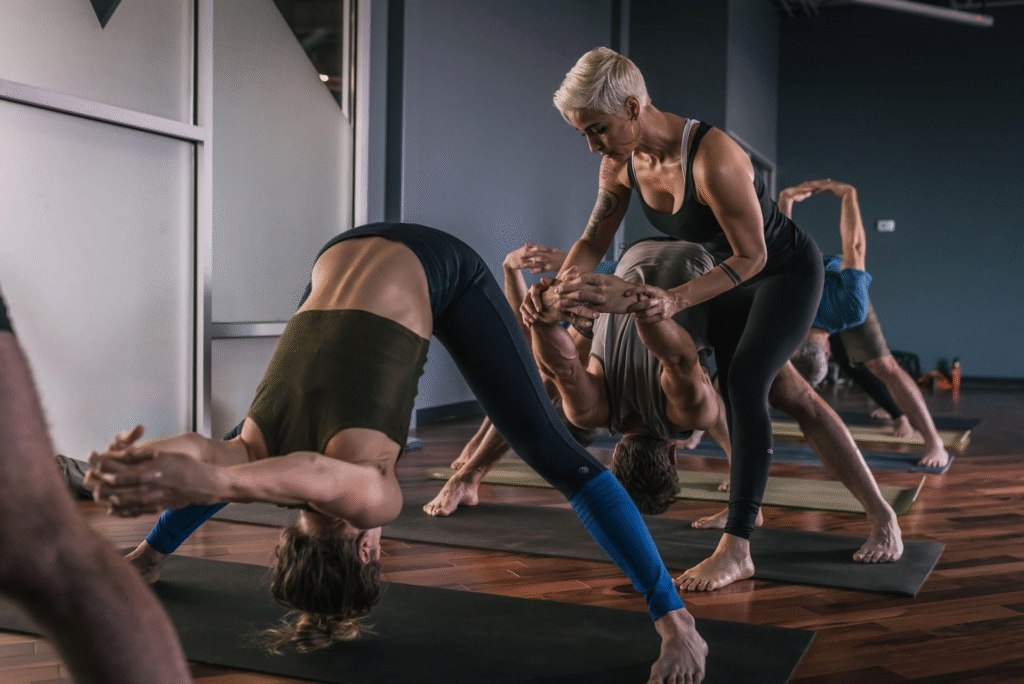
Quick Overview of Ashtanga Vinyasa Flow Yoga Lessons
| Feature | Ashtanga Vinyasa Flow Yoga Lessons |
| Yoga Style | Traditional Dynamic Yoga |
| Practice Method | Fixed Sequential Series |
| Breath | Ujjayi Pranayama |
| Main Focus | Breath, Movement, Discipline & Mindfulness |
| Suitable For | Beginners to Advanced Practitioners |
| Physical Benefits | Strength, Flexibility, Mobility & Endurance |
| Mental Benefits | Focus, Stress Relief & Emotional Balance |
| Spiritual Focus | Self-awareness, Meditation & Inner Growth |
| Core Principles | Ujjayi, Bandha & Drishti |
| Traditional Foundation | Patanjali’s Eight Limbs of Yoga |
Understanding the Meaning of Ashtanga
The Sanskrit word Ashtanga is formed from two words:
- Ashta meaning eight
- Anga meaning limbs
These eight limbs, described by Sage Patanjali in the Yoga Sutras, provide a complete framework for living a balanced and meaningful life. While many people associate yoga only with physical postures, the Eight Limbs remind us that yoga is a holistic path encompassing ethics, self-discipline, breath, meditation, and spiritual growth.
The Eight Limbs of Yoga are:
| Eight Limbs | Meaning |
| Yama | Ethical principles that guide our interactions with others, including non-violence, truthfulness, honesty, moderation, and non-possessiveness. |
| Niyama | Personal practices such as cleanliness, contentment, discipline, self-study, and surrender to a higher purpose. |
| Asana | Physical postures that strengthen the body while preparing it for meditation. |
| Pranayama | Conscious regulation of breath to balance energy and calm the nervous system. |
| Pratyahara | Turning awareness inward by reducing attachment to external distractions. |
| Dharana | Developing focused concentration on a single point of attention. |
| Dhyana | Continuous meditation and uninterrupted awareness. |
| Samadhi | A state of profound inner peace, unity, and self-realization. |
Although physical postures are often the starting point for many practitioners, Ashtanga Vinyasa Flow Yoga Lessons encourages the gradual integration of all eight limbs into daily life. This holistic approach supports not only physical health but also emotional stability, mental clarity, and spiritual development.
What Does Vinyasa Flow Mean?
The The Sanskrit word Vinyasa can be translated as “to place in a special way,” “to arrange with awareness,” or “to move with intention.” In traditional yoga, Vinyasa refers to the mindful coordination of breath and movement, where every posture and every transition is synchronised with either an inhalation or an exhalation. This conscious connection transforms a sequence of yoga poses into a continuous, flowing practice that develops both physical vitality and mental focus.
In Ashtanga Vinyasa Flow Yoga Lessons, movement is never rushed or mechanical. Instead, each transition is performed with precision, awareness, and steady breathing. Every inhalation encourages expansion and openness, while every exhalation promotes stability, grounding, and release. As practitioners continue this rhythmic flow, the practice naturally becomes a form of moving meditation, helping quiet mental distractions and cultivate present-moment awareness.
Unlike practising individual postures in isolation, Vinyasa creates a seamless connection between one pose and the next. This continuous flow generates internal heat, improves circulation, supports healthy joint mobility, and enhances the body’s natural rhythm. Over time, practitioners develop greater coordination, endurance, balance, and breath control while moving with increasing confidence and ease.
Regular Vinyasa practice offers a wide range of physical, mental, and emotional benefits, including:
| Benefit | How Vinyasa Helps |
| Improves Cardiovascular Endurance | Continuous movement increases heart and lung efficiency. |
| Builds Functional Strength | Repeated transitions strengthen muscles throughout the body. |
| Increases Flexibility & Mobility | Dynamic movement safely improves range of motion. |
| Enhances Balance & Coordination | Breath-led transitions improve stability and body awareness. |
| Supports Better Posture | Proper alignment strengthens postural muscles. |
| Develops Breath Awareness | Synchronising breath with movement improves breathing efficiency and concentration. |
| Reduces Stress & Anxiety | Rhythmic breathing helps calm the nervous system and quiet the mind. |
| Cultivates Mindfulness | Attention remains fully focused on the present moment rather than external distractions. |
One of the greatest strengths of Vinyasa Flow Yoga is its ability to keep practitioners fully present throughout the practice. Rather than dwelling on previous postures or anticipating the next one, awareness remains anchored in the current breath, movement, and moment. This deep state of concentration not only improves physical performance but also develops patience, emotional resilience, and mental clarity.
At Diksha Yoga School, we teach Vinyasa as more than simply flowing from one posture to another. Students learn how to synchronise Ujjayi Pranayama, Bandhas, Drishti, proper alignment, and mindful movement to create a safe, efficient, and authentic yoga practice. This traditional approach allows practitioners to experience the true essence of Ashtanga Vinyasa Flow Yoga Lessons—where every breath, every movement, and every posture becomes an opportunity for self-awareness, inner balance, and personal transformation.
Why Is Ashtanga Vinyasa Flow Yoga Lessons So Popular?
Over the past few decades, Ashtanga Vinyasa Flow Yoga Lessons has become one of the world’s most respected and widely practised traditional yoga styles. Its popularity continues to grow because it offers far more than physical exercise—it is a complete system that integrates movement, breath, mindfulness, philosophy, and self-discipline into one transformative practice.
Unlike many fitness programmes that focus primarily on burning calories or building muscle, Traditional Ashtanga Yoga nurtures the whole person. Through the synchronisation of Ujjayi Pranayama, Vinyasa, Bandhas, and Drishti, practitioners develop not only physical strength and flexibility but also emotional resilience, mental clarity, and inner balance. This holistic approach is one of the key reasons why Ashtanga Yoga remains a lifelong practice for millions of people around the world.
One of the defining features of Ashtanga Yoga is its structured and progressive sequence. Rather than learning random postures in every class, students practise the same carefully designed series, allowing them to monitor their progress, refine their alignment, improve breath control, and build confidence over time. This consistency creates measurable improvement while encouraging patience, dedication, and self-awareness.
Why Practitioners Choose Ashtanga Vinyasa Flow Yoga Lessons
| Benefit | How It Supports Your Practice |
| Structured Learning System | A fixed sequence makes progress easier to track and builds confidence over time. |
| Full-Body Strength | Develops functional strength using body weight and controlled movement. |
| Greater Flexibility & Mobility | Gradually increases joint mobility and muscle flexibility. |
| Improved Posture & Spinal Health | Encourages proper alignment and strengthens postural muscles. |
| Better Cardiovascular Fitness | Continuous Vinyasa flow improves stamina and endurance. |
| Enhanced Balance & Coordination | Develops stability, body awareness, and movement control. |
| Reduced Stress & Anxiety | Breath-led movement helps calm the nervous system and relax the mind. |
| Improved Focus & Mental Clarity | Drishti and mindful breathing enhance concentration. |
| Emotional Resilience | Builds patience, discipline, and confidence through consistent practice. |
| Better Sleep & Overall Well-being | Regular practice supports relaxation, recovery, and a balanced lifestyle. |
One of the greatest advantages of Ashtanga Vinyasa Flow Yoga Lessons is that it is suitable for practitioners at every stage of their yoga journey. Beginners can safely modify challenging postures while building a strong foundation in breath, alignment, and movement. More experienced practitioners continue refining their technique, exploring deeper postures, improving endurance, and cultivating greater meditative awareness. This progressive system ensures that the practice remains both challenging and rewarding for years to come.
At Diksha Yoga School, we encourage students to focus on steady progress rather than perfection. Our experienced teachers provide individual guidance, posture modifications, alignment corrections, and breath awareness techniques so that every student can develop a safe, confident, and sustainable practice regardless of age, flexibility, or previous experience. This personalised approach reflects the traditional spirit of Ashtanga Yoga, where consistency and mindful practice are valued far more than achieving advanced postures.
Beyond the physical benefits, the discipline developed through regular Ashtanga practice often extends into everyday life. Many practitioners report improved time management, healthier lifestyle choices, greater emotional stability, stronger self-discipline, and a deeper sense of purpose. As yoga gradually becomes a daily habit, its positive effects can be experienced not only on the mat but also in relationships, work, and personal growth.
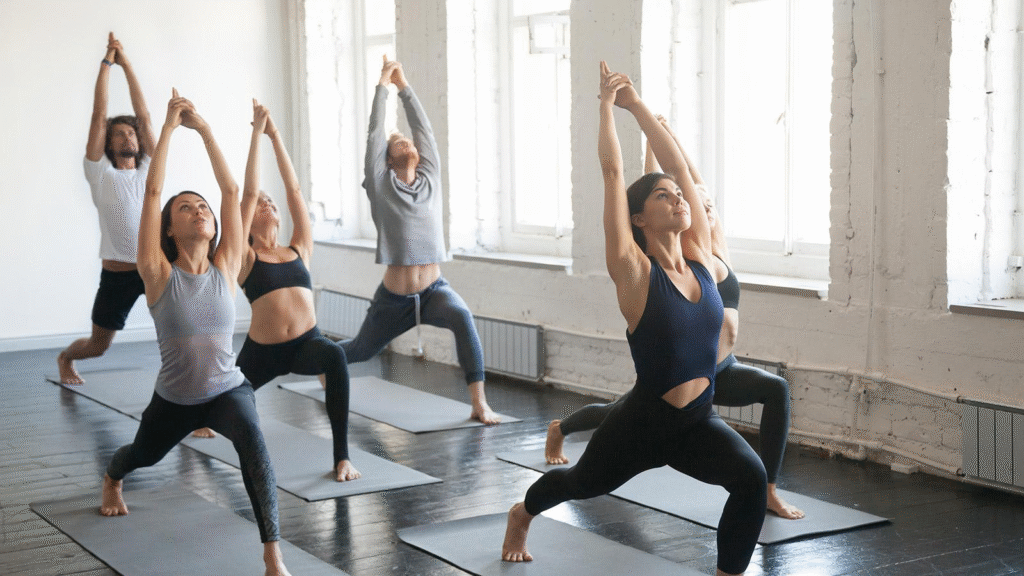
Ashtanga Yoga vs General Fitness Workouts
| Feature | Ashtanga Vinyasa Flow Yoga Lessons | General Gym Workout |
| Primary Focus | Body, Mind & Breath Integration | Physical Fitness |
| Breathing | Conscious Ujjayi Pranayama | Usually Unstructured |
| Flexibility | Excellent | Moderate |
| Strength | Functional Bodyweight Strength | Weight-Based Strength |
| Mental Focus | High | Moderate |
| Stress Reduction | Excellent | Moderate |
| Meditation | Integrated into Practice | Not Included |
| Philosophy & Lifestyle | Yes | No |
| Suitable for Long-Term Personal Growth | Excellent | Primarily Physical |
Why Learn Ashtanga Vinyasa Flow Yoga Lessons?
This unique combination of traditional yoga philosophy, breath-centred movement, physical conditioning, and mindful awareness is what makes Ashtanga Vinyasa Flow Yoga Lessons one of the most effective and enduring yoga systems in the world. Whether your goal is to improve fitness, reduce stress, increase flexibility, deepen your spiritual practice, or become a certified yoga teacher, Ashtanga Yoga offers a structured path toward lasting health, self-discovery, and holistic well-being.
Learning Ashtanga Vinyasa Flow Yoga Lessons is about far more than mastering advanced yoga postures. It is a lifelong journey of developing a deeper connection with your body, breath, mind, and inner awareness while embracing the timeless principles of traditional yoga. Through consistent practice, students discover that true progress is measured not only by physical ability but also by greater self-discipline, mindfulness, resilience, and personal growth.
Why Learn Ashtanga Vinyasa Flow Yoga Lessons?
The structured nature of Traditional Ashtanga Yoga encourages steady and sustainable development. As practitioners repeat the same carefully designed sequences, they gradually improve their strength, flexibility, mobility, balance, posture, breath control, and body awareness while cultivating patience, perseverance, and confidence. Every practice becomes an opportunity to observe personal progress, refine technique, and develop a calm, focused mind.
One of the greatest strengths of Ashtanga Yoga is its ability to support both physical health and mental well-being. The synchronisation of Ujjayi Pranayama, Vinyasa, Bandhas, and Drishti helps reduce mental distractions, regulate the nervous system, improve concentration, and promote emotional balance. Over time, practitioners often experience reduced stress, increased mental clarity, improved sleep quality, greater emotional resilience, and a deeper sense of inner peace.
Many students begin practising Ashtanga Vinyasa Flow Yoga Lessons to improve flexibility, lose weight, increase fitness, or build strength. However, with regular practice, they often discover that the most meaningful transformation happens internally. Greater self-confidence, improved focus, healthier daily habits, enhanced self-awareness, and a more balanced approach to life’s challenges become lasting benefits that extend well beyond the yoga mat.
For those who aspire to become professional yoga teachers, Ashtanga Vinyasa Flow Yoga Lessons provides one of the strongest foundations for teaching. Its systematic methodology helps future instructors develop a thorough understanding of asana alignment, intelligent sequencing, Ujjayi breathing, Bandhas, Drishti, functional anatomy, teaching methodology, yoga philosophy, and safe class progression. This comprehensive knowledge enables teachers to guide students with confidence, authenticity, and compassion while preserving the integrity of the traditional practice.
What You’ll Develop Through Regular Practice
| Area of Growth | Benefits |
| Physical Development | Strength, flexibility, mobility, endurance, posture, balance, and coordination |
| Mental Well-being | Improved focus, concentration, memory, and emotional resilience |
| Breath Awareness | Better breathing efficiency, relaxation, and nervous system regulation |
| Personal Growth | Patience, discipline, confidence, self-awareness, and consistency |
| Lifestyle Benefits | Better sleep, healthier habits, reduced stress, and improved overall well-being |
| Teaching Skills | Alignment, sequencing, anatomy, philosophy, and class management |
Learn Traditional Ashtanga Vinyasa Flow Yoga Lessons at Diksha Yoga School
At Diksha Yoga School, we teach Ashtanga Vinyasa Flow Yoga Lessons as a complete yogic discipline rather than simply a physical exercise programme. Our experienced teachers combine traditional yogic wisdom with modern anatomy, alignment principles, breath awareness, and mindful teaching methods to create a learning experience that is authentic, safe, and accessible for students of all backgrounds.
Whether you are a complete beginner, an experienced practitioner, or preparing for a Yoga Alliance Registered Yoga Teacher Training Course, our small class sizes and personalised guidance ensure that every student receives individual attention throughout their journey. We believe that every practitioner progresses at a unique pace, and our teaching approach supports steady, sustainable development without unnecessary pressure or comparison.
By practising in a supportive and traditional learning environment, students gain not only stronger bodies and calmer minds but also a deeper appreciation of yoga as a lifelong path of health, mindfulness, self-discovery, and holistic well-being. This balanced approach empowers students to carry the principles of yoga into their everyday lives, creating lasting transformation both on and off the mat.
The History and Origins of Ashtanga Vinyasa Flow Yoga Lessons
Understanding the history of Ashtanga Vinyasa Flow Yoga Lessons reveals that this practice is much more than a sequence of physical postures. It is a living yogic tradition rooted in ancient Indian philosophy, refined through generations of dedicated teachers, and preserved as a holistic system that integrates breath, movement, concentration, and self-discipline. This rich heritage is one of the reasons Ashtanga Yoga continues to be respected by practitioners and yoga teachers around the world.
Ancient Roots in the Yoga Sutras of Patanjali
The philosophical foundation of Ashtanga Yoga can be traced back more than 2,000 years to the Yoga Sutras of Patanjali, one of the most influential texts in the history of yoga. In this timeless scripture, Sage Patanjali outlines the Eight Limbs of Yoga (Ashtanga Yoga)—a complete path for cultivating ethical living, physical health, mental discipline, meditation, and spiritual growth.
The Eight Limbs are:
1. Yama – Ethical principles and self-restraint.
2. Niyama – Personal discipline and self-observation.
3. Asana – Physical postures that prepare the body for meditation.
4. Pranayama – Conscious regulation of the breath.
5. Pratyahara – Withdrawal of the senses from external distractions.
6. Dharana – Concentration and focused attention.
7. Dhyana – Meditation and continuous awareness.
8. Samadhi – A state of profound inner peace and self-realisation.
These teachings remain the philosophical heart of traditional yoga and continue to guide practitioners far beyond the physical practice of asana.
From Ancient Philosophy to Modern Practice
While the Yoga Sutras explain the philosophy and purpose of yoga, they do not describe the flowing posture sequences practised in modern Ashtanga Yoga. The dynamic practice known today as Ashtanga Vinyasa Flow Yoga Lessons was systematised and popularised during the twentieth century by the renowned yoga master Sri K. Pattabhi Jois, who devoted his life to preserving and sharing this traditional method with students from around the world.
Pattabhi Jois studied under the legendary teacher Tirumalai Krishnamacharya, widely recognised as one of the most influential figures in the revival of modern yoga. Under his guidance, Pattabhi Jois refined a disciplined system that synchronised Ujjayi breathing, Vinyasa (breath-led movement), Bandhas (energy locks), and Drishti (focused gaze) into a progressive sequence of postures. This integrated approach transformed yoga into a powerful practice of moving meditation, where physical movement and mindful awareness become one.
The Global Growth of Ashtanga Vinyasa Flow Yoga Lessons
From its origins in Mysore, India, Ashtanga Yoga gradually spread across the world as international students travelled to study with Pattabhi Jois and later shared the practice in their own countries. Today, Ashtanga Vinyasa Flow Yoga Lessons is practised in yoga schools, wellness centres, and teacher training programmes across every continent, making it one of the most recognised and influential traditional yoga systems.
Its enduring popularity comes from its structured progression, disciplined methodology, and ability to benefit practitioners of different ages, backgrounds, and experience levels. Whether the goal is improving strength, flexibility, mobility, stress management, mindfulness, or spiritual development, Ashtanga Yoga offers a clear and progressive path for lifelong learning.
Preserving Tradition in a Modern World
Although yoga has evolved into many different styles over the past century, the core principles of Traditional Ashtanga Vinyasa Flow Yoga Lessons remain unchanged. Every breath, every movement, and every posture is practised with intention, encouraging practitioners to cultivate discipline, self-awareness, compassion, balance, and inner transformation.
At Diksha Yoga School, we honour these traditional teachings by combining authentic yogic philosophy with modern knowledge of anatomy, alignment, and safe teaching methodology. Students are encouraged not only to learn the physical practice but also to understand the deeper principles that have guided yoga practitioners for thousands of years. This balanced approach preserves the authenticity of Ashtanga Yoga while making it accessible, safe, and meaningful for today’s practitioners and future yoga teachers.
Timeline of Ashtanga Vinyasa Flow Yoga Lessons
| Period | Key Development |
| Ancient India | Development of yogic philosophy and early meditation practices. |
| c. 200 BCE–400 CE | Sage Patanjali compiles the Yoga Sutras, describing the Eight Limbs of Yoga. |
| 20th Century | Tirumalai Krishnamacharya revitalises traditional yoga education in India. |
| Mid-20th Century | Sri K. Pattabhi Jois systematises and teaches the Ashtanga Vinyasa Flow Yoga Lessons method in Mysore. |
| Late 20th Century | International students introduce Ashtanga Yoga to Europe, North America, Australia, and beyond. |
| Today | Ashtanga Vinyasa Flow Yoga Lessons is practised worldwide and forms the foundation of many Yoga Alliance teacher training programmes. |
Key Takeaway
The history of Ashtanga Vinyasa Flow Yoga Lessons demonstrates that it is far more than a physical exercise. Rooted in the wisdom of the Yoga Sutras of Patanjali and refined through the teachings of Tirumalai Krishnamacharya and Sri K. Pattabhi Jois, it remains a complete yogic system that unites breath, movement, philosophy, mindfulness, and self-discipline. This timeless tradition continues to inspire millions of practitioners seeking lasting physical health, mental clarity, and spiritual growth.The Evolution of Ashtanga Vinyasa Flow Yoga Lessons
The Evolution of Ashtanga Vinyasa Flow Yoga Lessons
Over the past century, Ashtanga Vinyasa Flow Yoga Lessons has become one of the most influential traditional yoga systems in the world. While it remains firmly rooted in classical yogic philosophy, its emphasis on breath-synchronised movement, disciplined sequencing, and mindful practice has inspired generations of yoga teachers and contributed to the development of many contemporary Vinyasa Flow Yoga styles practised today.
Although modern Vinyasa classes often feature creative sequencing, themed lessons, and varied posture combinations, many contemporary Vinyasa styles draw significant inspiration from the breath-led movement principles of Traditional Ashtanga Yoga. The key difference is that Ashtanga follows a fixed and progressive sequence, whereas most Vinyasa Flow classes allow teachers greater flexibility in designing each session.
One of the defining characteristics of Ashtanga Vinyasa Flow Yoga Lessons is its carefully structured sequence of postures. Rather than practising different routines every day, students repeat the same series consistently. This systematic approach allows practitioners to develop familiarity with each posture, refine alignment, improve breathing efficiency, strengthen the body, and cultivate greater concentration with every practice.
Unlike constantly changing fitness programmes, the repetitive nature of Ashtanga Yoga provides a clear way to measure progress. Students can observe gradual improvements in strength, flexibility, mobility, balance, endurance, breath control, and body awareness, while also developing patience, discipline, and self-confidence. Every practice becomes an opportunity to deepen understanding rather than simply learning new poses.
As Ashtanga Yoga spread across the world, experienced teachers introduced thoughtful modifications and supportive teaching methods that made the practice more accessible without compromising its traditional principles. Today, beginners can safely learn foundational postures with appropriate variations, while intermediate and advanced practitioners continue progressing through the traditional series at a pace suited to their individual abilities.
At Diksha Yoga School, we respect the authentic lineage of Ashtanga Yoga while recognising that every student’s body, experience, and goals are different. Our teachers provide personalised guidance, alignment adjustments, breath awareness techniques, and posture modifications when appropriate, helping students build a strong foundation before advancing to more challenging practices. This balanced approach preserves the essence of traditional Ashtanga Yoga while making it safe, enjoyable, and sustainable for modern practitioners.
Ashtanga Yoga vs Modern Vinyasa Flow
| Feature | Traditional Ashtanga Yoga | Modern Vinyasa Flow Yoga |
| Sequence | Fixed and progressive | Usually varies from class to class |
| Practice Style | Traditional and disciplined | Creative and adaptable |
| Breath | Ujjayi Pranayama throughout | Breath-guided, often varies by teacher |
| Learning Method | Repetition and gradual mastery | Exploration through varied sequencing |
| Progress | Measured through consistent practice | Measured through overall experience and skill development |
| Best For | Students seeking structure, discipline, and long-term progression | Students who enjoy variety and creative movement |
Today, Ashtanga Vinyasa Flow Yoga Lessons is practised by people from all walks of life, including athletes, dancers, healthcare professionals, office workers, yoga teachers, students, and wellness enthusiasts. Its enduring popularity lies in its ability to improve physical strength, flexibility, cardiovascular fitness, posture, mobility, stress management, emotional resilience, and mental clarity, while remaining deeply connected to the timeless philosophy of yoga.
As yoga continues to evolve around the world, Traditional Ashtanga Vinyasa Flow Yoga Lessons remains a cornerstone of modern yoga education. Its disciplined methodology, emphasis on mindful breathing, and holistic approach to well-being continue to inspire practitioners seeking not only better physical health but also greater self-awareness, inner balance, and lifelong personal growth.
The Philosophy Behind Ashtanga Vinyasa Flow Yoga Lessons
One of the defining characteristics of Ashtanga Vinyasa Flow Yoga Lessons is its profound philosophical foundation. Unlike many modern fitness programmes that focus primarily on physical appearance or performance, Traditional Ashtanga Yoga is a complete yogic system that nurtures the body, mind, and spirit. Every practice is designed not only to improve physical health but also to cultivate self-awareness, discipline, compassion, mindfulness, and inner peace.
According to the ancient teachings of yoga, true well-being extends far beyond strength and flexibility. A healthy body supports a calm and focused mind, while a peaceful mind creates the conditions for wisdom, emotional balance, and spiritual growth. This holistic perspective is what has made Ashtanga Yoga one of the world’s most respected and enduring yoga traditions.
At the heart of Ashtanga Yoga Philosophy are the Eight Limbs of Yoga, described by Sage Patanjali in the Yoga Sutras. These timeless principles provide a practical roadmap for living with integrity, awareness, and purpose. Rather than viewing yoga as something practised only during an asana class, the Eight Limbs encourage practitioners to integrate yogic wisdom into every aspect of daily life—from personal relationships and work to decision-making and self-care.
Living the Principles of Yoga Every Day
The philosophy of Ashtanga Yoga encourages practitioners to develop qualities that support both personal well-being and harmonious relationships with others. These principles include:
| Yogic Principle | How It Applies in Everyday Life |
| Kindness (Ahimsa) | Treat yourself and others with compassion, patience, and respect. |
| Truthfulness (Satya) | Live with honesty, authenticity, and integrity. |
| Self-Discipline (Tapas) | Build consistency through regular practice and healthy habits. |
| Self-Reflection (Svadhyaya) | Observe your thoughts, behaviours, and personal growth with awareness. |
| Contentment (Santosha) | Appreciate the present moment and cultivate gratitude. |
| Mindfulness | Respond thoughtfully instead of reacting impulsively. |
| Balance | Create harmony between effort and ease, work and rest, action and stillness. |
These teachings remind us that yoga is not simply about achieving advanced postures. Instead, it is about developing a balanced and conscious way of living that supports long-term physical, mental, emotional, and spiritual well-being.
Transformation Beyond the Yoga Mat
As practitioners deepen their understanding of Ashtanga Vinyasa Flow Yoga Lessons, they often discover that the greatest transformation happens internally. While strength, flexibility, posture, and mobility naturally improve through consistent practice, many students also experience greater patience, emotional resilience, self-confidence, mental clarity, and a stronger sense of purpose.
The integration of Ujjayi Pranayama, mindful movement, meditation, and yogic philosophy helps calm the nervous system, improve concentration, and develop the ability to remain centred during life’s challenges. Over time, these qualities extend beyond the yoga studio, positively influencing relationships, work, decision-making, and overall quality of life.
Yoga as a Lifelong Practice
At Diksha Yoga School, we believe that yoga is not measured by the complexity of a posture but by the positive changes it brings into everyday life. Our experienced teachers encourage students to embrace yoga as a lifelong journey of continuous learning, self-discovery, and personal transformation. Alongside physical practice, students explore Yoga Philosophy, Pranayama, Meditation, Mindfulness, and the Eight Limbs of Yoga, creating a deeper understanding of the traditional teachings that have guided practitioners for thousands of years.
Whether your goal is to improve flexibility, reduce stress, deepen your meditation practice, or become a certified yoga teacher, understanding the philosophy behind Ashtanga Vinyasa Flow Yoga Lessons provides the foundation for a more meaningful, balanced, and authentic yoga journey.
Physical Practice vs Yogic Philosophy
| Physical Yoga Practice | Yogic Philosophy |
| Builds strength and flexibility | Develops wisdom and self-awareness |
| Improves posture and mobility | Encourages ethical living and mindfulness |
| Enhances balance and coordination | Cultivates emotional resilience and compassion |
| Supports cardiovascular health | Promotes inner peace and mental clarity |
| Increases physical endurance | Inspires lifelong personal and spiritual growth |
Key Takeaway
The philosophy of Ashtanga Vinyasa Flow Yoga Lessons teaches that true transformation comes from the harmonious development of the body, breath, mind, and spirit. While physical postures are an important part of the journey, the ultimate purpose of yoga is to cultivate awareness, compassion, discipline, and inner peace—qualities that enrich every aspect of daily life.
The Three Pillars (Tristhana) of Ashtanga Vinyasa Flow Yoga Lessons
One of the defining characteristics of Traditional Ashtanga Vinyasa Flow Yoga Lessons is the integration of three essential principles that work together throughout every practice. These principles are known as Tristhana, meaning the three places of attention—Ujjayi Pranayama (Breath), Bandhas (Energy Locks), and Drishti (Focused Gaze).
Rather than practising these elements separately, Ashtanga Yoga teaches practitioners to coordinate them in every posture and every transition. When breath, body, and mind work together, the practice becomes more than physical exercise. It develops stability, concentration, efficient movement, and mindful awareness while transforming each sequence into a form of moving meditation.
Whether you are practising the Primary Series, attending an Ashtanga Yoga Teacher Training, or simply beginning your yoga journey, mastering these three pillars creates the foundation for a safe, sustainable, and authentic yoga practice.
The Three Pillars of Ashtanga Yoga at a Glance
| Pillar | Sanskrit Name | Primary Purpose | Main Benefits |
| Breath | Ujjayi Pranayama | Synchronises breath with movement | Improves endurance, focus, relaxation, and breath control |
| Energy Locks | Bandhas | Stabilises the body and directs internal energy | Better posture, core stability, balance, and body awareness |
| Focused Gaze | Drishti | Develops concentration and mindfulness | Better balance, mental clarity, and meditation in motion |
Together, these three principles form the heart of Traditional Ashtanga Vinyasa Flow Yoga Lessons, allowing practitioners to move with intention, precision, and awareness rather than relying on physical strength alone.
Ujjayi Pranayama: The Breath That Guides Every Movement
In Ashtanga Vinyasa Flow Yoga Lessons, breath is the foundation of every movement. Rather than breathing randomly, practitioners use Ujjayi Pranayama, often called the “Victorious Breath.” This traditional breathing technique is created by gently narrowing the back of the throat while inhaling and exhaling through the nose, producing a soft ocean-like sound.
Every inhalation supports expansion and energy, while every exhalation promotes stability and release. By maintaining a slow, rhythmic breath throughout the practice, students create a steady flow that links one posture seamlessly to the next. This synchronisation of breath and movement is one of the defining features of Ashtanga Yoga and transforms physical exercise into a deeply mindful practice.
Benefits of Ujjayi Pranayama
| Benefit | How It Supports Your Practice |
| Improves Breath Control | Creates a steady rhythm throughout the practice. |
| Generates Internal Heat | Warms muscles and prepares the body for movement. |
| Increases Oxygen Supply | Supports endurance and reduces fatigue. |
| Enhances Concentration | Keeps the mind focused on the present moment. |
| Supports Smooth Transitions | Synchronises every movement with the breath. |
| Calms the Nervous System | Encourages relaxation and emotional balance. |
| Develops Mindfulness | Turns movement into moving meditation. |
| Improves Practice Quality | Creates greater control, precision, and body awareness. |
When every movement is synchronised with the breath, practitioners naturally slow down, move with greater intention, and develop deeper awareness. Over time, Ujjayi Pranayama not only improves yoga practice but also supports better breathing habits, stress management, and emotional resilience in everyday life.
Want to master Ujjayi Pranayama? Explore our complete guide to Ujjayi Breathing, where you’ll learn the correct technique, step-by-step instructions, common mistakes, contraindications, beginner-friendly tips, and the many benefits of breath control both on and off the yoga mat.
Bandhas: Building Stability from Within
Bandhas are subtle muscular engagements often described as energy locks or internal locks. The Sanskrit word Bandha means “lock,” “bind,” or “seal.” Rather than creating unnecessary tension, Bandhas provide intelligent muscular support that stabilises the body, protects the spine, improves posture, and helps direct internal energy during yoga practice.
When combined with Ujjayi breathing, Bandhas allow practitioners to move with greater control, efficiency, and balance while reducing unnecessary muscular effort.
The Three Primary Bandhas
| Bandha | Sanskrit Meaning | Primary Function | Main Benefit |
| Mula Bandha | Root Lock | Engages the pelvic floor | Creates stability, grounding, and pelvic support |
| Uddiyana Bandha | Upward Flying Lock | Activates the lower abdomen | Improves core strength, balance, and spinal stability |
| Jalandhara Bandha | Throat Lock | Aligns the chin and throat during specific breathing practices | Supports breath regulation and energetic balance |
With consistent practice, Bandhas help practitioners improve posture, core stability, spinal alignment, movement efficiency, and overall body awareness. They also play an important role in maintaining safe alignment during more challenging postures and transitions.
Ready to deepen your Bandha practice? Learn each energy lock in detail with our complete guides to Mula Bandha, Uddiyana Bandha, and Jalandhara Bandha, including proper activation techniques, breathing coordination, common mistakes, and their role in Traditional Ashtanga Yoga
Drishti: Developing Focus Through the Eyes
In today’s fast-paced world, distractions are everywhere. One of the unique features of Ashtanga Vinyasa Flow Yoga Lessons is the practice of Drishti, or focused gaze. Every posture has a designated focal point that helps practitioners maintain concentration, improve balance, and cultivate mindfulness throughout the practice.
Rather than allowing the eyes to wander around the room, practitioners keep their gaze fixed on a specific point. This simple yet powerful technique quiets mental distractions, improves body awareness, and strengthens the connection between the mind and the movement.
Traditional Drishti Points
| Drishti | Sanskrit Name | Common Application |
| Nose Tip | Nasagrai | Standing and balancing postures |
| Thumb | Angustha Ma Dyai | Warrior poses and arm extensions |
| Fingertips | Hastagrai | Forward-reaching postures |
| Third Eye | Bhrumadhya | Meditation and seated practices |
| Navel | Nabhi Chakra | Core-focused postures |
| Sky | Urdhva | Backbends and upward gazes |
| Right Side | Parsva Dakshina | Twisting postures |
| Left Side | Parsva Vama | Twisting postures |
Benefits of Drishti
· Improves balance and coordination.
· Enhances concentration and mental clarity.
· Reduces external distractions.
· Strengthens body awareness.
· Encourages mindfulness.
· Supports meditation in motion.
· Develops emotional calmness and focus.
When Drishti, Ujjayi Pranayama, and Bandhas are practised together, movement becomes smoother, breathing becomes steadier, and the mind becomes quieter. This integration is what transforms Ashtanga Vinyasa Flow Yoga Lessons from a sequence of physical postures into a deeply meditative and holistic yoga practice.
Want to improve your concentration during yoga? Read our complete guide to Drishti in Yoga, where we explain the traditional gaze points, their Sanskrit names, practical applications, benefits, and how they enhance balance, mindfulness, and meditation
Why Tristhana Matters in Ashtanga Yoga
At Diksha Yoga School, students begin learning Ujjayi Pranayama, Bandhas, and Drishti from the very first stages of their practice rather than waiting until advanced levels. Our experienced teachers provide personalised guidance on breathing rhythm, posture alignment, energy lock engagement, and focused gaze, ensuring students develop safe habits and a strong technical foundation.
By integrating these three principles into every class, practitioners gradually improve not only their strength and flexibility but also their concentration, confidence, breath awareness, emotional resilience, and overall quality of movement. This traditional teaching approach allows students to experience the true essence of Ashtanga Vinyasa Flow Yoga Lessons—a practice where body, breath, and mind move together in perfect harmony.
How the Three Pillars Work Together
| Principle | Physical Benefits | Mental & Emotional Benefits |
| Ujjayi Pranayama | Improves endurance, breathing efficiency, and movement quality | Develops calmness, focus, and mindfulness |
| Bandhas | Enhances core strength, posture, stability, and spinal support | Increases body awareness and confidence |
| Drishti | Improves balance, coordination, and alignment | Sharpens concentration and reduces mental distractions |
Key Takeaway
Mastering Tristhana—the integration of Ujjayi Pranayama, Bandhas, and Drishti—is one of the most important steps in developing an authentic Ashtanga Vinyasa Flow Yoga Lessons practice. Together, these three pillars create the stability, awareness, and discipline that allow practitioners to experience yoga not merely as physical exercise but as a lifelong journey of mindfulness, self-discovery, and holistic well-being.
Why Consistency Matters in Ashtanga Vinyasa Flow Yoga Lessons
Why Consistency Matters in Ashtanga Vinyasa Flow Yoga Lessons
One of the defining characteristics of Traditional Ashtanga Vinyasa Flow Yoga Lessons is its emphasis on consistent daily practice. Unlike many exercise programmes that rely on constantly changing routines, Ashtanga Yoga follows a structured and progressive sequence of postures. By repeating the same series regularly, practitioners develop a deeper understanding of their bodies while steadily improving their strength, flexibility, breath control, and mental focus.
In Ashtanga Yoga, progress is not measured by how quickly you master advanced postures. Instead, it is measured through consistency, patience, mindful awareness, and steady personal growth. Every practice—whether it feels easy or challenging—contributes to long-term development. This philosophy encourages practitioners to appreciate the journey rather than becoming attached to immediate results.
Over weeks, months, and years of regular practice, students often notice meaningful improvements in both physical and mental well-being.
Benefits of Consistent Ashtanga Yoga Practice
| Area of Improvement | How Consistency Helps |
| Flexibility | Gradually improves joint mobility and muscle elasticity. |
| Strength | Builds functional, full-body strength through repeated practice. |
| Endurance | Increases stamina and cardiovascular fitness over time. |
| Balance & Coordination | Develops greater stability and body control. |
| Breath Control | Improves the rhythm and efficiency of Ujjayi Pranayama. |
| Concentration | Strengthens focus through Drishti and mindful movement. |
| Body Awareness | Enhances posture, alignment, and movement quality. |
| Emotional Resilience | Encourages patience, confidence, and a calmer response to challenges. |
One of the greatest lessons of Ashtanga Vinyasa Flow Yoga Lessons is learning to meet yourself exactly as you are each day. Some practices feel energising and effortless, while others may feel physically demanding or mentally challenging. Both experiences are equally valuable because yoga teaches acceptance, self-awareness, and compassion rather than comparison or perfection.
Through regular practice, students begin to understand that progress is rarely linear. Instead of judging each session by how flexible or strong they feel, they learn to value discipline, consistency, and mindful effort. This shift in perspective not only improves yoga practice but also develops resilience and emotional balance that naturally extend into everyday life.
At Diksha Yoga School, we encourage students to build a sustainable practice that honours their individual abilities and goals. Our experienced teachers emphasise proper alignment, breath awareness, gradual progression, and intelligent sequencing, helping practitioners develop confidence while reducing the risk of injury. We believe that small, consistent improvements create far greater long-term results than occasional intense practice.
Consistency vs Intensity in Yoga Practice
| Consistent Practice | Occasional Intense Practice |
| Builds long-term strength and flexibility | May lead to inconsistent progress |
| Improves movement quality through repetition | Focuses more on short-term performance |
| Develops healthy daily habits | Difficult to maintain over time |
| Supports safe and gradual progression | May increase the risk of overtraining or injury |
| Strengthens discipline and mindfulness | Often emphasises physical achievement |
| Encourages lifelong practice | Can be harder to sustain consistently |
One of the most inspiring teachings associated with Ashtanga Yoga is the famous quotation:
“Practice, and all is coming.”
— Sri K. Pattabhi Jois
This simple yet powerful reminder encourages practitioners to trust the process rather than chase perfection. With patience, dedication, and regular practice, strength, flexibility, confidence, mental clarity, and inner peace naturally develop over time.
Key Takeaway
Consistency is the foundation of Ashtanga Vinyasa Flow Yoga Lessons. By returning to the practice with patience and commitment, practitioners gradually cultivate not only a stronger and healthier body but also a calmer mind, greater self-awareness, emotional resilience, and a lifelong appreciation for the transformative power of yoga.
Mysore Style vs Led Classes
Ashtanga Vinyasa Flow Yoga Lessons is commonly taught in two different formats.
| Feature | Mysore Style | Led Class |
| Learning Method | Self-paced | Teacher-guided |
| Sequence | Memorized by student | Led together as a group |
| Individual Attention | High | Moderate |
| Suitable For | All levels | Beginners to experienced practitioners |
| Pace | Personal | Uniform |
| Teacher Adjustments | Individual | Group-based |
Mysore Style allows students to practice independently while receiving personalized guidance and adjustments from the teacher.
Led Classes are conducted as a group, with the instructor guiding everyone through the sequence together.
Both approaches offer valuable learning experiences and help practitioners develop confidence, discipline, and consistency.
Why Traditional Practice Still Matters Today
Why Traditional Ashtanga Vinyasa Flow Yoga Lessons Still Matters Today
In an age of constantly changing fitness trends, digital distractions, and fast-paced lifestyles, the timeless principles of Traditional Ashtanga Vinyasa Flow Yoga Lessons remain more relevant than ever. While modern yoga has evolved into many different styles, the authentic teachings of Ashtanga Yoga continue to offer a complete and balanced path to physical health, mental clarity, emotional resilience, and spiritual growth.
Unlike exercise programmes that focus only on physical performance, Ashtanga Vinyasa Flow Yoga Lessons integrates Ujjayi Pranayama, mindful movement, Bandhas, Drishti, meditation, and yogic philosophy into one holistic practice. This unique combination helps practitioners strengthen the body while cultivating concentration, self-awareness, discipline, and inner peace. The result is not simply improved fitness but a sustainable lifestyle that supports overall well-being.
One of the greatest strengths of Traditional Ashtanga Yoga is its structured and progressive approach. By practising a consistent sequence of postures, students develop patience, confidence, and a deeper understanding of their bodies instead of constantly chasing new routines or advanced poses. This steady progression creates lasting habits that support lifelong health and personal growth.
In today’s world, where many people experience stress, information overload, long hours of sitting, and constant multitasking, returning to the rhythm of breath-led movement offers a valuable opportunity to slow down and reconnect with the present moment. Every practice becomes a space to cultivate calmness, improve focus, release physical tension, and restore balance between body and mind.
At Diksha Yoga School, we believe that preserving the traditional principles of Ashtanga Yoga does not mean resisting modern knowledge—it means honouring the authentic teachings while integrating contemporary understanding of anatomy, alignment, movement science, and safe teaching methodology. This balanced approach enables students of all ages and experience levels to enjoy the benefits of a traditional practice in a safe, accessible, and meaningful way.
Why Traditional Ashtanga Yoga Remains Relevant
| Traditional Principle | Modern-Day Benefit |
| Ujjayi Pranayama | Supports mindful breathing, stress management, and improved focus. |
| Fixed Sequential Practice | Builds consistency, discipline, and measurable progress. |
| Bandhas | Improves posture, core stability, and movement efficiency. |
| Drishti | Enhances concentration and reduces mental distractions. |
| Yoga Philosophy | Encourages mindfulness, compassion, and ethical living. |
| Meditation in Motion | Promotes emotional balance and present-moment awareness. |
| Consistent Practice | Creates sustainable habits for lifelong health and well-being. |
Traditional Practice vs Modern Fitness Trends
| Traditional Ashtanga Yoga | Short-Term Fitness Trends |
| Focuses on long-term health and personal growth | Often focuses on quick physical results |
| Integrates body, breath, and mind | Primarily targets physical performance |
| Encourages consistency and discipline | Frequently changes routines and methods |
| Includes philosophy and mindfulness | Rarely includes mental or spiritual development |
| Supports lifelong practice | May be based on temporary fitness goals |
| Develops sustainable healthy habits | Can emphasise rapid transformation |
Rather than encouraging perfection or comparison, Traditional Ashtanga Vinyasa Flow Yoga Lessons teaches practitioners to embrace continuous learning, self-reflection, and mindful progress. Every breath, every posture, and every practice becomes an opportunity to grow stronger, calmer, and more aware.
Key Takeaway
The lasting relevance of Traditional Ashtanga Vinyasa Flow Yoga Lessons lies in its ability to unite ancient yogic wisdom with the needs of modern life. By combining breath, movement, mindfulness, discipline, and philosophy, it offers a practical path toward better physical health, greater emotional resilience, mental clarity, and lifelong personal transformation. Whether you are beginning your yoga journey or preparing to become a yoga teacher, these timeless principles continue to provide guidance, balance, and inspiration both on and off the yoga mat.
Part 3: Ashtanga Vinyasa Flow Yoga Lessons Sequences – Understanding the Primary, Intermediate & Advanced Series
One of the defining characteristics of Traditional Ashtanga Vinyasa Flow Yoga Lessons is its carefully structured and progressive sequence of postures. Unlike many modern yoga styles where every class follows a different theme or flow, Ashtanga Yoga follows a fixed series that allows practitioners to build strength, flexibility, stability, breath control, and mental focus in a logical and sustainable way.
Each posture is intentionally placed within the sequence to prepare the body and mind for the next. This intelligent progression helps practitioners develop safe movement patterns, improve alignment, cultivate discipline, and deepen their understanding of both the physical and philosophical aspects of yoga. Rather than constantly learning new poses, students refine familiar movements, synchronise Ujjayi Pranayama with every transition, and gradually build confidence through consistent practice.
One of the greatest strengths of this traditional system is that progress is measured through quality rather than quantity. Students learn to move with greater precision, awareness, and control instead of rushing toward advanced postures. This steady approach supports long-term development while reducing the risk of injury and creating a strong foundation for lifelong practice.
Although many people refer to Primary, Intermediate, and Advanced Series, the traditional Ashtanga system actually consists of six progressive series. These six series are commonly grouped into three levels:
Overview of the Ashtanga Yoga Series
| Series | Traditional Sanskrit Name | Primary Focus | Suitable For |
| Primary Series | Yoga Chikitsa | Detoxification, strength, flexibility, and foundational alignment | Beginners to Intermediate Practitioners |
| Intermediate Series | Nadi Shodhana | Nervous system purification, backbends, and energetic balance | Experienced Practitioners |
| Advanced Series A–D | Sthira Bhaga | Strength, advanced flexibility, balance, endurance, and mastery | Advanced Practitioners under experienced guidance |
Each series builds upon the previous one, ensuring practitioners develop the physical strength, mobility, breath awareness, concentration, and confidence needed before progressing to more demanding postures. This gradual progression is one of the reasons Traditional Ashtanga Yoga Lessons has remained one of the most respected systems of yoga practice worldwide.
At Diksha Yoga School, we encourage students to progress according to their individual abilities rather than rushing through the series. Our experienced teachers focus on proper alignment, breath awareness, intelligent sequencing, anatomy-based instruction, and safe progression, helping practitioners establish a strong foundation before advancing to more challenging postures. We believe that consistency, patience, and mindful practice are the keys to sustainable growth in Ashtanga Yoga.
Whether you are completely new to yoga, exploring the Primary Series, preparing for an Ashtanga Yoga Teacher Training Course, or deepening an established practice, understanding the purpose of each series helps you appreciate the intelligence, tradition, and transformational power behind this authentic yoga system.
Why the Ashtanga Series Are Practised in Order
| Benefit | Why It Matters |
| Safe Progression | Each posture prepares the body for the next, reducing unnecessary strain. |
| Better Alignment | Repetition improves posture, technique, and movement quality. |
| Breath Awareness | Ujjayi Pranayama becomes more natural through consistent practice. |
| Strength & Flexibility | Physical development occurs gradually and sustainably. |
| Mental Focus | Repeating the sequence strengthens concentration and mindfulness. |
| Long-Term Growth | Students build confidence and mastery instead of chasing difficult postures. |
Key Takeaway
The structured sequence of Ashtanga Vinyasa Flow Yoga Lessons is one of its greatest strengths. By progressing systematically through the Primary, Intermediate, and Advanced Series, practitioners develop not only greater strength, flexibility, and endurance but also discipline, self-awareness, patience, and a deeper appreciation for the traditional wisdom of yoga. Each series serves as a stepping stone, preparing the practitioner for the next stage of physical, mental, and spiritual growth.
How Is an Ashtanga Vinyasa Flow Practice Structured?
How Is an Ashtanga Vinyasa Flow Yoga Lessons Practice Structured?
One of the reasons Traditional Ashtanga Vinyasa Flow Yoga Lessons is so effective is its carefully organised structure. Every class follows a logical progression that gradually prepares the body, breath, and mind for increasingly demanding postures before guiding practitioners into deep relaxation. This intelligent sequencing promotes safe movement, improves physical performance, and cultivates mindfulness throughout the entire practice.
Rather than practising postures randomly, every stage of the sequence has a specific purpose. Each posture prepares the body for the next, creating a harmonious flow that develops strength, flexibility, mobility, endurance, balance, concentration, and breath awareness. This systematic approach allows practitioners to build confidence while reducing the risk of injury through gradual progression.
Whether you are attending a traditional Mysore-style practice, a guided Ashtanga Vinyasa Flow Yoga Lessons class, or a Yoga Teacher Training Course, the overall structure remains remarkably consistent.
A Traditional Ashtanga Yoga Practice Sequence
| Stage | Purpose |
| 1. Opening Chant (Optional) | Creates a respectful and mindful beginning while honouring the traditional lineage of yoga. |
| 2. Centering & Breath Awareness | Calms the mind and establishes steady Ujjayi Pranayama before movement begins. |
| 3. Surya Namaskar A (Sun Salutation A) | Warms the body, activates the muscles, and synchronises breath with movement. |
| 4. Surya Namaskar B (Sun Salutation B) | Builds strength, increases heart rate, and prepares the body for standing postures. |
| 5. Standing Poses | Develop strength, balance, flexibility, stability, and proper alignment. |
| 6. Seated Poses | Improve hip mobility, hamstring flexibility, spinal length, and mindful breathing. |
| 7. Forward Folds | Encourage relaxation, increase flexibility, and calm the nervous system. |
| 8. Twisting Postures | Improve spinal mobility, posture, and body awareness while promoting balanced movement. |
| 9. Hip Openers | Increase mobility in the hips and pelvis while releasing accumulated tension. |
| 10. Backbends | Strengthen the posterior chain, improve spinal flexibility, and open the chest. |
| 11. Inversions | Develop balance, concentration, upper-body strength, and body awareness. |
| 12. Closing Sequence | Gradually slows the practice and prepares the body for complete relaxation. |
| 13. Savasana (Final Relaxation) | Allows the body and mind to integrate the benefits of the practice while promoting deep relaxation and recovery. |
Why This Structured Sequence Works
Unlike yoga classes that change every day, Ashtanga Vinyasa Flow Yoga Lessons follows a consistent sequence that allows practitioners to measure progress naturally. By repeating the same postures regularly, students gradually refine their alignment, improve breathing efficiency, develop greater body awareness, and build confidence without becoming overwhelmed by constantly learning new movements.
The sequence also creates a balanced physical practice by combining standing postures, seated poses, forward folds, twists, hip openers, backbends, inversions, and relaxation within a single session. This comprehensive approach ensures that every major area of the body receives attention while maintaining harmony between strength and flexibility.
At Diksha Yoga School, students are guided through each stage of the sequence with careful attention to proper alignment, Ujjayi Pranayama, Bandhas, Drishti, anatomy, and safe progression. Our experienced teachers provide modifications when needed, allowing beginners and experienced practitioners alike to develop a practice that is both authentic and sustainable.
Practice Structure at a Glance
| Practice Stage | Main Focus | Key Benefits |
| Preparation | Chanting, Centering & Breath Awareness | Mental focus, calmness, and breath control |
| Warm-Up | Surya Namaskar A & B | Heat, circulation, mobility, and coordination |
| Standing Sequence | Strength & Stability | Balance, posture, endurance, and alignment |
| Seated Sequence | Flexibility & Mobility | Hip opening, spinal health, and mindful movement |
| Peak Practice | Backbends & Inversions | Confidence, strength, flexibility, and concentration |
| Cool Down | Closing Sequence & Savasana | Recovery, relaxation, nervous system regulation, and integration |
Key Takeaway
The structured nature of Ashtanga Vinyasa Flow Yoga Lessons is one of its greatest strengths. Every stage of the practice is intentionally designed to prepare practitioners physically, mentally, and emotionally for the next. By following this intelligent progression with consistent practice, mindful breathing, and proper alignment, students develop not only greater strength and flexibility but also deeper concentration, emotional balance, and a lifelong appreciation for the transformative power of traditional yoga.
Why Are Yoga Sequences Important?
A well-designed yoga sequence is much more than a collection of postures. In Traditional Ashtanga Vinyasa Flow Yoga Lessons, every movement has a clear purpose and every posture prepares the body, breath, and mind for the next stage of practice. This intelligent sequencing creates a safe, balanced, and progressive experience that supports long-term physical, mental, and emotional well-being.
Unlike random exercise routines or constantly changing yoga flows, Ashtanga Yoga follows a carefully structured sequence that allows practitioners to develop strength, flexibility, mobility, stability, and concentration in a logical order. As students repeat the same sequence over time, they gradually refine their alignment, improve movement quality, deepen their breathing, and build confidence through consistent practice.
The progression also helps the body warm up naturally before moving into more demanding postures. Beginning with Surya Namaskar (Sun Salutations) and gradually advancing through standing poses, seated postures, backbends, inversions, and relaxation allows practitioners to prepare both physically and mentally for each stage of the practice.
Benefits of the Traditional Ashtanga Yoga Sequence
| Benefit | How the Sequence Helps |
| Warms the Body Safely | Gradually increases body temperature and prepares muscles for deeper movement. |
| Improves Blood Circulation | Continuous breath-led movement supports healthy circulation throughout the practice. |
| Enhances Joint Mobility | Progressive sequencing improves range of motion while protecting the joints. |
| Builds Functional Strength | Strength develops naturally through balanced and repeated movement patterns. |
| Supports Injury Prevention | Proper progression reduces unnecessary strain and encourages safe alignment. |
| Increases Flexibility | Muscles lengthen gradually as the body becomes warm and prepared. |
| Develops Balance & Stability | Standing poses and transitions improve coordination and body control. |
| Strengthens Breath Awareness | Ujjayi Pranayama creates a steady rhythm between breath and movement. |
| Calms the Nervous System | The structured flow encourages relaxation, mindfulness, and emotional balance. |
| Prepares the Mind for Meditation | Consistent practice develops concentration, presence, and inner stillness. |
One of the greatest strengths of Ashtanga Vinyasa Flow Yoga Lessons is that every posture has a purpose. Each asana builds upon the previous one, creating a natural progression that develops the body safely while encouraging patience, discipline, and self-awareness. This systematic approach allows practitioners to focus on refining their technique instead of constantly learning new sequences, leading to deeper understanding and more sustainable long-term progress.
At Diksha Yoga School, we teach students to appreciate not only how to perform each posture but also why it appears in a specific place within the sequence. By combining traditional sequencing, proper alignment, Ujjayi Pranayama, Bandhas, Drishti, and anatomy-based instruction, our experienced teachers help students build a practice that is both authentic and sustainable.
Traditional Ashtanga Sequence vs Random Yoga Sequences
| Traditional Ashtanga Sequence | Random or Constantly Changing Sequences |
| Fixed and progressive structure | Sequence changes frequently |
| Builds skills through repetition | Less opportunity to refine the same postures |
| Clear and measurable progress | Progress may be harder to track |
| Develops consistent breath awareness | Breathing patterns often vary |
| Supports safe, long-term progression | May emphasise novelty over progression |
| Integrates philosophy, mindfulness, and discipline | Often focuses primarily on physical movement |
Key Takeaway
The carefully structured sequence of Traditional Ashtanga Vinyasa Flow Yoga Lessons is one of the reasons it has remained one of the world’s most respected yoga systems. By progressing in a logical order, practitioners safely build strength, flexibility, mobility, balance, breath awareness, and concentration while preparing both the body and mind for deeper meditation and lifelong personal growth.
The Three Main Series of Ashtanga Vinyasa Flow Yoga Lessons
Traditional Ashtanga Yoga consists of six series, but most practitioners spend years mastering the first three stages.
| Series | Sanskrit Name | Primary Focus | Suitable For |
| Primary Series | Yoga Chikitsa | Detoxification, alignment, flexibility | Beginners to Intermediate |
| Intermediate Series | Nadi Shodhana | Nervous system purification and energy balance | Intermediate |
| Advanced Series | Sthira Bhaga | Strength, balance, endurance and advanced practice | Advanced Practitioners |
Each series builds naturally upon the previous one.
Students are generally encouraged to master one stage before progressing to the next.
Primary Series (Yoga Chikitsa)
Primary Series (Yoga Chikitsa): Building the Foundation of Ashtanga Vinyasa Flow Yoga Lessons
The Primary Series, traditionally known as Yoga Chikitsa (योग चिकित्सा), is the first and most widely practised sequence in Traditional Ashtanga Vinyasa Flow Yoga Lessons. The Sanskrit word Chikitsa means “therapy” or “healing,” reflecting the series’ purpose of creating a healthier, stronger, and more balanced body through consistent practice.
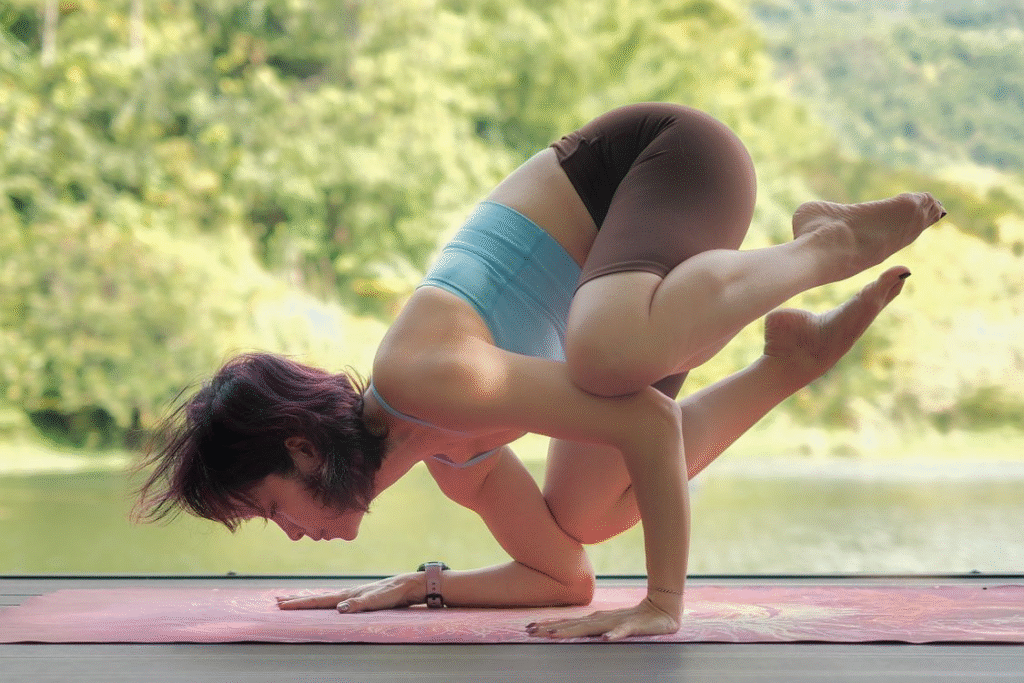
Rather than focusing on advanced postures, Yoga Chikitsa establishes the essential foundations of Ashtanga Yoga. Through a carefully structured sequence of standing poses, seated postures, forward folds, twists, hip openers, backbends, inversions, and relaxation, practitioners gradually develop strength, flexibility, mobility, balance, endurance, breath awareness, and mental focus.
Every posture in the Primary Series prepares the body for the next, allowing students to progress safely while building confidence and refining their understanding of movement, alignment, and mindful breathing.
Primary Goals of the Primary Series (Yoga Chikitsa)
| Goal | How the Primary Series Helps |
| Improves Spinal Alignment | Develops healthy posture, spinal mobility, and balanced movement patterns. |
| Builds Functional Strength | Strengthens the core, legs, shoulders, back, and supporting muscles. |
| Increases Flexibility | Gradually improves mobility in the hips, hamstrings, shoulders, and spine. |
| Develops Breath Awareness | Synchronises every movement with Ujjayi Pranayama for greater control and mindfulness. |
| Enhances Balance & Coordination | Standing and balancing postures improve stability and body awareness. |
| Cultivates Mental Discipline | Repetition develops patience, focus, and consistency. |
| Establishes a Sustainable Practice | Creates the physical and mental foundation for long-term yoga practice and future progression. |
One of the defining features of Yoga Chikitsa is its emphasis on quality over speed. Students are encouraged to practise consistently, refine each posture, and develop confidence before attempting more advanced sequences. This gradual progression supports long-term improvement while helping practitioners build a safe and sustainable yoga practice.
Although the Primary Series is often described as the beginner series, it should not be mistaken for an easy practice. Many of its postures require significant strength, flexibility, endurance, concentration, and breath control. Even highly experienced practitioners continue returning to the Primary Series throughout their lives to deepen alignment, improve technique, and strengthen the fundamental principles of Ashtanga Yoga.
What Students Learn in the Primary Series
| Skill Developed | Why It Is Important |
| Ujjayi Pranayama | Creates steady breathing and supports mindful movement. |
| Proper Alignment | Encourages safe, efficient, and sustainable practice. |
| Bandhas | Improves core stability, posture, and movement control. |
| Drishti (Focused Gaze) | Develops concentration and enhances balance. |
| Smooth Transitions (Vinyasa) | Builds coordination and links breath with movement. |
| Patience & Consistency | Encourages gradual, lifelong progress rather than rushing towards advanced poses. |
At Diksha Yoga School, the Primary Series (Yoga Chikitsa) forms an essential part of our Ashtanga Vinyasa Flow Yoga Lessons Teacher Training and regular practice classes. Our experienced teachers guide students with careful attention to alignment, anatomy, breathing techniques, Bandhas, Drishti, and safe modifications, ensuring that every practitioner develops a strong technical foundation before progressing further.
Rather than encouraging students to move quickly through the sequence, we emphasise mindful repetition, intelligent progression, and personalised guidance. This traditional teaching approach helps practitioners build confidence while reducing unnecessary strain and supporting long-term physical and mental well-being.
Primary Series at a Glance
| Feature | Primary Series (Yoga Chikitsa) |
| Traditional Name | Yoga Chikitsa |
| Meaning | Yoga Therapy |
| Level | Foundational (Suitable for beginners with appropriate guidance) |
| Primary Focus | Strength, flexibility, alignment, breath awareness, and discipline |
| Key Practices | Ujjayi Pranayama, Bandhas, Drishti, and Vinyasa |
| Main Objective | Build a strong foundation for lifelong Ashtanga Yoga practice |
Key Takeaway
The Primary Series (Yoga Chikitsa) is much more than an introduction to Ashtanga Yoga—it is the foundation upon which the entire practice is built. Through consistent practice, mindful breathing, proper alignment, and disciplined repetition, students cultivate the strength, flexibility, focus, and self-awareness needed to progress safely while embracing the deeper philosophy of Traditional Ashtanga Vinyasa Flow Yoga Lessons.
Intermediate Series (Nadi Shodhana)
Intermediate Series (Nadi Shodhana): Deepening the Practice of Ashtanga Vinyasa Flow Yoga Lessons
The Intermediate Series, traditionally known as Nadi Shodhana (नाडी शोधन), is the second sequence in Traditional Ashtanga Vinyasa Flow Yoga Lessons. The Sanskrit term Nadi Shodhana translates as “Purification of the Energy Channels,” reflecting the traditional yogic understanding that this series refines the flow of prana (vital energy) while developing greater physical strength, flexibility, stability, and mental focus.
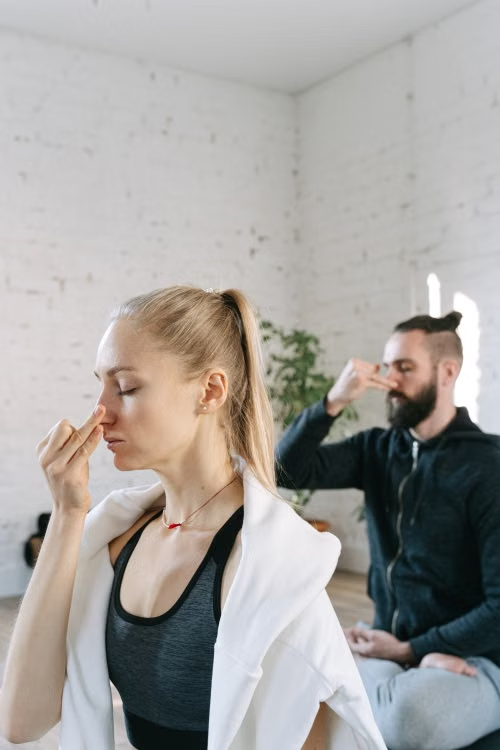
After establishing a strong foundation in the Primary Series (Yoga Chikitsa), practitioners gradually progress to the Intermediate Series under the guidance of an experienced teacher. This sequence builds upon the principles learned in the Primary Series, introducing more technically demanding postures that require greater control, body awareness, breath coordination, and consistent practice.
Rather than simply increasing physical difficulty, Nadi Shodhana encourages practitioners to refine their movement, deepen their concentration, and cultivate a more integrated connection between breath, body, and mind.
Primary Goals of the Intermediate Series
| Goal | How the Intermediate Series Helps |
| Enhances Spinal Mobility | Introduces deeper backbends and controlled spinal extension. |
| Develops Greater Strength | Builds upper-body, core, shoulder, and leg strength. |
| Improves Hip Mobility | Expands flexibility through more advanced hip-opening postures. |
| Refines Balance & Coordination | Challenges stability with arm balances and complex transitions. |
| Deepens Breath Awareness | Requires consistent Ujjayi Pranayama throughout demanding sequences. |
| Strengthens Mental Focus | Encourages patience, concentration, and mindful movement. |
| Supports Progressive Development | Builds the skills needed before attempting the Advanced Series. |
The Intermediate Series introduces a broader range of physically demanding postures while continuing to emphasise the core principles of Ujjayi Pranayama, Bandhas, Drishti, proper alignment, and smooth Vinyasa transitions. Practitioners gradually learn to move with greater efficiency, precision, and confidence while maintaining calm, steady breathing throughout the practice.
What Students Develop in the Intermediate Series
| Skill Developed | Why It Matters |
| Deeper Backbends | Improve spinal mobility, chest opening, and posture. |
| Advanced Hip Openers | Increase mobility and stability in the hips and pelvis. |
| Arm Balances | Build strength, coordination, and body awareness. |
| Advanced Twists | Enhance spinal mobility and balanced movement. |
| Core Stability | Supports safe transitions and advanced postures. |
| Breath Control | Maintains calmness and efficiency during physically demanding sequences. |
| Mental Resilience | Develops patience, discipline, and confidence through consistent practice. |
Although the Intermediate Series is more physically demanding than the Primary Series, progression should never be rushed. Every posture requires a solid foundation, healthy movement patterns, and a thorough understanding of alignment. Advancing before the body is ready may increase the likelihood of unnecessary strain or injury, which is why experienced guidance is essential.
At Diksha Yoga School, students progress to the Intermediate Series (Nadi Shodhana) only after demonstrating confidence in the foundational principles of the Primary Series. Our experienced teachers provide personalised instruction, posture modifications where appropriate, alignment guidance, anatomy-based teaching, and careful observation to ensure that every student progresses safely and sustainably.
We believe that advancement in Ashtanga Yoga is not measured by how quickly a practitioner reaches more advanced postures but by the quality of movement, consistency of breath, and depth of awareness developed throughout the journey.
Primary Series vs Intermediate Series
| Feature | Primary Series (Yoga Chikitsa) | Intermediate Series (Nadi Shodhana) |
| Purpose | Build a strong physical and technical foundation | Deepen strength, mobility, and energetic awareness |
| Difficulty Level | Foundational | Intermediate to Advanced |
| Primary Focus | Alignment, flexibility, strength, and breath awareness | Backbends, arm balances, advanced mobility, and refined control |
| Breath & Bandhas | Develops the fundamentals | Requires consistent mastery and integration |
| Who It Is For | Beginners and developing practitioners | Experienced practitioners under qualified guidance |
Key Takeaway
The Intermediate Series (Nadi Shodhana) represents the next stage in the journey of Traditional Ashtanga Vinyasa Flow Yoga Lessons. By building upon the foundations established in the Primary Series, practitioners gradually develop greater strength, spinal mobility, coordination, breath control, and mental discipline. With patient practice, proper guidance, and consistent dedication, this series offers a rewarding opportunity to deepen both the physical and meditative dimensions of Ashtanga Yoga.
Advanced Series (Sthira Bhaga): Mastery Through Strength, Stability & Awareness
The Advanced Series, traditionally known as Sthira Bhaga (स्थिर भाग), represents the highest level of Traditional Ashtanga Vinyasa Flow Yoga Lessons. These advanced sequences are designed for experienced practitioners who have developed a strong foundation through years of dedicated practice in the Primary Series (Yoga Chikitsa) and Intermediate Series (Nadi Shodhana).
In the traditional Ashtanga system, the Advanced Series consists of four progressive sequences (Advanced A, B, C, and D). Each sequence builds upon the previous one, demanding exceptional levels of strength, flexibility, balance, endurance, breath awareness, concentration, and mental discipline.
Although these postures are often visually impressive, the true purpose of the Advanced Series is not to demonstrate physical ability or achieve complex poses. Instead, it is to cultivate unwavering steadiness, mindful awareness, humility, and complete integration of breath, movement, and concentration under increasingly challenging conditions.
Primary Goals of the Advanced Series
| Goal | How the Advanced Series Develops It |
| Exceptional Strength | Builds full-body power, stability, and muscular endurance. |
| Advanced Flexibility | Develops safe mobility through years of progressive practice. |
| Superior Balance | Challenges coordination and refined body control. |
| Breath Mastery | Maintains calm, steady Ujjayi Pranayama during demanding postures. |
| Mental Discipline | Strengthens concentration, patience, resilience, and presence. |
| Mind–Body Integration | Refines the connection between breath, movement, and awareness. |
The Advanced Series introduces highly demanding postures that require complete control rather than force. These may include:
- Advanced arm balances
- Deep backbends
- Complex inversions
- Challenging Vinyasa transitions
- Advanced hip-opening and flexibility postures
- Sophisticated balancing sequences
Every posture builds upon the skills developed in the earlier series. Success is not determined by flexibility alone but by the practitioner’s ability to maintain steady breathing, precise alignment, balanced effort, and a calm, focused mind throughout the practice.
What Makes the Advanced Series Different?
| Skill | Why It Is Important |
| Advanced Arm Balances | Develop full-body coordination, strength, and confidence. |
| Deep Backbends | Require spinal mobility, shoulder stability, and controlled breathing. |
| Complex Inversions | Improve balance, concentration, and body awareness. |
| Advanced Transitions | Demand seamless integration of breath, Bandhas, and movement. |
| Refined Bandha Control | Supports stability, efficiency, and safe movement. |
| Mental Presence | Helps practitioners remain calm and focused throughout challenging sequences. |
Progressing into the Advanced Series (Sthira Bhaga) requires years of consistent practice, excellent technical foundations, and experienced guidance. Advancing too quickly can compromise alignment and increase the risk of injury. For this reason, traditional Ashtanga teachers emphasise patience, gradual progression, and respect for each individual’s unique journey.
At Diksha Yoga School, we believe that advanced yoga is not defined by the complexity of a posture but by the quality of awareness with which it is practised. Our experienced teachers encourage students to develop strong foundations, intelligent alignment, mindful breathing, and disciplined consistency before exploring advanced techniques. This traditional yet supportive approach helps practitioners progress safely while preserving the authentic principles of Ashtanga Yoga.
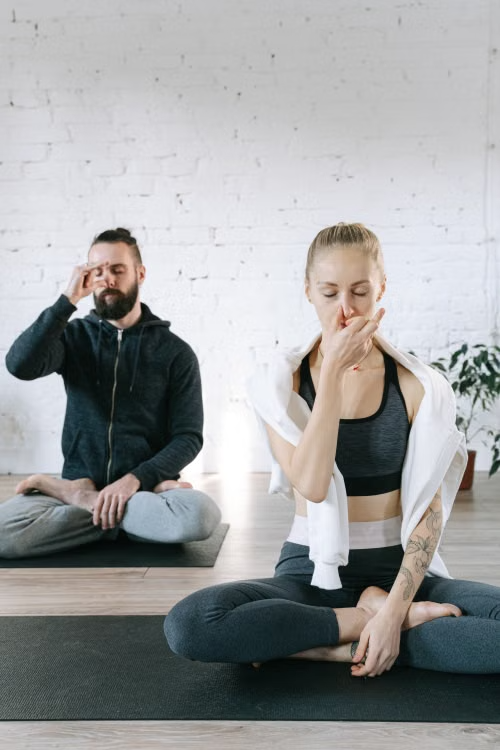
Intermediate Series vs Advanced Series
| Feature | Intermediate Series (Nadi Shodhana) | Advanced Series (Sthira Bhaga) |
| Primary Focus | Deepen mobility, strength, and energetic awareness | Refine mastery, stability, and advanced integration |
| Difficulty Level | Intermediate to Advanced | Highly Advanced |
| Physical Demands | Backbends, arm balances, advanced mobility | Complex inversions, advanced transitions, and sophisticated balancing postures |
| Breath & Bandhas | Strong and consistent application | Complete integration throughout every movement |
| Who It Is For | Experienced practitioners | Dedicated practitioners with years of consistent training under qualified guidance |
Key Takeaway
The Advanced Series (Sthira Bhaga) represents the culmination of Traditional Ashtanga Vinyasa Flow Yoga Lessons, where physical skill becomes inseparable from mental clarity and mindful awareness. While the postures become increasingly challenging, the ultimate goal never changes—to practise with steady breath, balanced effort, unwavering concentration, humility, and inner calm. In Ashtanga Yoga, true mastery is measured not by the difficulty of the posture but by the depth of awareness cultivated in every breath and every movement.
Understanding Surya Namaskar A (Sun Salutation A)
Surya Namaskar A (Sun Salutation A) is one of the most important foundations of Traditional Ashtanga Vinyasa Flow Yoga Lessons. Every practice begins with this dynamic sequence, which gently prepares the body, breath, and mind for the postures that follow. More than a simple warm-up, Surya Namaskar A establishes the rhythm of the entire practice by synchronising Ujjayi Pranayama (Victorious Breath) with every movement.
In Sanskrit, Surya means “Sun,” while Namaskar means “salutation” or “reverential greeting.” Traditionally, the sequence symbolises gratitude for the life-giving energy of the sun while cultivating vitality, mindfulness, and inner awareness. Within the Ashtanga Yoga system, it serves as the gateway to a focused and disciplined practice.
Every inhalation encourages expansion, while every exhalation promotes grounding and stability. This continuous connection between breath and movement helps practitioners develop concentration, improve coordination, and transition smoothly into the standing sequence that follows.
Benefits of Surya Namaskar A
| Benefit | How It Supports Your Practice |
| Gradually Warms the Body | Increases body temperature and prepares muscles for deeper postures. |
| Improves Blood Circulation | Supports healthy circulation throughout the body. |
| Enhances Flexibility | Gently mobilises the spine, shoulders, hips, hamstrings, and ankles. |
| Activates the Core | Engages the abdominal muscles to improve stability and posture. |
| Builds Functional Strength | Strengthens the legs, shoulders, arms, and core through repeated movement. |
| Develops Breath Awareness | Establishes the rhythm of Ujjayi Pranayama from the beginning of practice. |
| Improves Coordination | Synchronises movement with breath for smoother transitions. |
| Increases Body Awareness | Encourages mindful movement and proper alignment. |
| Prepares the Nervous System | Helps cultivate focus, calmness, and mental clarity before the main sequence. |
One of the reasons Surya Namaskar A is repeated several times at the beginning of an Ashtanga practice is to create consistency. Each repetition allows practitioners to refine their alignment, deepen their breathing, and become more present before progressing into standing postures. Rather than rushing through the sequence, the emphasis is on maintaining smooth, controlled movement with steady breath and mindful awareness.
At Diksha Yoga School, students learn Surya Namaskar A with careful attention to alignment, breathing technique, Bandhas, Drishti, and safe movement patterns. Our experienced teachers guide practitioners step by step, helping them develop efficient movement habits that support both beginners and experienced yogis throughout their Ashtanga journey.
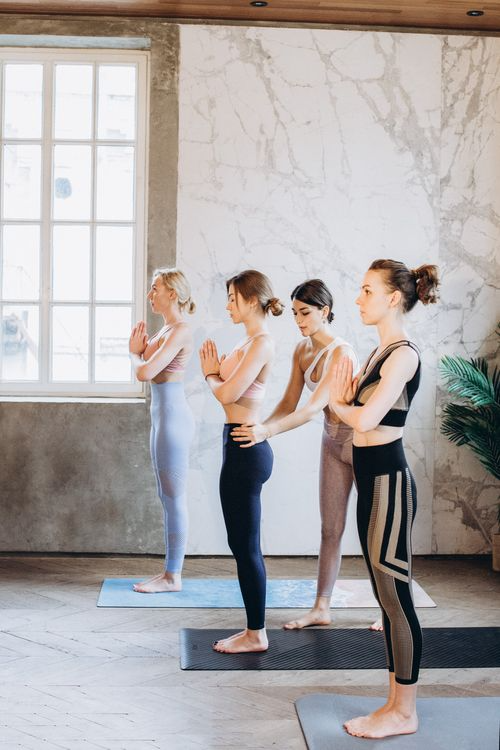
Surya Namaskar A at a Glance
| Feature | Details |
| Sanskrit Name | Surya Namaskar A |
| English Name | Sun Salutation A |
| Practice Stage | Opening warm-up sequence |
| Primary Focus | Breath synchronisation, mobility, strength, and preparation |
| Main Muscles Engaged | Legs, core, shoulders, arms, hips, and spine |
| Key Techniques | Ujjayi Pranayama, Bandhas, Drishti, and Vinyasa |
| Suitable For | Beginners to advanced practitioners with appropriate guidance |
Common Beginner Tips
- Move with your breath rather than rushing through the sequence.
- Focus on proper alignment before trying to move faster.
- Keep your Ujjayi breathing smooth and steady throughout each posture.
- Engage the core gently to support the spine during transitions.
- Practise consistently to build strength, mobility, and confidence.
Want to learn every posture in detail? Explore our complete guide to Surya Namaskar A, where we explain each step, breathing pattern, alignment cues, common mistakes, modifications, benefits, and beginner-friendly practice tips.
Key Takeaway
Surya Namaskar A is far more than a warm-up—it is the foundation of Traditional Ashtanga Vinyasa Flow Yoga Lessons. By combining breath, movement, mindful awareness, and proper alignment, this sequence prepares the body for deeper practice while cultivating strength, flexibility, concentration, and inner balance. With regular practice, it becomes a powerful daily ritual that supports both physical vitality and mental well-being.
Understanding Surya Namaskar B (Sun Salutation B)
Following several rounds of Surya Namaskar A, practitioners continue with Surya Namaskar B (Sun Salutation B), an essential part of Traditional Ashtanga Vinyasa Flow Yoga Lessons. While Surya Namaskar A establishes the rhythm of the practice, Surya Namaskar B builds upon that foundation by introducing more dynamic standing postures that further develop strength, stability, endurance, and breath awareness.
This sequence includes Utkatasana (Chair Pose) and Virabhadrasana I (Warrior I), which challenge the legs, hips, shoulders, and core while maintaining the continuous flow of Ujjayi Pranayama. Every movement remains synchronised with the breath, reinforcing the connection between body, breath, and mind that defines the Ashtanga Yoga tradition.
As practitioners repeat Surya Namaskar B, the body becomes warmer, the breath becomes steadier, and the mind becomes more focused, creating the ideal preparation for the standing sequence that follows.
Benefits of Surya Namaskar B
| Benefit | How It Supports Your Practice |
| Builds Leg Strength | Strengthens the thighs, glutes, calves, and supporting muscles. |
| Improves Hip Mobility | Increases flexibility and stability in the hips and pelvis. |
| Enhances Shoulder Stability | Develops strength and control through weight-bearing transitions. |
| Strengthens the Core | Supports balance, posture, and safe movement. |
| Improves Balance & Coordination | Standing postures refine body awareness and stability. |
| Develops Cardiovascular Endurance | Continuous movement increases stamina and overall fitness. |
| Deepens Breath Awareness | Reinforces smooth Ujjayi Pranayama throughout the sequence. |
| Prepares the Body for Standing Poses | Creates heat, mobility, and readiness for the Primary Series. |
Unlike Surya Namaskar A, which primarily focuses on warming the body and establishing breathing rhythm, Surya Namaskar B introduces greater muscular engagement and physical intensity. The additional standing postures encourage practitioners to develop strength and endurance while maintaining calm, steady breathing and mindful movement.
At Diksha Yoga School, students learn Surya Namaskar B with detailed guidance on alignment, breathing, Bandhas, Drishti, and safe transitions. Our experienced teachers help practitioners understand not only how to perform each posture correctly but also why every movement appears in a specific place within the sequence. This traditional approach creates a strong technical foundation while reducing unnecessary strain and supporting long-term progress.
Surya Namaskar A vs Surya Namaskar B
| Feature | Surya Namaskar A | Surya Namaskar B |
| Primary Purpose | Warm the body and establish breathing rhythm | Build strength, endurance, and prepare for standing postures |
| Difficulty Level | Foundational | Slightly more physically demanding |
| Key Additional Postures | Basic Sun Salutation sequence | Includes Utkatasana (Chair Pose) and Virabhadrasana I (Warrior I) |
| Primary Focus | Mobility, coordination, and breath synchronisation | Strength, stability, endurance, and balance |
| Suitable For | Beginners to advanced practitioners | Beginners to advanced practitioners with appropriate guidance |
Why Both Sun Salutations Matter
Together, Surya Namaskar A and Surya Namaskar B create a complete warm-up for the body and mind. They gradually increase circulation, improve mobility, activate the major muscle groups, strengthen the core, establish the rhythm of Ujjayi Pranayama, and prepare practitioners for the standing, seated, and more demanding postures that follow.
Rather than rushing through these opening sequences, Ashtanga Yoga encourages practitioners to move with steady breath, mindful awareness, and precise alignment. This consistent approach develops strength, flexibility, concentration, and discipline while creating the balanced foundation needed for a safe and rewarding practice.
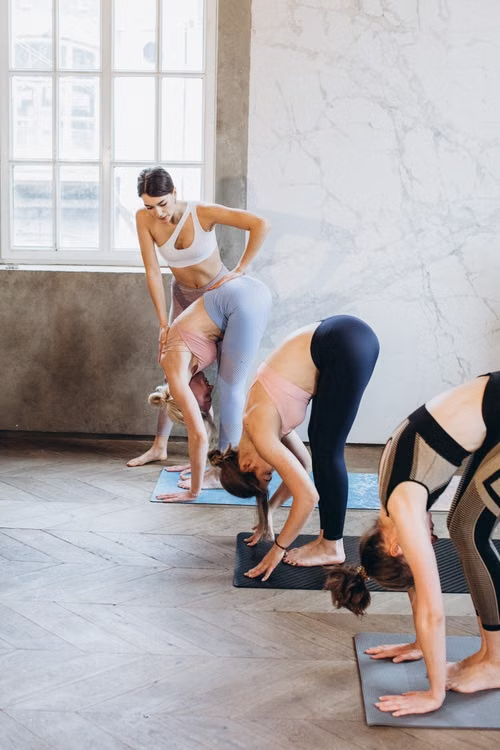
Key Takeaway
Surya Namaskar B is much more than a warm-up sequence—it is an essential bridge between preparation and practice. By combining strength-building postures, breath synchronisation, mindful movement, and proper alignment, it prepares practitioners for the deeper physical and mental challenges of Traditional Ashtanga Vinyasa Flow Yoga Lessons, while reinforcing the discipline and awareness that lie at the heart of this timeless yoga tradition.
Standing Sequence
Following the Sun Salutations comes the standing sequence.
Standing poses establish stability while strengthening the lower body and improving posture.
Common standing postures include:
- Padangusthasana
- Padahastasana
- Trikonasana
- Parivrtta Trikonasana
- Parsvakonasana
- Virabhadrasana I
- Prasarita Padottanasana
- Parsvottanasana
These poses improve:
- Balance
- Hip flexibility
- Hamstring mobility
- Leg strength
- Core stability
- Shoulder mobility
Standing postures also prepare practitioners for the seated portion of the practice.
Seated Sequence
The seated sequence forms the heart of the Primary Series.
This section emphasizes:
- Forward folds
- Hip opening
- Twisting
- Core strength
- Spinal flexibility
Some well-known seated poses include:
- Dandasana
- Paschimottanasana
- Janu Sirsasana
- Marichyasana
- Navasana
- Bhujapidasana
- Kurmasana
- Upavistha Konasana
Each posture builds flexibility while encouraging mindful breathing and concentration.
Backbends
Backbending postures strengthen the posterior chain while improving spinal mobility.
They also help counteract poor posture caused by prolonged sitting.
Common benefits include:
- Opens the chest
- Strengthens the back muscles
- Improves breathing capacity
- Increases spinal flexibility
- Boosts confidence
- Enhances energy levels
Backbends should always be approached gradually and with proper technique.
Finishing Sequence
Every traditional Ashtanga practice concludes with a calming finishing sequence.
These poses help:
- Slow the heart rate
- Relax the nervous system
- Improve circulation
- Encourage recovery
- Prepare for meditation
The finishing sequence often includes:
- Shoulder Stand
- Headstand (for experienced practitioners)
- Lotus variations
- Gentle seated postures
- Savasana
Savasana is considered one of the most important poses because it allows the body and mind to fully absorb the benefits of the practice.
Why Repeating the Same Sequence Works
Many beginners wonder why Ashtanga Yoga follows the same sequence every day.
The answer lies in progressive learning.
Repeating familiar movements allows practitioners to:
- Improve technique.
- Refine alignment.
- Build muscle memory.
- Deepen flexibility safely.
- Strengthen concentration.
- Notice subtle improvements.
- Reduce mental distractions.
- Develop discipline.
Instead of constantly focusing on remembering new poses, attention shifts toward breathing, awareness, and inner experience.
This consistency is one of the reasons practitioners often experience profound physical and mental transformation over time.
How Long Does It Take to Progress in Ashtanga Vinyasa Flow Yoga Lessons?
One of the most common questions beginners ask is, “How long does it take to progress in Ashtanga Vinyasa Flow Yoga Lessons?” The honest answer is that every yoga journey is unique. There is no fixed timeline for mastering the Primary Series, progressing to the Intermediate Series, or exploring advanced postures. Traditional Ashtanga Yoga values steady, mindful progress rather than rapid achievement.
Progress is not measured by how quickly you perform advanced poses. Instead, it is reflected in the quality of your breath, alignment, concentration, consistency, and self-awareness. For some practitioners, noticeable improvements in flexibility and strength may develop within a few months of regular practice, while progressing through an entire series often takes much longer. The emphasis is always on building a safe and sustainable foundation before moving forward.
Factors That Influence Progress
| Factor | Why It Matters |
| Practice Consistency | Regular practice develops strength, flexibility, and confidence more effectively than occasional sessions. |
| Physical Condition | Your current mobility, strength, posture, and overall fitness influence how your body adapts. |
| Previous Yoga Experience | Earlier experience may make some movements more familiar, but everyone progresses at their own pace. |
| Age | Practitioners of every age can make meaningful progress with appropriate guidance and patience. |
| Lifestyle & Daily Habits | Sleep, nutrition, stress management, and recovery all support consistent practice. |
| Recovery | Rest allows the body to adapt, repair, and become stronger over time. |
| Breath Awareness | Developing steady Ujjayi Pranayama improves movement quality and concentration. |
| Qualified Guidance | Learning from experienced teachers helps refine alignment, technique, and safe progression. |
One of the greatest lessons of Traditional Ashtanga Vinyasa Flow Yoga Lessons is that progress is rarely linear. Some days the body feels light, strong, and energised, while on other days it may feel stiff or fatigued. Both experiences are valuable because they teach practitioners to observe with awareness rather than judge with frustration.
At Diksha Yoga School, we encourage students to respect their individual journey instead of comparing themselves with others. Our experienced teachers provide personalised guidance, alignment corrections, appropriate modifications, and gradual progression based on each student’s abilities and experience. We believe that sustainable improvement comes through consistent practice, mindful breathing, patience, and intelligent instruction, not through rushing towards advanced postures.
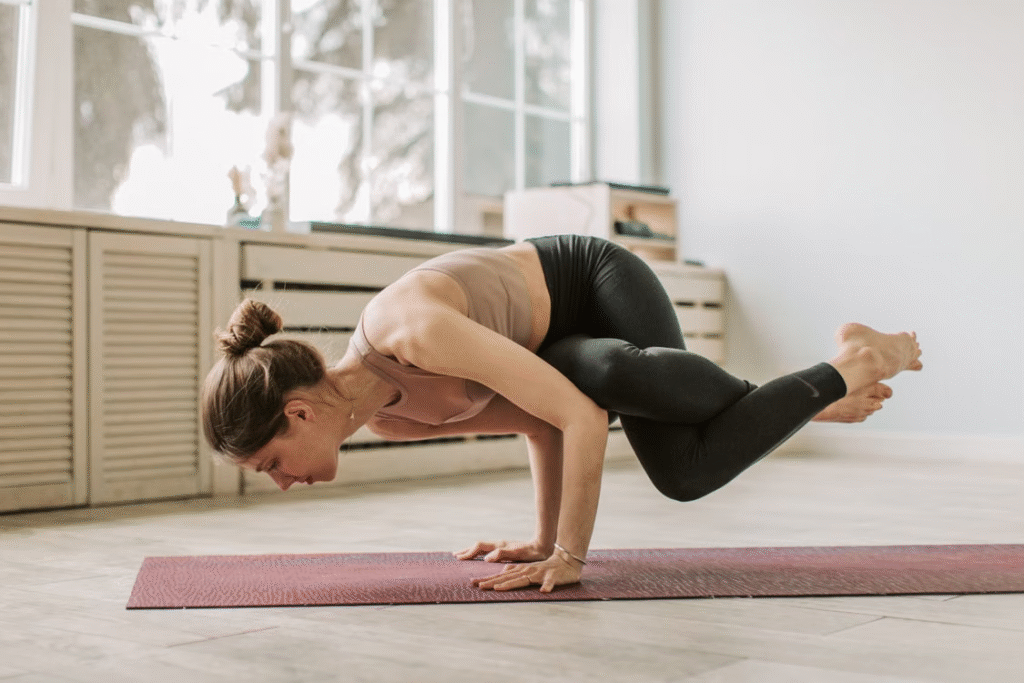
Healthy Progress vs Rushing the Practice
| Healthy Progress | Rushing Progress |
| Builds a strong technical foundation | May overlook proper alignment and technique |
| Prioritises steady breath and mindful movement | Often focuses only on achieving difficult postures |
| Develops strength and flexibility gradually | May increase unnecessary strain or injury risk |
| Encourages patience and consistency | Can lead to frustration and burnout |
| Supports lifelong practice | Often seeks short-term results |
One of the most inspiring teachings in the Ashtanga tradition reminds practitioners to trust the process:
“Practice, and all is coming.”
— Sri K. Pattabhi Jois
This quotation reflects the heart of Ashtanga Yoga. Rather than chasing perfection or comparing yourself with others, the practice invites you to return to the mat with patience, humility, and dedication. Over time, physical strength, flexibility, confidence, and inner awareness naturally develop through consistent effort.
Key Takeaway
There is no perfect timeline for progressing in Ashtanga Vinyasa Flow Yoga Lessons. Every practitioner grows at a different pace based on their body, experience, lifestyle, and consistency. By focusing on steady practice, proper alignment, breath awareness, and guidance from experienced teachers, you create a strong foundation for lifelong growth—both on and off the yoga mat.
Comparison Table: Primary vs Intermediate vs Advanced Series
| Feature | Primary Series | Intermediate Series | Advanced Series |
| Sanskrit Name | Yoga Chikitsa | Nadi Shodhana | Sthira Bhaga |
| Main Goal | Detoxification & Alignment | Nervous System Purification | Strength & Mastery |
| Difficulty Level | Beginner to Intermediate | Intermediate | Advanced |
| Flexibility Required | Moderate | High | Very High |
| Strength Required | Moderate | High | Very High |
| Focus | Foundation | Energy Flow | Complete Mastery |
| Typical Practice Time | 60–90 minutes | 90–120 minutes | 120+ minutes |
| Suitable For | New Practitioners | Experienced Yogis | Advanced Yogis |
Building a Sustainable Ashtanga Vinyasa Flow Yoga Lessons Practice
The true purpose of Traditional Ashtanga Vinyasa Flow Yoga Lessons is not to rush towards advanced postures but to build a safe, sustainable, and lifelong yoga practice that nurtures the body, calms the mind, and supports personal growth. While flexibility and strength naturally improve over time, the greatest transformation comes from developing consistency, patience, self-awareness, and a deeper connection with the breath.
Every practitioner progresses at a different pace, and every stage of the journey offers valuable lessons. Some days bring physical breakthroughs, while others teach patience, humility, and acceptance. In the Ashtanga tradition, success is not measured by how quickly you master difficult poses but by your ability to practise with steady breathing, mindful awareness, proper alignment, and disciplined consistency.
By respecting the traditional sequence, practising regularly, and focusing on quality rather than perfection, students gradually develop functional strength, flexibility, mobility, endurance, emotional resilience, and mental clarity. These benefits extend far beyond the yoga mat, positively influencing posture, daily movement, stress management, confidence, relationships, and overall well-being.
One of the most powerful aspects of Ashtanga Vinyasa Flow Yoga Lessons is that it evolves with you. As your body becomes stronger, your breathing becomes steadier, and your concentration deepens, the practice naturally shifts from being primarily physical to becoming a lifelong path of mindfulness, self-discovery, and inner balance.
At Diksha Yoga School, we encourage every student to embrace yoga as a lifelong journey rather than a destination. Through traditional teaching methods, personalised guidance, anatomy-informed instruction, breath awareness, yoga philosophy, and mindful progression, we help practitioners build a strong foundation that supports safe practice for years to come. Whether your goal is better health, stress relief, personal transformation, or becoming a certified yoga teacher, a sustainable practice begins with patience, consistency, and respect for the traditional teachings.
Sustainable Practice vs Chasing Advanced Poses
| Sustainable Ashtanga Practice | Chasing Advanced Poses |
| Prioritises proper alignment and safety | Often prioritises appearance or difficulty |
| Builds strength and flexibility gradually | May encourage rushing and overexertion |
| Develops consistent breath awareness | Breath is often neglected |
| Encourages patience and lifelong learning | Focuses on short-term achievements |
| Supports long-term physical and mental well-being | May increase the risk of unnecessary strain or injury |
| Values mindfulness, discipline, and self-awareness | Values external performance over internal growth |
Signs of a Healthy Ashtanga Yoga Practice
· You practise consistently rather than occasionally.
· Your breathing remains calm and controlled throughout the sequence.
· You notice gradual improvements in strength, mobility, and balance.
· You respect your body’s limits while continuing to grow.
· You focus on mindful movement instead of comparing yourself with others.
· Your practice supports greater calmness, resilience, and well-being in everyday life.
Key Takeaway
The real transformation of Traditional Ashtanga Vinyasa Flow Yoga Lessons does not come from performing the most challenging postures—it comes from returning to the mat with discipline, humility, mindful breathing, and consistent practice. When approached with patience and respect for the traditional sequence, Ashtanga Yoga becomes far more than a physical exercise. It becomes a lifelong practice that strengthens the body, steadies the breath, quiets the mind, and cultivates lasting health, balance, and inner awareness
Part 4A: Essential Foundation Poses in Ashtanga Vinyasa Flow Yoga Lessons
Mastering the foundation of Ashtanga Vinyasa Flow Yoga Lessons begins with understanding the purpose of each pose rather than simply memorizing the sequence. Every asana is carefully placed to prepare the body for the next movement while developing strength, flexibility, stability, and mindful awareness.
The early poses of the Primary Series establish the essential principles of breath synchronization, alignment, balance, and concentration. These foundational postures also help practitioners build confidence before progressing to more demanding sequences.
Whether you are new to yoga or refining your technique, practicing these poses with patience and proper alignment creates a strong base for long-term progress.
Why Foundation Poses Matter
Foundation poses may appear simple, but they play one of the most important roles in the practice of Ashtanga Vinyasa Flow Yoga Lessons.
These postures help practitioners:
- Build strength gradually
- Improve flexibility safely
- Increase body awareness
- Develop proper breathing patterns
- Strengthen the core
- Improve balance and coordination
- Prepare the joints for advanced movements
- Reduce the risk of injuries
- Establish consistency in daily practice
A strong foundation makes every future posture more stable, controlled, and comfortable.
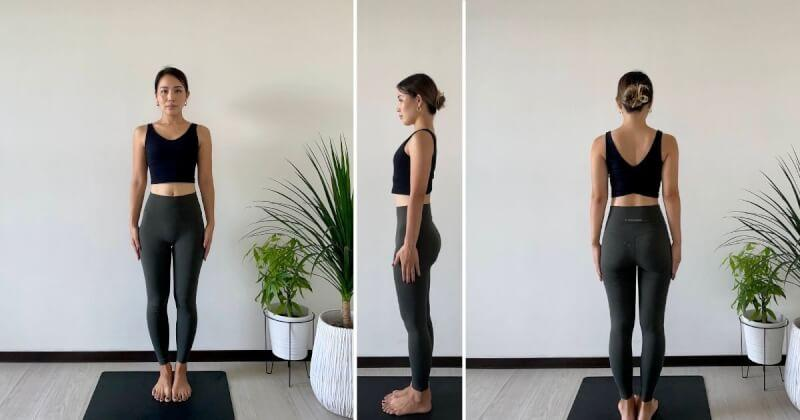
1. Samasthiti (Equal Standing Pose)
Purpose
Samasthiti is the starting point of every Ashtanga Vinyasa Flow Yoga Lessons practice. Although it appears to be a simple standing posture, it teaches practitioners how to stand with complete awareness, balance, and stability.
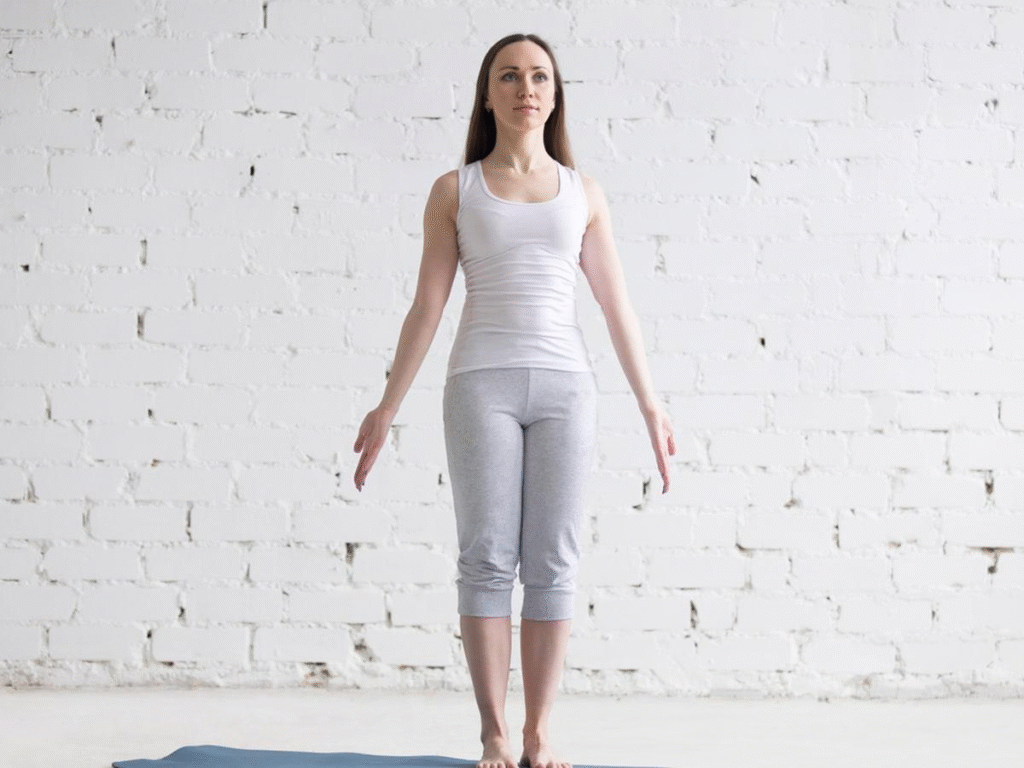
How to Practice
- Stand with your feet together.
- Distribute your body weight evenly across both feet.
- Engage your thighs gently.
- Lengthen your spine.
- Relax your shoulders.
- Keep your chin parallel to the floor.
- Breathe slowly through the nose.
Benefits
- Improves posture
- Develops body awareness
- Enhances balance
- Encourages mindful breathing
- Creates mental focus before practice
Common Mistakes
- Locking the knees
- Leaning forward or backward
- Holding unnecessary tension in the shoulders
- Forgetting to breathe naturally
2. Surya Namaskar A (Sun Salutation A)
Surya Namaskar A is one of the most recognizable sequences in Ashtanga Vinyasa Flow Yoga Lessons. It warms the body while coordinating movement with breath.
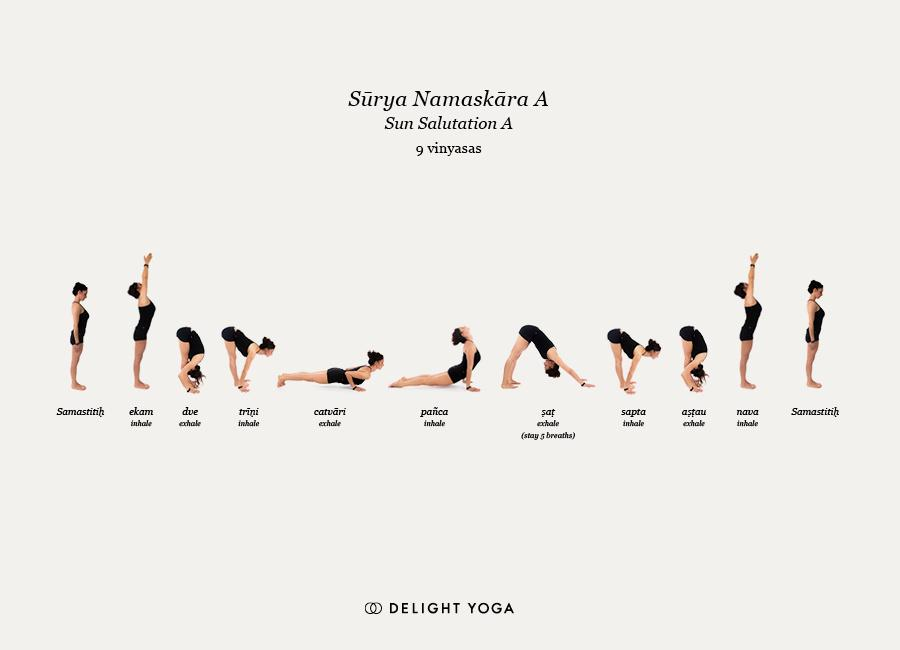
Sequence Includes
- Samasthiti
- Upward Salute
- Standing Forward Fold
- Half Lift
- Plank
- Chaturanga Dandasana
- Upward Facing Dog
- Downward Facing Dog
- Return to Standing
Benefits
- Warms up the entire body
- Improves circulation
- Builds upper-body strength
- Increases flexibility
- Activates the core
- Develops breath awareness
Beginner Tip
Move slowly and focus on smooth breathing rather than speed
3. Surya Namaskar B (Sun Salutation B)
This variation builds upon Sun Salutation A by introducing standing strength postures.
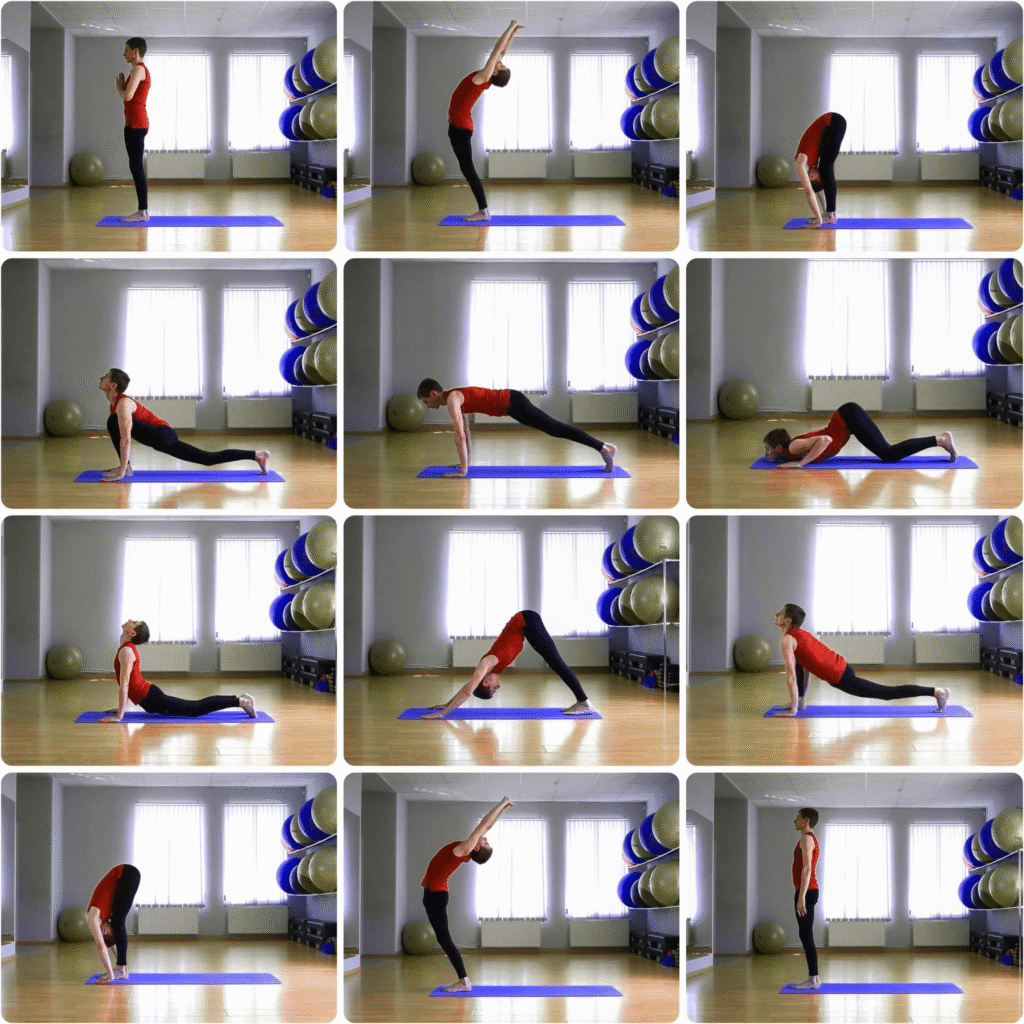
Benefits
- Strengthens the legs
- Improves cardiovascular endurance
- Opens the hips
- Increases shoulder mobility
- Develops stamina
- Builds coordination
Surya Namaskar B prepares practitioners for the standing sequence that follows
4. Tadasana (Mountain Pose)
Although not always emphasized separately in traditional Ashtanga sequencing, Tadasana teaches the alignment principles that influence every standing posture.
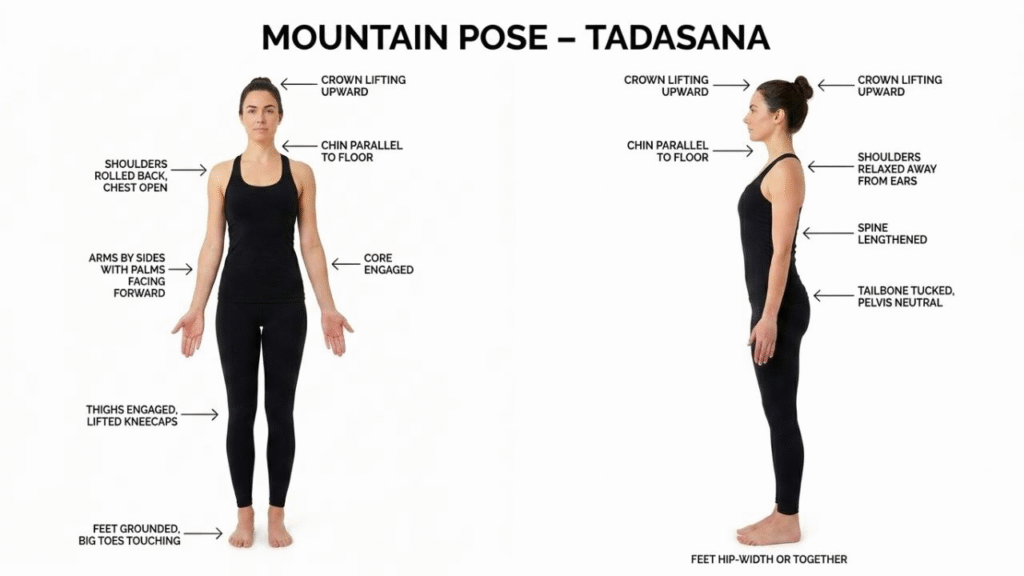
How to Practice
- Stand tall.
- Keep your feet hip-width apart or together.
- Lift through the crown of your head.
- Relax the shoulders.
- Engage the thighs gently.
- Maintain natural breathing.
Benefits
- Improves posture
- Strengthens the legs
- Creates body awareness
- Improves spinal alignment
- Encourages proper breathing
Common Mistakes
- Leaning into one leg
- Locking the knees
- Arching the lower back excessively
5. Uttanasana (Standing Forward Fold)
Uttanasana is one of the first forward folds practiced in Ashtanga Vinyasa Flow Yoga Lessons.
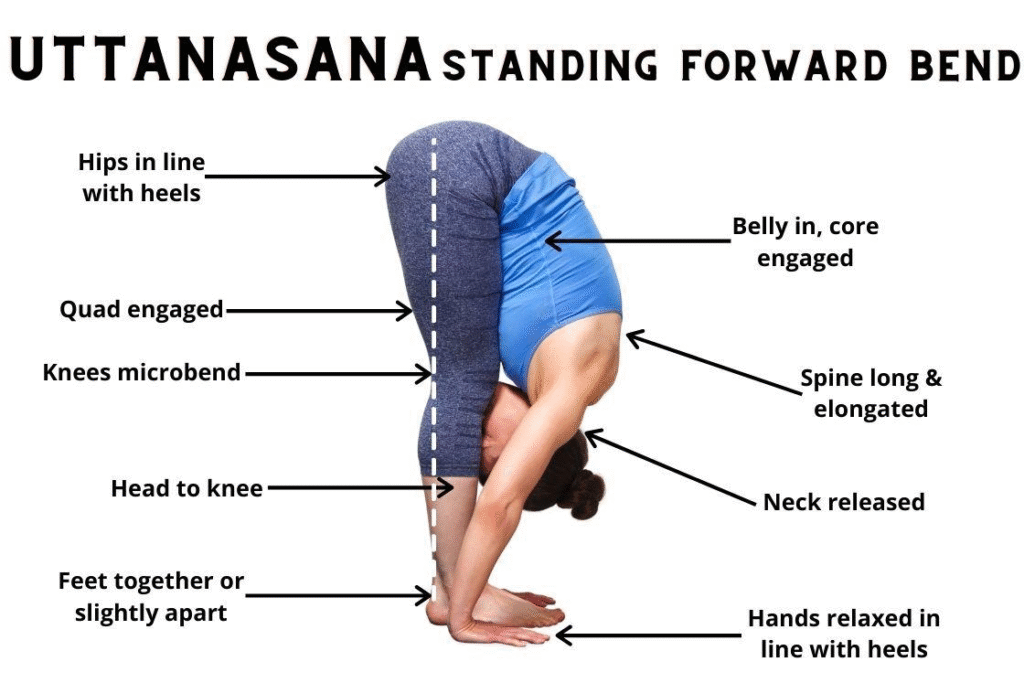
How to Practice
- Fold forward from the hips.
- Keep the spine long.
- Relax the neck.
- Bend the knees if necessary.
- Allow the body to soften naturally.
Benefits
- Stretches the hamstrings
- Releases spinal tension
- Improves flexibility
- Calms the nervous system
- Increases circulation to the brain
Common Mistakes
- Rounding the back
- Forcing flexibility
- Holding the breath
6. Ardha Uttanasana (Half Forward Fold)
This posture teaches spinal extension while preparing practitioners for safe transitions.
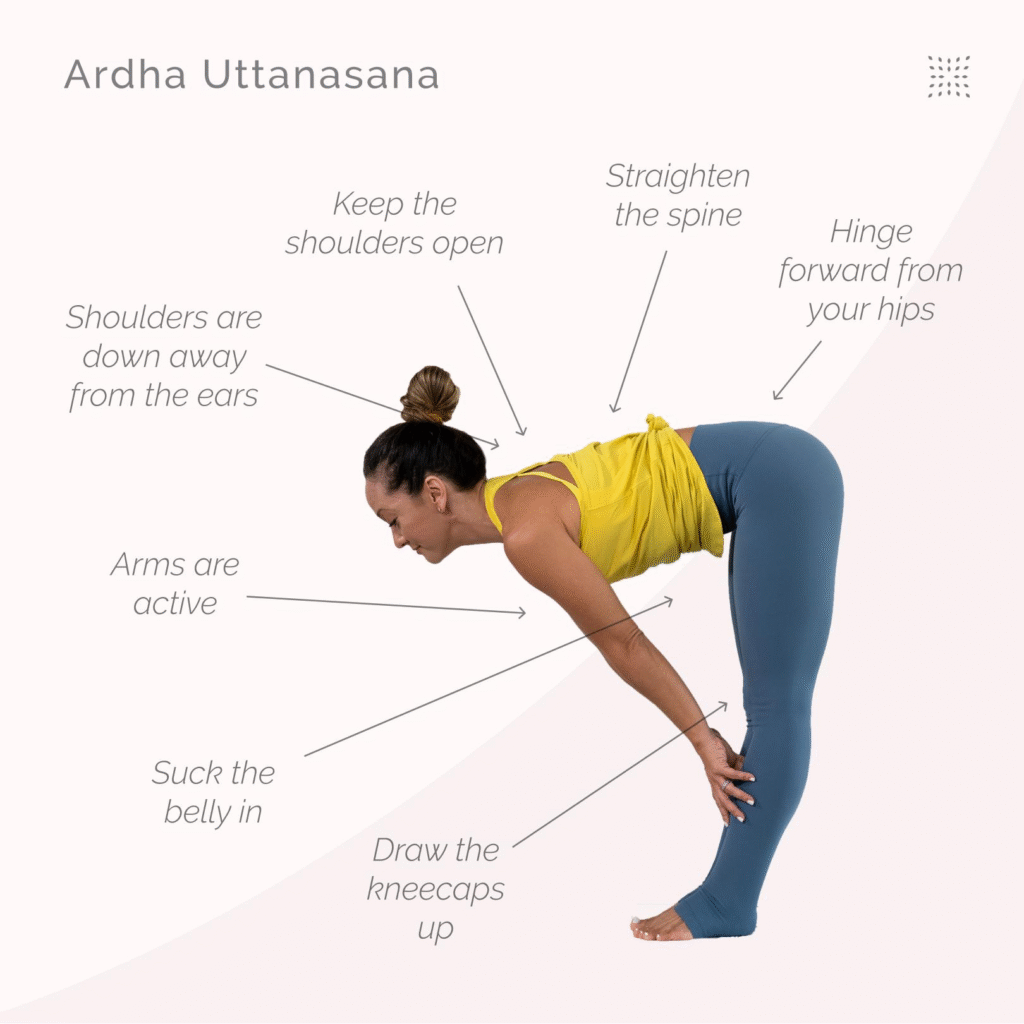
Benefits
- Strengthens the back
- Improves posture
- Lengthens the spine
- Activates the core
- Develops proper alignment
Alignment Tip
Keep your chest open while extending through the spine rather than rounding the back.
7. Chaturanga Dandasana (Four-Limbed Staff Pose)
One of the most challenging transitions in Ashtanga Vinyasa Flow Yoga Lessons is Chaturanga.
Although it resembles a push-up, proper alignment is essential.
How to Practice
- Begin in Plank.
- Shift your weight slightly forward.
- Bend your elbows close to the ribs.
- Lower until the shoulders are level with the elbows.
- Engage the core.
- Maintain a straight body.
Benefits
- Strengthens the arms
- Builds shoulder stability
- Develops core strength
- Improves endurance
- Enhances body control
Common Mistakes
- Dropping the hips
- Flaring the elbows
- Lowering too quickly
- Holding the breath
Beginner Modification
Lower your knees to the floor while maintaining proper alignment.
8. Urdhva Mukha Svanasana (Upward Facing Dog)
This energizing backbend follows Chaturanga.
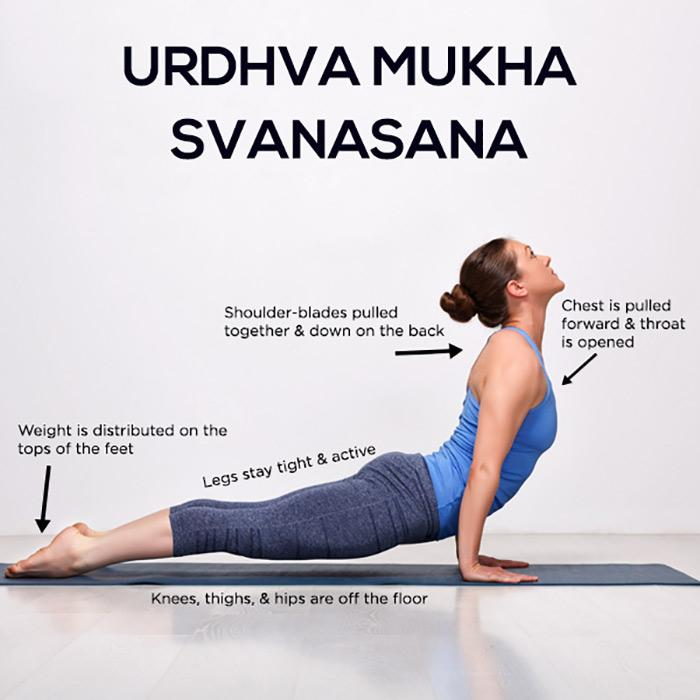
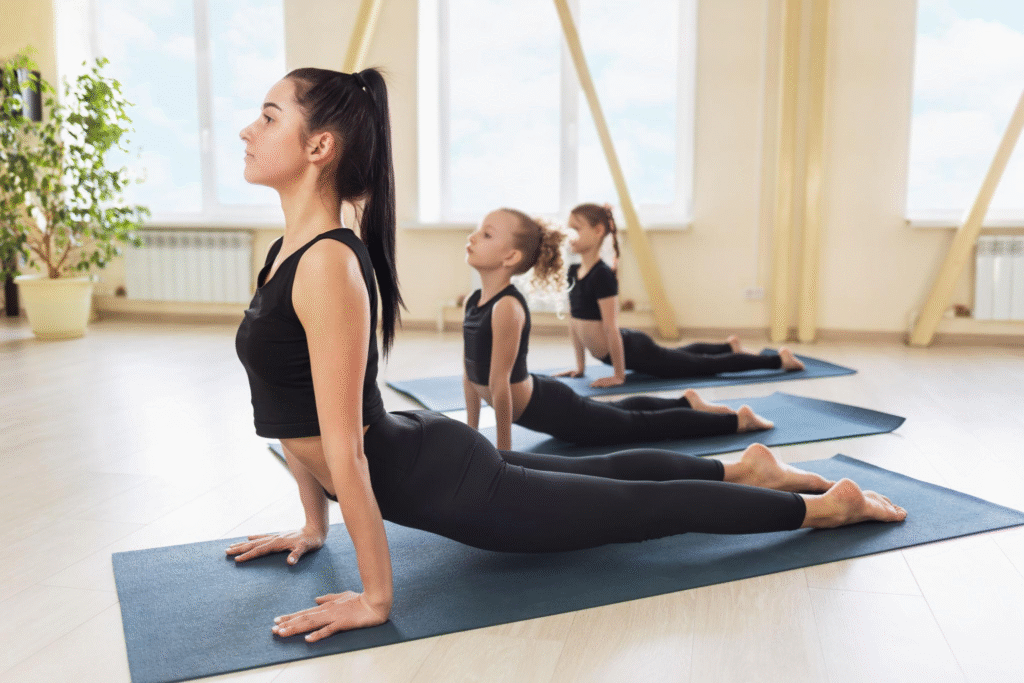
Benefits
- Opens the chest
- Improves spinal flexibility
- Strengthens the arms
- Expands the lungs
- Stimulates energy
Alignment Tips
- Press firmly into your palms.
- Lift through the chest.
- Keep the shoulders away from the ears.
- Engage the legs.
Common Mistakes
- Collapsing into the shoulders
- Overarching the lower back
- Locking the elbows
9. Adho Mukha Svanasana (Downward Facing Dog)
Downward Facing Dog is one of the most frequently practiced postures in Ashtanga Vinyasa Flow Yoga Lessons.
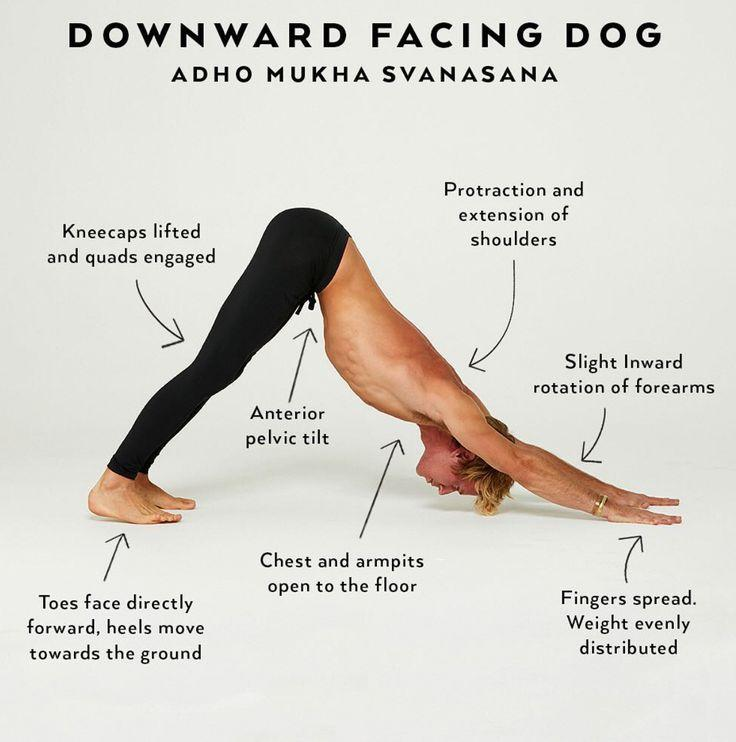
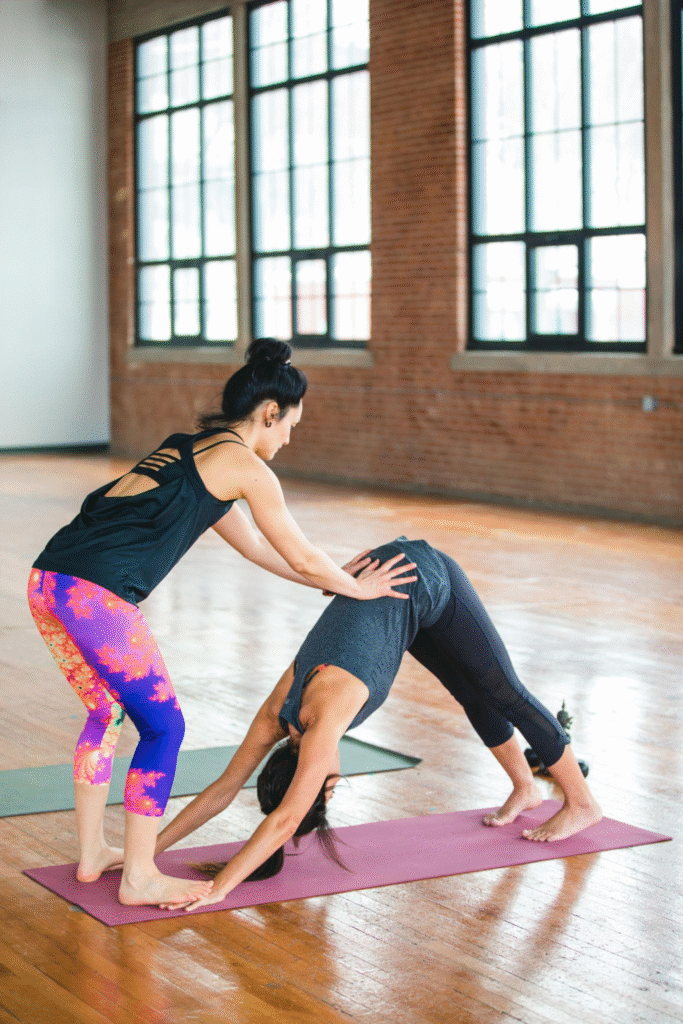
It serves as both a strengthening pose and a resting posture between sequences.
Benefits
- Strengthens the shoulders
- Lengthens the spine
- Improves hamstring flexibility
- Relieves back tension
- Builds endurance
- Improves circulation
Beginner Tip
Keep the knees slightly bent if your hamstrings feel tight.
Common Mistakes
- Rounded back
- Weight only in the wrists
- Locked knees
- Lifted shoulders
10. Padangusthasana (Big Toe Pose)
This standing forward bend develops flexibility while improving balance.
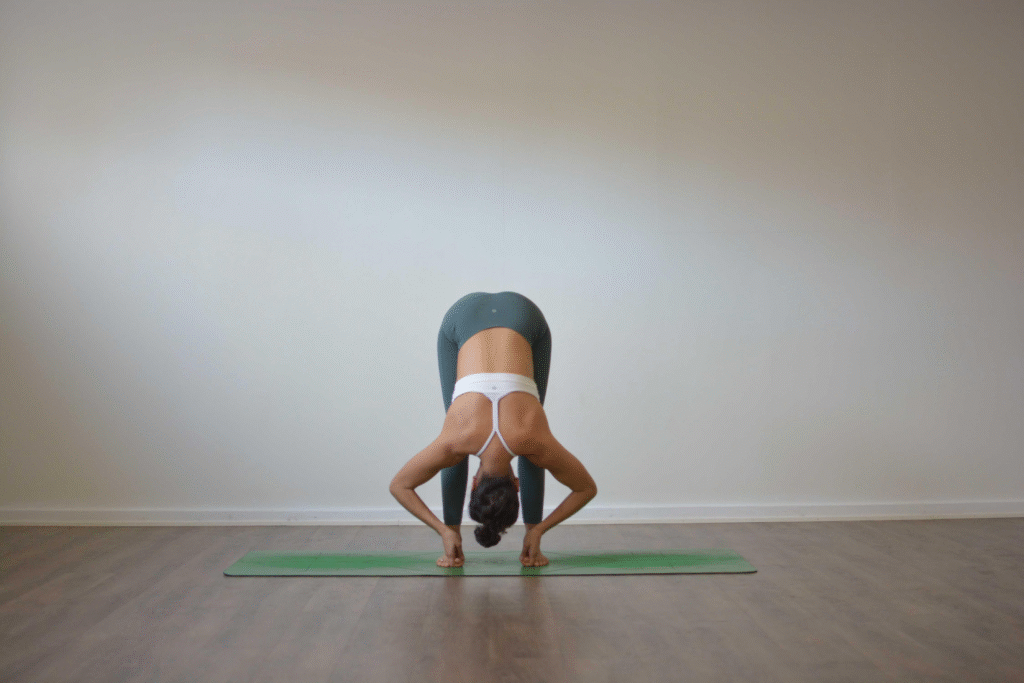
Benefits
- Stretches the hamstrings
- Improves digestion
- Releases lower-back tension
- Increases flexibility
- Calms the mind
Alignment Tips
Focus on lengthening the spine before deepening the fold.
11. Padahastasana (Hand Under Foot Pose)
Padahastasana follows Padangusthasana in the standing sequence.
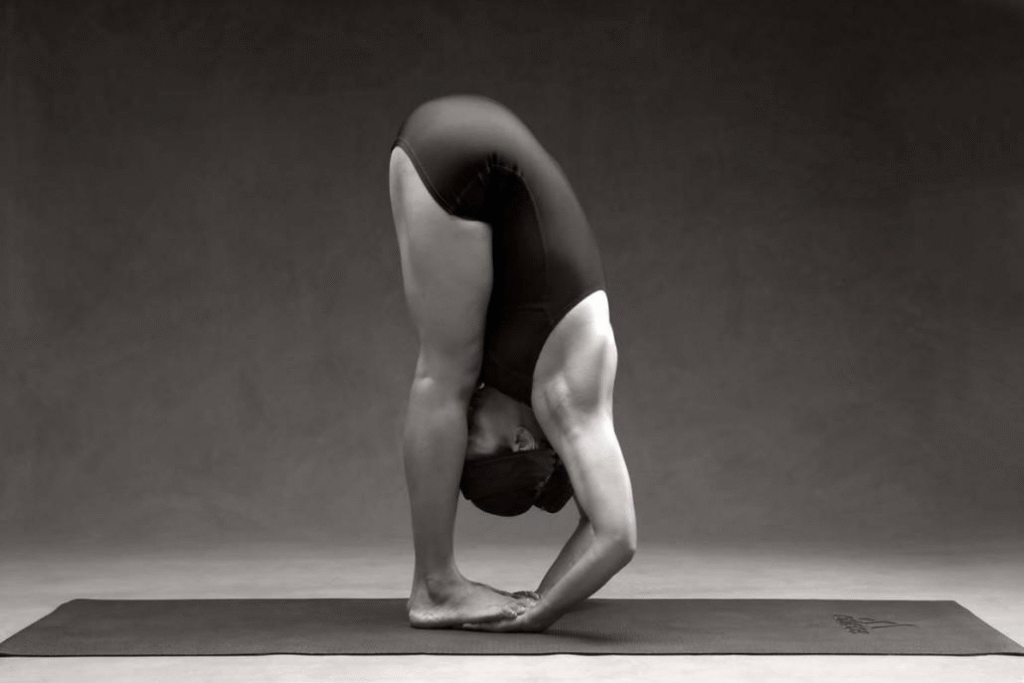
Benefits
- Improves flexibility
- Strengthens the feet
- Relieves spinal tension
- Stimulates circulation
- Develops patience
Beginner Modification
If reaching under the feet feels difficult, simply place your hands beside your feet.
Foundation Pose Comparison Table
| Pose | Difficulty | Main Benefit | Best For |
| Samasthiti | Beginner | Balance | Body Awareness |
| Surya Namaskar A | Beginner | Warm-up | Full Body |
| Surya Namaskar B | Beginner–Intermediate | Strength | Endurance |
| Tadasana | Beginner | Posture | Alignment |
| Uttanasana | Beginner | Flexibility | Hamstrings |
| Ardha Uttanasana | Beginner | Spine | Alignment |
| Chaturanga | Intermediate | Upper Body | Strength |
| Upward Facing Dog | Beginner | Chest Opening | Flexibility |
| Downward Facing Dog | Beginner | Full Body Stretch | Recovery |
| Padangusthasana | Beginner | Hamstrings | Flexibility |
| Padahastasana | Beginner | Spine | Stretching |
Tips for Beginners Practicing Foundation Poses
When beginning Ashtanga Vinyasa Flow Yoga Lessons, remember that progress comes from consistency rather than intensity. Practicing with patience and awareness helps build a sustainable foundation.
Keep these tips in mind:
- Prioritize proper alignment over depth.
- Synchronize every movement with your breath.
- Avoid comparing yourself with others.
- Use modifications when needed.
- Practice regularly, even if sessions are short.
- Focus on steady improvement instead of perfection.
- Listen to your body and respect its limits.
- End every practice with adequate relaxation.
By mastering these foundational poses, you’ll develop the strength, flexibility, and confidence needed to move safely into the standing sequence and the more challenging postures of the Primary Series.
Part 4B: Essential Standing Poses in Ashtanga Vinyasa Flow Yoga Lessons
Standing postures form the backbone of the Ashtanga Vinyasa Flow Yoga Lessons Primary Series. They build strength from the ground up, improve stability, develop flexibility, and prepare the body for the seated sequence. These poses also teach practitioners how to distribute body weight evenly, engage the core, and maintain steady breathing while moving through dynamic transitions.
Unlike static stretching, standing poses combine balance, strength, mobility, and focus. Regular practice enhances posture, strengthens the legs, improves joint health, and increases overall body awareness.
Why Are Standing Poses Important?
Standing postures are much more than warm-up exercises. They create the physical and mental foundation needed for a safe and effective yoga practice.
Regular practice of standing poses can help:
- Build leg and core strength
- Improve balance and stability
- Increase hip flexibility
- Strengthen the ankles and knees
- Enhance posture and spinal alignment
- Improve concentration
- Increase stamina
- Prepare the body for seated and advanced poses
Standing poses also encourage proper weight distribution and teach practitioners to move with awareness rather than momentum.
1. Trikonasana (Triangle Pose)
Trikonasana is one of the most recognizable standing poses in Ashtanga Vinyasa Flow Yoga Lessons. It combines strength, balance, flexibility, and spinal extension in a single posture.
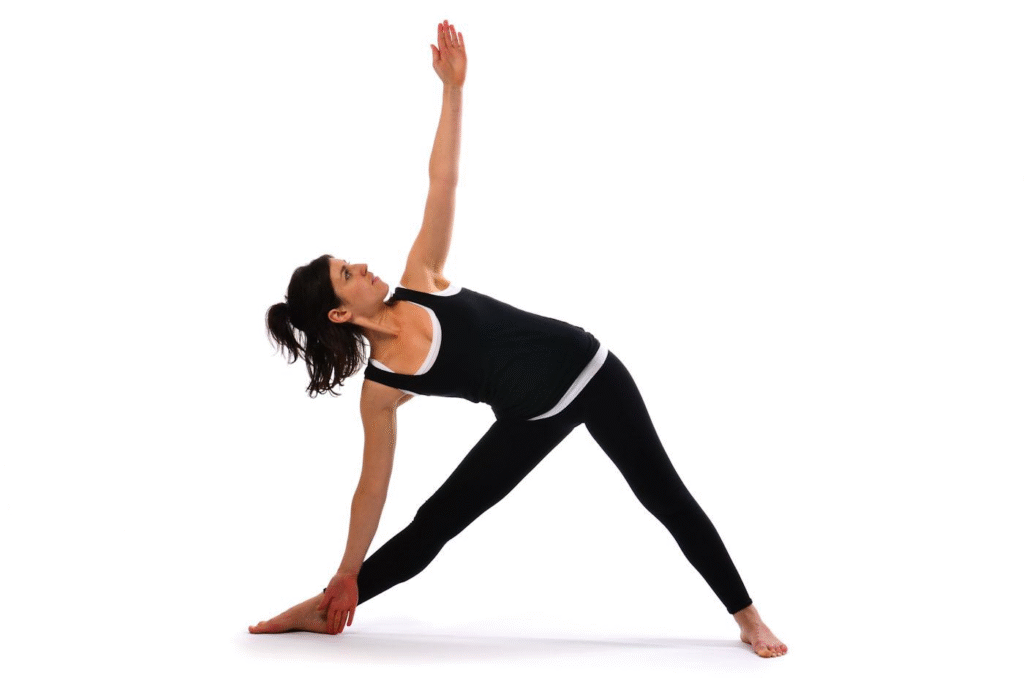
How to Practice
- Stand with your feet wide apart.
- Turn one foot outward and the other slightly inward.
- Extend both arms parallel to the floor.
- Reach forward before lowering one hand toward the shin or ankle.
- Extend the opposite arm toward the ceiling.
- Keep the chest open and gaze upward if comfortable.
Benefits
- Strengthens the legs
- Stretches the hamstrings and hips
- Improves spinal flexibility
- Opens the chest and shoulders
- Enhances balance and coordination
- Improves digestion through gentle twisting
Common Mistakes
- Collapsing into the lower side
- Locking the front knee
- Rounding the spine
- Losing weight in the back foot
2. Parivrtta Trikonasana (Revolved Triangle Pose)
Parivrtta Trikonasana adds a spinal twist while requiring greater balance and core stability.
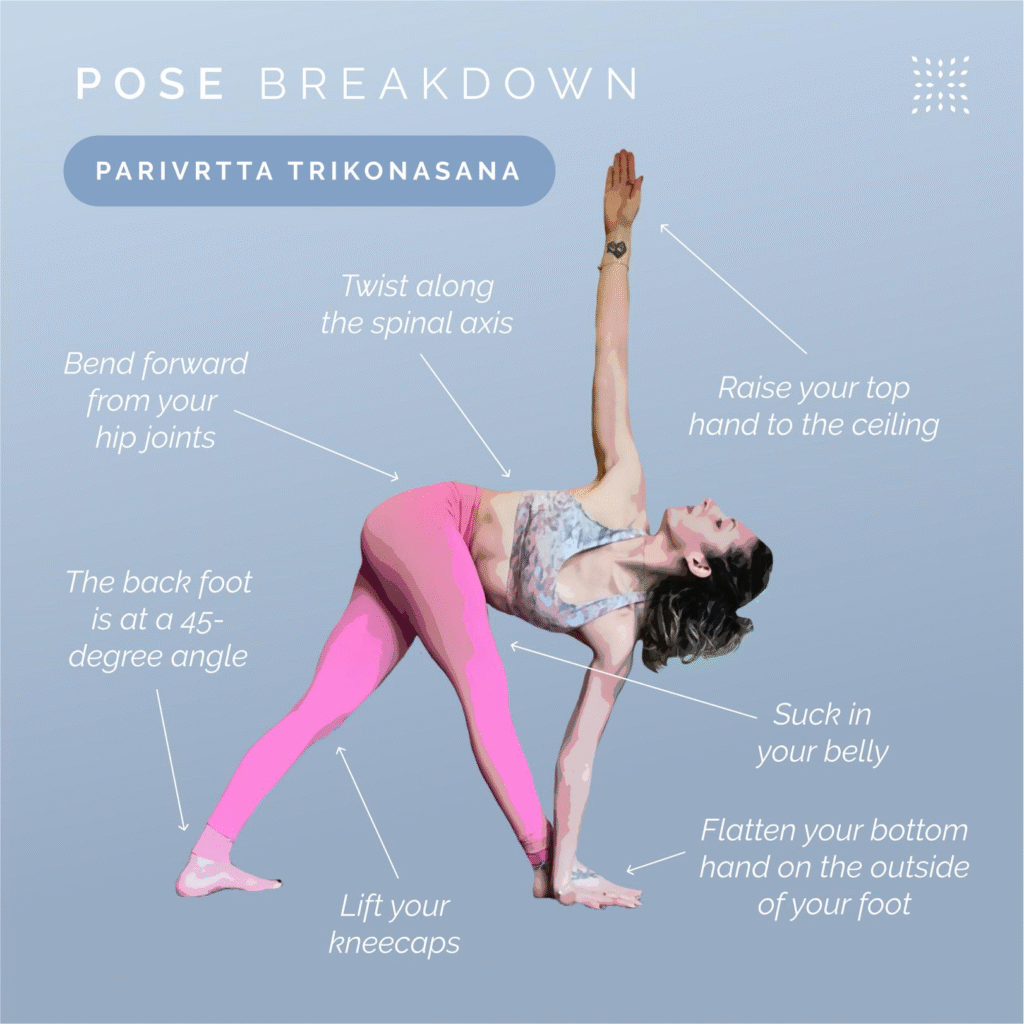
Benefits
- Improves spinal mobility
- Strengthens the legs
- Enhances balance
- Stimulates digestion
- Increases core engagement
- Improves concentration
Beginner Tip
Place your lower hand on a yoga block if reaching the floor affects your alignment.
3. Utthita Parsvakonasana (Extended Side Angle Pose)
This powerful standing posture lengthens the entire side body while strengthening the lower body.
Benefits
- Strengthens thighs and hips
- Opens the chest
- Improves shoulder mobility
- Increases endurance
- Builds core strength
- Improves balance
Alignment Tip
Avoid collapsing into the front shoulder. Instead, create length from the back heel to the fingertips.
4. Parivrtta Parsvakonasana (Revolved Side Angle Pose)
This posture combines a deep twist with a lunge, demanding strength, flexibility, and focus.
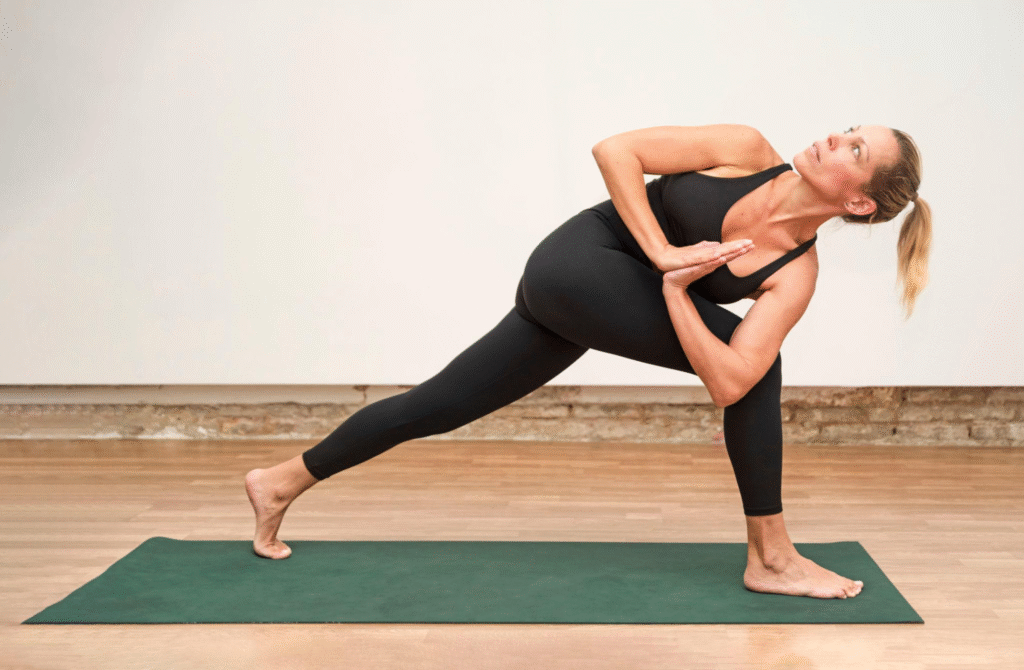
Benefits
- Detoxifies the digestive organs
- Strengthens the legs
- Improves spinal mobility
- Builds balance
- Increases flexibility
- Activates the abdominal muscles
Common Mistakes
- Twisting only the shoulders
- Allowing the back heel to lift
- Rounding the spine
- Holding the breath
5. Prasarita Padottanasana (Wide-Legged Forward Fold)
Prasarita Padottanasana provides an intense stretch for the legs while calming the nervous system.
Benefits
- Lengthens the hamstrings
- Relieves lower back tension
- Improves circulation
- Reduces stress
- Increases hip flexibility
- Enhances spinal mobility
Beginner Modification
Bend the knees slightly if the hamstrings feel tight.
6. Parsvottanasana (Intense Side Stretch Pose)
Parsvottanasana develops flexibility, balance, and body awareness through a deep forward fold.
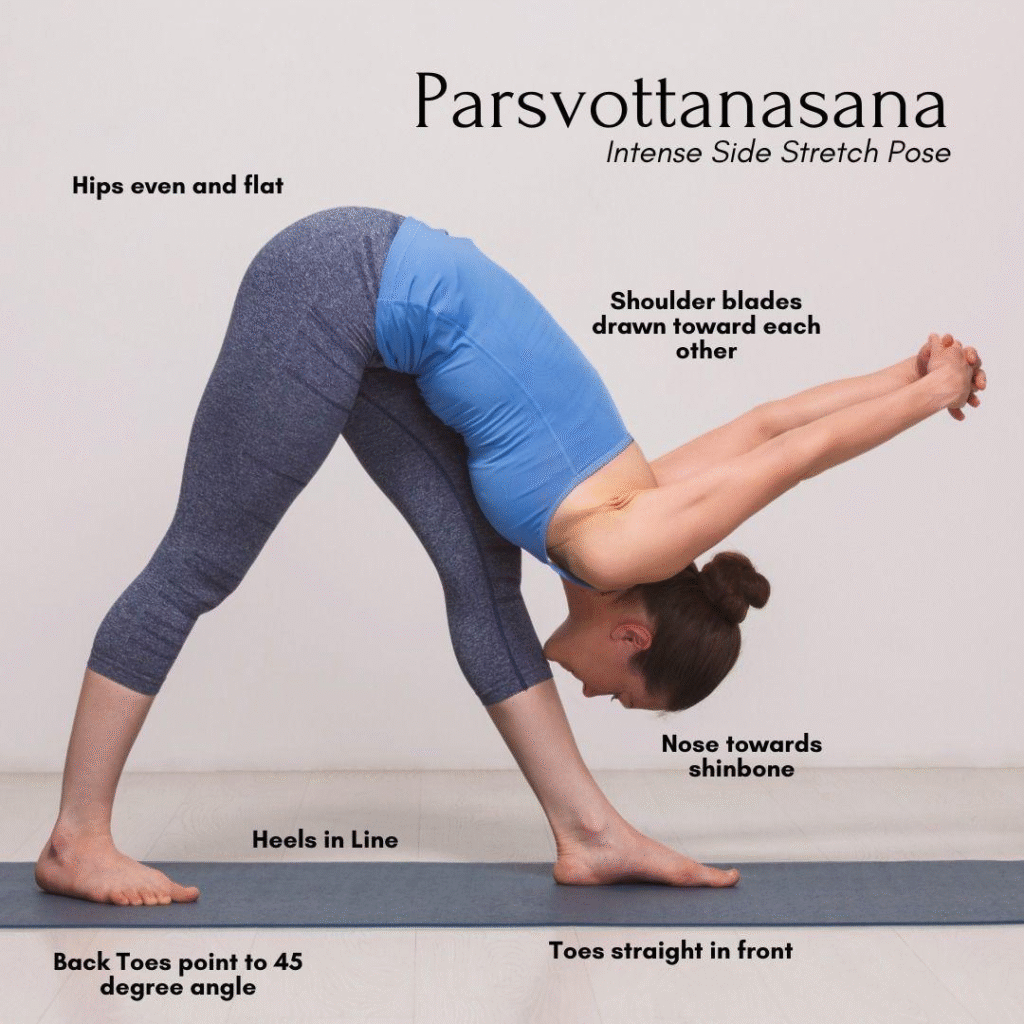
Benefits
- Improves posture
- Stretches the calves and hamstrings
- Strengthens the legs
- Increases hip mobility
- Improves concentration
- Encourages mindful breathing
Alignment Tip
Keep both hips square toward the front of the mat throughout the posture.
7. Virabhadrasana I (Warrior I)
Warrior I builds strength, stability, and confidence while opening the hips and chest.
Benefits
- Strengthens the legs
- Improves hip flexibility
- Opens the shoulders
- Increases stamina
- Builds balance
- Strengthens the core
Common Mistakes
- Leaning forward excessively
- Allowing the front knee to collapse inward
- Arching the lower back too much
8. Utthita Hasta Padangusthasana (Extended Hand-to-Big-Toe Pose)
This balancing posture develops concentration, coordination, and flexibility.
Benefits
- Improves balance
- Strengthens the standing leg
- Opens the hips
- Develops focus
- Increases hamstring flexibility
- Builds ankle stability
Beginner Tip
Use a yoga strap around the lifted foot if reaching the toe is difficult.
9. Ardha Baddha Padmottanasana (Half Bound Lotus Forward Fold)
This posture combines balance, hip opening, and forward folding.
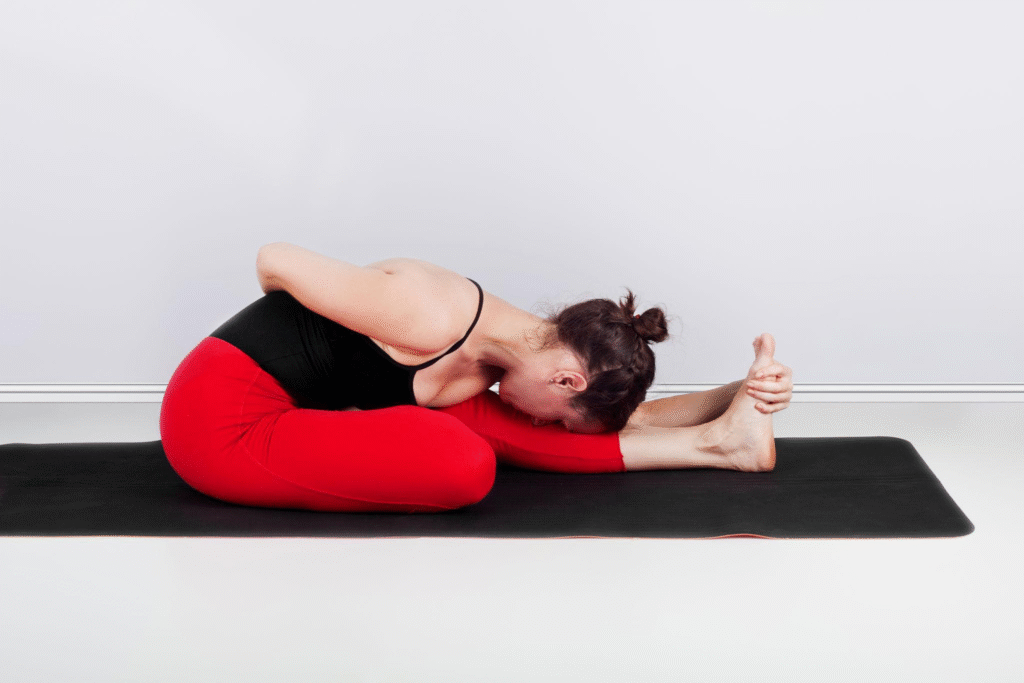
Benefits
- Improves balance
- Opens the hips
- Increases flexibility
- Strengthens the legs
- Develops concentration
- Improves body awareness
Beginner Modification
If Half Lotus is uncomfortable, keep the lifted foot below the opposite knee instead of placing it on the thigh.
10. Utkatasana (Chair Pose)
Although commonly associated with Sun Salutation B, Utkatasana deserves individual attention because of its strengthening benefits.
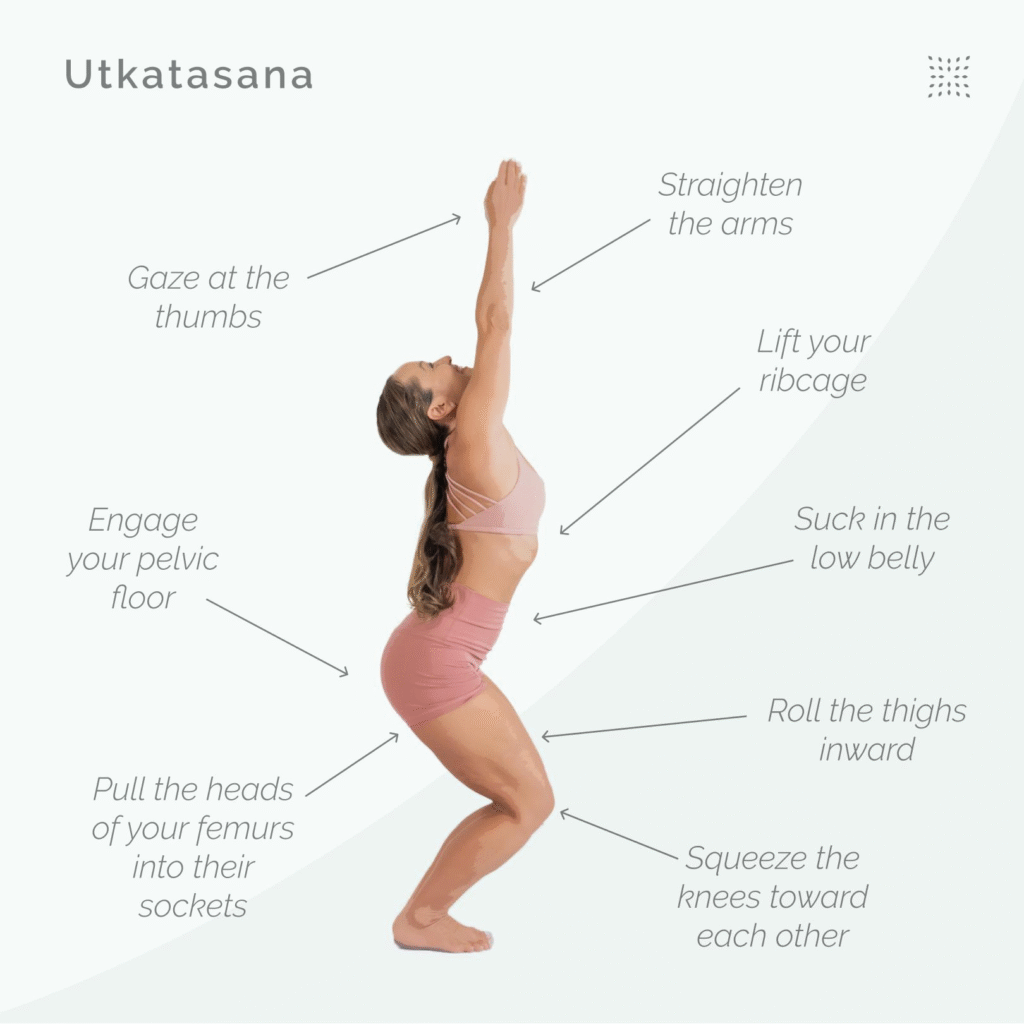
Benefits
- Strengthens the thighs
- Builds core stability
- Improves ankle mobility
- Enhances endurance
- Supports knee stability
- Develops determination
Common Mistakes
- Allowing the knees to extend beyond the toes
- Arching the lower back
- Holding unnecessary tension in the shoulders
11. Virabhadrasana II (Warrior II)
While Warrior II is more common in modern Vinyasa classes, many practitioners include it in supplementary standing practices to improve stability and endurance.
Benefits
- Strengthens the legs
- Improves balance
- Opens the hips
- Builds shoulder strength
- Enhances stamina
- Improves concentration
12. Vrikshasana (Tree Pose)
Tree Pose develops balance and mental focus while strengthening the lower body.
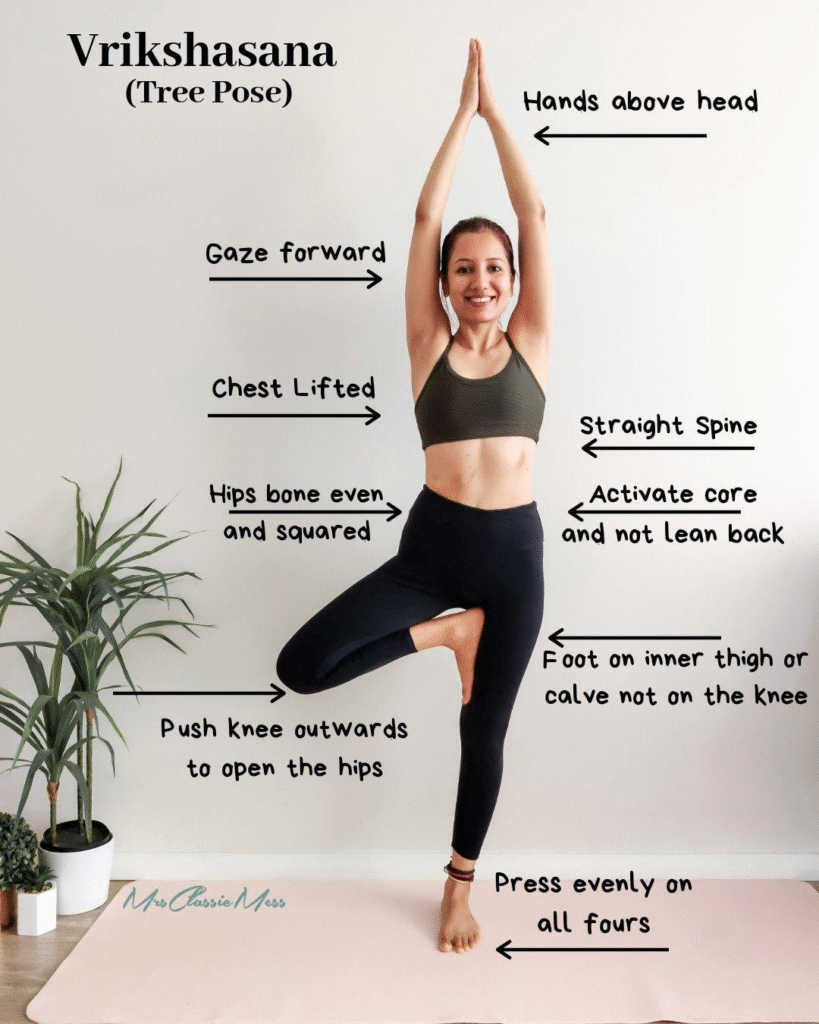
Benefits
- Improves concentration
- Enhances balance
- Strengthens the legs
- Opens the hips
- Improves posture
- Develops body awareness
Beginner Tip
Place the lifted foot below the knee if balancing feels challenging.
Standing Pose Comparison Table
| Pose | Difficulty | Primary Focus | Main Benefit |
| Trikonasana | Beginner | Flexibility | Hamstrings & Spine |
| Parivrtta Trikonasana | Intermediate | Twisting | Balance & Core |
| Utthita Parsvakonasana | Beginner | Strength | Legs & Hips |
| Parivrtta Parsvakonasana | Intermediate | Twist | Digestion & Core |
| Prasarita Padottanasana | Beginner | Stretch | Hamstrings |
| Parsvottanasana | Beginner | Balance | Spine & Legs |
| Virabhadrasana I | Beginner | Strength | Legs & Core |
| Utthita Hasta Padangusthasana | Intermediate | Balance | Coordination |
| Ardha Baddha Padmottanasana | Intermediate | Hip Opening | Balance |
| Utkatasana | Beginner | Strength | Legs |
| Virabhadrasana II | Beginner | Endurance | Stability |
| Vrikshasana | Beginner | Balance | Focus |
Benefits of Practicing Standing Poses Regularly
Practicing standing postures consistently offers numerous physical and mental benefits that support every stage of the Ashtanga Vinyasa Flow Yoga Lessons journey.
Physical Benefits
- Builds lower-body strength
- Improves flexibility
- Enhances spinal alignment
- Strengthens the core
- Improves posture
- Supports joint health
- Increases endurance
- Develops better balance
Mental Benefits
- Improves concentration
- Reduces stress
- Increases mindfulness
- Builds confidence
- Develops patience
- Encourages emotional stability
Breath Awareness
Standing poses also reinforce one of the core principles of Ashtanga Vinyasa Flow Yoga Lessons—moving with the breath. Coordinating inhalations and exhalations with each posture helps create a steady rhythm, making the practice feel smooth, controlled, and meditative.
Tips for Safe Practice
To get the most from your standing practice:
- Focus on alignment before depth.
- Distribute weight evenly through both feet.
- Keep your breath slow and steady.
- Engage the core to support the spine.
- Avoid forcing flexibility.
- Move with control during transitions.
- Practice consistently rather than intensely.
- Respect your body’s current range of motion.
Standing poses lay the groundwork for the deeper flexibility, strength, and focus required in the seated sequence. As these postures become more familiar, practitioners develop greater confidence, making it easier to approach the more demanding sections of the Primary Series with stability and ease.
Part 4C: Essential Seated Poses, Backbends, Inversions & Closing Sequence in Ashtanga Vinyasa Flow Yoga Lessons
As practitioners move beyond the standing sequence, the practice of Ashtanga Vinyasa Flow Yoga Lessons becomes more introspective. The seated sequence encourages flexibility, stability, and concentration, while backbends, inversions, and the closing sequence help balance the body and calm the mind.
Unlike the standing postures that generate energy and build strength, these poses encourage practitioners to slow down, deepen their breath, and cultivate greater awareness. Together, they complete the intelligent progression of the Primary Series and prepare the body for relaxation and meditation.
Whether your goal is to improve flexibility, strengthen your core, enhance spinal health, or reduce stress, these postures play an essential role in developing a balanced and sustainable yoga practice.
Why Are Seated Poses Important?
Seated postures allow the body to settle after the dynamic standing sequence. They focus on improving flexibility while maintaining stability through the pelvis and spine.
Regular practice of seated poses can help:
- Increase hamstring flexibility
- Improve hip mobility
- Lengthen the spine
- Strengthen the abdominal muscles
- Enhance digestion
- Improve posture
- Reduce muscular tension
- Develop patience and mindfulness
These postures also prepare the body for deeper forward bends, twists, and meditative sitting.
1. Dandasana (Staff Pose)
Dandasana is often considered the foundation of all seated postures.
Although it appears simple, maintaining proper alignment requires strength and awareness.
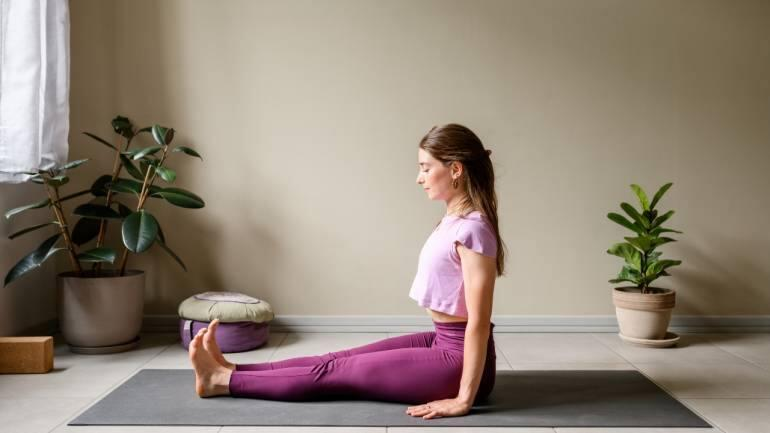
How to Practice
- Sit with both legs extended forward.
- Press the backs of the thighs into the floor.
- Flex the feet.
- Lengthen the spine.
- Rest the hands beside the hips.
- Lift through the crown of the head while breathing naturally.
Benefits
- Improves posture
- Strengthens the back
- Activates the core
- Stretches the calves
- Develops body awareness
Common Mistakes
- Rounding the back
- Leaning backward
- Locking the knees
- Collapsing through the chest
2. Paschimottanasana (Seated Forward Fold)
Paschimottanasana is one of the most important forward folds in Ashtanga Vinyasa Flow Yoga Lessons.
Rather than forcing flexibility, practitioners are encouraged to lengthen the spine before folding.
Benefits
- Stretches the hamstrings
- Improves spinal flexibility
- Calms the nervous system
- Supports digestion
- Reduces stress
- Encourages introspection
Beginner Tip
Keep the knees slightly bent if the hamstrings feel tight.
3. Janu Sirsasana (Head-to-Knee Pose)
This asymmetrical forward fold stretches one side of the body at a time while improving hip mobility.
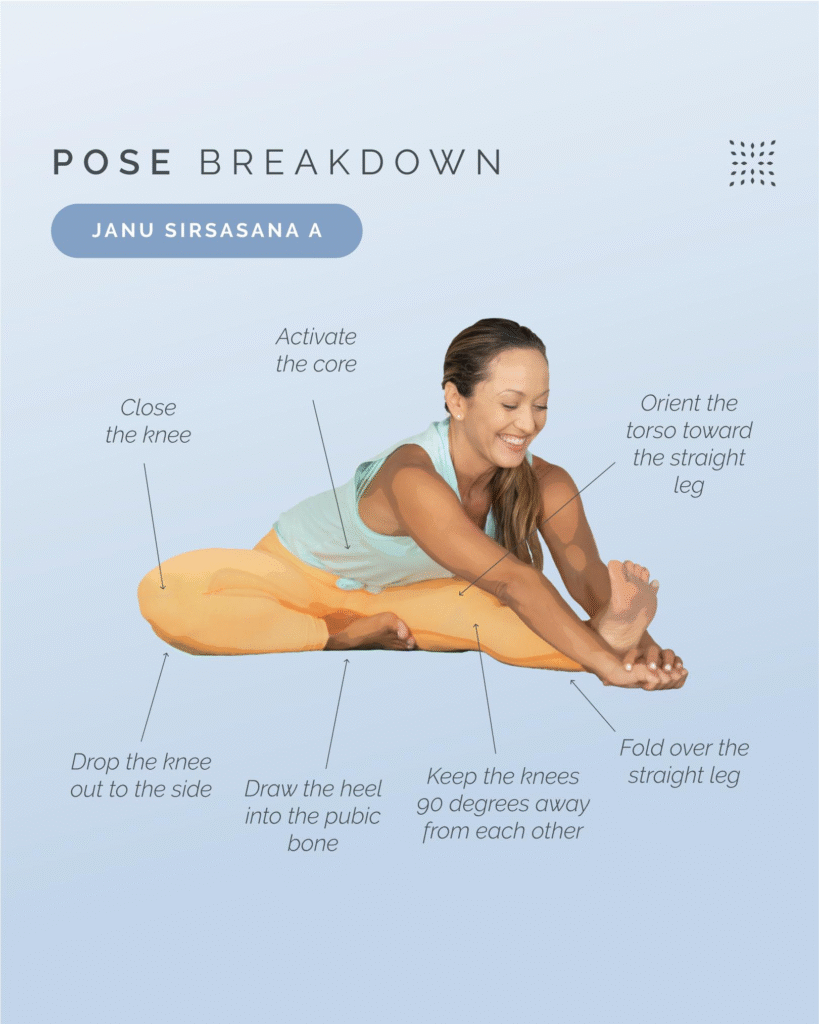
Benefits
- Improves flexibility
- Opens the hips
- Stretches the lower back
- Supports digestion
- Relieves muscular tension
- Enhances concentration
4. Marichyasana
Marichyasana is a series of twisting and forward-folding postures that gradually increase in complexity.
Benefits
- Improves spinal mobility
- Stimulates digestion
- Opens the hips
- Strengthens the back
- Improves posture
- Develops patience
5. Navasana (Boat Pose)
Navasana develops core stability and balance.
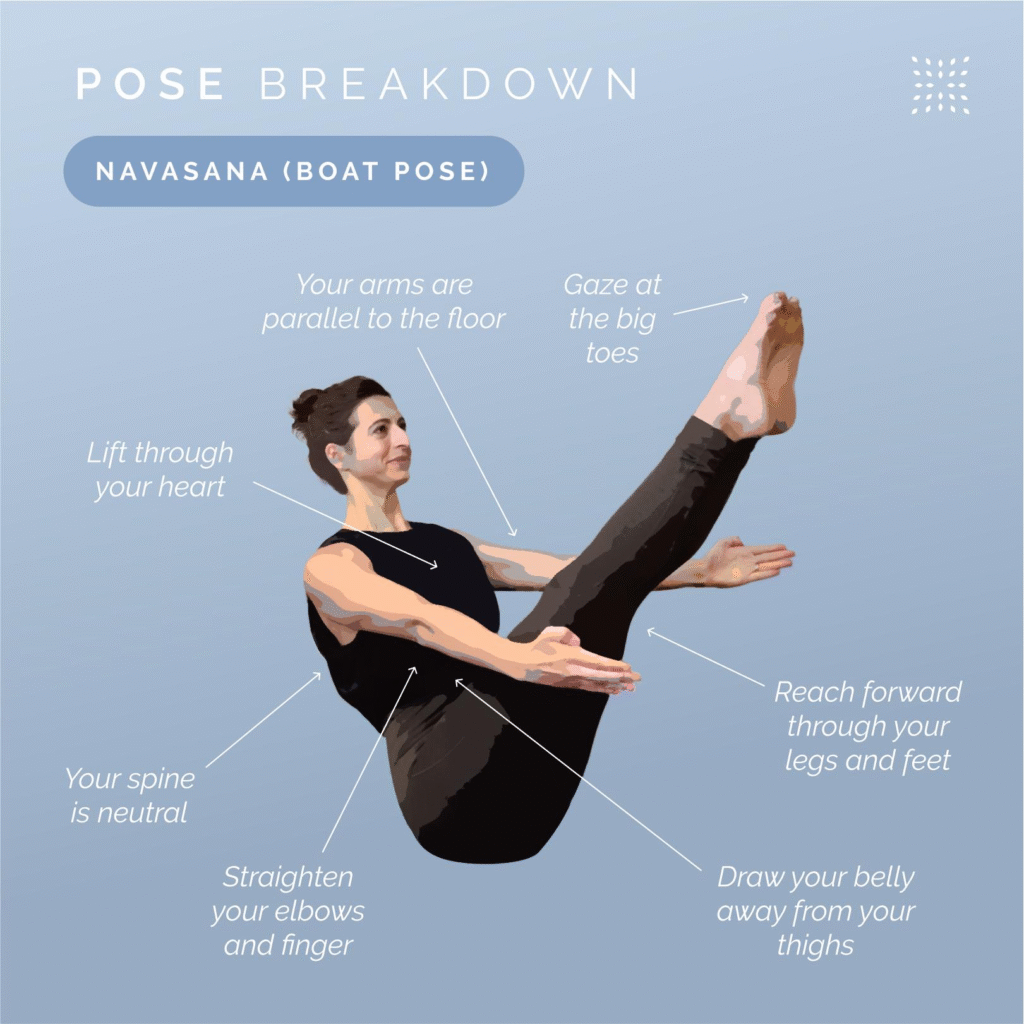
Benefits
- Strengthens abdominal muscles
- Improves posture
- Builds hip flexor strength
- Enhances balance
- Develops endurance
- Supports spinal stability
Common Mistakes
- Rounding the lower back
- Holding the breath
- Tightening the shoulders
- Locking the knees
6. Baddha Konasana (Bound Angle Pose)
Baddha Konasana is one of the most effective hip-opening postures.
Benefits
- Improves hip flexibility
- Stretches the inner thighs
- Supports pelvic mobility
- Encourages relaxation
- Improves posture
7. Upavistha Konasana (Wide-Angle Seated Forward Fold)
This posture provides a deep stretch for the hamstrings and inner thighs.
Benefits
- Improves flexibility
- Opens the hips
- Lengthens the spine
- Reduces lower-back stiffness
- Improves circulation
8. Kurmasana (Tortoise Pose)
Kurmasana encourages deep forward folding while promoting relaxation and inward awareness.
Benefits
- Improves flexibility
- Releases tension
- Calms the mind
- Opens the hips
- Improves shoulder mobility
9. Bhujapidasana (Shoulder Pressing Pose)
Bhujapidasana combines balance, arm strength, and concentration.
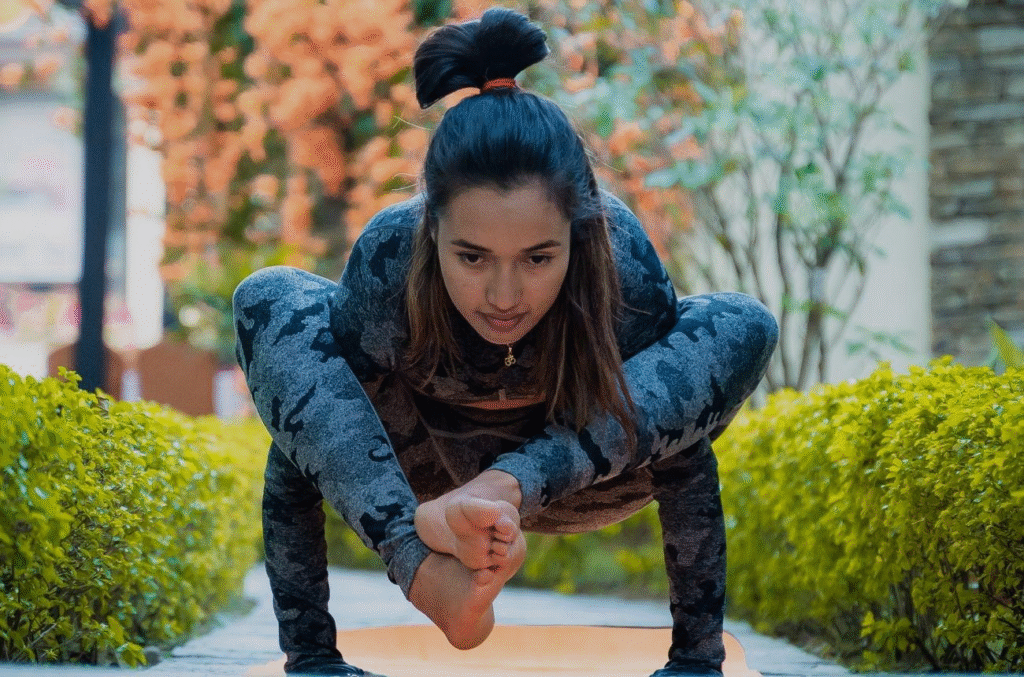
Benefits
- Strengthens the arms
- Builds core stability
- Improves balance
- Enhances coordination
- Develops confidence
Beginner Advice
Develop sufficient shoulder and core strength before attempting this posture.
10. Supta Kurmasana (Sleeping Tortoise Pose)
This advanced posture requires deep flexibility and should only be practiced with proper preparation.
Benefits
- Opens the hips
- Increases spinal flexibility
- Improves patience
- Enhances concentration
- Encourages inward awareness
Why Twisting Poses Matter
Twisting postures are an important part of the seated sequence because they improve spinal mobility while encouraging balanced movement throughout the torso.
Regular twisting may help:
- Improve posture
- Increase spinal flexibility
- Support digestion
- Relieve back stiffness
- Improve mobility
- Enhance body awareness
Twists should always be performed with a long spine rather than forcing the rotation.
Backbends in Ashtanga Vinyasa Flow Yoga Lessons
Backbends are energizing postures that strengthen the posterior chain while opening the front body.
Many people spend hours sitting at desks or looking at screens, creating rounded shoulders and reduced spinal mobility.
Backbends help restore balance.
Their benefits include:
- Opens the chest
- Improves breathing capacity
- Strengthens the back muscles
- Increases spinal flexibility
- Improves posture
- Boosts confidence
- Enhances energy
Urdhva Dhanurasana (Wheel Pose)
One of the most important backbends in the Primary Series.
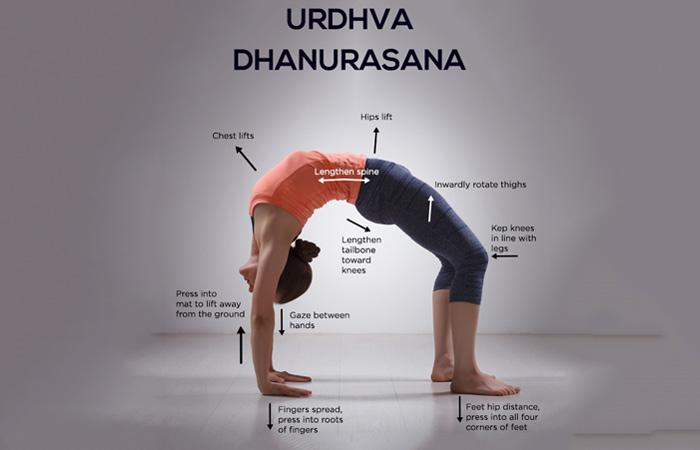
Benefits
- Opens the shoulders
- Strengthens the arms
- Improves spinal flexibility
- Expands the chest
- Builds confidence
- Increases energy
Common Mistakes
- Turning the feet outward
- Compressing the lower back
- Holding the breath
Bridge Pose (Setu Bandhasana)
Bridge Pose is often practiced as a preparation for deeper backbends.
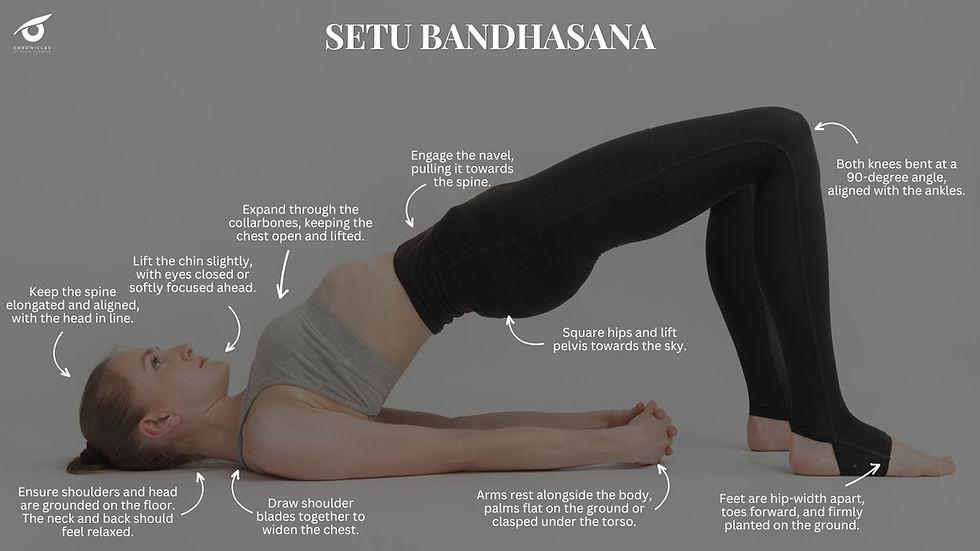
Benefits
- Strengthens the back
- Opens the chest
- Improves posture
- Supports spinal health
- Activates the glutes
Inversions in Ashtanga Vinyasa Flow Yoga Lessons
Inversions develop confidence, concentration, and balance while offering a fresh perspective.
Although they appear advanced, they should always be approached gradually.
Salamba Sarvangasana (Shoulder Stand)
Benefits
- Improves circulation
- Strengthens the shoulders
- Supports balance
- Calms the nervous system
- Enhances body awareness
Halasana (Plow Pose)
Benefits
- Lengthens the spine
- Improves flexibility
- Reduces muscular tension
- Supports relaxation
- Stretches the shoulders
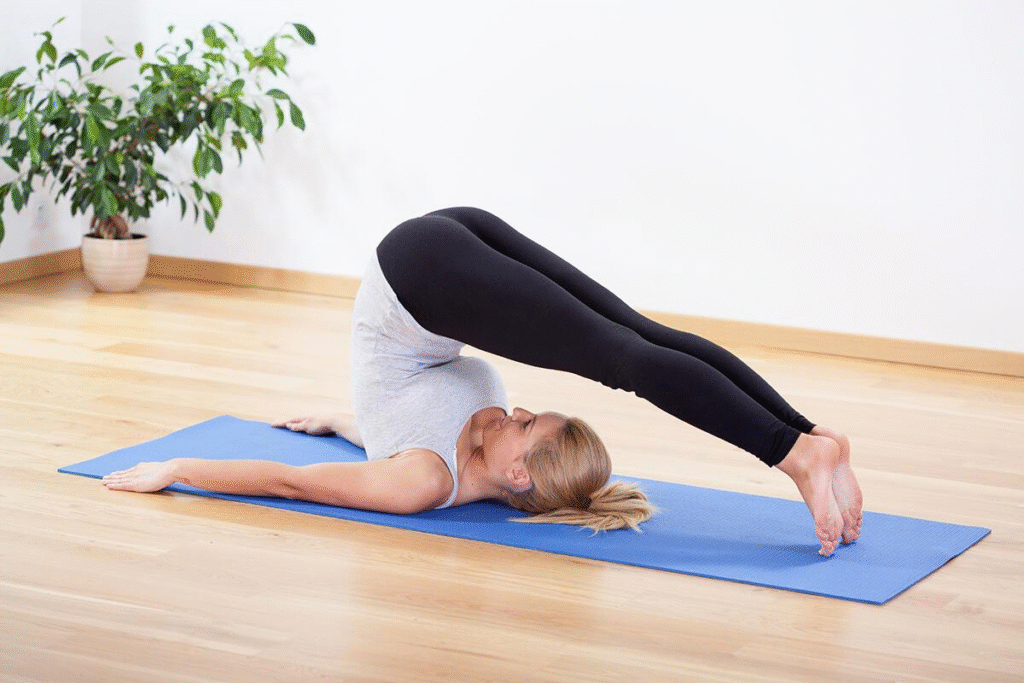
Sirsasana (Headstand)
Headstand is often called the “King of Asanas.”
It should only be practiced after developing adequate shoulder strength and under proper guidance.
Benefits
- Improves balance
- Develops concentration
- Strengthens the shoulders
- Builds confidence
- Enhances body awareness
Matsyasana (Fish Pose)
Fish Pose counterbalances Shoulder Stand by opening the chest and stretching the front of the body.
Benefits
- Opens the chest
- Improves breathing
- Stretches the neck
- Improves posture
- Relieves upper-back tension
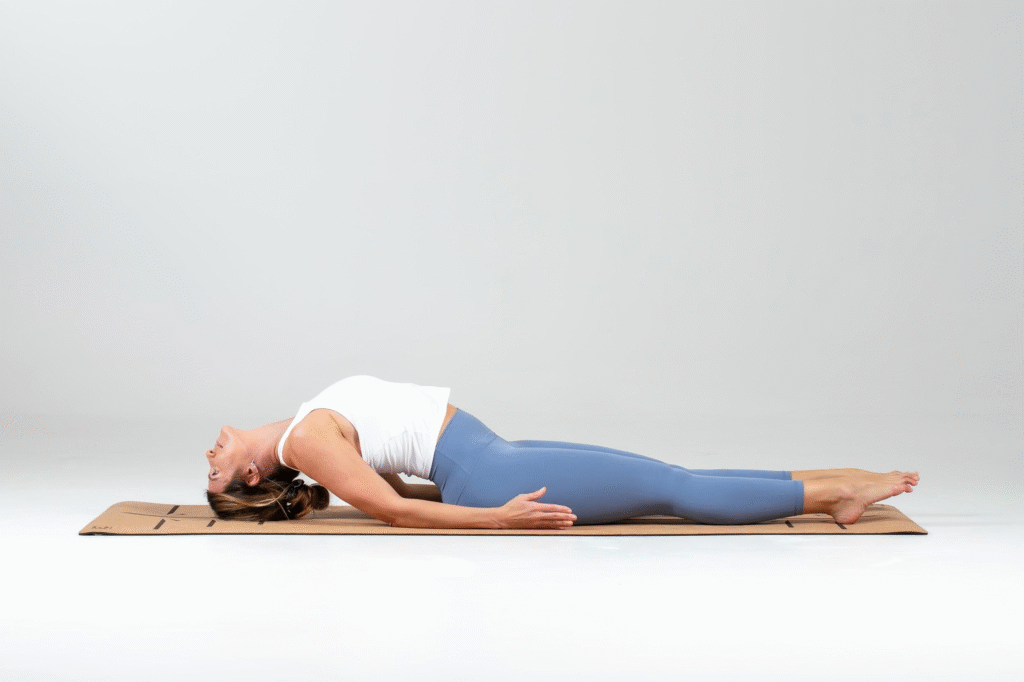
The Closing Sequence
The closing sequence allows the body to transition from an active practice into a state of relaxation.
It helps:
- Slow the heart rate
- Relax the muscles
- Calm the nervous system
- Reduce stress
- Prepare for meditation
Never skip the closing sequence, as it allows the body to absorb the full benefits of the practice.
Savasana (Corpse Pose)
Although Savasana looks effortless, it is one of the most valuable postures in yoga.
During this final relaxation, the body integrates everything practiced throughout the session.
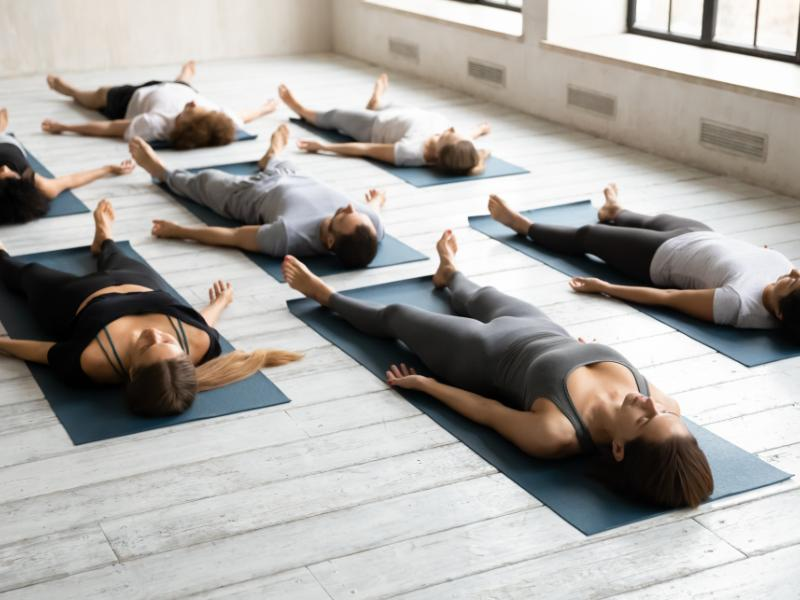
Benefits
- Deep relaxation
- Reduces stress
- Lowers muscle tension
- Supports recovery
- Improves mental clarity
- Encourages mindfulness
Remain in Savasana for 5–10 minutes, allowing the breath to become natural and the body to completely relax.
Comparison Table: Seated, Backbends & Inversions
| Pose | Category | Difficulty | Main Benefit |
| Dandasana | Seated | Beginner | Posture |
| Paschimottanasana | Forward Fold | Beginner | Flexibility |
| Janu Sirsasana | Forward Fold | Beginner | Hip Mobility |
| Marichyasana | Twist | Intermediate | Digestion |
| Navasana | Core | Intermediate | Strength |
| Baddha Konasana | Hip Opener | Beginner | Flexibility |
| Upavistha Konasana | Forward Fold | Beginner | Hamstrings |
| Kurmasana | Hip Opener | Advanced | Deep Stretch |
| Bhujapidasana | Arm Balance | Advanced | Upper Body Strength |
| Urdhva Dhanurasana | Backbend | Intermediate | Spinal Flexibility |
| Bridge Pose | Backbend | Beginner | Chest Opening |
| Shoulder Stand | Inversion | Intermediate | Circulation |
| Halasana | Inversion | Intermediate | Spinal Stretch |
| Headstand | Inversion | Advanced | Balance |
| Fish Pose | Counterpose | Beginner | Chest Expansion |
| Savasana | Relaxation | Beginner | Recovery |
Common Mistakes to Avoid During the Seated and Closing Sequence
Many practitioners focus on achieving the deepest expression of a pose rather than practicing with awareness. Avoiding common mistakes helps prevent injury and encourages steady progress.
Some of the most common mistakes include:
- Holding the breath during challenging poses.
- Forcing flexibility instead of respecting your body’s limits.
- Rounding the spine excessively in forward folds.
- Collapsing into the shoulders during backbends.
- Rushing through the closing sequence.
- Skipping Savasana to finish practice early.
- Comparing your flexibility or strength with others.
- Practicing advanced inversions without proper preparation.
Remember that yoga is a practice of patience and consistency. Progress comes from mindful repetition rather than pushing beyond your current capacity.
Completing the Primary Series with Awareness
The seated sequence, backbends, inversions, and final relaxation complete the journey of the Ashtanga Vinyasa Flow Yoga Lessons Primary Series. Together, these postures create a balanced practice that strengthens the body, improves flexibility, enhances concentration, and encourages inner calm.
As practitioners move through each stage with steady breathing and mindful attention, they begin to experience the true purpose of yoga—not simply mastering postures, but developing greater awareness, resilience, and harmony in daily life.
Part 5: 25 Science-Backed Benefits of Ashtanga Vinyasa Flow Yoga Lessons for the Body, Mind & Spirit
One of the reasons Ashtanga Vinyasa Flow Yoga Lessons has remained one of the world’s most respected yoga styles is its ability to support overall well-being. Unlike workouts that focus only on burning calories or building muscle, this traditional practice combines movement, breath, mindfulness, and discipline to create lasting physical, mental, and emotional transformation.
The synchronized flow of postures, conscious breathing, and focused attention engages every major system of the body. With regular practice, many people notice improvements not only in flexibility and strength but also in posture, concentration, energy levels, sleep quality, and emotional balance.
While every practitioner’s experience is unique, research on yoga as a whole suggests that consistent practice may contribute to better cardiovascular health, stress management, mobility, and overall quality of life. The following benefits highlight why Ashtanga Vinyasa Flow Yoga Lessons continues to be a lifelong practice for millions of people around the world.
Physical Benefits of Ashtanga Vinyasa Flow Yoga Lessons
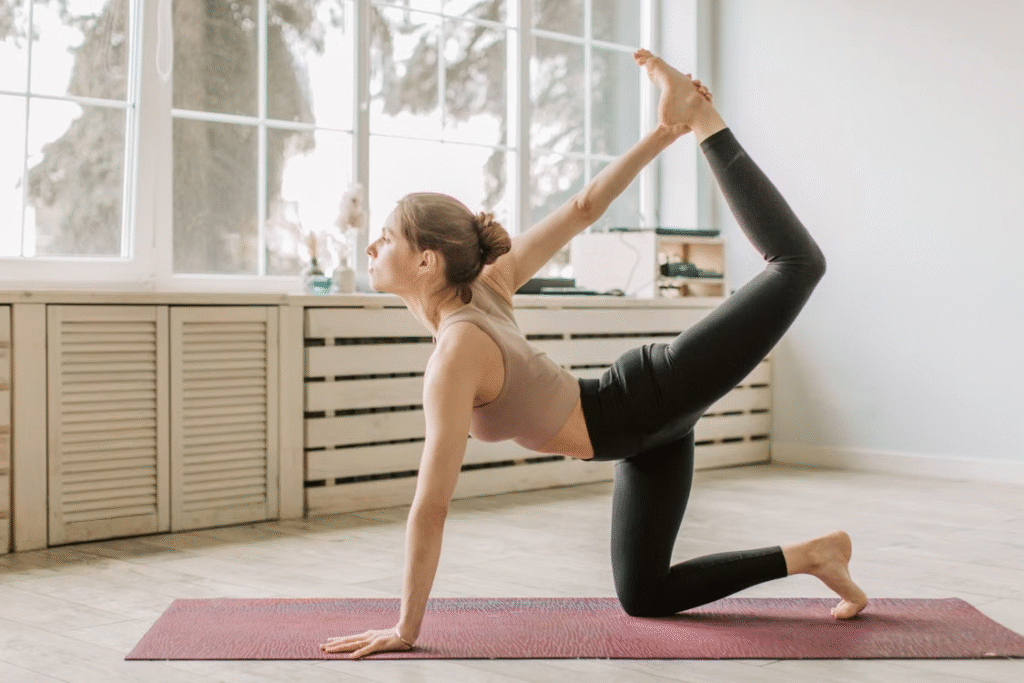
1. Builds Full-Body Strength
Every sequence in Ashtanga Vinyasa Flow Yoga Lessons requires active engagement of multiple muscle groups. Weight-bearing postures such as Chaturanga Dandasana, Plank, Warrior poses, and arm balances strengthen the shoulders, chest, back, core, legs, and hips.
Unlike isolated strength training, yoga develops balanced muscular strength while improving mobility and coordination.
2. Improves Flexibility Naturally
Flexibility develops gradually through repeated practice rather than forcing the body into deep stretches.
Forward folds, hip openers, twists, and backbends help improve the range of motion in the:
- Hamstrings
- Hips
- Shoulders
- Spine
- Ankles
- Chest
Consistent practice often leads to smoother movement and reduced muscular stiffness.
3. Enhances Core Stability
Nearly every posture requires activation of the abdominal and lower back muscles.
A stronger core helps:
- Improve posture
- Support the spine
- Increase balance
- Reduce lower back discomfort
- Improve movement efficiency
4. Increases Balance and Coordination
Balancing postures challenge both the body and the mind.
Improved balance contributes to:
- Better posture
- Greater body awareness
- Reduced risk of falls
- Increased joint stability
5. Supports Better Posture
Modern lifestyles often involve prolonged sitting, screen time, and poor movement habits.
Ashtanga Vinyasa Flow Yoga Lessons helps counter these patterns by:
- Strengthening postural muscles
- Opening the chest
- Lengthening the spine
- Improving shoulder alignment
- Increasing hip mobility
Better posture may also reduce unnecessary strain on the neck and lower back.
6. Improves Joint Mobility
Healthy joints require both movement and stability.
The diverse range of postures encourages gentle mobility in the:
- Knees
- Ankles
- Hips
- Shoulders
- Wrists
- Spine
Moving through a full range of motion helps maintain joint function and supports everyday activities.
7. Boosts Cardiovascular Endurance
Unlike slower yoga styles, Ashtanga Vinyasa Flow Yog Lessonsa maintains a continuous rhythm of movement.
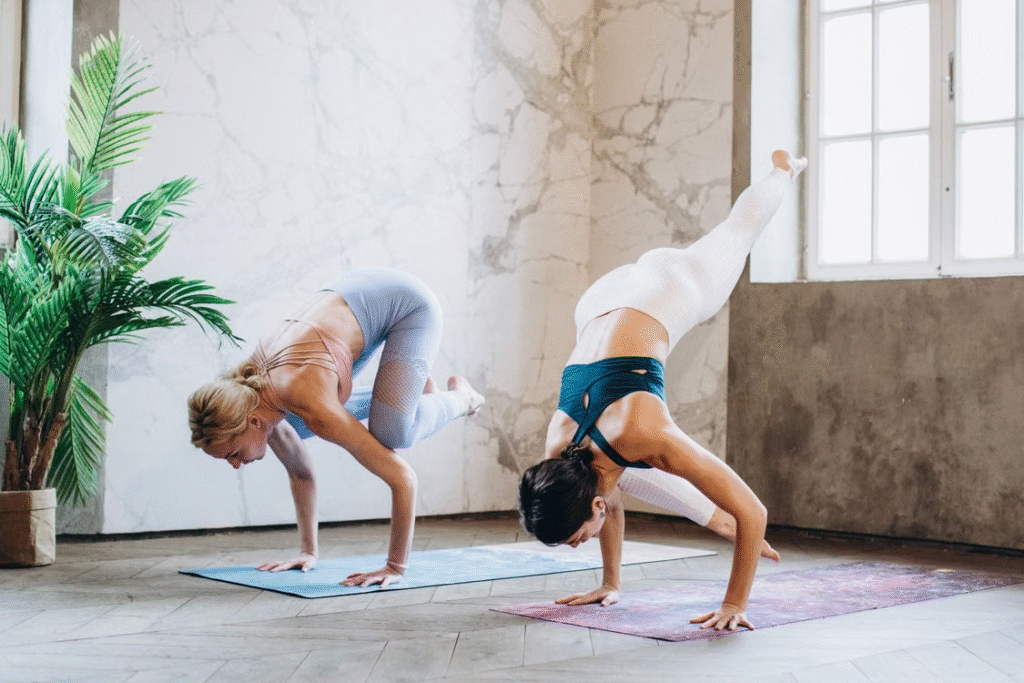
This dynamic approach can:
- Elevate the heart rate
- Improve endurance
- Enhance circulation
- Support cardiovascular fitness
8. Improves Breathing Efficiency
Breath is central to every Ashtanga Vinyasa Flow Yoga Lessons practice.
Using Ujjayi breathing helps practitioners:
- Develop better breath awareness
- Improve breathing efficiency
- Increase oxygen delivery
- Maintain calm during physical effort
This breathing technique also encourages a slower, more mindful pace.
9. Increases Energy Levels
Many practitioners report feeling refreshed rather than exhausted after a well-balanced practice.
Improved circulation, mindful breathing, and coordinated movement can contribute to sustained energy throughout the day.
10. Supports Healthy Weight Management
Ashtanga Vinyasa Flow Yoga Lessons is an active practice that combines muscular engagement with continuous movement.
When practiced regularly as part of a balanced lifestyle, it can support:
- Increased calorie expenditure
- Improved muscle tone
- Better metabolic health
- Greater body awareness around movement and daily habits
Rather than focusing only on weight loss, the practice encourages long-term physical health and sustainable wellness.
Mental and Emotional Benefits
11. Reduces Stress
One of the greatest benefits of Ashtanga Vinyasa Flow Yoga Lessons is its ability to help manage stress.
The combination of controlled breathing and mindful movement encourages relaxation while reducing mental tension.
Many practitioners notice they feel calmer and more centered after practice.
12. Improves Concentration
Maintaining synchronized breath, steady gaze (Drishti), and proper alignment requires continuous attention.
Over time, this focused awareness can improve concentration both on and off the mat.
13. Promotes Mental Clarity
The repetitive nature of the practice allows the mind to settle.
Many students describe experiencing:
- Reduced mental clutter
- Greater focus
- Improved decision-making
- Increased self-awareness
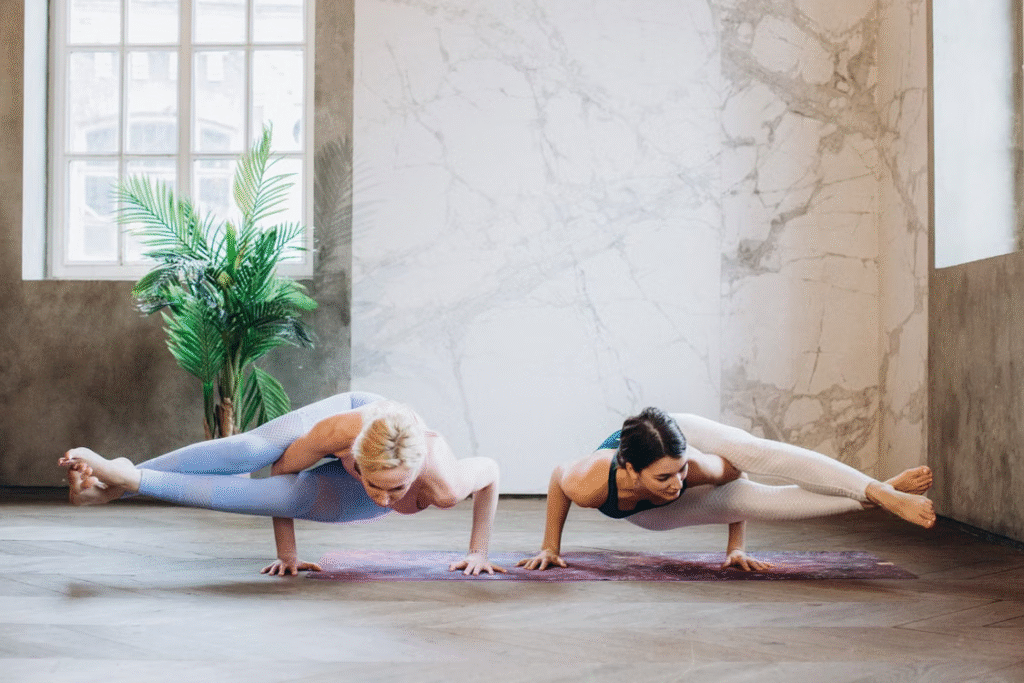
14. Encourages Emotional Balance
Yoga provides an opportunity to observe emotions without immediately reacting to them.
Regular practice encourages qualities such as:
- Patience
- Acceptance
- Compassion
- Resilience
These qualities often extend into daily life and relationships.
15. Supports Better Sleep
Many practitioners experience improved sleep quality after consistent yoga practice.
Gentle movement, breath awareness, and relaxation techniques help prepare the body for restful sleep.
16. Builds Self-Discipline
One of the defining characteristics of Ashtanga Vinyasa Flow Yoga Lessons is consistency.
Returning to the mat regularly develops:
- Commitment
- Discipline
- Perseverance
- Confidence
These habits often influence other areas of life, including work, study, and personal goals.
17. Improves Mind-Body Awareness
Rather than moving automatically, practitioners learn to notice:
- Breathing patterns
- Muscle engagement
- Balance
- Posture
- Emotional responses
This increased awareness supports healthier movement and mindful decision-making.
18. Develops Patience
Progress in yoga happens gradually.
Every practice becomes an opportunity to accept the present moment while trusting the process of steady improvement.
Spiritual Benefits
Although many people begin practicing yoga for physical fitness, they often discover deeper personal benefits over time.
19. Encourages Mindfulness
Mindfulness is the practice of paying attention to the present moment without judgment.
Ashtanga Vinyasa Flow Yoga Lessons naturally develops mindfulness through:
- Breath awareness
- Focused movement
- Concentration
- Meditation in motion
20. Supports Inner Peace
Steady breathing and disciplined movement create moments of stillness even during physically demanding sequences.
This balance between effort and ease helps cultivate a greater sense of calm.
21. Deepens Self-Awareness
Yoga encourages practitioners to observe their thoughts, habits, and reactions with curiosity rather than criticism.
Greater self-awareness often leads to healthier choices both on and off the mat.
22. Encourages Gratitude
Many practitioners find that regular yoga practice helps them appreciate their bodies, their breath, and their daily experiences with greater gratitude.
23. Strengthens the Mind-Body Connection
The integration of breath, movement, and focused attention creates a strong connection between physical sensations and mental awareness.
This holistic approach is one of the defining qualities of traditional yoga practice.
Lifestyle Benefits
24. Encourages Healthy Daily Habits
Regular practitioners often become more mindful of:
- Nutrition
- Hydration
- Sleep
- Recovery
- Stress management
- Physical activity
Yoga becomes part of a broader commitment to overall well-being.
25. Supports Lifelong Wellness
Unlike many fitness trends, Ashtanga Vinyasa Flow Yoga Lessons can be adapted throughout different stages of life.
With appropriate modifications and guidance, it remains a meaningful practice for beginners, experienced practitioners, and older adults alike.
The emphasis on gradual progress, mindful movement, and self-awareness makes it a sustainable practice that can support lifelong health.
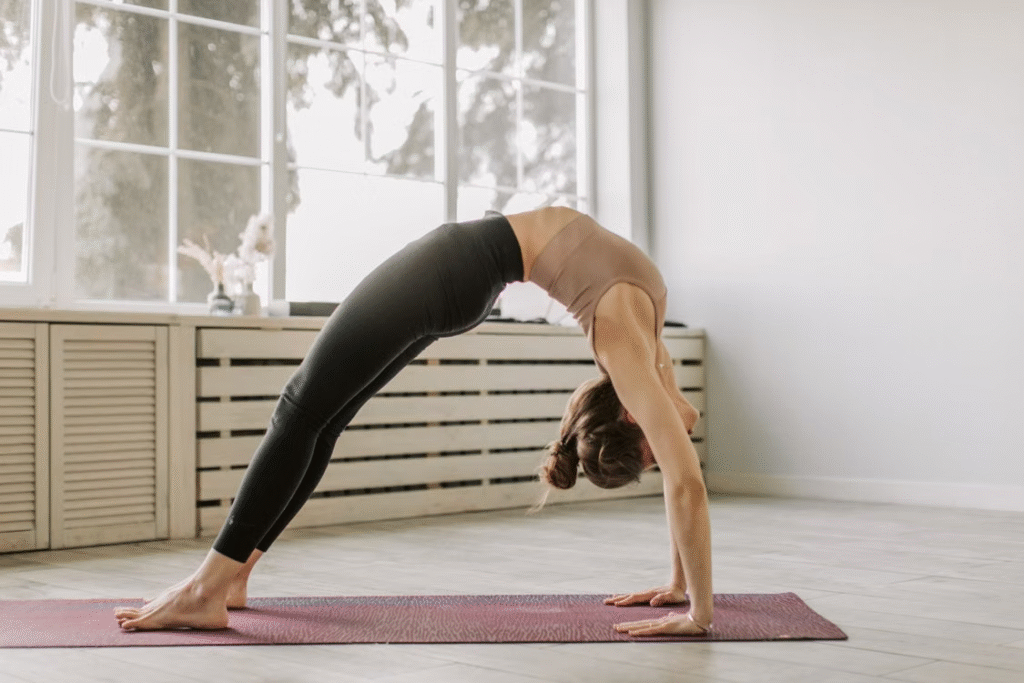
Benefits at a Glance
| Benefit | How Ashtanga Vinyasa Flow Yoga Lessons Helps |
| Strength | Builds muscular endurance throughout the body |
| Flexibility | Improves joint mobility and muscle elasticity |
| Posture | Strengthens postural muscles and spinal alignment |
| Balance | Enhances coordination and body awareness |
| Core Stability | Supports spinal health and functional movement |
| Breathing | Develops controlled and efficient breathing |
| Stress Relief | Encourages relaxation and mental calm |
| Concentration | Improves focus through breath and Drishti |
| Energy | Increases circulation and vitality |
| Sleep | Promotes relaxation and better sleep quality |
| Emotional Well-being | Encourages patience and resilience |
| Mindfulness | Cultivates present-moment awareness |
| Overall Wellness | Supports long-term physical and mental health |
Who Can Benefit the Most?
Ashtanga Vinyasa Flow Yoga Lessons can be adapted to suit many different practitioners, including:
| Practitioner | Potential Benefits |
| Beginners | Learn proper movement, breath awareness, and consistency |
| Office Workers | Improve posture, mobility, and reduce muscular stiffness |
| Athletes | Enhance flexibility, balance, and recovery |
| Older Adults* | Maintain mobility and balance with appropriate modifications |
| Yoga Teachers | Deepen understanding of sequencing, alignment, and philosophy |
| Wellness Enthusiasts | Build a sustainable mind-body practice |
*Older adults or individuals with medical conditions should consult a qualified healthcare professional and practice under the guidance of an experienced yoga teacher.
A Holistic Practice for Modern Life
The true value of Ashtanga Vinyasa Flow Yoga Lessons extends far beyond physical exercise. It is a practice that encourages strength without rigidity, flexibility without force, discipline without pressure, and mindfulness without distraction.
Whether your goal is to improve fitness, manage stress, enhance flexibility, or cultivate a deeper connection with yourself, regular practice offers a balanced path toward greater well-being. By integrating breath, movement, concentration, and self-awareness, Ashtanga Vinyasa Flow Yoga Lessons becomes more than a daily routine—it becomes a lifelong journey of personal growth and holistic wellness.
Part 6: How to Start Ashtanga Vinyasa Flow Yoga Lessons – A Complete Beginner’s Guide
Starting Ashtanga Vinyasa Flow Yoga Lessons can feel exciting, but it can also seem intimidating for beginners. Images of advanced arm balances and deep backbends often create the impression that this practice is only for highly flexible or experienced yogis. In reality, Ashtanga Yoga is a progressive system that welcomes practitioners of all levels.
Every experienced yoga practitioner once began with the basics—learning how to breathe, stand with proper alignment, and move mindfully from one posture to the next. Progress in Ashtanga Vinyasa Flow Yoga Lessons is not measured by how advanced a pose looks but by the quality of your breath, your awareness, and your consistency.
By approaching the practice with patience and realistic expectations, beginners can build a strong foundation that supports long-term growth and reduces the risk of injury.
Can Beginners Practice Ashtanga Vinyasa Flow Yoga Lessons?
Yes. Beginners can absolutely practice Ashtanga Vinyasa Flow Yoga Lessons.
The key is to begin gradually, focus on proper technique, and respect your body’s current abilities. You do not need to be flexible, strong, or experienced before starting. These qualities develop naturally through regular and mindful practice.
Rather than trying to complete the entire Primary Series immediately, beginners should first become comfortable with:
- Basic standing postures
- Sun Salutations
- Simple seated poses
- Breath awareness
- Safe transitions
- Proper alignment
With time, confidence and strength increase naturally.
What Do You Need Before Your First Practice?
One of the advantages of Ashtanga Vinyasa Flow Yoga Lessons is that it requires very little equipment.
Before your first session, prepare:
- A good-quality yoga mat with a non-slip surface
- Comfortable clothing that allows free movement
- A water bottle for hydration after practice
- A small towel if you expect to sweat
- An open, well-ventilated practice space
- A calm mindset and willingness to learn
Avoid practicing immediately after a heavy meal, and choose clothing that does not restrict movement or breathing.
The Best Time to Practice Ashtanga Vinyasa Flow Yoga Lessons
Traditionally, Ashtanga Yoga is practiced early in the morning when the mind is calm and distractions are minimal. Morning practice can help improve focus, boost energy, and establish a consistent daily routine.
However, the best time to practice is the time you can commit to consistently.
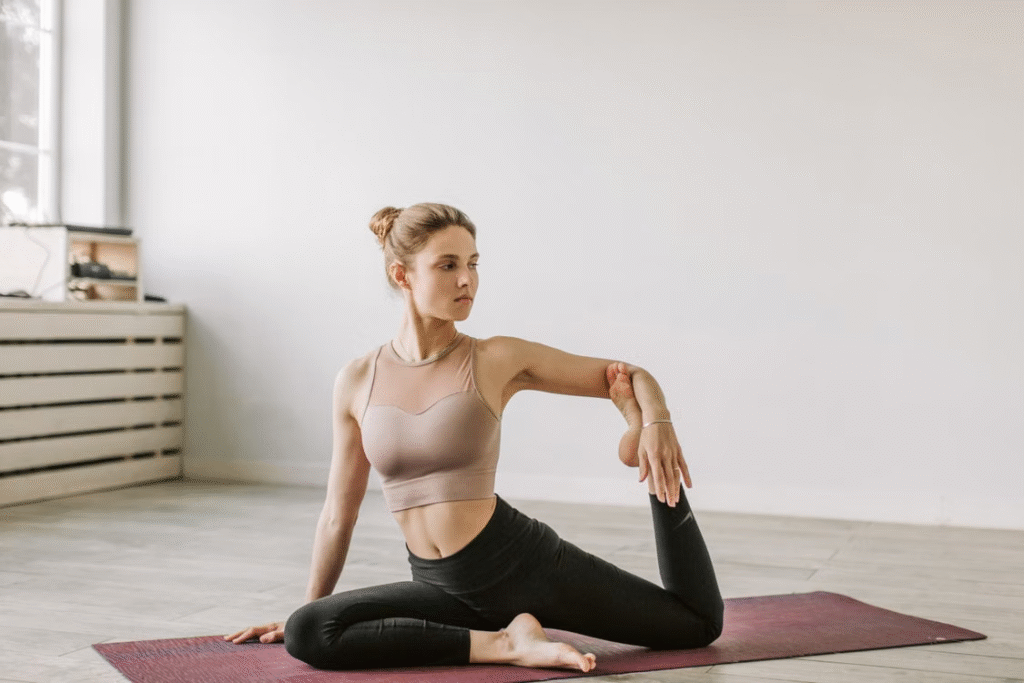
Morning Practice
Benefits include:
- Increased energy for the day
- Improved mental clarity
- Fewer distractions
- A consistent routine
Evening Practice
Benefits include:
- Releases physical tension
- Helps reduce stress after work
- Supports relaxation
- May improve sleep quality
Consistency matters more than the specific time of day.
Should You Practice on an Empty Stomach?
Yes. Practicing on a relatively empty stomach allows for more comfortable movement and breathing.
General guidelines include:
- Wait 2–3 hours after a large meal before practicing.
- If needed, have a light snack such as a banana or a few nuts 30–60 minutes before practice.
- Drink water throughout the day, but avoid drinking large amounts immediately before practice.
After your session, allow your body a short period to cool down before eating a balanced meal.
How Often Should Beginners Practice?
Consistency is more beneficial than long, occasional sessions.
A realistic schedule for beginners might look like this:
| Experience Level | Recommended Practice |
| Beginner | 3 days per week |
| Beginner to Intermediate | 4–5 days per week |
| Intermediate | 5–6 days per week |
| Experienced Practitioner | 6 days per week with one rest day |
Even 20–30 minutes of focused practice can be more valuable than an occasional two-hour session.
A Simple Beginner Practice Routine
If you are new to Ashtanga Vinyasa Flow Yoga Lessons, start with a shorter sequence rather than attempting the entire Primary Series.
Step 1: Center Yourself (2–3 Minutes)
Sit comfortably and bring your attention to your natural breath.
Allow the mind to settle before beginning movement.
Step 2: Gentle Warm-Up (5 Minutes)
Warm up the joints with gentle movements.
Include:
- Neck circles
- Shoulder rolls
- Cat-Cow stretches
- Hip circles
- Gentle spinal twists
Step 3: Sun Salutations (10 Minutes)
Practice:
- 3–5 rounds of Surya Namaskar A
- 2–3 rounds of Surya Namaskar B
Focus on smooth breathing rather than speed.
Step 4: Standing Poses (10–15 Minutes)
Practice a few foundational standing postures such as:
- Triangle Pose
- Warrior I
- Extended Side Angle Pose
- Wide-Legged Forward Fold
Hold each posture for several breaths while maintaining steady alignment.
Step 5: Seated Poses (10 Minutes)
Include:
- Staff Pose
- Seated Forward Fold
- Bound Angle Pose
- Boat Pose
Move slowly and avoid forcing flexibility.
Step 6: Relaxation (5–10 Minutes)
Finish with Savasana.
Allow the body to completely relax while maintaining slow, natural breathing.
Never skip this final relaxation, as it helps integrate the benefits of the practice.
Focus on Breath Before Advanced Poses
One of the most common misconceptions is that advanced yoga is about difficult postures.
In reality, experienced practitioners prioritize the quality of their breath over the complexity of the pose.
If your breathing becomes strained, it is often a sign to ease out of the posture or modify it.
A steady breath indicates that you are practicing with awareness rather than force.
Common Mistakes Beginners Should Avoid
Many beginners progress more slowly because they unknowingly repeat the same mistakes.
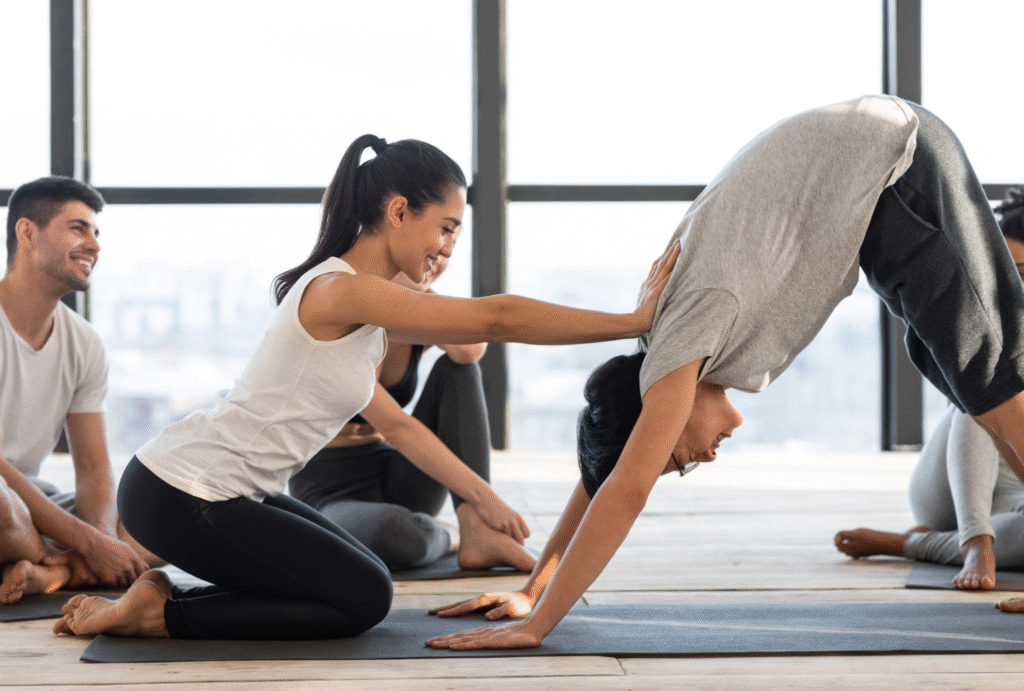
Here are some of the most common ones:
Trying to Advance Too Quickly
Avoid rushing into advanced postures before developing strength and mobility.
Strong foundations lead to safer long-term progress.
Holding the Breath
Breath should remain smooth and controlled throughout every posture.
If breathing becomes irregular, reduce the intensity of the pose.
Comparing Yourself with Others
Every practitioner has a unique body, background, and pace of progress.
Focus on your own journey rather than comparing flexibility or strength.
Ignoring Alignment
Correct alignment is more important than achieving the deepest version of a posture.
Poor technique may increase the risk of discomfort or injury.
Skipping Warm-Up
Cold muscles are less prepared for deep stretching.
Always begin with gentle movement and Sun Salutations.
Practicing Through Pain
Discomfort from effort is different from sharp or sudden pain.
If something feels painful, stop and assess the movement rather than pushing through it.
Forgetting Savasana
Relaxation is not optional.
Savasana allows the body and mind to absorb the benefits of the practice.
Safety Tips for a Sustainable Practice
A safe yoga practice supports long-term progress and reduces unnecessary strain.
Keep these principles in mind:
- Practice at your own pace.
- Listen to your body’s signals.
- Prioritize alignment over flexibility.
- Warm up before deep stretches.
- Breathe steadily throughout practice.
- Rest whenever necessary.
- Stay hydrated.
- Progress gradually.
If you have an existing injury, are pregnant, or have a medical condition, seek guidance from a qualified healthcare professional and practice under the supervision of an experienced yoga teacher.
What Should You Eat After Practice?
A balanced post-practice meal helps support recovery and replenish energy.
Consider including:
- Fresh fruits
- Vegetables
- Whole grains
- Legumes
- Healthy fats
- Adequate protein
- Plenty of water
Avoid overeating immediately after practice, and allow your body time to cool down before your meal.
A 30-Day Beginner Roadmap
Starting slowly and building consistency is one of the best ways to establish a sustainable practice.
| Week | Focus |
| Week 1 | Learn breathing techniques, Sun Salutations, and basic standing poses. |
| Week 2 | Add foundational seated postures and improve alignment. |
| Week 3 | Increase practice duration, refine transitions, and develop balance. |
| Week 4 | Build confidence with the complete beginner sequence while maintaining steady breath and mindfulness. |
Remember that progress is not measured by mastering advanced poses within a month. The goal is to develop confidence, consistency, and body awareness.
Signs That You’re Progressing
Many beginners expect progress to be visible only through flexibility or difficult postures.
However, meaningful progress often appears in subtle ways.
You may notice:
- More comfortable breathing during practice
- Better posture throughout the day
- Improved balance
- Increased energy
- Greater body awareness
- Reduced muscular stiffness
- Better concentration
- Increased patience
- More confidence
- A calmer response to daily stress
These changes often indicate that your practice is becoming more mindful and sustainable.
Building a Lifelong Practice
The most rewarding aspect of Ashtanga Vinyasa Flow Yoga Lessons is that it evolves with you. Every practice offers an opportunity to learn something new about your body, your breath, and your mind.
Rather than striving for perfection, approach each session with curiosity, patience, and consistency. Some days will feel effortless, while others may be more challenging. Both experiences are valuable and contribute to long-term growth.
By establishing a regular routine, practicing with awareness, and respecting your body’s limits, you create a strong foundation for a lifelong yoga journey—one that supports physical health, mental clarity, emotional resilience, and inner balance.
Ashtanga Vinyasa Flow Yoga Lessons vs Other Popular Yoga Styles – Which One Is Right for You?
Choosing the right yoga style can feel overwhelming, especially with so many options available today. While every form of yoga shares the common goal of improving physical and mental well-being, each style has its own philosophy, pace, intensity, and approach to practice.
Ashtanga Vinyasa Flow Yoga Lessons is known for its disciplined structure, synchronized breathing, and fixed sequences. Other styles, such as Hatha, Vinyasa Flow, Yin, Power Yoga, and Bikram Yoga, offer different experiences depending on your goals, fitness level, and personal preferences.
Understanding these differences can help you choose a practice that aligns with your needs while appreciating the unique benefits each style provides.
Ashtanga Vinyasa Flow Yoga Lessons vs Hatha Yoga
Both Ashtanga Vinyasa Flow Yoga Lessons and Hatha Yoga are rooted in traditional yoga, but they differ significantly in pace, intensity, and teaching style.
Hatha Yoga generally focuses on holding postures for longer periods with a slower, more relaxed rhythm. It emphasizes alignment, breathing, and mindful awareness, making it a popular choice for beginners and those seeking a gentler practice.
Ashtanga Vinyasa Flow Yoga Lessons follows a fixed sequence of postures linked together through breath. The continuous movement creates a more physically demanding and energetic practice while still maintaining a meditative quality.
Comparison Table
| Feature | Ashtanga Vinyasa Flow Yoga Lessons | Hatha Yoga |
| Practice Style | Dynamic and structured | Slow and steady |
| Pace | Fast to moderate | Slow |
| Sequence | Fixed | Flexible |
| Intensity | Moderate to high | Gentle to moderate |
| Breath | Continuous Ujjayi breathing | Natural breath awareness |
| Best For | Strength, endurance, discipline | Relaxation, alignment, beginners |
Which Should You Choose?
Choose Ashtanga Vinyasa Flow Yoga if you enjoy structured routines, dynamic movement, and building strength and stamina.
Choose Hatha Yoga if you prefer a slower pace, longer holds, and a gentle introduction to yoga.
Ashtanga Vinyasa Flow Yoga Lessons vs Vinyasa Flow Yoga
These two styles are often confused because both connect breath with movement.
However, there is one important difference.
Ashtanga Vinyasa Flow Yoga Lessons follows a traditional fixed sequence, while Vinyasa Flow Yoga allows teachers to create different sequences for every class.
Comparison Table
| Feature | Ashtanga Vinyasa Flow Yoga Lessons | Vinyasa Flow Yoga |
| Sequence | Fixed | Changes regularly |
| Creativity | Traditional | Creative |
| Pace | Consistent | Varies |
| Difficulty | Progressive | Depends on the class |
| Breath | Structured | Structured |
| Practice Style | Traditional | Modern |
Which Style Is Better?
If you enjoy routine and measurable progress, Ashtanga Vinyasa Flow Yoga Lessons may suit you best.
If you enjoy variety and creative sequencing, Vinyasa Flow Yoga offers more diversity.
Ashtanga Vinyasa Flow Yoga Lessons vs Power Yoga
Power Yoga was inspired by Ashtanga Yoga but evolved into a modern fitness-focused practice.
Power Yoga often emphasizes physical conditioning, muscular endurance, and calorie-burning workouts.
Ashtanga Vinyasa Flow Yoga Lessons maintains a stronger connection to traditional yoga philosophy, breathing techniques, and disciplined progression.
Comparison Table
| Feature | Ashtanga Vinyasa Flow Yoga Lessons | Power Yoga |
| Philosophy | Traditional | Modern fitness approach |
| Intensity | High | High |
| Sequence | Fixed | Flexible |
| Breath Focus | Strong emphasis | Moderate emphasis |
| Meditation | Integral part | Often limited |
| Goal | Holistic development | Physical fitness |
Which Is Better for Strength?
Both styles build strength.
However, Ashtanga Vinyasa Flow Yoga Lessons combines physical development with breath awareness, mindfulness, and philosophical principles, creating a more comprehensive yoga practice.
Ashtanga Vinyasa Flow Yoga Lessons vs Yin Yoga
Yin Yoga offers a completely different experience.
Instead of continuous movement, practitioners hold passive stretches for several minutes while relaxing the muscles and targeting deeper connective tissues.
Comparison Table
| Feature | Ashtanga Vinyasa Flow Yoga Lessons | Yin Yoga |
| Movement | Dynamic | Passive |
| Hold Time | Short | Long |
| Intensity | Moderate to High | Gentle |
| Main Focus | Strength and Flow | Flexibility and Relaxation |
| Heat Generation | High | Low |
| Best For | Fitness and Discipline | Stress Relief and Recovery |
Which Is Better?
Choose Ashtanga Vinyasa Flow Yog Lessonsa if you want an active, energetic practice.
Choose Yin Yoga if your goal is deep relaxation, flexibility, and recovery.
Many practitioners combine both styles to create balance in their weekly routine.
Ashtanga Vinyasa Flow Yoga Lessons vs Bikram Yoga
Bikram Yoga follows a standardized sequence of 26 postures practiced in a heated room.
While both systems emphasize consistency, they differ significantly in execution.
Comparison Table
| Feature | Ashtanga Vinyasa Flow Yoga Lessons | Bikram Yoga |
| Room Temperature | Normal | Heated |
| Sequence | Traditional Series | 26 Fixed Poses |
| Movement | Continuous Flow | Static Holds |
| Breath | Ujjayi Breathing | Natural Breathing |
| Physical Demand | Dynamic | Heat-based endurance |
| Philosophy | Traditional Yoga | Structured Physical Practice |
Which Is Better?
If you enjoy flowing movement and traditional yogic principles, Ashtanga Vinyasa Flow Yoga Lessons may be a better fit.
If you enjoy practicing in a heated environment and prefer a predictable sequence of static postures, Bikram Yoga may appeal to you.
Ashtanga Vinyasa Flow Yoga Lessons vs Iyengar Yoga
Iyengar Yoga focuses on precision, alignment, and the use of props such as blocks, straps, bolsters, and chairs. Poses are generally held longer, allowing practitioners to refine technique and develop body awareness.
Ashtanga Vinyasa Flow Yoga Lessons emphasizes continuous movement, breath synchronization, and a flowing sequence without relying heavily on props.
Comparison Table
| Feature | Ashtanga Vinyasa Flow Yoga Lessons | Iyengar Yoga |
| Practice Style | Dynamic Flow | Alignment-Based |
| Pace | Continuous | Slow |
| Props | Minimal | Frequently Used |
| Focus | Breath and Movement | Precision and Technique |
| Suitable For | Active Practitioners | Beginners, Rehabilitation, Alignment |
Ashtanga Vinyasa Flow Yoga Lessons vs Restorative Yoga
Restorative Yoga is designed to promote deep relaxation by supporting the body with props and holding gentle poses for extended periods.
It is ideal for recovery, stress relief, and nervous system regulation.
Ashtanga Vinyasa Flow Yoga Lessons is physically active and focuses on developing strength, endurance, and concentration.
Comparison Table
| Feature | Ashtanga Vinyasa Flow Yoga Lessons | Restorative Yoga |
| Intensity | Moderate to High | Very Gentle |
| Pace | Dynamic | Slow |
| Physical Effort | High | Minimal |
| Main Goal | Strength and Discipline | Relaxation and Recovery |
| Best For | Daily Active Practice | Recovery Days |
Which Yoga Style Is Best for Beginners?
Many beginners wonder which yoga style they should choose first.
The answer depends on personal goals, fitness level, and preferred pace of learning.
| Goal | Recommended Yoga Style |
| Complete Beginner | Hatha Yoga |
| Build Strength | Ashtanga Vinyasa Flow Yoga Lessons |
| Improve Flexibility | Yin Yoga |
| Reduce Stress | Hatha or Restorative Yoga |
| Weight Management | Ashtanga Vinyasa Flow Yoga Lessons |
| Athletic Conditioning | Power Yoga |
| Improve Alignment | Iyengar Yoga |
| Creative Flow | Vinyasa Flow Yoga |
Beginners interested in Ashtanga Vinyasa Flow Yoga Lessons should start gradually under the guidance of an experienced instructor and focus on mastering the fundamentals before progressing to more advanced sequences.
Which Yoga Style Is Best for Your Goals?
The ideal practice depends on what you hope to achieve.
| Your Goal | Recommended Style |
| Improve Overall Fitness | Ashtanga Vinyasa Flow Yoga Lessons |
| Increase Strength | Ashtanga Vinyasa Flow Yoga Lessons |
| Build Flexibility | Yin Yoga + Ashtanga Vinyasa Flow Yoga Lessons |
| Better Posture | Hatha Yoga or Iyengar Yoga |
| Stress Relief | Hatha Yoga, Yin Yoga, Restorative Yoga |
| Weight Management | Ashtanga Vinyasa Flow Yoga Lessons |
| Mental Focus | Ashtanga Vinyasa Flow Yoga Lessons |
| Better Balance | Ashtanga Vinyasa Flow Yoga Lessons |
| Recovery | Restorative Yoga |
| Daily Wellness | Combination of Hatha and Ashtanga Vinyasa Flow Yoga Lessons |
Can You Practice More Than One Style?
Absolutely.
Many experienced practitioners combine different yoga styles throughout the week to create a balanced routine.
For example:
- 2–3 days: Ashtanga Vinyasa Flow Yoga Lessons for strength and endurance.
- 1–2 days: Hatha Yoga for alignment and mindful movement.
- 1 day: Yin or Restorative Yoga for flexibility and recovery.
- Daily: Pranayama and meditation for breath awareness and mental clarity.
This balanced approach supports physical fitness while giving the body time to recover and adapt.
Which Yoga Style Is Right for You?
There is no single “best” yoga style for everyone. The right choice depends on your goals, lifestyle, and experience.
If you are looking for a practice that combines physical challenge, breath awareness, mental focus, and traditional yogic philosophy, Ashtanga Vinyasa Flow Yoga Lessons offers a comprehensive path for long-term growth.
Its structured sequences encourage discipline and consistency, while the integration of movement, breath, and mindfulness supports both physical vitality and inner balance. Whether you are practicing for fitness, stress management, or personal transformation, Ashtanga Vinyasa Flow Yoga Lessons provides a strong foundation for a lifelong yoga journey.
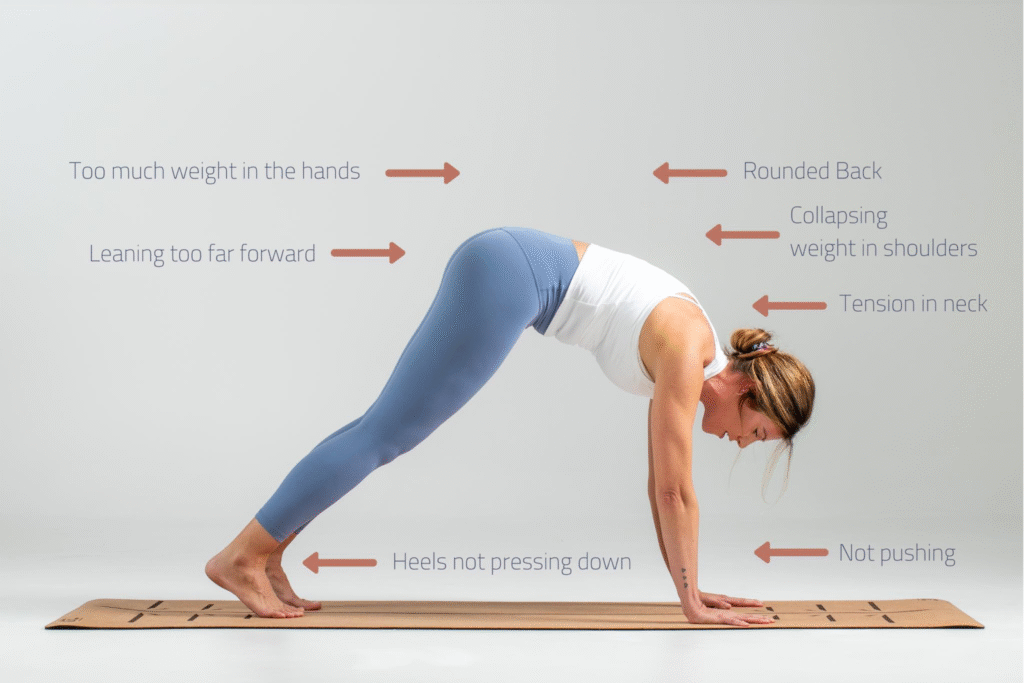
1. What Is Ashtanga Vinyasa Flow Yoga Lessons?
Ashtanga Vinyasa Flow Yoga Lessons is a traditional style of yoga that combines a fixed sequence of postures with synchronized breathing. Every movement is connected to the breath, creating a continuous flow that develops strength, flexibility, endurance, concentration, and mindfulness. It is based on the principles of the Eight Limbs of Yoga described in the Yoga Sutras of Patanjali.
2. Is Ashtanga Vinyasa Flow Yoga Lessons Suitable for Beginners?
Yes. Beginners can practice Ashtanga Vinyasa Flow Yoga Lessons by learning the foundational poses, proper breathing techniques, and correct alignment. Starting gradually under the guidance of a qualified teacher helps build confidence and reduces the risk of injury.
3. What Is the Difference Between Ashtanga Yoga and Vinyasa Flow Yoga?
Ashtanga Yoga follows a fixed sequence of postures practiced in the same order each time, while Vinyasa Flow Yoga allows teachers to create different sequences for every class. Both styles connect breath with movement, but Ashtanga is more structured and progressive.
4. How Often Should I Practice Ashtanga Vinyasa Flow Yoga Lessons?
Beginners can start with three sessions per week. As strength, flexibility, and endurance improve, practitioners often increase to four to six sessions weekly. Regular practice is more beneficial than occasional long sessions.
5. What Are the Main Benefits of Ashtanga Vinyasa Flow Yoga Lessons?
Regular practice may help improve:
- Strength
- Flexibility
- Balance
- Posture
- Core stability
- Cardiovascular endurance
- Concentration
- Stress management
- Breath awareness
- Overall well-being6. Is Ashtanga Vinyasa Flow Yoga Lessons Good for Weight Management?
Ashtanga Vinyasa Flow Yoga Lessons is an active and physically demanding practice that can support healthy weight management when combined with balanced nutrition and a healthy lifestyle. It also helps improve muscle tone and overall fitness.
7. How Long Does an Ashtanga Vinyasa Flow Yoga Lessons Class Last?
A traditional class usually lasts between 60 and 90 minutes, depending on the sequence being practiced and the experience level of the students.
8. Can I Practice Every Day?
Many experienced practitioners practice six days per week with one rest day. Beginners should increase their practice gradually and allow adequate time for recovery.
9. Do I Need to Be Flexible Before Starting?
No. Flexibility develops through regular practice. You do not need to be flexible before beginning Ashtanga Vinyasa Flow Yoga Lessons.
10. What Should I Wear?
Choose comfortable clothing that allows unrestricted movement. Breathable fabrics and fitted athletic wear are generally suitable because they allow teachers to observe alignment more easily.
11. Should I Practice on an Empty Stomach?
Yes. It is generally recommended to practice at least two to three hours after a full meal. If necessary, a light snack may be eaten about 30 to 60 minutes before practice.
12. What Is Ujjayi Breathing?
Ujjayi breathing is a controlled breathing technique performed through the nose with a gentle constriction at the back of the throat. It creates a soft ocean-like sound and helps maintain rhythm, concentration, and steady movement throughout the practice.
13. What Are Bandhas?
Bandhas are subtle muscular engagements that provide stability and support during yoga practice. The three primary Bandhas are Mula Bandha, Uddiyana Bandha, and Jalandhara Bandha.
14. What Is Drishti?
Drishti refers to the specific gaze point assigned to each posture. It helps improve balance, concentration, and mindfulness while reducing distractions.
15. How Long Does It Take to Learn the Primary Series?
The timeline varies for each practitioner. Some students become familiar with the sequence within a few months, while others spend several years refining the Primary Series before progressing further. Consistency is more important than speed.
16. Is Ashtanga Vinyasa Flow Yoga Lessons Physically Demanding?
Yes. It is considered one of the more active yoga styles because it combines continuous movement, strength-building postures, and synchronized breathing. However, beginners can modify poses according to their ability.
17. Can Older Adults Practice Ashtanga Vinyasa Flow Yoga Lessons?
Many older adults enjoy practicing yoga with appropriate modifications. Individuals with health concerns should seek advice from a qualified healthcare professional and learn under an experienced yoga instructor.
18. Is Ashtanga Vinyasa Flow Yoga Lessons Safe During Pregnancy?
Pregnancy requires individualized guidance. Anyone who is pregnant should consult their healthcare provider and practice only under the supervision of a qualified prenatal yoga teacher.
19. What Equipment Do I Need?
You only need a few essentials:
- A yoga mat
- Comfortable clothing
- A towel if needed
- Water for hydration after practice
Optional props such as blocks or straps can be useful for beginners.
20. Can I Learn Ashtanga Vinyasa Flow Yoga Lessons at Home?
Home practice is possible once you understand the fundamentals. Beginners benefit from learning with a qualified teacher first to establish proper alignment, breathing, and technique before practicing independently.
21. What Is the Best Time to Practice?
Traditionally, early morning is preferred because the mind is calm and distractions are minimal. However, the best time is the one that allows you to practice consistently.
22. Why Is Savasana Important?
Savasana allows the body and mind to absorb the effects of the practice. It promotes deep relaxation, supports recovery, and helps integrate the physical and mental benefits of yoga
23. Can Ashtanga Vinyasa Flow Yoga Lessons Help Reduce Stress?
Many practitioners find that the combination of mindful breathing, movement, and focused attention helps reduce stress and promotes a greater sense of calm. Individual experiences may vary.
24. How Is Progress Measured in Ashtanga Yoga?
Progress is not measured solely by advanced poses. Improvements in breathing, balance, posture, concentration, consistency, and body awareness are equally meaningful signs of growth.
25. Is Ashtanga Vinyasa Flow Yoga Lessons Only About Physical Exercise?
No. While it provides a challenging physical practice, Ashtanga Vinyasa Flow Yoga Lessons also emphasizes breath control, mindfulness, meditation, ethics, and personal development. It is a holistic discipline that supports the body, mind, and spirit.
Quick Summary Table
| Question | Short Answer |
| Is it beginner-friendly? | Yes, with proper guidance. |
| How many days should I practice? | 3–6 days per week, depending on experience. |
| Is it good for flexibility? | Yes, regular practice gradually improves flexibility. |
| Can it build strength? | Yes, it develops full-body strength and endurance. |
| Does it reduce stress? | Many practitioners report improved relaxation and focus. |
| Do I need special equipment? | No, a yoga mat and comfortable clothing are usually enough. |
| Can I practice at home? | Yes, after learning the fundamentals. |
| Is morning the best time? | Traditionally yes, but consistency matters most. |
Final Thoughts
Ashtanga Vinyasa Flow Yoga Lessons is much more than a sequence of physical postures. It is a complete system that integrates breath, movement, mindfulness, and yogic philosophy into a structured practice that can support lifelong learning and personal growth.
Whether your goal is to improve strength, increase flexibility, reduce stress, or deepen your understanding of yoga, consistent practice offers opportunities for meaningful transformation. Every session encourages greater awareness, patience, and resilience, reminding us that yoga is not about perfection but about showing up with intention and progressing one breath at a time.
With dedication, proper guidance, and a willingness to learn, Ashtanga Vinyasa Flow Yoga Lessons can become a valuable part of a healthy and balanced lifestyle.
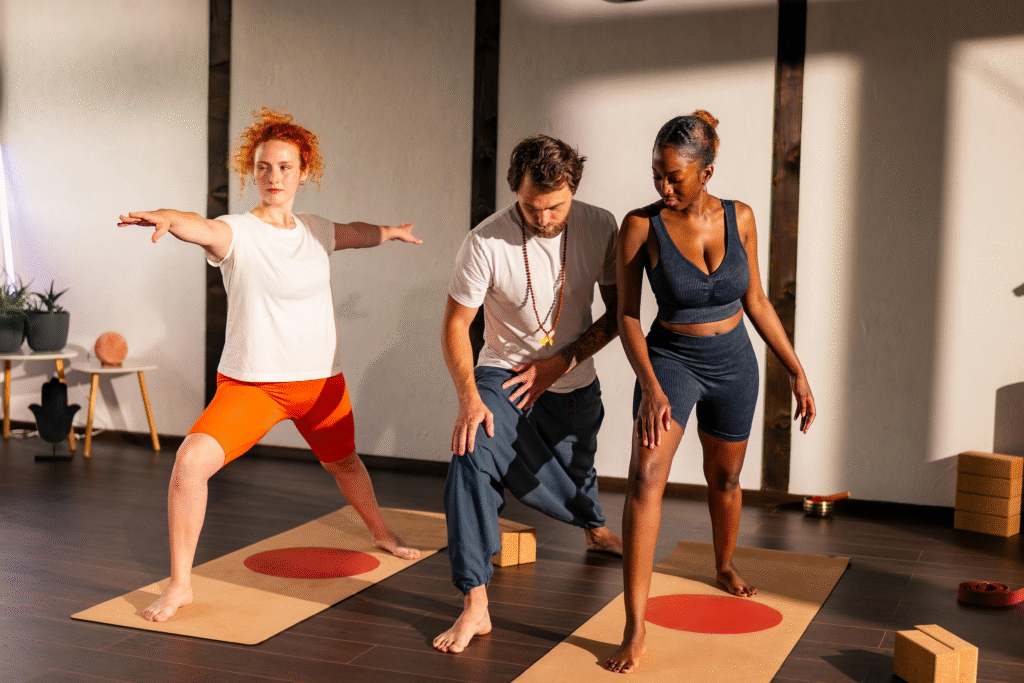
Practice Authentic Ashtanga Vinyasa Flow Yoga Lessons at Diksha Yoga School
At Diksha Yoga School, we believe that yoga is a journey of continuous learning, self-discovery, and transformation. Our approach combines traditional yogic teachings with supportive instruction, helping students develop a safe, confident, and meaningful practice regardless of their experience level.
Students receive comprehensive training in:
- Ashtanga Vinyasa Flow Yoga Lessons
- Hatha Yoga
- Pranayama
- Meditation
- Yoga Philosophy
- Anatomy and Physiology
- Teaching Methodology
- Alignment and Adjustments
Whether you want to deepen your personal practice or pursue professional yoga teacher training, our experienced teachers provide personalized guidance in a welcoming and supportive learning environment.
If you are ready to experience the transformative power of Ashtanga Vinyasa Flow Yoga Lessons, we invite you to begin your journey with Diksha Yoga School and take the next step toward a healthier, stronger, and more mindful life.
Part 9: Traditional Ashtanga Vinyasa Flow Yoga Lessons Sequence Explained
The Traditional Ashtanga Vinyasa Flow Yoga Lessons sequence is one of the defining features of this ancient yoga system. Unlike many modern yoga classes where sequences change daily, Ashtanga follows a fixed, progressive series of postures designed to prepare the body and mind step by step. Every movement, breath, and transition has a specific purpose, creating a balanced practice that develops strength, flexibility, mobility, endurance, concentration, and inner awareness.
This carefully designed structure allows practitioners to progress safely while building confidence through repetition. Rather than learning new sequences every class, students deepen their understanding of familiar postures, refine alignment, and cultivate greater mindfulness over time.
At Diksha Yoga School, we teach the traditional Ashtanga sequence with emphasis on Ujjayi Pranayama, Bandhas, Drishti, proper alignment, anatomy, and yogic philosophy, ensuring students experience the practice as a complete system rather than simply a physical workout.
The Complete Structure of a Traditional Ashtanga Yoga Practice
| Practice Stage | Primary Purpose | Difficulty Level |
| Opening Chant | Prepare the mind and honour the yoga tradition | Beginner |
| Centering & Breath Awareness | Establish focus and Ujjayi breathing | Beginner |
| Surya Namaskar A | Warm the body and synchronise breath with movement | Beginner |
| Surya Namaskar B | Build strength, endurance, and stability | Beginner |
| Standing Sequence | Improve strength, balance, posture, and mobility | Beginner–Intermediate |
| Seated Sequence | Develop flexibility, hip mobility, and spinal health | Intermediate |
| Backbends | Build spinal strength and open the chest | Intermediate |
| Inversions | Improve balance, concentration, and body awareness | Intermediate–Advanced |
| Finishing Sequence | Cool down the body and calm the nervous system | Beginner |
| Closing Chant (Optional) | Conclude the practice with gratitude and mindfulness | Beginner |
1. Opening Chant
Traditionally, an Ashtanga Yoga practice begins with the Opening Invocation, a Sanskrit chant recited before movement begins. This chant is not simply a ritual—it helps practitioners cultivate respect for the yoga lineage, quiet the mind, and establish a focused, mindful state before practice.
The Opening Chant reminds students that yoga is a lifelong path of learning, humility, and self-discovery rather than a pursuit of physical achievement alone.
2. Centering & Breath Awareness
Before beginning movement, practitioners spend a few moments connecting with their breath through Ujjayi Pranayama.
This short period of stillness helps:
- Calm the mind
- Reduce distractions
- Establish steady breathing
- Improve concentration
- Prepare the nervous system for practice
Centering creates the bridge between daily life and yoga practice, allowing students to become fully present before moving into the Sun Salutations.
3. Surya Namaskar A
Vinyasa Sun Salutation A (Surya Namaskar A)
Step 1 – Samasthiti (Mountain Pose)
Center • Ground • Prepare
Step 2 – Urdhva Hastasana (Upward Salute)
Lengthen • Expand • Inhale
Step 3 – Uttanasana (Standing Forward Fold)
Fold • Surrender • Exhale
Step 4 – Ardha Uttanasana (Half Forward Fold)
Lengthen • Align • Inhale
Step 5 – Phalakasana (Plank Pose)
Stabilize • Strengthen • Engage
Step 6 – Chaturanga Dandasana (Four-Limbed Staff Pose)
Control • Strength • Balance
Step 7 – Urdhva Mukha Svanasana (Upward Facing Dog)
Open • Lift • Energize
Step 8 – Adho Mukha Svanasana (Downward Facing Dog)
Lengthen • Breathe • Ground
Step 9 – Ardha Uttanasana (Half Forward Fold)
Extend • Reawaken • Inhale
Step 10 – Uttanasana (Standing Forward Fold)
Release • Relax • Exhale
Step 11 – Urdhva Hastasana (Upward Salute)
Rise • Expand • Inhale
Step 12 – Samasthiti (Mountain Pose)
Return • Observe • Breathe
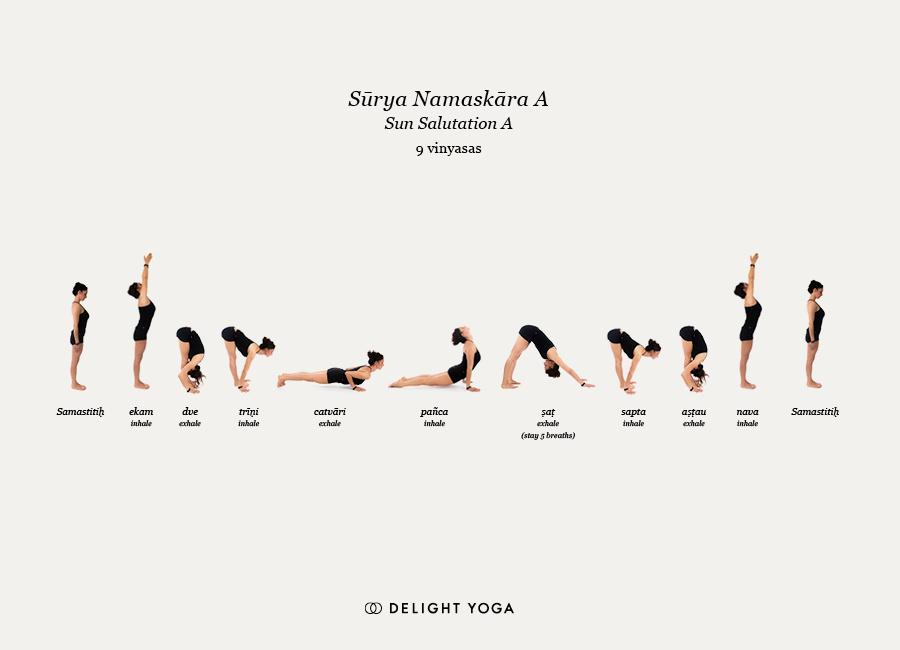
4. Surya Namaskar B
Vinyasa Sun Salutation B (Surya Namaskar B)
Step 1 – Samasthiti (Mountain Pose)
Center • Ground • Prepare
Step 2 – Utkatasana (Chair Pose)
Strengthen • Ignite • Inhale
Step 3 – Uttanasana (Standing Forward Fold)
Fold • Release • Exhale
Step 4 – Ardha Uttanasana (Half Forward Fold)
Lengthen • Align • Inhale
Step 5 – Phalakasana (Plank Pose)
Stabilize • Engage • Exhale
Step 6 – Chaturanga Dandasana (Four-Limbed Staff Pose)
Control • Strength • Balance
Step 7 – Urdhva Mukha Svanasana (Upward Facing Dog)
Open • Lift • Inhale
Step 8 – Adho Mukha Svanasana (Downward Facing Dog)
Lengthen • Ground • Exhale
Step 9 – Virabhadrasana I (Warrior I – Right Side)
Power • Focus • Inhale
Step 10 – Chaturanga Dandasana (Four-Limbed Staff Pose)
Stability • Strength • Exhale
Step 11 – Urdhva Mukha Svanasana (Upward Facing Dog)
Expand • Energize • Inhale
Step 12 – Adho Mukha Svanasana (Downward Facing Dog)
Ground • Breathe • Exhale
Step 13 – Virabhadrasana I (Warrior I – Left Side)
Balance • Confidence • Inhale
Step 14 – Chaturanga Dandasana (Four-Limbed Staff Pose)
Control • Strength • Exhale
Step 15 – Urdhva Mukha Svanasana (Upward Facing Dog)
Open the Heart • Inhale
Step 16 – Adho Mukha Svanasana (Downward Facing Dog)
Steady • Restore • Exhale
Step 17 – Ardha Uttanasana (Half Forward Fold)
Lengthen • Lift • Inhale
Step 18 – Uttanasana (Standing Forward Fold)
Relax • Surrender • Exhale
Step 19 – Utkatasana (Chair Pose)
Rise • Strengthen • Inhale
Step 20 – Samasthiti (Mountain Pose)
Return • Observe • Breathe
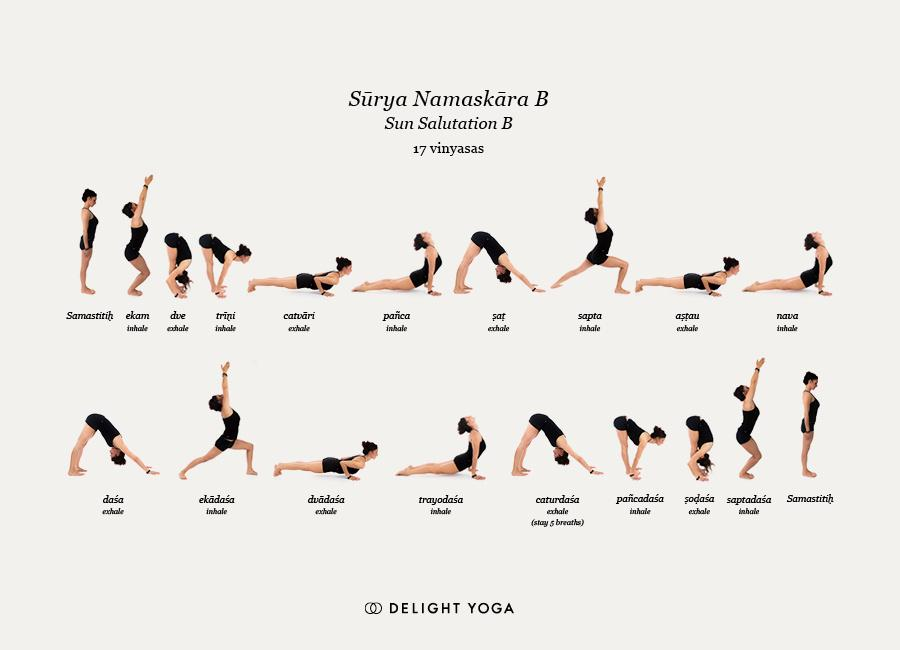
5. Standing Sequence
Step 1: Tadasana (Mountain Pose)
Step 2: Urdhva Hastasana (Upward Salute)
Step 3: Uttanasana (Standing Forward Fold)
Step 4: Ardha Uttanasana (Half Forward Fold)
Step 5: Utkatasana (Chair Pose)
Step 6: Virabhadrasana I (Warrior I)
Step 7: Virabhadrasana II (Warrior II)
Step 8: Reverse Warrior
Step 9: Utthita Parsvakonasana (Extended Side Angle Pose)
Step 10: Trikonasana (Triangle Pose)
Step 11: Parivrtta Trikonasana (Revolved Triangle Pose)
Step 12: Parsvottanasana (Pyramid Pose)
Step 13: Prasarita Padottanasana (Wide-Legged Forward Fold)
Step 14: Utkata Konasana (Goddess Pose)
Step 15: Vrksasana (Tree Pose)
Step 16: Garudasana (Eagle Pose)
Step 17: Ardha Chandrasana (Half Moon Pose)
Step 18: Virabhadrasana III (Warrior III)
Step 19: Utthita Hasta Padangusthasana (Standing Hand-to-Big-Toe Pose)
Step 20: Natarajasana (Dancer Pose)
6. Seated Sequence
Following the standing postures, practitioners move to the floor for the Seated Sequence, where the emphasis shifts toward flexibility, spinal mobility, hip opening, and mindful breathing.
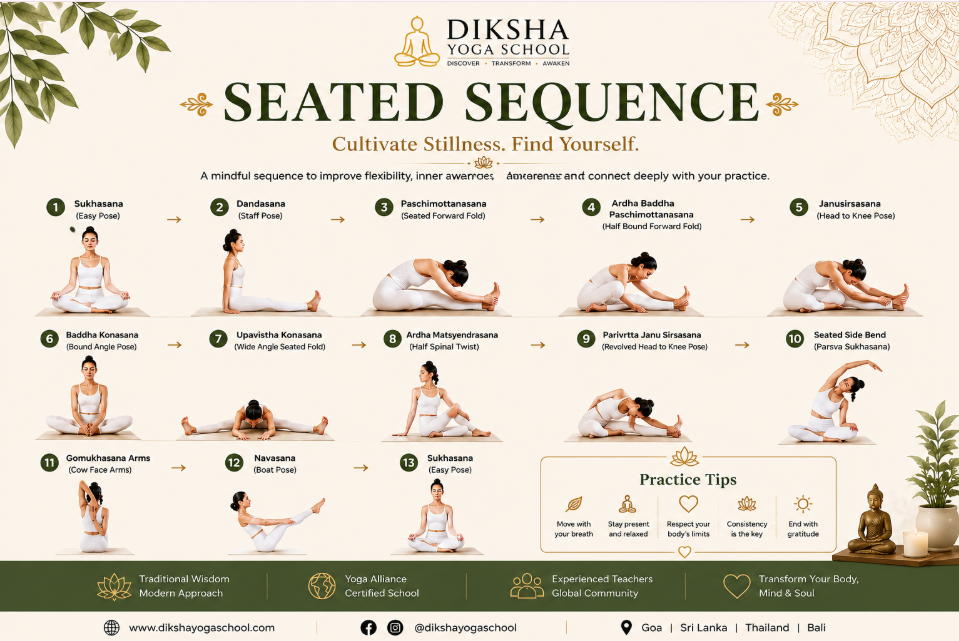
This section includes forward folds, twists, hip-opening postures, and seated balancing poses that encourage deeper awareness while maintaining the steady rhythm of Ujjayi breath
Benefits of the Seated Sequence
| Benefit | Purpose |
| Hip Mobility | Releases tension and improves range of motion |
| Hamstring Flexibility | Supports healthier movement and posture |
| Spinal Health | Encourages mobility and proper alignment |
| Breath Awareness | Deepens concentration and relaxation |
| Mental Focus | Develops patience and mindfulnes |
7. Backbends
Backbends are introduced after the body has been thoroughly prepared.
Their purpose is to:
- Strengthen the spine
- Open the chest
- Improve posture
- Increase shoulder mobility
- Build confidence
- Develop controlled breathing
Rather than forcing flexibility, traditional Ashtanga Yoga teaches practitioners to approach backbends gradually with proper alignment and consistent practice.
8. Finishing Sequence
The Finishing Sequence allows the body and mind to absorb the benefits of the practice.
This section usually includes:
- Shoulderstand variations
- Headstand (for appropriate practitioners)
- Gentle closing postures
- Savasana
The purpose is to:
- Reduce heart rate
- Relax the nervous system
- Improve circulation
- Restore energy
- Prepare for meditation
9. Closing Chant
Many traditional classes conclude with a Sanskrit closing chant expressing gratitude, peace, and well-being for all living beings.
Ending the practice with stillness reinforces that yoga extends beyond physical movement into daily life.
Mysore Style vs Led Ashtanga Class
| Mysore Style | Led Class |
| Self-paced practice | Teacher leads the entire class |
| Individual instruction | Everyone moves together |
| Personalised adjustments | Same sequence for all students |
| Progress based on readiness | Fixed pace |
| Ideal for long-term progression | Excellent for learning rhythm and breathing |
At Diksha Yoga School, students experience both Mysore-style self-practice and guided Led Classes, helping them develop independence while receiving personalised instruction and feedback from experienced teachers.
Why Doesn’t the Ashtanga Sequence Change?
One of the most frequently asked questions is why Ashtanga Yoga follows the same sequence every day.
The answer is simple: repetition creates mastery.
By practising the same sequence consistently, students:
- Improve alignment
- Refine breathing
- Measure progress
- Build confidence
- Develop discipline
- Reduce mental distractions
- Deepen mindfulness
Rather than seeking constant novelty, Ashtanga Yoga encourages practitioners to discover new awareness within familiar movements
How Students Progress in Ashtanga Yoga
Unlike many fitness programmes, progression in Ashtanga Yoga is based on readiness rather than speed.
Teachers observe:
- Breath quality
- Alignment
- Stability
- Consistency
- Mental focus
- Safe movement patterns
Only when these foundations are established do students gradually learn additional postures.
Progression Through the Ashtanga System
| Stage | Main Focus | Typical Goal |
| Beginner | Learn breathing and alignment | Build consistency |
| Primary Series | Develop strength and flexibility | Establish strong foundations |
| Intermediate Series | Improve spinal mobility and endurance | Refine technique |
| Advanced Series | Integrate breath, movement, and concentration | Deepen awareness and mastery |
Key Takeaway
The Traditional Ashtanga Vinyasa Flow Yoga Lessons sequence is a carefully designed system that develops the body and mind progressively through breath-led movement, intelligent sequencing, and disciplined practice. By following the same sequence with patience and consistency, practitioners cultivate not only greater strength and flexibility but also deeper concentration, resilience, and self-awareness. At Diksha Yoga School, this traditional approach is combined with personalised guidance, anatomy-informed instruction, and authentic yogic philosophy to help students build a safe, sustainable, and lifelong yoga practice.
Part 10: Common Mistakes Every Ashtanga Vinyasa Flow Yoga Lessons Student Should Avoid
Learning Traditional Ashtanga Vinyasa Flow Yoga Lessons is a rewarding journey, but like any discipline, it comes with challenges. Whether you are a beginner or an experienced practitioner, making mistakes is a natural part of the learning process. The key is to recognise these habits early and correct them before they become obstacles to safe and sustainable progress.
Many students believe that advancing in Ashtanga Yoga means achieving difficult postures as quickly as possible. In reality, the true practice is about developing steady breathing, proper alignment, mindful awareness, patience, and consistency. By avoiding common mistakes and focusing on strong foundations, practitioners can reduce the risk of unnecessary strain while experiencing the full physical, mental, and spiritual benefits of this traditional yoga system.
At Diksha Yoga School, our experienced teachers emphasise Ujjayi Pranayama, Bandhas, Drishti, anatomy-based alignment, and gradual progression to help students practise safely and confidently. We believe that mastering the basics is the fastest path to long-term growth.
Common Ashtanga Yoga Mistakes and How to Fix Them
| Mistake | Why It Happens | Solution |
| Holding the Breath | Too much effort or moving too quickly | Slow down and maintain smooth, steady Ujjayi Pranayama. |
| Rushing Through the Sequence | Ego, impatience, or focusing only on finishing | Let your breath determine the pace of every movement. |
| Poor Alignment | Lack of guidance or body awareness | Learn proper technique before increasing depth or intensity. |
| Overtraining | Too much enthusiasm and inadequate recovery | Balance practice with rest, sleep, and recovery days. |
| Skipping the Warm-Up | Wanting to save time | Always begin with Surya Namaskar A and B to prepare the body. |
| Locking the Joints | Misunderstanding stability | Keep gentle muscular engagement and avoid hyperextension. |
| Practising Advanced Poses Too Early | Impatience or comparison with others | Master the Primary Series before progressing. |
| Ignoring Bandhas & Drishti | Focusing only on physical postures | Integrate breath, core engagement, and focused gaze into every pose. |
| Comparing Yourself to Others | Social media or class environment | Focus on your own journey and consistent improvement. |
| Skipping Savasana | Feeling short of time | Complete every practice with relaxation and mindful recovery. |
1. Moving Too Fast
One of the most common mistakes in Ashtanga Vinyasa Flow Yoga Lessons is rushing through the sequence. The goal is not to finish quickly but to move with awareness. Every posture should be guided by Ujjayi Pranayama, allowing the breath—not speed—to determine the rhythm of the practice.
Moving too quickly often leads to poor alignment, unnecessary tension, reduced body awareness, and a greater risk of injury. Slowing down allows practitioners to refine technique, improve concentration, and experience the meditative quality of the practice.
2. Ignoring the Breath
Breath is the foundation of Traditional Ashtanga Yoga. When breathing becomes irregular, shallow, or strained, the body often responds with tension and fatigue.
Signs that you should reduce the intensity include:
- Irregular or forced breathing
- Holding the breath during difficult postures
- Excessive muscular tension
- Feeling exhausted early in the practice
Maintaining smooth and controlled Ujjayi Pranayama creates stability, improves concentration, and supports efficient movement throughout the sequence.
3. Skipping the Warm-Up
Beginning with demanding postures before warming the body can increase the risk of muscle strain and reduce movement quality.
The traditional practice always begins with Surya Namaskar A and Surya Namaskar B, which help:
- Increase blood circulation
- Warm muscles safely
- Improve joint mobility
- Activate the core
- Synchronise breath with movement
- Prepare the body for standing and seated postures
A proper warm-up creates the foundation for a safer and more effective practice.
4. Locking the Joints
Many beginners mistakenly lock their knees or elbows in an attempt to improve alignment. However, hyperextending the joints can place unnecessary stress on ligaments and surrounding tissues.
Instead, maintain gentle muscular engagement while keeping the joints stable and supported. Proper alignment should create strength and stability—not rigidity.
5. Practising Advanced Poses Too Early
Advanced arm balances, deep backbends, and complex inversions require years of consistent practice. Attempting these postures before developing sufficient strength, flexibility, and control may increase the likelihood of unnecessary strain.
Traditional Ashtanga Yoga follows a progressive system for a reason. By mastering the Primary Series (Yoga Chikitsa) first, practitioners develop the strength, breath awareness, and alignment needed for long-term progress.
6. Comparing Yourself with Others
Every practitioner has a different body, background, and level of experience. Comparing yourself with classmates or images on social media can create frustration and distract from the true purpose of yoga.
Instead of comparing postures, ask yourself:
- Is my breathing calm and steady?
- Am I improving my alignment?
- Do I feel stronger than last month?
- Am I becoming more patient and mindful?
These are the signs of meaningful progress in Ashtanga Yoga.
7. Poor Alignment
Proper alignment is essential for safe and effective practice. Misaligned postures can create unnecessary stress on the joints and reduce the benefits of each pose.
Learning under experienced teachers helps practitioners understand:
- Correct posture alignment
- Safe movement patterns
- Proper weight distribution
- Core engagement through Bandhas
- Individual modifications based on body structure
Good alignment supports both immediate comfort and long-term joint health.
8. Overtraining Without Recovery
Consistency is important, but practising intensely every day without allowing adequate recovery can lead to fatigue and reduced performance.
Support your practice with:
- Sufficient sleep
- Balanced nutrition
- Hydration
- Rest or lighter practice when needed
- Gentle stretching and mobility work
Recovery is an essential part of long-term progress.
9. Skipping Savasana
After a dynamic Ashtanga practice, Savasana (Corpse Pose) allows the body and mind to integrate the benefits of the session.
Savasana helps:
- Calm the nervous system
- Reduce muscle tension
- Lower the heart rate
- Improve mental clarity
- Support physical recovery
- Prepare the mind for meditation
Even a few minutes of complete relaxation can significantly enhance the overall benefits of your practice.
Beginner Habits vs Healthy Ashtanga Yoga Habits
| Beginner Habit | Healthy Ashtanga Habit |
| Rushes through the sequence | Moves with steady breath and mindful awareness |
| Focuses only on advanced poses | Builds strong foundations first |
| Holds the breath | Maintains smooth Ujjayi Pranayama |
| Compares progress with others | Respects their own unique journey |
| Skips warm-up or Savasana | Completes the entire practice mindfully |
| Trains through pain | Listens to the body and practises wisely |
| Prioritises flexibility alone | Develops strength, stability, mobility, and balance together |
Expert Tips for a Safe & Sustainable Practice
- Practise consistently rather than intensely.
- Let your breath guide every movement.
- Focus on quality instead of speed.
- Learn proper alignment before increasing flexibility.
- Progress gradually under qualified teachers.
- Respect your body’s limits while remaining consistent.
- Finish every session with Savasana.
At Diksha Yoga School, students receive personalised guidance, traditional instruction, anatomy-informed alignment, and mindful teaching methods that help build a safe, confident, and sustainable yoga practice. We believe that avoiding common mistakes is just as important as learning new postures because strong foundations create lifelong progress.
Key Takeaway
Mistakes are a natural part of learning Ashtanga Vinyasa Flow Yoga Lessons, but they should become opportunities for growth rather than discouragement. By focusing on steady breathing, proper alignment, patience, consistent practice, and qualified guidance, you can safely deepen your practice while enjoying the lifelong benefits of traditional yoga. Remember, true success in Ashtanga Yoga is not measured by how advanced a posture looks—it is measured by the awareness, balance, and presence you bring to every breath and every movement.
Part 11: Safety Precautions & Contraindications for Ashtanga Vinyasa Flow Yoga Lessons
Traditional Ashtanga Vinyasa Flow Yoga Lessons is a dynamic and rewarding practice that offers numerous physical and mental benefits. However, like any form of physical activity, it should be practised with awareness, proper technique, and respect for your individual health needs. Every practitioner has a unique body, medical history, and level of experience, which is why safety should always be the first priority.
While many people can safely enjoy Ashtanga Yoga, certain health conditions may require modifications, temporary avoidance of specific postures, or guidance from a qualified yoga teacher and healthcare professional. Listening to your body, practising within your limits, and progressing gradually are essential for building a safe and sustainable practice.
At Diksha Yoga School, our experienced teachers emphasise proper alignment, anatomy-informed instruction, mindful progression, and personalised modifications to help students practise safely while respecting their individual abilities.
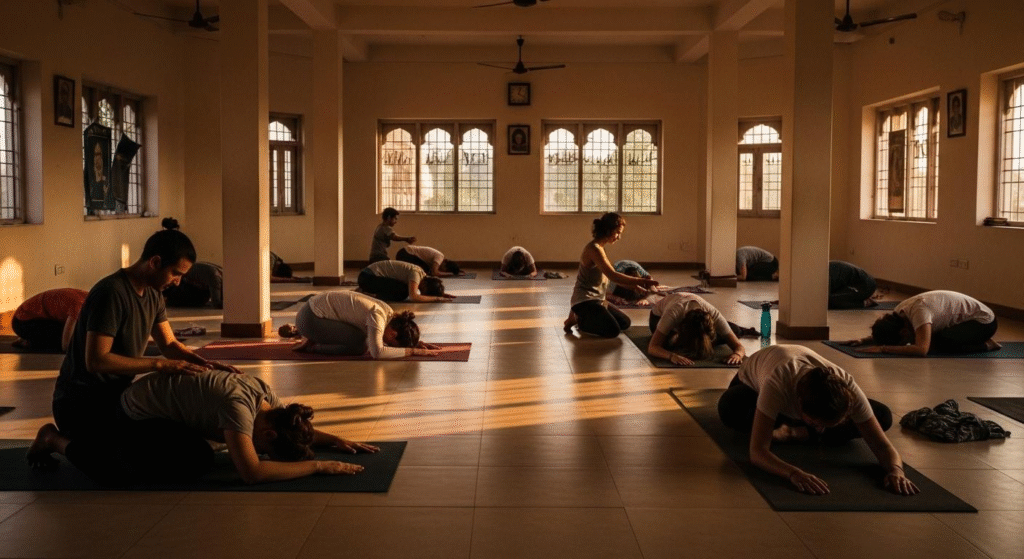
Can You Practise Ashtanga Yoga with These Conditions?
| Health Condition | Can You Practise? | Recommendation |
| Pregnancy | Yes, with appropriate modifications | Practise under the guidance of a qualified prenatal yoga teacher and your healthcare provider. |
| High Blood Pressure | Yes, with caution | Avoid or modify certain inversions and intense breath retention. Consult your healthcare provider before beginning or continuing practice. |
| Heart Conditions | Often possible with medical clearance | Practise gently, avoid overexertion, and follow advice from your healthcare provider. |
| Wrist Injury | Yes, with modifications | Reduce weight-bearing on the hands, use props where appropriate, or practise alternative postures. |
| Shoulder Injury | Yes, with modifications | Avoid movements that cause pain and work with a qualified teacher to adapt the practice. |
| Knee Pain or Injury | Yes, with modifications | Use supportive props, avoid forcing deep knee flexion, and prioritise proper alignment. |
| Herniated Disc | Depends on the condition | Seek advice from your healthcare provider and practise only under experienced supervision. Certain movements may need to be modified or avoided. |
| Recent Surgery | Usually not until cleared | Wait for medical clearance before resuming yoga and return gradually. |
| Vertigo | Yes, with caution | Move slowly, avoid rapid transitions, and modify inversions if they trigger symptoms. |
| Glaucoma | With caution | Some inversions may increase pressure in the eyes. Consult your eye specialist and modify the practice accordingly. |
General Safety Guidelines
Following a few simple principles can make your Ashtanga Yoga practice safer and more enjoyable.
- Practise under the guidance of a qualified and experienced yoga teacher, especially if you are new to Ashtanga Yoga.
- Never force yourself into a posture or work through sharp or persistent pain.
- Progress gradually and master the fundamentals before attempting advanced postures.
- Maintain smooth, steady Ujjayi Pranayama throughout the practice.
- Warm up properly with Surya Namaskar A and Surya Namaskar B before moving into deeper postures.
- Stay hydrated and support your practice with adequate sleep and balanced nutrition.
- Allow time for recovery and include rest days when needed.
- Finish each session with Savasana to help the body and nervous system recover.
When Should You Stop Practising?
Stop practising immediately and seek appropriate medical advice if you experience:
- Sharp or severe pain
- Dizziness or fainting
- Chest pain or unusual shortness of breath
- Sudden loss of balance or coordination
- Persistent numbness or tingling
- Vision changes during practice
Yoga should challenge you, but it should never cause severe pain or place your health at unnecessary risk.
Practising During Pregnancy
Many women continue practising yoga during pregnancy with suitable modifications and professional guidance. However, pregnancy is not the time to begin an intensive Ashtanga Yoga practice if you have little or no previous experience.
A qualified prenatal yoga teacher can help adapt postures, avoid unnecessary abdominal pressure, and ensure the practice remains safe and supportive throughout each stage of pregnancy. Always follow the advice of your healthcare provider regarding physical activity during pregnancy.
Beginners vs Safe Practice
| Beginner Mistake | Safer Approach |
| Pushing through pain | Stop, assess, and modify the posture if needed. |
| Attempting advanced poses too soon | Build strength and mobility gradually through the Primary Series. |
| Ignoring injuries | Inform your teacher and adapt the practice. |
| Skipping the warm-up | Begin every session with Sun Salutations. |
| Holding the breath | Maintain smooth, steady Ujjayi breathing throughout. |
| Comparing yourself with others | Respect your own body and progress at your own pace. |
Safety Tips for Long-Term Practice
- Practise consistently rather than aggressively.
- Prioritise proper alignment over achieving deeper stretches.
- Listen to your body’s signals and respect your limits.
- Choose qualified teachers who understand anatomy and safe progression.
- Rest when your body needs recovery.
- Remember that long-term consistency is more beneficial than short-term intensity.
At Diksha Yoga School, student safety is at the heart of every class. Our experienced teachers provide personalised guidance, anatomy-based alignment instruction, posture modifications, and mindful sequencing to help practitioners of all levels build a practice that is both authentic and sustainable.
Key Takeaway
Traditional Ashtanga Vinyasa Flow Yoga Lessons can be adapted for many practitioners, but safety should always come before performance. By practising with proper alignment, steady breathing, qualified guidance, and appropriate modifications, you can reduce unnecessary risks while enjoying the long-term benefits of yoga. If you have a medical condition, are recovering from an injury or surgery, or are pregnant, consult your healthcare provider and work with an experienced yoga teacher to determine the most appropriate approach for your individual needs.
Part 12: Ashtanga Vinyasa Flow Yoga for Different Goals
One of the greatest strengths of Traditional Ashtanga Vinyasa Flow Yoga Lessons is its versatility. While every practitioner follows the same fundamental principles of breath, movement, Bandhas, Drishti, and mindful awareness, the benefits of the practice can support a wide range of personal health and wellness goals.
Whether you want to improve your fitness, increase flexibility, reduce stress, build strength, enhance athletic performance, or simply develop a healthier lifestyle, Ashtanga Yoga provides a structured and progressive system that can be adapted to your individual needs and experience level.
At Diksha Yoga School, we believe yoga is not about achieving one specific goal—it is about creating balance in every aspect of life. Our experienced teachers help students modify their practice according to their age, ability, physical condition, and personal aspirations while preserving the traditional principles of Ashtanga Yoga.
Recommended Practice Duration for Different Goals
| Goal | Recommended Practice Duration |
| Weight Management | 60–90 minutes |
| Flexibility | 45–60 minutes |
| Stress Relief | 30–45 minutes |
| Strength & Muscle Endurance | 60 minutes |
| Mobility & Joint Health | 45 minutes |
Note: Practice duration varies depending on your experience, overall fitness, and individual health needs. Beginners may start with shorter sessions and gradually increase their practice under qualified guidance.
Ashtanga Yoga for Weight Management
Many people begin Ashtanga Vinyasa Flow Yoga Lessons to support healthy weight management because the continuous flow of movement, combined with controlled breathing, creates a physically demanding yet mindful practice.
Regular practice may help:
- Increase calorie expenditure through continuous movement
- Build lean muscle strength
- Improve cardiovascular endurance
- Support a healthy metabolism
- Encourage mindful lifestyle habits
- Reduce stress-related eating by promoting emotional balance
For the best results, combine regular yoga practice with balanced nutrition, adequate sleep, and healthy daily habits.
Ashtanga Yoga for Flexibility
Flexibility develops gradually through consistent practice—not by forcing deeper stretches.
The structured sequence helps improve:
- Hamstring flexibility
- Hip mobility
- Shoulder mobility
- Spinal flexibility
- Ankle mobility
- Overall range of motion
Because the same postures are repeated regularly, practitioners can safely observe gradual improvements while maintaining proper alignment and steady breathing.
Ashtanga Yoga for Stress Relief
Although Ashtanga Yoga is physically active, it also has a deeply calming effect on the mind.
The combination of Ujjayi Pranayama, mindful movement, and focused attention encourages practitioners to remain present, helping reduce mental distractions and support emotional well-being.
Many students report improvements in:
- Mental clarity
- Emotional balance
- Concentration
- Sleep quality
- Overall sense of calm
Rather than escaping stress, yoga teaches you to respond with greater awareness and resilience.
Ashtanga Yoga for Back Health
A well-balanced Ashtanga practice can help improve posture, strengthen the core, and increase spinal mobility when practised with proper alignment.
Potential benefits include:
- Improved postural awareness
- Stronger core muscles
- Better spinal mobility
- Increased flexibility in the hips and hamstrings
- Reduced muscular tension caused by prolonged sitting
If you have chronic back pain, a herniated disc, or another spinal condition, consult your healthcare provider and practise under the guidance of an experienced yoga teacher. Certain postures may need to be modified or avoided.
Ashtanga Yoga for Office Workers
Long hours of sitting can contribute to stiffness, poor posture, reduced mobility, and muscular tension.
Ashtanga Yoga helps office workers by:
- Improving posture
- Opening the hips
- Reducing neck and shoulder tension
- Strengthening the core
- Increasing spinal mobility
- Enhancing circulation
- Supporting better body awareness during daily activities
Regular practice can help counterbalance the effects of a sedentary lifestyle.
Ashtanga Yoga for Athletes
Many athletes incorporate Ashtanga Yoga into their training because it complements strength and endurance sports.
Benefits include:
- Improved flexibility
- Greater mobility
- Better balance and coordination
- Enhanced body awareness
- Increased recovery through mindful movement
- Improved breathing efficiency
Yoga can support athletic performance by helping practitioners move more efficiently while maintaining stability and control.
Ashtanga Yoga for Seniors
Older adults can also benefit from yoga when the practice is appropriately modified.
With professional guidance, Ashtanga-inspired practice may help:
- Maintain mobility
- Improve balance
- Support healthy posture
- Build functional strength
- Enhance coordination
- Encourage confidence in everyday movement
Seniors should always work within their individual abilities and use modifications where appropriate.
Ashtanga Yoga for Women
Women of all ages practise Ashtanga Yoga for its holistic approach to physical and mental well-being.
Regular practice may help support:
- Functional strength
- Flexibility
- Postural health
- Stress management
- Balance and coordination
- Overall wellness
During pregnancy or certain stages of recovery, modifications may be necessary. Always seek guidance from a qualified teacher and follow the advice of your healthcare provider.
Ashtanga Yoga for Men
Ashtanga Yoga offers men an effective way to improve mobility, strength, flexibility, and recovery while complementing other physical activities.
Many male practitioners appreciate its ability to develop:
- Core stability
- Joint mobility
- Functional flexibility
- Balance
- Endurance
- Mental discipline
The practice also helps reduce muscular tightness commonly associated with strength training and sedentary work.
Ashtanga Yoga for Beginners
Beginners often assume that Ashtanga Yoga is only for advanced practitioners. In reality, every experienced yogi once began with the fundamentals.
New students should focus on:
- Learning Ujjayi Pranayama
- Developing proper alignment
- Building consistency
- Mastering Sun Salutations
- Understanding Bandhas and Drishti
- Progressing gradually without comparison
With qualified guidance and regular practice, beginners can safely develop the confidence and skills needed for long-term growth.
Which Goal Matches Your Practice?
| Goal | Primary Focus | Key Benefits |
| Weight Management | Dynamic movement | Strength, endurance, calorie expenditure |
| Flexibility | Mobility and stretching | Improved range of motion and posture |
| Stress Relief | Breath and mindfulness | Greater calm, focus, and emotional balance |
| Back Health | Core strength and alignment | Better posture and spinal support |
| Office Workers | Mobility and posture | Reduced stiffness and improved movement |
| Athletes | Recovery and performance | Mobility, balance, coordination |
| Seniors | Safe movement | Functional strength and balance |
| Women | Holistic wellness | Strength, flexibility, mindfulness |
| Men | Functional fitness | Mobility, stability, endurance |
| Beginners | Strong foundations | Confidence, technique, consistency |
Why Personalised Guidance Matters
Although Ashtanga Yoga follows a traditional sequence, every practitioner’s body and goals are different. Progress should always be based on individual ability rather than comparison.
At Diksha Yoga School, our experienced teachers provide personalised guidance, posture modifications, anatomy-based alignment, and traditional instruction to help every student practise safely and confidently. Whether your goal is better health, increased flexibility, stress management, personal transformation, or becoming a certified yoga teacher, we help you build a sustainable practice that supports lifelong well-being.
Key Takeaway
Traditional Ashtanga Vinyasa Flow Yoga Lessons is far more than a physical workout—it is a complete system that can support a wide variety of health, fitness, and wellness goals. Through consistent practice, mindful breathing, proper alignment, and qualified instruction, practitioners develop strength, flexibility, mobility, resilience, and inner balance. No matter your age, background, or experience level, Ashtanga Yoga offers a lifelong path toward healthier movement, greater self-awareness, and overall well-being.
Part 13: Daily, Weekly & Monthly Ashtanga Vinyasa Flow Yoga Lessons Practice Plan
One of the greatest advantages of Traditional Ashtanga Vinyasa Flow Yoga Lessons is its structured and progressive approach to learning. Unlike yoga styles that change every class, Ashtanga follows a consistent sequence that allows practitioners to build strength, flexibility, endurance, and confidence over time.
The key to long-term success is consistency rather than intensity. Practising regularly—even for a shorter duration—is generally more beneficial than occasional long sessions. A well-planned routine helps improve technique, establish healthy habits, and create sustainable progress while reducing the risk of overtraining.
At Diksha Yoga School, we encourage students to develop a realistic practice schedule that fits their lifestyle while respecting the traditional principles of Ashtanga Yoga. Whether you are a beginner or an experienced practitioner, a structured plan helps you stay motivated and track your progress.
Daily Ashtanga Yoga Practice Plan
A daily practice does not always need to include the complete Primary Series. Beginners can start with shorter sessions and gradually increase their practice as strength, flexibility, and endurance improve.
Beginner Daily Practice (30–45 Minutes)
- 5 minutes – Centering and Ujjayi Pranayama
- 10 minutes – Surya Namaskar A & B
- 15 minutes – Standing Postures
- 10 minutes – Gentle Seated Postures
- 5 minutes – Savasana and Relaxation
Intermediate Daily Practice (45–75 Minutes)
- Opening Chant
- Ujjayi Pranayama
- Surya Namaskar A & B
- Standing Series
- Seated Series
- Backbends
- Finishing Sequence
- Savasana
Advanced Daily Practice (75–120 Minutes)
- Opening Chant
- Complete Primary, Intermediate, or Advanced Series (depending on experience)
- Bandha and Drishti awareness throughout
- Closing Sequence
- Savasana
- Meditation or Pranayama
The goal is not to practise longer but to practise with steady breathing, proper alignment, and mindful awareness.
Weekly Ashtanga Yoga Practice Plan
A balanced weekly routine allows the body to recover while maintaining consistency.
| Day | Practice Focus |
| Monday | Sun Salutations, Standing Series, Savasana |
| Tuesday | Full Primary Series or Modified Practice |
| Wednesday | Standing & Seated Series with Breath Awareness |
| Thursday | Primary Series, Backbends & Relaxation |
| Friday | Mysore-Style Self Practice or Guided Class |
| Saturday | Gentle Practice, Mobility, Pranayama & Meditation |
| Sunday | Rest Day, Walking, Reflection or Gentle Stretching |
Recovery is an important part of progress. Rest days allow the body to adapt, repair, and become stronger.
30-Day Ashtanga Yoga Challenge
A 30-day challenge is an excellent way to establish consistency and build confidence without focusing on perfection.
Week-by-Week Progress Plan
| Week | Focus |
| Week 1 | Breath Awareness, Ujjayi Pranayama & Sun Salutations |
| Week 2 | Standing Series, Balance & Alignment |
| Week 3 | Seated Series, Flexibility & Hip Mobility |
| Week 4 | Complete Beginner Practice with Smooth Breath–Movement Coordination |
Goals for the 30-Day Challenge
- Establish a consistent yoga habit.
- Learn proper breathing techniques.
- Improve posture and mobility.
- Develop confidence in the Primary Series.
- Increase body awareness.
- Finish every practice with Savasana.
Remember that consistency matters more than practising perfectly every day.
90-Day Ashtanga Yoga Progress Plan
Meaningful progress in Ashtanga Yoga happens gradually. A 90-day plan allows practitioners to develop strong foundations while avoiding unnecessary strain.
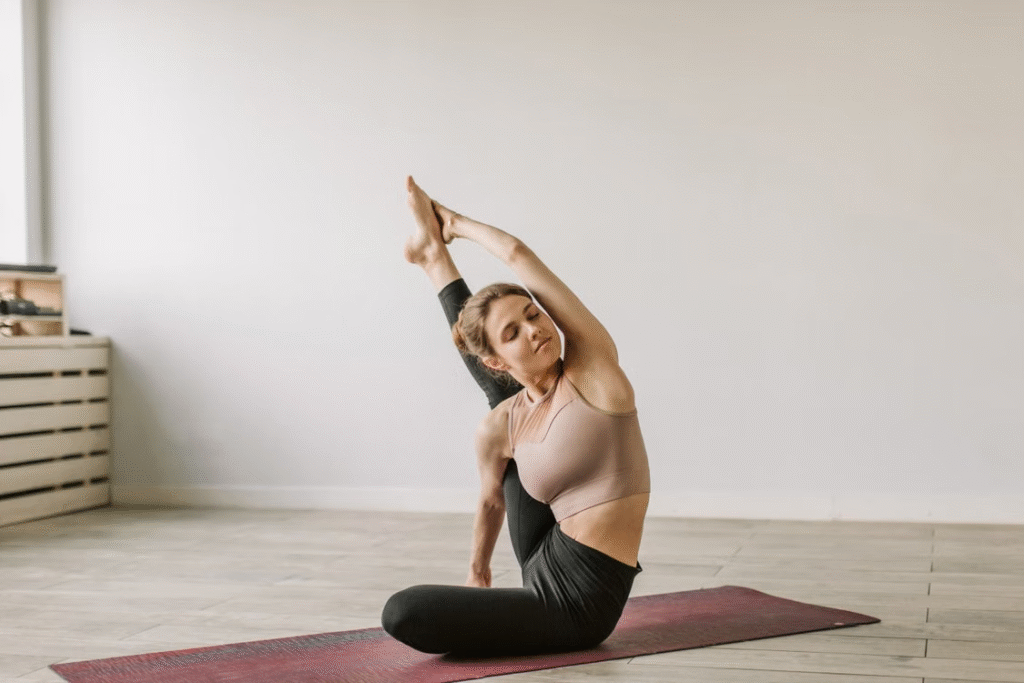
| Month | Primary Goal | Expected Progress |
| Month 1 | Learn breathing, Sun Salutations, and standing postures | Improved confidence, coordination, and body awareness |
| Month 2 | Develop consistency and begin the seated sequence | Increased flexibility, strength, and endurance |
| Month 3 | Refine alignment, transitions, and complete a modified Primary Series | Better breath control, stability, and overall practice quality |
Rather than measuring success by advanced postures, focus on improvements in:
- Breath quality
- Balance
- Mobility
- Strength
- Consistency
- Concentration
- Confidence
These are the true signs of sustainable progress.
Daily Practice vs Weekly Practice
| Daily Practice | Weekly Practice |
| Builds consistency and healthy habits | Creates long-term structure and balance |
| Improves breath awareness | Prevents overtraining |
| Develops muscle memory | Allows recovery between intensive sessions |
| Encourages mindfulness | Supports steady progression |
| Ideal for maintaining momentum | Ideal for tracking overall development |
Tips for Staying Consistent
Building a lifelong yoga practice is about creating habits that are realistic and enjoyable.
- Practise at the same time each day whenever possible.
- Start with shorter sessions if you are a beginner.
- Focus on quality rather than duration.
- Keep a yoga journal to record your progress.
- Avoid comparing yourself with others.
- Celebrate small improvements.
- Include rest and recovery as part of your practice.
- Continue learning from qualified teachers.
How to Measure Your Progress
Many students measure success by flexibility alone, but Ashtanga Yoga encourages a broader perspective.
Signs of healthy progress include:
- Smoother and more controlled breathing
- Improved posture and alignment
- Greater balance and stability
- Increased mobility
- Better concentration
- Reduced physical tension
- More confidence during practice
- Greater patience and emotional resilience
These changes often appear long before advanced postures become accessible.
Why Guided Practice Makes a Difference
Following a structured plan is valuable, but practising under experienced teachers helps you progress more safely and efficiently.
At Diksha Yoga School, students receive personalised guidance, anatomy-based alignment corrections, traditional sequencing, and supportive instruction designed to build confidence step by step. Whether you are practising for better health, stress management, flexibility, or preparing for a Yoga Teacher Training Course (YTTC), our structured approach helps you develop a safe, consistent, and sustainable Ashtanga Yoga practice.
Key Takeaway
A successful Ashtanga Vinyasa Flow Yoga Lessons practice is built on consistency, patience, and mindful progression. Whether you follow a daily routine, a weekly schedule, a 30-day challenge, or a 90-day development plan, the goal is not rapid advancement but lifelong growth. By combining steady Ujjayi breathing, proper alignment, disciplined practice, and guidance from qualified teachers, you can create a practice that supports your physical health, mental clarity, and overall well-being for years to come.
Part 14: Why Learn Ashtanga Vinyasa Flow Yoga Lessons at Diksha Yoga School?
Choosing the right yoga school is one of the most important decisions on your yoga journey. While there are many places offering yoga courses today, finding a school that combines traditional yogic wisdom, experienced teachers, internationally recognised certification, and personalised guidance can make a significant difference in your learning experience.
At Diksha Yoga School, we believe that yoga is much more than learning postures. Our approach combines Traditional Ashtanga Yoga, Hatha Yoga, Vinyasa Flow, Pranayama, Meditation, Yoga Philosophy, Anatomy, and Teaching Methodology to provide students with a complete understanding of yoga as both a personal practice and a professional teaching path.
Whether your goal is to improve your health, deepen your personal practice, or become a confident and certified yoga teacher, our comprehensive training programmes are designed to help you build a strong foundation through authentic teaching, mindful progression, and individual support.
Why Students Choose Diksha Yoga School
Our courses are designed to preserve the authenticity of traditional yoga while making it accessible for modern practitioners from around the world.
What Makes Diksha Yoga School Different?
| Feature | Diksha Yoga School |
| Yoga Alliance Registered School | ✓ |
| Traditional Teaching Methods | ✓ |
| Small Batch Sizes | ✓ |
| Individual Attention | ✓ |
| Hatha, Ashtanga & Vinyasa Flow Training | ✓ |
| Pranayama & Breathwork | ✓ |
| Meditation Training | ✓ |
| Yoga Philosophy | ✓ |
| Anatomy & Physiology | ✓ |
| Teaching Methodology | ✓ |
| Practice Teaching Sessions | ✓ |
| International Student Community | ✓ |
| Beautiful Training Destinations | ✓ |
| Lifetime Learning Community | ✓ |
Yoga Alliance Registered School
Diksha Yoga School is a Yoga Alliance Registered Yoga School (RYS), offering internationally recognised Yoga Teacher Training Courses that follow globally accepted educational standards.
Graduates who successfully complete eligible courses receive a certification that allows them to register with Yoga Alliance USA, helping them pursue teaching opportunities around the world.
Learn Through Traditional Teaching Methods
We honour the traditional roots of yoga while integrating modern educational approaches.
Students learn through:
- Step-by-step posture instruction
- Traditional Ashtanga sequencing
- Hatha Yoga alignment
- Vinyasa Flow transitions
- Guided and self-practice sessions
- Breath awareness (Ujjayi Pranayama)
- Bandhas and Drishti
- Meditation and mindfulness
- Yoga Philosophy based on classical teachings
Rather than simply memorising poses, students develop a deeper understanding of why each technique is practised and how it supports long-term physical and mental well-being.
Experienced & Supportive Teachers
Learning from experienced teachers provides confidence, clarity, and personalised guidance throughout your yoga journey.
Our teaching team supports students by helping them:
- Improve posture alignment
- Develop safe movement patterns
- Understand anatomy and biomechanics
- Build confidence gradually
- Refine breathing techniques
- Develop effective teaching skills
- Progress according to individual ability
Every student receives encouragement and constructive feedback throughout the course.
Small Batch Sizes for Individual Attention
We intentionally keep our class sizes small to create a more supportive and interactive learning environment.
Smaller groups allow teachers to provide:
- Individual posture corrections
- Personalised alignment guidance
- One-to-one feedback
- Safer modifications
- Better communication
- Stronger teacher-student relationships
This personalised approach helps students learn with confidence while progressing safely.
Comprehensive Multi-Style Yoga Curriculum
Our Yoga Teacher Training Courses combine multiple traditional disciplines to create well-rounded yoga teachers and practitioners.
Students study:
- Traditional Ashtanga Yoga
- Classical Hatha Yoga
- Vinyasa Flow Yoga
- Pranayama
- Meditation
- Yoga Philosophy
- Anatomy & Physiology
- Teaching Methodology
- Sequencing
- Adjustment techniques
- Practice teaching
This integrated curriculum prepares students for both personal growth and professional teaching.
Learn Beyond Physical Postures
At Diksha Yoga School, yoga extends far beyond flexibility and strength.
Students also develop:
- Breath awareness
- Mindfulness
- Emotional resilience
- Self-discipline
- Concentration
- Meditation skills
- Confidence
- Communication skills
- Leadership qualities
These skills continue supporting students long after completing their training.
Join an International Yoga Community
Every year, students from different countries come together to learn, practise, and grow in a welcoming and supportive environment.
Training alongside an international community provides opportunities to:
- Learn from different cultures
- Build lifelong friendships
- Share experiences
- Practise teaching with diverse students
- Expand your global yoga network
Many graduates remain connected through our growing worldwide yoga community.
Beautiful Yoga Training Destinations
Learning yoga in a peaceful natural environment enhances the overall experience.
Diksha Yoga School offers internationally recognised Yoga Teacher Training Courses in carefully selected destinations that provide an inspiring atmosphere for learning, self-reflection, and personal transformation.
Practising in nature supports:
- Better concentration
- Reduced stress
- Greater mindfulness
- A deeper connection with yogic living
- An immersive learning experience
Lifetime Learning Community
Graduating from Diksha Yoga School is only the beginning of your yoga journey.
Our students become part of a lifelong community that encourages continuous learning, ongoing practice, and professional development.
We believe yoga is a lifelong path of growth, and we remain committed to supporting our students beyond graduation.
Why Students Choose Diksha Yoga School
| Student Goal | How Diksha Yoga School Supports You |
| Learn authentic yoga | Traditional Ashtanga, Hatha, and Vinyasa teachings |
| Become a certified yoga teacher | Yoga Alliance Registered Teacher Training Courses |
| Improve posture and alignment | Anatomy-based instruction and personalised guidance |
| Deepen your personal practice | Daily practice, meditation, philosophy, and breathwork |
| Build teaching confidence | Practice teaching, sequencing, and teaching methodology |
| Learn safely | Small batches and individual attention |
| Experience yoga internationally | Students from around the world and inspiring training destinations |
| Continue learning after graduation | Supportive lifelong yoga community |
Begin Your Ashtanga Yoga Journey with Diksha Yoga School
Whether you are stepping onto the yoga mat for the first time or preparing to become a professional yoga teacher, Diksha Yoga School provides a supportive environment where traditional wisdom meets modern education.
Our experienced teachers, comprehensive curriculum, personalised guidance, and commitment to authentic yoga education help students build confidence, deepen their practice, and develop the skills needed to share yoga safely and effectively with others.
Key Takeaway
Choosing the right yoga school can shape your entire yoga journey. At Diksha Yoga School, we combine traditional Ashtanga Yoga, Hatha Yoga, Vinyasa Flow, Pranayama, Meditation, Yoga Philosophy, Anatomy, and Teaching Methodology within a supportive, Yoga Alliance Registered learning environment. Through small class sizes, experienced teachers, individual attention, and an international community, we help every student build a strong foundation for lifelong practice, personal transformation, and professional growth.
Part 15: Glossary of Ashtanga Vinyasa Flow Yoga Lessons Terms
Understanding traditional Sanskrit terminology helps practitioners develop a deeper appreciation of Ashtanga Vinyasa Flow Yoga Lessons. While many of these words are commonly used in yoga classes, their meanings extend beyond simple definitions. They represent the philosophy, techniques, and traditions that have guided yoga practitioners for thousands of years.
Whether you are a beginner, an experienced yogi, or preparing for a Yoga Teacher Training Course (YTTC), becoming familiar with these essential terms will strengthen both your practice and your understanding of traditional yoga.
Essential Ashtanga Yoga Glossary
| Term | Meaning |
| Ashtanga | A Sanskrit word meaning “Eight Limbs.” It refers to the eightfold path of yoga described by Sage Patanjali, which includes ethical principles, physical postures, breath control, meditation, and self-realisation. |
| Vinyasa | The mindful coordination of breath and movement, creating a smooth and continuous flow between postures. |
| Drishti | A specific point of focus or gaze used during yoga practice to improve concentration, balance, and mindfulness. |
| Bandha | Internal energy locks created through gentle muscular engagement to improve stability, posture, and breath control. |
| Ujjayi | Often called the “Victorious Breath,” this breathing technique creates a soft ocean-like sound while helping regulate the rhythm of practice. |
| Pranayama | Yogic breathing practices designed to regulate and expand the flow of life energy (Prana) through conscious breath control. |
| Surya Namaskar | The traditional Sun Salutation, a flowing sequence of postures used to warm the body and synchronise breath with movement. |
| Samasthiti | The standing posture at the beginning and end of many Ashtanga sequences, symbolising balance, stability, and readiness. |
| Mysore Style | A traditional method of teaching Ashtanga Yoga where students practise independently while receiving individual guidance from the teacher. |
| Led Class | A teacher-guided class in which all students practise the sequence together at the same pace. |
| Primary Series (Yoga Chikitsa) | The first and foundational Ashtanga Yoga sequence, focusing on building strength, flexibility, spinal health, and breath awareness. |
| Intermediate Series (Nadi Shodhana) | The second Ashtanga series, designed to deepen flexibility, strengthen the nervous system, and refine breath and concentration. |
| Advanced Series (Sthira Bhaga) | The advanced Ashtanga sequences that require exceptional strength, stability, flexibility, endurance, and mental focus. |
| Sadhana | A dedicated and disciplined personal spiritual practice performed consistently over time. |
| Yoga Sutras | One of the most influential classical yoga texts, written by Sage Patanjali, outlining the philosophy and eight limbs of yoga. |
| Patanjali | The ancient sage traditionally credited with compiling the Yoga Sutras, which form the philosophical foundation of Classical Yoga. |
| Dharana | Concentration or one-pointed focus, the sixth limb of Ashtanga Yoga. |
| Dhyana | Meditation, the uninterrupted flow of awareness that develops from sustained concentration. |
| Samadhi | The eighth and final limb of yoga, representing profound absorption, inner peace, and spiritual realisation. |
Additional Traditional Yoga Terms
| Sanskrit Term | Meaning |
| Asana | A yoga posture or seat designed to cultivate steadiness, comfort, and awareness. |
| Prana | The vital life force or energy believed to flow through all living beings. |
| Nadi | Energy channels through which Prana flows according to yogic philosophy. |
| Chakra | Energy centres within the subtle body described in traditional yogic teachings. |
| Namaste | A respectful greeting meaning “I bow to the divine within you.” |
| Guru | A teacher or guide who shares knowledge and wisdom with students. |
| Shavasana (Savasana) | Corpse Pose, the final relaxation posture that allows the body and mind to integrate the benefits of practice. |
| Om (Aum) | A sacred syllable traditionally chanted at the beginning or end of yoga and meditation practices. |
| Mudra | Symbolic hand gestures or body positions used to support meditation and direct energy. |
| Mantra | A sacred sound, word, or phrase repeated to support concentration and meditation. |
Understanding the Eight Limbs of Ashtanga Yoga
The word Ashtanga literally means “Eight Limbs.” These eight interconnected principles, described in the Yoga Sutras of Patanjali, provide a complete guide for living a balanced and mindful life.
| Limb | Sanskrit | Meaning |
| 1 | Yama | Ethical principles and moral disciplines |
| 2 | Niyama | Personal observances and self-discipline |
| 3 | Asana | Physical postures |
| 4 | Pranayama | Breath regulation |
| 5 | Pratyahara | Withdrawal of the senses |
| 6 | Dharana | Concentration |
| 7 | Dhyana | Meditation |
| 8 | Samadhi | Self-realisation and deep meditative absorption |
These eight limbs demonstrate that Traditional Ashtanga Yoga is much more than a physical exercise—it is a complete system for cultivating physical health, mental clarity, emotional balance, and spiritual growth.
Mysore Style vs Led Class
| Mysore Style | Led Class |
| Students practise at their own pace | Teacher leads the entire class together |
| Individual instruction and adjustments | Uniform pace for all students |
| Encourages independence | Helps beginners learn rhythm and sequencing |
| Progress based on readiness | Excellent for developing breath synchronisation |
| Traditional learning method | Ideal for group practice |
Why Learning Sanskrit Terms Matters
Understanding traditional yoga terminology helps practitioners:
- Develop a deeper appreciation of yoga philosophy.
- Communicate confidently in yoga classes.
- Understand traditional teachings more clearly.
- Strengthen their Yoga Teacher Training knowledge.
- Connect physical practice with yogic wisdom.
- Preserve the authenticity of the yoga tradition.
At Diksha Yoga School, students learn not only how to perform yoga postures but also the meaning behind the Sanskrit terms, classical philosophy, breathing techniques, and traditional practices that make Ashtanga Yoga a complete system for lifelong learning.
Key Takeaway
Learning the language of Traditional Ashtanga Vinyasa Flow Yoga Lessons deepens your understanding of every practice. From Ujjayi Pranayama and Bandhas to Mysore Style, Yoga Sutras, and the Eight Limbs of Yoga, these Sanskrit terms represent the rich heritage of yoga and help practitioners connect movement, breath, philosophy, and mindfulness into one integrated practice. Whether you are beginning your yoga journey or training to become a certified yoga teacher, this glossary provides a valuable reference that you can return to throughout your practice.
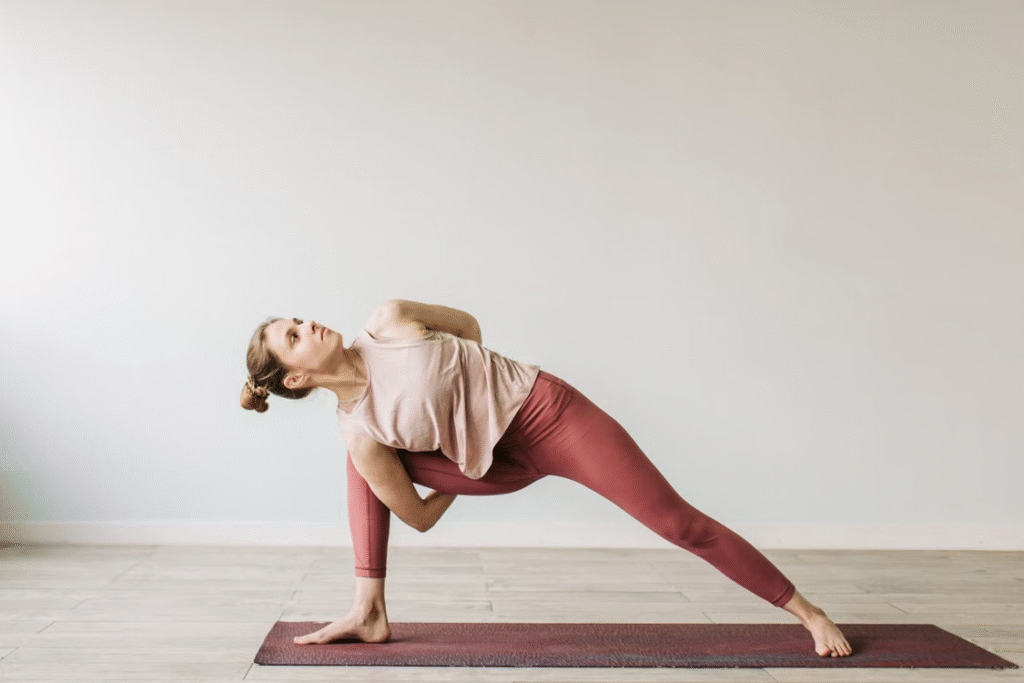
Frequently Asked Questions (FAQs) About Ashtaalnga Vinyasa Flow Yoga Lessons
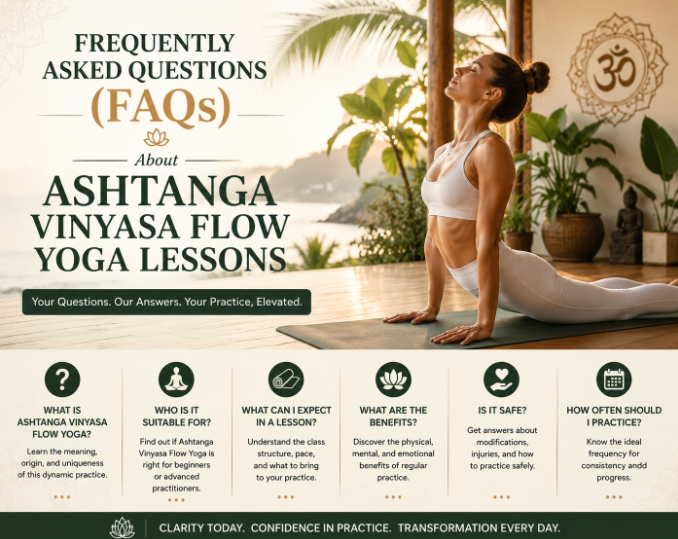
1. What is Ashtanga Vinyasa Flow Yoga Lessons?
Ashtanga Vinyasa Flow Yoga Lessons is a traditional style of yoga that combines a fixed sequence of postures with synchronized breathing (Ujjayi Pranayama). Every movement is linked to the breath, creating a continuous flow that develops strength, flexibility, endurance, concentration, and mindfulness.
2. Is Ashtanga Vinyasa Flow Yoga Lessons suitable for beginners?
Yes. Beginners can safely practise Ashtanga Yoga when learning under qualified teachers who provide proper instruction, modifications, and gradual progression. Students usually begin with Sun Salutations and the foundational postures of the Primary Series before advancing.
3. What is the difference between Ashtanga Yoga and Vinyasa Flow Yoga?
Traditional Ashtanga Yoga follows a fixed sequence of postures that remains the same each time you practise. Modern Vinyasa Flow Yoga generally offers creative and varied sequences that change from class to class while maintaining breath-to-movement coordination.
4. How often should I practise Ashtanga Yoga?
Beginners can start with 3–4 sessions per week. As strength, flexibility, and endurance improve, many practitioners gradually increase to 5–6 days of practice while allowing adequate recovery and rest.
5. How long should an Ashtanga Yoga practice be?
A beginner’s practice may last 30–45 minutes, while intermediate practitioners often practise for 45–75 minutes. A complete Primary Series may take approximately 90 minutes depending on experience and pace.
6. Can Ashtanga Yoga help improve flexibility?
Yes. Regular practice gradually improves flexibility in the hips, hamstrings, shoulders, spine, and other major muscle groups while also developing strength and stability.
7. Does Ashtanga Yoga build strength?
Yes. Ashtanga Yoga develops functional strength through standing postures, arm balances, core engagement, and controlled body-weight movements while improving muscular endurance and stability.
8. Is Ashtanga Yoga good for weight management?
Ashtanga Yoga is an active style of yoga that can support healthy weight management when combined with balanced nutrition, adequate sleep, and a healthy lifestyle. Individual results vary depending on many factors.
Ujjayi Pranayama, often called the “Victorious Breath,” is a breathing technique used throughout Ashtanga Yoga. It creates a gentle ocean-like sound while helping regulate the rhythm of movement, improve concentration, and support mindful breathing.
9. What is Ujjayi Pranayama?
10. What are Bandhas in Ashtanga Yoga?
Bandhas are gentle muscular engagements or “energy locks” that improve stability, posture, breath control, and body awareness during yoga practice. The three primary Bandhas are Mula Bandha, Uddiyana Bandha, and Jalandhara Bandha.
11. What is Drishti?
Drishti refers to a specific point of focus or gaze used during yoga practice. It helps improve balance, concentration, mindfulness, and mental stability by reducing distractions.
12. What is the Primary Series in Ashtanga Yoga?
The Primary Series, also known as Yoga Chikitsa, is the first sequence of Ashtanga Yoga. It focuses on building strength, flexibility, spinal health, breath awareness, and a strong foundation for future progression.
13. How long does it take to progress in Ashtanga Yoga?
There is no fixed timeline. Progress depends on consistency, quality of practice, physical condition, guidance from experienced teachers, recovery, and individual goals. Every practitioner develops at their own pace.
14. What is the difference between Mysore Style and a Led Class?
In a Mysore-style class, students practise independently while receiving individual guidance from the teacher. In a Led Class, the instructor guides the entire group through the sequence together at the same pace.
15. Can I practise Ashtanga Yoga every day?
Many experienced practitioners follow a regular practice schedule. However, beginners should increase practice gradually and allow sufficient recovery. Listening to your body and maintaining balance between practice and rest is important.
16. Is Ashtanga Yoga safe?
For most healthy individuals, Ashtanga Yoga can be practised safely with proper instruction, gradual progression, and attention to alignment. People with medical conditions, injuries, or pregnancy should consult their healthcare provider and practise under qualified guidance
17. What should I eat before an Ashtanga Yoga class?
It is generally recommended to practise on a relatively empty stomach. Many practitioners allow a gap of approximately 2–3 hours after a full meal. Individual needs may vary.
18. Can older adults practise Ashtanga Yoga?
Yes. With appropriate modifications and professional guidance, many older adults enjoy the benefits of Ashtanga-inspired practice for mobility, balance, posture, and functional strength.
19. Do I need to be flexible before starting Ashtanga Yoga?
No. Flexibility is developed through regular practice. Beginners do not need to be flexible before starting, as the practice itself helps improve mobility over time.
20. What equipment do I need for Ashtanga Yoga?
A quality yoga mat is the primary requirement. Depending on individual needs, props such as yoga blocks, straps, blankets, or bolsters may be helpful, especially for beginners or those requiring modifications.
21. Can Ashtanga Yoga help reduce stress?
Many practitioners find that the combination of mindful breathing, movement, concentration, and meditation supports relaxation, emotional balance, and stress management. Individual experiences vary.
22. Why is Savasana important?
Savasana allows the body and nervous system to recover after practice. It helps integrate the benefits of the session, reduce physical tension, and promote relaxation and mental clarity.
23. What is the best age to start Ashtanga Vinyasa Flow Yoga Lessons?
There is no ideal age. People of different ages can begin practising with appropriate instruction, modifications, and guidance suited to their individual abilities and health.
24. Why choose Diksha Yoga School for Ashtanga Vinyasa Flow Yoga Lessons?
Diksha Yoga School offers Yoga Alliance Registered Teacher Training Courses, traditional teaching methods, experienced instructors, small batch sizes, anatomy-based alignment, Pranayama, Meditation, Yoga Philosophy, and personalised guidance in a supportive international learning environment.
25. Can I become a certified Ashtanga Yoga teacher after completing a Yoga Teacher Training Course?
Yes. Completing an eligible Yoga Alliance Registered Yoga Teacher Training Course provides the knowledge and practical teaching experience needed to begin your journey as a yoga teacher. Graduates of eligible programmes may apply for registration with Yoga Alliance, subject to its current requirements.