Published October 10, 2026 · By Soniya Rangher
200 Hour Yoga Teacher Training Sri Lanka
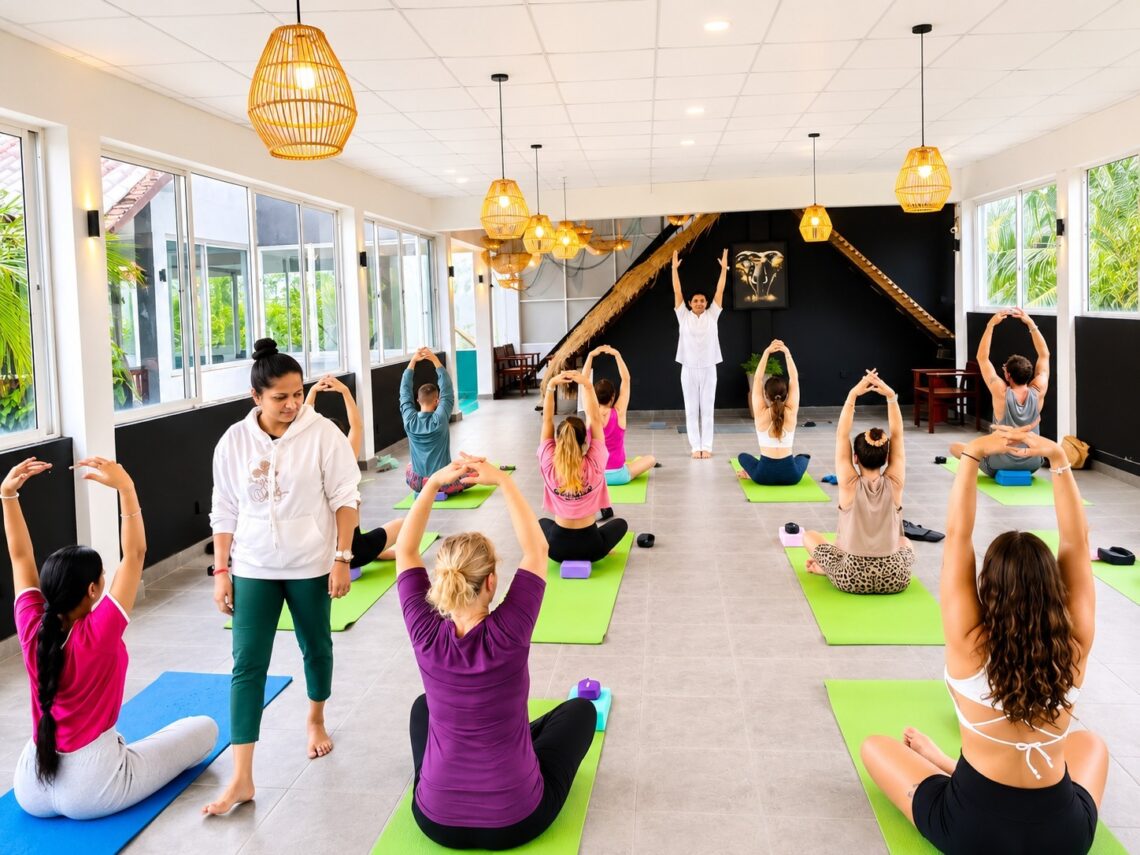
Your day in Galle starts at 6:00 AM. By 7:00 you are on the mat, and by mid-morning you are studying yoga philosophy. By the second week you are standing in front of up to nine fellow trainees, guiding them through your first postures as a teacher.
This is the 200-hour yoga teacher training in Sri Lanka with Diksha Yoga School: 23 days of living, practising and studying at Green Serene Villa, taught in English by Yogini Manisha and her experienced teaching team. The group is never larger than 10, so your teachers know your practice and give you personal feedback on how you teach.
Table of Contents
The first week is tiring, and we would rather tell you that now. Then your stamina builds and the routine becomes a rhythm. You finish with a 200-hour certificate from a Yoga Alliance Registered Yoga School.
Fees start at €2,000, with your room, three sattvic vegetarian meals a day and airport pickup from Colombo included. Below you will find the real daily timetable, how the hours add up, what each week feels like, who teaches you and what it costs.
The next course starts on 5 November 2026. See the 200-Hour Yoga Teacher Training in Sri Lanka course page.
The Course at a Glance
| Detail | What to expect |
| Duration | 23 days / 22 nights, residential |
| Next course | 5 to 27 November 2026, then the 5th to the 27th of each month until May 2027 |
| Venue | Green Serene Villa, Galle, southern Sri Lanka |
| Teachers | Yogini Manisha (E-RYT 500, YACEP) and her experienced teaching team |
| Group size | Maximum 10 students |
| Level | Beginner and intermediate |
| Language | English |
| Styles | Hatha Yoga, Vinyasa Flow, Ashtanga foundations |
| Certificate | 200-hour certificate from a Yoga Alliance Registered Yoga School (RYS 200), eligible for RYT 200 registration |
| Fees | €2,000 triple shared, €2,500 twin shared, €3,200 private room |
| Included | Tuition, room, three sattvic vegetarian meals daily, course manual, airport pickup from Colombo (CMB), Wi-Fi, local excursions |
| Rest day | Sunday, no classes |
What Does a Typical Day Look Like?
The day runs from a 6:00 AM wake-up to an 8:30 PM satsang, Monday to Saturday. Expect about 9.5 hours of scheduled practice and classes before satsang, with a two-hour break after lunch.
| Time | Session | What happens |
| 6:00 AM | Wake up | A slow, quiet start to the day |
| 6:30 AM | Jal Neti and Pranayama | Morning cleansing practice and conscious breathing |
| 7:00 AM | Morning asana practice | Hatha Yoga on Monday, Wednesday and Friday. Ashtanga foundations on Tuesday, Thursday and Saturday |
| 9:00 AM | Breakfast | Sattvic vegetarian meal |
| 10:00 AM | Yoga Philosophy | The traditional teachings behind the practice |
| 11:00 AM | Alignment and Adjustments | Safe alignment principles and hands-on adjustment techniques |
| 12:00 PM | Meditation | Guided meditation and awareness practices |
| 1:00 PM | Lunch and rest | Two hours to eat, rest and recharge |
| 3:00 PM | Anatomy | The body, movement, posture and safe practice |
| 4:00 PM | Tea break | A short pause before the late-afternoon sessions |
| 4:30 PM | Teaching Methodology and Sequencing | Class structure, sequencing and cueing |
| 5:30 PM | Evening Vinyasa Flow | A dynamic practice, with student-led teaching from week two |
| 7:30 PM | Dinner | Sattvic vegetarian meal |
| 8:30 PM | Satsang and Meditation | Evening reflection, discussion and meditation |
Sundays are free. There are no classes, so you can rest at the villa, walk Galle Fort or spend the day at a nearby beach.
The pace is steady and full. Arrive rested and ready for early mornings.
How Do the Training Hours Add Up?
Scheduled sessions total about 9.5 hours a day, or 57 hours in a full six-day week. Evening satsang and meditation come on top of that.
| Part of the training | Hours per day | Hours per full week |
| Asana practice (morning Hatha or Ashtanga, evening Vinyasa Flow) | 4 | 24 |
| Pranayama and Shatkarma | 0.5 | 3 |
| Meditation | 1 | 6 |
| Yoga Philosophy | 1 | 6 |
| Anatomy | 1 | 6 |
| Alignment and Adjustments | 1 | 6 |
| Teaching Methodology and Sequencing | 1 | 6 |
| Total before satsang | 9.5 | 57 |
Your teaching practicum happens inside these sessions from week two, mainly in the evening Vinyasa class. The assessment is completed in the final stage of the course.
The hours are documented according to the school’s approved course structure and the applicable Yoga Alliance requirements.
What Will You Study?
The curriculum has nine subjects. Each one is taught through daily practice, so theory and the mat stay connected.
| Subject | What you learn |
| Hatha Yoga | Traditional postures with close attention to alignment, breath and stability, so you know each asana well enough to teach it |
| Vinyasa Flow | Linking breath with movement, and designing balanced sequences for different levels |
| Ashtanga foundations | Foundational Ashtanga principles and traditional sequencing, building strength and a steady practice |
| Pranayama and Shatkarma | Traditional breathing techniques and yogic cleansing practices such as Jal Neti |
| Meditation | Traditional and guided meditation, and a practice you can continue at home |
| Yoga Philosophy | The teachings at the foundation of yoga, and how to bring them into daily life and your classes |
| Anatomy and Alignment | Functional anatomy and movement, and how to keep practice safe for different bodies |
| Teaching Methodology | Planning a class, verbal instruction, demonstration, observing students and offering modifications |
| Teaching Practicum | Teaching your fellow students in guided sessions, with constructive feedback |
The morning asana class alternates between Hatha and Ashtanga, and every evening ends with Vinyasa Flow. You practise all three styles each week instead of studying them in separate blocks.
Want to read ahead? Start with our guides to traditional Hatha Yoga, why breathwork is essential in yoga, meditation for beginners and yoga anatomy.
How Much Teaching Practice Is Included?
You start teaching in week two, and teaching practice continues through the rest of the course. Three daily sessions build your teaching skills.
- Teaching Methodology and Sequencing, 4:30 PM. One hour on class planning, sequencing, cueing and timing.
- Alignment and Adjustments, 11:00 AM. One hour on safe alignment and how to adjust and modify postures for different students.
- Evening Vinyasa Flow, 5:30 PM. From week two, this practice includes student-led teaching, where you guide your fellow trainees.
Over the course you build your own sequences, practise teaching full classes, refine your verbal cues and learn modifications for different bodies.
Group size matters here. With a maximum of 10 students, your teachers know your practice well enough to give specific, personal feedback on how you teach.
The course includes an assessment before your 200-hour certificate is awarded.
How Do the 23 Days Unfold, and What Do They Feel Like?
Each course runs from the 5th to the 27th of the month. The timetable stays the same throughout, but what you do inside it, and how it feels, changes as you progress.
Week one: building your foundation
You arrive in Galle, meet your group and settle into early mornings and full days. Your teachers lead every practice while you learn the foundations: Hatha and Ashtanga postures, Jal Neti, pranayama, meditation, and the first philosophy and anatomy classes.
Expect to feel tired. The first week is exciting and physically demanding, and the early mornings, daily practice and long hours of learning take a few days to adjust to. Gradually your stamina builds and the schedule starts to feel like a rhythm.
Lunch becomes a welcome pause to rest, recharge and get to know your fellow students. A typical sattvic vegetarian lunch is freshly prepared rice, dal, a seasonal vegetable curry and a selection of local vegetables.
By the end of the week, students often notice changes in their confidence, discipline and connection with the group, as well as in their practice.
Week two: starting to teach
Student-led teaching begins in the evening Vinyasa session. Methodology classes move from principles to practice as you build sequences, give cues and receive feedback on how you teach.
Your first teaching practice is one of the most memorable milestones of the course. Standing in front of your classmates for the first time can bring nervousness, excitement and self-doubt, all at once. You begin by guiding simple asanas, practising clear verbal instructions and learning how to observe and support others.
With feedback and encouragement from your teachers, you gradually become more comfortable using your voice and sharing what you know.
Final stage: bringing it together
You practise teaching full classes, refine your sequences and complete your assessment. You leave with your 200-hour certificate and a clear idea of what to keep working on.
Local excursions are part of the course, so there is time to see Galle as well as study in it.
The moments between sessions stay with you too: the tired smiles after morning practice, the conversations over lunch, and the courage it takes to teach for the first time.
Who Teaches the Course?
The Sri Lanka training is taught by Yogini Manisha, founder of Diksha Yoga School, and her experienced teaching team.
Yogini Manisha holds E-RYT 500 and is a Yoga Alliance Continuing Education Provider (YACEP). She has taught for more than 16 years and guided over 23,000 students from more than 80 countries. She has also completed three 200-hour and two 300-hour teacher trainings herself.
Her approach shapes how the course is taught:
“Flexible yoga teachers are easy to find. A meditative, authentic one is much harder to find.”
In practice, that means awareness, alignment and breath come before advanced postures. The course values clear, aware teaching over extreme flexibility.
What Do Graduates Say?
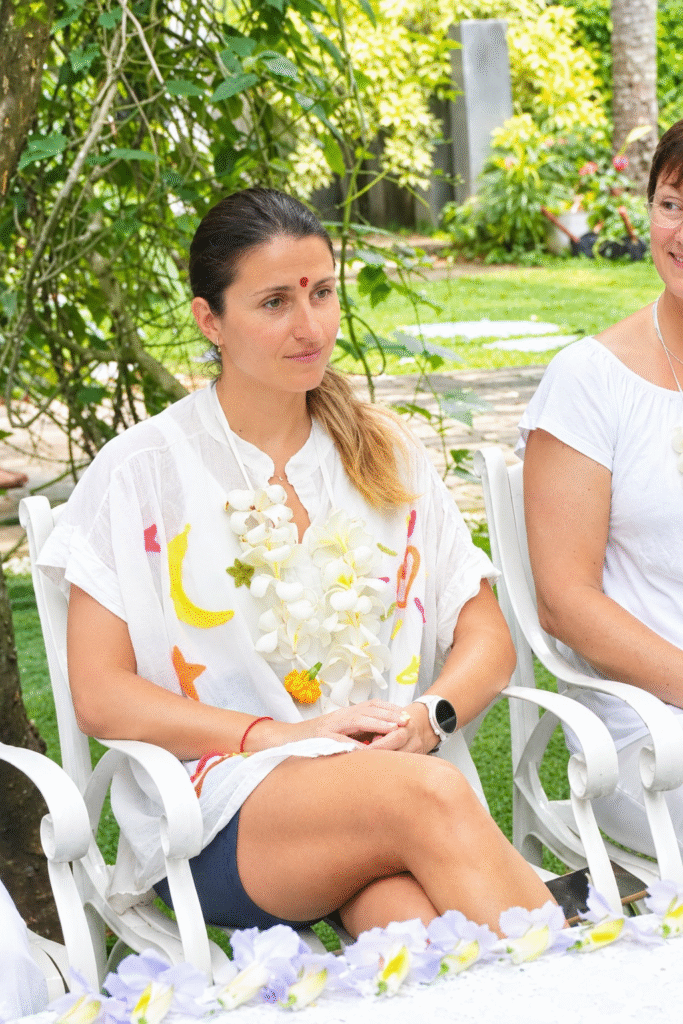
“My experience with Diksha Yoga School in Sri Lanka in May 2026 was truly special and enriching. The training gave me the opportunity to deepen my yoga practice, expand my knowledge, and grow both personally and as a future yoga teacher.
I am grateful for the guidance, teachings, and experience I received throughout the course. The combination of yoga practice, pranayama, meditation, philosophy, and teaching methodology helped me develop a deeper understanding of yoga beyond the physical postures.
The beautiful surroundings of Galle, Sri Lanka, made the entire experience even more memorable. I will always cherish the knowledge, inspiration, and personal growth I gained during this journey.
Thank you, Diksha Yoga School, for being part of my yoga journey.”
Vinka, 200-Hour Yoga Teacher Training, Sri Lanka, May 2026
What Certificate Do You Receive?
You graduate with a 200-hour certificate from a Yoga Alliance Registered Yoga School. Diksha Yoga School is registered at both the 200-hour and 300-hour levels (RYS 200 and RYS 300).
The certificate makes you eligible to register with Yoga Alliance as an RYT 200. Registration is optional, and the fee is paid directly to Yoga Alliance.
If you plan to teach in a specific country or studio, check what they ask for before you book. Requirements vary between countries and studios.
Where Will You Live and Train?
You live and study at Green Serene Villa in Galle, on Sri Lanka’s southern coast. The villa is surrounded by tropical greenery, close to the coast, and has a spacious yoga shala for daily practice.
Rooms and food
You choose a private room, a twin shared room or a triple shared room. Wi-Fi is available at the villa.
Three sattvic vegetarian meals are served every day, with a tea break in the afternoon. You do not need to shop, cook or plan meals during the course. See the accommodation and food page for more detail.
Getting there
Fly into Bandaranaike International Airport in Colombo (CMB). The airport is about 150 km from Galle, around 2.5 to 3.5 hours by road depending on traffic.
Airport pickup from CMB is included in your course fee. Send your flight details in advance so the team can arrange your transfer. If you travel by train, Galle Railway Station is roughly 5 to 10 km from the villa.
What is nearby
- Galle Fort. A UNESCO-listed fort with historic walls, colonial-era streets, cafés and ocean views.
- Beaches. Several southern-coast beaches are within easy reach on your free day.
- Everyday essentials. Shops, cafés, pharmacies and ATMs are available around Galle.
For wider travel information, see Sri Lanka Tourism.
When is the best time to come?
Courses run from November to May. December to March is the most popular period for training in Galle.
| Months | Weather in Galle | Courses running |
| October to November | Warm, with occasional showers. A quieter time around Galle | November |
| December to March | Warm and generally pleasant along the southern coast | December, January, February, March |
| April to May | Hot and humid, with occasional rain | April, May |
| June to September | Southwest monsoon, with more rainfall | None scheduled |
How Much Does It Cost, and What Is Included?
The course fee is €2,000 to €3,200, depending on your room. The price is the same for every course date.
| Room | Course fee | Deposit to book (30%) |
| Triple shared room | €2,000 | €600 |
| Twin shared room | €2,500 | €750 |
| Private room | €3,200 | €960 |
- 5 to 27 November 2026
- 5 to 27 December 2026
- 5 to 27 January 2027
- 5 to 27 February 2027
- 5 to 27 March 2027
- 5 to 27 April 2027
- 5 to 27 May 2027
Check live availability on the course dates and fees page.
What the fee covers
Included
- 200 hours of training and the course manual
- 22 nights’ accommodation at Green Serene Villa
- Three sattvic vegetarian meals daily
- Teaching practicum with individual feedback
- Assessment and 200-hour certificate
- Airport pickup from Colombo (CMB)
- Wi-Fi and local excursions
Not included
- Flights to and from Sri Lanka
- Sri Lanka visa or travel authorisation fees
- Travel and medical insurance
- Personal expenses and local transport
- Yoga Alliance registration fee, if you choose to register
Booking and cancellation terms
- Deposit. A 30% deposit reserves your place and is deducted from your total fee. It is non-refundable.
- Balance. The remaining fee is due 15 days before the course starts.
- Changing dates. You can move to another available course if you tell us at least 30 days before your start date.
- Inside 30 days. Bookings cannot normally be changed or cancelled. In a genuine emergency, contact the school and we will review your situation.
- Payment methods. Bank transfer, cash, credit or debit card, PayPal and Wise.
How to book
- Choose your course dates.
- Contact us on WhatsApp or through the booking form.
- Pay your deposit to confirm your place.
- Receive your arrival details and preparation guidance.
With only 10 places on each course, it is worth booking early for the December to March dates.
Is the Training Suitable for Beginners?
Yes. The course is open to beginner and intermediate students, and you do not need to be advanced, flexible or an experienced teacher to join.
It suits:
- Aspiring yoga teachers taking their first step towards teaching.
- Dedicated practitioners who want to understand the principles behind their practice.
- Existing teachers who want to strengthen their foundations and earn a Yoga Alliance 200-hour certificate.
- Beginners with a sincere interest who are ready to take part fully.
- Fitness, bodywork and wellness professionals adding yoga, breathwork and meditation to their skills.
- Students seeking personal growth who want 23 days to reconnect body, breath and mind.
Be honest with yourself about the schedule. Days start at 6:00 AM and include two asana practices, six days a week, for more than three weeks.
If you have an injury or health condition, speak to a medical professional and tell the school before you book. Your teachers can then advise on suitable modifications.
Frequently Asked Questions
Who will teach me in Sri Lanka?
Yogini Manisha and her experienced teaching team.
Do I need a visa for Sri Lanka?
It depends on your nationality. Check the current entry rules on the official Sri Lanka immigration website before you book flights, and make sure your permitted stay covers all 23 days. Visa fees are not included in the course fee.
Can I register with Yoga Alliance after the course?
Yes. The certificate makes you eligible for RYT 200 registration. You apply and pay the registration fee directly to Yoga Alliance.
What if I need to change my dates?
You can move to another available course if you tell us at least 30 days before your start date. The 30% deposit is non-refundable.
What can I do after the 200-hour course?
You can begin teaching, and you can continue your training. Diksha Yoga School also offers a 300-hour yoga teacher training in Sri Lanka for graduates who want to go further.
Start Your Yoga Teacher Training in Sri Lanka
In 23 days in Galle you build your practice, study the tradition behind it and teach your first classes. You leave with a 200-hour certificate from a Yoga Alliance registered school.
The next course starts on 5 November 2026.
- View the 200-Hour Yoga Teacher Training in Sri Lanka
- Check course dates and fees
- See accommodation and food
Questions about dates, rooms or travel?
Message us on WhatsApp at +91 9130157393 or email contactdikshayoga@gmail.com.