Yoga Teacher Training in Thailand Cost 2026–27: Fees
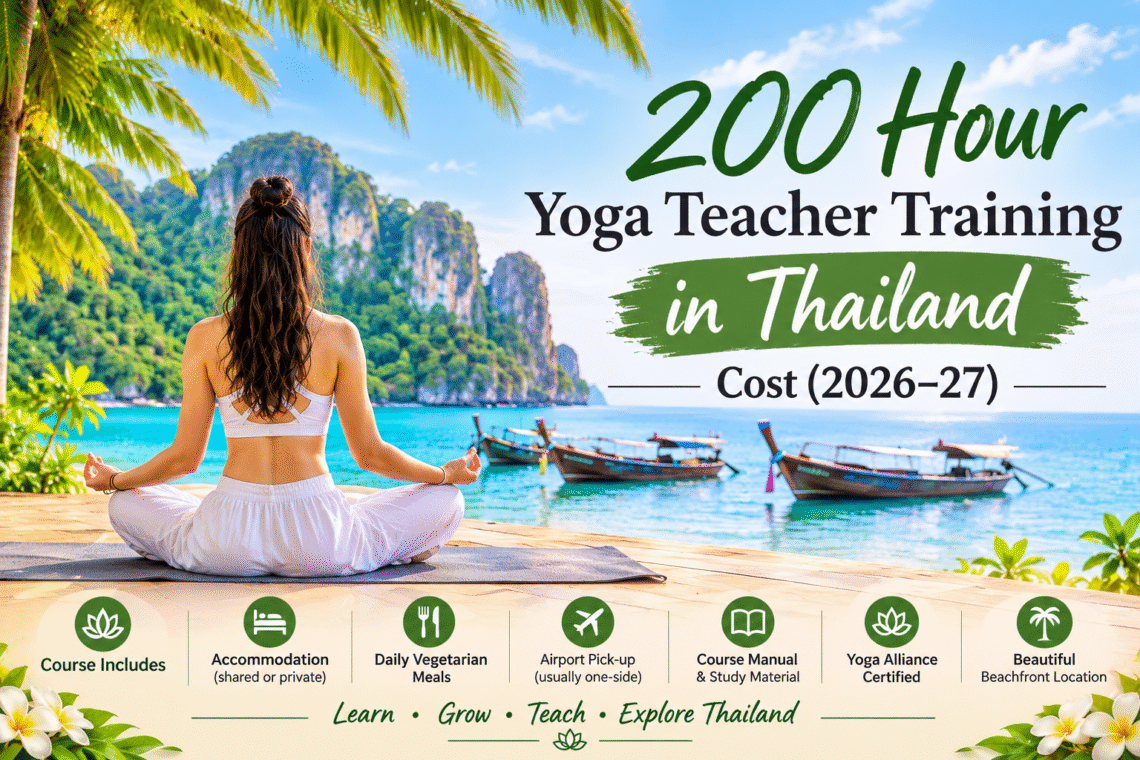
Quick answer: the yoga teacher training in Thailand cost for a residential 200 hour course is usually €2,000 to €4,000, with luxury programmes going well above that. Add flights, meals not covered by the course, insurance and spending money, and most international students budget €3,000 to €5,500 in total. Thailand’s visa rules also changed on 15 September 2026: the visa-free stay is now 30 days for 60 countries, down from 60.
If you’re comparing prices, you’re probably close to booking. So this guide goes past the headline fee and breaks down what a 200 hour YTT in Thailand really costs in 2026–27: the course fee and what it includes, the new visa rules, flights to Koh Samui, and the extras most schools never mention.
We’ll use our own 200 Hour Yoga Teacher Training in Thailand on Koh Samui as a worked example, because we can show you every number honestly, including what isn’t included.
About the author. Written by Yogini Manisha, founder of Diksha Yoga School. She is an E-RYT 500 and YACEP with Yoga Alliance, has taught for 16+ years, and has guided more than 23,000 students from 80+ countries. Our Koh Samui training is led by her teaching team using her method. Every fee here is our own published price, and visa details come from the Tourism Authority of Thailand and the Royal Gazette announcements.
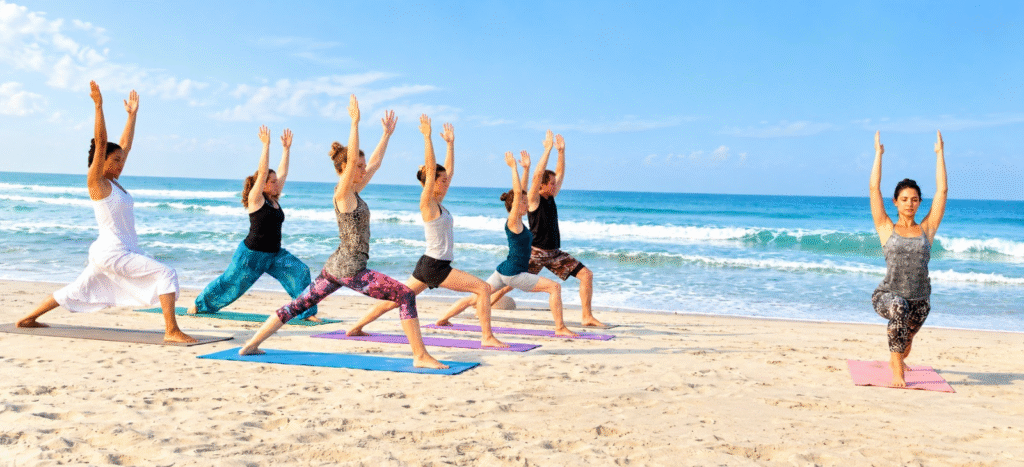
Table of Contents
How much is the 200 hour YTT at Diksha Yoga School, Thailand?
Our 23-day residential 200 hour training at Health Oasis Resort on Bang Por Beach, Koh Samui, costs €2,800 in a twin-shared room or €3,200 in a private room. The price is the same for every batch from November 2026 to May 2027.
| Batch (2026–27) | Twin-shared room | Private room |
| 5 – 27 Nov 2026 | €2,300 | €2700 |
| 5 – 27 Dec 2026 | €2,300 | €2700 |
| 5 – 27 Jan 2027 | €2,300 | €2700 |
| 5 – 27 Feb 2027 | €2,300 | €2700 |
| 5 – 27 Mar 2027 | €2,300 | €2700 |
| 5 – 27 Apr 2027 | €2,300 | €2700 |
| 5 – 27 May 2027 | €2,300 | €2700 |
What the fee includes
- 23 days / 22 nights residential training (200 hours)
- Beachfront room at Health Oasis Resort, Bang Por Beach
- Sattvic vegetarian breakfast and lunch daily
- Course manual, teaching practicum, assessment and 200-hour certificate
- Training at a Yoga Alliance Registered Yoga School (RYS 200 & RYS 300), so you’re eligible to register as RYT 200
- High-speed Wi-Fi
- Airport pickup from Koh Samui Airport (USM)
- Local excursions
- Maximum 10 students per batch
Not included: dinner. Most students eat at the resort’s vegetarian restaurant or at nearby cafés and beachfront restaurants. We’ve added dinner to the budget below so there are no surprises.
Want to see what those 200 hours cover? Read our guides to traditional Hatha yoga, yoga philosophy and meditation for beginners.
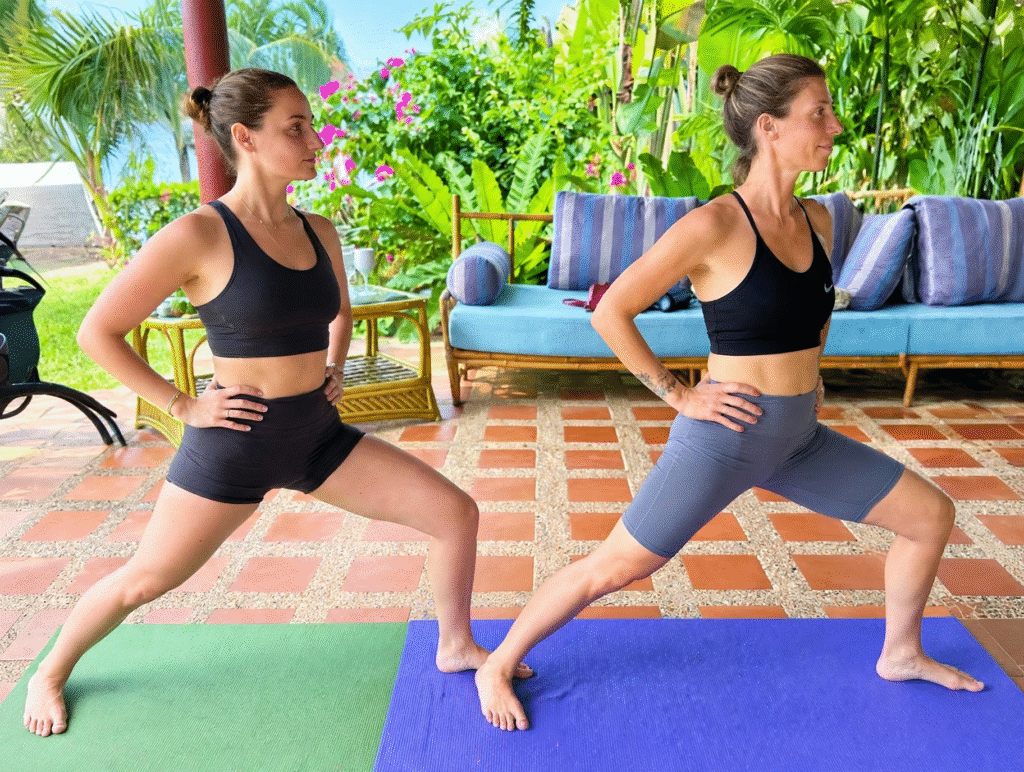
Worked out per day, the twin-shared fee is about €122 a day for teaching, a beachfront room and two meals. That’s the number to compare when you look at other schools.
How payment works
- A 30% deposit reserves your place: €840 twin-shared or €960 private.
- The balance is due 15 days before the course starts.
- You can pay by bank transfer, card, PayPal, Wise or cash.
- The deposit is non-refundable. If you can’t attend, you can move to another batch if you tell us at least 30 days before your start date.
What do other 200 hour YTTs in Thailand cost?
Thailand has the widest price range of the three destinations we teach in. On listing sites for 2026–27 you’ll find a 22-day course in Chiang Mai for about US$2,200, a 21-day Hatha course on Koh Samui from about US$2,360, and a 22-day premium programme on Koh Samui from about US$6,760 that bundles Yoga Alliance registration and private rooms.
| Price band (approx.) | What you usually get |
| Under €2,200 | Mainland or Chiang Mai courses, shared rooms, simpler food |
| €2,200 – €3,500 | Island locations, small groups, twin or private rooms, Yoga Alliance RYS |
| Over €3,500 | Luxury wellness resorts, extras like video shoots or bundled YA registration |
What drives the price
- Island or mainland. Koh Samui and Koh Phangan cost more than Chiang Mai for rooms, food and flights.
- Meals. Some courses include three meals, others two or only breakfast. Over 22 days that can be a €150–€300 difference.
- Group size. A batch of 10 costs more per student than a batch of 30, but you get far more feedback on your teaching.
- Room type. At Diksha, a private room adds €400 over twin-shared.
- Venue. Beachfront resorts with pools and spas cost more than a jungle guesthouse.
Tip: compare the total cost for the month, not the headline fee. Check which meals and transfers are included, because on an island those extras add up quickly.
Accommodation: twin-shared or private room?
At Diksha, your beachfront room is already in the course fee, so the only choice is room type: a private room costs €400 more than twin-shared for the full 22 nights (about €18 a night).
- Twin-shared room (€2,800): best value, and many students enjoy sharing the journey with a classmate.
- Private room (€3,200): worth it if you’re a light sleeper, need quiet study time, or are travelling with a partner who isn’t training.
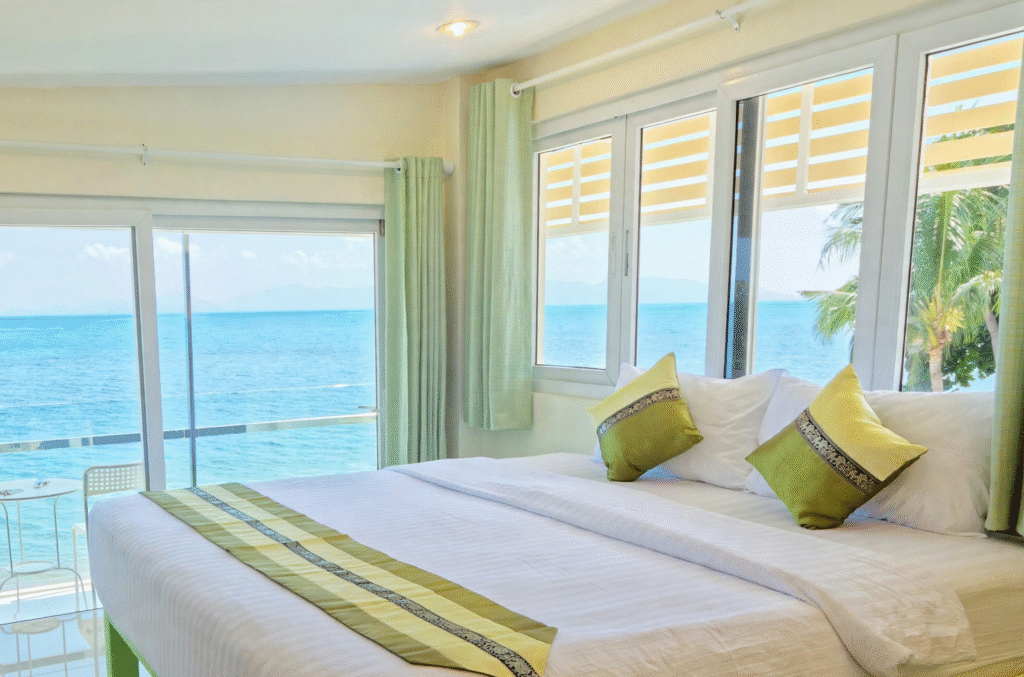
If you choose a school where accommodation is not included, budget for it separately. Rooms on Koh Samui get much busier and pricier from mid-December to March, especially around Christmas and New Year.
Arriving early or staying on? Read our Bang Por Beach travel guide for the area around the resort, or message us on WhatsApp and we’ll suggest places to stay.
Thailand visa cost for a yoga teacher training (new 2026 rules)
For most of our students, entering Thailand for the course costs nothing. Since 15 September 2026, passport holders from 60 countries and territories can stay up to 30 days visa-free for tourism. That’s enough for our 23-day course. The old 60-day exemption has ended.
| Your passport | Entry for a 23-day course |
| USA, UK, Canada, Australia, New Zealand, Ireland | 30 days visa-free |
| Germany, France, Italy, Spain, Portugal, Netherlands, Belgium, Austria, Greece | 30 days visa-free |
| Sweden, Norway, Denmark, Finland, Iceland, Switzerland, Poland, Czech Republic | 30 days visa-free |
| India, Japan, Malaysia, Indonesia, Philippines, Singapore, Taiwan | 30 days visa-free |
| Israel, Türkiye, UAE, Saudi Arabia, Qatar, South Africa, Ukraine | 30 days visa-free |
| China, Russia and some others | Separate bilateral agreements (check yours) |
| Mauritius, Seychelles | 15 days visa-free, so you need a visa for the course |
| Nationalities not on any list | Apply for a Thai tourist e-visa before you fly |
The full list of 60 countries is in this summary of the Royal Gazette rules, based on the Tourism Authority of Thailand’s announcement. Check your own passport before you book flights.
Our advice:
- Watch the 30-day limit. If you arrive several days early and travel afterwards, you can go over 30 days. You can extend once at an immigration office for about 1,900 baht, or apply for a 60-day tourist visa before you fly.
- Complete the Thailand Digital Arrival Card (TDAC) online before you land. It’s required for all foreign visitors and is free on the official immigration site. Ignore agent sites that charge for it.
- The planned 300-baht tourist entry fee (about €8) for air arrivals has been delayed several times. If it’s in force when you travel, it’s expected to be included in your airfare.
- Visa-free entry is for tourism. It doesn’t allow paid work, including teaching yoga for money in Thailand.
Flights and getting to Koh Samui
Flights are the biggest cost after the course fee, and Koh Samui is the most expensive of our three locations to reach. Most international students fly to Bangkok, then take a short domestic flight to Koh Samui Airport (USM), about 16 km and 30 minutes from the resort. Pickup from USM is included in the Diksha fee.
As a rough guide, here’s what return economy fares often cost. Prices move a lot, so treat them as approximate:
| Flying from | To Bangkok, return (approx.) | Plus Bangkok–Koh Samui, return (approx.) |
| Europe | €550 – €950 | €150 – €300 |
| UK | £500 – £900 | £130 – £260 |
| USA / Canada | US$900 – US$1,500 | US$160 – US$330 |
| Australia | A$800 – A$1,500 | A$250 – A$500 |
| India | ₹20,000 – ₹40,000 | ₹8,000 – ₹16,000 |
Ways to save on flights:
- Fly to Surat Thani (URT) instead of Koh Samui. It’s usually much cheaper, but the combined bus and ferry to the island takes 3–4 hours, and our airport pickup only covers Koh Samui Airport. Ferries arrive at Nathon Pier, about 10 km from the resort.
- Book 2–3 months ahead, especially for December and January batches around Christmas and New Year.
- Book the Bangkok–Koh Samui leg on the same ticket as your international flight where you can, so a delay doesn’t cost you the connection.
Send us your flight details in advance so we can arrange your pickup.
Hidden costs most schools don’t mention
The course fee is rarely the whole story. These are the extras to plan for, whichever school you choose:
- Dinners — about €110–€260. Our fee covers breakfast and lunch. Simple Thai or vegetarian dinners nearby cost roughly €5–€12 each over 22 evenings. Many schools on Koh Samui include only one or two meals, so check yours.
- Domestic flight to Koh Samui — €150–€300. Easy to forget when you price a flight to Bangkok.
- Yoga Alliance registration — US$115 in year one. After graduating you can register as an RYT 200. Yoga Alliance charges a one-time US$50 application fee plus US$65 a year in membership dues (Yoga Alliance). It’s optional, but many studios ask for it.
- Travel and medical insurance — roughly €40–€100 for a month. Make sure it covers yoga and scooter riding if you plan to rent one.
- Local transport — €30–€100. Songthaews (shared pickup taxis), taxis or a rented scooter for Sunday trips to Fisherman’s Village, the Big Buddha or Na Muang waterfalls.
- Personal spending — €100–€250. Coconuts, smoothies, laundry, a local SIM card, Thai massage and souvenirs.
- Yoga kit — €0–€60. Bring your own mat and light clothes for the heat.
- Visa extension — about 1,900 baht if needed. Only if your stay goes over 30 days.
- Currency and card fees. Thai ATMs usually charge a fixed fee on foreign cards, so withdraw larger amounts less often, or use Wise or a no-fee travel card.
What you won’t pay extra for at Diksha: breakfast, lunch, accommodation, the manual, certification, Wi-Fi, local excursions or your pickup from Koh Samui Airport. They’re all in the fee.
Total yoga teacher training in Thailand cost: your full budget
A student flying from Europe and choosing a twin-shared room at Diksha should budget about €3,900 to €4,900 all in. Add €400 for a private room.
| Item | Low (€) | High (€) | Notes |
| Course fee (twin-shared) | 2,800 | 2,800 | Includes room, breakfast, lunch, USM pickup, manual, certificate |
| Return flights Europe–Bangkok | 550 | 950 | Approximate; book early |
| Return flights Bangkok–Koh Samui | 150 | 300 | Approximate; cheaper via Surat Thani and ferry |
| Visa | 0 | 0 | 30 days visa-free for 60 countries |
| Dinners (22 evenings) | 110 | 260 | About €5–€12 each |
| Travel and medical insurance | 40 | 100 | One month |
| Yoga Alliance RYT 200 (year 1) | 100 | 100 | US$115, optional |
| Local transport | 30 | 100 | Songthaews, taxis or scooter |
| Personal spending | 100 | 250 | Cafés, laundry, SIM, massage |
| Yoga kit | 0 | 60 | Mat and clothes |
| Total | ≈ 3,900 | ≈ 4,900 | Private room: +€400 |
Euro amounts for Yoga Alliance are converted from US dollars and rounded.
Best time to train, and how to keep costs down
Our course fee is the same in every month, but your travel costs aren’t. Koh Samui’s weather pattern is different from the rest of Thailand: January to March is dry and sunny, while November is usually the wettest month. April and May are hot, but flights and rooms are usually cheaper once peak season ends.
| Batch months | Weather on Koh Samui | Cost of travel |
| November | Rainy season; heaviest rain of the year, quiet and green | Lower |
| December | Rain easing; Christmas and New Year peak | Highest |
| January – March | Dry, sunny, calm seas | High |
| April – May | Hottest months, mostly sunny, occasional showers | Lower |
Six ways to save:
- Choose a twin-shared room and save €400.
- Pick a November, April or May batch for lower fares.
- Fly into Surat Thani and take the ferry if you don’t mind a longer journey.
- Book flights early, especially for December and January.
- Eat dinner at local Thai restaurants rather than resort restaurants.
- Withdraw cash less often to avoid repeated Thai ATM fees, or pay by Wise or a no-fee card.
Comparing destinations? The same 23-day course costs less in our other locations: see our Goa yoga teacher training cost guide (from €1,800) and Sri Lanka yoga teacher training cost guide (from €2,000).
Frequently asked questions
How much does a 200 hour yoga teacher training in Thailand cost?
Most residential 200 hour courses in Thailand cost €2,000 to €4,000, and luxury programmes can cost much more. At Diksha Yoga School on Koh Samui the fee is €2,800 (twin-shared) or €3,200 (private), including a beachfront room, breakfast, lunch and airport pickup.
Are meals included?
At Diksha, breakfast and lunch are included every day. Dinner isn’t, so budget about €110–€260 for 22 evenings. Other schools vary, so always check.
What is not included?
Flights (including the domestic flight to Koh Samui), dinners, travel and medical insurance, personal expenses, local transport (other than airport pickup) and the optional Yoga Alliance registration fee.
Do I need a visa for a yoga course in Thailand?
Since 15 September 2026, nationals of 60 countries, including the US, UK, India, Australia, Canada and most of Europe, can stay 30 days visa-free for tourism. That covers our 23-day course. Others need a Thai tourist e-visa before travelling. Every visitor must also complete the free Thailand Digital Arrival Card.
Is 30 days visa-free enough for the course?
Yes, the course is 23 days. If you plan to arrive early or travel afterwards, keep your total stay under 30 days, extend once in Thailand for about 1,900 baht, or apply for a 60-day tourist visa before you fly.
How much is Yoga Alliance registration after the course?
US$50 one-time application plus US$65 a year, so US$115 in your first year. It’s optional but widely recognised by studios.
How much deposit do I need to book?
30% of the course fee: €840 for a twin-shared room or €960 for a private room. The balance is due 15 days before the course starts.
Is Thailand more expensive than India or Sri Lanka for yoga teacher training?
Usually, yes. At Diksha the same 23-day course starts at €1,800 in Goa, €2,000 in Sri Lanka and €2,800 in Thailand. Koh Samui also costs more to reach because of the extra domestic flight.
Is a cheaper course worth it?
Sometimes. Check group size, the lead trainer’s experience, Yoga Alliance registration, and which meals and transfers are included. If a full 200 hours isn’t in your budget yet, our 100 Hour YTT in Thailand or 50 Hour Breathwork and Pranayama TTC is a shorter first step. Already finished a 200 hour course? Our 300 Hour YTT in Thailand is the next level.
Ready to plan your training in Thailand?
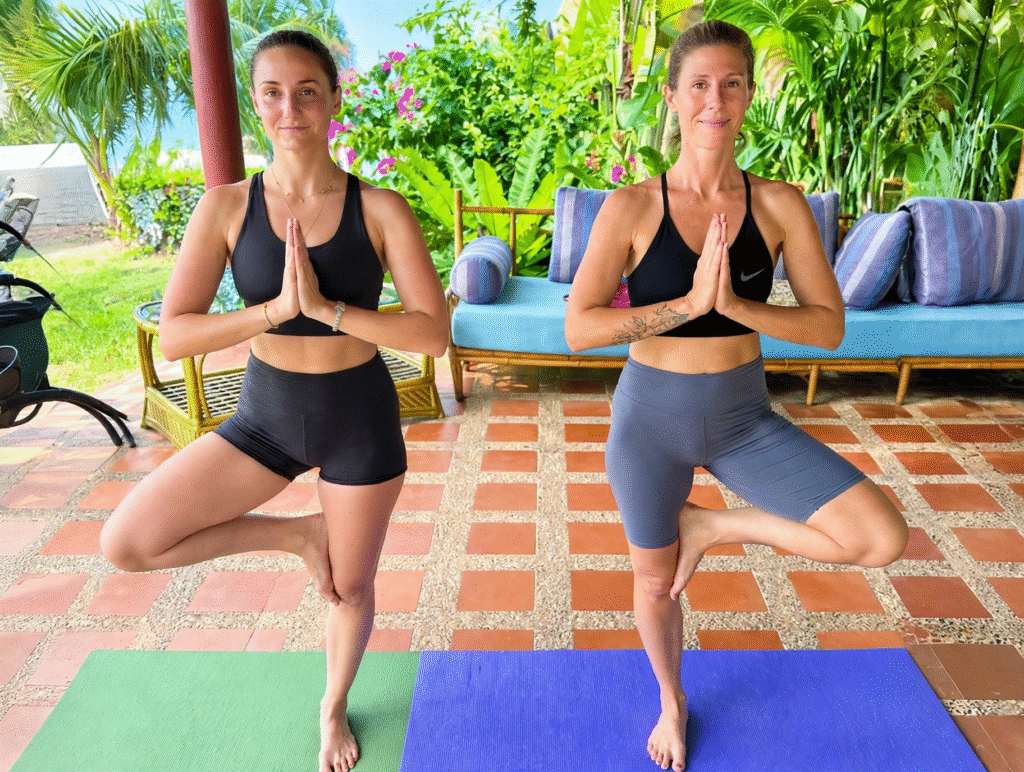
For €2,800 you get 23 days on Bang Por Beach, a beachfront room, breakfast and lunch every day, pickup from Koh Samui Airport and a 200-hour certificate from a Yoga Alliance Registered Yoga School. You train in a group of no more than 10, taught using Yogini Manisha’s method (E-RYT 500, 16+ years of teaching).
“I have learnt so much, not only asanas but more important, about what yoga means and how it will positively impact my life.” — Leigh Hughes, 200 Hour YTT graduate
View the 200 Hour YTT in Thailand → · Check dates & fees · Chat with us on WhatsApp