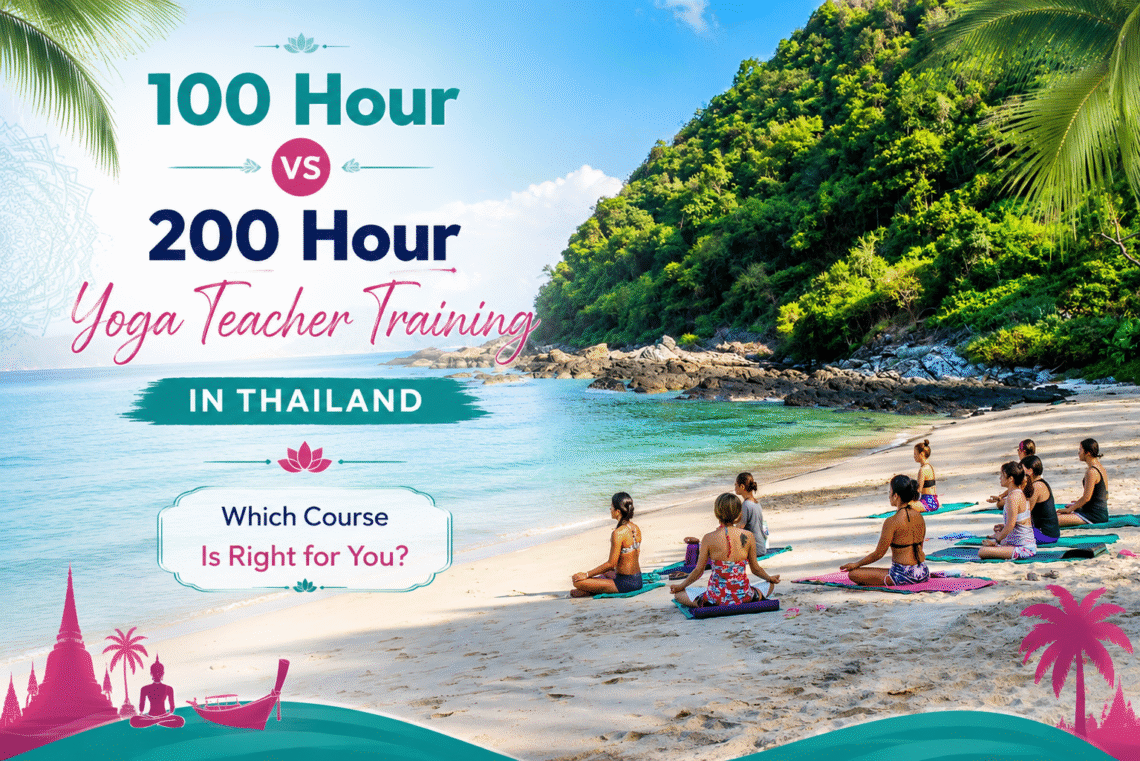
Best 100 Hour vs 200 Hour Yoga TTC If you’re thinking about joining a Yoga Teacher Training in Thailand, you’ve probably asked yourself one important question:
Should I start with a 100 Hour Yoga Teacher Training or go straight into a 200 Hour Yoga Teacher Training?
It’s one of the most common questions we receive at Diksha Yoga School in Koh Samui, and honestly, there’s no single answer that works for everyone.
Every student begins their yoga journey for a different reason.
Some want to become certified yoga teachers and build a meaningful career. Others simply want to deepen their personal practice, understand yoga beyond the physical postures, improve their health, or take a break from the stress of everyday life.
We’ve welcomed students from many different countries, ages, and backgrounds, and one thing has become clear over the years—the best Yoga Teacher Training isn’t always the longest one. It’s the one that matches your goals, your experience, and where you are in your life today.
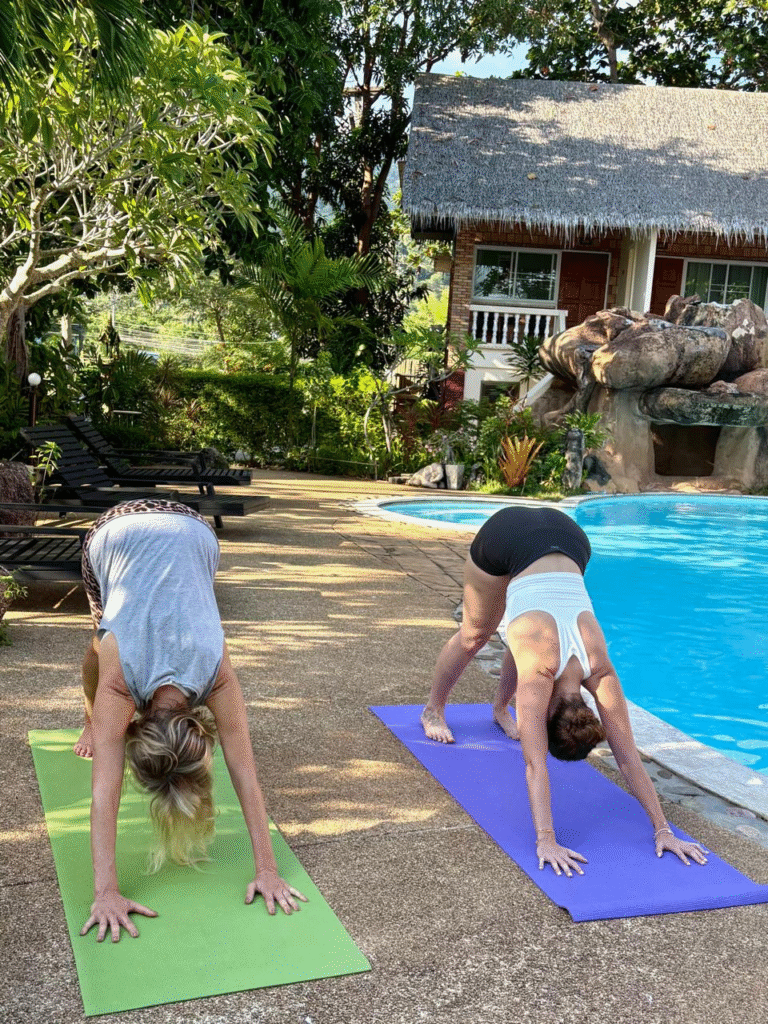
That’s exactly why both a Best 100 Hour vs 200 Hour Yoga TTC have their own purpose.
A 100 Hour Yoga Teacher Training in Thailand is ideal if you’re looking for a shorter but meaningful introduction to traditional yoga. It’s perfect for beginners, travellers, and anyone who wants to build a strong foundation before deciding whether to continue towards a full teacher training.
A 200 Hour Yoga Teacher Training, on the other hand, is a complete professional program that prepares you to teach yoga with confidence while earning an internationally recognised Yoga Alliance certification.
Both courses include the heart of authentic yoga—Hatha Yoga, Vinyasa Flow, Pranayama, Meditation, Yoga Philosophy, Anatomy, and mindful living—but they offer very different learning experiences.
In this guide, we’ll help you understand those differences in a simple and honest way.
We’ll compare the curriculum, teaching practice, certification, time commitment, learning experience, career opportunities, and who each course is best suited for. We’ll also share what it’s really like to study with us at Diksha Yoga School in Koh Samui, Thailand, so you can make your decision with confidence.
Whether you’re looking for the best Yoga Teacher Training in Thailand, comparing a Best 100 Hour vs 200 Hour Yoga TTC, or searching for a Yoga Alliance Certified Yoga School in Koh Samui, this guide is here to help you choose the path that feels right for you.
Because choosing a yoga course isn’t just about earning a certificate.
It’s about choosing the experience that will support your personal growth, deepen your practice, and inspire the next chapter of your yoga journey.
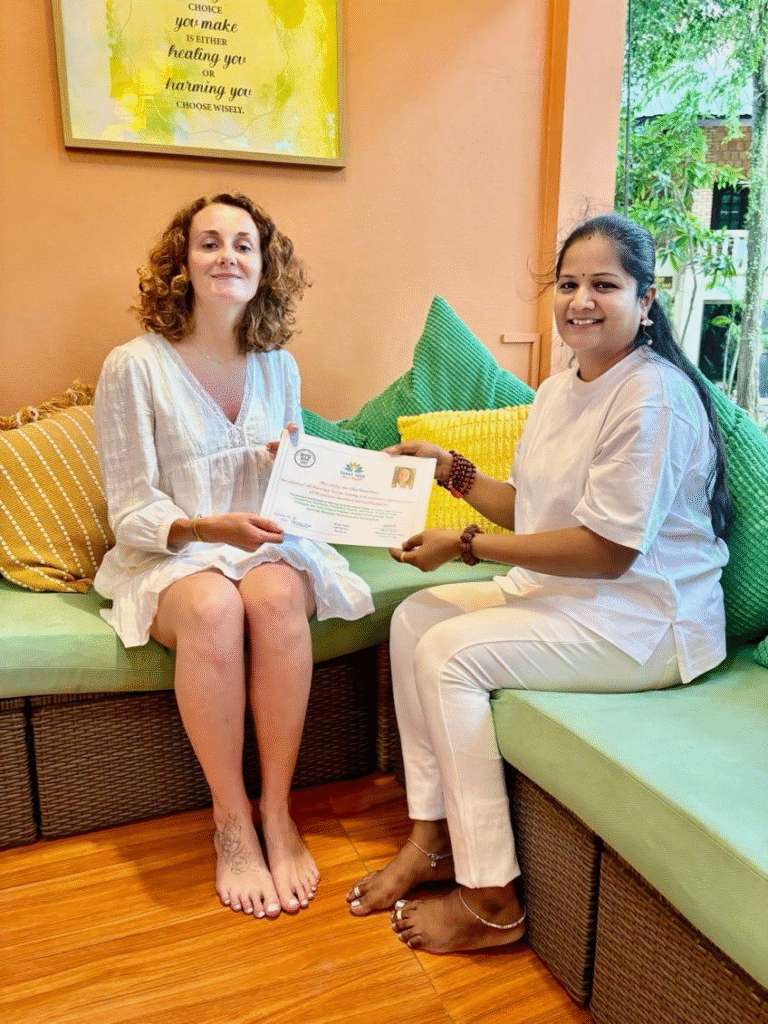
Table of Contents
Who Is This Guide For?
We’ve created this guide to help you make the right decision if you’re planning to join a Yoga Teacher Training in Thailand. This article is especially for you if:
✅ You’re trying to decide between a Best 100 Hour vs 200 Hour Yoga TTC
✅ You’re looking for the best Yoga Teacher Training in Thailand or Koh Samui.
✅ You’re a beginner and want to know which course is the right place to start.
✅ You want to deepen your personal yoga practice before committing to a longer program.
✅ You’re planning to become a certified yoga teacher in the future.
✅ You’re interested in studying at a Yoga Alliance Registered Yoga School.
✅ You want to understand the differences in curriculum, certification, teaching practice, and career opportunities.
✅ You’re searching for an authentic residential yoga course with experienced teachers and a supportive learning environment.
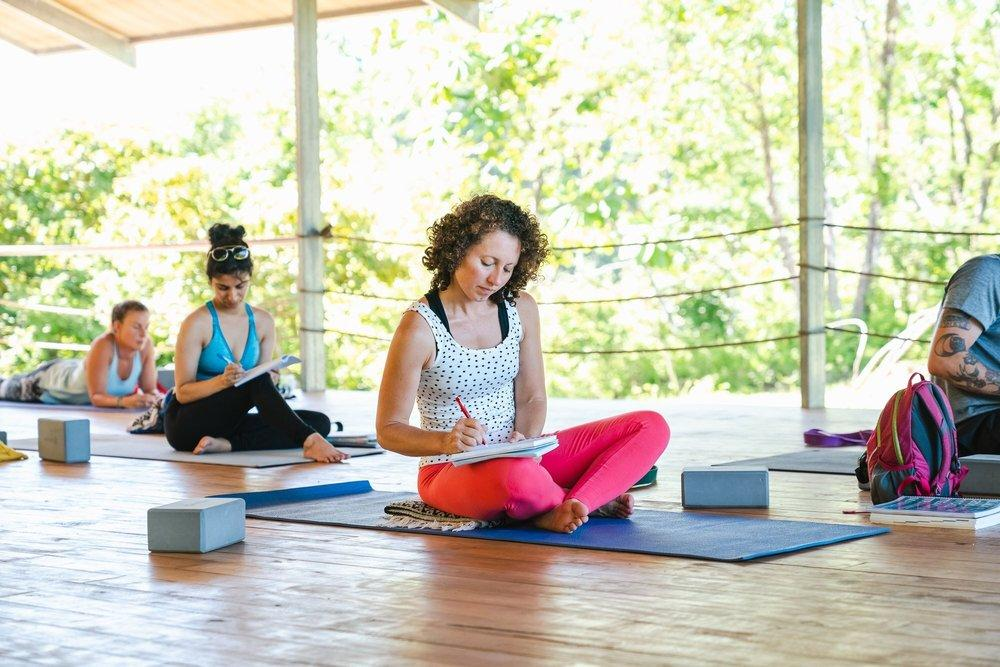
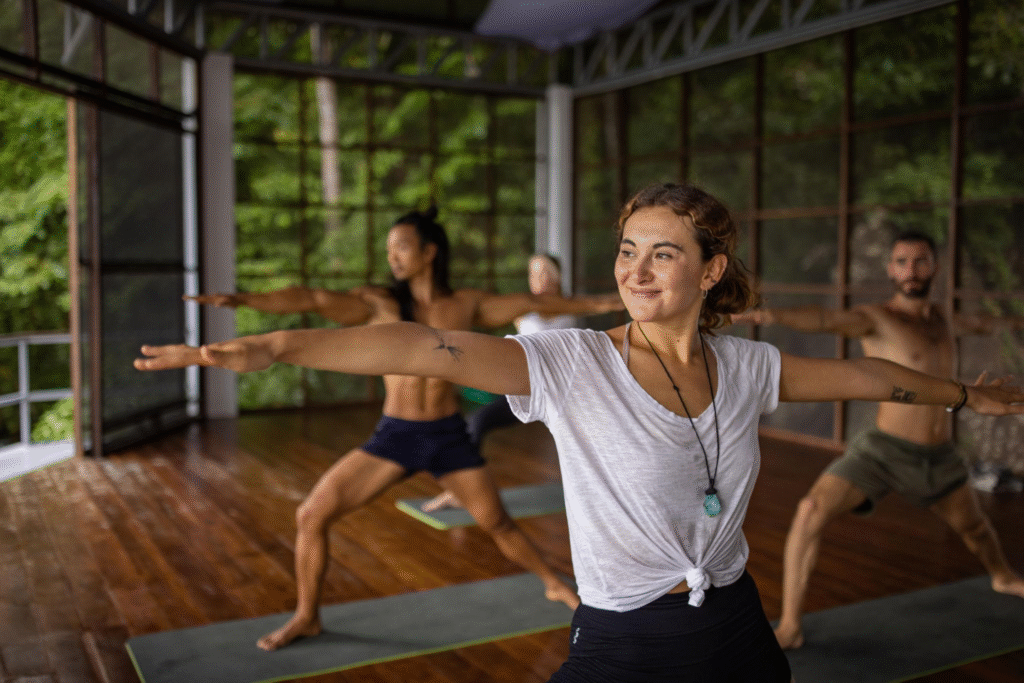
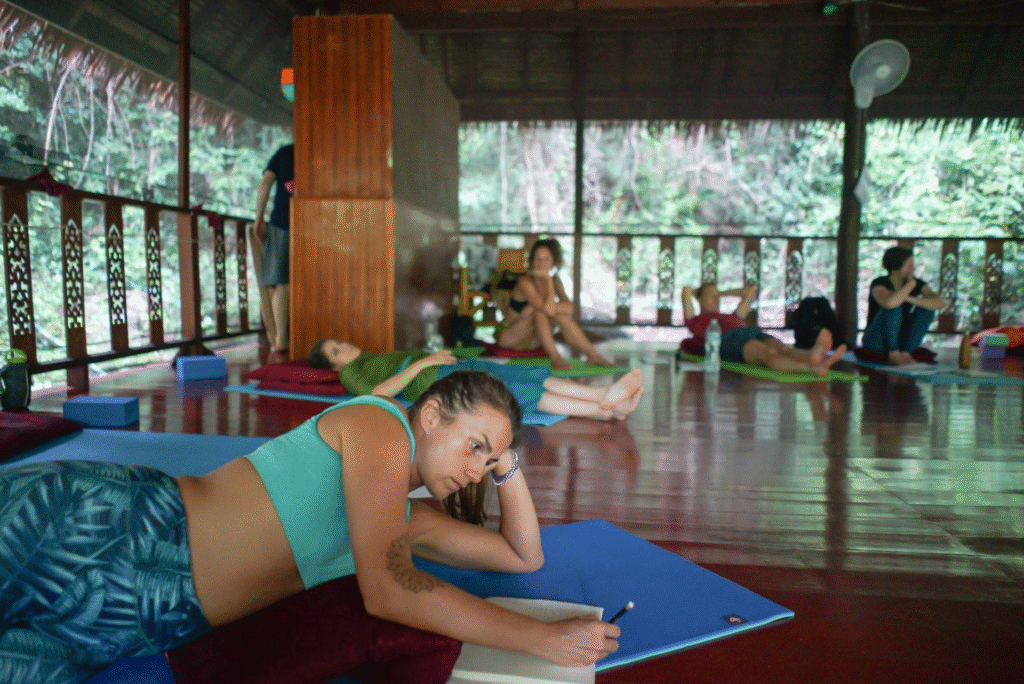
Quick Answer: Best 100 Hour vs 200 Hour Yoga TTC
If you’re looking for a concise answer, here’s the key difference:
- Choose a 100 Hour Yoga Teacher Training if you’re a beginner, have limited time, want to deepen your personal practice, or would like to experience an authentic residential yoga program before committing to a full teacher training.
- Choose a 200 Hour Yoga Teacher Training if you’re ready to become a certified yoga teacher, want comprehensive training in teaching methodology, and wish to earn a Yoga Alliance-recognised certification that prepares you to teach internationally.
Both courses offer life-changing experiences. The best choice depends on your personal goals, available time, previous yoga experience, and future aspirations.
Best 100 Hour vs 200 Hour Yoga TTC at a Glance
| Feature | 100 Hour Yoga Teacher Training | 200 Hour Yoga Teacher Training |
| Course Duration | 11 Days | 23 Days |
| Best For | Beginners, travellers, yoga enthusiasts | Aspiring yoga teachers and dedicated practitioners |
| Yoga Experience Required | None – Beginners Welcome | None – Beginners Welcome |
| Main Goal | Deepen personal practice | Become a certified yoga teacher |
| Teaching Practice | Introduction to teaching skills | Comprehensive teaching methodology and practicum |
| Curriculum | Hatha Yoga, Vinyasa, Pranayama, Meditation, Philosophy, Anatomy | Complete Yoga Alliance curriculum with advanced teaching practice |
| Certification | 100 Hour Course Completion Certificate | Yoga Alliance RYS 200 Certification |
| Time Commitment | Short immersive experience | Full residential professional training |
| Confidence Level | Build a strong yoga foundation | Graduate ready to begin teaching |
| Ideal Student | Personal growth and exploration | Students seeking a professional yoga career |
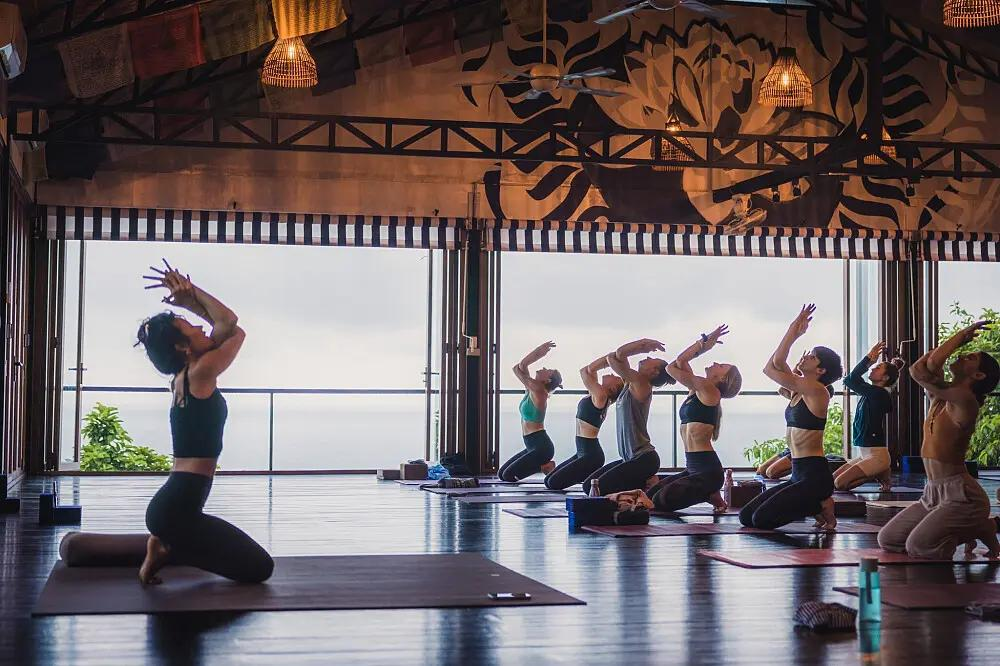
Why This Comparison Matters More Than Ever
The popularity of Yoga Teacher Training in Thailand has grown significantly over the past decade, giving students more options than ever before. While having more choices is exciting, it can also make the decision more confusing.
Many people believe they must immediately enrol in a 200 Hour Yoga Teacher Training to take yoga seriously. Others assume a 100 Hour course is only a short retreat with little educational value. Both assumptions are misconceptions.
In reality, each course serves a different purpose, and choosing the one that aligns with your current lifestyle, experience, and aspirations will provide a far more rewarding learning experience.
At Diksha Yoga School, we’ve guided students from around the world through both pathways. Some begin with our 100 Hour Yoga Teacher Training in Koh Samui to build confidence and later continue to the 200 Hour certification. Others arrive ready for the complete teacher training from day one.
After teaching students in our Yoga Teacher Trainings, we’ve found that there is no single “right” starting point. Some students arrive convinced they need the full 200 Hour course, only to realise a 100 Hour program better suits their current stage of life. Others join expecting only to deepen their own practice and later discover a passion for teaching. Those experiences have shown us that choosing the course that matches your goals is often more important than choosing the longer course.
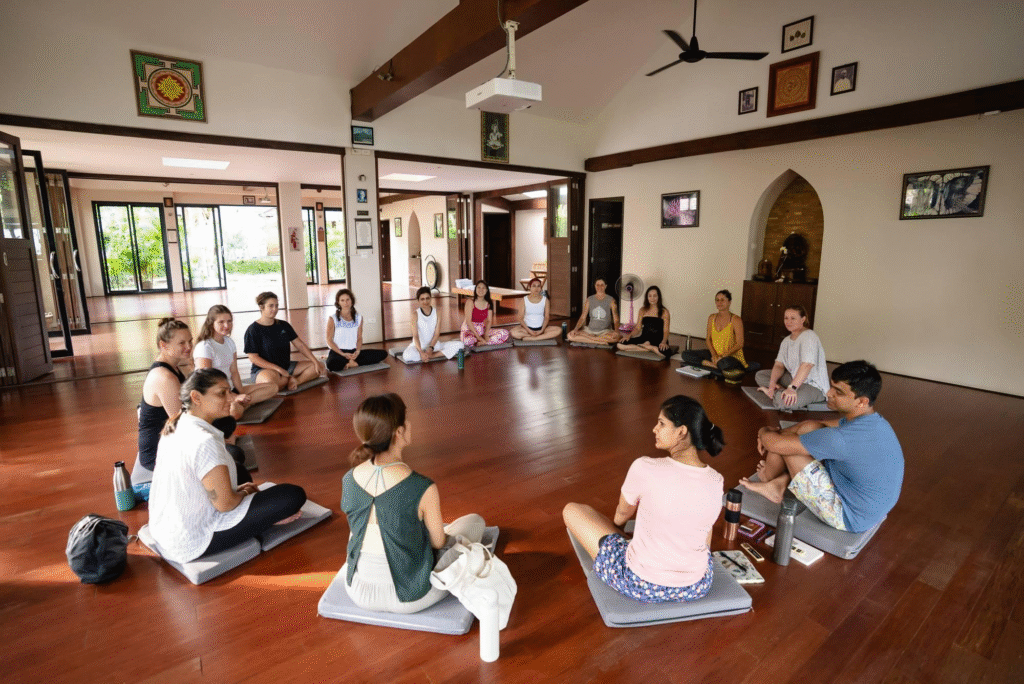
Understanding the Difference Between a 100 Hour and 200 Hour Yoga Teacher Training
Many students write to us before joining a course in Thailand and ask the same question:
“Should I start with a 100 Hour Yoga Teacher Training or go directly for a 200 Hour Yoga Teacher Training?”
It’s a good question, and honestly, there isn’t one answer that fits everyone.
Over the years at Diksha Yoga School in Koh Samui, Thailand, we’ve welcomed students from many different countries and backgrounds. Some arrive after practising yoga for only a few months, while others have been practising for years but have never considered becoming teachers.
Over the years, we have ve welcomed students ranging from complete beginners to experienced practitioners. One pattern we’ve noticed is that students rarely regret starting with the course that genuinely matches their goals. Those who begin at the right pace often feel more confident, enjoy the learning process more, and continue their yoga journey with greater enthusiasm.
Some students feel ready to spend nearly a month in an intensive residential training. Others prefer to begin with a shorter course that allows them to experience traditional yoga education before making a bigger commitment.
That is exactly why both the 100 Hour Yoga Teacher Training and 200 Hour Yoga Teacher Training exist.
Neither course is better than the other.
The right choice depends on your experience, your goals, your available time, and what you hope to gain from your yoga journey.
Before comparing the two courses, let’s first understand what each program is designed to offer.
How Diksha Yoga School Compares with Many Yoga Schools in Thailand
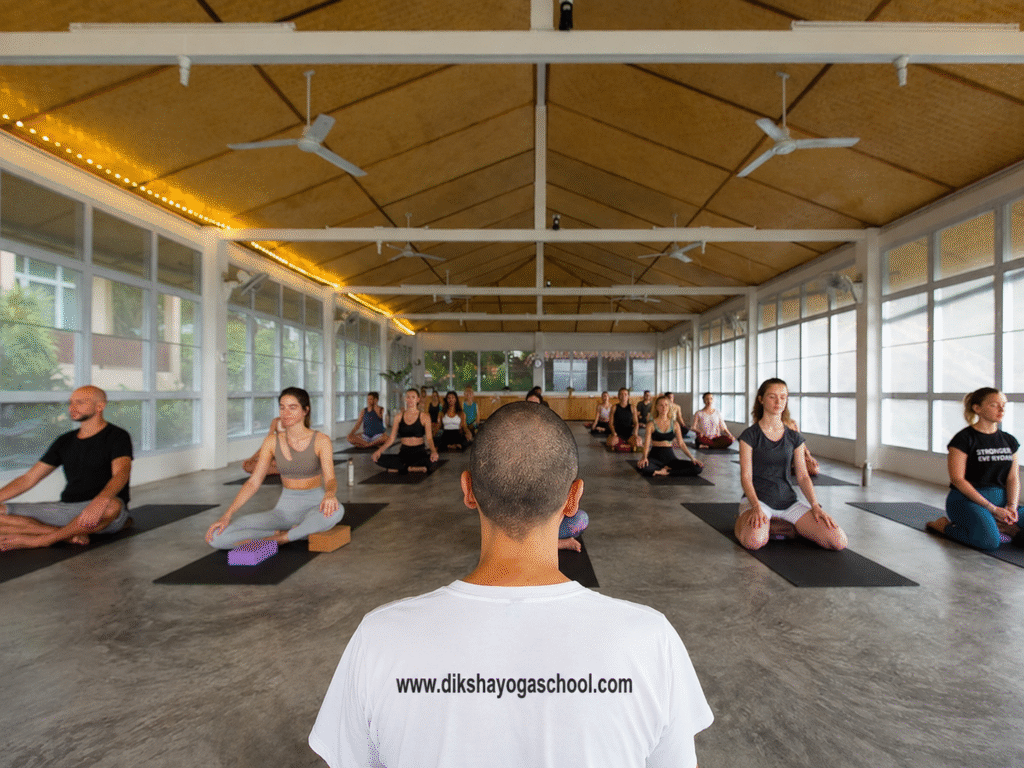
Choosing between a 100 Hour and 200 Hour Yoga Teacher Training is only part of the decision. Many students also compare different yoga schools in Thailand before booking. While every school has its own teaching style and strengths, we’ve found that students often look at factors such as class size, personal guidance, teaching practice, learning environment, and the level of support they receive throughout the course.
Rather than focusing only on course duration, we encourage students to compare what their day-to-day learning experience will actually be. The table below highlights some of the areas students commonly consider when choosing a Yoga Teacher Training in Thailand.
Then insert the table.
| Feature | Diksha Yoga School | Many Yoga Schools in Thailand* |
| Average Batch Size | Small batches (typically 8–12 students) | Often 20–40+ students |
| Personal Teacher Feedback | Individual guidance throughout the course | May be more limited in larger groups |
| Practice Teaching | Regular guided teaching practice | Varies by school |
| Learning Environment | Supportive, residential community | Depends on the school |
| Location | Peaceful Koh Samui island setting | Varies across Thailand |
| Student Support | Ongoing guidance from teachers | Varies between providers |
Kindly Note:
Class sizes, teaching style, and course structure vary between schools. We encourage prospective students to compare programs carefully and choose the school that best matches their learning goals.
What Is a 100 Hour Yoga Teacher Training?
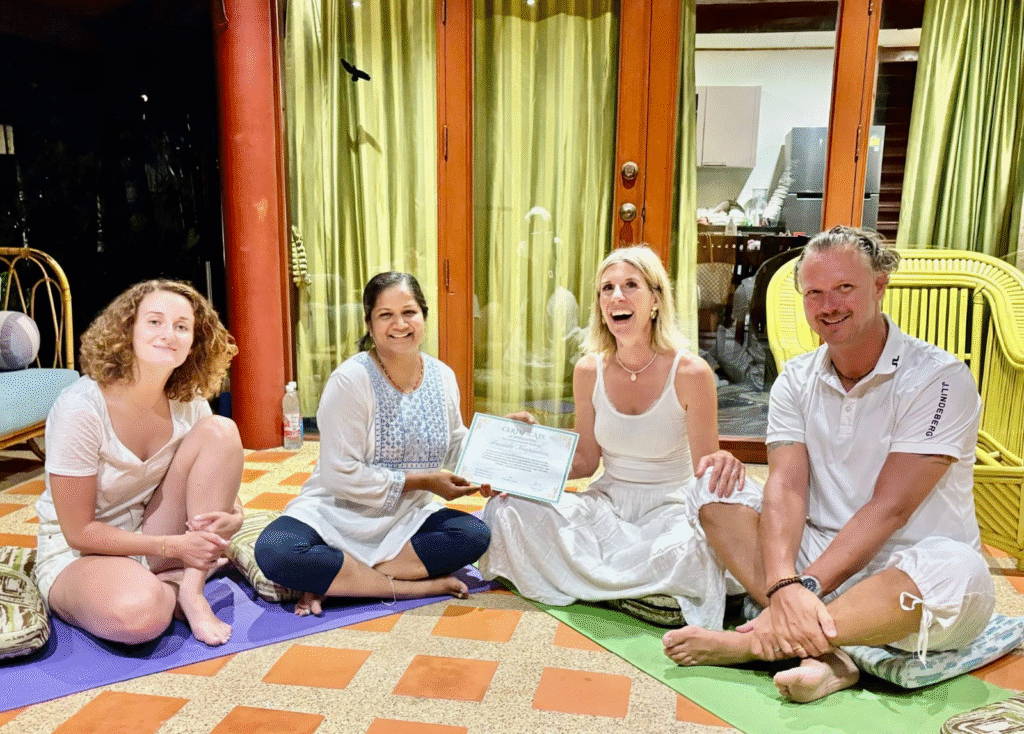
A 100 Hour Yoga Teacher Training in Thailand is a short but immersive residential yoga course designed for students who want to deepen their understanding of yoga without committing to a full 200-hour certification straight away.
At Diksha Yoga School, we often describe our 100 Hour Yoga Teacher Training in Koh Samui as the perfect starting point.
Many students join this course because they want to:
- Build a regular yoga practice.
- Improve their alignment.
- Learn proper breathing techniques.
- Understand yoga beyond physical postures.
- Experience traditional yogic living.
- Gain confidence before enrolling in a longer course.
Although the course lasts only 11 days, every day is carefully planned to help students experience yoga as a complete lifestyle rather than just a fitness activity.
Our mornings begin with yoga practice, where students gradually develop strength, flexibility, balance, and body awareness. Throughout the day, we explore Hatha Yoga, Vinyasa Flow, Pranayama, Meditation, Yoga Philosophy, Anatomy, and basic Teaching Methodology in a supportive learning environment.
Rather than trying to teach everything at once, we focus on helping students understand the foundations correctly.
We believe that learning yoga slowly and with awareness creates stronger teachers in the future.
Over the years, we’ve seen many students join our 100 Hour Yoga Teacher Training simply to improve their own practice while travelling in Thailand. One student arrived planning to spend two weeks on Koh Samui before continuing her backpacking trip across Southeast Asia. During the course, she discovered how much she enjoyed learning yoga philosophy and assisting classmates during practice sessions. A few months later, she returned to complete our 200 Hour Yoga Teacher Training because she realised she wanted to teach yoga professionally.
We’ve also noticed that many students arrive believing they need to be flexible before joining. By the end of the first few days, those worries usually disappear as they realise the course focuses on learning rather than performance. Watching students become more comfortable with their practice is one of the most rewarding parts of every batch.
Who Usually Chooses a 100 Hour Yoga Teacher Training?
Over the years, we’ve noticed that this course attracts students with many different goals.
It may be the right choice if you:
- Are completely new to yoga.
- Have a busy work schedule and limited holiday time.
- Want to improve your personal practice.
- Are travelling through Thailand and want a meaningful learning experience.
- Are unsure whether teaching yoga is the right career for you.
- Prefer starting with a shorter residential course before progressing to a 200 Hour Yoga Teacher Training.
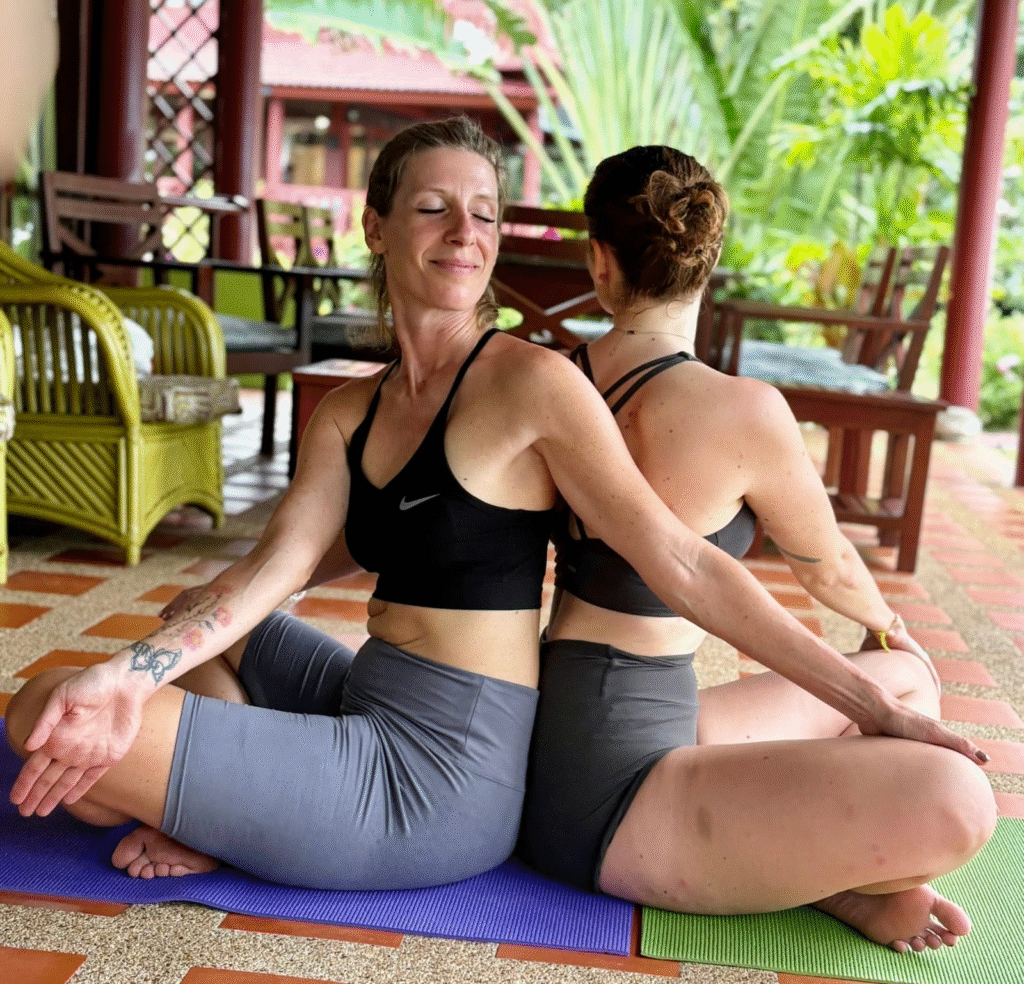
Many students tell us they originally booked the 100 Hour course because they weren’t sure if they wanted to teach. Once they experienced daily yoga practice, philosophy classes, and the supportive atmosphere, they often left with much greater confidence and a clearer vision for their next step.
Many of our students complete the 100 Hour program first and later return to Koh Samui to continue their journey with our 200 Hour Yoga Teacher Training
For them, the shorter course becomes a valuable first step that builds confidence before taking the next stage of their yoga education.
What Is a 200 Hour Yoga Teacher Training?
A 200 Hour Yoga Teacher Training is the internationally recognised foundation for anyone who wants to become a professional yoga teacher.
While beginners are welcome, the course is much more comprehensive than a 100 Hour program.
Instead of introducing yoga, we guide students through every aspect of becoming a confident and responsible teacher.
At Diksha Yoga School in Thailand, our 200 Hour Yoga Teacher Training is a 23-day residential course that combines daily practice with in-depth study and teaching experience.
Students don’t simply attend yoga classes.
They learn how to teach yoga safely, confidently, and with purpose.
Throughout the training, we cover:
- Hatha Yoga
- Vinyasa Flow
- Yoga Alignment
- Teaching Methodology
- Functional Anatomy
- Yoga Philosophy
- Pranayama
- Meditation
- Class Sequencing
- Hands-on Adjustments
- Practice Teaching
One of the biggest differences is the amount of teaching experience students receive.
During the course, students gradually move from practising yoga themselves to confidently guiding others through complete classes.
We observe their teaching, offer personalised feedback, answer questions, and help them improve with every practice session.
During the first teaching practice, it’s common for students to feel nervous about speaking in front of the group. After several rounds of personalised feedback, we often see those same students confidently leading complete classes by the final week. That gradual growth is one of the most rewarding transformations we witness during every training.
By the end of the training, students are not only stronger practitioners but also feel prepared to begin sharing yoga with others in studios, retreats, wellness centres, or private classes.
We’ve also welcomed students who arrived with very little confidence in their ability to teach. During the first week, speaking in front of the group often feels intimidating. Through daily practice teaching and personalised feedback, those same students frequently lead complete classes by the final week with far greater confidence and clarity.
Who Should Choose a 200 Hour Yoga Teacher Training?
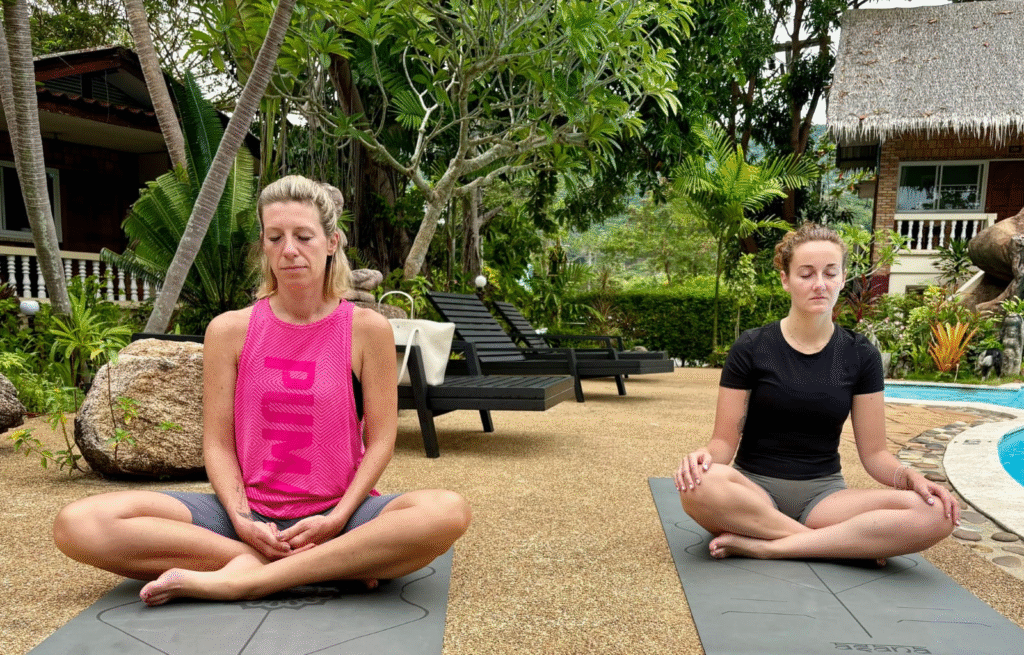
A 200 Hour Yoga Teacher Training in Thailand is often the best choice if you:
- Want to become a certified yoga teacher.
- Plan to register with Yoga Alliance.
- Are ready for an intensive residential learning experience.
- Want comprehensive teaching practice.
- Wish to build a long-term career in yoga.
- Want to deepen both your personal practice and your understanding of yogic philosophy.
Many students join our 200 Hour Yoga Teacher Training in Koh Samui without any previous teaching experience.
What matters most is not how advanced your poses are, but your willingness to learn, practise consistently, and stay open throughout the journey.
We always remind our students that yoga is not about performing the most difficult posture.
It’s about learning how to teach with awareness, compassion, and confidence.
100 Hour vs 200 Hour Yoga Teacher Training: A Complete Comparison
Now that you understand what each course offers, let’s compare them side by side.
Many students think the only difference is the number of hours. In reality, the experience, learning journey, teaching practice, and personal transformation are quite different.
At Diksha Yoga School in Koh Samui, Thailand, we don’t encourage every student to choose the longer course. Instead, we help each person find the course that matches their current goals.
We’ve seen students flourish after starting with a 100 Hour Yoga Teacher Training, while others have been ready from day one to begin a full 200 Hour Yoga Teacher Training.
Yoga is a personal journey, and your course should support where you are today—not where someone else thinks you should be.
Quick Comparison
| Feature | 100 Hour Yoga Teacher Training | 200 Hour Yoga Teacher Training |
| Duration | 11 Days | 23 Days |
| Best For | Beginners and personal growth | Future yoga teachers and dedicated practitioners |
| Daily Practice | Yes | Yes |
| Teaching Practice | Introduction | Extensive practical teaching |
| Yoga Philosophy | Foundation | In-depth understanding |
| Anatomy | Basic concepts | Functional anatomy and teaching application |
| Meditation & Pranayama | Daily practice | Daily practice with deeper understanding |
| Certification | 100 Hour Completion Certificate | Yoga Alliance RYS 200 Certification |
| Professional Teaching | Preparation | Ready to begin teaching |
The Biggest Difference Isn’t the Number of Days
This is something we explain to almost every student before they book.
A 100 Hour Yoga Teacher Training is designed to help you understand yoga.
A 200 Hour Yoga Teacher Training is designed to help you understand yoga and learn how to teach it.
That difference changes the whole learning experience.
In our 100 Hour course, students spend most of their time building confidence in their own practice.
They learn correct alignment, breathing techniques, meditation, yoga philosophy, and the foundations of Hatha Yoga and Vinyasa Flow.
There is also an introduction to teaching, but the focus is still on personal learning and self-development.
Our 200 Hour Yoga Teacher Training goes much deeper.
Students begin teaching small groups, learn how to sequence complete classes, observe different body types, improve verbal cueing, understand functional anatomy, and receive personalised feedback from our teachers throughout the course.
By graduation, they are not only practising yoga with confidence but are also prepared to guide others safely.
Comparing the Curriculum
People often ask us,
“Will I learn the same things in both courses?”
The answer is yes and no.
Both courses share the same yogic foundation.
Both include:
- Hatha Yoga
- Vinyasa Flow
- Meditation
- Pranayama
- Yoga Philosophy
- Anatomy
- Alignment
- Mindfulness
The difference is how deeply we explore each subject.
For example, during our 100 Hour Yoga Teacher Training, anatomy helps students understand how their own body moves safely.
During our 200 Hour Yoga Teacher Training, anatomy becomes a teaching tool.
We discuss common movement patterns, posture variations, safe modifications, and how to adapt yoga for different students.
The same progression happens throughout the curriculum.
Every subject becomes more detailed, practical, and focused on teaching.
Curriculum Comparison
| Topic | 100 Hour Course | 200 Hour Course |
| Hatha Yoga | Foundation | Advanced practice and teaching |
| Vinyasa Flow | Basic sequencing | Intelligent sequencing and transitions |
| Pranayama | Daily practice | Advanced techniques and teaching |
| Meditation | Personal practice | Teaching meditation sessions |
| Anatomy | Understanding your own body | Teaching anatomy safely |
| Philosophy | Introduction | Practical application in teaching |
| Teaching Methodology | Basic concepts | Complete teaching skills |
| Practice Teaching | Short teaching exercises | Full class teaching with feedback |
How Much Teaching Experience Will You Get?
This is probably the biggest difference between the two programs.
Many students join our 100 Hour Yoga Teacher Training in Thailand because they aren’t sure if they want to become yoga teachers.
For that reason, we introduce teaching gradually.
Students learn simple cueing, observe demonstrations, and begin understanding how classes are structured.
There is no pressure to perform perfectly.
The goal is to become comfortable and curious.
In our 200 Hour Yoga Teacher Training, everything becomes much more practical.
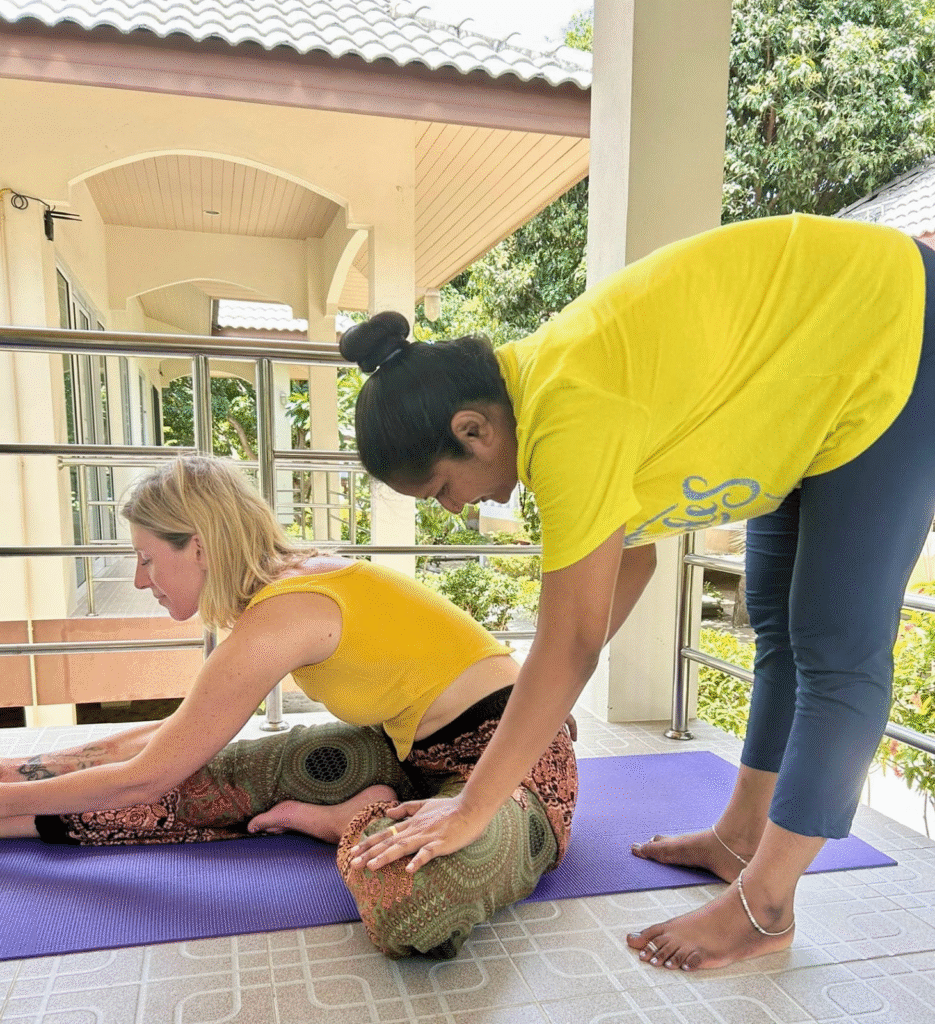
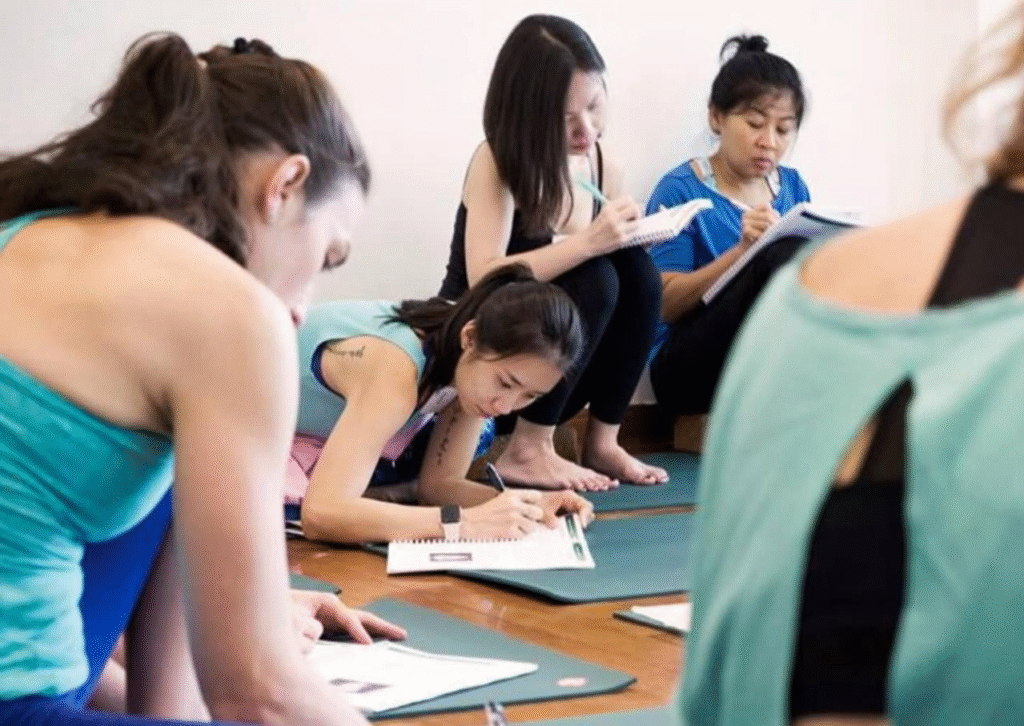
Throughout the course, students regularly teach one another in a supportive environment.
We watch closely, give honest feedback, answer questions, and help each student improve with every practice session.
One pattern we’ve noticed over the years is that many students are most nervous before their first teaching practice. After several rounds of guided feedback, they often surprise themselves with how naturally they begin communicating with the group. Watching that confidence grow is one of the most rewarding parts of every course.
Teaching Practice Comparison
| Learning Experience | 100 Hour Yoga Teacher Training | 200 Hour Yoga Teacher Training |
| Observe Teachers | ✓ | ✓ |
| Learn Basic Cueing | ✓ | ✓ |
| Practice Speaking | ✓ | ✓ |
| Teach Short Sequences | ✓ | ✓ |
| Teach Complete Classes | Limited | ✓ |
| Receive Detailed Teaching Feedback | Basic | Extensive |
| Class Planning | Introduction | Complete sequencing and planning |
| Build Professional Teaching Confidence | Foundation | Comprehensive |
Which Course Feels More Intensive?
Students often worry that a 200 Hour Yoga Teacher Training will be too difficult.
In our experience, it isn’t about being physically stronger.
It’s about being ready for a deeper learning experience.
Both courses include:
- Early morning yoga practice
- Meditation
- Breathwork
- Philosophy
- Anatomy
- Healthy meals
- Rest and reflection
The difference is the amount of information you learn and the time you spend teaching.
A 100 Hour course gives students space to absorb the basics at a comfortable pace.
A 200 Hour course asks for a greater commitment because you’re preparing to become a yoga teacher.
Both are rewarding.
The question is simply which one matches your current stage of life.
Time Commitment Comparison
| Feature | 100 Hour Course | 200 Hour Course |
| Residential Stay | 11 Days | 23 Days |
| Daily Practice | Yes | Yes |
| Teaching Practice | Introductory | Extensive |
| Self-Study | Moderate | More in-depth |
| Physical Practice | Moderate | Moderate to Intensive |
| Overall Commitment | Short immersive experience | Full professional training |
Who Should Choose a 100 Hour Yoga Teacher Training?
One of the best parts of our work at Diksha Yoga School in Koh Samui, Thailand is meeting students from different walks of life.
Some are travelling through Southeast Asia and want to spend their holiday learning yoga. Others are working professionals looking for a meaningful break. We also welcome people who simply want to reconnect with themselves after a busy period in life.
Not everyone arrives with the goal of becoming a yoga teacher.
And that’s perfectly okay.
A 100 Hour Yoga Teacher Training is designed for people who want to experience authentic yoga education without making a long-term commitment straight away.
If you’re curious about yoga but still exploring where your journey might lead, this course gives you the opportunity to learn in a supportive environment while building a strong foundation.
Our 100 Hour Yoga Teacher Training may be the right choice if you:
- You’re completely new to yoga.
- You want to deepen your personal practice.
- You only have 10–14 days available.
- You’d like to experience a residential yoga course before joining a longer program.
- You’re travelling in Thailand and want a meaningful learning experience.
- You’re interested in yoga for your health, wellbeing, or personal growth.
- You’re not yet sure if teaching yoga is the right path for you.
Many of our students tell us that before arriving, they felt nervous because they thought everyone would already be experienced.
By the second or third day, those worries usually disappear. We’ve seen complete beginners arrive worried they would be the least experienced person in the room. Within a few days,
those same students are participating confidently because they realise everyone is learning together rather than competing with one another.
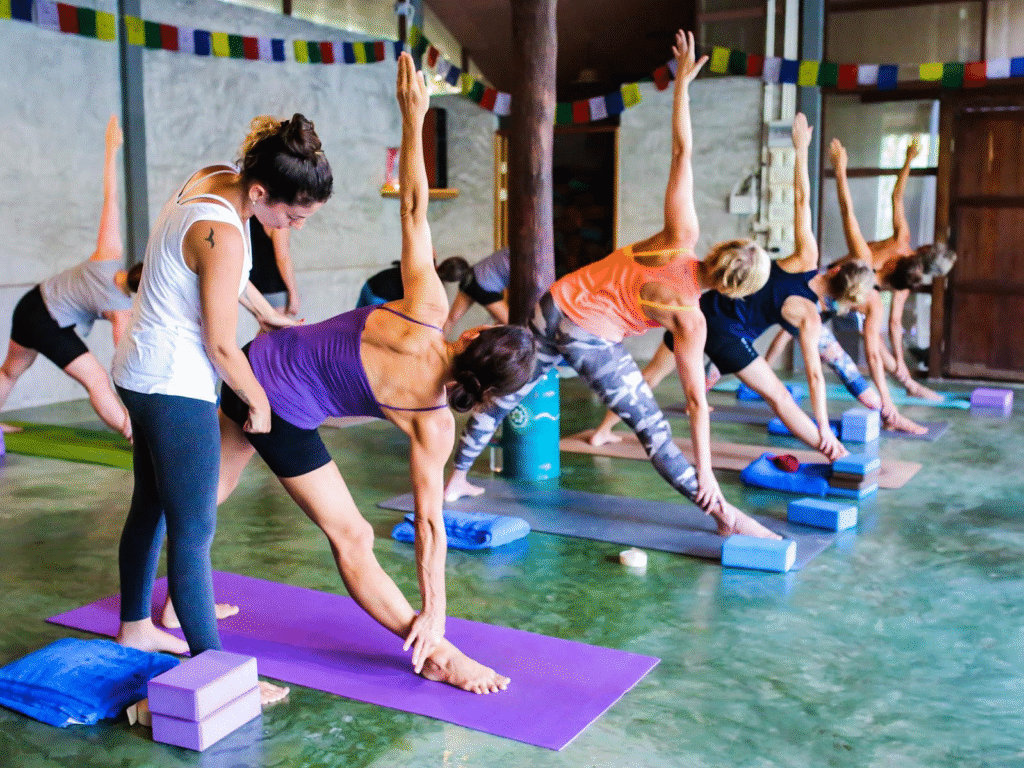
Our teachers guide every student step by step, creating a welcoming environment where everyone learns at their own pace. Many students tell us they arrive wondering whether they’ll be able to keep up with the course. By the second or third day, those concerns usually disappear as they realise everyone is learning together. Seeing beginners become more comfortable with each practice is something we experience in almost every batch.
Who Should Choose a 200 Hour Yoga Teacher Training?
If you already know that you want to become a certified yoga teacher, or you’re ready to fully immerse yourself in yoga for several weeks, then a 200 Hour Yoga Teacher Training is often the better choice.
This course is much more than learning new yoga poses.
It’s about developing the confidence, knowledge, and teaching skills needed to guide others safely and professionally.
During our 200 Hour Yoga Teacher Training in Thailand, students spend more time studying anatomy, philosophy, sequencing, adjustments, teaching methodology, and practice teaching.
Every week, confidence grows through experience.
You don’t need to be the strongest or most flexible person in the room.
You simply need to arrive with an open mind and a willingness to learn. Some students join with years of personal practice but little confidence in teaching, while others have only recently discovered yoga. We’ve found that curiosity, consistency, and a willingness to learn are much stronger indicators of success than previous experience.
Our 200 Hour Yoga Teacher Training is ideal if you:
- You want to become a certified yoga teacher.
- You’d like to register with Yoga Alliance after completing your course.
- You’re ready for an intensive residential learning experience.
- You enjoy learning in depth.
- You want to teach yoga professionally in the future.
- You’re looking for both personal transformation and professional development.
Many of our graduates begin teaching in yoga studios, wellness retreats, fitness centres, or private sessions after completing their training.
Others don’t teach immediately but continue practising yoga with a much deeper understanding than before.
Both outcomes are equally valuable.
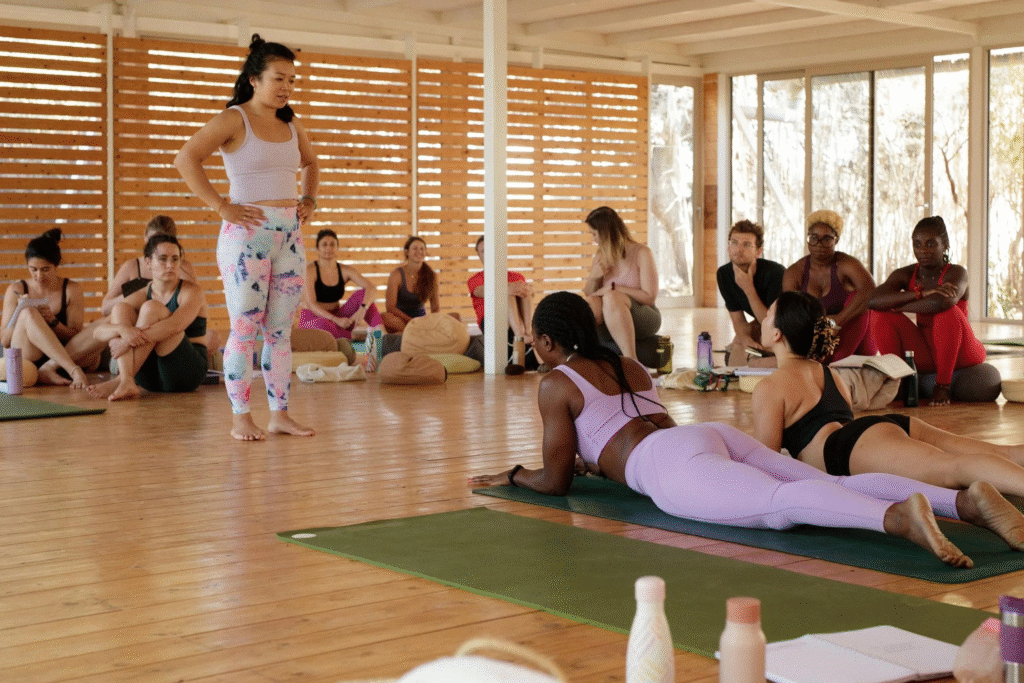
Which Course Matches Your Goals?
Everyone joins a yoga teacher training for a different reason.
Instead of asking,
“Which course is better?”
we encourage students to ask,
“Which course is right for me right now?”
Here’s a simple comparison that may help.
| If Your Goal Is… | We Recommend… |
| Improve your personal yoga practice | 100 Hour Yoga Teacher Training |
| Learn yoga while travelling in Thailand | 100 Hour Yoga Teacher Training |
| Experience authentic yogic living | 100 Hour Yoga Teacher Training |
| Become a certified yoga teacher | 200 Hour Yoga Teacher Training |
| Build confidence teaching classes | 200 Hour Yoga Teacher Training |
| Start a professional yoga career | 200 Hour Yoga Teacher Training |
| Study yoga in greater depth | 200 Hour Yoga Teacher Training |
| Explore yoga before committing to a longer course | 100 Hour Yoga Teacher Training |
Can You Start with a 100 Hour Course and Continue Later?
Absolutely.
In fact, many of our students choose this path.
Life doesn’t always allow us to take three or four weeks away from work or family.
Some students only have two weeks available but still want to begin learning yoga properly.
Our 100 Hour Yoga Teacher Training in Koh Samui allows them to start their journey without feeling rushed.
Later, when the time feels right, many return to continue their education through our 200 Hour Yoga Teacher Training.
We love welcoming familiar faces back to our school.
It’s rewarding to see how much confidence students have gained before taking the next step.
Yoga isn’t a race.
There’s no deadline.
Your journey should unfold at a pace that feels comfortable for you.
Common Myths About 100 Hour and 200 Hour Yoga Teacher Training
Before students join us, they often have concerns based on things they’ve read online or heard from others.
Let’s clear up some of the most common misconceptions.
Myth 1: A 100 Hour Yoga Teacher Training Is Just a Yoga Holiday
Not at all.
Although the course is shorter, it’s a structured residential program with daily practice, philosophy, anatomy, meditation, pranayama, and guided learning.
Students often leave with a much deeper understanding of yoga than they expected
Myth 2: You Need to Be Flexible Before Joining
This is probably the biggest myth we hear.
You don’t need to touch your toes or perform advanced poses.
Flexibility develops through regular practice.
What matters far more is your willingness to learn.
Myth 3: Only Experienced Yogis Can Join a 200 Hour Course
Many students join our 200 Hour Yoga Teacher Training in Thailand with only a few months of yoga experience.
Our teachers guide beginners just as carefully as experienced practitioners.
Everyone starts somewhere.
Myth 4: Completing a 200 Hour Course Means You Know Everything
Yoga is a lifelong practice.
Completing a teacher training isn’t the finish line.
It’s the beginning of a deeper journey of learning, teaching, and personal growth.
Even our senior teachers continue studying, practising, and learning every year.
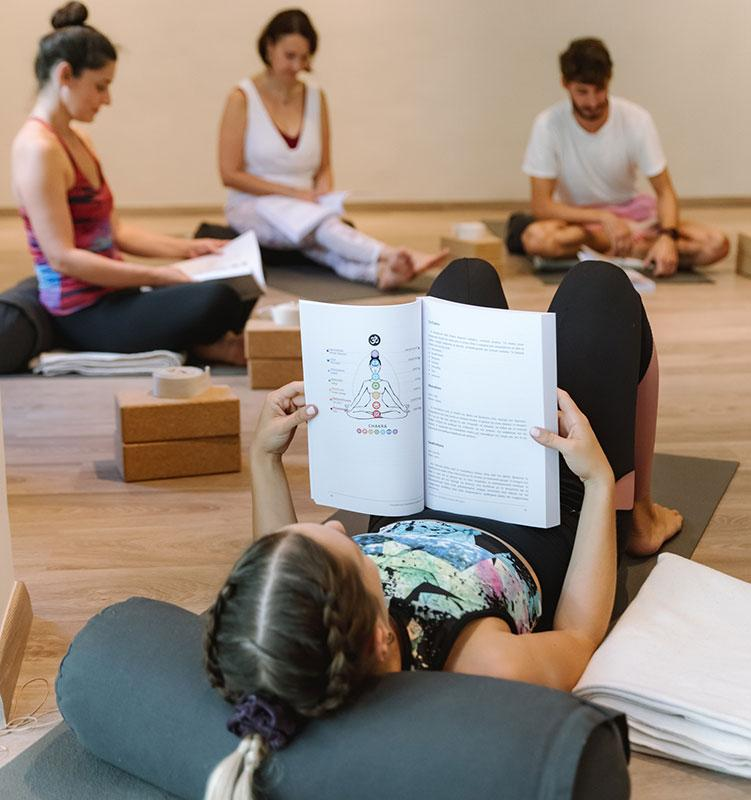
Our Advice to Students Who Are Still Unsure
If you’re still deciding between a 100 Hour Yoga Teacher Training and a 200 Hour Yoga Teacher Training, don’t feel pressured to make the “perfect” choice.
The best course is the one that matches your current goals, available time, and level of commitment.
At Diksha Yoga School, we’ve seen incredible transformations in both programs.
Some students discover a lifelong passion for yoga during our 100 Hour course.
Others arrive ready to fully commit to a 200 Hour Teacher Training and leave feeling confident to begin teaching.
There isn’t a right or wrong path.
There is only your path.
If you’re unsure, we’re always happy to answer your questions, understand your goals, and help you choose the course that feels right for you—not the one that simply sounds more impressive.
After all, yoga teaches us to move with awareness, and we believe your learning journey should begin in exactly the same way.
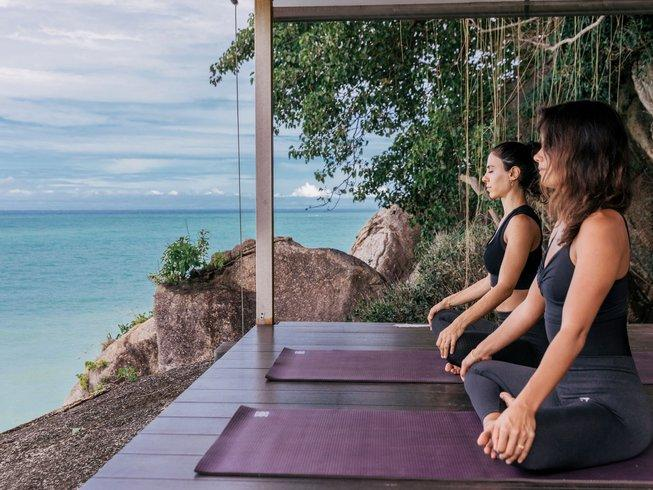
Why Choose Koh Samui, Thailand for Your Yoga Teacher Training?
When students begin looking for a Yoga Teacher Training in Thailand, they often compare different destinations such as Chiang Mai, Phuket, and Koh Phangan. While each place has its own charm, many students choose Koh Samui because it offers something unique—a peaceful island lifestyle that supports learning, self-reflection, and personal growth.
At Diksha Yoga School, we’ve seen how much the environment influences the learning experience.
Yoga isn’t only something that happens in the classroom.
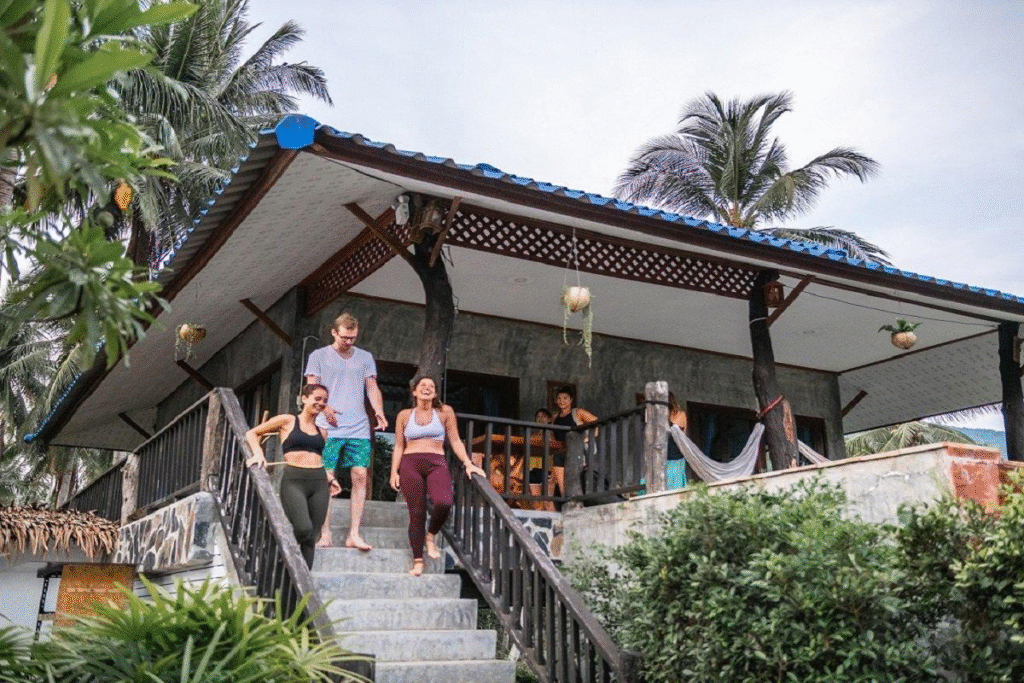
It’s also found in the quiet morning walks, the sound of the ocean after meditation, sharing healthy meals with classmates, and taking time to reflect on everything you’ve learned throughout the day.
Koh Samui naturally encourages this slower and more mindful way of living.
Instead of rushing through busy city life, students have the opportunity to focus entirely on themselves and their practice.
For many people, this becomes just as valuable as the yoga classes themselves.
Why We Chose Koh Samui for Diksha Yoga School
When we decided to offer our Yoga Teacher Training in Thailand, we wanted more than just a beautiful location.
We wanted a place where students could truly disconnect from daily stress and reconnect with themselves.
We’ve noticed that many students begin to slow down after just a few days on the island. The combination of regular yoga practice, healthy meals, and the peaceful surroundings often helps them leave behind the pace of everyday life and focus more deeply on their learning.
We often notice a change after the first few days in Koh Samui. Students arrive carrying the stress of work, travel, or busy daily routines. As they settle into a regular schedule of yoga, meditation, healthy meals, and time in nature, they become more relaxed and present. By the end of the course, many tell us they haven’t felt this balanced in years.
What Is It Like to Study at Diksha Yoga School?
Every Yoga Teacher Training is different.
Some schools focus only on completing the syllabus.
At Diksha Yoga School, we focus on creating a supportive learning experience where every student feels comfortable asking questions, making mistakes, and growing with confidence.
Our teachers understand that everyone learns differently.
Some students learn best through practice.
Others enjoy discussions, demonstrations, or simply observing before trying something themselves.
That’s why our classes combine practical experience with clear explanations and personal guidance.
Rather than expecting perfection, we encourage progress.
Whether you’re joining our 100 Hour Yoga Teacher Training or our 200 Hour Yoga Teacher Training, our goal is to help you build confidence step by step.
Small improvements each day often lead to remarkable transformation by the end of the course.
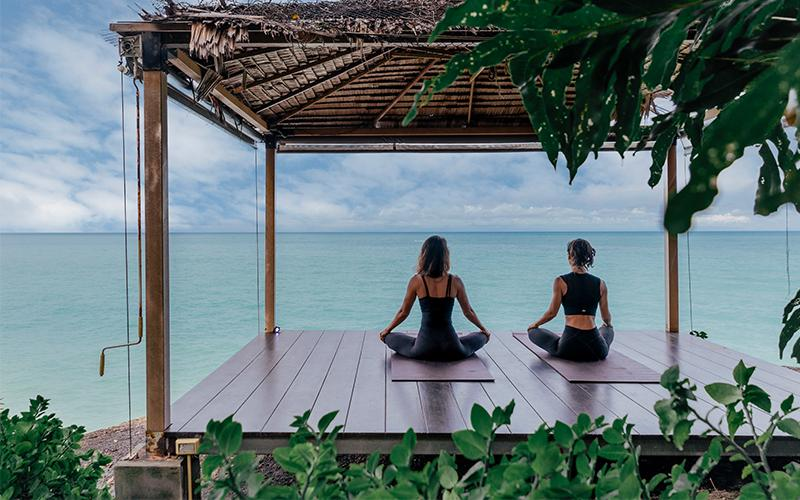
A Day at Diksha Yoga School
Many students ask us,
“What does a typical day look like?”
Every day is designed to create a balance between physical practice, learning, rest, and reflection.
Our mornings usually begin in a peaceful atmosphere before the island becomes busy.
Starting the day with yoga helps students wake up both the body and the mind.
As the day continues, classes include different aspects of yoga such as:
- Hatha Yoga
- Vinyasa Flow
- Pranayama
- Meditation
- Yoga Philosophy
- Anatomy
- Teaching Methodology
Between classes, students enjoy nourishing vegetarian meals, spend time reviewing their notes, connect with classmates, or simply relax and enjoy the peaceful surroundings.
Although the schedule is structured, there is also space to breathe, reflect, and absorb everything you’ve learned.
This balance is one of the reasons many students describe the course as challenging but deeply enjoyable.
Learning Beyond the Yoga Mat
We’ve watched students from different countries who had never met before become close friends through shared meals, practice sessions, and study groups. Those connections often continue long after the course has finished, reminding us that yoga education is also about building community.
of the things we love most about teaching is watching students discover that yoga is much more than physical postures.
During the course, learning continues outside the classroom.
Simple moments become valuable lessons.
Sharing meals with students from different countries teaches openness and community.
Morning meditation develops patience.
Group discussions encourage self-reflection.
Teaching practice builds confidence.
Even quiet walks around Koh Samui often become opportunities to process new ideas and appreciate the present moment.
Many graduates later tell us these experiences stayed with them long after they returned home.
This is one reason a residential Yoga Teacher Training in Thailand feels so different from simply attending yoga classes once or twice a week.
For a few weeks, yoga becomes your daily lifestyle rather than just an activity.
A Student’s Journey at Diksha Yoga School
Every student arrives with a different story.
Some step onto the yoga mat with confidence.
Others arrive feeling nervous, wondering if they’re experienced enough or flexible enough to join.
We see these feelings in almost every course.
On the first day, everyone is getting to know each other, adjusting to a new environment, and wondering what the coming days will bring.
By the middle of the course, something begins to change.
Students become more comfortable asking questions.
We’ve watched students who were hesitant to say a single sentence on the first day gradually volunteer to lead breathing exercises and short yoga sequences by the final week. That gradual growth is something we see again and again, regardless of age or previous experience.
They start remembering Sanskrit names, understanding alignment, breathing more consciously, and moving with greater awareness.
Those joining the 200 Hour Yoga Teacher Training often surprise themselves during their first teaching practice.
Even students who were nervous about speaking in front of others begin guiding short sequences with increasing confidence.
By graduation, the atmosphere is completely different.
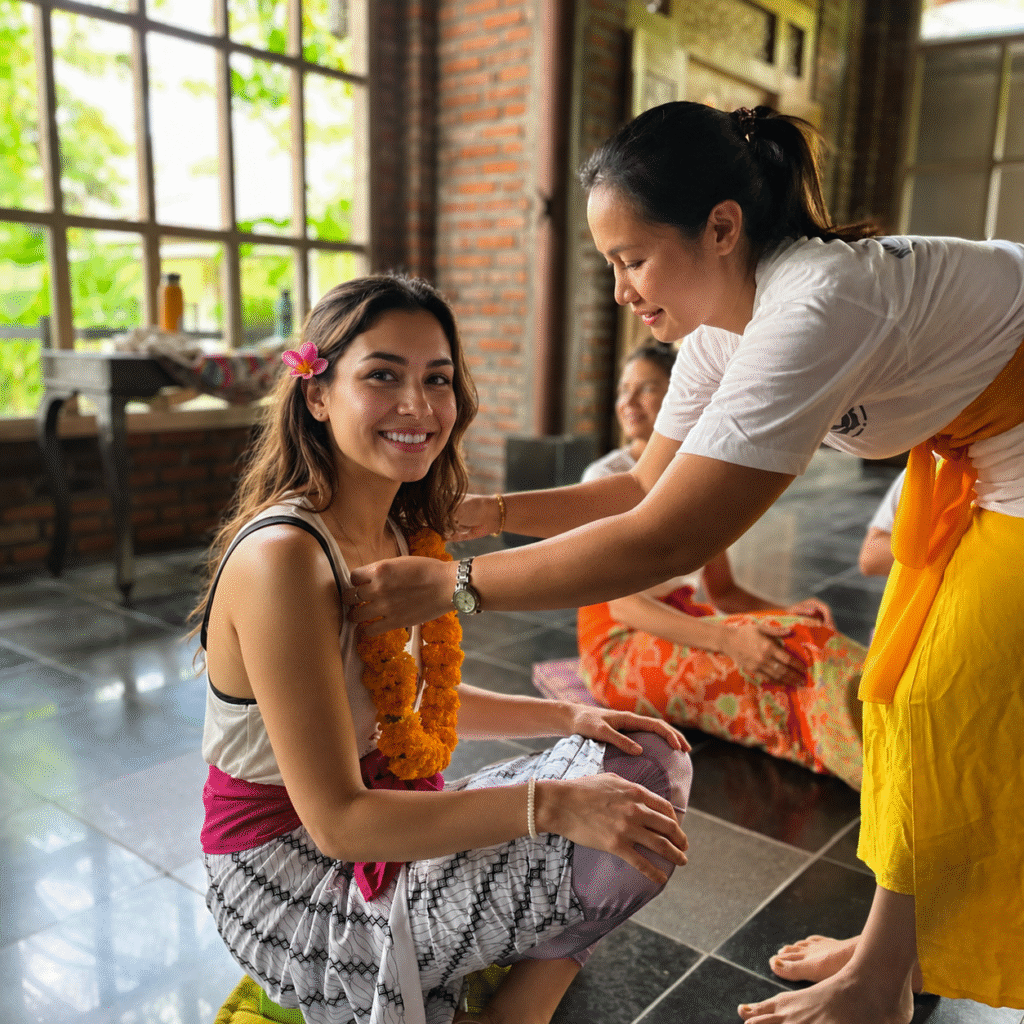
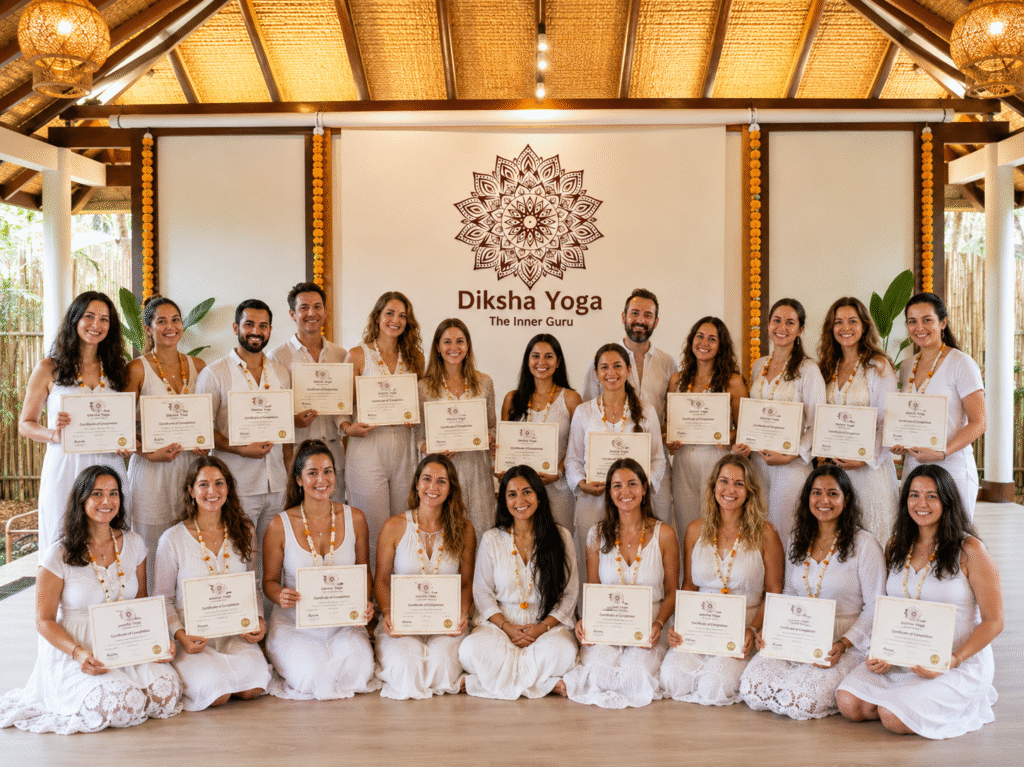
The group has become a small community. One of our favourite moments is graduation day. Students who were strangers just a few weeks earlier often leave encouraging one another, sharing future plans, and promising to stay connected. Seeing that transformation reminds us that a Yoga Teacher Training is about much more than learning postures.
Students support one another, celebrate each other’s progress, and leave with friendships that often continue long after the course has finished.
Watching this transformation is one of the most rewarding parts of what we do.
More Than a Certificate
Many people begin searching for a Yoga Teacher Training in Thailand because they want a certificate.
By the end of the course, most realise they have gained much more than that.
They leave with:
- A stronger and more consistent yoga practice.
- Better understanding of their body.
- Greater confidence.
- Healthier daily habits.
- A calmer mind.
- New friendships from around the world.
- A deeper appreciation for yoga as a lifelong practice.
Whether students continue teaching yoga or simply bring these lessons into their personal lives, the experience often continues to shape them long after they leave Koh Samui.
For us, that is the true purpose of yoga education.
Helping people build knowledge is important.
Helping people grow with confidence, awareness, and compassion is even more meaningful.
Why Students Return to Diksha Yoga School
One of the greatest compliments we receive is when students choose to come back.
Many students who first join our 100 Hour Yoga Teacher Training in Thailand later return to complete their 200 Hour Yoga Teacher Training or continue their yoga education with us.
One of the most rewarding moments for our teaching team is welcoming former students back for the next stage of their education. They often tell us they continued practising at home, gained confidence, and felt ready to deepen their learning through the 200 Hour course.
When former students return for the next level of training, we often notice how much they’ve grown in confidence since their first visit. Seeing that progression over months or even years is one of the most rewarding parts of being a teacher.
They return because they already know our teachers, our learning environment, and our approach to yoga.
They know they’ll be welcomed like family.
For us, this is never just about completing a course.
It’s about supporting students throughout their yoga journey, whether they’re taking their very first class or continuing their path toward becoming experienced yoga teachers
Can You Teach Yoga After a 100 Hour Yoga Teacher Training?
This is one of the questions we hear most often.
The simple answer is it depends on your goal.
A 100 Hour Yoga Teacher Training is designed to build a strong foundation. It helps you understand yoga beyond physical postures and introduces you to teaching methodology, but it is not intended to replace a complete professional teacher training.
Many students join our 100 Hour course because they want to:
- Improve their own practice.
- Learn proper alignment.
- Understand yoga philosophy.
- Experience living a yogic lifestyle.
- Decide if teaching yoga is the right path for them.
For many people, the 100 Hour course becomes the beginning of something much bigger.
After returning home, they continue practising, feel more confident, and later decide to complete a 200 Hour Yoga Teacher Training in Thailand.
We often welcome these students back to Koh Samui, and it’s always inspiring to see how much they have grown since their first visit.
What Can You Do After Completing a 200 Hour Yoga Teacher Training?
A 200 Hour Yoga Teacher Training prepares you with the knowledge and practical experience needed to begin teaching yoga with confidence.
During the course, you don’t just learn yoga—you learn how to share it with others in a safe, thoughtful, and professional way.
After completing the training, many graduates choose different paths depending on their interests.
Some begin teaching at local yoga studios.
Others organise community classes, private sessions, wellness retreats, or online yoga classes.
Many continue their studies with specialised courses such as Yin Yoga, Prenatal Yoga, or a 300 Hour Yoga Teacher Training.
Some students never teach professionally at all.
Instead, they use everything they’ve learned to improve their own wellbeing and bring more balance into their daily lives.
There is no single definition of success after a Yoga Teacher Training.
For us, success means applying yoga in a way that supports your own life and, if you choose, the lives of others.
Certification Comparison
Many students are understandably curious about certification before booking their course.
Here’s a simple comparison.
| Feature | 100 Hour Yoga Teacher Training | 200 Hour Yoga Teacher Training |
| Course Completion Certificate | ✔ Yes | ✔ Yes |
| Professional Teacher Training | Foundation | Complete |
| Teaching Practice | Introduction | Comprehensive |
| Yoga Alliance Recognition | Forms part of your learning journey | Eligible through our Yoga Alliance Registered School upon successful completion |
| Best For | Personal growth and preparation | Students wishing to teach professionally |
At Diksha Yoga School, both courses are taught with the same dedication, experienced teachers, and supportive learning environment.
The difference isn’t the quality.
It’s the depth of learning and the outcome each course is designed to achieve.
Is the Longer Course Always the Better Choice?
Not necessarily.
Many people assume that choosing the longer course automatically makes it the better option.
In reality, the best course is the one that fits your current stage of life.
For example, imagine two students.
One has only two weeks available because of work commitments.
The other has a full month and knows they want to teach yoga professionally.
Would we recommend the same course to both?
Probably not.
The first student may benefit much more from a 100 Hour Yoga Teacher Training, enjoying a meaningful learning experience without feeling rushed.
The second student is likely ready for the commitment of a 200 Hour Yoga Teacher Training.
Choosing the right course isn’t about doing more.
It’s about choosing wisely.
Comparing the Investment
Students often compare prices before choosing a Yoga Teacher Training.
While cost is important, we encourage students to think about value rather than simply looking for the cheapest course.
A Yoga Teacher Training is an investment in yourself.
The knowledge you gain, the habits you develop, the friendships you build, and the confidence you develop often stay with you long after the course has ended.
When comparing different yoga schools, ask yourself questions like:
- What is included in the course fee?
- Will I receive personal guidance?
- How much teaching practice is included?
- Are accommodation and meals provided?
- What is the student-to-teacher ratio?
- Is the school experienced?
- Will I feel supported throughout the course?
The cheapest course isn’t always the best value.
Likewise, the most expensive course doesn’t automatically offer the best learning experience.
At Diksha Yoga School, we believe students deserve transparent information, experienced teachers, comfortable accommodation, nourishing vegetarian meals, and a learning environment where every student receives personal attention.
Why Small Batches Make a Big Difference
This is something many students don’t think about until after they begin their training.
In a smaller group, teachers have more time to observe your practice, answer your questions, and offer individual guidance. In smaller groups, teachers have the opportunity to notice subtle details that can easily be overlooked in larger classes. Sometimes a simple adjustment to a student’s alignment or breathing creates an immediate improvement in both comfort and confidence. We’ve seen these small moments make a lasting difference throughout the course.
That personal attention can make a huge difference to your confidence and progress.
We’ve seen students improve quickly simply because they received small corrections that might have been missed in a much larger class.
Whether it’s adjusting your alignment in Warrior II, helping you find a steadier breath in Pranayama, or offering feedback after your first teaching practice, these moments often become the turning points in a student’s journey.
For us, teaching isn’t about standing at the front of the room and delivering information.
It’s about creating an environment where every student feels seen, supported, and encouraged to grow.
What Makes Diksha Yoga School Different?
Every Yoga Teacher Training has a curriculum. What often makes the biggest difference is how that curriculum is taught.
When students compare yoga schools in Thailand, they often focus on course fees or location. From our experience, the day-to-day learning environment has a much bigger impact on their overall experience. Factors such as class size, individual guidance, opportunities to ask questions, and personalised feedback can make a significant difference throughout a Yoga Teacher Training.
Then add your table.
| What Students Often Compare | Diksha Yoga School | Many Larger Yoga Schools* |
| Teacher knows every student’s name | Yes | Not always |
| Individual alignment corrections | Frequent | Can be less frequent in larger groups |
| Opportunities to ask questions | Encouraged throughout the day | Varies by teaching style |
| Practice teaching feedback | Personalised after teaching sessions | Depends on class size |
| Sense of community | Small, close-knit batches | Can vary with group size |
Over the years, we’ve learned that students rarely remember every lecture in detail. What they often remember most is feeling comfortable enough to ask questions, receiving personal encouragement from teachers, and realising they were capable of more than they expected.
Every yoga school is different, and teaching approaches vary. We encourage prospective students to compare class sizes, teaching methods, and the level of personal support offered before choosing a course.
At Diksha Yoga School in Koh Samui, we believe learning should feel supportive rather than intimidating.
We don’t expect students to arrive knowing everything.
That’s why they’re here.
From your first day, our teachers encourage questions, celebrate progress, and guide each student with patience.
Our goal isn’t simply to help you complete a course.
It’s to help you leave with confidence in yourself.
Students often tell us that they appreciated:
- The welcoming atmosphere.
- Individual guidance from experienced teachers.
- Small batch sizes.
- A balance between traditional yoga and modern teaching methods.
- The peaceful environment of Koh Samui.
- Friendships they made during the course.
These are the experiences that students remember long after graduation.
We’ve found that students often remember the personal guidance more than any single lesson. A small alignment adjustment, extra encouragement before teaching practice, or an informal discussion after class can become the moment that changes how they experience yoga.
Our Final Advice Before You Decide
If you’re comparing a 100 Hour and 200 Hour Yoga Teacher Training, don’t let pressure or expectations influence your decision.
Take a moment to think about where you are today.
Ask yourself:
- Why do I want to study yoga?
- What do I hope to learn?
- How much time can I realistically commit?
- Am I looking for personal growth, professional teaching, or both?
When you answer those questions honestly, the right course usually becomes much clearer.
Whether you begin with our 100 Hour Yoga Teacher Training in Koh Samui or decide you’re ready for our 200 Hour Yoga Teacher Training in Thailand, we’ll be here to support your journey.
Because for us, yoga isn’t about reaching a destination.
It’s about continuing to learn, practise, and grow—one step at a time.
Why Thousands of Students Begin Their Yoga Journey with Diksha Yoga School
Choosing a Yoga Teacher Training in Thailand is about much more than comparing course duration, accommodation, or prices.
It’s about choosing a school where you feel supported, inspired, and encouraged to grow.
At Diksha Yoga School, we don’t believe every student should follow exactly the same path.
Some students arrive dreaming of becoming yoga teachers.
Others simply want to improve their health, reduce stress, reconnect with themselves, or experience authentic yoga while living in beautiful Koh Samui, Thailand.
Whatever brings you here, our role is the same—to create a welcoming learning environment where every student feels comfortable, supported, and motivated throughout their journey.
For us, yoga education is not about memorising information.
It is about understanding yourself, building confidence, and developing a practice that continues long after the course has finished.
That philosophy is reflected in every class we teach.
What You Can Expect When You Join Us
When you arrive at Diksha Yoga School, you become part of a community rather than simply joining a course.
From your first day, our teachers and team are here to help you settle in, answer your questions, and make you feel at home.
During your training, you’ll experience:
- Daily Hatha Yoga and Vinyasa Flow practice.
- Guided Meditation and Pranayama.
- Functional Anatomy explained in simple, practical ways.
- Yoga Philosophy connected to modern daily life.
- Teaching Methodology with supportive feedback.
- Comfortable accommodation in Koh Samui.
- Fresh vegetarian meals prepared each day.
- A peaceful learning environment surrounded by nature.
- Friendships with students from different countries.
We believe students learn best when they feel relaxed, encouraged, and supported.
That’s why we create an atmosphere where learning becomes enjoyable rather than stressful.
What Our Students Often Tell Us
Over the years, we’ve heard many different reasons for joining our Yoga Teacher Training.
Some students say they wanted a break from busy working lives.
Others wanted to improve their confidence.
Some were recovering from stressful periods and simply needed time to reconnect with themselves.
By the end of the course, many tell us that they leave with much more than they expected.
Over the years, we’ve noticed a similar pattern across many batches. Students usually arrive focused on learning yoga poses, but by graduation they speak just as much about the friendships they built, the confidence they developed, and the positive habits they want to continue once they return home.
They often mention:
- A deeper understanding of yoga.
- Better posture and body awareness.
- More confidence.
- Healthier daily habits.
- Greater mental clarity.
- Meaningful friendships.
- A renewed sense of purpose.
For us, these personal transformations are just as important as completing the curriculum.
Why Our Teaching Approach Is Different
Every Yoga Teacher Training follows a curriculum.
What makes the biggest difference is how that curriculum is delivered.
At Diksha Yoga School, we believe learning should never feel intimidating.
Our teachers explain each subject in simple, practical language.
If a student doesn’t understand something the first time, we encourage them to ask questions.
If someone needs extra guidance during practice, we’re happy to spend additional time helping them.
We don’t measure success by how advanced a student’s yoga poses are.
Instead, we look for progress.
A student who becomes more confident, more aware, and more connected to their practice has already achieved something meaningful.
This supportive teaching style is one of the reasons many students recommend our courses to friends and return to continue their yoga education with us.
Which Course Should You Choose?
If you’ve read this guide from beginning to end, you probably already have a good idea which course feels right for you.
To make your decision even easier, here’s one final comparison.
| Choose the 100 Hour Yoga Teacher Training if you… | Choose the 200 Hour Yoga Teacher Training if you… |
| Want to deepen your personal practice | Want to become a certified yoga teacher |
| Have limited time available | Can commit to a longer residential course |
| Prefer to begin with a shorter program | Want comprehensive teaching experience |
| Are exploring whether teaching is right for you | Are ready to begin a professional yoga journey |
| Want to experience yoga in Thailand | Want a complete Yoga Alliance-recognised teacher training |
| Would like to return later for further study | Want to graduate ready to teach confidently |
Neither path is better.
The best choice is simply the one that matches your goals today.
Yoga teaches us to move with awareness rather than comparison.
We believe choosing your teacher training should be approached in exactly the same way.
What We’ve Learned After Teaching Students From Around the World
After teaching students from different countries and backgrounds, we’ve learned that people rarely remember every anatomy lesson or Sanskrit term. What they remember is how they felt during the course. They remember becoming more confident, building meaningful friendships, discovering a healthier routine, and realising that yoga is much more than physical movement.
Those moments are what make a Yoga Teacher Training a life-changing experience, and they’re what continue to inspire us as teachers.
Final Thoughts
Whether you choose our 100 Hour Yoga Teacher Training or our 200 Hour Yoga Teacher Training, you’re choosing to invest in yourself.
You’ll develop new knowledge, healthier habits, stronger self-awareness, and a deeper understanding of yoga that extends far beyond physical postures.
At Diksha Yoga School in Koh Samui, Thailand, we’re honoured to be part of that journey.
After teaching students from different countries and backgrounds, we’ve learned that people rarely remember every anatomy lesson or Sanskrit term. What they remember is how they felt during the course. They remember becoming more confident, building meaningful friendships, discovering a healthier routine, and realising that yoga is much more than physical movement. Those moments are what make a Yoga Teacher Training a life-changing experience, and they’re what continue to inspire us as teachers.
After teaching students from many different countries and backgrounds, one lesson stands out to us above all others: people rarely remember every anatomy lesson or Sanskrit term. What they remember is how they felt during the training—supported, challenged, encouraged, and inspired. Those experiences are what make a Yoga Teacher Training truly life-changing, and they continue to shape the way we teach every new batch of students.
We look forward to welcoming you, practising with you, learning together, and helping you take the next step—wherever your yoga journey lead
Frequently Asked Questions About 100 Hour vs 200 Hour Yoga Teacher Training
Choosing between a 100 Hour and 200 Hour Yoga Teacher Training is a big decision, and it’s completely normal to have questions before booking.
These are some of the questions we receive most often from students planning to join us at Diksha Yoga School in Koh Samui, Thailand.
1. Which course is better for complete beginners?
Both courses are suitable for beginners.
If you’re completely new to yoga and would like to learn without feeling overwhelmed, our 100 Hour Yoga Teacher Training in Thailand is a wonderful place to begin.
If you’re already confident that you want to become a yoga teacher and can commit to a longer residential program, our 200 Hour Yoga Teacher Training is also beginner-friendly. Our teachers guide students step by step, so no previous teaching experience is required.
2. Do I need to be flexible before joining?
This is one of the biggest misconceptions about yoga.
We don’t expect students to arrive already flexible or able to perform advanced postures.
Flexibility develops naturally through regular practice.
What matters most is your willingness to learn and practise with patience.
3. Can I complete a 100 Hour course first and continue later?
Yes.
Many of our students choose exactly this path.
They begin with our 100 Hour Yoga Teacher Training in Koh Samui, gain confidence, and then return later to complete our 200 Hour Yoga Teacher Training when the timing feels right.
Yoga is a lifelong journey, and there is no need to rush.
4. Which course is better if I only want to deepen my own practice?
If teaching isn’t your immediate goal, we usually recommend our 100 Hour Yoga Teacher Training.
You’ll learn proper alignment, breathing techniques, meditation, yoga philosophy, anatomy, and healthy daily habits while experiencing authentic yogic living in Thailand.
Many students join simply because they want to understand yoga more deeply.
5. Can I become a yoga teacher after completing a 100 Hour course?
A 100 Hour Yoga Teacher Training provides a strong foundation and introduces teaching methodology, but students who want to teach professionally generally continue with a 200 Hour Yoga Teacher Training, which offers more comprehensive teaching practice and professional preparation.
6. What styles of yoga do we teach?
At Diksha Yoga School, our courses include:
- Hatha Yoga
- Vinyasa Flow
- Pranayama
- Meditation
- Yoga Philosophy
- Functional Anatomy
- Teaching Methodology
- Alignment and Adjustment Techniques
We believe this balanced approach helps students become well-rounded practitioners and confident teachers.
7. Why do students choose Thailand for Yoga Teacher Training?
Thailand offers a wonderful combination of peaceful surroundings, tropical nature, healthy food, welcoming culture, and an international wellness community.
Studying in Koh Samui allows students to step away from everyday distractions and focus completely on learning, practising, and personal growth.
Many students tell us that the peaceful island atmosphere becomes an important part of their transformation.
8. Will I receive personal guidance during the course?
Absolutely.
One thing our students appreciate most is the supportive learning environment.
Our teachers observe each student’s progress, answer questions, provide individual feedback, and encourage steady improvement throughout the course.
We believe personal attention makes learning more enjoyable and more effective.
9. What makes Diksha Yoga School different?
Every yoga school teaches yoga.
Our focus is on how we teach.
We believe learning should feel welcoming, supportive, and inspiring.
Instead of asking students to compete with one another, we encourage them to learn at their own pace while building confidence through regular practice.
For us, yoga education is about much more than completing a syllabus.
It’s about helping each student grow physically, mentally, and personally.
10. Which course would we recommend?
If you’re looking for a gentle introduction to yoga and have limited time, we’d usually recommend our 100 Hour Yoga Teacher Training in Thailand.
If you’re ready to become a certified yoga teacher and can commit to a longer residential program, our 200 Hour Yoga Teacher Training will provide the depth, practical experience, and confidence needed to begin teaching.
If you’re still unsure, we’re always happy to help you choose the course that best matches your goals.
Your Yoga Journey Starts With One Decision
Every experienced yoga teacher was once a beginner.
Every confident instructor once attended their first class.
Every transformation starts with one decision.
Whether you choose a 100 Hour Yoga Teacher Training or a 200 Hour Yoga Teacher Training, you’re giving yourself something much more valuable than a certificate.
You’re giving yourself time to slow down.
Time to reconnect with your body.
Time to understand yoga beyond the physical practice.
Time to learn from experienced teachers.
And time to invest in your own wellbeing.
At Diksha Yoga School, we’ve had the privilege of welcoming students from around the world to Koh Samui, Thailand. Each student arrives with a different story, different expectations, and different goals, but they all share one thing in common—a desire to learn.
Some leave with the confidence to begin teaching yoga.
Some return home with a renewed sense of balance and purpose.
Others continue their journey by returning to study with us again.
There is no single definition of success because every yoga journey is unique.
Our role is simply to provide the guidance, knowledge, and supportive environment that allows you to discover your own path.
What We’ve Learned After Teaching Students From Around the World
Example:
After teaching students from different countries and backgrounds, we’ve learned that people rarely remember every anatomy lesson or Sanskrit term. What they remember is how they felt during the course. They remember becoming more confident, building meaningful friendships, discovering a healthier routine, and realising that yoga is much more than physical movement. Those moments are what make a Yoga Teacher Training a life-changing experience, and they’re what continue to inspire us as teachers.
Begin Your Journey with Diksha Yoga School in Koh Samui, Thailand
If you’re looking for an authentic Yoga Teacher Training in Thailand, we’d love to welcome you to our school.
Whether you’re interested in our 100 Hour Yoga Teacher Training or you’re ready to take the next step with our 200 Hour Yoga Teacher Training, our experienced teachers are here to support you throughout your journey.
When you join us, you’ll experience:
- Small and supportive class sizes.
- Experienced and dedicated teachers.
- Daily Hatha Yoga and Vinyasa Flow practice.
- Meditation and Pranayama sessions.
- Functional Anatomy and Yoga Philosophy.
- Comfortable accommodation.
- Fresh vegetarian meals.
- A peaceful learning environment in beautiful Koh Samui.
- A welcoming international yoga community.
We believe yoga is a journey of continuous learning rather than perfection.
Whenever you’re ready to take the next step, we’ll be here to welcome you with open hearts and help you begin a meaningful and transformative experience in Thailand.
🌿 Apply Now : Enroll Today & Reserve Your Spot
📅 View Upcoming Dates : Explore 2026 Course Schedule
💬 Chat on WhatsApp : Quick Support for All Your Questions