Best 300 Hour Yoga Teacher Training in Sri Lanka, Yoga Alliance Certification Guide, There comes a point in every yoga teacher’s journey when simply teaching asanas no longer feels like enough. You begin to notice that your students are asking deeper questions. They want to understand breath, meditation, philosophy, alignment, energy, and how yoga can transform their daily lives—not just their flexibility. At the same time, you may feel ready to refine your own teaching, build greater confidence, and reconnect with the deeper purpose that first inspired you to practice yoga.
This is exactly where a Best 300 Hour Yoga Teacher Training becomes more than an advanced certification—it becomes a meaningful step in your personal and professional evolution.
Unlike a foundational 200-hour course, a Best 300 Hour Yoga Teacher Training program is designed for certified yoga teachers who want to expand their knowledge, strengthen their teaching methodology, and develop a deeper understanding of the traditional roots of yoga. It is an opportunity to move beyond memorizing sequences and begin teaching with clarity, confidence, and authenticity.
Sri Lanka has become one of the world’s most inspiring destinations for advanced yoga education. Surrounded by tropical landscapes, peaceful beaches, and a slower pace of life, it offers an environment where learning happens naturally. Away from the distractions of everyday routines, you can immerse yourself fully in your practice while reconnecting with yourself.
At Diksha Yoga School, we believe that becoming an exceptional yoga teacher is not about mastering the most challenging postures. It is about learning to teach from experience, understanding each student’s unique needs, and embodying yoga both on and off the mat.
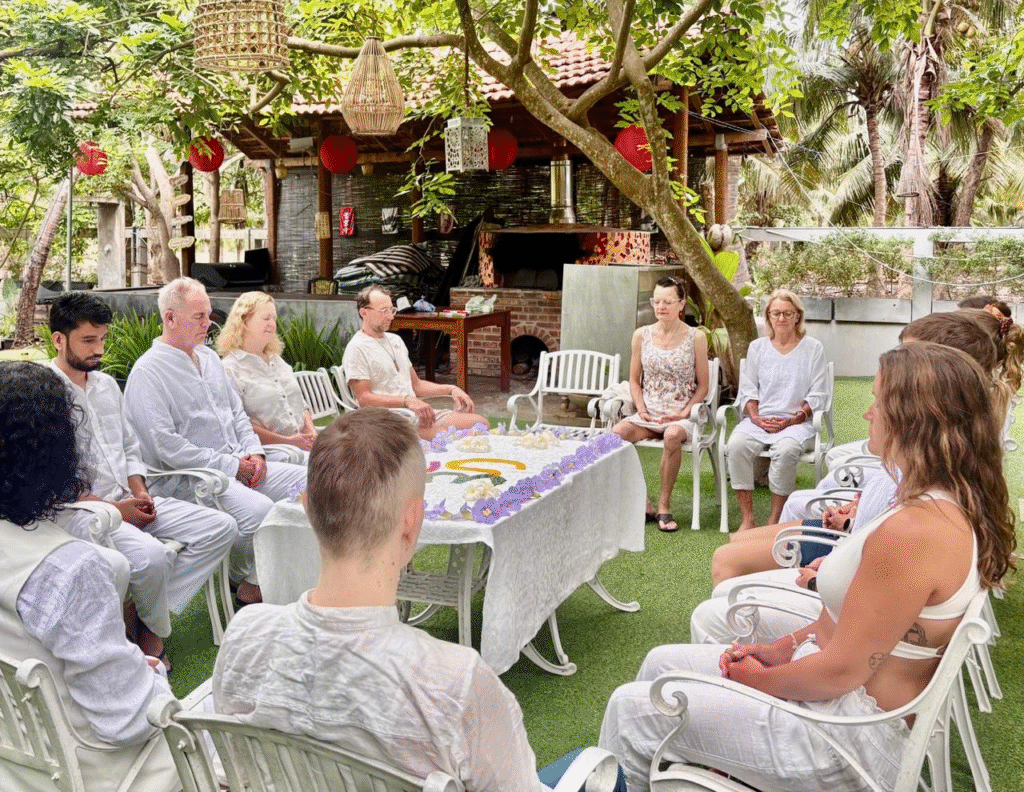
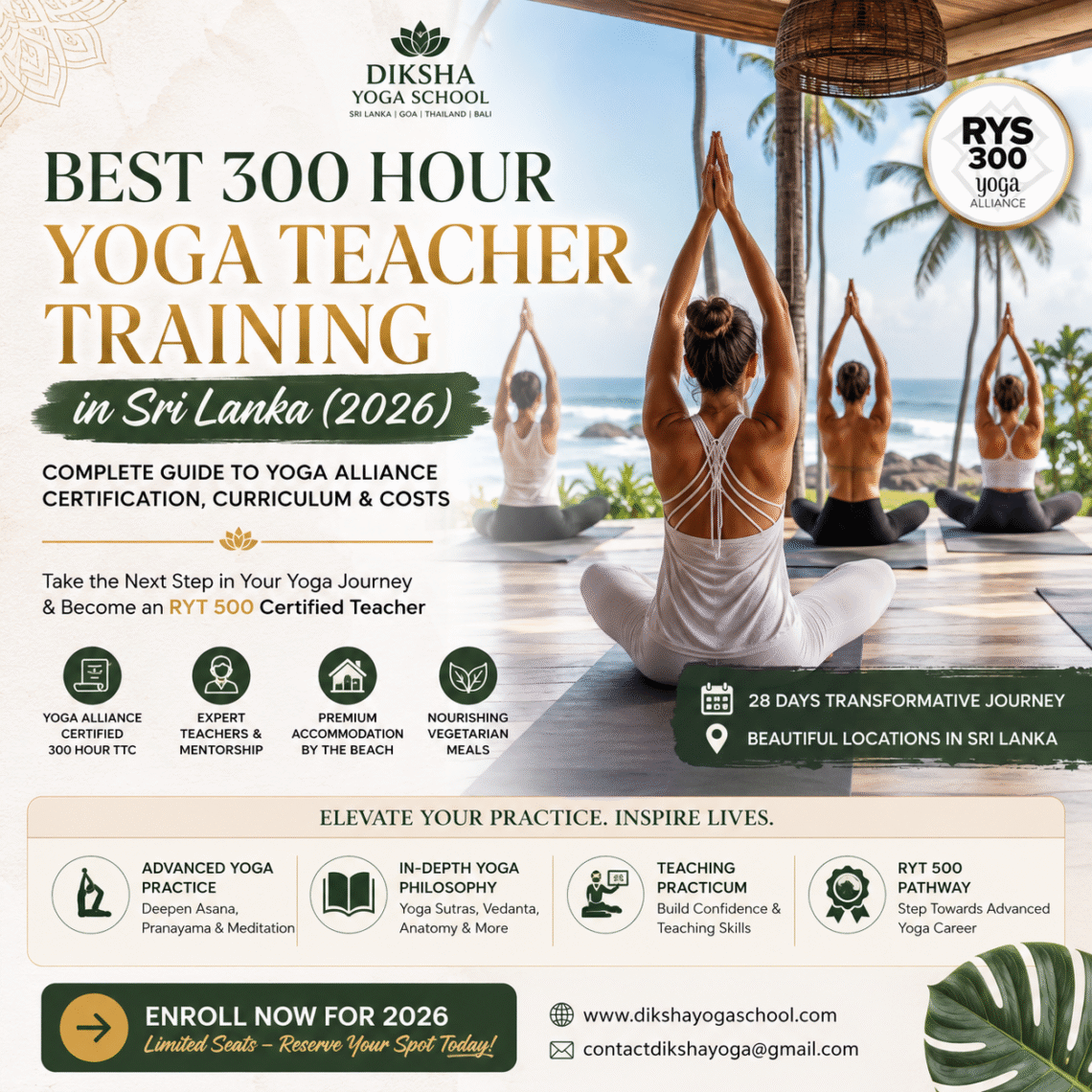
Our Yoga Alliance Registered Best 300 Hour Yoga Teacher Training has been thoughtfully created for teachers who want more than another certificate. Every part of the course is designed to help you deepen your practice, refine your teaching skills, explore traditional yogic philosophy, and develop the confidence to guide others with authenticity and compassion.
Led by Yogini Manisha, who has over 16 years of teaching experience and has mentored thousands of yoga practitioners and teachers from around the world, this training combines the wisdom of traditional yoga with modern teaching methods. Rather than simply following a fixed curriculum, you’ll receive personal guidance, constructive feedback, and mentorship throughout your journey.
Whether your goal is to teach internationally, specialize in advanced yoga education, or simply deepen your own practice, this guide will help you understand everything you need to know before choosing the Best 300 Hour Yoga Teacher Training.
In this comprehensive guide, you’ll discover:
- What a Best 300 Hour Yoga Teacher Training actually includes.
- Who should enroll in an advanced yoga certification.
- Why Sri Lanka has become a preferred destination for yoga teachers worldwide.
- How to choose the right Yoga Alliance Registered school.
- What you’ll learn throughout the curriculum.
- Typical costs and what should be included in your course fees.
- Career opportunities after graduation.
- Why many teachers choose Diksha Yoga School for their advanced training.
By the end of this guide, you’ll have a clear understanding of what to expect from a Best 300 Hour Yoga Teacher Training and how to choose a program that truly supports your growth—not only as a yoga teacher but as a lifelong student of yoga.
Because the most valuable certification isn’t the one hanging on your wall.
It’s the confidence, wisdom, and presence you carry every time you step onto your mat and into your classroom.
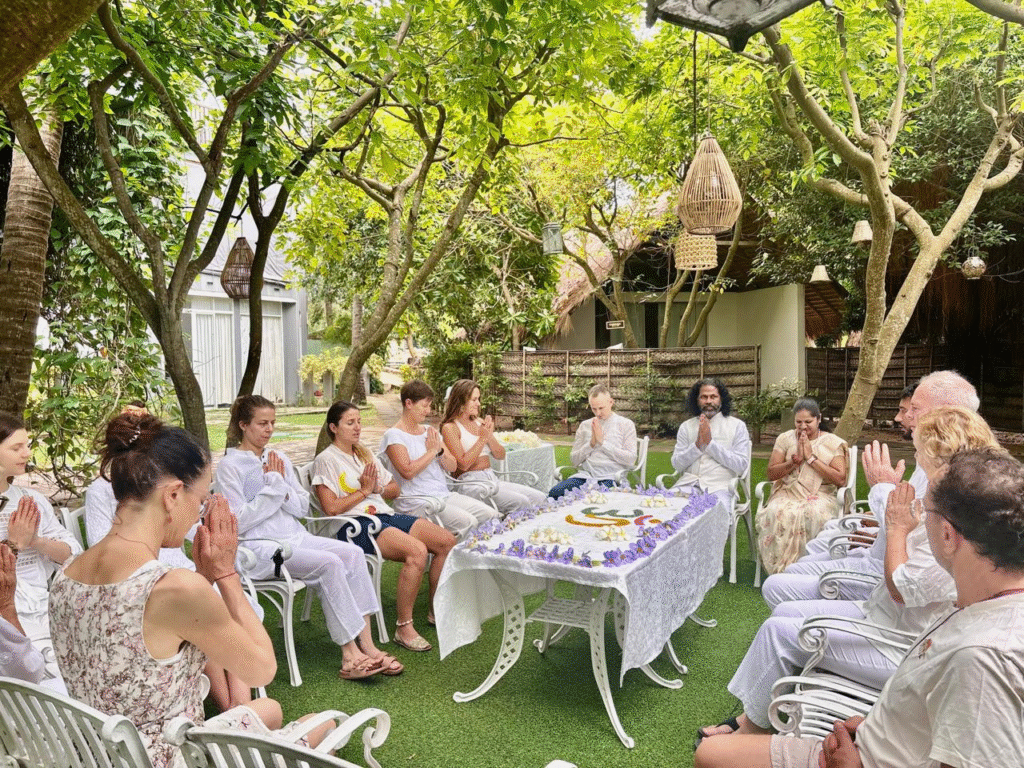
Table of Contents
Why This Guide Is Different
Many articles about yoga teacher training simply compare prices, list course dates, or promote one school over another. While those details matter, they don’t tell you what truly shapes your experience as a teacher.
This guide has been written from the perspective of experienced yoga educators who have spent years training students from different backgrounds, cultures, and levels of experience. It reflects the questions prospective teachers ask most often, the challenges they face after completing a 200-hour course, and the qualities that distinguish an excellent advanced training from an average one.
Our intention is not simply to help you choose a course—it is to help you choose the right environment for your personal growth, professional development, and lifelong yoga journey.
Whether you ultimately study with Diksha Yoga School or another Yoga Alliance Registered School, we hope this guide gives you the knowledge to make an informed and confident decision.
Part 2: What Is a Best 300 Hour Yoga Teacher Training? Is It the Right Next Step for You?
If you’ve recently completed your 200-hour yoga teacher training, you may be wondering whether you should continue your education or spend more time teaching before enrolling in another course.
It’s a question we hear often at Diksha Yoga School, and there isn’t one answer that fits everyone. Your decision depends on where you are in your yoga journey and what you hope to discover next.
For many teachers, a 200-hour course is where everything begins. It introduces the foundations of yoga, helps you build a personal practice, and gives you the confidence to teach your first classes. It is an important milestone, but it is only the beginning.
As you start teaching, you naturally encounter situations that your first training couldn’t fully prepare you for. Every student has a different body, different challenges, and different expectations. You begin to realize that teaching yoga is much more than guiding a sequence of postures.
This is where a Best 300 Hour Yoga Teacher Training becomes truly valuable.
Rather than repeating what you learned in your 200-hour course, a Best 300 Hour Yoga Teacher Training program expands your understanding of yoga in every direction. It helps you become a more knowledgeable teacher, a more confident guide, and a lifelong student of yoga.
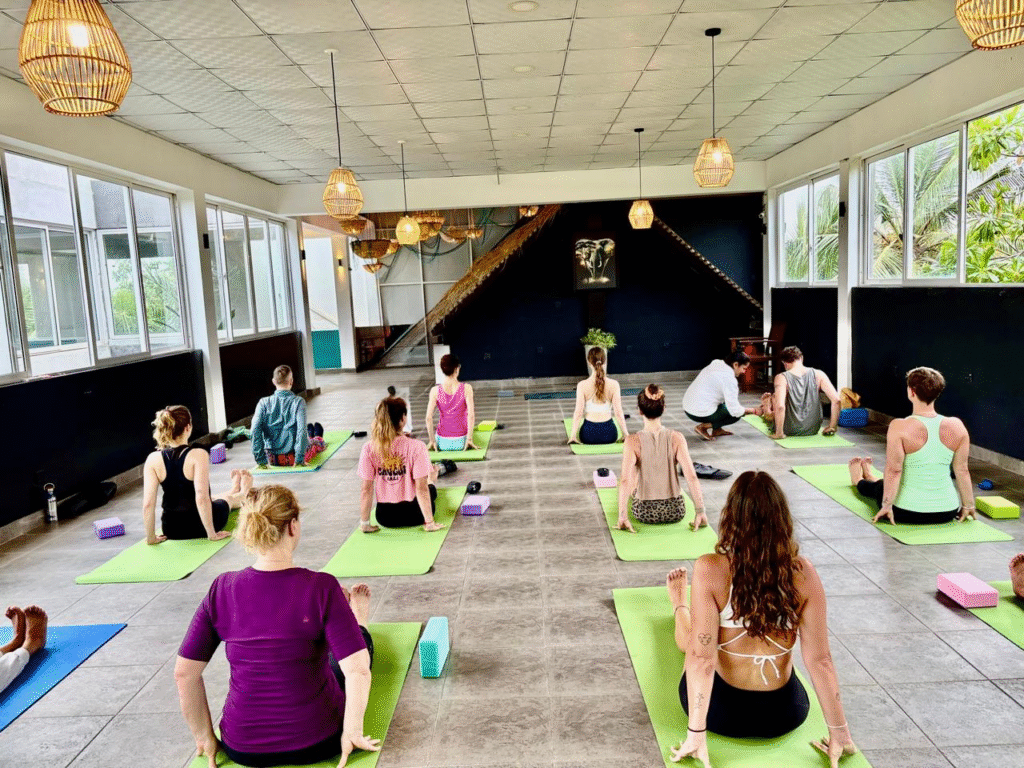
Moving Beyond the Basics
Many new teachers believe that a Best 300 Hour Yoga Teacher Training is simply about learning more advanced poses.
In reality, advanced yoga has very little to do with difficult postures.
An advanced teacher is someone who understands how to adapt a class for different bodies, recognize movement patterns, teach safely, communicate clearly, and create meaningful experiences for students of all levels.
At Diksha Yoga School, we often remind our trainees:
“The depth of your teaching is not measured by the complexity of your asanas, but by the awareness you bring to every class.”
That awareness develops through consistent practice, observation, study, self-reflection, and experience—qualities that are cultivated throughout a Best 300 Hour Yoga Teacher Training.
What You’ll Learn During a Best 300 Hour Yoga Teacher Training?
A well-structured advanced teacher training goes far beyond physical practice. It is designed to strengthen every aspect of your teaching.
During your training, you’ll deepen your understanding of:
Advanced Asana Practice
Instead of simply learning new poses, you’ll explore:
- Intelligent alignment principles
- Safe progressions and regressions
- Functional movement
- Injury prevention
- Hands-on adjustments
- Advanced variations
- Creative sequencing
You’ll begin understanding why a posture works instead of simply knowing how to demonstrate it.
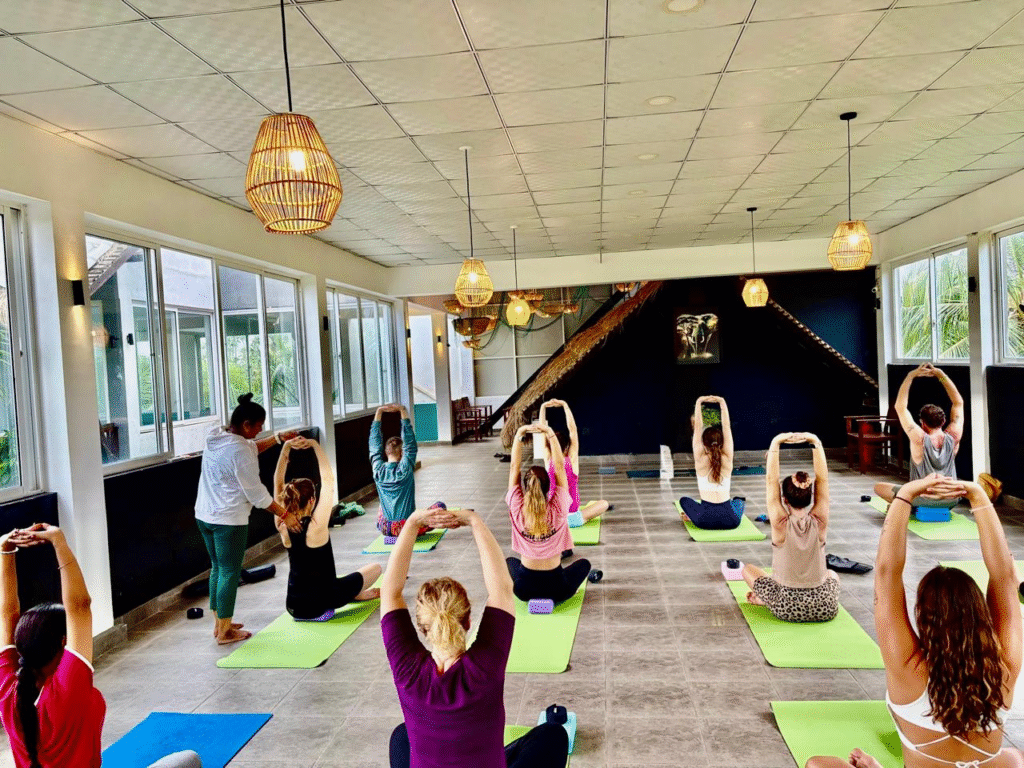
Many graduates of a 200-hour course realize they only touched the surface of yoga philosophy.
A Best 300 Hour Yoga Teacher Training gives you time to explore classical yogic teachings in greater depth.
You’ll study topics such as:
- The Yoga Sutras of Patanjali
- Hatha Yoga Pradipika
- Bhagavad Gita
- The Eight Limbs of Yoga
- The subtle body
- Koshas
- Chakras
- Nadis
- The traditional purpose of yoga
These teachings help you bring greater meaning into both your personal practice and your classes.
Breath is often called the bridge between the body and the mind.
In advanced training, you’ll move beyond basic breathing exercises and learn:
- Traditional pranayama techniques
- Breath awareness
- Breath retention
- Bandhas
- Mudras
- Guided meditation
- Silent meditation
- Yogic concentration practices
These practices cultivate steadiness, clarity, and presence—qualities every teacher needs.
Understanding anatomy gives you the confidence to teach safely.
Rather than memorizing muscles and bones, you’ll learn how the body moves during yoga practice.
Topics typically include:
- Joint stability
- Range of motion
- Fascial connections
- Biomechanics
- Common injuries
- Contraindications
- Safe modifications
This knowledge allows you to support students with different abilities while reducing the risk of injury.
Teaching Methodology
One of the most valuable parts of an advanced training is learning how to become an exceptional teacher—not simply a knowledgeable practitioner.
You’ll develop skills in:
- Intelligent sequencing
- Voice projection
- Observation
- Verbal cueing
- Demonstration techniques
- Classroom management
- Student communication
- Assisting beginners and experienced practitioners
These practical teaching skills often make the greatest difference once you begin leading classes professionally.
The Difference Between a 200 Hour and Best 300 Hour Yoga Teacher Training
Although both programs are recognized by Yoga Alliance, they serve very different purposes.
| Best 200 Hour Yoga Teacher Training | Best 300 Hour Yoga Teacher Training |
| Builds a strong foundation | Deepens existing knowledge |
| Introduces yoga philosophy | Explores philosophy in depth |
| Teaches fundamental sequencing | Develops advanced sequencing skills |
| Focuses on beginner teaching | Refines teaching for diverse students |
| Builds teaching confidence | Develops teaching mastery |
| Covers basic anatomy | Studies functional anatomy and biomechanics |
| Prepares you to start teaching | Helps you become an experienced educator |
The goal of a Best 300 Hour Yoga Teacher Training course is not simply to add another certificate to your résumé.
It is to help you teach with greater confidence, knowledge, and authenticity.
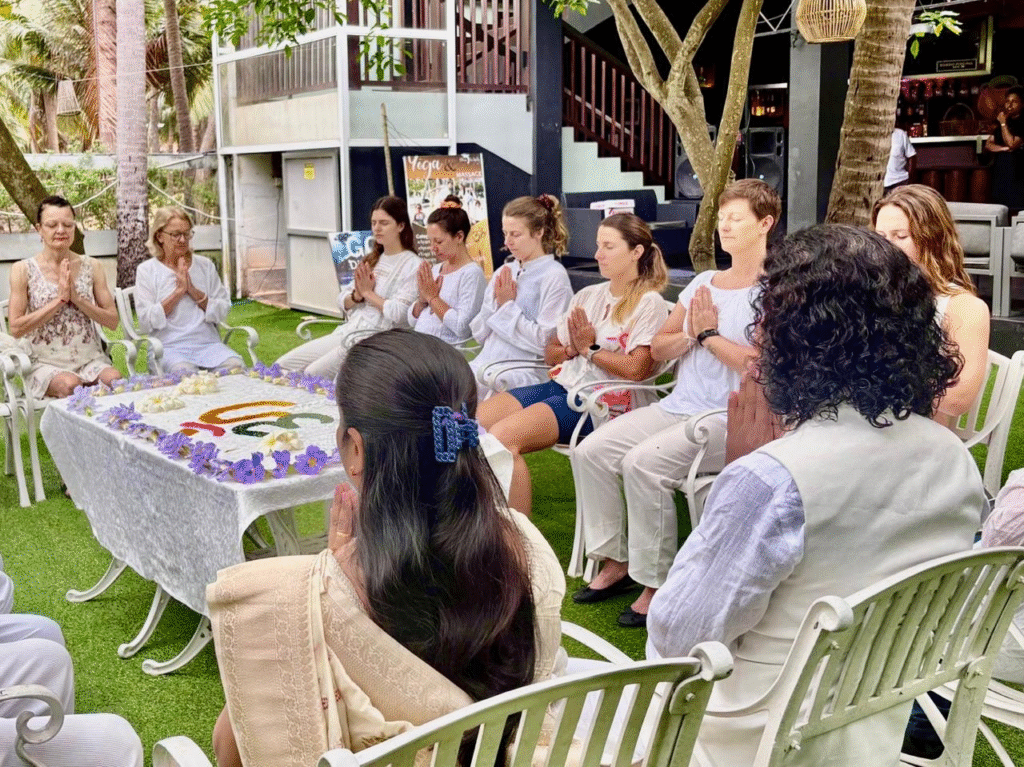
Who Should Join a Best 300 Hour Yoga Teacher Training?
This program is ideal for:
- Certified 200-hour yoga teachers who want to continue their education.
- Teachers looking to improve their sequencing and cueing.
- Yoga instructors who want to specialize in advanced teaching.
- Practitioners interested in philosophy, meditation, and pranayama.
- Teachers preparing to register as RYT 500 with Yoga Alliance after meeting all requirements.
- Yoga professionals seeking international teaching opportunities.
- Anyone committed to lifelong learning and personal transformation.
You don’t need to be able to perform advanced arm balances or deep backbends.
What matters most is your willingness to learn, practice consistently, and approach the training with curiosity and dedication.
Why Many Teachers Choose Sri Lanka for Advanced Training
Learning environment plays a significant role in any yoga teacher training.
Sri Lanka offers a unique combination of natural beauty, cultural richness, and a peaceful atmosphere that supports focused study. The slower rhythm of life, tropical climate, and connection to nature create an ideal setting for stepping away from daily distractions and immersing yourself in yoga.
At Diksha Yoga School in Galle, Sri Lanka, students experience small-group learning, personal mentorship, and a supportive community where every trainee is encouraged to grow at their own pace. Rather than feeling like one participant among many, you’ll receive individual guidance that helps refine your teaching and deepen your understanding of yoga.
A Thought from Yogini Manisha
“Your second training is not about becoming a different teacher. It is about becoming more deeply yourself. The techniques, philosophy, and knowledge you gain are important, but the greatest transformation happens when you begin teaching from awareness instead of memory. That is the journey we invite you to experience.”
Part 3: Why Choose Sri Lanka for Your Best 300 Hour Yoga Teacher Training?
When yoga teachers begin searching for an advanced training, they often compare destinations before they compare schools.
India is known as the birthplace of yoga. Bali attracts those looking for a wellness lifestyle. Thailand is famous for tropical retreats.
So where does Sri Lanka fit into the picture?
Having taught students from more than 50 countries over the years, we’ve noticed something interesting. Many teachers initially choose a destination because of its beauty, but they remember it because of how deeply they were able to learn there.
That is one of Sri Lanka’s greatest strengths.
It offers an environment that supports genuine immersion. Instead of feeling like you’re on a busy holiday, you have the space to slow down, establish a rhythm, and focus entirely on your personal practice and professional development.
For an advanced training like a Best 300 Hour Yoga Teacher Training, that environment matters more than many people realize.
Learning Happens Beyond the Yoga Shala
One of the biggest differences between a short yoga retreat and a month-long teacher training is that learning never stops when class ends.
Some of the most meaningful moments happen during breakfast conversations, evening meditation, walks by the ocean, or quiet periods of self-reflection.
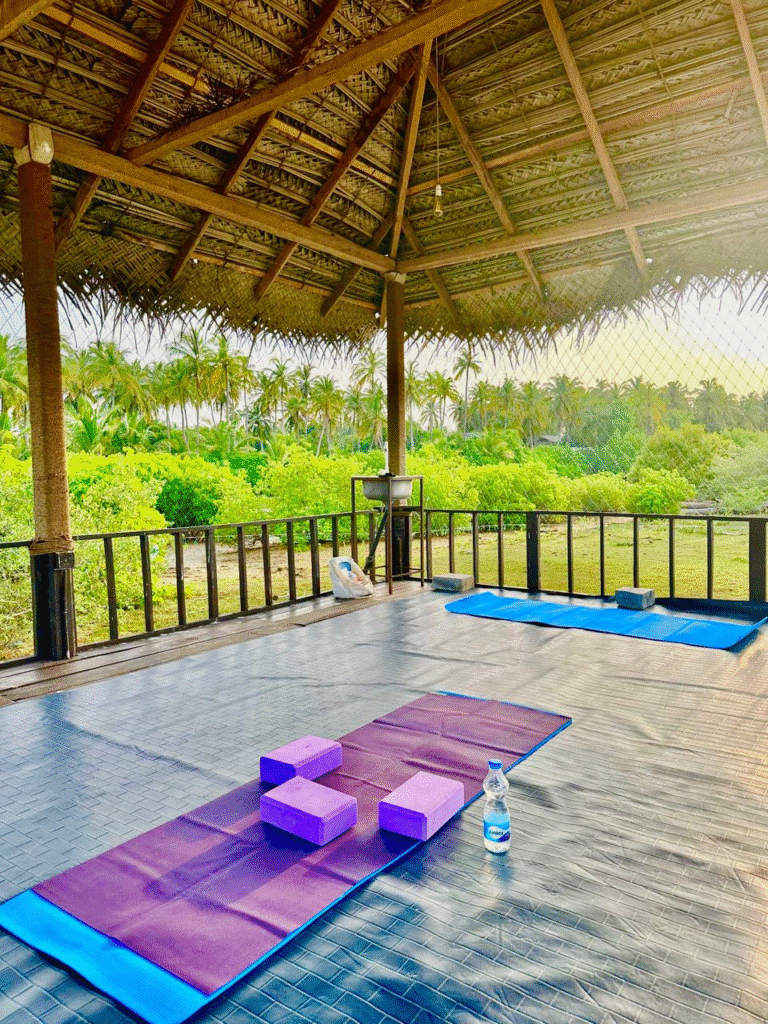
Sri Lanka naturally encourages this slower pace.
The sound of the waves, warm tropical weather, fresh air, and abundant greenery create a peaceful atmosphere where it becomes easier to disconnect from daily responsibilities and reconnect with yourself.
Instead of constantly checking emails or rushing through a schedule, you begin paying attention to your breath, your thoughts, and your practice.
This is often where the deepest transformation begins.
A Place That Supports Inner Growth
Advanced yoga isn’t about collecting more information.
It’s about creating space to integrate what you’ve already learned.
Many teachers arrive carrying expectations—about themselves, their teaching, or where they think they should be.
Over several weeks of consistent practice, meditation, pranayama, study, and teaching, those expectations begin to soften.
Students often tell us that they leave with something they didn’t expect.
Not simply better sequencing.
Not simply improved flexibility.
But greater clarity.
Greater patience.
Greater confidence.
These are qualities that cannot be taught through lectures alone.
They develop through daily experience.
Why Sri Lanka Has Become a Global Yoga Destination
Over the last decade, Sri Lanka has quietly become one of the most sought-after destinations for yoga teacher training.
There are several reasons why teachers from Europe, North America, Australia, and Asia continue choosing Sri Lanka.
Peaceful Natural Environment
Unlike large cities, Sri Lanka offers a slower rhythm that naturally complements yogic living.
Morning meditation feels different when surrounded by tropical gardens.
Pranayama becomes more enjoyable with fresh ocean air.
Even simple moments like walking barefoot after practice become part of the experience.
Nature becomes another teacher.
Rich Spiritual Heritage
Although yoga originated in India, Sri Lanka has long embraced meditation, mindfulness, and spiritual practice through its own rich cultural traditions.
Visitors often notice the calm atmosphere found in ancient temples, quiet villages, and daily life.
This peaceful energy supports students who wish to explore yoga beyond physical movement.
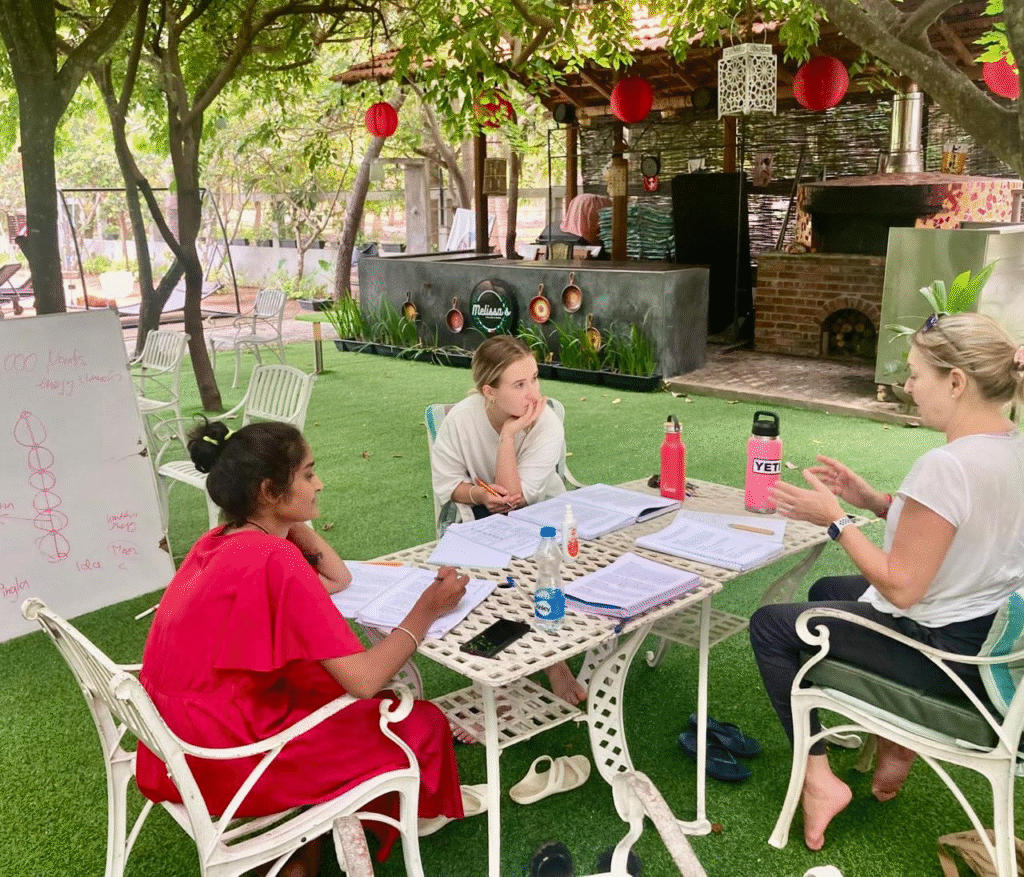
Comfortable Tropical Climate
Practicing yoga consistently becomes much easier in warm weather.
Flexible muscles.
Comfortable mornings.
Sunrise practice.
The tropical climate allows students to spend more time outside connecting with nature, which becomes an important part of the overall experience.
Every teacher training brings together students from different countries, cultures, professions, and life experiences.
During your training, you’ll not only learn from your teachers—you’ll learn from each other.
Sharing conversations, teaching practice, and daily routines with an international community broadens your perspective as a teacher.
Many lifelong friendships begin during yoga teacher training.
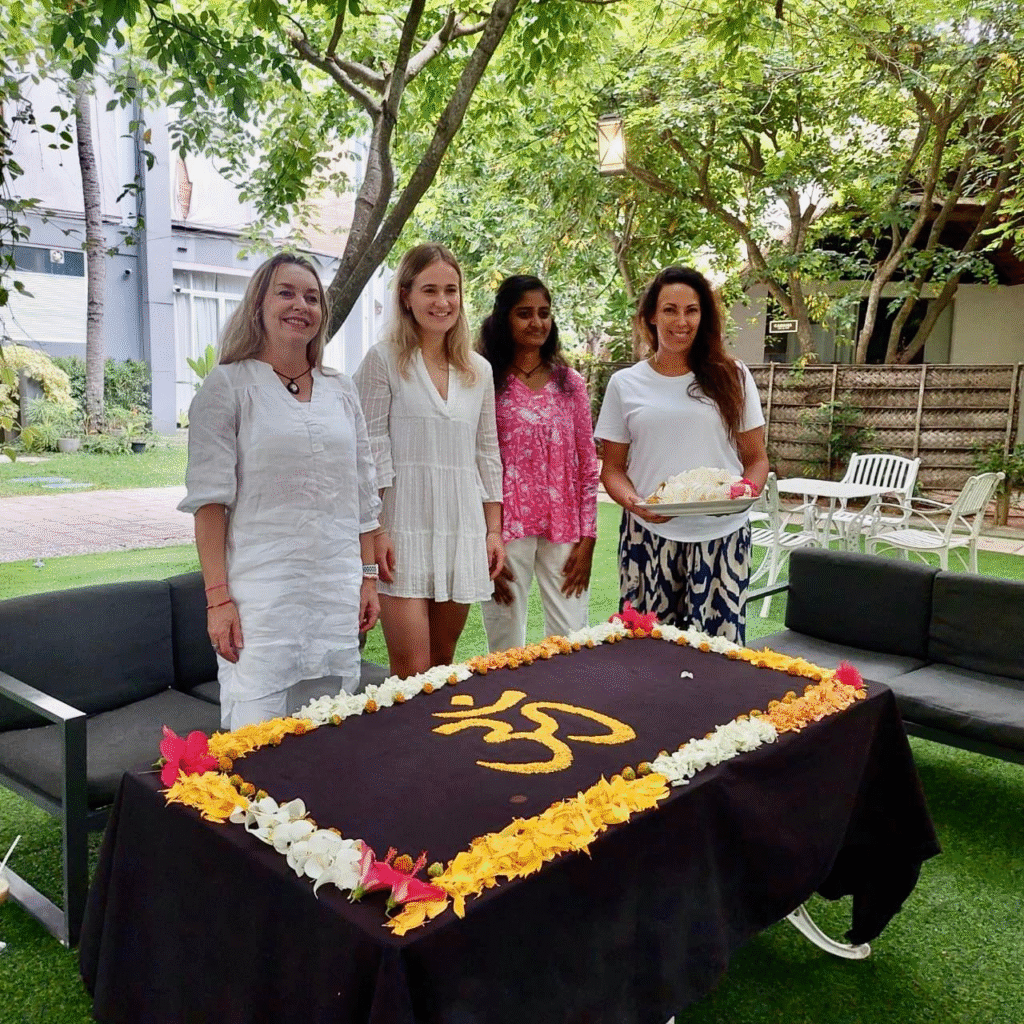
Why Galle Is an Ideal Location for Advanced Yoga Training
At Diksha Yoga School, our Best 300 Hour Yoga Teacher Training takes place in Galle, one of Sri Lanka’s most beautiful coastal regions.
Unlike crowded tourist hubs, Galle offers a balance between peaceful surroundings and cultural richness.
Here, your days are shaped by a simple rhythm:
Wake before sunrise.
Practice.
Study.
Share nourishing meals.
Teach.
Reflect.
Rest.
Without constant distractions, you begin living yoga rather than simply studying it.
The nearby beaches, tropical gardens, and quiet atmosphere naturally support meditation, mindfulness, and personal reflection.
For many students, this slower rhythm becomes one of the most memorable parts of their training.
Sri Lanka Compared with Other Yoga Destinations
Every destination offers something unique.
Rather than asking which country is “best,” it’s more helpful to ask which environment best supports your current stage of growth.
| Destination | Best For |
| India | Traditional yoga philosophy and cultural immersion |
| Bali | Wellness lifestyle and creative community |
| Thailand | Island retreats and tropical learning |
| Sri Lanka | Balanced lifestyle, peaceful immersion, supportive learning environment, and focused teacher development |
For teachers seeking an advanced certification without the intensity of large cities or overly commercial yoga hubs, Sri Lanka offers an ideal balance.
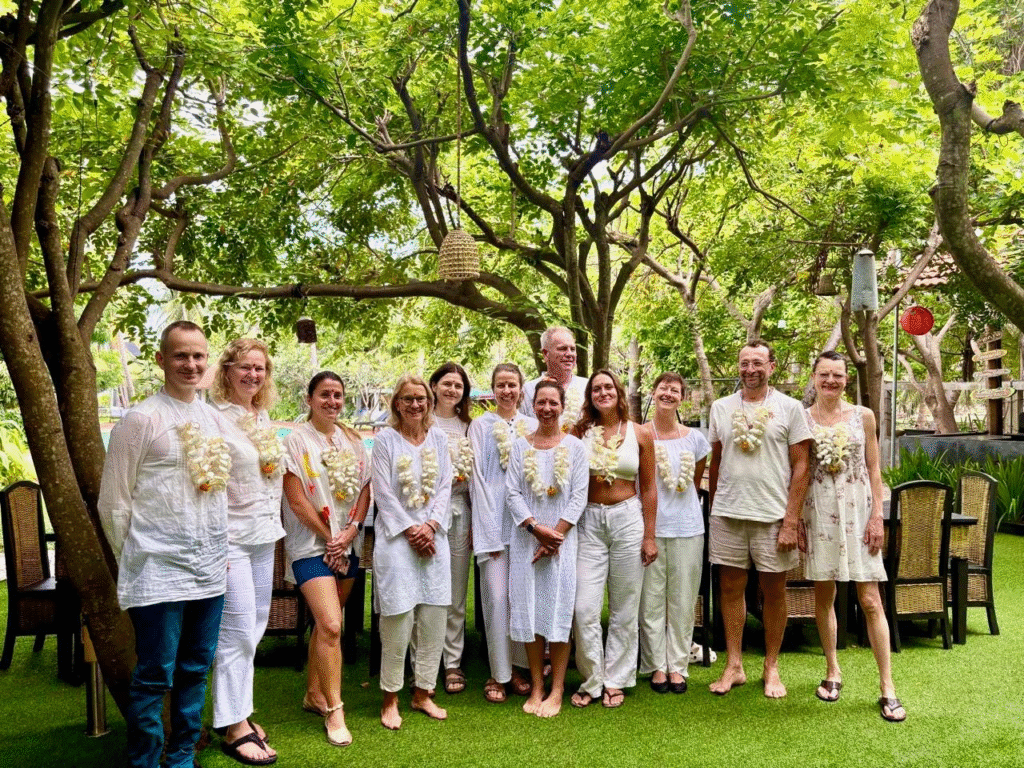
More Than Beautiful Beaches
Many websites promote Sri Lanka by showing palm trees and ocean views.
While those landscapes are certainly beautiful, they are not the reason students leave transformed.
The real value lies in what happens inside the yoga shala.
Every morning you return to your mat.
Every day you refine your teaching.
Every week you discover something new—not only about yoga, but about yourself.
Beautiful surroundings simply create the conditions for deeper learning.
They don’t replace it.
The Diksha Yoga School Experience
At Diksha Yoga School, we intentionally keep our advanced teacher trainings personal.
We believe meaningful learning happens through connection rather than large class sizes.
Throughout your training, you’ll receive:
- Personal mentorship from experienced teachers.
- Individual feedback on your teaching.
- Guidance for refining your sequencing and cueing.
- Support in developing your authentic teaching voice.
- Opportunities to ask questions and explore concepts in depth.
Rather than trying to become another version of someone else, we encourage every trainee to discover their own teaching style.
Because your students don’t need another copy of an instructor they saw online.
They need you—teaching with confidence, presence, and authenticity.
A Reflection from Yogini Manisha
“One of the greatest gifts Sri Lanka offers isn’t found in a temple or on a beach. It is the space to hear your own inner voice again. When the outside world becomes quieter, your practice becomes clearer. That clarity naturally flows into your teaching, your relationships, and your life.”
Part 4: How to Choose the Best 300 Hour Yoga Teacher Training
Choosing a Best 300 Hour Yoga Teacher Training is very different from choosing your first 200-hour course.
When most students enroll in their first teacher training, they are excited, curious, and often unsure of what to expect. The decision is usually influenced by beautiful photographs, affordable prices, or recommendations from friends.
An advanced training requires a different mindset.
By now, you’ve already experienced what a teacher training feels like. You’ve spent time teaching classes, working with students, and discovering both your strengths and the areas where you still want to grow.
That experience changes the questions you should ask.
Instead of asking:
“Which school has the lowest price?”
Start asking:
“Which school will genuinely help me become a better teacher?”
Those are two very different questions.
Over the years at Diksha Yoga School, we’ve welcomed many students who had already completed a 200-hour course elsewhere. Almost every one of them told us the same thing:
“I wish I had known what to look for before choosing my first training.”
This section is designed to help you make an informed decision—not just for our school, but for any advanced yoga teacher training you may be considering.
1. Choose a School That Prioritizes Teaching, Not Tourism
There is nothing wrong with enjoying beautiful beaches, waterfalls, or cultural excursions during your yoga journey.
But remember why you’re investing in a Best 300 Hour Yoga Teacher Training
You’re not booking a holiday.
You’re investing in your future as a yoga teacher.
If most of a school’s marketing focuses on swimming pools, excursions, cocktails, or luxury accommodation, ask yourself an honest question:
How much attention is being given to the actual education?
A meaningful teacher training should always place learning at the center of the experience.
Beautiful surroundings are a wonderful bonus.
They should never be the main reason to enrol.
2. Verify Yoga Alliance Registration
This may sound obvious, but many students overlook it.
Before booking your training, make sure the school is officially registered with Yoga Alliance if international recognition is important to you.
A registered school follows established educational standards and provides certification that may help if you plan to teach internationally.
However, registration alone doesn’t guarantee quality.
Think of it as the starting point—not the finish line.
A school can be registered and still provide a very average learning experience.
3. Look Beyond the Curriculum
Almost every yoga school lists similar subjects.
Teaching Methodology.
On paper, many programs look nearly identical.
The real difference lies in how these subjects are taught.
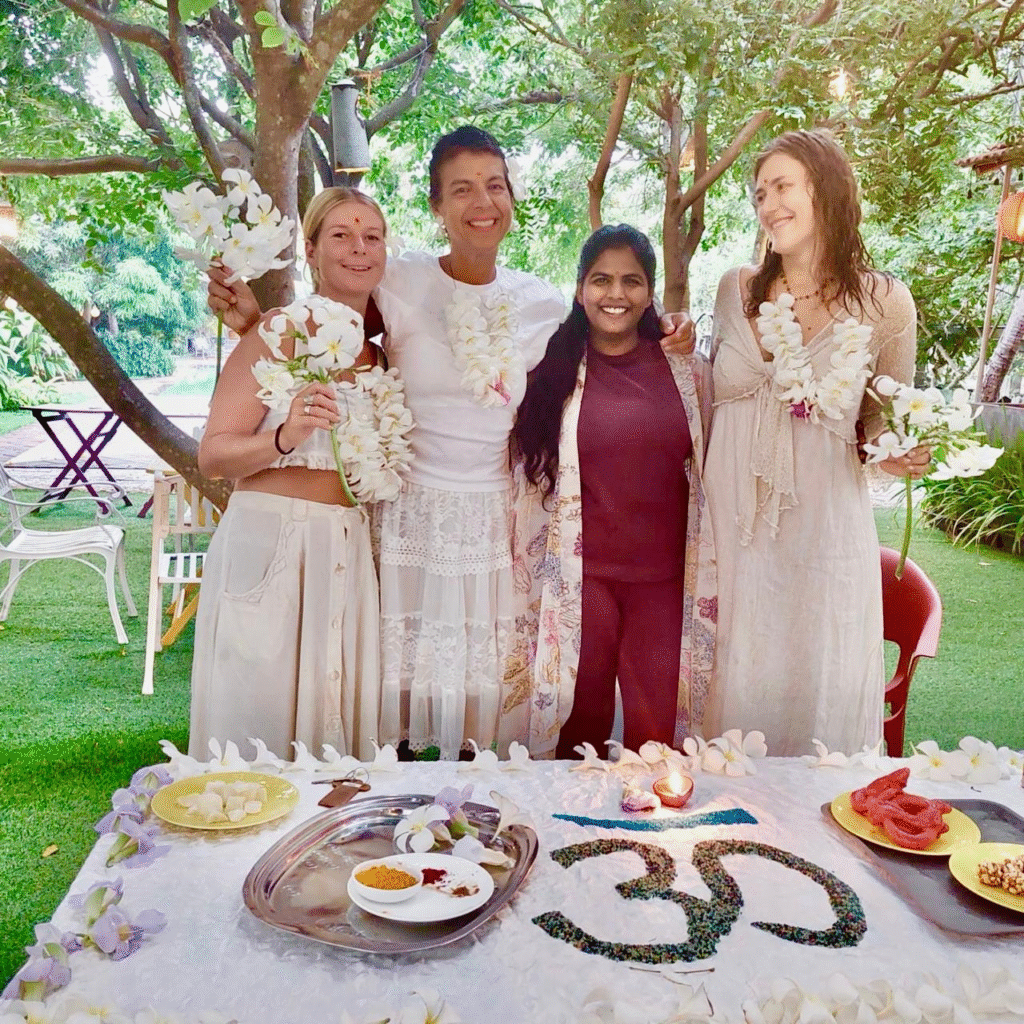
Ask yourself:
- Will I receive individual feedback?
- Will teachers observe my teaching?
- Can I ask questions freely?
- Will I have opportunities to practice teaching every day?
- Is there time for discussion and reflection?
A curriculum is only as valuable as the teachers delivering it.
4. Learn From Teachers Who Still Teach
One of the most overlooked factors when choosing an advanced yoga teacher training is the teaching team.
Some schools rely heavily on guest instructors who teach only a few sessions before moving on.
Others have experienced teachers who remain present throughout the entire course.
At Diksha Yoga School, our philosophy is simple.
Students deserve consistent guidance.
Transformation happens through relationships—not one-time lectures.
Learning alongside experienced teachers every day allows you to receive ongoing support, personalised corrections, and honest feedback that simply isn’t possible in larger or constantly changing teaching teams.
5. Small Groups Create Better Teachers
Imagine learning to teach yoga in a class of forty students.
Now imagine learning in a class of twelve.
Which environment would give you more opportunities to teach?
Which would allow teachers to know your strengths?
Which would make it easier to ask questions?
Which would provide more personal feedback?
The answer is obvious.
Advanced teacher training is deeply personal.
Smaller groups create space for conversation, mentorship, and meaningful growth.
At Diksha Yoga School, we intentionally keep our groups small because we believe every student deserves individual attention—not just a certificate at the end of the course.
6. Ask About Teaching Practice
Many graduates discover that the biggest challenge isn’t understanding yoga.
It’s standing confidently in front of a class.
Teaching confidence comes from practice.
Lots of practice.
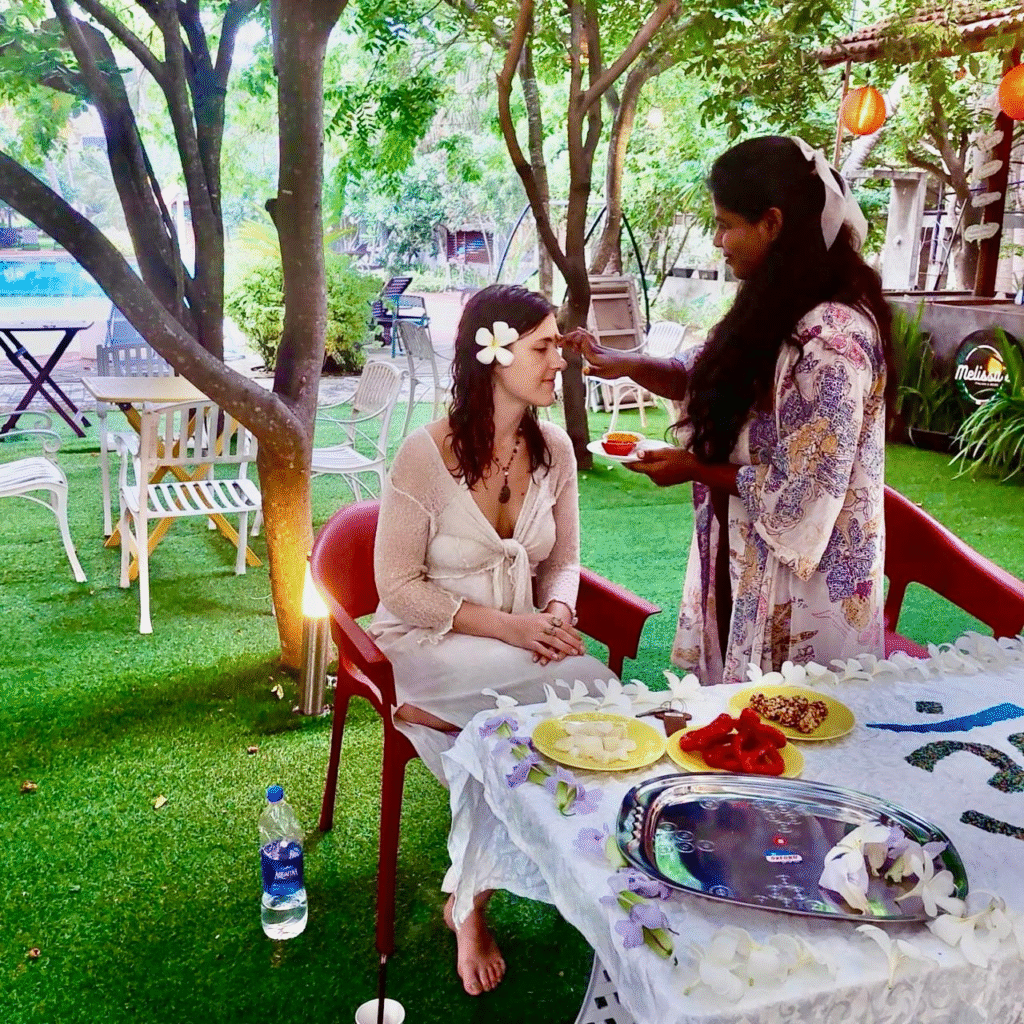
A high-quality Best 300 Hour Yoga Teacher Training should include regular opportunities to:
- Lead full yoga classes.
- Practice verbal cueing.
- Receive constructive feedback.
- Improve sequencing.
- Learn classroom management.
- Adapt classes for different students.
Confidence cannot be downloaded from a manual.
It develops through repetition, reflection, and supportive guidance.
7. Does the School Encourage Questions?
Yoga has always been a living tradition.
For thousands of years, knowledge has been shared through conversation between teacher and student.
If students don’t feel comfortable asking questions, an important part of that tradition is lost.
A good teacher welcomes curiosity.
An exceptional teacher encourages it.
Whether your questions relate to anatomy, philosophy, meditation, or personal practice, your learning should feel like a dialogue—not a one-way lecture.
8. Consider the Learning Environment
The space around you influences the way you learn.
During an intensive month of study, your surroundings become part of your daily practice.
Ask yourself:
Can I rest well here?
Will I be able to focus?
Does this environment support meditation?
Will I feel inspired?
Peaceful surroundings won’t automatically make you a better teacher.
But they can make deep learning much easier.
That is one reason many teachers choose Sri Lanka.
Its slower pace naturally supports mindfulness.
9. Read Student Reviews Carefully
Testimonials are valuable—but don’t just look at the overall rating.
Read the details.
Look for recurring themes.
Do students mention:
- Personal attention?
- Knowledgeable teachers?
- Supportive atmosphere?
- Improved confidence?
- Practical teaching experience?
- Life-changing personal growth?
These repeated experiences often reveal much more than five-star ratings alone.

10. Ask Yourself One Honest Question
Before enrolling anywhere, pause for a moment.
Ask yourself:
“When I graduate, what kind of teacher do I want to become?”
Do you simply want another certificate?
Or do you want to teach with greater confidence, deeper knowledge, and genuine authenticity?
Your answer will guide your decision more clearly than any brochure ever could.
Why Teachers Choose Diksha Yoga School
Every yoga school has its own philosophy.
Ours is simple.
We believe yoga teacher training should transform the teacher—not just improve the resume.
That means creating an environment where students feel supported, challenged, and inspired every day.
At Diksha Yoga School, our Best 300 Hour Yoga Teacher Training combines traditional yogic wisdom with practical teaching experience. Students receive personal mentorship, daily teaching practice, in-depth study of philosophy, pranayama, meditation, anatomy, sequencing, and alignment, all within a supportive learning community.
Rather than encouraging students to imitate a particular teaching style, we help each person discover their own authentic voice.
Because the best yoga teachers aren’t remembered for teaching the hardest poses.
They’re remembered for how they made people feel.
A Reflection from Yogini Manisha
“Over the years, I’ve realised that students rarely remember every posture they learn during a training. What stays with them is how they were guided, how they were encouraged, and how they gradually discovered confidence within themselves. My role as a teacher is not to create students who teach like me. It is to help each teacher discover their own wisdom, compassion, and presence. That is where truly meaningful teaching begins.”
Part 5: Inside the Best 300 Hour Yoga Teacher Training Curriculum
A certificate may open a door, but it is your knowledge, confidence, and presence that keep it open.
This is one of the first conversations we have with our students at Diksha Yoga School.
Many teachers arrive expecting to learn more advanced poses. They leave realizing that the greatest transformation had very little to do with flexibility.
Instead, they discover how to teach with purpose.
They learn how to see the individual standing in front of them rather than simply guiding a sequence they memorized.
That is the real purpose of a Best 300 Hour Yoga Teacher Training
It is not designed to make your practice more impressive.
It is designed to make your teaching more meaningful.
Throughout this advanced training, every subject builds upon the foundation you created during your 200-hour certification. Instead of introducing completely new concepts every day, we deepen your understanding, challenge your perspective, and help you integrate yoga into every aspect of your teaching.
Let’s explore what that journey looks like.
Advanced Asana: Understanding the “Why” Behind Every Pose
One of the biggest differences between a beginner teacher and an experienced teacher is observation.
A new teacher often focuses on remembering the sequence.
An experienced teacher focuses on the students.
That shift changes everything.
During this module, we don’t simply practice advanced postures. We study how the body moves, why certain alignments work, and how to adapt postures for different students.
Rather than asking, “Can this student do the pose?” we begin asking, “Is this variation the right choice for this student today?”
This approach develops both technical knowledge and compassion.
You’ll explore:
- Advanced standing postures and transitions.
- Arm balances with progressive preparation.
- Backbends and spinal health.
- Hip-opening techniques with safe alignment.
- Twists and their therapeutic applications.
- Inversions with intelligent progressions.
- Functional mobility and stability.
- Injury prevention through mindful movement.
Our focus is never on performing the most difficult posture.
Our focus is helping you understand the purpose behind every movement you teach.
Intelligent Alignment Instead of Perfect Alignment
For many years, yoga students were taught that every posture had one “correct” shape.
Modern understanding tells a different story.
Every body is unique.
Bone structure, mobility, previous injuries, age, and daily habits all influence how someone experiences a posture.
At Diksha Yoga School, we encourage teachers to move beyond rigid rules and develop intelligent observation.
Instead of forcing every student into identical shapes, you’ll learn how to recognize safe movement patterns and offer appropriate variations.
This creates more inclusive classes where students feel supported rather than judged.
As a teacher, this may become one of your most valuable skills.
Beautiful classes don’t happen by accident.
They are carefully designed experiences.
In this module, you’ll learn how to create sequences that flow naturally while supporting specific physical, energetic, and emotional intentions.
You’ll understand how to:
- Build progressive peak-pose sequences.
- Balance strength with mobility.
- Create classes for beginners, intermediate students, and experienced practitioners.
- Design restorative sessions.
- Plan workshops and themed classes.
- Adapt sequences for different age groups.
More importantly, you’ll learn when simplicity is more effective than complexity.
Some of the most memorable yoga classes include only a handful of carefully chosen postures.
Teaching Methodology: Finding Your Authentic Voice
Every yoga teacher remembers teaching their first class.
The nervousness.
The forgotten cues.
The awkward silences.
The constant wondering:
“Am I doing this correctly?”
Confidence doesn’t appear overnight.
It grows through repetition, reflection, and constructive feedback.
During your advanced training, you’ll teach regularly in a supportive environment where mistakes become opportunities for learning rather than reasons for embarrassment.
You’ll refine:
- Verbal cueing.
- Demonstration skills.
- Observation techniques.
- Classroom presence.
- Voice projection.
- Time management.
- Student communication.
- Creating inclusive learning environments.
One of the greatest compliments a teacher can receive isn’t:
“That was a difficult class.”
It’s:
“I felt seen.”
Helping students feel supported is one of the highest skills a yoga teacher can develop.

Pranayama: The Heart of Yogic Practice
Many practitioners spend years perfecting physical postures while giving very little attention to the breath.
Yet in traditional yoga, breath is considered the bridge between body, mind, and awareness.
Throughout this module, you’ll deepen your understanding of classical pranayama practices and learn how to teach them safely.
You’ll explore techniques including:
- Nadi Shodhana.
- Ujjayi.
- Kapalabhati.
- Bhastrika.
- Sheetali.
- Sheetkari.
- Bhramari.
You’ll also study:
- Breath awareness.
- Energetic effects of different practices.
- Contraindications.
- Sequencing pranayama within classes.
- Bandhas and their relationship with breath.
Rather than simply practicing breathing techniques, you’ll understand when, why, and for whom each practice is most appropriate.
Meditation: Cultivating Stillness
Many students begin yoga seeking flexibility.
Many remain because of meditation.
As teachers, our role extends beyond guiding movement.
We also help students experience moments of stillness.
Throughout the meditation module, you’ll explore a variety of traditional practices including:
- Breath meditation.
- Mantra meditation.
- Trataka.
- Yoga Nidra.
- Mindfulness meditation.
- Loving-kindness meditation.
- Silent sitting practice.
You’ll also learn practical methods for introducing meditation to beginners who may initially find stillness challenging.
Meditation becomes less about emptying the mind and more about developing awareness.
Yoga Philosophy: Bringing Ancient Wisdom Into Modern Life
One of the greatest gifts of an advanced teacher training is the opportunity to study yoga beyond physical practice.
Yoga philosophy isn’t about memorizing Sanskrit verses.
It is about understanding timeless principles that remain relevant today.
During this module, you’ll explore:
- The Yoga Sutras of Patanjali.
- Hatha Yoga Pradipika.
- The Bhagavad Gita.
- The Eight Limbs of Yoga.
- Karma Yoga.
- Bhakti Yoga.
- Raja Yoga.
- Jnana Yoga.
More importantly, you’ll discuss how these teachings influence modern teaching and daily life.
Rather than asking students to believe philosophical ideas, we encourage exploration through reflection, discussion, and experience.
Functional Anatomy for Yoga Teachers
One of the greatest responsibilities of a yoga teacher is creating a safe learning environment.
Understanding anatomy allows you to make informed decisions rather than relying on assumptions.
Instead of memorizing every muscle, you’ll study movement patterns that directly relate to yoga.
Topics include:
- Major joints and their function.
- The spine in movement.
- Fascia and connective tissue.
- Functional biomechanics.
- Common yoga injuries.
- Safe modifications.
- Hypermobile students.
- Pregnancy considerations.
- Age-related adaptations.
This practical approach gives teachers greater confidence when working with diverse student populations.
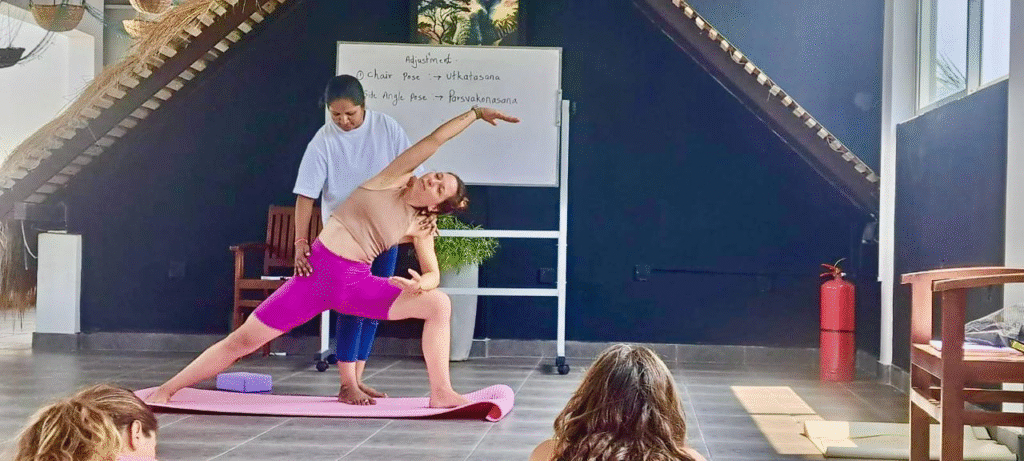
Adjustments and Assisting With Awareness
Hands-on adjustments can be valuable when offered with knowledge, respect, and clear communication.
Throughout the course, you’ll learn:
- When adjustments are appropriate.
- Verbal versus physical assists.
- Consent-based teaching.
- Supporting rather than forcing movement.
- Partner observation.
- Hands-on techniques for common postures.
Our philosophy is simple.
An adjustment should never make a student achieve a pose.
It should help them understand their body more clearly.
Becoming More Than a Yoga Instructor
Perhaps the greatest transformation during a Best 300 Hour Yoga Teacher Training isn’t physical.
It is internal.
You become more patient.
You become a better listener.
You observe more carefully.
You teach with greater intention.
You learn that yoga is not something you perform.
It is something you embody.
And that embodiment becomes the most valuable lesson your students will ever receive.
A Reflection from Yogini Manisha
“When students ask me what the most important part of a Best 300 Hour Yoga Teacher Training is, they often expect me to mention advanced postures or philosophy. My answer is always the same: awareness. The more awareness you develop within yourself, the more naturally your teaching begins to serve others. That is the real evolution of a yoga teacher.”
Part 6: A Day in the Life During a Best 300 Hour Yoga Teacher Training
When people imagine a yoga teacher training, they often picture hours of practicing asanas in a beautiful yoga shala overlooking the ocean.
While those moments certainly exist, they are only one part of the experience.
A Best 300 Hour Yoga Teacher Training is not simply a course you attend—it becomes the rhythm of your life for several weeks.
Your days begin with intention. Your meals become part of your practice. Conversations with fellow students turn into learning opportunities. Even moments of silence begin to teach you something.
By the end of the training, many students realize that yoga was never confined to the mat.
It was present in how they woke up each morning, how they listened, how they breathed, how they responded to challenges, and how they supported the people around them.
At Diksha Yoga School, we have carefully designed each day to create a balance between discipline, learning, rest, and reflection. The schedule is structured enough to support your growth while allowing space to absorb everything you are experiencing.
Beginning the Day Before the World Wakes Up
There is something special about the early morning.
Before phones start ringing, before the world becomes busy, there is a natural stillness that makes it easier to turn inward.
This is why our mornings begin early.
As the first light appears, students gather in the yoga shala, leaving behind yesterday’s thoughts and preparing themselves for a new day of learning.
Some mornings begin with quiet meditation.
Other days begin with gentle breathwork before moving into physical practice.
Whatever the sequence, the intention remains the same:
To arrive fully present.
Many students tell us that these early morning sessions become their favourite part of the day—not because they are easy, but because they offer a rare opportunity to experience complete stillness before daily activity begins.
Moving the Body With Awareness
Morning asana practice is where energy begins to build.
Rather than simply following a sequence, students are encouraged to observe how their bodies respond from one day to the next.
Some mornings feel strong.
Others feel challenging.
Both experiences are valuable.
One of the most important lessons of advanced yoga is learning not to judge your practice based on external performance.
Instead, you begin asking different questions.
How steady is my breath?
Can I remain present during discomfort?
Am I practicing with awareness rather than ambition?
These questions gradually become more important than touching your toes or mastering an advanced posture.
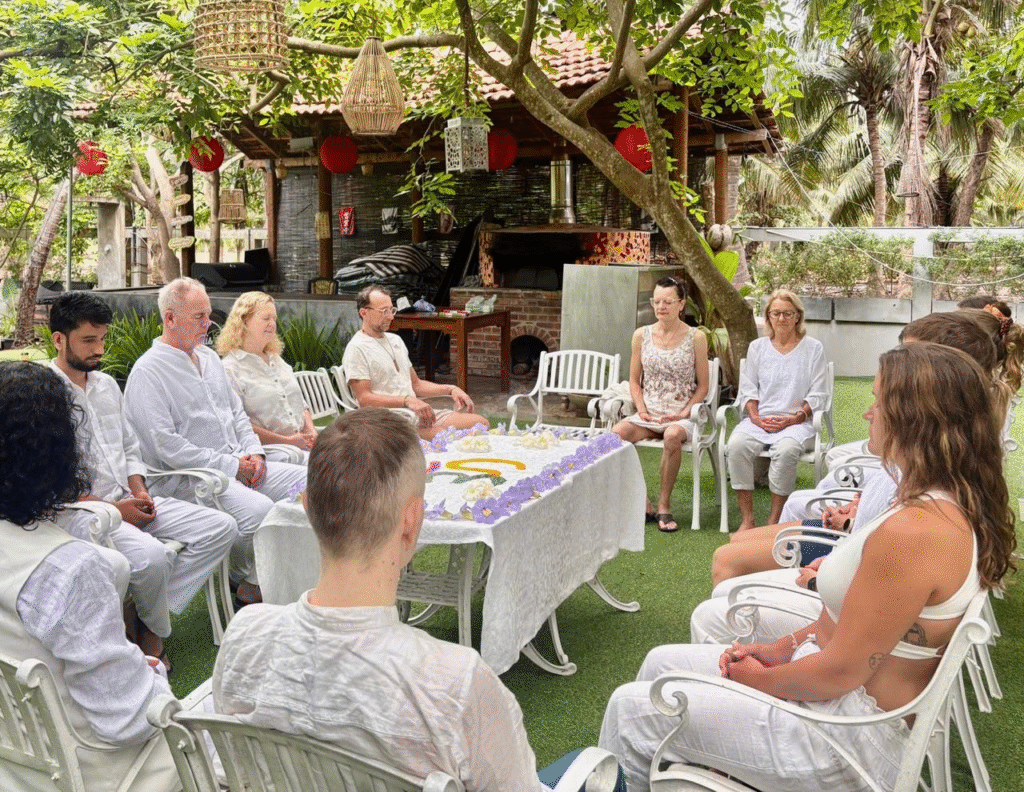
Nourishment as Part of the Practice
After the morning practice, it’s time to nourish the body.
At Diksha Yoga School, meals are prepared with the understanding that food is more than fuel—it supports concentration, recovery, and overall well-being.
Fresh vegetarian meals inspired by yogic principles provide the energy needed for long days of study and practice. Seasonal fruits, vegetables, whole grains, legumes, and balanced nutrition help students feel light, focused, and sustained throughout the day.
For many international students, sharing meals becomes one of the unexpected highlights of the training.
Around the dining table, conversations naturally flow.
Students exchange experiences, discuss philosophy, laugh about challenging classes, and learn from one another’s cultures.
These simple moments create a sense of community that often lasts long after the course has ended.
Learning Beyond Physical Practice
As the day continues, the focus shifts from movement to understanding.
Lectures and interactive discussions explore subjects such as:
- Advanced yoga philosophy
- Functional anatomy
- Teaching methodology
- Sequencing
- Pranayama
- Meditation
- Ethics of teaching
- The business of becoming a professional yoga teacher
Rather than memorizing information, students are encouraged to think critically, ask questions, and connect ancient teachings with modern life.
At Diksha Yoga School, we believe real learning happens through conversation, curiosity, and experience.
Some of the most meaningful discussions begin with a simple question from a student.
Practice Teaching: Where Confidence Is Built
One of the biggest differences between practicing yoga and teaching yoga is responsibility.
When you step to the front of the room, people trust you with their bodies, their attention, and often their emotional well-being.
That responsibility deserves preparation.
Throughout the course, students regularly lead classes for their peers in a supportive environment.
At first, it can feel intimidating.
You might forget a cue.
Lose your place in the sequence.
Speak too quickly.
Or wonder whether anyone understands your instructions.
Every experienced teacher has been there.
What matters is not avoiding mistakes but learning from them.
With constructive feedback from teachers and classmates, each teaching session becomes an opportunity to improve.
Week by week, nervousness is gradually replaced by confidence.
You begin speaking more clearly.
Observing more carefully.
Teaching more naturally.
By the end of the training, many students are surprised by how much they have grown—not only as teachers but as communicators and leaders.
Time for Reflection
One aspect of yoga teacher training that often surprises students is the importance of quiet time.
Learning doesn’t happen only during classes.
Sometimes the greatest insights appear during a peaceful walk, while watching the sunset, or while writing in a journal after dinner.
These pauses allow the body to rest and the mind to absorb what has been learned throughout the day.
In a world that constantly encourages productivity, creating space for reflection becomes a powerful practice in itself.
Living in a Community
A yoga teacher training brings together people from different countries, professions, cultures, and life experiences.
Some students are experienced teachers.
Others have only recently completed their first certification.
Some arrive with years of meditation experience.
Others are just beginning to explore the deeper aspects of yoga.
Despite these differences, something remarkable often happens.
The group slowly becomes a community.
Students encourage one another during challenging practices.
Celebrate each other’s progress.
Share stories from home.
Offer support when someone is struggling.
Many graduates tell us that the friendships formed during their training remain one of the most valuable parts of the entire experience.
Rest Is Also Part of Yoga
Advanced training is immersive, and naturally, it requires energy and commitment.
But yoga also teaches balance.
Rest is not a reward for working hard.
It is an essential part of growth.
Evenings provide time to relax, enjoy a nourishing meal, review notes, or simply sit quietly before preparing for the next day.
As your body adapts to a consistent routine of movement, study, and rest, you begin to notice subtle changes.
Your sleep improves.
Your mind becomes clearer.
Your breath feels steadier.
These changes are often just as meaningful as anything learned in the classroom.
More Than a Daily Schedule
When prospective students ask us for the timetable, we are always happy to share it.
But the schedule itself doesn’t explain the experience.
A timetable can tell you when meditation begins.
It cannot describe the silence in the room before sunrise.
It can tell you what time anatomy class starts.
It cannot explain the confidence that grows after teaching your first full class.
It can list meal times.
It cannot capture the friendships formed around the table.
The true value of a Best 300 Hour Yoga Teacher Training lies not in the individual activities but in how they come together to create a transformative experience.
A Reflection from Yogini Manisha
“When students first arrive, they often ask me what the typical day looks like. By the final week, they stop asking about the schedule because they are living it. Yoga becomes woven into everything—from the way they breathe during practice to the kindness they show one another. That is when I know the training has begun to do its work.”
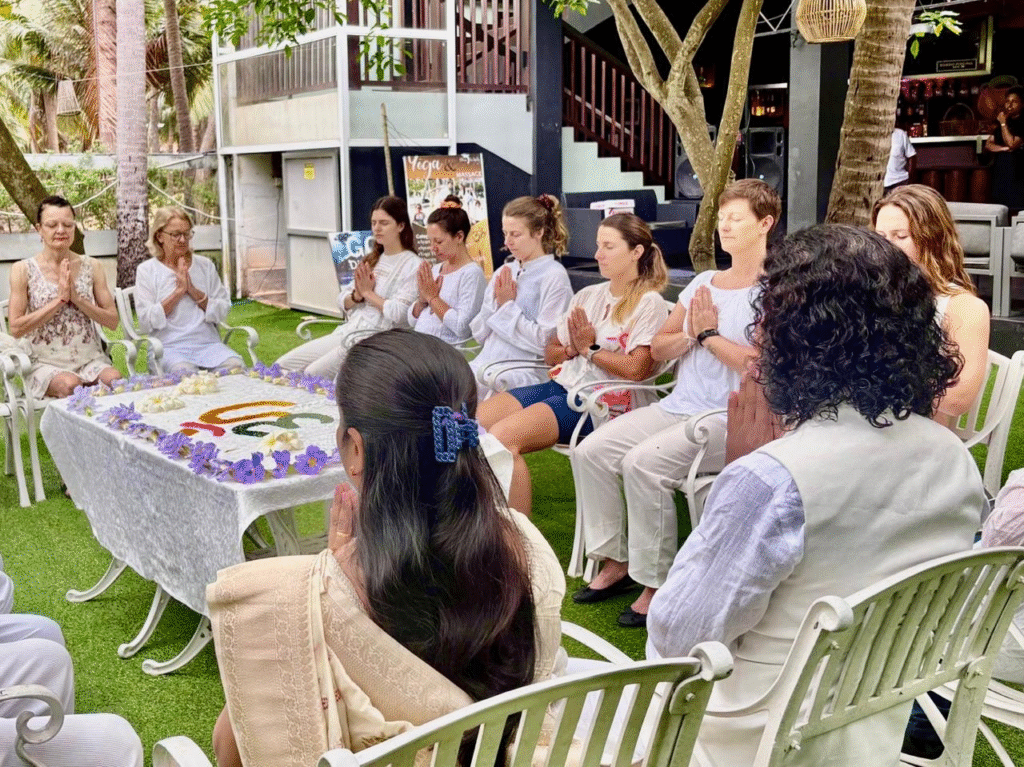
Part 7: How Much Does a Best 300 Hour Yoga Teacher Training Cost?
One of the first questions almost every prospective student asks is:
“How much should I expect to invest in a Best 300 Hour Yoga Teacher Training?”
It’s an important question, but it’s not always the right one.
A better question is:
“What am I receiving in return for my investment?”
Over the years, we’ve spoken with many students who chose a training based primarily on price. Some were happy with their decision. Others later realized that important parts of their education were missing—limited teaching practice, large class sizes, little individual feedback, or additional costs they hadn’t anticipated.
At Diksha Yoga School, we encourage students to look beyond the price tag and consider the overall learning experience.
After all, a teacher training is not simply another trip or short course.
It is an investment in your future as a yoga teacher, an investment that can continue to influence your life and career long after the training has ended.
What Is the Average Cost of a Best 300 Hour Yoga Teacher Training?
The cost of a Best 300 Hour Yoga Teacher Training can vary depending on several factors, including the location, accommodation, course duration, class size, and what is included in the package.
Generally, you can expect prices to range from approximately €2,000 to €4,000 for a Yoga Alliance Registered Best 300 Hour Yoga Teacher Training with accommodation and meals.
While lower-priced courses may seem attractive at first, it’s important to understand what has been included—and what hasn’t.
Before comparing prices, always ask for a detailed breakdown of the course package.
Sometimes a higher initial fee includes far more value than a lower-priced option.
What Should Be Included in Your Course Fee?
A quality teacher training should be transparent about what is included from the beginning.
Before booking, check whether your investment covers:
- Yoga Alliance Registered 300 Hour Certification
- Comprehensive training manual and study materials
- Daily yoga classes and workshops
- Philosophy, anatomy, meditation, and pranayama sessions
- Teaching methodology and practice teaching
- Accommodation throughout the course
- Nutritious vegetarian meals
- Assessments and graduation ceremony
- Ongoing support during the training
Knowing exactly what is included helps you compare schools fairly and avoid unexpected expenses later.
Price Should Never Be the Only Decision
Imagine two different schools.
One offers a lower price but has 35 students in each class.
The other costs a little more but limits class sizes, provides daily teaching feedback, and offers personal mentorship throughout the course.
Which one offers greater value?
For many students, the quality of learning, personal attention, and confidence they gain are far more important than saving a small amount at the time of booking.
Your teacher training will shape how you teach for years to come.
That makes it one of the most valuable investments you can make in your yoga journey.
Why Small Class Sizes Matter
One factor that directly affects the value of a training is the number of students.
In large groups, teachers naturally have less time to observe each student, answer questions, and provide personalised guidance.
During an advanced training, feedback becomes even more important.
You are refining your teaching style, improving sequencing, learning hands-on assisting, and building confidence in front of a class.
These skills develop most effectively when experienced teachers have time to observe your progress and offer meaningful feedback.
This is one reason why Diksha Yoga School intentionally keeps its training groups smaller.
We believe quality education happens through connection, not numbers.
Think Beyond the Four Weeks
When comparing yoga schools, many people focus only on what happens during the training.
Instead, ask yourself another question:
“Who will I become because of this experience?”
A meaningful teacher training continues to influence your work long after graduation.
Perhaps you’ll begin teaching internationally.
Perhaps you’ll open your own yoga studio.
Perhaps you’ll organise retreats, workshops, or private sessions.
Perhaps you’ll simply develop a deeper personal practice that enriches every area of your life.
The value of your education cannot always be measured immediately.
Sometimes its greatest impact appears months or even years later.
Choosing Value Over Discounts
It’s natural to appreciate special offers and seasonal discounts.
However, it’s important to distinguish between genuine value and marketing promotions.
A discounted course isn’t automatically a better investment.
Likewise, a premium-priced course isn’t automatically higher quality.
Instead of asking:
“Where can I spend the least?”
Try asking:
“Where will I learn the most?”
That simple shift in perspective often leads to a much better decision.
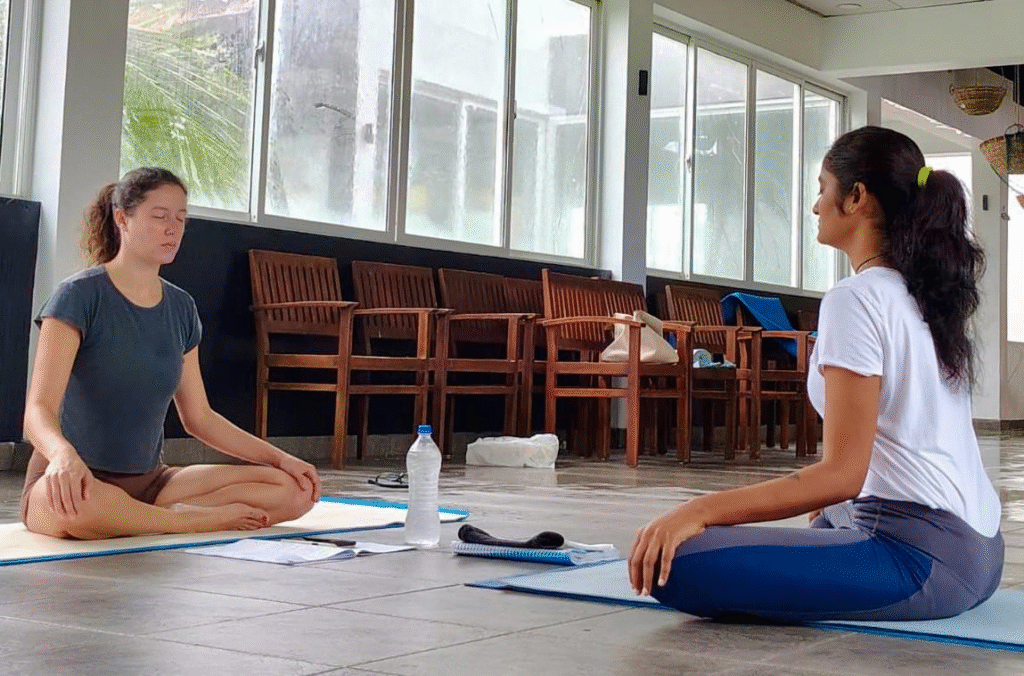
Why Students Choose Diksha Yoga School
Every yoga school offers something different.
At Diksha Yoga School, we focus on creating an environment where students feel genuinely supported throughout their learning journey.
Our Best 300 Hour Yoga Teacher Training is designed to provide far more than classroom instruction.
Students receive:
- Personal mentorship from experienced teachers.
- Daily opportunities to practice teaching.
- In-depth study of traditional yoga philosophy.
- Functional anatomy and intelligent alignment.
- Advanced sequencing and class planning.
- Meditation and pranayama practice.
- A peaceful learning environment in Galle, Sri Lanka.
- A supportive international yoga community.
Our goal is not simply to help students complete another certification.
Our goal is to help them become knowledgeable, confident, and compassionate yoga teachers.
An Investment in Yourself
There are many things we purchase in life that lose value over time.
A phone becomes outdated.
Fashion changes.
Technology evolves.
Knowledge is different.
The skills, confidence, and awareness you develop through an advanced yoga teacher training continue growing every time you teach.
Every student you guide.
Every class you lead.
Every life you touch.
That is why many graduates describe their yoga teacher training as one of the most meaningful investments they have ever made.
Not because of the certificate they received.
But because of the person they became.
A Reflection from Yogini Manisha
“Students often ask me whether a Best 300 Hour Yoga Teacher Training is worth the investment. I always tell them that only they can answer that question. But if you choose a school where you are challenged, supported, and encouraged to grow, the value of that experience will continue unfolding every time you step in front of your students. Education is one of the few investments that keeps giving back throughout your life.”
Part 8: Why Choose Diksha Yoga School for Your Best 300 Hour Yoga Teacher Training?
There are many beautiful yoga schools in Sri Lanka.
Many have experienced teachers.
Many offer Yoga Alliance certification.
Many are located close to the beach.
So, what truly makes one school different from another?
The answer isn’t found in the yoga shala, the accommodation, or even the curriculum.
It’s found in the people who guide you.
Because when you spend nearly a month learning, practicing, questioning, teaching, and growing, your relationship with your teachers becomes one of the most important parts of the experience.
At Diksha Yoga School, we don’t see yoga teacher training as simply delivering information.
We see it as a journey of mentorship.
Our responsibility is not only to teach yoga but to help each student discover the confidence, awareness, and authenticity that already exists within them.
Every class, every discussion, and every practice is designed with that intention.
A School Built on Experience, Not Trends
Yoga has become increasingly popular around the world, and with that growth, new teacher training programs continue to appear every year.
While innovation has its place, we believe the foundation of a meaningful yoga education should remain rooted in tradition.
Diksha Yoga School was created with a clear vision:
To share authentic yogic knowledge in a way that is practical, accessible, and relevant for modern teachers.
Our approach honours traditional teachings while recognising that today’s yoga teachers work with students from diverse backgrounds, cultures, ages, and physical abilities.
This balance between ancient wisdom and contemporary understanding shapes every aspect of our curriculum.
Learn From Teachers Who Continue to Learn
One of the qualities we value most as educators is humility.
No matter how many years we teach, we remain students ourselves.
Yoga is a lifelong path of study, observation, and self-inquiry.
This mindset influences the way we teach.
Rather than presenting ourselves as people who have all the answers, we encourage dialogue, curiosity, and thoughtful discussion.
Students are invited to ask questions, explore ideas, and reflect on their own experiences.
Some of the richest learning moments happen when teachers and students explore a subject together.
That openness creates an environment where learning feels alive rather than rigid.
Personal Mentorship Makes the Difference
One of the comments we hear most often from graduates is:
“I never felt like just another student.”
This is something we intentionally work to create.
Throughout your training, you’ll receive individual guidance on your teaching, alignment, sequencing, communication, and personal practice.
If you need extra support with a posture, we’re there.
If you’re nervous before teaching your first class, we’ll encourage you.
If you have questions about philosophy or anatomy after class, we’ll make time for those conversations.
Because growth rarely happens through lectures alone.
It happens through relationships.
Meet Yogini Manisha
Every yoga teacher brings their own life experience into the classroom.
For Yogini Manisha, yoga has never been simply a profession.
It has been a lifelong practice of learning, teaching, and self-discovery.
With more than 16 years of teaching experience, she has guided and mentored thousands of yoga practitioners and aspiring teachers from around the world.
Her teaching is rooted in traditional Hatha Yoga while embracing the practical needs of modern yoga education.
Students often describe her teaching style as calm, supportive, and deeply observant.
Rather than asking students to imitate her practice, she encourages each person to develop awareness, confidence, and their own authentic teaching voice.
One of her favourite reminders to students is:
“Your students don’t need another teacher who teaches exactly like someone else. They need a teacher who is fully present, deeply aware, and genuinely cares.”
This philosophy shapes the entire learning experience at Diksha Yoga School
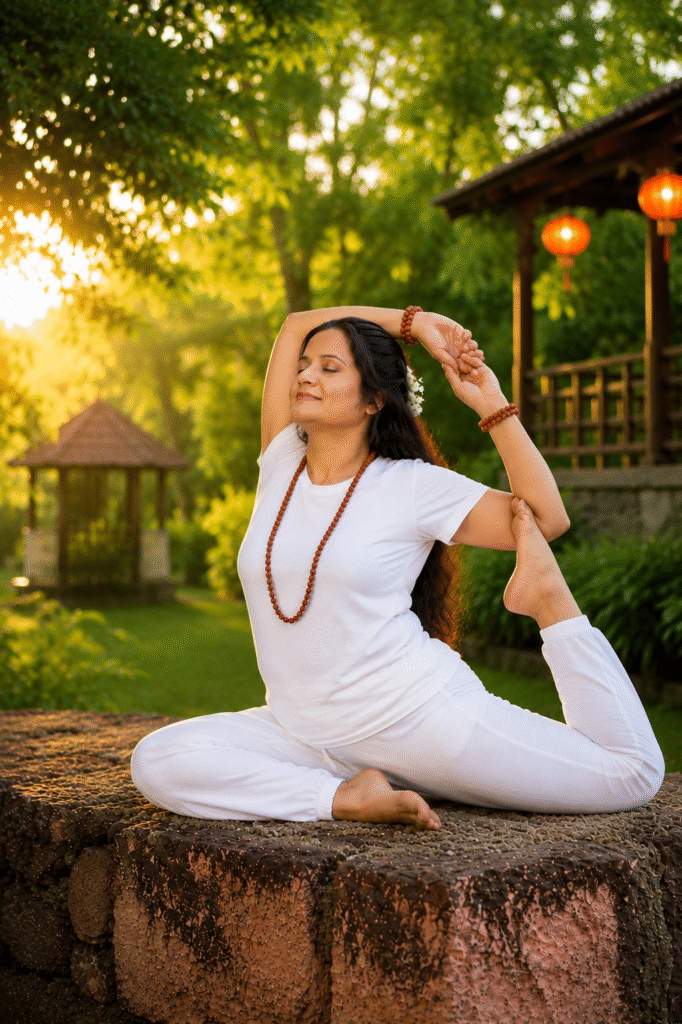
A Curriculum Designed for Real Teachers
Completing a teacher training should prepare you for what actually happens when you begin teaching.
Your students won’t all be young.
They won’t all be flexible.
They won’t all arrive feeling confident.
Some may be recovering from injuries.
Some may be managing stress or anxiety.
Some may be stepping onto a yoga mat for the very first time.
That is why our curriculum focuses on practical teaching skills as much as theoretical knowledge.
You’ll learn how to:
- Observe students with greater awareness.
- Offer intelligent modifications.
- Create inclusive classes.
- Build safe and progressive sequences.
- Communicate clearly.
- Teach with confidence rather than memorisation.
Our goal is to prepare you for real classrooms, real students, and real teaching experiences.
Small Groups, Meaningful Learning
Education is deeply personal.
In smaller groups, teachers have time to know each student, understand their goals, and provide meaningful feedback.
You’ll have more opportunities to:
- Teach complete classes.
- Receive personalised corrections.
- Ask questions.
- Practice hands-on assisting.
- Develop your teaching voice.
- Learn collaboratively with your peers.
This creates an atmosphere where students feel comfortable making mistakes, asking for help, and growing together.
Learning Beyond the Classroom
Although the structured curriculum is an essential part of the training, many of the most memorable lessons happen outside scheduled classes.
A conversation over breakfast.
A walk after evening meditation.
Sharing experiences with students from different cultures.
Watching someone’s confidence grow as they teach their first full class.
These moments remind us that yoga is not limited to postures or textbooks.
It is reflected in the way we relate to ourselves and to others.
The community that develops during a teacher training often becomes one of its greatest gifts.
Our Home in Galle, Sri Lanka
Our training takes place in the peaceful surroundings of Galle, where the natural beauty of Sri Lanka supports focused learning and personal reflection.
Away from busy cities and constant distractions, students have the opportunity to immerse themselves fully in their practice.
The tropical climate, nearby beaches, and slower pace of life create an environment that complements the rhythm of yoga teacher training.
Many graduates tell us that this balance between structured learning and peaceful surroundings helped them absorb the teachings more deeply.



We Believe Every Student Has Something to Teach
Perhaps the most important belief we hold at Diksha Yoga School is this:
Every student already carries something valuable within them.
Our role is not to create copies of ourselves.
Our role is to help each student recognise and develop their own strengths.
Some graduates become studio teachers.
Others organise retreats.
Some specialise in private sessions.
Others integrate yoga into healthcare, education, or community work.
There is no single path.
Yoga teaching is as diverse as the people who practice it.
Our hope is that every graduate leaves with the confidence to follow their own path with integrity and compassion.
More Than a Certification
At the end of the training, you will receive a Yoga Alliance recognised certification.
But certificates eventually become framed on a wall.
What remains with you is everything you experienced along the way.
The conversations.
The friendships.
The challenges.
The moments of self-discovery.
The confidence you found standing in front of your first class.
Those experiences continue shaping your teaching long after the training has ended.
That is the true value of a yoga teacher training.
A Reflection from Yogini Manisha
“People sometimes ask me what makes Diksha Yoga School different. My answer is always the same. We teach yoga, but more importantly, we care for the people who come to learn it. Every student arrives with a unique story, unique strengths, and unique challenges. Our responsibility is to honour that individuality and help them grow into teachers who lead with knowledge, humility, and heart. If students leave with greater awareness, deeper compassion, and the confidence to guide others authentically, then we have fulfilled our purpose.”
Part 9: Diksha Yoga School vs Other Best 300 Hour Yoga Teacher Training
If you’ve reached this point in the guide, you’ve probably realised something.
Choosing the right Best 300 Hour Yoga Teacher Training isn’t about finding the “perfect” school.
It is about finding the school that matches your learning style, your goals, and the kind of teacher you want to become.
Every yoga school has its own strengths.
Some focus heavily on physical practice.
Some emphasise retreats and wellness experiences.
Others offer intensive academic study.
There is no single approach that suits everyone.
Rather than asking, “Which school is the best?”, a more helpful question is:
“Which school will help me become the teacher I want to be?”
At Diksha Yoga School, we encourage every prospective student to compare schools carefully. Read the curriculum, speak with the teachers if possible, read graduate reviews, and understand exactly what each program offers.
An informed decision is always the best decision.
What Should You Compare Before Enrolling?
Instead of comparing schools only by price or location, consider the factors that will have the greatest impact on your learning experience.
1. Teaching Philosophy
Every school teaches yoga differently.
Some focus primarily on mastering advanced postures.
Others place greater emphasis on meditation, philosophy, or self-development.
At Diksha Yoga School, we believe advanced teacher training should develop the whole teacher.
That means balancing physical practice with breathwork, meditation, anatomy, philosophy, sequencing, communication, and practical teaching experience.
Our goal isn’t simply to improve your practice.
It’s to prepare you to confidently guide others.
2. Personal Mentorship
One of the biggest differences between schools is the level of personal guidance students receive.
Ask yourself:
- Will teachers know your name?
- Will someone observe your teaching?
- Will you receive individual feedback?
- Can you ask questions outside class?
At Diksha Yoga School, mentorship is an important part of the learning experience.
We believe students grow most when they feel supported rather than overlooked.
3. Class Size
Smaller groups naturally create more opportunities for learning.
With fewer students, teachers can:
- Observe your alignment more carefully.
- Offer detailed teaching feedback.
- Answer individual questions.
- Support your personal development.
- Encourage meaningful discussion.
This creates a collaborative learning environment where every student has space to grow.
4. Practical Teaching Experience
Reading about yoga is important.
Teaching yoga is different.
A high-quality advanced teacher training should provide frequent opportunities to:
- Teach complete classes.
- Receive constructive feedback.
- Improve verbal cueing.
- Practice sequencing.
- Build classroom confidence.
- Learn through real experience.
At Diksha Yoga School, practical teaching is integrated throughout the training because confidence develops through experience, not observation alone.
5. Balance Between Tradition and Modern Knowledge
Yoga continues to evolve.
Today’s teachers need both traditional wisdom and modern understanding.
A well-rounded program should include:
- Classical yoga philosophy.
- Traditional pranayama.
- Meditation.
- Functional anatomy.
- Biomechanics.
- Inclusive teaching practices.
- Safe alignment principles.
This balanced approach prepares teachers to work with students from diverse backgrounds and abilities.
A Comparison Checklist
The table below highlights some of the qualities prospective students often compare when evaluating different yoga teacher training programs. It is intended as a guide to help you ask informed questions rather than rank schools.
| What to Look For | Diksha Yoga School | What to Ask Any School |
| Yoga Alliance Registered | ✓ Yes | Is the school currently registered? |
| Experienced Lead Teachers | ✓ 16+ years of teaching experience | Who teaches the majority of the course? |
| Personal Mentorship | ✓ Individual guidance throughout the training | How much one-to-one feedback is provided? |
| Teaching Practice | ✓ Regular supervised teaching sessions | How often do students teach? |
| Small Learning Environment | ✓ Focus on personal attention | What is the average class size? |
| Traditional Yoga Philosophy | ✓ Integrated throughout the curriculum | How deeply is philosophy explored? |
| Functional Anatomy | ✓ Practical, teacher-focused approach | Is anatomy connected to teaching? |
| Meditation & Pranayama | ✓ Daily practice and instruction | Are these core subjects or optional sessions? |
| Supportive Community | ✓ International student community | How does the school encourage connection? |
| Peaceful Location | ✓ Galle, Sri Lanka | Does the environment support focused learning? |
The purpose of a comparison like this isn’t to suggest that one school is objectively better than every other.
Instead, it’s to encourage thoughtful questions before making an important decision.
Questions Every Future Yoga Teacher Should Ask
Before confirming your place, consider asking the school these questions:
Who teaches most of the course?
Will you be learning directly from experienced lead teachers, or from different guest instructors throughout the month?
Consistency often creates a richer learning experience.
How much teaching practice is included?
Advanced teacher training should involve much more than observation.
Teaching regularly helps transform knowledge into confidence.
How are students assessed?
Feedback is one of the most valuable parts of a teacher training.
Understanding how teachers evaluate your progress can give you insight into the level of support you will receive.
Is the atmosphere competitive or collaborative?
Yoga is not a competition.
A supportive environment allows students to ask questions, make mistakes, and develop naturally.
What happens after graduation?
Some schools continue supporting graduates through alumni communities, mentoring, workshops, or continued education.
Knowing that support is available after the course can be reassuring, particularly if you are beginning your teaching career.
Why Many Teachers Feel at Home at Diksha Yoga School
Every year, we welcome students with different backgrounds.
Some have been teaching for years.
Others completed their 200-hour training only recently.
Some arrive feeling completely confident.
Others are nervous about leading even a short practice.
By the end of the course, those differences matter much less.
Students begin learning from one another as much as they learn from the teachers.
Ideas are shared.
Experiences are exchanged.
Confidence grows.
The atmosphere becomes one of encouragement rather than comparison.
This sense of community is something many graduates continue to mention long after returning home.
Choosing With Your Head and Your Heart
Research is important.
Reviews matter.
Curriculum matters.
Teachers matter.
But after gathering all the information, there is one final step.
Listen to your intuition.
When you read about a school, watch its videos, or speak with its teachers, ask yourself:
“Can I imagine myself learning here?”
Sometimes the answer is immediate.
Sometimes it takes time.
Trust that process.
A yoga teacher training is more than an educational program.
It is a chapter of your life.
Choosing the right environment can make that chapter one of the most rewarding experiences you ever have.
A Reflection from Yogini Manisha
“Whenever someone asks me whether they should choose Diksha Yoga School, I encourage them to do their research first. Compare schools, ask questions, and listen to your intuition. The right school is not simply the one with the most beautiful photographs or the lowest price. It is the place where you feel supported to learn, challenged to grow, and inspired to become the teacher you are capable of being. If that place is with us, we will welcome you with an open heart.”
Part 10: Career Opportunities After Completing a Best 300 Hour Yoga Teacher Training
Many students begin a Best 300 Hour Yoga Teacher Training with one simple goal:
“I want to become a better yoga teacher.”
By the end of the course, that goal often becomes much bigger.
They discover that the training hasn’t just improved their teaching skills—it has changed the way they communicate, observe, listen, and connect with people.
That transformation naturally opens new opportunities.
But before we talk about careers, it’s important to understand one thing.
A Best 300 Hour Yoga Teacher Training certification is not a guarantee of success.
No yoga school can honestly promise that you will immediately fill every class, earn a certain income, or become a well-known teacher.
What a quality training can do is give you the knowledge, confidence, practical experience, and professional foundation to build a meaningful teaching career over time.
What you create from there depends on your commitment, consistency, and willingness to keep learning.
Becoming an RYT 500
One of the main reasons teachers continue their education is to progress toward becoming an RYT 500 with Yoga Alliance.
After completing both a 200-hour and a 300-hour Yoga Alliance–registered training, and meeting Yoga Alliance’s applicable experience requirements, you may be eligible to register as an RYT 500.
For many teachers, this reflects a continued commitment to professional development and ongoing study.
While registration itself does not make someone a better teacher, it demonstrates that you have invested in a broader and deeper yoga education.
Teaching at Yoga Studios
Many graduates choose to teach regular classes in yoga studios.
The difference after completing a Best 300 Hour Yoga Teacher Training is often noticeable.
You become more comfortable:
- Teaching mixed-level classes.
- Offering modifications confidently.
- Creating thoughtful class sequences.
- Supporting students with different abilities.
- Leading workshops and specialty classes.
Studio owners often value teachers who communicate clearly, teach safely, and create a welcoming experience for students.
These qualities are developed through experience and continued education.
Leading Yoga Retreats
For teachers who enjoy creating immersive experiences, leading yoga retreats can become a natural next step.
A retreat involves much more than teaching a morning yoga class.
You’ll often guide:
- Daily yoga practices.
- Meditation sessions.
- Pranayama.
- Group discussions.
- Relaxation practices.
- Community experiences.
The broader knowledge gained during a Best 300 Hour Yoga Teacher Training helps teachers design retreats that feel balanced, meaningful, and accessible.
Offering Private Yoga Sessions
Private teaching allows you to work closely with individual students and tailor classes to their unique needs.
Some students may be recovering from injuries.
Others may want support with stress management, mobility, strength, or establishing a consistent practice.
Because advanced teacher training deepens your understanding of anatomy, observation, and sequencing, many graduates feel more confident working one-on-one.
Private teaching can also be a rewarding way to build long-term relationships with students.
Specialising in Areas That Inspire You
One of the beautiful aspects of yoga teaching is that there isn’t only one path.
Some graduates discover a passion for:
- Meditation.
- Breathwork.
- Restorative yoga.
- Yin yoga.
- Yoga philosophy.
- Prenatal yoga.
- Chair yoga.
- Corporate wellness.
- Senior yoga.
- Workshops and continuing education.
A 300-hour training often helps teachers identify the areas that genuinely inspire them.
Rather than trying to teach everything, they begin developing their own unique strengths.
Teaching Internationally
Yoga is practiced around the world, creating opportunities for teachers to work in different countries and communities.
Many graduates go on to teach in:
- Yoga studios.
- Retreat centres.
- Wellness resorts.
- Fitness centres.
- Community organisations.
- Private practice.
Requirements vary by country and employer, so it’s always worth researching local regulations and expectations.
Your teaching ability, professionalism, and experience will continue to play an important role alongside your certification.
Building Your Own Yoga Business
Some graduates dream of creating something of their own.
This might include:
- Opening a yoga studio.
- Offering online classes.
- Hosting workshops.
- Organising retreats.
- Building an online community.
- Teaching through digital platforms.
Running a yoga business requires skills beyond teaching, including communication, organisation, and consistency.
The confidence developed during an advanced teacher training often provides a strong foundation for taking those first steps.
Continuing to Learn
Perhaps the most important opportunity after graduation is one that doesn’t involve a job title at all.
It is the opportunity to remain a student.
Every experienced yoga teacher will tell you the same thing.
The more you learn, the more you realise there is still to discover.
Each class you teach becomes another lesson.
Each student becomes another teacher.
Each challenge becomes another invitation to grow.
Completing a Best 300 Hour Yoga Teacher Training is not the end of your education.
It is another beginning.
Success Looks Different for Everyone
One of the most meaningful conversations we have with students happens near the end of the training.
Someone inevitably asks:
“What should I do next?”
Our answer is always the same.
There is no single definition of success.
For one graduate, success might mean teaching in a busy studio.
For another, it might mean sharing yoga with a small community in their hometown.
Someone else may integrate yoga into healthcare, education, coaching, or personal development.
Each path is equally valuable.
The purpose of advanced teacher training is not to create identical careers.
It is to give each teacher the knowledge and confidence to follow their own path with integrity.
The Real Qualification Students Remember
Years from now, your students probably won’t remember whether your certificate was printed on thick paper.
They won’t remember the exact number of hours you studied.
They won’t remember every Sanskrit term you learned.
What they will remember is how they felt in your class.
Did they feel safe?
Did they feel encouraged?
Did they leave with greater awareness?
Did they feel seen?
These qualities cannot be measured by a certificate.
They are cultivated through consistent practice, self-reflection, humility, and genuine care for others.
That is the kind of teacher we hope every graduate becomes.
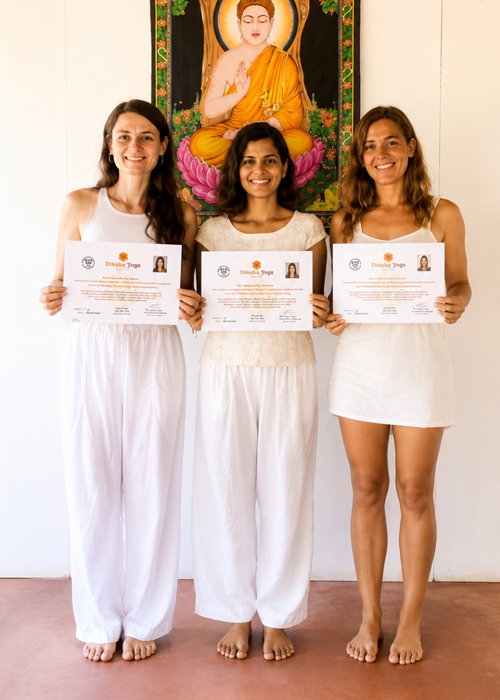
A Reflection from Yogini Manisha
“People often ask me what makes a successful yoga teacher. My answer has never been flexibility, popularity, or social media followers. A successful teacher is someone who continues learning, teaches with honesty, and creates a space where students feel supported exactly as they are. Certificates may open doors, but it is your compassion, consistency, and authenticity that encourage people to return to your classes again and again.”
Why Graduates Choose Diksha Yoga School
At Diksha Yoga School, we believe your graduation is not the finish line—it is the beginning of the next chapter in your teaching journey.
Our aim is to help you leave with more than technical knowledge. We want you to leave with the confidence to teach thoughtfully, the curiosity to keep learning, and the humility to continue growing alongside your students.
Whether your path leads you to a yoga studio, your own retreats, private teaching, or simply a deeper personal practice, we hope the training becomes a foundation you can build upon for years to come.
Part 11: Frequently Asked Questions About Best 300 Hour Yoga Teacher Training
1. What is a Best 300 Hour Yoga Teacher Training?
A Best 300 Hour Yoga Teacher Training is an advanced certification designed for teachers who have already completed a 200-hour Yoga Teacher Training. It builds upon your existing foundation by exploring yoga philosophy, anatomy, advanced sequencing, meditation, pranayama, teaching methodology, and personal practice in much greater depth.
Unlike a beginner-level course, a Best 300 Hour Yoga Teacher Training focuses on helping you refine your teaching skills, deepen your understanding of yoga, and develop the confidence to guide students with greater awareness and authenticity.
2. Who can join a Best 300 Hour Yoga Teacher Training?
This training is intended for students who have successfully completed a 200 Hour Yoga Teacher Training, ideally through a Yoga Alliance Registered School if they plan to continue their Yoga Alliance registration pathway.
You do not need to perform advanced postures.
What matters most is your commitment to learning, self-practice, and teaching.
3. Do I need teaching experience before joining?
No.
While teaching experience can be helpful, it is not always necessary.
Some students enroll immediately after completing their 200-hour training, while others join after teaching for several years.
Both approaches are valid.
The course is designed to meet teachers wherever they are in their journey.
4. Why choose Sri Lanka for a Best 300 Hour Yoga Teacher Training?
Sri Lanka offers a peaceful environment that supports focused learning and personal growth.
Its tropical climate, beautiful coastline, slower pace of life, and welcoming culture create ideal conditions for an immersive yoga education.
Many students appreciate being able to step away from daily distractions and dedicate themselves fully to practice, study, and self-reflection.
5. Is a Best 300 Hour Yoga Teacher Training worth it?
For many yoga teachers, yes.
If your goal is simply to collect another certificate, the value may be limited.
However, if you want to deepen your understanding of yoga, improve your teaching, and grow personally, an advanced teacher training can become one of the most rewarding investments in your yoga journey.
The greatest benefits often appear long after graduation, as you apply what you’ve learned in your own classes.
6. What is the difference between a 200 Hour and a Best 300 Hour Yoga Teacher Training?
A 200-hour course introduces the foundations of yoga teaching.
A Best 300 Hour Yoga Teacher Training expands that knowledge through advanced study, greater teaching practice, deeper philosophy, functional anatomy, intelligent sequencing, meditation, and refined teaching methodology.
It is designed for teachers who are ready to continue learning rather than beginning from scratch.
7. Is the course Yoga Alliance certified?
Yes.
Diksha Yoga School offers a Yoga Alliance Registered Best 300 Hour Yoga Teacher Training.
After successfully completing both a 200-hour and a Best 300 Hour Yoga Teacher Training Yoga Alliance–registered training, and meeting Yoga Alliance’s applicable requirements, you may be eligible to register as an RYT 500.
8. How long does the training last?
Most Best 300 Hour Yoga Teacher Training programs run for approximately four weeks.
The exact duration may vary slightly depending on the school and course schedule.
At Diksha Yoga School, the timetable is designed to balance structured learning with adequate time for rest, reflection, and personal practice.
9. What subjects are included?
The curriculum generally includes:
- Advanced Hatha Yoga
- Vinyasa Flow
- Advanced sequencing
- Yoga philosophy
- Functional anatomy
- Pranayama
- Meditation
- Teaching methodology
- Hands-on assisting
- Alignment
- Practice teaching
The goal is to prepare you to teach with greater confidence and understanding.
10. Will I have opportunities to teach?
Yes.
Practice teaching is an essential part of the training.
Students regularly lead classes, receive feedback, improve their communication skills, and gradually build confidence in a supportive environment.
11. Do I need to know advanced yoga poses?
No.
Many students assume that advanced teacher training is only for highly flexible practitioners.
This is a common misconception.
The focus is not on performing the most difficult postures but on becoming a more knowledgeable and effective teacher.
12. What accommodation is provided?
Diksha Yoga School offers comfortable accommodation designed to support rest and learning throughout the training.
Accommodation options may vary depending on availability and the package you choose.
The focus is on providing a peaceful environment where students can fully immerse themselves in the course.
13. Are meals included?
Yes.
Nutritious vegetarian meals are included throughout the training.
Meals are prepared to support an active yoga lifestyle and provide the energy needed for daily practice and study.
14. What should I bring?
Most students bring:
- Comfortable yoga clothing.
- A reusable water bottle.
- Notebook and journal.
- Personal toiletries.
- Lightweight clothing suitable for a tropical climate.
- An open mind and a willingness to learn.
The school will provide any additional guidance before your arrival.
15. Can international students join?
Absolutely.
Students from many different countries choose Sri Lanka for their yoga teacher training.
Learning alongside an international community creates valuable opportunities to exchange ideas, cultures, and teaching experiences.
16. Is English the language of instruction?
Yes.
Classes are taught in English.
Teachers aim to communicate clearly and support students from diverse language backgrounds.
17. Will I receive a certificate after graduation?
Yes.
Students who successfully complete the course requirements receive a Best 300 Hour Yoga Teacher Training Certificate from Diksha Yoga School.
18. Can I teach yoga internationally after completing the course?
Many graduates go on to teach internationally.
However, teaching requirements can vary by country, employer, or studio.
It’s always a good idea to check any local regulations where you intend to teach.
19. What makes Diksha Yoga School different?
Our approach combines traditional yogic wisdom with practical teaching experience.
We place a strong emphasis on personal mentorship, small-group learning, thoughtful teaching methodology, and helping each student develop their own authentic teaching voice.
Rather than focusing only on advanced postures, we encourage students to embody yoga both on and off the mat.
20. Is this course suitable if I simply want to deepen my personal practice?
Yes.
Although many students join with professional teaching goals, others enroll because they want to deepen their understanding of yoga for personal growth.
The course supports both paths.
21. How physically demanding is the course?
The training is immersive and requires commitment, but it is not designed as a competition.
Students are encouraged to practise mindfully, listen to their bodies, and progress safely throughout the program.
22. What is the daily schedule like?
Each day typically includes morning practice, meditation, pranayama, lectures, practical workshops, teaching sessions, meals, and time for personal reflection.
The schedule is designed to create a balanced learning experience rather than simply filling every hour.
23. What should I look for when choosing a yoga school?
Consider factors such as:
- Teacher experience.
- Yoga Alliance registration.
- Curriculum quality.
- Class size.
- Opportunities for practice teaching.
- Student reviews.
- Learning environment.
- Personal mentorship.
Choosing the right learning environment is often more important than choosing the lowest price.
24. What happens after I graduate?
Graduation marks the beginning of your next chapter.
Many graduates continue teaching, organise retreats, offer private sessions, pursue specialised training, or deepen their own personal practice.
Learning doesn’t end with certification—it continues every time you step onto your mat.
25. How do I know if Diksha Yoga School is the right choice for me?
Take time to explore the curriculum, read graduate reviews, learn about the teachers, and reflect on your own goals.
If you’re looking for a school that values personal mentorship, traditional yogic wisdom, practical teaching experience, and a supportive learning environment, Diksha Yoga School may be the right place for your journey.
Your Journey Doesn’t Begin When You Feel Ready
One of the most common beliefs we hear is:
“I’ll join when I feel more prepared.”
But yoga has a beautiful way of teaching us something different.
Growth rarely begins when everything feels certain.
It begins the moment we choose to take the next step.
A Best 300 Hour Yoga Teacher Training is not about becoming someone else.
It is about uncovering more of who you already are.
Through consistent practice, honest self-reflection, meaningful conversations, and guidance from experienced teachers, you gradually develop the confidence to teach with authenticity and compassion.
At Diksha Yoga School, we believe every teacher has a unique voice.
Our role is not to shape you into a copy of someone else.
Our role is to help you discover your own way of sharing yoga with the world.
If you’re ready to deepen your practice, expand your teaching, and continue your lifelong journey of learning, we would be honoured to welcome you to our 300 Hour Yoga Teacher Training in Galle, Sri Lanka.
Because the most meaningful transformation doesn’t happen when you receive your certificate.
It happens in the moments afterward—when you step into a classroom, meet your students, and realise that the journey has only just begun.
Part 12: Why Our Graduates Return Home as Different Teachers
“The greatest transformation in a yoga teacher training is rarely visible on the final day. It reveals itself months later, every time you teach a class.”
When people ask us what students gain from a Best 300 Hour Yoga Teacher Training, it’s tempting to talk about the curriculum.

Advanced sequencing.
Hands-on adjustments.
Teaching methodology.
All of these are important.
But they are not what students remember most.
Years after graduation, our students rarely tell us,
“I remember Chapter Four of the anatomy manual.”
Instead, they tell us stories.
They remember the first time they taught a full class without looking at their notes.
They remember overcoming the fear of speaking in front of a room.
They remember the quiet confidence they felt after guiding someone through meditation.
They remember realising that yoga had become something they lived—not simply something they practised.
That is the transformation we hope every student experiences.
You Stop Trying to Teach Like Someone Else
One of the biggest challenges new yoga teachers face is comparison.
Social media makes it easy to believe that great teachers have perfect handstands, flawless flexibility, and beautifully choreographed classes.
Many students arrive feeling that they need to become someone else before they are “good enough” to teach.
Over time, something changes.
Through practice teaching, feedback, and self-reflection, they begin to understand an important truth.
Your students are not looking for perfection.
They are looking for presence.
They don’t need another version of their favourite teacher on Instagram.
They need someone who listens, communicates clearly, and creates a space where they feel comfortable learning.
The moment you stop trying to imitate others is often the moment your real teaching begins.
Confidence Grows Quietly
People often imagine confidence appearing suddenly.
In reality, it develops gradually.
It grows every time you answer a student’s question honestly.
Every time you guide a breathing practice.
Every time you adapt a posture for someone who needs support.
Every time you finish teaching and realise,
“I handled that better than I thought I could.”
By the end of the course, you may still feel nervous before teaching.
Most experienced teachers do.
The difference is that nervousness no longer controls you.
Knowledge replaces uncertainty.
Practice replaces fear.
Experience replaces doubt.
You Learn to Observe Instead of Correct
Many new teachers believe their role is to fix every posture they see.
Advanced teachers understand something different.
Every student arrives with a different body.
Different history.
Different goals.
Different limitations.
Instead of asking,
“How can I make everyone look the same?”
You begin asking,
“How can I help this individual practice safely and meaningfully today?”
This shift changes everything.
Students feel respected.
Classes become more inclusive.
Teaching becomes more compassionate.
You Understand That Yoga Extends Beyond the Mat
Some of the most valuable lessons during a teacher training happen outside formal classes.
You notice how you respond when you’re tired.
How you communicate when opinions differ.
How you support classmates during difficult moments.
How you care for yourself when challenges arise.
These experiences become part of your yoga practice too.
Yoga gradually moves beyond postures and becomes part of everyday life.
That understanding stays with you long after the course ends.
Teaching Becomes an Act of Service
One of the most beautiful moments we witness at Diksha Yoga School happens during the final teaching assessments.
Students who arrived feeling nervous now stand in front of the room with calmness and clarity.
They stop thinking about themselves.
They begin thinking about the people they are guiding.
That shift is subtle but profound.
Teaching becomes less about performing.
More about serving.
Less about being impressive.
More about being helpful.
Less about demonstrating knowledge.
More about creating connection.
This is where authentic teaching begins.
A Community That Continues Beyond Graduation
One of the unexpected gifts of yoga teacher training is the community you build.
During several weeks together, strangers become classmates.
Classmates become friends.
Friends become lifelong supporters.
Long after graduation, students continue sharing teaching experiences, celebrating milestones, asking questions, and encouraging one another.
Yoga reminds us that growth is rarely a solitary journey.
Having a community that understands your path can make all the difference.
Our Hope for Every Graduate
When students leave Diksha Yoga School, we don’t expect them to remember every Sanskrit word.
We don’t expect them to teach exactly as we teach.
In fact, we hope they don’t.
Our greatest wish is much simpler.
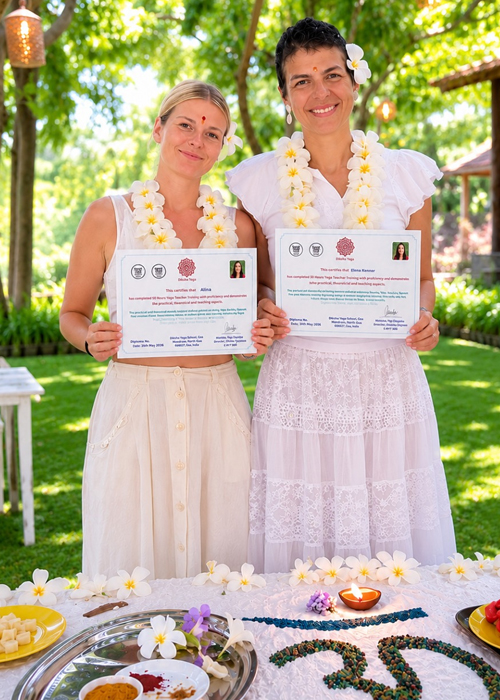
We hope they leave with:
- A deeper respect for the tradition of yoga.
- Confidence in their own teaching voice.
- Curiosity that keeps them learning.
- Compassion for every student they meet.
- Humility to remain lifelong practitioners.
Because great yoga teachers are not recognised by the complexity of their classes.
They are recognised by the way people feel when they leave them.
A Personal Note from Yogini Manisha
“After more than sixteen years of teaching, one lesson has remained constant. Yoga is not about creating perfect practitioners. It is about helping people live with greater awareness, kindness, and balance. Every teacher who joins our school brings their own story, strengths, and dreams. Watching them discover confidence in themselves is one of the greatest privileges of my work. If you choose to train with us, my hope is not simply that you leave with another certificate. My hope is that you leave trusting your own wisdom and carrying the heart of yoga into every class you teach.”
Final Invitation
If you’re reading this guide because you’re searching for the Best 300 Hour Yoga Teacher Training in Sri Lanka, you’ve probably spent hours comparing schools, reading reviews, and wondering which path is right for you.
That’s completely natural.
Choosing an advanced teacher training is an important decision, and it deserves thoughtful consideration.
At Diksha Yoga School, we won’t tell you that we’re the right school for everyone.
Instead, we invite you to explore our curriculum, get to know our teachers, and ask us your questions.
If our philosophy resonates with you, we’d be honoured to welcome you to Galle, Sri Lanka, where you’ll join a community of dedicated practitioners from around the world, deepen your understanding of yoga, and continue your journey as both a teacher and a lifelong student.
Your journey doesn’t begin when you feel ready.
It begins the moment you choose to take the next step.
Apply Now for the 2026 Batch
Limited Seats • Yoga Alliance Certified • Beachfront Campus • International Students Welcome