We Believe Choosing the Right Yoga School Is More Important Than Choosing the Right Destination
A Complete Guide by Diksha Yoga School, Sri Lanka
Choosing a Best 200 Hour Yoga Teacher Training is one of the most important decisions in your yoga journey. Whether your goal is to become a certified yoga teacher, deepen your personal practice, or take a meaningful break from the demands of everyday life, the school you choose will shape your learning experience, personal growth, and confidence as a future teacher.
Today, there are hundreds of yoga schools across Sri Lanka, India, Bali, Thailand, Nepal, and other popular destinations. Most promise experienced teachers, Yoga Alliance certification, beautiful accommodation, and a life-changing experience. While many schools genuinely offer excellent training, the quality of education, level of personal attention, teaching methodology, and long-term support can vary significantly from one school to another.
Choosing the right yoga school is about much more than comparing prices or selecting the most popular destination. A well-structured teacher training should provide experienced instructors, a balanced curriculum, practical teaching experience, individual guidance, and a supportive learning environment that helps you grow both on and off the yoga mat.
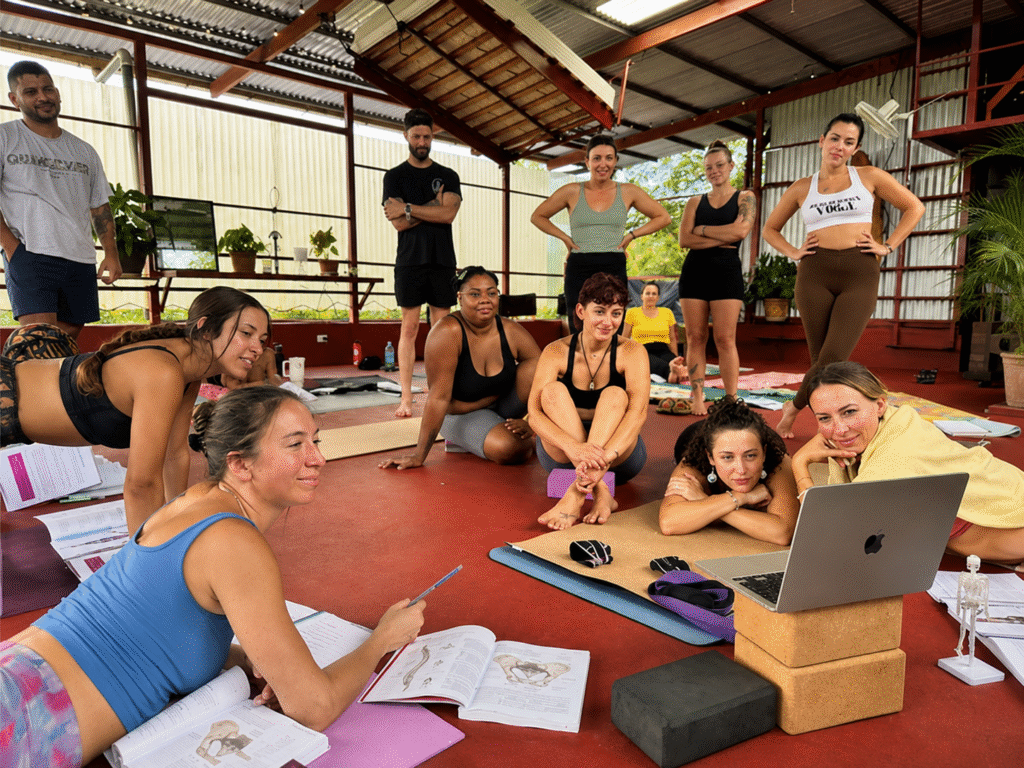
Through years of guiding students from around the world, we’ve seen that those who have the most rewarding teacher training experience are rarely the ones who choose a course based only on cost or attractive marketing. Instead, they take the time to compare schools carefully, understand the curriculum, learn about the teaching team, read genuine student reviews, and choose a program that aligns with their personal goals and learning style.
We’ve also spoken with many students who previously completed teacher training elsewhere and later wished they had asked more questions before enrolling. Their experiences have shown us that a few simple checks before booking can make the difference between an average course and a truly transformative one.
This guide brings together the most common mistakes prospective students make when choosing a Best 200 Hour Yoga Teacher Training, along with practical advice to help you compare programs with confidence. Whether you eventually choose Diksha Yoga School or another reputable yoga school, our goal is to help you make an informed decision that supports your personal practice, teaching journey, and long-term growth.
Table of Contents
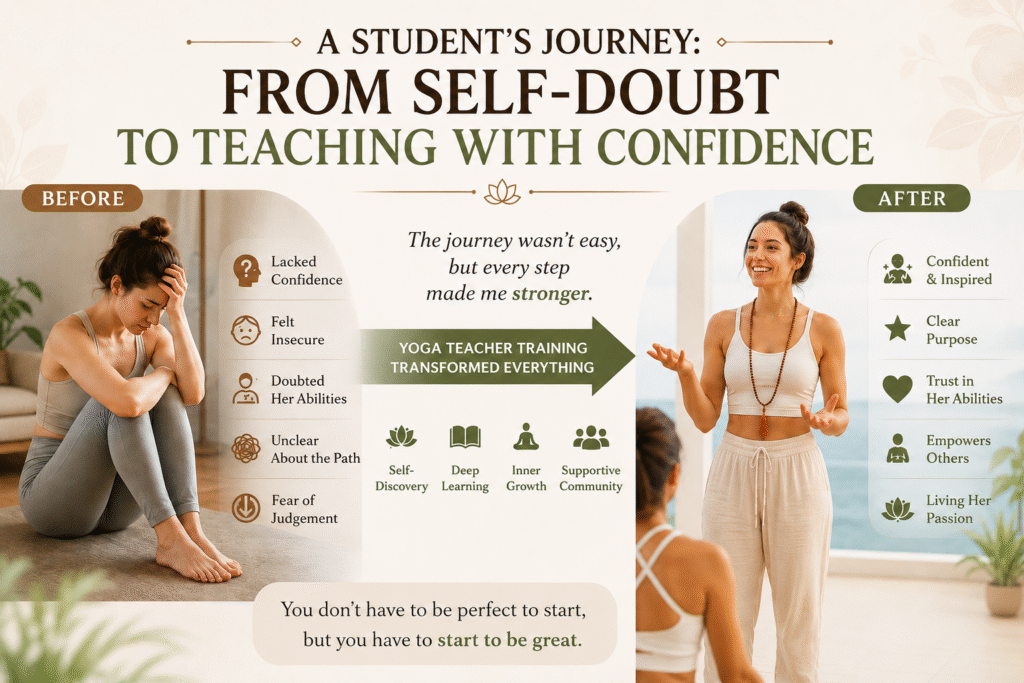
A Student’s Journey: From Self-Doubt to Teaching with Confidence
One of the most rewarding aspects of Best 200 Hour Yoga Teacher Training is witnessing students discover confidence they never knew they had.
We remember a student from Germany who joined a Best 200 Hour Yoga Teacher Training in Galle, Sri Lanka after practising yoga for only six months. Before arriving, she questioned whether she was experienced enough to enrol. Although she enjoyed practising yoga for herself, the idea of standing in front of a group and guiding others felt overwhelming.
As the training progressed, her confidence grew steadily through daily asana practice, teaching methodology classes, practice teaching sessions, and supportive feedback from both teachers and fellow students. With each opportunity to teach, she became more comfortable communicating clearly, understanding alignment, and leading a class with confidence.
By the end of the course, she successfully taught her first complete yoga class—something she had never imagined she could do just a few weeks earlier.
Her journey is a reminder that becoming a yoga teacher isn’t about being the strongest, most flexible, or most experienced person in the room. It begins with curiosity, commitment, and a willingness to learn. With the right guidance, supportive teachers, and consistent practice, confidence develops naturally over time.
Why Choosing Sri Lanka for Your Best 200 Hour Yoga Teacher Training Matters
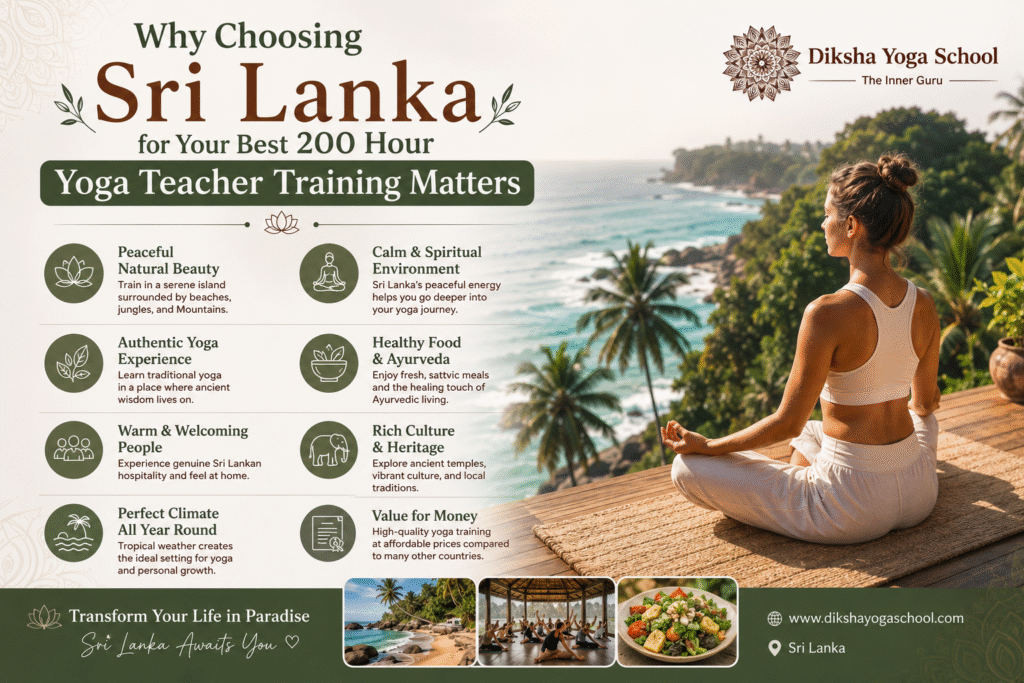
Sri Lanka has become one of the most sought-after destinations for international students looking to complete a Best 200 Hour Yoga Teacher Training in a peaceful and inspiring environment. With its tropical climate, beautiful coastline, rich cultural heritage, and growing wellness community, the island offers an ideal setting for immersive yoga education.
Unlike destinations known for busy nightlife or crowded tourist attractions, many parts of Sri Lanka provide a slower pace of life that naturally supports mindfulness, self-discipline, and personal growth. This quieter atmosphere allows students to focus on their daily practice, develop healthy routines, and fully engage with every aspect of their training.
From the golden beaches of the southern coast to the historic charm of Galle, Sri Lanka offers an environment where yoga extends beyond the classroom. Time spent in nature, peaceful walks by the ocean, and moments of reflection between classes often become just as meaningful as the lessons themselves, helping students cultivate balance both on and off the mat.
A Best 200 Hour Yoga Teacher Training is about far more than completing the required study hours or earning a certificate. It is an opportunity to develop a deeper understanding of yoga while embracing a lifestyle that encourages physical well-being, mental clarity, and self-awareness.
The environment you choose for your training plays an important role in that journey. A well-designed residential yoga program combines experienced teachers, a structured curriculum, supportive community, and peaceful surroundings to create the conditions for meaningful learning and lasting personal transformation. When these elements come together, students often leave not only with new knowledge and teaching skills but also with greater confidence, healthier habits, and a stronger connection to themselves.
Our Yoga Teacher Training Environment in Galle, Sri Lanka
The environment where you complete your Best 200 Hour Yoga Teacher Training can be just as important as the curriculum itself. A peaceful setting allows you to step away from the demands of everyday life, establish healthy routines, and fully immerse yourself in the learning process.
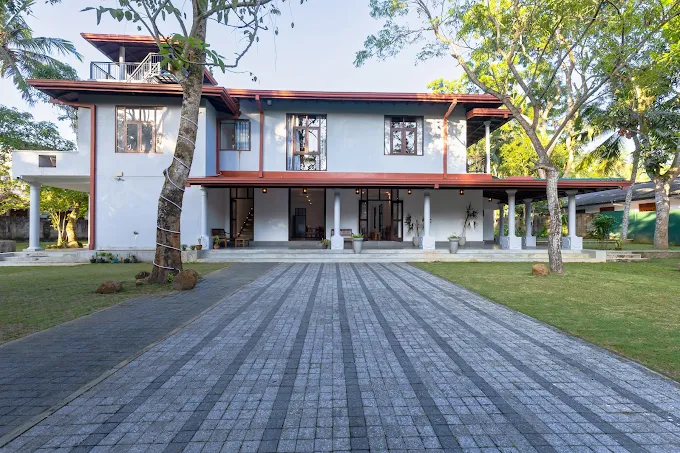
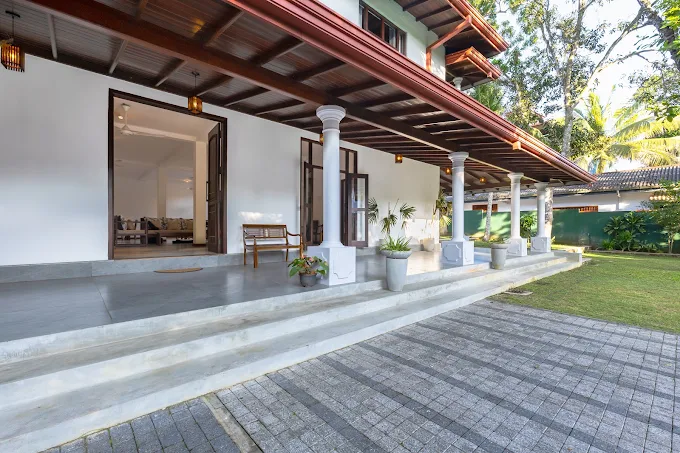
At Diksha Yoga School, our residential teacher training is based in Galle, on Sri Lanka’s beautiful southern coast. Surrounded by tropical nature and the calming rhythm of coastal life, students have the opportunity to focus on their practice without the distractions often found in busier destinations. The peaceful atmosphere encourages mindfulness, self-discipline, and personal growth throughout the 23-day program.
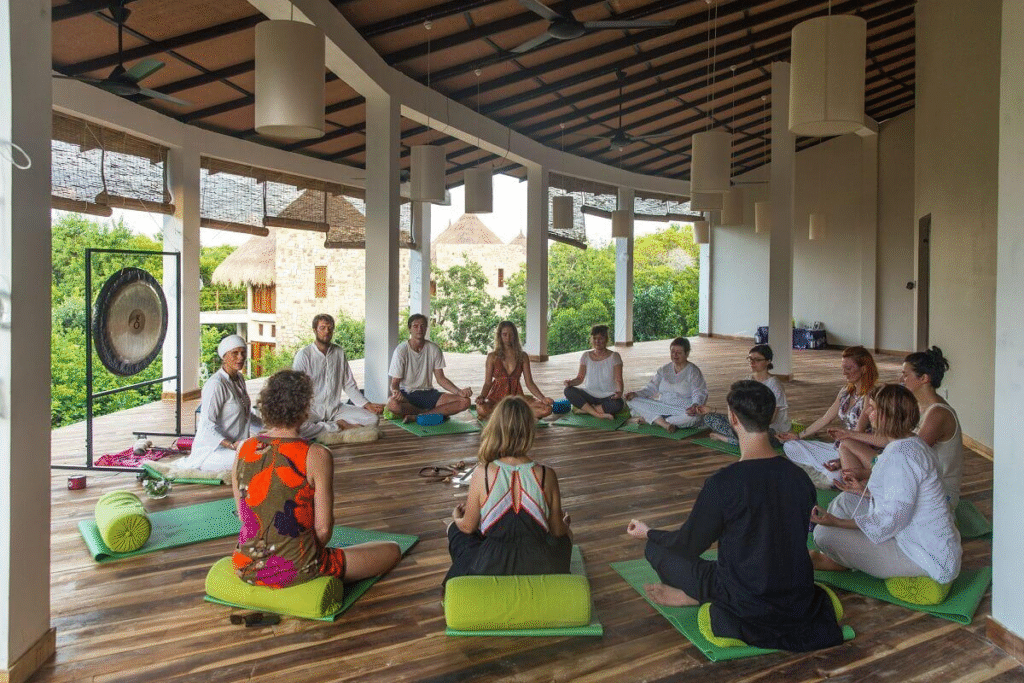
Each day begins with morning meditation, pranayama, and asana practice in our dedicated yoga shala, creating a strong foundation for the day’s learning. The schedule then continues with anatomy, yoga philosophy, teaching methodology, alignment, and practical teaching sessions, giving students a balanced combination of theoretical knowledge and hands-on experience. Between classes, students enjoy nourishing vegetarian meals, quiet time for self-study, and opportunities to rest and reflect in a supportive environment.
One of the reasons we chose Galle is its unique combination of natural beauty, cultural heritage, and peaceful surroundings. During their free time, students often enjoy walking along nearby beaches, exploring the historic Galle Fort, watching the sunset, or simply appreciating the slower pace of life that helps them remain present throughout the training.
Beyond the curriculum, many graduates tell us that living together as a residential yoga community becomes one of the most meaningful parts of their journey. Sharing meals, practising together, supporting one another, and learning alongside people from different countries creates lasting friendships and a sense of connection that often continues long after the course has ended.
For us, a Best 200 Hour Yoga Teacher Training is about more than earning a certification. It is about creating an environment where students feel supported, inspired, and encouraged to develop not only as future yoga teachers but also as individuals committed to lifelong learning and personal growth.


Why Choosing the Right Yoga School Matters
A Best 200 Hour Yoga Teacher Training is about much more than learning yoga postures or earning a certification. It is an immersive educational experience that combines physical practice, traditional yogic wisdom, self-discovery, and the practical skills needed to become a confident and knowledgeable yoga teacher.
A comprehensive teacher training program should provide a balanced curriculum that includes:
Ashtanga Yoga
Human Anatomy and Physiology
Teaching Methodology
Class Sequencing
Alignment and Safe Adjustments
Each subject plays an essential role in helping you develop a deeper understanding of yoga while building the confidence to teach students safely and effectively. Together, these areas of study create a strong foundation that continues to support your personal practice and teaching journey long after the course has ended.
For many graduates, the knowledge, habits, and confidence developed during these few weeks influence their approach to yoga for years to come. This is why choosing the right school is one of the most important decisions you will make.
Rather than focusing only on course fees, luxury accommodation, or attractive social media photos, look for a school that offers experienced teachers, a well-structured curriculum, regular teaching practice, constructive feedback, small class sizes, and a supportive learning environment. These are the qualities that help transform a yoga enthusiast into a confident, compassionate, and well-prepared yoga teacher.
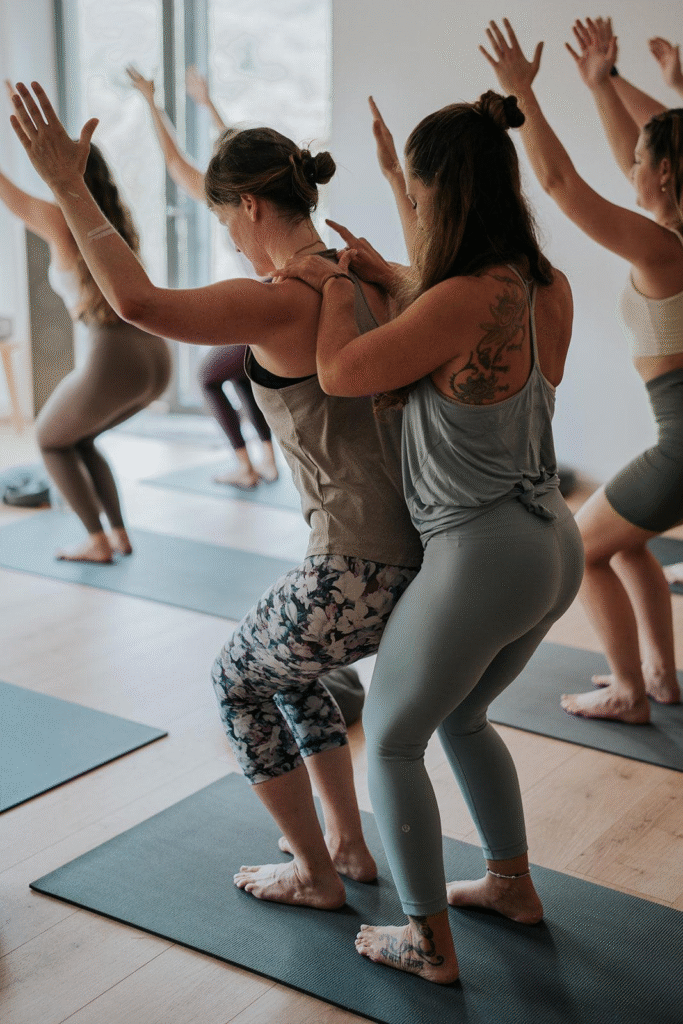
Mistake 1: Choosing a Best 200 Hour Yoga Teacher Training Only Because It’s Cheap
Budget is an important consideration, and it’s perfectly natural to compare course fees before making a decision. However, choosing the least expensive Best 200 Hour Yoga Teacher Training without understanding what is included can sometimes lead to disappointment.
A lower course fee may reflect fewer services or a different learning experience. While this isn’t always the case, it’s worth looking beyond the price to understand the overall value of the program.
A lower-priced course may include:
Larger class sizes
Limited one-to-one guidance
Fewer opportunities for practice teaching
Basic accommodation
Additional charges for study materials or activities
Limited support before or after graduation
On the other hand, a slightly higher investment may include:
Experienced and qualified teachers
Comprehensive study materials
Airport transfers
Small batch sizes
Personalised feedback
Ongoing mentorship and post-course support
The true value of a Best 200 Hour Yoga Teacher Training is not measured by the lowest price—it is measured by the quality of education, the confidence you develop, and the skills you gain as a future yoga teacher.
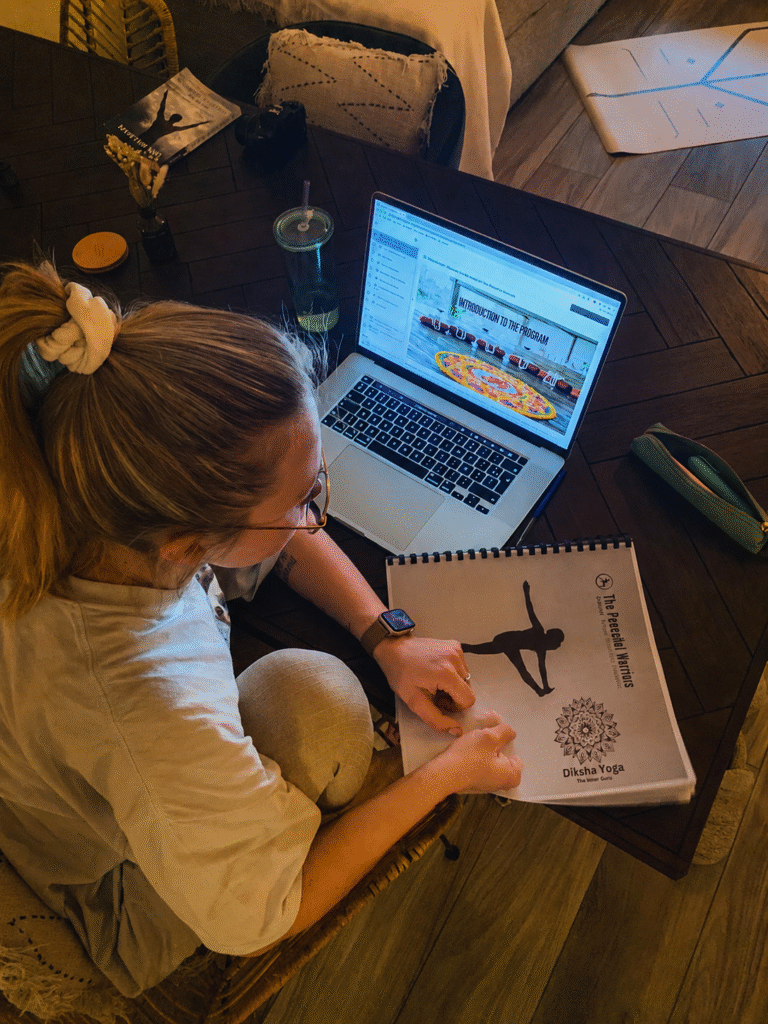
Questions to Ask Before Comparing Prices
Before making your decision, ask these questions:
What is included in the course fee?
Are accommodation and meals included?
How many students are usually in each batch?
How much teaching practice will I receive?
What qualifications and experience do the teachers have?
Does the curriculum match my personal goals?
Is support available after graduation?
Comparing these factors will give you a much clearer picture of the overall value of a course than price alone. In many cases, investing in a program that provides experienced teachers, practical teaching opportunities, and ongoing support can offer far greater long-term value than simply choosing the cheapest option.

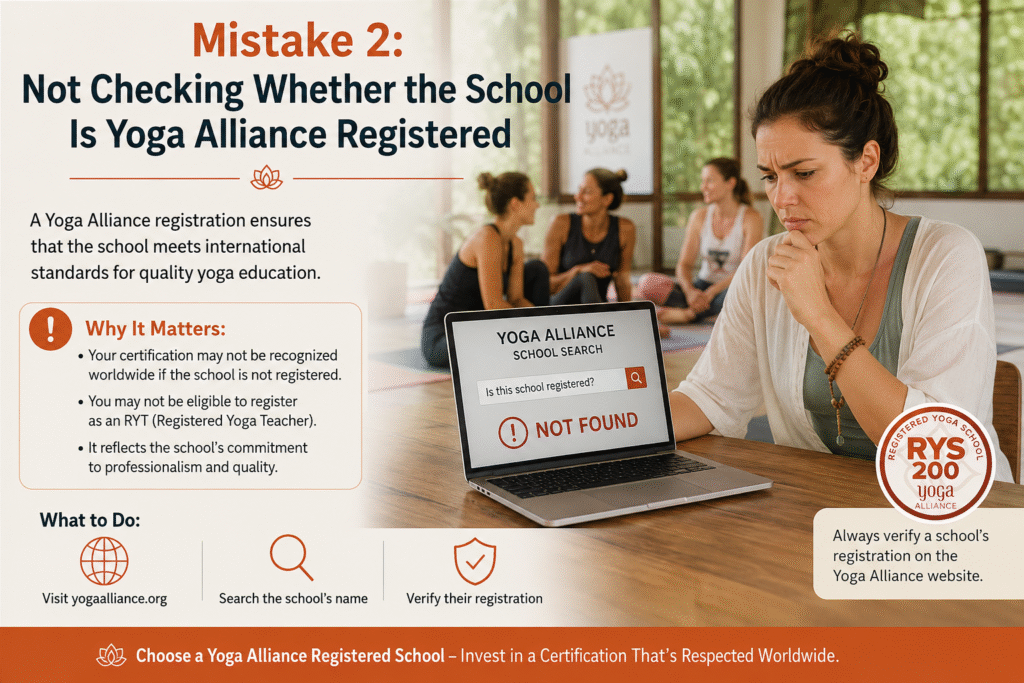
Mistake 2: Not Checking Whether the School Is Yoga Alliance Registered
Many prospective students assume that every Best 200 Hour Yoga Teacher Training follows the same educational standards. In reality, the quality, curriculum, and teaching methods can vary significantly from one school to another.
If you plan to teach professionally after completing your Best 200 Hour Yoga Teacher Training, it’s worth checking whether the school is registered with Yoga Alliance and whether its curriculum follows internationally recognised training standards. While registration is not the only indicator of quality, it provides reassurance that the program meets established educational requirements.
A Yoga Alliance Registered School (RYS) typically offers:
A structured and comprehensive curriculum
The required minimum training hours
Qualified and experienced teaching staff
Teaching methodology and practical teaching sessions
Anatomy and physiology education
Yoga philosophy and ethics
Professional standards for yoga teacher education
It’s important to remember that a certificate alone does not make someone a skilled Best 200 Hour Yoga Teacher Training. Confidence, experience, regular practice, and the quality of instruction play an equally important role. A recognised training framework simply provides a strong foundation on which those skills can be developed.
Questions to Ask Before Enrolling
Before choosing a yoga school, consider asking:
Is the school officially registered with Yoga Alliance?
What certification will I receive after graduation?
Can graduates register with Yoga Alliance upon completing the course?
Is the curriculum aligned with Yoga Alliance educational standards?
How much practical teaching experience is included?
Taking a few minutes to verify these details can help you compare schools more confidently and ensure you’re investing in a program that provides both recognised certification and a well-rounded yoga education.

Mistake 3: Ignoring the Experience of the Teachers
Beautiful yoga studios, tropical beaches, and comfortable accommodation may attract your attention, but the people leading your Best 200 Hour Yoga Teacher Training will have the greatest influence on your learning experience.
An experienced yoga teacher does far more than demonstrate advanced postures. They know how to explain complex concepts clearly, adapt practices for different abilities, provide constructive feedback, and create a supportive environment where every student feels encouraged to learn and grow.
Experienced teachers typically help students:
Understand proper alignment and safe movement
Modify postures for different body types and abilities
Develop confidence through regular teaching practice
Answer questions about yoga philosophy and anatomy
Improve communication and class sequencing
Build the practical skills needed to teach safely and effectively
Many graduates remember the guidance, encouragement, and individual attention they receive from their teachers long after they have forgotten the details of a particular location. Strong mentorship often becomes one of the most valuable parts of the entire teacher training experience.
Questions to Ask About the Teaching Team
Before enrolling, take time to learn about the instructors who will guide your training. Consider asking:
How many years have they been teaching yoga?
What yoga styles do they specialise in?
Will the lead teachers teach most of the course?
What experience do they have training future yoga teachers?
Are they available to provide individual feedback throughout the program?
The answers to these questions can give you valuable insight into the quality of education you are likely to receive.
A Real Classroom Experience
One student from the United Kingdom joined a Best 200 Hour Yoga Teacher Training with a strong personal practice but very little experience teaching others. She could perform many postures confidently, yet found it difficult to explain alignment, communicate clearly, and guide a class with confidence.
Through regular practice teaching, personalised feedback, and patient guidance from experienced instructors, she gradually developed the skills needed to sequence classes, observe students, and communicate effectively. By the final week of the course, she was confidently leading a complete yoga class while understanding how to make each posture safer and more accessible for different bodies.
Her journey highlights an important lesson: great yoga teachers are not defined by how advanced their practice looks, but by their ability to share knowledge with clarity, patience, empathy, and confidence. Those qualities are developed through consistent practice and experienced mentorship—not simply through earning a certificate.
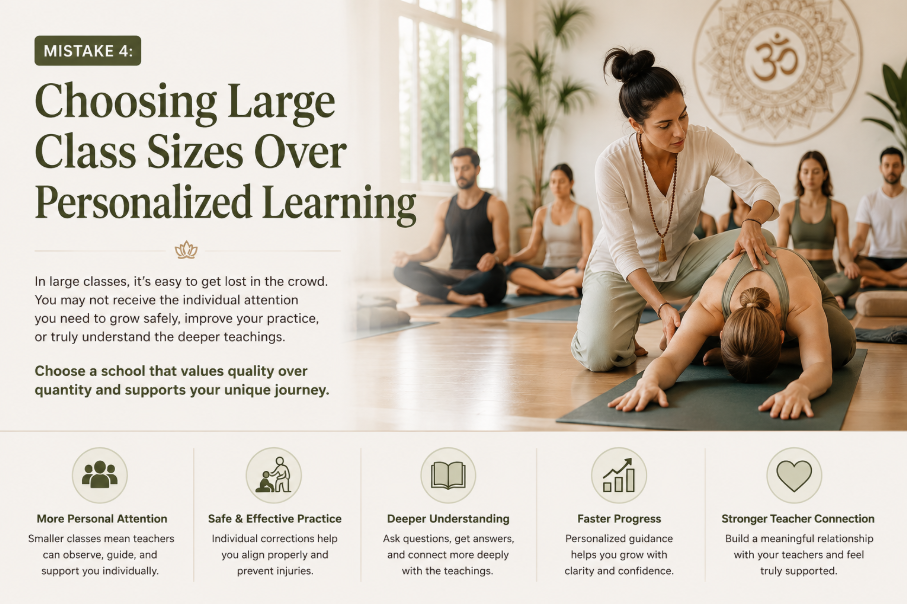
Mistake 4: Choosing Large Class Sizes Over Personalized Learning
When comparing a Best 200 Hour Yoga Teacher Training, many prospective students focus on the curriculum, accommodation, or course fee—but overlook one of the most important questions:
“How many students are in each batch?”
Class size can have a significant impact on the quality of your learning experience. During teacher training, you’re not only learning yoga techniques; you’re also developing the confidence and practical skills needed to teach others. This process requires regular feedback, individual attention, and meaningful interaction with your instructors.
Imagine learning complex postures, practising adjustments, or teaching your first yoga class alongside 50 or 60 students. While larger groups may work well for general yoga classes, teacher training often benefits from a more personalised learning environment where instructors have the time to observe each student’s progress.
Smaller batch sizes often provide:
- More individual alignment corrections
- Greater access to teachers for questions and guidance
- Personalised feedback during practice teaching
- More opportunities to participate in discussions
- A supportive learning community where students know and encourage one another
- Stronger relationships with both teachers and fellow students
Personalised guidance is especially valuable for beginners or anyone teaching for the first time. Receiving constructive feedback throughout the course allows students to improve gradually, build confidence, and develop safer, more effective teaching skills.
What to Ask Before You Enrol
When comparing yoga schools, consider asking:
- How many students are usually in each training batch?
- What is the student-to-teacher ratio?
- Will I receive individual feedback during practice teaching?
- Are teachers available for one-to-one guidance when needed?
- How are students assessed throughout the course?
A smaller class doesn’t automatically guarantee a better education, but it often creates more opportunities for meaningful interaction, personalised mentorship, and hands-on learning. When evaluating a Best 200 Hour Yoga Teacher Training, look beyond the numbers and consider whether the learning environment will give you the support and confidence needed to grow as both a practitioner and a future yoga teacher.
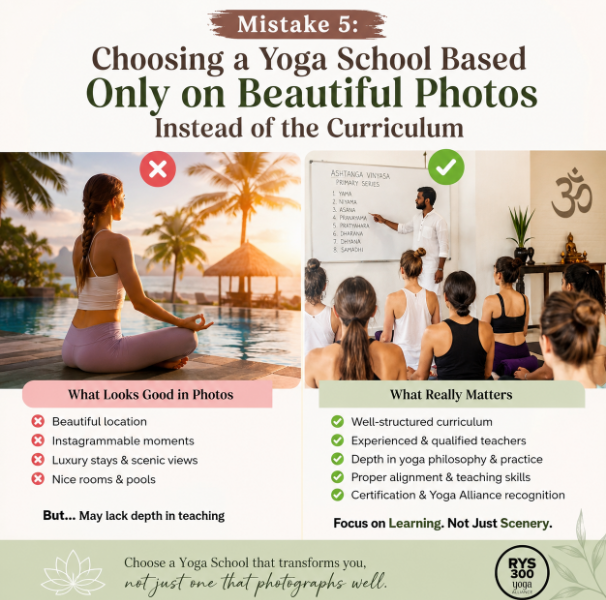
Mistake 5: Choosing a Yoga School Based Only on Beautiful Photos Instead of the Curriculum
A beautiful yoga shala, luxury accommodation, tropical gardens, and breathtaking ocean views can create a memorable first impression. While these features can certainly enhance your overall experience, they should never be the main reason for choosing a Best 200 Hour Yoga Teacher Training.
The true value of any Best 200 Hour Yoga Teacher Training lies in the quality of its education. Long after your stay has ended, the knowledge, practical skills, and confidence you gain from the curriculum will continue to shape your personal practice and teaching journey.
When comparing yoga schools, take time to carefully review what is actually taught during the course. A comprehensive curriculum should provide a balance between practical training, theoretical knowledge, and hands-on teaching experience.
A high-quality Best 200 Hour Yoga Teacher Training should include subjects such as:
- Hatha Yoga
- Vinyasa Flow
- Ashtanga Yoga
- Pranayama (Breathwork)
- Meditation
- Human Anatomy and Physiology
- Yoga Philosophy
- Teaching Methodology
- Class Sequencing
- Alignment Principles
- Safe Adjustments
- Practice Teaching
The strongest teacher training programs don’t focus only on physical practice. They help students understand why each posture is taught, how to adapt it safely for different students, and how to communicate clearly and confidently in a classroom setting.
What to Compare Before Enrolling
Rather than relying only on promotional photos or social media, ask questions such as:
- Is the curriculum clearly explained on the website?
- How many hours are dedicated to anatomy, philosophy, and teaching methodology?
- How much practice teaching is included?
- Will I receive regular feedback from experienced teachers?
- Does the course balance theory with practical application?
Looking beyond the visuals allows you to compare the educational quality of different schools more objectively.
Remember: A beautiful location may inspire you for a few weeks, but a well-designed curriculum will continue to benefit your personal practice and teaching career for many years to come.
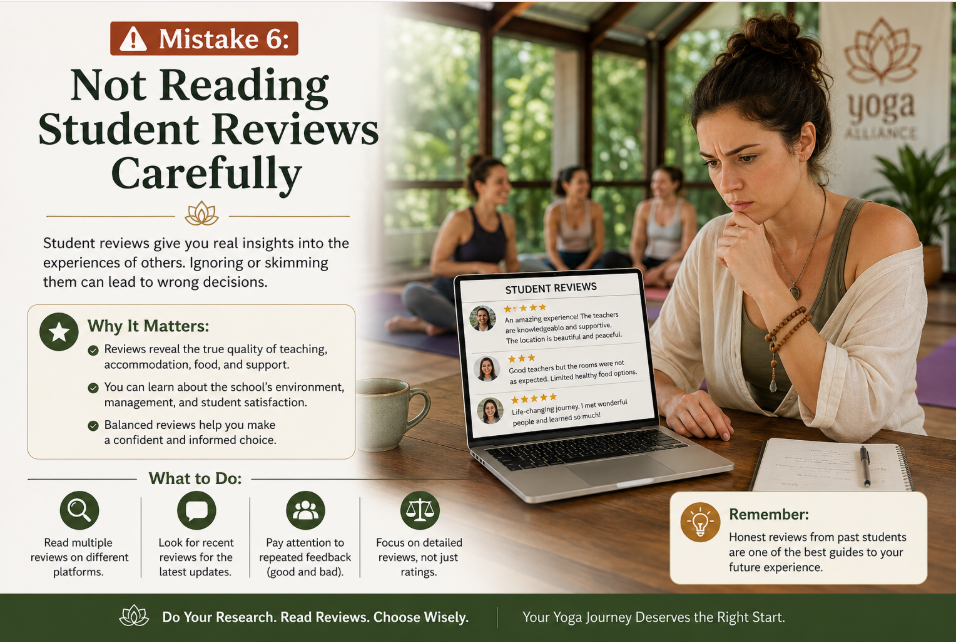
Mistake 6: Not Reading Student Reviews Carefully
Student reviews are one of the most valuable resources when comparing a Best 200 Hour Yoga Teacher Training, but only if you know how to evaluate them properly. Rather than looking only at the overall star rating, take the time to read detailed reviews that describe real learning experiences.
The most helpful reviews explain how the course influenced a student’s growth, not just whether they enjoyed their stay. They often reveal the strengths of the teaching team, the quality of the curriculum, and the level of support students received throughout the program.
When reading reviews, look for comments about:
- Teaching quality and instructor expertise
- Individual attention and personalised guidance
- The curriculum and learning experience
- Practice teaching opportunities
- Accommodation and facilities
- Food and overall cleanliness
- Student support before, during, and after the course
- Confidence and preparedness after graduation
Pay particular attention to reviews that describe specific experiences rather than general statements such as “Amazing course” or “Best experience ever.” Reviews that explain how teachers improved a student’s alignment, helped build confidence during practice teaching, or supported them through challenges often provide a much clearer picture of what you can realistically expect.
How to Evaluate Reviews More Effectively
When researching a yoga school, consider asking yourself:
- Do multiple students mention the same strengths?
- Are the reviews detailed and authentic rather than overly brief?
- Do graduates describe how much they learned, not just how beautiful the location was?
- Is there feedback about the teachers, curriculum, and teaching methodology?
- Are both recent and older reviews consistently positive?
Patterns are often more meaningful than individual opinions. When many students independently highlight experienced teachers, practical learning, supportive guidance, and personal transformation, it usually indicates a consistently high-quality learning experience.
Student reviews should never be the only factor in your decision, but when combined with a well-structured curriculum, experienced teachers, transparent course information, and open communication, they can provide valuable insight into the overall quality of a Best 200 Hour Yoga Teacher Training program.
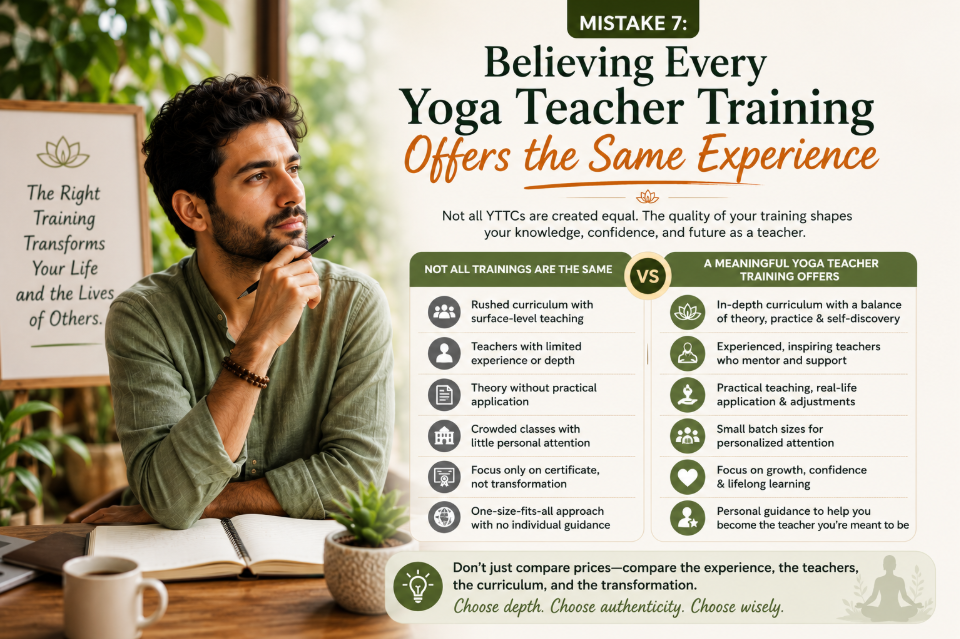
Mistake 7: Believing Every Yoga Teacher Training Offers the Same Experience
At first glance, many Best 200 Hour Yoga Teacher Training appear remarkably similar. Most websites highlight Yoga Alliance registration, experienced teachers, comfortable accommodation, healthy meals, and beautiful locations. While these are all important features, they don’t tell the complete story.
The real differences become clear when you look beyond the marketing and examine how each school approaches teaching and learning.
Every yoga school has its own philosophy, teaching style, curriculum, and learning environment. Some programs place a strong emphasis on traditional yoga philosophy and the spiritual foundations of yoga, while others focus primarily on physical postures and fitness. Some dedicate significant time to anatomy, teaching methodology, and practice teaching, whereas others offer only limited opportunities for students to develop real teaching confidence.
The quality of a teacher training is shaped not only by what is taught, but also by how it is taught. A comprehensive program should combine practical experience, theoretical knowledge, individual guidance, and constructive feedback to help students grow into confident and knowledgeable yoga teachers.
What to Compare Between Yoga Schools
Rather than comparing schools based only on photographs or promotional claims, consider asking these questions:
- What teaching philosophy does the school follow?
- How much time is dedicated to practice teaching?
- Will I receive regular individual feedback from the teachers?
- Does the curriculum include anatomy, philosophy, and teaching methodology?
- What is the average class size?
- Is the learning environment suitable for beginners as well as experienced practitioners?
- Will this course prepare me to teach confidently after graduation?
Taking the time to compare these factors will give you a much clearer understanding of the quality of each program than relying on marketing alone.
The Best 200 Hour Yoga Teacher Training is not necessarily the one with the largest campus, the biggest social media following, or the most luxurious facilities. It is the program that aligns with your personal goals, supports your individual learning journey, and provides the knowledge, practical experience, and confidence needed to become a safe, compassionate, and well-prepared yoga teacher.
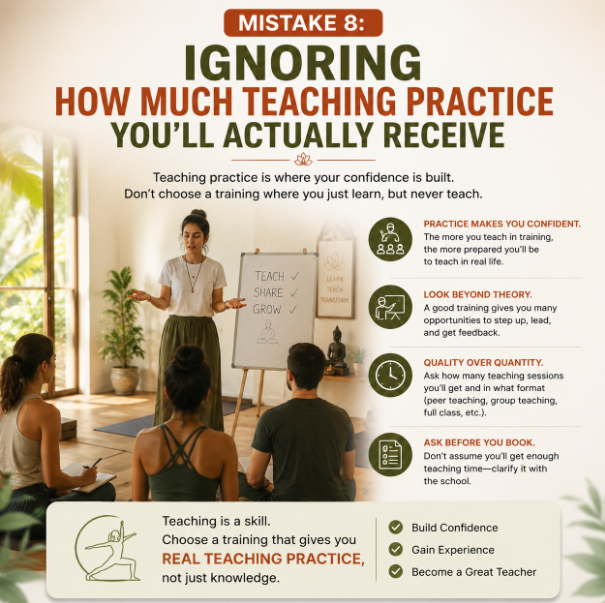
Mistake 8: Ignoring How Much Teaching Practice You’ll Actually Receive
One of the most common misconceptions about a Best 200 Hour Yoga Teacher Training is that completing the course automatically prepares you to teach with confidence. In reality, earning a certificate is only one part of the journey.
Confidence doesn’t come from watching demonstrations or memorising yoga sequences—it develops through consistent teaching practice, constructive feedback, and real experience leading others. Like any skill, teaching improves with repetition, reflection, and guidance from experienced instructors.
Before choosing a yoga school, ask one important question:
“How much practice teaching is actually included in the course?”
The answer can vary significantly from one school to another. Some teacher training programs dedicate only a small portion of the curriculum to practical teaching, while others integrate teaching practice throughout the entire course. The more opportunities you have to teach, receive feedback, and refine your communication, the more prepared you’ll feel when leading your own classes after graduation.
What to Compare Before You Enrol
| Question | Why It Matters |
| Will I teach real yoga classes during the training? | Builds confidence before graduation. |
| Will experienced teachers observe my teaching? | Personal feedback helps improve technique and communication. |
| Will fellow students provide constructive feedback? | Encourages reflection and continuous improvement. |
| Will I learn cueing, sequencing, and class management? | These are essential skills for teaching safe and engaging classes. |
| How many opportunities will I have to practise teaching? | Repetition helps transform knowledge into confidence. |
Teaching practice is where theory becomes real experience. Every class you teach during your training helps you improve your communication, observation, sequencing, and ability to support students with different needs.
A Student’s Journey to Confidence
We remember a student from France who joined a Best 200 Hour Yoga Teacher Training feeling anxious about speaking in front of others. Although she enjoyed practising yoga, the thought of leading a class made her nervous. During her first practice teaching session, she spoke quietly, hesitated between instructions, and often doubted herself.
Rather than expecting immediate perfection, the teaching process focused on gradual progress. With repeated opportunities to lead short classes, personalised feedback from experienced teachers, and encouragement from fellow students, her confidence steadily grew. She learned how to sequence a class, communicate more clearly, observe her students, and create a calm, supportive atmosphere.
By the final week of the training, she confidently guided a complete yoga class from beginning to end. Looking back, she said that the greatest transformation wasn’t simply learning how to teach yoga—it was discovering confidence in herself that extended far beyond the yoga shala.
Her experience highlights an important lesson: becoming a confident yoga teacher is not about being perfect. It is about practising consistently, learning from feedback, and growing through experience. The schools that provide regular teaching opportunities and supportive mentorship often prepare students far more effectively than those that focus primarily on theory alone.
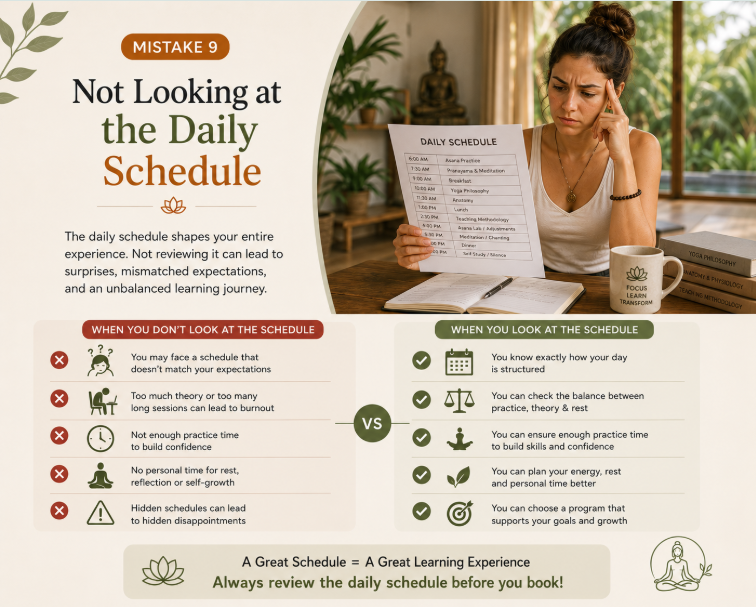
Mistake 9: Not Looking at the Daily Schedule
When researching a Best 200 Hour Yoga Teacher Training, it’s easy to focus on accommodation, location, and course highlights. However, one of the most revealing aspects of any program is something many students overlook—the daily schedule.
Your timetable determines how your days are structured, how subjects are balanced, and whether you’ll have enough time to practise, learn, reflect, and recover. A thoughtfully designed schedule creates a steady learning rhythm that supports both physical and mental development throughout the course.
A well-balanced Best 200 Hour Yoga Teacher Training should include time for:
- Morning meditation and mindfulness
- Pranayama (breathwork)
- Asana practice
- Healthy, nourishing meals
- Human anatomy and physiology
- Yoga philosophy
- Teaching methodology
- Practice teaching and feedback
- Self-study and revision
- Rest, reflection, and recovery
The goal isn’t to fill every hour of the day with classes. Effective teacher training also provides space to absorb new knowledge, reflect on what you’ve learned, and maintain the energy needed for consistent progress over several weeks.
Compare the Daily Schedule, Not Just the Destination
| Balanced Teacher Training | Less Balanced Program |
| Daily yoga practice | Focuses mainly on physical practice |
| Dedicated meditation and pranayama | Little or no mindfulness practice |
| Anatomy and physiology classes | Minimal anatomy education |
| Yoga philosophy and ethics | Very limited theoretical learning |
| Regular practice teaching | Few opportunities to teach |
| Time for self-study and reflection | Continuous classes with little recovery time |
A daily schedule reveals far more about a yoga school than promotional photos or marketing descriptions. It shows how much importance the program places on practical teaching, anatomy, philosophy, personal practice, and student well-being.
What to Ask Before You Enrol
Before making your decision, ask the school to share a sample daily timetable. Consider questions such as:
- How many hours are dedicated to practical yoga each day?
- Is there enough time for anatomy, philosophy, and teaching methodology?
- How often will I practise teaching?
- Does the schedule include breaks for meals, self-study, and recovery?
- Is the daily routine realistic and sustainable for the full duration of the course?
A transparent and well-structured schedule is often a sign of a thoughtfully designed teacher training program. It gives you a clear understanding of what your learning experience will look like and helps you choose a course that supports both your education and your overall well-being.
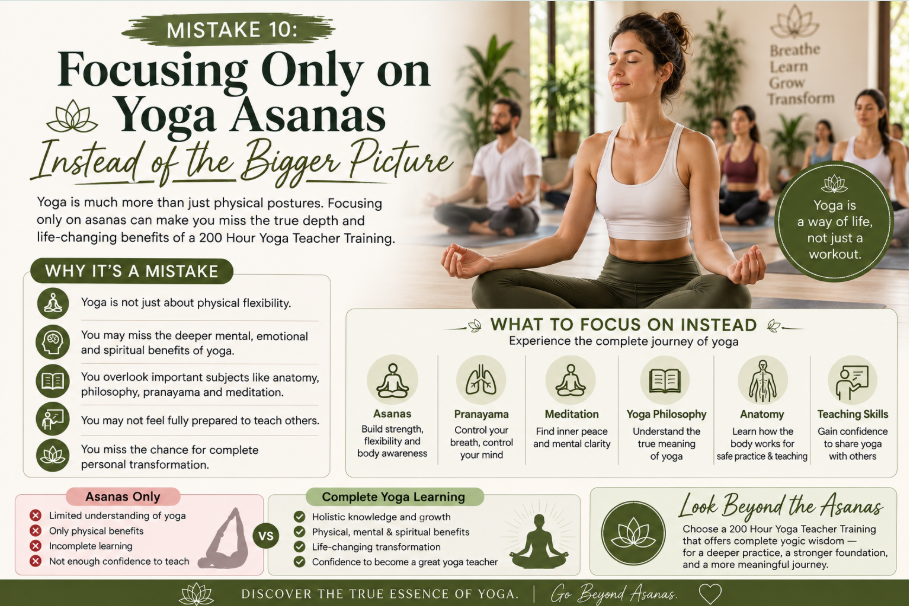
Mistake 10: Focusing Only on Yoga Asanas
When many people imagine a Best 200 Hour Yoga Teacher Training, they picture advanced yoga postures, beautiful beaches, and long hours of physical practice. While asana is an important part of the journey, authentic yoga is much more than mastering physical poses.
A well-rounded Best 200 Hour Yoga Teacher Training introduces yoga as a complete system that supports physical health, mental clarity, emotional balance, and personal growth. To teach with confidence, it’s important to understand not only how to practise yoga, but also why each practice is meaningful and how to share it safely with others.
A comprehensive Best 200 Hour Yoga Teacher Training typically includes:
- Hatha Yoga
- Vinyasa Flow
- Ashtanga Yoga
- Pranayama (Breathwork)
- Meditation
- Yoga Philosophy
- Human Anatomy and Physiology
- Teaching Methodology
- Class Sequencing
- Alignment Principles and Safe Adjustments
Each of these subjects contributes to your development as a yoga teacher. While asana builds strength, flexibility, and body awareness, anatomy helps you understand safe movement, philosophy explores the deeper purpose of yoga, and teaching methodology prepares you to communicate effectively with students. Together, these disciplines create a strong foundation for both personal practice and professional teaching.
An Insight from Years of Teaching
One observation we’ve made over the years is that many students arrive expecting the physical practice to be the most valuable part of the course. Subjects such as anatomy, yoga philosophy, or teaching methodology are sometimes seen as secondary.
By the end of the training, however, many graduates tell us that these were the classes that transformed their understanding of yoga the most. Learning how the body moves, understanding the philosophy behind the practice, and developing the skills to guide others safely often changes not only how they teach but also how they approach their own personal practice.
This is why it’s important to choose a yoga school that offers a balanced curriculum rather than focusing only on physical postures. A comprehensive education prepares you to become not just a skilled practitioner, but a knowledgeable, confident, and responsible yoga teacher.
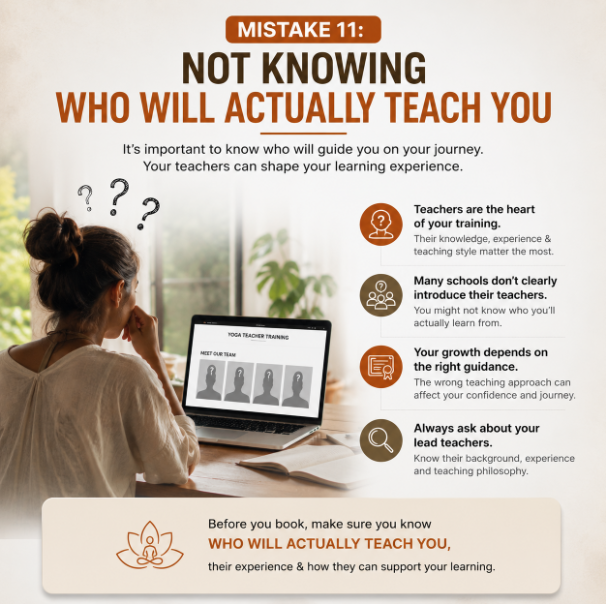
Mistake 11: Not Knowing Who Will Actually Teach You
When choosing a Best 200 Hour Yoga Teacher Training, many students focus on the destination, curriculum, or accommodation but overlook one of the most important factors—the people who will be guiding them every day.
Many yoga schools introduce their founders or senior teachers on their websites, but it’s equally important to understand who will actually lead your daily classes. The instructors you spend the most time with will have a direct influence on your learning, confidence, and overall experience throughout the course.
Experienced teachers do much more than deliver lessons. They observe your progress, answer questions, provide individual feedback, and help you overcome challenges as you develop your teaching skills. Building a consistent relationship with your instructors also creates a more supportive and encouraging learning environment.
Questions to Ask Before You Enrol
Before making your decision, consider asking:
- Will the lead teachers conduct most of the training?
- Will guest teachers or assistant instructors be involved?
- Will I learn with the same teachers throughout the course?
- Can I read about each instructor’s qualifications, teaching experience, and areas of expertise?
- Will I have opportunities to ask questions and receive individual guidance?
Understanding who will be teaching you gives you a much clearer picture of the educational experience you can expect.
What to Compare Between Schools
| What to Check | Why It Matters |
| Lead teachers | Ensures consistent guidance throughout the training |
| Teaching experience | Reflects practical knowledge beyond certification alone |
| Areas of expertise | Helps you understand the teachers’ strengths and specialisations |
| Student interaction | Indicates how much individual support and mentorship you’ll receive |
| Teaching style | Helps you choose a learning environment that suits your goals |
The quality of a Best 200 Hour Yoga Teacher Training depends not only on the curriculum but also on the knowledge, experience, and commitment of the people delivering it. Before enrolling, take time to learn about the teaching team, their background, and how they support students throughout the course. Knowing who will guide your journey allows you to choose a program with greater confidence and clarity.
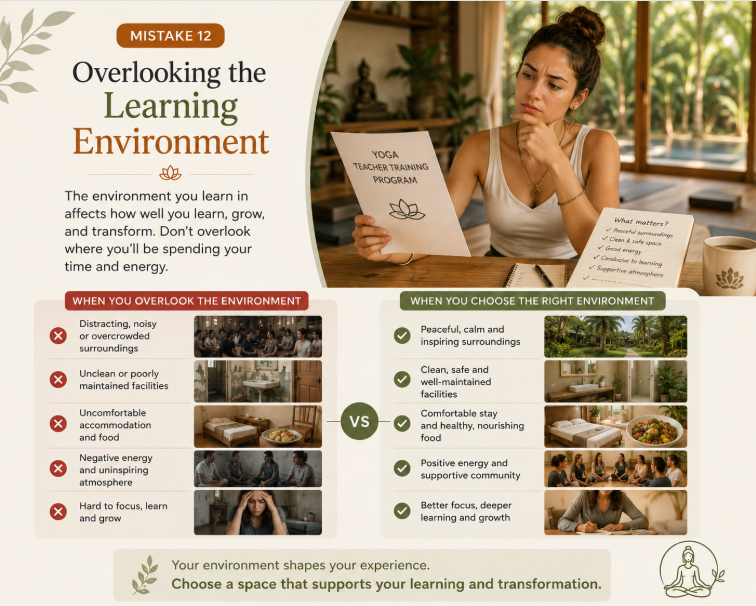
Mistake 12: Overlooking the Learning Environment
The quality of a Best 200 Hour Yoga Teacher Training is influenced by more than the curriculum and the teaching team. The environment where you live and study for several weeks also plays an important role in your overall learning experience.
A residential Best 200 Hour Yoga Teacher Training is an immersive journey. Your surroundings affect how well you rest, focus during classes, build healthy routines, and engage with your practice each day. A calm and supportive environment makes it easier to disconnect from everyday distractions and fully immerse yourself in learning.
When comparing yoga schools, look beyond professional photographs and ask practical questions about the learning environment.
What to Look For
- Is the accommodation clean, comfortable, and suitable for long-term stays?
- Is the yoga shala spacious, well-ventilated, and designed for comfortable practice?
- Are nutritious vegetarian meals provided throughout the course?
- Does the location offer a peaceful atmosphere with access to nature?
- Is there enough space for self-study, relaxation, and reflection?
- Will you feel supported by the teachers, staff, and fellow students throughout the training?
A positive learning environment is about much more than beautiful surroundings. It creates the conditions for consistent practice, meaningful conversations, better concentration, and personal growth. Many graduates say that the supportive community and peaceful atmosphere became just as valuable as the lessons they learned in the classroom.
Why the Environment Matters
While the curriculum provides the knowledge and the teachers provide guidance, the learning environment supports the entire experience. When students feel comfortable, well-rested, and free from unnecessary distractions, they are often better able to absorb new concepts, participate confidently in discussions, and develop a deeper connection with their yoga practice.
Choosing a yoga school with a balanced combination of experienced teachers, a thoughtfully designed curriculum, and a supportive learning environment can make a lasting difference to both your personal journey and your development as a future yoga teacher.
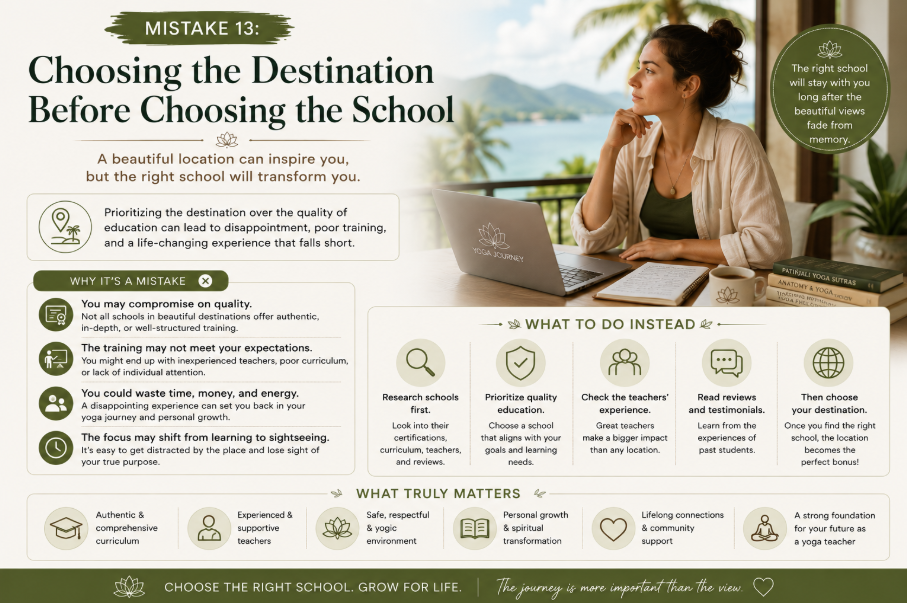
Mistake 13: Choosing the Destination Before Choosing the School
One of the first questions many prospective students ask is:
- Should I study in Bali?
- Is Thailand a better choice?
- Should I complete my training in India?
- Is Sri Lanka the right destination for me?
These are all valid questions, but there’s another question that’s even more important:
“Which yoga school will provide the best education and learning experience for my goals?”
The destination certainly influences your overall experience, but the quality of the school has a much greater impact on what you learn, how confidently you teach, and how much you grow during the course.
Every destination offers something unique. India is known for its rich yogic heritage, Bali for its wellness culture, Thailand for its tropical island lifestyle, and Sri Lanka for its peaceful coastal atmosphere and growing yoga community. Rather than choosing a country based only on popularity or social media, compare the schools within each destination.
Compare What Really Matters
| Choosing by Destination Alone | Choosing by Educational Quality |
| Famous location | Experienced teachers |
| Tourist attractions | Comprehensive curriculum |
| Luxury accommodation | Practical teaching experience |
| Social media popularity | Small class sizes and personalised guidance |
| Lowest course price | Long-term educational value |
Before making your decision, ask yourself:
- Does the curriculum match my learning goals?
- Will I receive enough practice teaching and individual feedback?
- Are the teachers experienced in training future yoga teachers?
- Is the learning environment supportive and suitable for immersive study?
- Will I leave feeling confident to teach after graduation?
The destination can make your journey memorable, but the quality of the education will continue to influence your yoga practice and teaching long after you return home. Choosing a school based on its teachers, curriculum, learning environment, and educational approach is often one of the best investments you can make in your yoga journey.
Mistake 14: Not Comparing Everything That’s Included
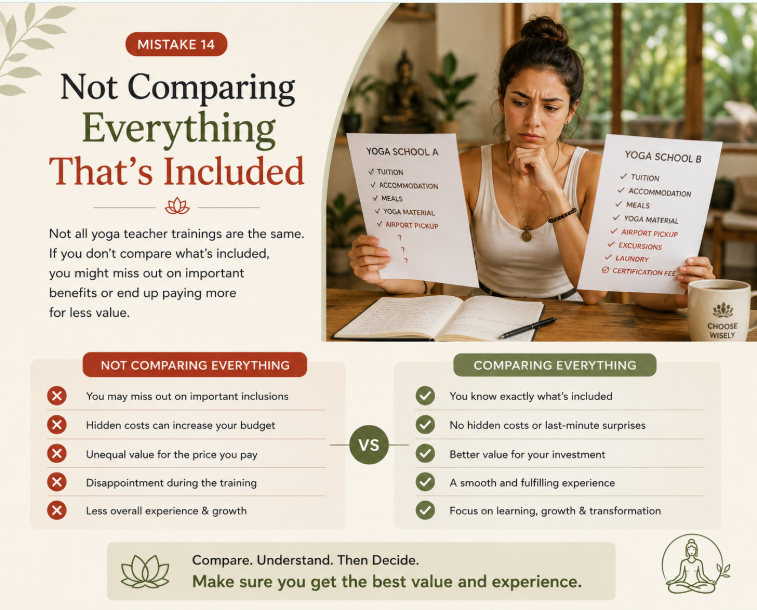
Before making your final decision, look beyond the course fee. While price is an important factor, it doesn’t always reflect the overall quality of a Best 200 Hour Yoga Teacher Training. Two programs with similar tuition fees can provide very different learning experiences depending on what’s included.
Rather than comparing schools based on a single feature, create a simple checklist and evaluate the complete educational experience. This approach makes it much easier to identify which program best matches your learning goals and expectations.
Compare Before You Book
| What to Compare | School A | School B | School C |
| Yoga Alliance Registered | ✔ | ✔ | ✔ |
| Comprehensive Curriculum | |||
| Experienced Teaching Team | |||
| Practice Teaching Opportunities | |||
| Individual Teacher Feedback | |||
| Small Class Sizes | |||
| Accommodation Included | |||
| Nutritious Vegetarian Meals | |||
| Study Materials Included | |||
| Airport Transfer | |||
| Daily Schedule Available | |||
| Student Support Throughout the Course | |||
| Post-Graduation Guidance |
Completing a comparison like this helps you evaluate the overall value of each program rather than focusing on one feature such as price, accommodation, or location.
An Observation from Years of Working with Students
Over the years, we’ve noticed that students who compare several aspects of a yoga school—not just the destination or tuition fee—often feel much more confident about their final decision. Looking at the complete picture, including the teaching team, curriculum, class size, practice teaching, accommodation, meals, and student support, provides a far more accurate understanding of the learning experience you can expect.
The goal isn’t to find the cheapest course or the most luxurious location. It’s to choose a yoga school that offers the right balance of education, practical experience, personal guidance, and support for your individual journey.
Tip: Use this checklist to compare every school you’re considering—including Diksha Yoga School. An informed comparison helps you choose the program that best aligns with your goals, learning style, and future teaching aspirations.
Mistake 15: Ignoring What Happens After You Graduate
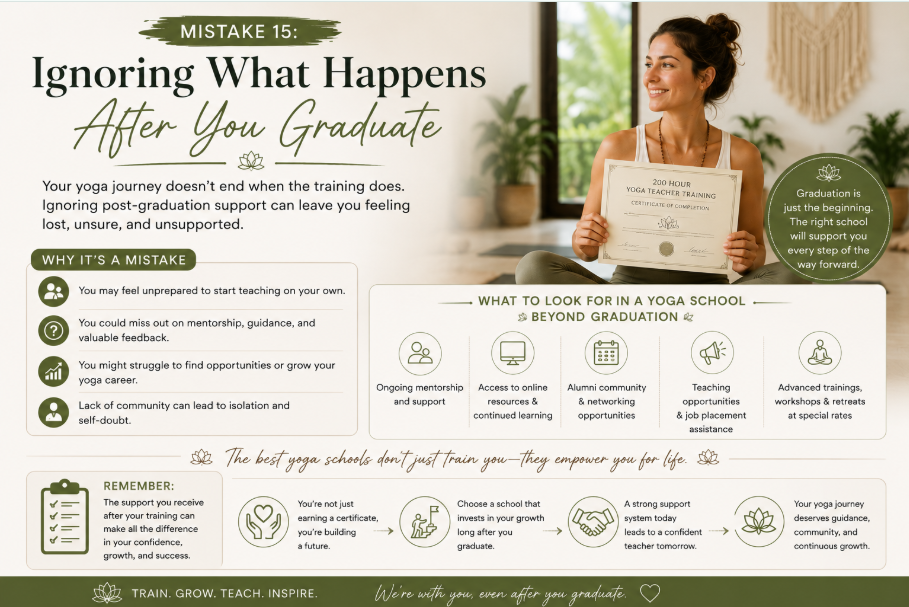
Many students believe that once they receive their Best 200 Hour Yoga Teacher Training certificate, they will immediately feel confident and ready to teach. In reality, graduation is not the end of the journey—it’s the beginning of a new chapter.
A quality teacher training provides the knowledge, practical skills, and confidence to start teaching, but developing as a yoga teacher is an ongoing process. Some graduates begin leading classes soon after completing the course, while others choose to deepen their personal practice, continue learning, or gain more experience before teaching professionally.
This is why it’s worth considering what kind of support a yoga school offers after the course has finished. Continuing guidance, access to experienced teachers, and opportunities to stay connected with the yoga community can make the transition from student to teacher much smoother.
Questions to Ask Before You Enrol
Before choosing a yoga school, consider asking:
- Is post-graduation support available?
- Can graduates contact teachers if they have questions?
- Is there an alumni community or student network?
- Does the school offer continued learning opportunities or advanced training?
- Will I receive guidance on beginning my teaching journey?
These questions can help you understand whether the school’s commitment to its students extends beyond the final day of training.
Why Ongoing Support Matters
| Question | Why It Matters |
| Is post-course support available? | Learning and confidence continue to grow after graduation. |
| Can graduates contact their teachers? | Experienced guidance can be valuable when teaching your first classes. |
| Is there an alumni community? | Staying connected with fellow graduates encourages learning, collaboration, and support. |
| Are there opportunities for continued education? | Advanced learning helps you grow as both a practitioner and a teacher. |
One observation we’ve made over the years is that the students who continue asking questions, practising regularly, and staying connected with their teachers often develop confidence more quickly than those who try to navigate the journey alone.
Choosing a yoga school that encourages lifelong learning can provide valuable support long after your certificate has been awarded. The best teacher training programs don’t simply prepare you to graduate—they help you continue growing as a yoga teacher throughout your career.
Mistake 16: Assuming You Need to Be Advanced Before Joining a Best 200 Hour Yoga Teacher Training
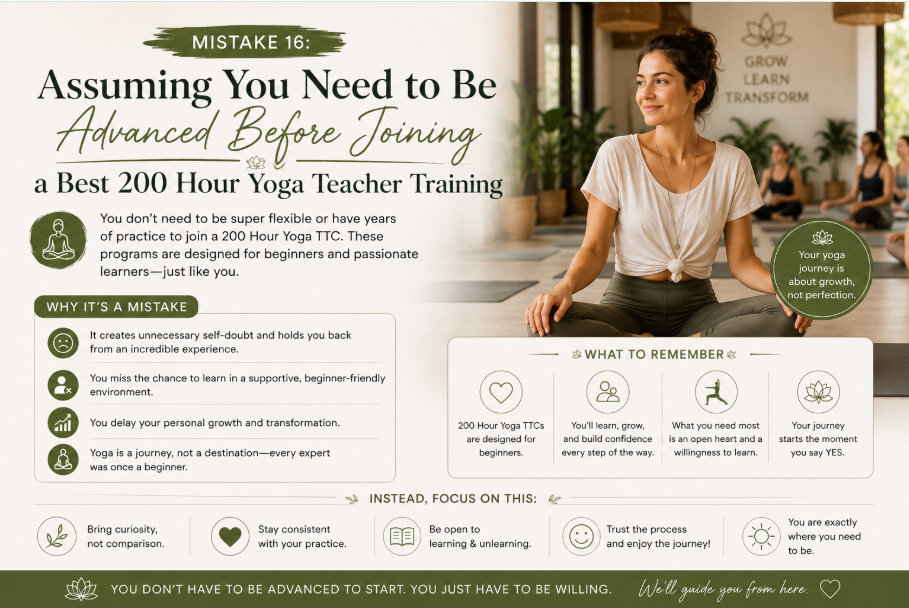
One of the biggest reasons people postpone a Best 200 Hour Yoga Teacher Training is the belief that they aren’t flexible enough, experienced enough, or “good enough” to enrol.
In reality, many teacher training programs welcome students with a wide range of experience. Some participants have been practising yoga for many years, while others have only recently established a consistent practice. What matters most is not your ability to perform advanced postures but your willingness to learn, practise regularly, and stay open to feedback.
A well-designed Best 200 Hour Yoga Teacher Training should create an environment where beginners feel supported while still providing enough depth and challenge for more experienced practitioners. Skilled teachers recognise that every student progresses differently and adapt their guidance to meet individual needs.
What to Look For in a Beginner-Friendly Program
Before enrolling, consider asking:
- Is the course suitable for beginners as well as experienced practitioners?
- Will teachers offer modifications for different abilities?
- Is individual guidance available during practical sessions?
- How are students assessed throughout the training?
- Will I receive support if I find certain subjects or postures challenging?
These questions can help you understand whether the learning environment is designed to support students with different backgrounds and levels of experience.
An Observation from Years of Teaching
One of the most encouraging things we’ve seen over the years is that students who arrive feeling uncertain often make remarkable progress during the course. Many begin by questioning whether they’re experienced enough to join a teacher training, yet gradually develop confidence through consistent practice, supportive guidance, and regular feedback.
The students who grow the most are rarely those who can perform the most advanced postures on the first day. More often, they’re the ones who approach the training with curiosity, commitment, and a willingness to learn.
Choosing a yoga school that welcomes students at different stages of their journey creates an inclusive learning environment where everyone has the opportunity to develop both personally and professionally.
Mistake 17: Not Verifying the Information Before You Book
Every yoga school wants to present its programs in the best possible way. Beautiful photography, inspiring videos, peaceful yoga shalas, comfortable accommodation, and stunning natural surroundings can all help you imagine what your experience might be like.
While these images can be inspiring, they don’t tell the whole story.
A well-designed website or an active social media presence doesn’t necessarily reflect the quality of the education you’ll receive. Before making your decision, take the time to look beyond the marketing and verify the information that matters most.
Rather than relying only on promotional content, compare objective facts that will directly influence your learning experience.
Compare Facts Instead of Marketing
| Marketing Claims | What to Verify |
| “Best Yoga School” | Teacher qualifications, experience, and student feedback |
| “Life-Changing Experience” | Curriculum, teaching methodology, and practice teaching |
| “Experienced Teachers” | Years of teaching and experience training yoga teachers |
| “Luxury Accommodation” | Recent student reviews and actual accommodation photos |
| “International School” | Class size, student diversity, and learning environment |
| “Yoga Alliance Certified” | Registration status and certification details |
| “Small Groups” | Average batch size and student-to-teacher ratio |
Questions Worth Asking
Before enrolling, consider asking:
- Is the curriculum clearly explained?
- Are the teachers’ qualifications and experience available?
- Can I see a sample daily schedule?
- Are recent student reviews consistent with the school’s claims?
- Is the information transparent and easy to verify?
Schools that provide clear, detailed, and transparent information make it much easier for prospective students to make informed decisions. The goal isn’t to choose the school with the most impressive marketing—it’s to choose the one that offers the educational quality, guidance, and learning experience that best matches your goals.
Taking a little extra time to verify the facts before booking can help you make a more confident decision and set realistic expectations for your Best 200 Hour Yoga Teacher Training journey.

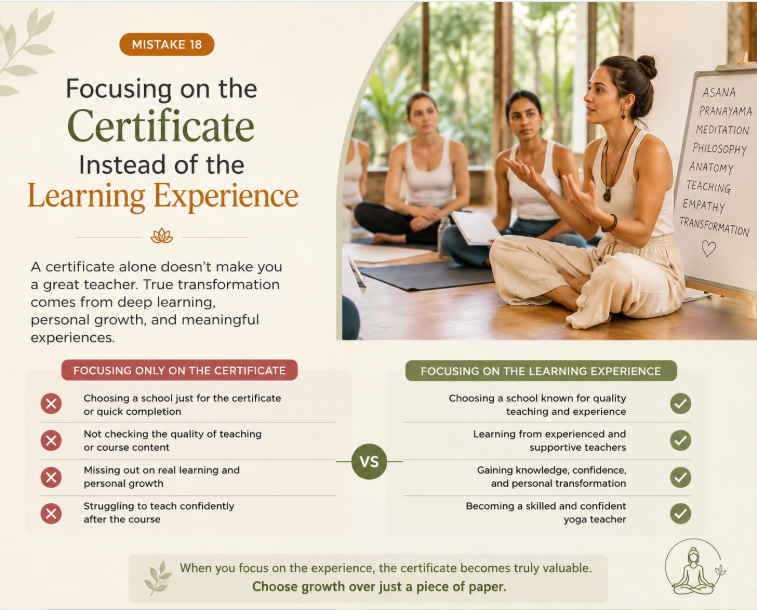
Mistake 18: Focusing on the Certificate Instead of the Learning Experience
For many prospective students, receiving a Yoga Alliance certificate is one of the main reasons for enrolling in a Best 200 Hour Yoga Teacher Training. Earning a recognised certification is certainly valuable, especially if you plan to teach professionally or register with Yoga Alliance.
However, a certificate is only the beginning of your journey—not the final goal.
Completing a teacher training should give you much more than a qualification. It should provide the knowledge, practical experience, and confidence needed to guide others safely and responsibly.
The skills that make an excellent yoga teacher develop gradually throughout the course, including:
- A solid understanding of yoga principles and practice
- Clear communication and teaching skills
- Safe alignment and movement awareness
- Observation and constructive feedback
- Compassion and empathy for students
- Confidence gained through regular practice teaching
- The ability to adapt classes for different bodies and experience levels
These qualities cannot be earned simply by completing the required training hours. They are developed through consistent practice, experienced mentorship, thoughtful feedback, and a willingness to continue learning.
Questions to Ask Before You Enroll
Before choosing a yoga school, consider asking yourself:
- Will this course prepare me to teach confidently, not just graduate?
- How much practice teaching is included?
- Will I receive individual feedback from experienced teachers?
- Does the curriculum balance theory with practical application?
- Will I leave with skills I can use in real classes?
The answers to these questions often reveal much more about the quality of a teacher training than the certificate alone.
A Different Way to Measure Success
Over the years, we’ve noticed that graduates rarely remember their teacher training because of the certificate itself. What stays with them are the lessons they learned, the confidence they developed, the friendships they formed, and the personal growth they experienced throughout the journey.
A recognised certificate is an important milestone, but the true value of a Best 200 Hour Yoga Teacher Training lies in the education, practical experience, and personal transformation that continue to shape your yoga practice and teaching long after graduation.
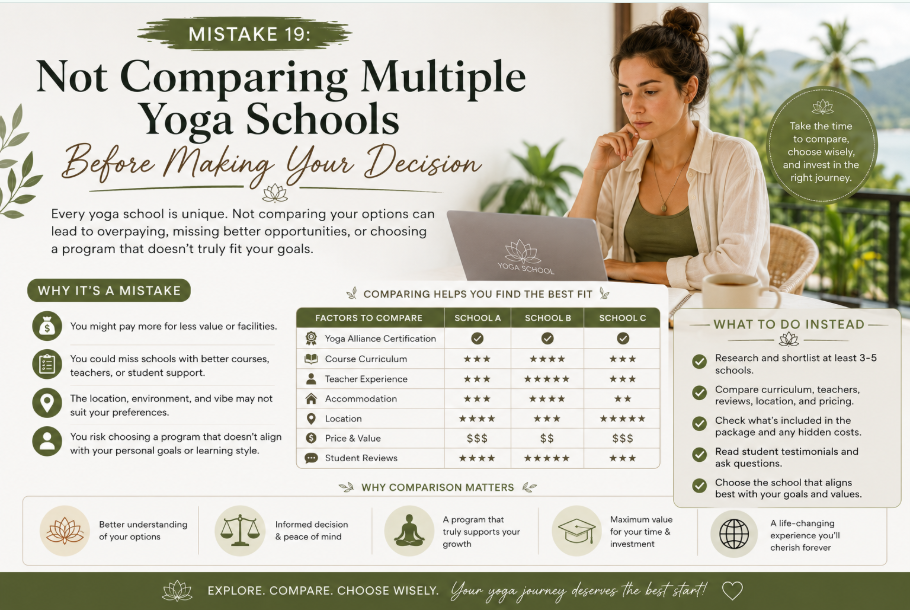
Mistake 19: Not Comparing Multiple Yoga Schools Before Making Your Decision
Choosing a Best 200 Hour Yoga Teacher Training is an important investment in your personal and professional development. One of the most valuable things you can do before enrolling is to compare several yoga schools rather than booking the first program you find.
Every school has its own teaching philosophy, curriculum, learning environment, and approach to teacher training. Taking the time to compare different options helps you understand what each program offers and which one best aligns with your goals.
Rather than looking for the “perfect” yoga school, look for the one that provides the educational experience, guidance, and support that are most important to you.
Compare Several Schools Before You Decide
| Feature | School A | School B | School C |
| Yoga Alliance Registered | □ | □ | □ |
| Experienced Teaching Team | □ | □ | □ |
| Comprehensive Curriculum | □ | □ | □ |
| Practice Teaching Opportunities | □ | □ | □ |
| Individual Teacher Feedback | □ | □ | □ |
| Small Class Sizes | □ | □ | □ |
| Human Anatomy & Physiology | □ | □ | □ |
| Yoga Philosophy | □ | □ | □ |
| Meditation & Pranayama | □ | □ | □ |
| Comfortable Accommodation | □ | □ | □ |
| Nutritious Vegetarian Meals | □ | □ | □ |
| Transparent Daily Schedule | □ | □ | □ |
| Airport Transfer | □ | □ | □ |
| Post-Graduation Support | □ | □ | □ |
| Student Reviews & Testimonials | □ | □ | □ |
How to Compare More Effectively
As you research different schools, ask yourself:
- Does the curriculum match my learning goals?
- Will I receive enough practice teaching and constructive feedback?
- Are the teachers experienced in training future yoga teachers?
- Does the learning environment support both study and personal growth?
- Do student reviews reflect a consistent and positive learning experience?
- Is the school transparent about what is included in the course?
Comparing several schools doesn’t make the decision more complicated—it usually makes it much clearer. Looking at the complete picture helps you move beyond marketing and choose a program based on educational quality, practical experience, and the type of support that matters most to you.
If Diksha Yoga School is one of the schools you’re considering, use this same checklist to compare it with other programs. An informed comparison allows you to choose the school that best fits your learning style, goals, and long-term aspirations as a yoga teacher.
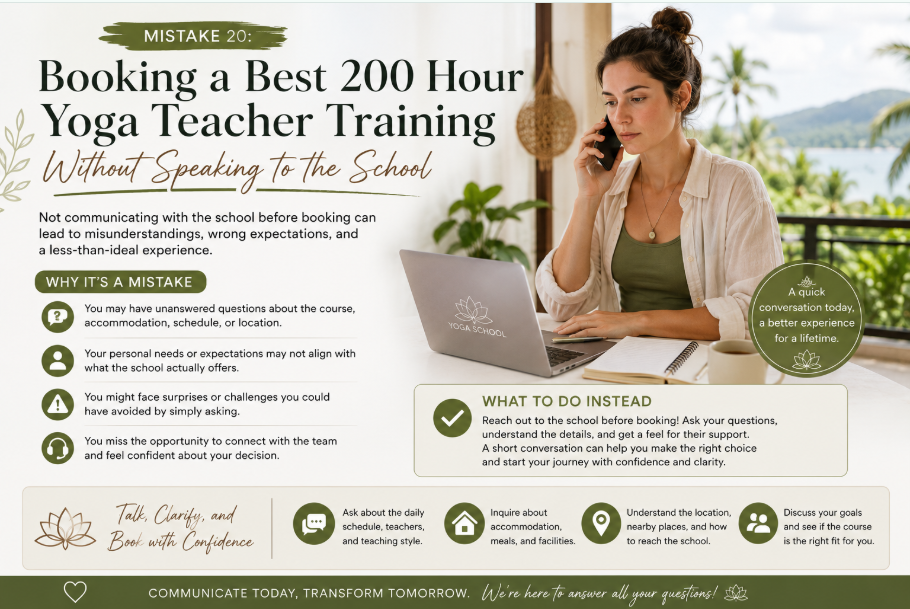
Mistake 20: Booking a Best 200 Hour Yoga Teacher Training Without Speaking to the School
After comparing different Best 200 Hour Yoga Teacher Training programs, reviewing the curriculum, reading student reviews, and evaluating the teachers, there’s one final step that many prospective students overlook—speaking directly with the school before making a decision.
A conversation can often tell you far more than a website.
It gives you the opportunity to ask questions, clarify expectations, and understand how the school communicates with prospective students. It also helps you decide whether you feel comfortable and confident about joining the program.
What to Pay Attention To
During your conversation, notice:
- How quickly and professionally the school responds.
- Whether your questions are answered clearly and honestly.
- If the staff take time to understand your goals and concerns.
- Whether they explain the curriculum, daily schedule, and accommodation in detail.
- If they provide realistic expectations instead of making unrealistic promises.
- Whether you feel respected, supported, and informed throughout the conversation.
Questions Worth Asking Before You Book
Before confirming your place, consider asking:
- What does a typical day during the training look like?
- Who will be teaching the course?
- How much practice teaching is included?
- What is the average class size?
- What is included in the course fee?
- What kind of support is available after graduation?
A reputable yoga school should be happy to answer these questions openly and transparently. Clear communication before you enrol is often a good indication of the level of support you can expect during the course.
A Final Thought
Choosing a Best 200 Hour Yoga Teacher Training in Sri Lanka is an important decision that can influence both your personal practice and your future as a yoga teacher. Taking the time to research different schools, compare your options, and speak directly with the teaching team allows you to make a confident and well-informed choice.
The goal isn’t simply to find the quickest course to book—it’s to choose a yoga school that offers the education, guidance, and learning environment that best supports your journey.
By asking questions, verifying the information, and trusting both your research and your instincts, you’ll be in a much stronger position to choose a teacher training that helps you grow long after the course has ended.
📥 Free Download: Best 200 Hour Yoga Teacher Training Comparison Checklist (PDF)
Our 25-Point Best 200 Hour Yoga Teacher Training School Checklist
Teachers & Experience
✅ Is the school Yoga Alliance Registered?
✅ How many years of teaching experience do the lead teachers have?
✅ Will the lead teachers teach most of the course?
✅ Can you read detailed teacher profiles before booking?
✅ Does the school have a clear teaching philosophy?
Curriculum
✅ Does the course include Hatha Yoga?
✅ Does it include Vinyasa Flow?
✅ Are Anatomy & Physiology taught in depth?
✅ Does the curriculum cover Yoga Philosophy?
✅ Will you learn Pranayama and Meditation?
✅ Is Teaching Methodology included?
✅ Will you learn sequencing and class planning?
Practical Learning
✅ Will you teach real classes during the course?
✅ Do teachers provide one-to-one feedback?
✅ Will you receive alignment corrections?
✅ Are beginners supported with modifications?
Learning Environment
✅ Are batch sizes small enough for personal attention?
✅ Is accommodation comfortable and peaceful?
✅ Are healthy vegetarian meals included?
✅ Does the school provide a distraction-free learning environment?
Student Support
✅ Can you contact the school before booking?
✅ Will your questions be answered honestly?
✅ Is support available after graduation?
✅ Does the school genuinely care about student growth?
Your Personal Goals
✅ Does this school feel like the right place for your own yoga journey?
Sometimes the final answer isn’t found on a website. It’s found in the conversations you have with the school and in how comfortable you feel after asking your questions.
Why We Do Things Differently at Diksha Yoga School
Throughout this guide, we’ve encouraged you to compare yoga schools carefully, ask thoughtful questions, and choose a program based on educational quality rather than marketing alone.
We believe it’s only fair to apply those same principles to ourselves.
Every yoga school has its own teaching philosophy, learning environment, and approach to education. Rather than claiming to be the “best,” we’d like to share the values that shape the way we teach and support our students.
We Prioritise Education Over Certification
A Yoga Alliance certificate is an important milestone, but we believe it should reflect meaningful learning—not simply the completion of training hours.
Our goal is to help students develop a strong understanding of yoga through consistent practice, thoughtful study, and practical teaching experience. By the end of the course, we want every graduate to feel prepared not only to receive a certificate but also to teach with confidence, awareness, and responsibility.
We Believe Learning Happens Through Experience
Yoga is more than something you study in a classroom—it’s something you experience every day.
That’s why our programs combine daily asana practice, pranayama, meditation, anatomy, yoga philosophy, teaching methodology, and regular practice teaching. This balanced approach allows students to connect theory with real teaching experience while developing confidence step by step.
We Value Small Groups and Personal Guidance
Every student arrives with a different background, learning style, and level of experience.
Keeping our training groups intentionally small allows our teachers to provide individual guidance, answer questions, offer constructive feedback, and support each student’s progress throughout the course.
We Teach Yoga as a Complete Practice
While physical postures are an important part of yoga, they represent only one aspect of a much deeper tradition.
Our curriculum explores the physical, philosophical, and practical dimensions of yoga, helping students understand not only how to practise but also why these teachings have remained relevant for thousands of years.
We Continue Supporting Our Students
We see graduation as the beginning of a student’s journey rather than the end of it.
Many graduates stay connected with our teaching team, ask questions as they begin teaching, continue their studies, or return for advanced training. We value these long-term relationships and are committed to supporting students as they continue to grow in their personal practice and teaching careers.
An Invitation to Compare
If you’re considering a Best 200 Hour Yoga Teacher Training in Sri Lanka, we encourage you to compare our school with others using the same questions and criteria discussed throughout this guide.
Look at the curriculum, meet the teachers, read student reviews, review the daily schedule, and ask as many questions as you need. Choosing a Best 200 Hour Yoga Teacher Training is an important decision, and we believe you should feel fully informed and confident before making your choice.
Whether you choose Diksha Yoga School or another program, our hope is that you find a learning environment that supports your goals, inspires your practice, and helps you become a knowledgeable, compassionate, and confident yoga teacher.
We Value Small Batch Learning
One of the principles that shapes our teaching approach is maintaining small training groups. We believe that learning to become a yoga teacher is a personal journey, and individual guidance plays an important role in that process.
Smaller batches allow our teachers to understand each student’s strengths, challenges, and progress throughout the training. Instead of feeling like one person in a large classroom, students have more opportunities to ask questions, receive constructive feedback, and build confidence at their own pace.
With smaller groups, students often benefit from:
- Individual alignment corrections
- Personalised feedback during practice teaching
- More opportunities to ask questions and participate in discussions
- Individual encouragement and ongoing support
- Meaningful connections with teachers and fellow students
- A collaborative learning environment where everyone can grow together
Why Personal Attention Matters
One student from Australia shared that her biggest concern before joining our Best 200 Hour Yoga Teacher Training in Sri Lanka was becoming “just another person in a large classroom.” She hoped to find a learning environment where her teachers would know her personally, understand her strengths, and support her progress throughout the course.
As the training progressed, regular one-to-one feedback, alignment guidance, and practice teaching sessions helped her become more confident in both her practice and her ability to teach. By the end of the course, she told us that the relationships she built with her teachers and fellow students had become one of the most meaningful parts of her experience.
Her story reflects something we’ve observed repeatedly over the years: when students receive personal guidance in a supportive learning environment, they often develop confidence more naturally and feel better prepared to teach after graduation.
For us, small batch learning isn’t simply about limiting class size—it’s about creating an environment where every student has the opportunity to be seen, supported, and encouraged throughout their yoga journey.
We Teach Yoga as a Complete Practice
At Diksha Yoga School, we believe yoga is much more than a series of physical postures. While asana is an important part of the practice, it represents only one aspect of a rich and holistic tradition that has been passed down through generations.
Our teaching approach is designed to help students understand yoga from multiple perspectives—physical, mental, philosophical, and practical. By exploring these interconnected disciplines, students develop not only a stronger personal practice but also the knowledge and confidence to teach with clarity, compassion, and responsibility.
Throughout the training, students study:
- Hatha Yoga – Building strength, stability, and mindful awareness.
- Vinyasa Flow – Understanding movement, breath, and creative sequencing.
- Ashtanga Yoga – Developing discipline, focus, and consistency.
- Human Anatomy & Physiology – Learning how the body moves to support safe and effective practice.
- Yoga Philosophy – Exploring the traditional wisdom and principles that form the foundation of yoga.
- Pranayama – Using conscious breathing techniques to improve energy, focus, and well-being.
- Meditation – Cultivating mindfulness, concentration, and inner awareness.
- Teaching Methodology – Developing the communication and observation skills needed to guide students with confidence.
- Class Sequencing – Learning how to design balanced, purposeful, and accessible yoga classes.
Rather than studying these subjects in isolation, we integrate them throughout the training so students can see how each area complements the others. This holistic approach helps transform knowledge into practical teaching skills while encouraging personal growth along the way.
Our goal is not simply to help students complete a teacher training, but to support them in becoming knowledgeable, compassionate, and confident yoga teachers who understand yoga as a complete practice—not just a physical exercise.
We Encourage Growth at Every Stage of the Journey
Every student begins their yoga journey from a different place, and we believe those differences should be respected and supported.
Some students join our training with the goal of becoming professional yoga teachers. Others come to deepen their personal practice, explore the philosophy of yoga, improve their well-being, or simply take time for self-discovery. Each motivation is equally valuable, and every student deserves a learning environment where they feel welcomed, encouraged, and supported.
Our role as teachers is not to expect everyone to progress at the same pace. Instead, we aim to meet each student where they are, offering guidance, constructive feedback, and encouragement that supports their individual development.
Throughout the training, we encourage students to learn with curiosity rather than comparison. Every person’s body, experience, and learning style is unique, and meaningful progress comes from consistent practice, patience, and an open mind.
Whether a student leaves with the confidence to begin teaching immediately or with a deeper personal understanding of yoga, we believe every step forward is a meaningful part of the journey. Our goal is to create a supportive environment where every individual has the opportunity to grow with confidence, develop new skills, and build a lifelong connection with the practice of yoga.
We Believe the Best Yoga Teachers Never Stop Learning
At Diksha Yoga School, we see a Best 200 Hour Yoga Teacher Training as the beginning of a lifelong journey rather than the final destination. Completing a course and earning a certificate are important milestones, but true growth as a yoga teacher comes through continued practice, study, self-reflection, and experience.
Yoga is a tradition of continuous learning. Every class you teach, every student you meet, and every challenge you encounter offers an opportunity to deepen your understanding—not only of yoga but also of yourself.
That is why we encourage our graduates to remain curious, ask questions, continue their education, and stay connected to their personal practice. Whether they choose to teach professionally, pursue advanced training, or simply integrate yoga more deeply into their daily lives, we believe learning never truly ends.
This philosophy guides everything we teach at Diksha Yoga School. Our goal is not only to prepare students for graduation but to inspire a lifelong relationship with yoga—one built on curiosity, compassion, humility, and a genuine commitment to continued growth.
Final Checklist: Questions to Ask Before You Book a Best 200 Hour Yoga Teacher Training
Choosing a Best 200 Hour Yoga Teacher Training is an important investment in your personal growth, education, and future as a yoga teacher. Before making your final decision, take a few moments to review this checklist. The answers will help you compare different schools more confidently and choose a program that aligns with your goals.
Before You Enroll, Ask These Questions
✔ Is the school Yoga Alliance Registered, and what certification will I receive?
✔ Who will teach the course, and what experience do they have?
✔ Which styles of yoga are included in the curriculum?
✔ Does the program include anatomy, philosophy, meditation, pranayama, and teaching methodology?
✔ How many students are typically in each batch?
✔ Will I receive individual guidance and personal feedback throughout the training?
✔ How much practice teaching is included, and will I receive constructive feedback?
✔ Can I review a sample daily schedule before booking?
✔ What is included in the course fee, such as accommodation, meals, study materials, and airport transfers?
✔ What support is available after graduation?
✔ Do the school’s teaching philosophy, learning environment, and values align with my personal goals?
A Final Thought
If you can answer these questions with confidence, you’ll be in a much stronger position to choose a Best 200 Hour Yoga Teacher Training that supports your learning, personal growth, and long-term development as a yoga teacher.
Remember, the Best 200 Hour Yoga Teacher Training isn’t necessarily the least expensive, the most popular, or the one with the most impressive marketing. It’s the program that offers the education, guidance, practical experience, and supportive environment that best aligns with your individual journey.
Take your time, compare your options carefully, ask plenty of questions, and choose the school that feels like the right fit for you. A thoughtful decision today can shape your yoga practice and teaching journey for many years to come.
The Ultimate 25-Point Checklist Before Choosing a Best 200 Hour Yoga Teacher Training School
If you’ve read this guide from the beginning, you’ll have seen that choosing a Best 200 Hour Yoga Teacher Training is about much more than finding the lowest price or the most beautiful destination. It’s about choosing a school that offers high-quality education, experienced teachers, practical teaching experience, and a supportive environment where you can grow with confidence.
One of the most common questions prospective students ask when researching Best 200 Hour Yoga Teacher Training is:
“How do I know if I’m choosing the right school?”
The answer isn’t to rely on advertisements, rankings, or social media alone. The best way to make a confident decision is to ask the right questions, compare several schools, and evaluate each program based on the factors that matter most to your learning experience.
The following checklist brings together the key points we’ve discussed throughout this guide. Use it to compare any yoga school you’re considering—including Diksha Yoga School—so you can make an informed decision based on education, transparency, and long-term value rather than marketing alone.
Your 25-Point Yoga Teacher Training Checklist
Use this checklist as a practical guide while researching different schools. The more questions you can answer with confidence, the more prepared you’ll be to choose a program that aligns with your goals, learning style, and future as a yoga teacher.
Our 25-Point Best 200 Hour Yoga Teacher Training School Checklist
Teachers & Experience
✅ Is the school Yoga Alliance Registered?
✅ How many years of teaching experience do the lead teachers have?
✅ Will the lead teachers teach most of the course?
✅ Can you read detailed teacher profiles before booking?
✅ Does the school have a clear teaching philosophy?
Curriculum
✅ Does the course include Hatha Yoga?
✅ Does it include Vinyasa Flow?
✅ Are Anatomy & Physiology taught in depth?
✅ Does the curriculum cover Yoga Philosophy?
✅ Will you learn Pranayama and Meditation?
✅ Is Teaching Methodology included?
✅ Will you learn sequencing and class planning?
Practical Learning
✅ Will you teach real classes during the course?
✅ Do teachers provide one-to-one feedback?
✅ Will you receive alignment corrections?
✅ Are beginners supported with modifications?
Learning Environment
✅ Are batch sizes small enough for personal attention?
✅ Is accommodation comfortable and peaceful?
✅ Are healthy vegetarian meals included?
✅ Does the school provide a distraction-free learning environment?
Student Support
✅ Can you contact the school before booking?
✅ Will your questions be answered honestly?
✅ Is support available after graduation?
✅ Does the school genuinely care about student growth?
Your Personal Goals
✅ Does this school feel like the right place for your own yoga journey?
Sometimes the final answer isn’t found on a website. It’s found in the conversations you have with the school and in how comfortable you feel after asking your questions.
Whether you choose Diksha Yoga School or another training provider, we encourage you to take your time, ask plenty of questions, and compare your options carefully. A thoughtful decision today can shape your yoga practice, teaching skills, and personal growth for many years to come.
Why We Chose Galle, Sri Lanka for Our Yoga Teacher Training
When we decided to offer our Best 200 Hour Yoga Teacher Training in Sri Lanka, we weren’t searching for the busiest tourist destination or the most popular beach town. We were looking for a place that reflected the kind of learning environment we wanted to create.
For us, Galle offers that balance.
Its peaceful coastal setting, tropical landscape, rich cultural heritage, and slower pace of life provide an environment where students can step away from the demands of everyday life and fully immerse themselves in their yoga practice. Rather than constantly moving from one attraction to the next, many students discover the value of slowing down, establishing healthy routines, and dedicating time to learning, reflection, and personal growth.
Our daily schedule is designed to support this rhythm. Mornings begin with meditation, pranayama, and yoga practice, followed by anatomy, philosophy, teaching methodology, and practice teaching sessions. Between classes, students have time to enjoy nourishing meals, study, rest, and simply appreciate the peaceful surroundings.
A Moment We Often Witness
One of our favourite moments during each training is seeing students experience their first weekend in Galle.
After several days of learning, many choose to take a quiet walk along the coastline, sit by the ocean, or explore the historic streets of Galle Fort. These simple moments often become an opportunity to pause, reflect on the week’s lessons, and reconnect with themselves before returning to the yoga shala with renewed focus.
Over the years, many graduates have shared that these quieter moments outside the classroom became just as meaningful as the classes themselves. They discovered that learning wasn’t limited to lectures or practice sessions—it also happened during moments of stillness, reflection, and connection with nature.
Why the Environment Matters
We believe a meaningful yoga teacher training is shaped not only by the curriculum and the teachers but also by the environment in which students live and learn. A peaceful setting can encourage healthier routines, deeper concentration, and the space to absorb new knowledge without the distractions of everyday life.
Of course, every destination has its own unique character. India, Bali, Thailand, Costa Rica, and Sri Lanka each offer wonderful opportunities to study yoga, and the right choice depends on your personal goals, learning style, and the type of experience you’re seeking.
For us, Galle reflects the calm, supportive, and immersive environment we want to offer our students. It’s a place where learning extends beyond the yoga shala and where many students begin a lifelong relationship with yoga, both on and off the mat.
Why Students Choose Diksha Yoga School
Every student who joins Diksha Yoga School arrives with a unique story and a different reason for beginning their journey.
Some dream of becoming certified yoga teachers and sharing yoga professionally. Others want to deepen their personal practice, explore the philosophy of yoga, or simply step away from the demands of everyday life to reconnect with themselves. Whatever inspires them to enrol, our commitment remains the same: to provide a supportive learning environment where every student can grow with confidence.
We Believe Learning Happens Through Patience, Not Pressure
Yoga is a lifelong practice, and meaningful learning takes time. Rather than expecting every student to progress at the same pace, we encourage consistent practice, thoughtful guidance, and self-reflection. Our teachers support students with encouragement and constructive feedback, creating an environment where confidence develops naturally.
We Value Personal Attention
We intentionally keep our training groups small because we believe individual guidance is an essential part of becoming a confident yoga teacher.
Smaller batches allow our teachers to observe each student’s progress, offer alignment corrections, answer questions, and provide personalised feedback throughout the course. This creates a learning environment where students feel supported, encouraged, and genuinely seen.
We Build Confidence Through Practice
Teaching your first yoga class can feel both exciting and intimidating. That’s why practice teaching is an important part of our curriculum.
Throughout the training, students have regular opportunities to guide classes, receive constructive feedback, and gradually develop the confidence to teach with clarity, awareness, and compassion. We believe confidence grows through experience, not simply by completing training hours.
We Teach Yoga as a Complete Practice
At Diksha Yoga School, we believe yoga extends far beyond physical postures. Our curriculum is designed to help students understand yoga as a complete and holistic discipline by studying:
- Hatha Yoga
- Vinyasa Flow
- Ashtanga Yoga
- Pranayama
- Meditation
- Yoga Philosophy
- Human Anatomy & Physiology
- Teaching Methodology
- Alignment & Adjustments
- Class Sequencing
By integrating these subjects throughout the training, students develop both a deeper personal practice and the practical skills needed to teach yoga safely, confidently, and responsibly.
We Believe Learning Never Ends
Completing a Best 200 Hour Yoga Teacher Training is an important milestone, but we see it as the beginning of a lifelong journey of learning, practice, and self-discovery.
A certificate recognises the completion of a course, but growth as a yoga teacher continues through experience, continued study, and a commitment to personal practice. We encourage our graduates to remain curious, continue learning, and carry the principles of yoga into both their teaching and everyday lives.
Our Commitment to Every Student
Everything we do at Diksha Yoga School is guided by one simple belief: every student deserves a learning experience that is supportive, authentic, and transformative.
Whether your goal is to teach professionally or to deepen your own practice, we hope your time with us helps you develop the knowledge, confidence, and self-awareness to continue your yoga journey long after the course has ended.
Frequently Asked Questions (FAQs)
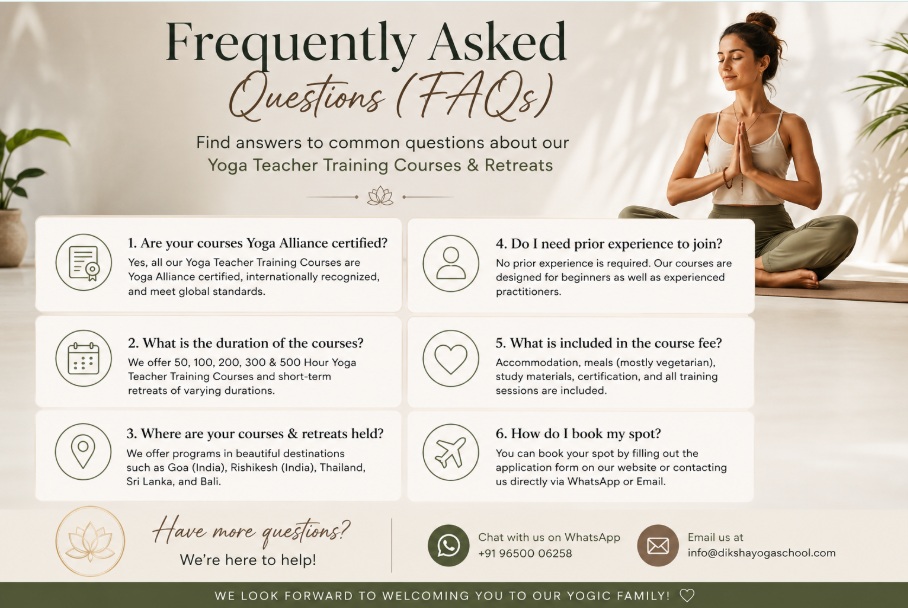
1. How do I choose the right Best 200 Hour Yoga Teacher Training in Sri Lanka?
Start by comparing several yoga schools rather than booking the first one you find. Look at the curriculum, teacher qualifications, class size, teaching methodology, student reviews, daily schedule, accommodation, and Yoga Alliance registration. Choosing a school that aligns with your personal goals is more important than choosing the cheapest or most popular option.
2. Is a Best 200 Hour Yoga Teacher Training suitable for beginners?
Yes. Many Best 200 Hour Yoga Teacher Training courses welcome beginners with a consistent interest in yoga. You don’t need to perform advanced postures before joining. A quality training should provide modifications, personal guidance, and a supportive learning environment for students of different experience levels.
3. How long does a Best 200 Hour Yoga Teacher Training in Sri Lanka take?
Most residential Best 200 Hour Yoga Teacher Training programs in Sri Lanka last around 23 days, combining daily yoga practice, anatomy, philosophy, meditation, teaching methodology, and practical teaching sessions.
4. Is Yoga Alliance registration important?
If you plan to teach yoga professionally, choosing a Yoga Alliance Registered School can be beneficial because it follows internationally recognised educational standards. However, the quality of teaching, practical experience, and personal guidance are equally important.
5. What subjects are included in a Best 200 Hour Yoga Teacher Training?
Most comprehensive programs include Hatha Yoga, Vinyasa Flow, Ashtanga Yoga, Anatomy & Physiology, Yoga Philosophy, Pranayama, Meditation, Teaching Methodology, Alignment, Class Sequencing, and Practice Teaching.
6. How much teaching practice should a good Best 200 Hour Yoga Teacher Training include?
Teaching practice is one of the most valuable parts of a teacher training. The more opportunities you have to teach, receive feedback, and improve, the more confident you’ll feel after graduation.
7. How important are small class sizes?
Smaller batches often allow teachers to provide more individual guidance, alignment corrections, personalised feedback, and opportunities for discussion, creating a more supportive learning experience.
8. Can I teach yoga after completing a Best 200 Hour Yoga Teacher Training?
Yes. A Best 200 Hour Yoga Teacher Training provides the foundation to begin teaching yoga. Many graduates start teaching immediately, while others continue practising and gaining experience before leading regular classes.
9. What should I ask a yoga school before booking?
Ask about the curriculum, teacher qualifications, class size, accommodation, daily schedule, practice teaching opportunities, post-graduation support, and everything included in the course fee.
10. Why do many students choose Sri Lanka for Best 200 Hour Yoga Teacher Training?
Sri Lanka offers peaceful beaches, tropical nature, a warm climate, and a relaxed lifestyle that supports focused learning, meditation, and personal growth throughout the training.
11. Is accommodation usually included in a Best 200 Hour Yoga Teacher Training?
Many residential Best 200 Hour Yoga Teacher Training courses include accommodation, vegetarian meals, study materials, and other essentials. Always confirm exactly what is included before booking.
12. How do I know if a yoga school is right for me?
Choose a school whose teaching philosophy, curriculum, learning environment, and level of support match your personal goals and learning style. Reading reviews and speaking directly with the school can also help you make an informed decision
13. Should I choose a yoga school based only on price?
Not necessarily. A lower course fee doesn’t always represent better value. Compare what is included, the experience of the teachers, class size, curriculum, accommodation, and student support before making a decision.
14. Why is yoga philosophy included in teacher training?
Yoga philosophy helps students understand the traditional principles and values behind yoga. It provides context for the physical practice and supports a deeper understanding of yoga as a complete lifestyle.
15. Do I need to be flexible before joining a Best 200 Hour Yoga Teacher Training?
No. Flexibility is not a requirement. Most schools value commitment, consistency, and a willingness to learn far more than advanced physical ability.
16. What makes a high-quality Best 200 Hour Yoga Teacher Training?
A strong teacher training combines experienced teachers, a comprehensive curriculum, regular practice teaching, personal feedback, small class sizes, a supportive learning environment, and opportunities for continued growth.
17. Why should I compare several yoga schools before enrolling?
Comparing multiple schools helps you evaluate the curriculum, teaching style, learning environment, class size, and student support, allowing you to choose the program that best fits your goals.
18. What happens after I complete my Best 200 Hour Yoga Teacher Training?
Graduation marks the beginning of your teaching journey. Many graduates continue practising, teaching, attending workshops, and pursuing advanced training to deepen their knowledge and experience.
19. Why is Galle a popular location for Best 200 Hour Yoga Teacher Training?
Galle offers a peaceful coastal setting, historic charm, tropical surroundings, and a slower pace of life that allows students to focus on learning, self-reflection, and personal growth throughout their training.
20. Why choose Diksha Yoga School for a Best 200 Hour Yoga Teacher Training in Sri Lanka?
At Diksha Yoga School, our focus is on providing a supportive learning environment that combines traditional yogic teachings with practical teaching experience. Through small batch learning, experienced teachers, comprehensive study, and personalised guidance, we aim to help students build confidence, deepen their practice, and develop the skills needed to teach yoga safely and responsibly.