
Reviewed By Soniya Rangher
Koh Samui vs Koh Phangan for Yoga Teacher Training
If you’re planning a yoga teacher training in Thailand, you’ve probably narrowed it down to two islands in the Gulf of Thailand: Koh Samui vs Koh Phangan for Yoga Teacher Training. They sit side by side, share the same weather and both have beautiful beaches. But they feel very different, and that changes your training experience.
Here’s an honest Koh Samui vs Koh Phangan yoga teacher training comparison to help you choose.
Table of Contents
Koh Samui vs Koh Phangan at a glance
| Comparison | Koh Samui | Koh Phangan |
|---|---|---|
| Atmosphere | Calm, relaxed, more grown-up | Bohemian, social, big yoga community |
| Getting there | Own international airport (USM) with daily flights from Bangkok | No airport; reached by ferry, usually via Koh Samui or Surat Thani |
| Yoga scene | Fewer, often smaller and more focused trainings | One of Asia’s best-known yoga hubs, with many schools |
| Nightlife | Available but easy to avoid on the quieter coasts | Famous for its parties, especially around full moon |
| Best for | Focused study, small groups, easy travel | Meeting lots of yogis and a lively social scene |
| Weather | Same climate: driest January to March, rainy October to December | Same climate: driest January to March, rainy October to December |
Getting there
Koh Samui has its own airport, with daily direct flights from Bangkok. Land in the afternoon and you can be at your training the same day. Our Koh Samui course includes airport pickup, and the resort is about 30 minutes from the airport.
Koh Phangan has no airport, so you usually fly to Koh Samui or Surat Thani and take a ferry. It’s an easy trip, but it adds time and a sea crossing to your journey, which matters if you arrive late or the sea is rough.
Atmosphere and focus
Koh Phangan’s yoga scene is huge and social. That’s wonderful if you want to meet many people and join workshops after class, but it can also mean bigger trainings and more distractions during an intense month of yoga teacher training.
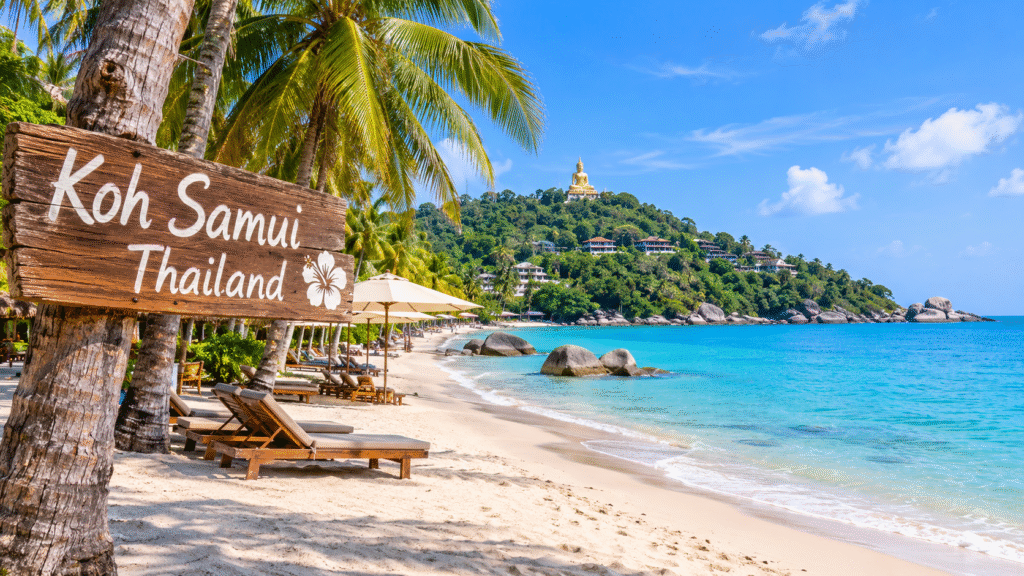
Koh Samui is calmer, especially on the north coast. Days are quieter, evenings are slower, and it’s easier to keep your energy for yoga practice, study and rest. For a 200 hour yoga teacher training, where you’re practising and studying from 6:30 AM to 8:30 PM, six days a week, that focus makes a real difference.
Group size
Group size matters more than the island. In a big group you may get little personal feedback on your teaching. Before you book anywhere, ask how many students are in each batch.
Our Koh Samui yoga teacher training takes a maximum of 10 students, so your teachers know your practice and give you individual feedback on every class you teach.
Before choosing a yoga teacher training school in either Koh Samui or Koh Phangan, ask about the maximum batch size, teacher-to-student ratio, daily teaching practice and individual feedback. A smaller group can provide more opportunities for personal guidance, corrections and teaching experience. At Diksha Yoga School, each Koh Samui batch is limited to a maximum of 10 students.
Cost of Yoga Teacher Training in Koh Samui vs Koh Phangan
Cost of Yoga Teacher Training in Koh Samui vs Koh Phangan
When comparing Koh Samui vs Koh Phangan for yoga teacher training, the overall cost of your stay is an important factor. Both islands offer beautiful beaches, tropical surroundings and wellness experiences, but accommodation, food, transportation and training fees can vary.
Koh Phangan is generally considered more budget-friendly, while Koh Samui offers a wider selection of comfortable resorts, restaurants and convenient travel connections. Here is what you should consider before choosing your yoga training destination.
1. Accommodation Costs
Koh Samui offers everything from affordable guesthouses to luxury beachfront resorts. Areas such as Bang Por, Maenam and Lamai are popular with travellers looking for a peaceful island experience.
Koh Phangan has a variety of budget-friendly bungalows, guesthouses and wellness retreats, particularly around Srithanu, Haad Salad and Thong Nai Pan. However, accommodation prices can increase significantly during Full Moon Party periods and peak travel seasons.
Which is more affordable? Koh Phangan generally offers cheaper independent accommodation, although prices depend on the season and location.
2. Food and Dining Expenses
Both islands offer Thai street food, local restaurants, fresh tropical fruits and international dining options.
On Koh Samui, you can enjoy everything from traditional Thai meals to beachfront restaurants and international cafés. Koh Phangan also has affordable local food markets and a good selection of vegetarian, vegan and healthy restaurants, particularly around Srithanu.
For students attending residential yoga teacher training, meal arrangements can make a significant difference to the overall budget. Choosing a course that includes daily meals helps avoid additional food expenses during training.
Which is more affordable? Koh Phangan can be cheaper for independent dining, especially when eating at local markets. However, both islands offer options for different budgets.
3. Yoga Teacher Training Course Fees
Yoga teacher training fees depend on the school’s experience, course duration, accommodation standards, teaching curriculum and included facilities.
Koh Samui offers residential yoga teacher training programmes in peaceful tropical surroundings. At Diksha Yoga School, our 200-hour Yoga Teacher Training in Thailand on Koh Samui starts from €2,300, including training, accommodation and meals.
Koh Phangan also has several independent yoga schools and wellness retreats, with different course formats and pricing structures. Before comparing fees, check whether accommodation, meals, study materials and certification are included in the advertised price.
Which offers better value? Rather than choosing a course based only on its price, compare the teaching hours, trainer experience, group size, accommodation and overall learning experience.
4. Transportation and Travel Costs
Koh Samui is easier to reach because it has its own airport, Koh Samui International Airport (USM). Travellers can access the island through flights from Bangkok and selected international and regional connections.
Koh Phangan does not have its own commercial airport. Most visitors travel through Koh Samui or Surat Thani and continue by ferry to Thong Sala Pier.
Local transportation is available on both islands through taxis, shared songthaews and scooter rentals. However, daily transport expenses depend on how far your accommodation is from beaches, restaurants and training centres.
Which is more convenient? Koh Samui is generally more convenient for international travellers because of its airport and established transport network.
Koh Samui vs Koh Phangan: Cost Comparison
| Expense | Koh Samui | Koh Phangan |
|---|---|---|
| Budget accommodation | Moderate | Generally cheaper |
| Food and local restaurants | Moderate | Generally cheaper |
| Yoga retreats | Different price ranges | Different price ranges |
| International travel access | More convenient | Requires ferry connection |
| Local transportation | More options | More limited in some areas |
| Residential YTTC | Depends on inclusions | Depends on inclusions |
Prices vary according to season, accommodation standards, course inclusions and individual travel preferences. These are general comparisons, not fixed quotations.
Which Island Offers Better Value for Yoga Teacher Training?
If you are looking for affordable independent accommodation, a strong yoga community and a relaxed backpacker atmosphere, Koh Phangan may be a suitable choice.
However, if you prefer convenient airport access, comfortable beachfront accommodation, organised residential training and a peaceful learning environment, Koh Samui is worth considering.
At Diksha Yoga School, our Koh Samui programme combines traditional yoga practices, experienced teachers, comfortable accommodation and daily meals in a peaceful tropical setting.
Explore our 200-Hour Yoga Teacher Training in Thailand and discover whether Koh Samui is the right destination for your yoga journey.
Weather: the same on both islands
Koh Samui and Koh Phangan share a similar tropical climate because they are located close to each other in the Gulf of Thailand. February to April is generally one of the driest periods, while October to December experiences heavier rainfall. November is usually the wettest month. May to September can also be a good time to visit, with relatively moderate rainfall compared with Thailand’s Andaman coast. However, weather conditions can vary each year, so check local forecasts before travelling.
Our training on Koh Samui
We chose Koh Samui’s quiet north coast for our 200 Hour Yoga Teacher Training in Thailand, at Health Oasis Resort on Bang Por Beach, with views across to Koh Phangan.
- 23 days / 22 nights, 200 hours at a Yoga Alliance Registered Yoga School (RYS 200 & RYS 300), eligible for RYT 200
- Maximum 10 students per batch
- Beachfront rooms, private or twin-shared accommodation, no dormitories
- Breakfast and lunch every day, airport pickup, Wi-Fi and local excursions included
- From €2,300, or €2,200 with our early bird offer
- Batches from the 5th to the 27th of every month until May 2027. January has only 2 seats left
You can also visit Koh Phangan on a Sunday off, as it’s a short ferry ride away.
So which should you choose?
Choose Koh Phangan if you:
- Want a big, social yoga community and lots of workshops
- Don’t mind a ferry transfer
- Enjoy a lively island scene
Choose Koh Samui if you:
- Want a small group and focused study
- Prefer a quieter setting with fewer distractions
- Want an easy arrival with your own airport and pickup
- Still want Koh Phangan close enough for a day trip
Frequently asked questions
Is Koh Samui or Koh Phangan better for yoga teacher training?
Neither is better for everyone. Koh Phangan suits people who want a big, social yoga scene. Koh Samui suits people who want a quieter, more focused training and easier travel.
Which island is easier to reach?
Koh Samui, because it has its own international airport. Koh Phangan is reached by ferry.
Is the weather different?
Weather | Both islands have a similar climate. February to April is generally drier, while October to December brings heavier rainfall, particularly in November.
Will my certificate be recognised?
Our 200 hour course in Koh Samui leads to a certificate from a Yoga Alliance Registered Yoga School, eligible for RYT 200 registration.
Can I visit Koh Phangan during the training?
Yes. Sundays are free, and Koh Phangan is a short ferry ride from Koh Samui.
Explore Our More Course:
200 Hour Yoga Teacher Training in Goa
200 Hour Yoga Teacher Training in Sri Lanka
200 Hour Yoga Teacher Training in Thailand
Is Koh Samui or Koh Phangan Better for Beginner Yoga Students?
Both Koh Samui and Koh Phangan can be excellent destinations for beginner yoga students, but the right choice depends on your learning preferences, travel comfort and training goals.
Koh Samui for Beginners: Koh Samui is a good choice for students who prefer convenient travel, comfortable accommodation and a peaceful learning environment. Its well-developed infrastructure makes it easier for first-time international travellers to settle in and focus on their yoga practice.
Koh Phangan for Beginners: Koh Phangan is ideal for students who enjoy a relaxed island lifestyle and a strong wellness community. The island offers a variety of yoga studios, meditation sessions and holistic experiences, making it attractive for those interested in exploring different yoga practices.
Which Island Should You Choose?
- Choose Koh Samui if you prefer convenient airport access, comfortable facilities and a more structured residential training experience.
- Choose Koh Phangan if you enjoy a laid-back atmosphere, wellness activities and a vibrant yoga community.
You do not need to be an advanced yoga practitioner to begin a Yoga Teacher Training Course. What matters most is your willingness to learn, regular practice and commitment to the training schedule. Before enrolling, check the school’s beginner requirements, teaching style, class size and individual support.
200 Hour Yoga Teacher Training in Bali
Book your Koh Samui training
Want a small, focused yoga teacher training by the sea in Thailand? Reserve your place with a 30% deposit, or message us first and we’ll help you choose the right batch.