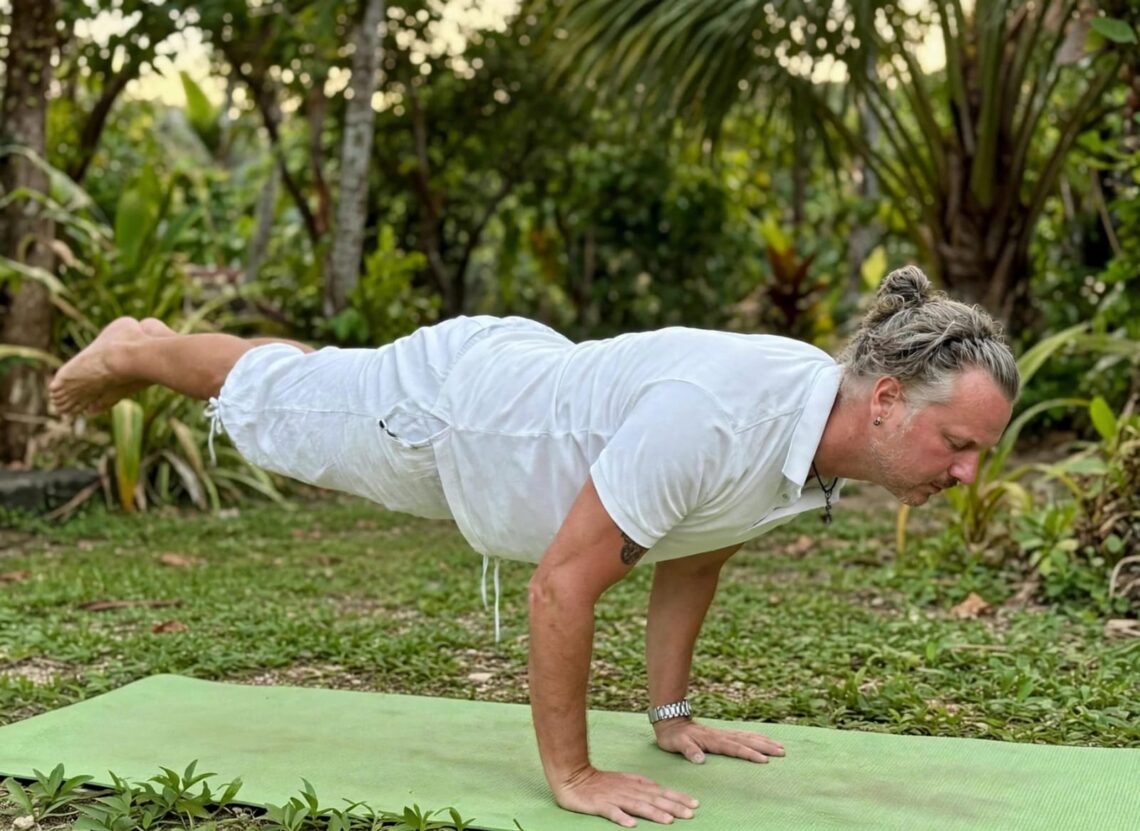
300 Hour Yoga Teacher Training Koh Samui Thailand
Completing your 200-hour yoga teacher training is an important milestone. It gives you the foundation to begin teaching, understand traditional yoga practices and share your knowledge with others.
But as you gain experience, your understanding of yoga naturally begins to evolve.
You start looking beyond the basic structure of a yoga class. You become more interested in why certain sequences work, how different bodies respond to movement, how to adapt postures for individual students and how to bring greater depth into your teaching.
You may also realise that becoming a knowledgeable yoga teacher is a continuous journey of learning, observation and self-development.
If you are ready to take this next step, a 300 Hour Yoga Teacher Training in Koh Samui, Thailand can offer an opportunity to dedicate time to advanced study, personal practice and professional development.
At Diksha Yoga School, the 28-day advanced residential programme brings together advanced multi-style yoga, Hatha Yoga, Vinyasa Flow, Ashtanga foundations, pranayama, meditation, yoga philosophy, anatomy, alignment and teaching methodology.
Located at Health Oasis Resort in Koh Samui, the programme offers a dedicated learning environment where you can step away from your usual routine and focus on developing a deeper understanding of yoga.

This guide explains what to expect from a 300-hour programme, who should consider joining, what you will study, how the RYT 500 pathway works and what to consider before choosing your advanced yoga teacher training.
You can also check the latest course dates and fees before planning your training.
Table of Contents
300 Hour Yoga Teacher Training Koh Samui: Programme Overview
If you are comparing advanced yoga teacher training programmes, start by understanding the course structure, duration, location and fees.
| Programme detail | Information |
| Yoga School | Diksha Yoga School |
| Location | Koh Samui, Thailand |
| Training Venue | Health Oasis Resort |
| Programme | 300 Hour Advanced Yoga Teacher Training |
| Duration | 28 Days / 27 Nights |
| Training Level | Advanced |
| Entry Requirement | Previous 200-hour yoga teacher training |
| Teaching Approach | Advanced Multi-Style Yoga |
| Main Subjects | Asana, Pranayama, Meditation, Philosophy, Anatomy and Teaching Methodology |
| Accommodation | Private and twin-shared options |
| Language | English |
The programme is intended for yoga teachers who want to build upon their previous education rather than repeat an introductory teacher training.
Interested in the next intake?
Explore the latest course dates and fees or contact Diksha Yoga School to discuss your previous training and learning goals.
Why Take a 300 Hour Yoga TTC Thailand After Your 200 Hours?
Your 200-hour training introduces the foundations of yoga teaching. You learn how to guide basic asana practice, introduce pranayama, understand yoga philosophy and begin developing the skills required to lead a class.
Once you start teaching, however, you encounter situations that require more than foundational knowledge.
A student may have limited mobility. Another may need a modification because of a physical limitation. Some students may be completely new to yoga, while others may have years of experience.
As a teacher, you need to understand how to respond to these differences.
An advanced 300-hour yoga teacher training in Koh Samui gives you the opportunity to explore these areas in greater depth.
1. Develop More Intelligent Yoga Sequencing
Rather than simply putting postures together, learn to consider the purpose of a sequence, the preparation required for challenging postures and how to create appropriate transitions.
2. Understand Anatomy and Alignment More Deeply
Explore how joints, muscles, mobility and stability influence movement. Develop a better understanding of why alignment varies between individuals and how to offer appropriate modifications.
3. Improve Your Teaching Confidence
Refine your verbal instructions, voice, class presence, observation skills and ability to guide students with different levels of experience.
4. Deepen Your Personal Practice
Explore advanced asana, pranayama and meditation with greater awareness, discipline and understanding.
5. Develop Your Own Teaching Approach
Move beyond copying another teacher’s style. Learn to make informed decisions, understand the principles behind your practices and develop a teaching voice that reflects your own experience.
The purpose of advanced training is not simply to perform more difficult postures. It is to develop the knowledge and awareness needed to guide others more thoughtfully.
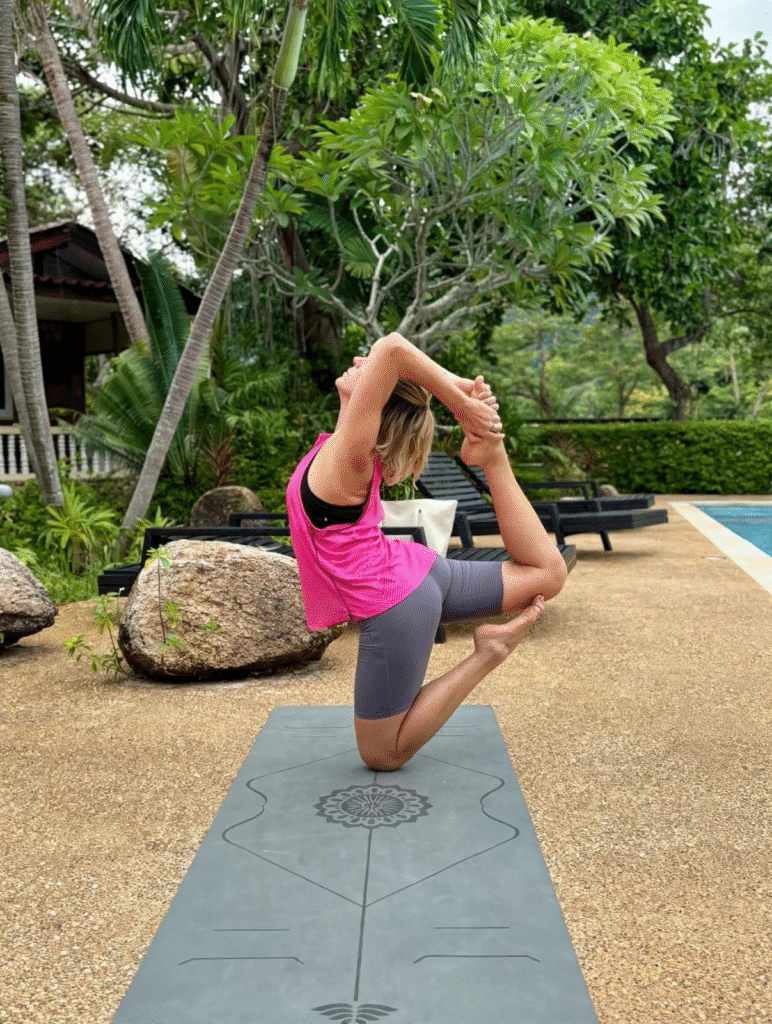
What Is the Difference Between 200 Hour and 300 Hour Advanced Yoga Teacher Training Thailand?
Both programmes are important stages of yoga education, but they serve different purposes.
| Area | 200 Hour Training | 300 Hour Training |
| Level | Foundational | Advanced |
| Main purpose | Learn the foundations of yoga teaching | Deepen knowledge and refine teaching skills |
| Asana | Foundational postures and alignment | Advanced practice, variations and adaptations |
| Sequencing | Learn to structure a class | Develop more purposeful and progressive sequences |
| Anatomy | Basic anatomical understanding | More detailed study of movement and alignment |
| Philosophy | Introduction to traditional teachings | Deeper exploration and application |
| Teaching | Begin teaching practice | Refine observation, communication and teaching methodology |
A 300-hour programme should build upon the knowledge you already have. It should challenge you to think more carefully about how you practise, understand and teach yoga.
Advanced Yoga Curriculum at Diksha Yoga School
The curriculum combines traditional yogic knowledge with practical teaching development.
Rather than approaching each subject as an isolated topic, the aim is to understand how physical practice, breath, philosophy, anatomy and teaching methodology work together.
1. Advanced Hatha Yoga
Hatha Yoga provides an important foundation for understanding the relationship between body, breath and awareness.
At an advanced level, the study moves towards a more detailed exploration of asana, alignment and the principles behind physical practice.
Areas of study include:
Advanced asana practice and preparation.
Alignment, stability and balance.
Strength, flexibility and mobility.
Breath coordination.
Posture variations and modifications.
Transitions between postures.
Understanding individual limitations.
Responsible practice and contraindications.
The intention is to develop a thoughtful relationship with asana rather than measuring progress only through physical difficulty.
2. Advanced Vinyasa Flow
Vinyasa Flow connects movement with breath through carefully designed sequences.
Advanced training helps you understand how to create classes with greater intention, progression and balance.
You will explore:
Creative and progressive sequencing.
Peak-pose preparation.
Intelligent transitions.
Breath-synchronised movement.
Class structure and pacing.
Thematic sequencing.
Modifications for different levels.
Creating balanced and purposeful classes.
The objective is to understand why a sequence is designed in a particular way and how it can serve the students practising it.
3. Ashtanga Yoga Foundations
Ashtanga Yoga introduces a disciplined approach to practice through the relationship between breath, movement and concentration.
Areas of exploration include:
Traditional sequencing principles.
Breath and movement coordination.
Drishti.
Bandhas.
Vinyasa principles.
Standing and seated asana foundations.
Progressive practice.
Appropriate modifications.
You will explore how the principles of Ashtanga can contribute to a consistent and focused personal practice.
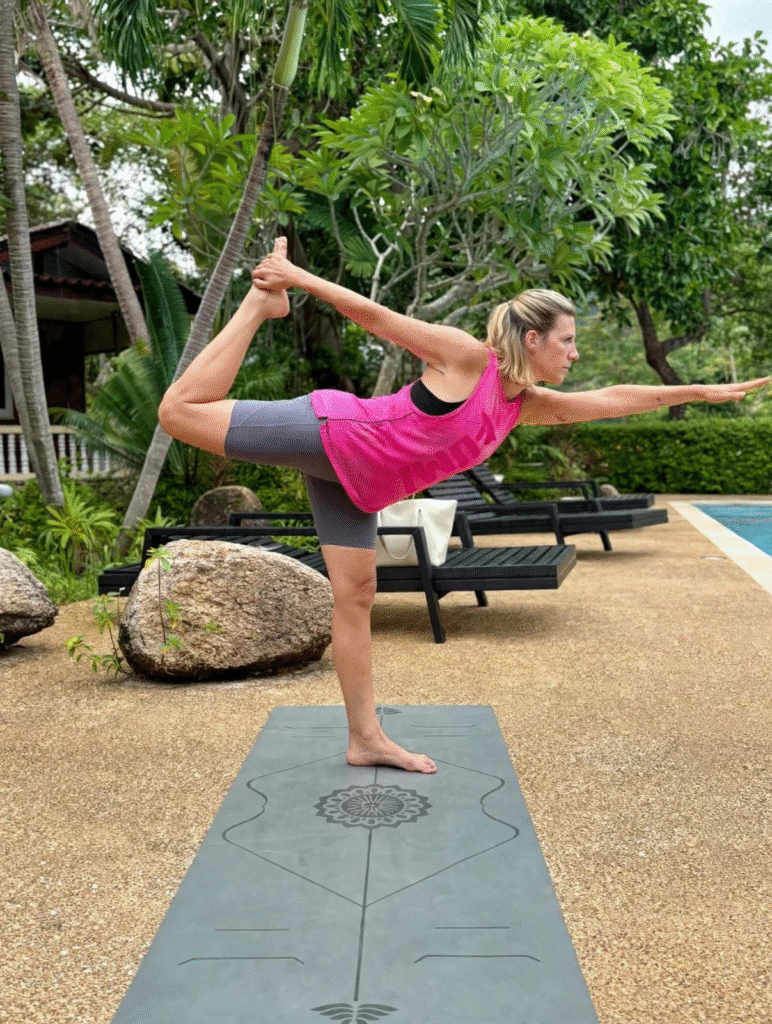
4. Advanced Pranayama and Breath Awareness
Pranayama is an essential aspect of traditional yoga education.
As your understanding develops, you begin to explore breathing practices with greater attention to preparation, technique and appropriate application.
Practices explored include:
Nadi Shodhana.
Ujjayi Pranayama.
Kapalabhati.
Bhastrika.
Sheetali.
Sheetkari.
Breath awareness.
Bandha principles.
Pranic awareness.
The study of breathing techniques should also include their appropriate application, preparation and contraindications.
5. Meditation and Inner Practice
Meditation develops concentration, observation and awareness.
In advanced yoga education, meditation is not simply an additional practice. It is an opportunity to investigate the mind, develop consistency and deepen your understanding of traditional yogic principles.
The programme explores:
Dharana.
Dhyana.
Mantra meditation.
Japa.
Yoga Nidra.
Breath awareness.
Concentration practices.
Silent meditation.
Inner observation.
These practices can also help you understand how to introduce meditation more thoughtfully into your own teaching.
6. Advanced Yoga Philosophy
A meaningful yoga education extends beyond physical practice.
Advanced philosophy study gives you the opportunity to revisit traditional teachings and consider their relevance to daily life and the responsibilities of being a yoga teacher.
Topics include:
Patanjali Yoga Sutras.
Bhagavad Gita.
Yamas and Niyamas.
Karma and Dharma.
Koshas and Chakras.
Prana and consciousness.
Self-study and discipline.
Traditional approaches to meditation.
The aim is to develop an understanding of yogic philosophy that goes beyond memorising definitions and concepts.
7. Advanced Anatomy, Alignment and Movement
Every student has a different body, movement history and range of motion.
An advanced yoga teacher needs to understand these differences and avoid assuming that one alignment approach is suitable for everyone.
Study areas include:
Joint mechanics.
Muscle actions.
Mobility and stability.
Movement patterns.
Range of motion.
Alignment principles.
Posture modifications.
Contraindications.
Injury awareness.
Teaching adaptations.
This knowledge supports more thoughtful observation and better-informed teaching decisions.
8. Advanced Teaching Methodology
Knowing how to practise yoga and knowing how to teach it effectively are different skills.
Advanced teaching methodology focuses on how you communicate, organise a class, observe students and respond to different learning needs.
Important areas include:
Advanced sequencing: Create classes with a clear purpose, appropriate preparation and balanced structure.
Verbal cueing: Develop instructions that are clear, useful and easy for students to follow.
Voice and teaching presence: Refine your communication and develop a confident, authentic way of guiding a class.
Adjustments and modifications: Understand responsible ways to support students with different needs and abilities.
Class observation: Learn to recognise student responses and adapt your teaching when necessary.
Practice teaching: Apply your knowledge through teaching practice, reflection and constructive feedback.
The goal is to develop teachers who can make informed decisions rather than simply repeat memorised sequences.
Practice Teaching: Turning Knowledge into Teaching Skills
One of the most valuable aspects of advanced yoga education is the opportunity to apply what you learn.
Understanding anatomy in theory is important, but applying that knowledge when guiding a class requires observation and practical experience.
Similarly, learning about sequencing is only the beginning. You need to develop the ability to create a sequence, communicate it clearly and recognise whether it is appropriate for the students.
Practice teaching encourages you to:
Plan classes with a clear objective.
Prepare students progressively for postures.
Give understandable instructions.
Offer appropriate modifications.
Observe student movement and responses.
Reflect on your teaching decisions.
Receive feedback and refine your approach.
A useful way to think about this process is:
Learn → Practise → Teach → Observe → Receive Feedback → Reflect → Improve
This is how knowledge gradually becomes part of your teaching experience.
Why Choose Koh Samui, Thailand for Advanced Yoga Teacher Training?
Choosing the right destination is an important part of a residential yoga teacher training experience.
Koh Samui offers a tropical island environment, natural surroundings, beaches and opportunities to experience Thai culture.
For a 28-day programme, the environment can make a meaningful difference. Having a dedicated place to practise, study and rest helps you establish a routine around your training.
The programme takes place at Health Oasis Resort in Koh Samui.
You can spend your training period focusing on your personal practice, classroom learning and teaching development, while also having opportunities to experience the island during your free time.
Whether you enjoy quiet moments by the sea, exploring local temples or discovering the island’s natural surroundings, Koh Samui offers an environment beyond the training room.
The important thing is to approach the experience as an advanced educational programme, with time for both focused study and personal reflection.
Learn with Diksha Yoga School: Traditional Wisdom and Modern Teaching Skills
Choosing an advanced yoga school is about more than selecting a beautiful location.
The quality of the teaching, the experience of the educators, the curriculum and the opportunities for individual feedback should all influence your decision.
Diksha Yoga School was founded by Yogini Manisha, an E-RYT 500 yoga teacher and educator with more than 16 years of experience in teaching, training and mentoring.
She has guided over 23,000 students from more than 80 countries.
Her teaching approach brings together traditional yogic knowledge and practical teaching skills, including:
Ashtanga foundations.
Anatomy and alignment.
Teaching methodology.
The emphasis is on helping students understand not only what to practise, but also why they practise and how to guide others with clarity and awareness.
Diksha’s approach values small-group learning, personal guidance and individual feedback. This creates space for questions, discussion and a deeper exchange of ideas during the learning process.
At the advanced level, this is particularly important because every teacher arrives with a different background, teaching experience and learning objective.
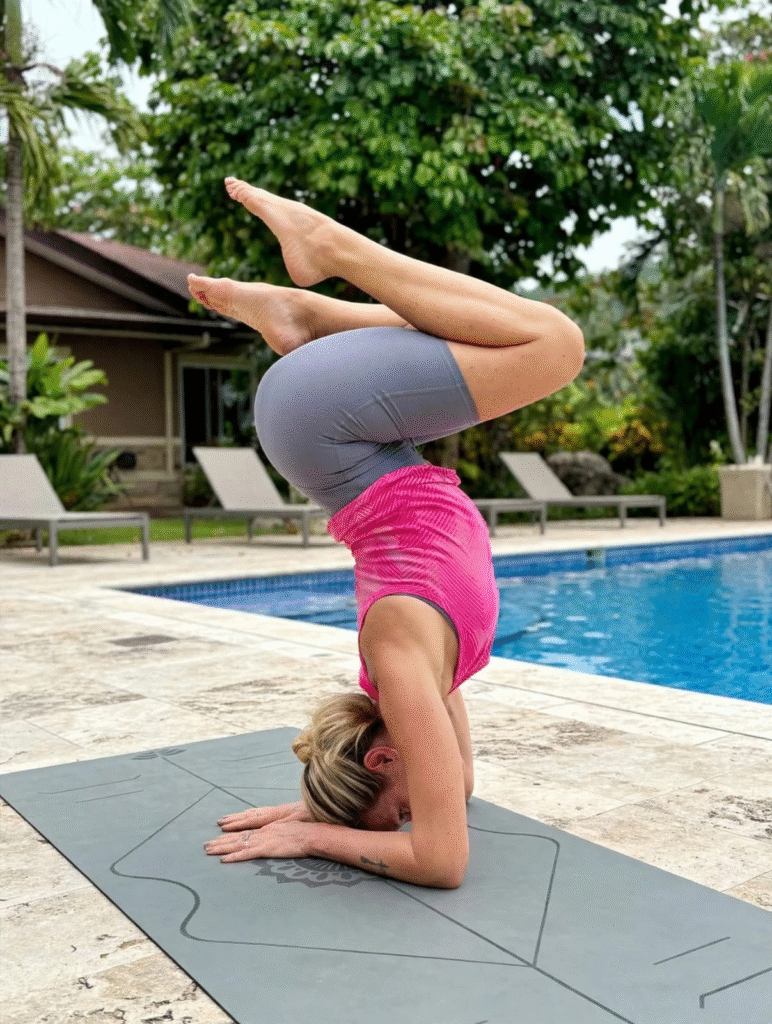
Meet the founder: Learn more about Yogini Manisha and Diksha Yoga School.
What Should You Check Before Booking a 300 Hour Yoga Teacher Training?
Before committing to an advanced programme, take time to compare schools carefully.
Here are six important questions to ask.
1. Is the School Registered for the Appropriate Programme?
If you intend to follow the Yoga Alliance RYS 300 Koh Samui pathway, verify the school’s current RYS 300 registration and confirm that the specific programme is eligible for the credential you are pursuing.
You can use the official Yoga Alliance school directory.
2. Who Will Lead the Training?
Review the lead teacher’s qualifications, experience and teaching background.
Ask who will teach the different subjects and how much direct guidance you can expect.
3. Does the Curriculum Go Beyond the 200-Hour Foundation?
A genuine advanced programme should offer deeper study and development rather than simply repeating the introductory syllabus.
Look for advanced sequencing, anatomy, teaching methodology, philosophy and practical application.
4. Will You Have Opportunities to Practise Teaching?
Ask how teaching practice is organised, how feedback is provided and what assessment is expected.
5. What Is Included in the Course Fee?
Check accommodation, meals, training materials, certificates, airport transfers and any additional costs.
Do not assume every school includes the same services.
6. Are the Booking Terms Clear?
Before paying a deposit, request written confirmation of course dates, room options, total fees, payment arrangements and cancellation terms.
Taking these steps helps you make a more confident and informed decision.
Yoga Alliance RYT 500 Yoga Teacher Training: What You Need to Know
Many yoga teachers choose a 300-hour advanced programme because they wish to continue towards the RYT 500 credential.
The combined training pathway generally involves:
Completing an eligible 200-hour teacher training with a Registered Yoga School.
Completing an eligible additional 300-hour teacher training with a school holding the appropriate RYS 300 registration.
Meeting the applicable Yoga Alliance teaching-experience and registration requirements.
The two training programmes provide the 500 hours of teacher education required for this pathway.
However, completing a 300-hour course alone does not automatically make someone an RYT 500.
Your previous training, the school’s registration status and your teaching experience all matter.
If RYT 500 registration is your goal, verify the current requirements directly with Yoga Alliance before enrolling.
28 Days of Advanced Learning in Koh Samui
A 300-hour programme is an opportunity to dedicate an extended period to your development as a yoga teacher.
The 28-day residential format allows you to step away from your usual routine and focus on learning, practice and reflection.
During the programme, your attention is directed towards:
Deepening your personal asana practice.
Exploring advanced yoga principles.
Developing your understanding of anatomy and alignment.
Refining pranayama and meditation.
Studying traditional yoga philosophy.
Improving sequencing and teaching methodology.
Applying your knowledge through practical teaching.
Before booking, we recommend requesting the detailed timetable for your selected intake so you can understand the daily structure, subject distribution, teaching practice and assessment requirements.
Accommodation and Residential Experience
Your accommodation is an important part of a residential training experience.
The Koh Samui programme takes place at Health Oasis Resort, with private and twin-shared room options.
Students can select their preferred accommodation according to comfort and budget, subject to availability.
The published course fee includes training, accommodation and meals. Airport transfer assistance is also available; confirm the exact arrangements and inclusions for your chosen intake before booking.
A residential environment makes it easier to organise your time around practice, study, meals and rest throughout the programme.
300 Hour Yoga Teacher Training in Koh Samui: Dates and Fees 2026–2027
Diksha Yoga School publishes the following 300-hour advanced training intakes in Koh Samui.
The programme runs for 28 days / 27 nights.
| Course dates | Twin-shared room | Private room |
| 5 Dec 2026 – 1 Jan 2027 | €3,400 | €3,800 |
| 5 Jan – 1 Feb 2027 | €3,400 | €3,800 |
| 5 Feb – 4 Mar 2027 | €3,400 | €3,800 |
| 5 Mar – 1 Apr 2027 | €3,400 | €3,800 |
| 5 Apr – 2 May 2027 | €3,400 | €3,800 |
| 5 May – 1 Jun 2027 | €3,400 | €3,800 |
Early Booking Offer
Students booking at least two months before the course start date may qualify for an early-booking discount of up to €100, according to the published offer.
What Is Included?
The published booking information states that course fees include:
Yoga training.
Airport transfer assistance is available. Please confirm the exact transfer arrangements, room availability and package details with the admissions team before making your travel arrangements.
For the latest information, visit:
View all course dates and fees.
Who Should Join This 300 Hour Advanced Yoga Teacher Training?
This programme is intended for people who have already completed a foundational 200-hour yoga teacher training and want to continue their education.
It may be a suitable next step if you are:
A yoga teacher with teaching experience: You want to become more confident, observant and adaptable when guiding different students.
A 200-hour graduate: You are ready to continue your education and explore advanced subjects in greater depth.
Interested in anatomy and alignment: You want to understand movement, modifications and individual differences more thoroughly.
Interested in advanced sequencing: You want to create classes with greater intention, progression and creativity.
Interested in traditional yoga philosophy: You want to deepen your understanding of yogic teachings and their relevance to your practice.
Working towards RYT 500: You want to explore the next stage of the Yoga Alliance teacher-training pathway.
If you have not completed a suitable 200-hour qualification, contact the school to discuss your eligibility before applying.
How to Reach Health Oasis Resort in Koh Samui
Koh Samui is a beautiful island in Thailand, and reaching your yoga teacher training destination is convenient for international students. Diksha Yoga School conducts its 300 Hour Yoga Teacher Training at Health Oasis Resort, located near Bang Por Beach on the peaceful northern coast of Koh Samui.
The nearest airport is Samui International Airport (USM), which connects the island with several domestic and international travel routes.
Airport and Arrival Information
- Nearest Airport: Samui International Airport (USM).
- Destination: Health Oasis Resort, Bang Por, Koh Samui.
- Airport Transfer: Students should coordinate their arrival and airport pickup arrangements with the Diksha Yoga School team before travelling.
- International Arrival: Students travelling from abroad can plan connecting flights through Bangkok or other available regional airports before arriving in Koh Samui.
Planning Your Arrival
We recommend arriving at Samui International Airport with enough time before your course begins. Share your flight number, arrival date and landing time with the school team in advance so that your transfer arrangements can be discussed and confirmed.
If you are arriving from another country, keep your flight details and accommodation confirmation easily accessible during your journey.
Distance and Travel Time
Health Oasis Resort is approximately 16 km from Samui International Airport, with a road journey of around 30–45 minutes, depending on traffic and the route taken.
Students should confirm whether airport pickup is included in their particular 300-hour booking. Do not assume that complimentary transfers offered for other programmes also apply to the 300-hour course.
For more travel guidance, read our guide: How to Get to Koh Samui from Bangkok.
A Typical Day During 300 Hour Yoga Teacher Training
A typical day during the 300 Hour Yoga Teacher Training at Diksha Yoga School combines practical yoga sessions, teaching methodology, anatomy, philosophy and personal practice.
Students follow a structured learning routine that allows them to develop their teaching skills, improve their understanding of advanced yoga practices and learn in a supportive environment.
300-Hour Yoga Teacher Training Schedule
A thoughtfully structured daily routine combining traditional yoga, practical teaching skills, philosophy, anatomy, meditation and personal practice.
Time
Session
06:00 AM
Wake Up Begin the day slowly and mindfully.
06:30 AM
Jal Neti & Pranayama Morning cleansing practices and conscious breathing.
07:00 AM
Morning Asana Practice Hatha Yoga — Monday / Wednesday / Friday
Ashtanga Foundations — Tuesday / Thursday / Saturday
09:00 AM
Breakfast Nutritious breakfast and mindful nourishment.
10:00 AM
Yoga Philosophy Explore the traditional wisdom and philosophy behind yoga.
11:00 AM
Alignment & Adjustments Learn safe alignment principles and practical adjustment techniques.
12:00 PM
Meditation Guided meditation and practices for inner awareness.
1:00 PM
Lunch & Rest Time to enjoy lunch, relax and recharge.
3:00 PM
Anatomy Understand the body, movement, posture and safe yoga practice.
4:00 PM
Tea Break A short pause to refresh and prepare for the afternoon session.
4:30 PM
Teaching Methodology & Sequencing Develop effective class structures, sequencing skills and teaching confidence.
5:30 PM
Evening Vinyasa Flow Dynamic evening practice with student-led teaching practice from Week 2.
8:30 PM
Satsang & Meditation Evening reflection, connection, meditation and yogic discussion.
Sundays — Rest & Exploration
Sundays are a rest day with no classes. Students can use their free time to explore Koh Samui, relax on nearby beaches, visit local temples and viewpoints, discover the island’s natural beauty, or simply unwind at Health Oasis Resort.
Student Experience at Health Oasis Resort
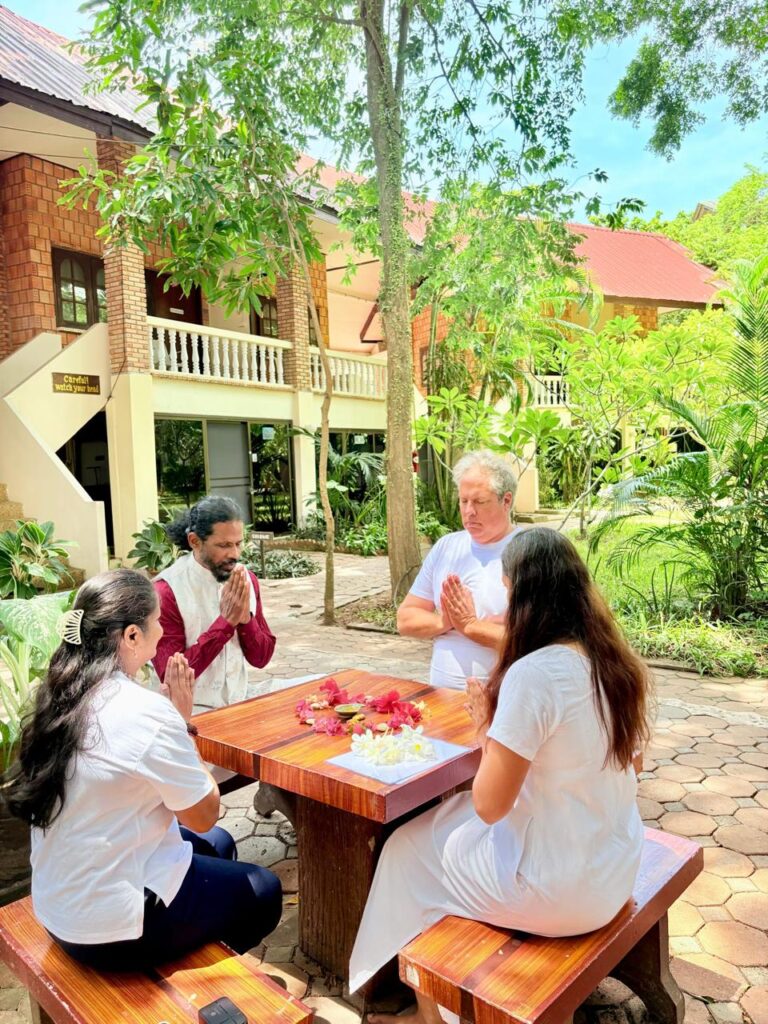
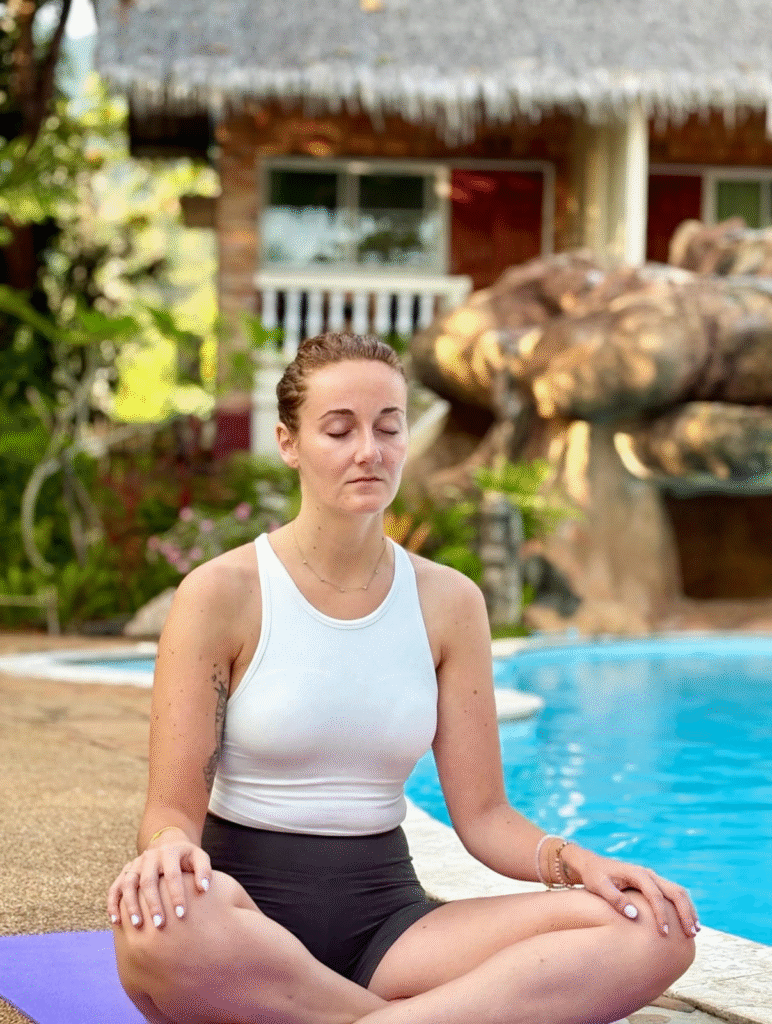
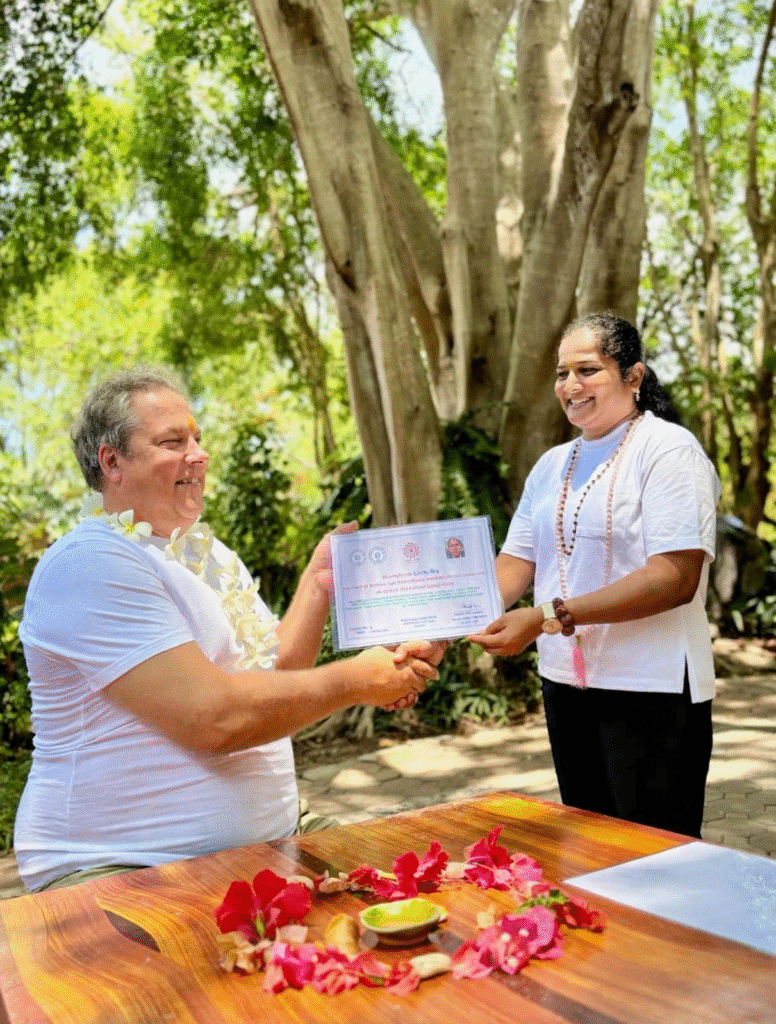
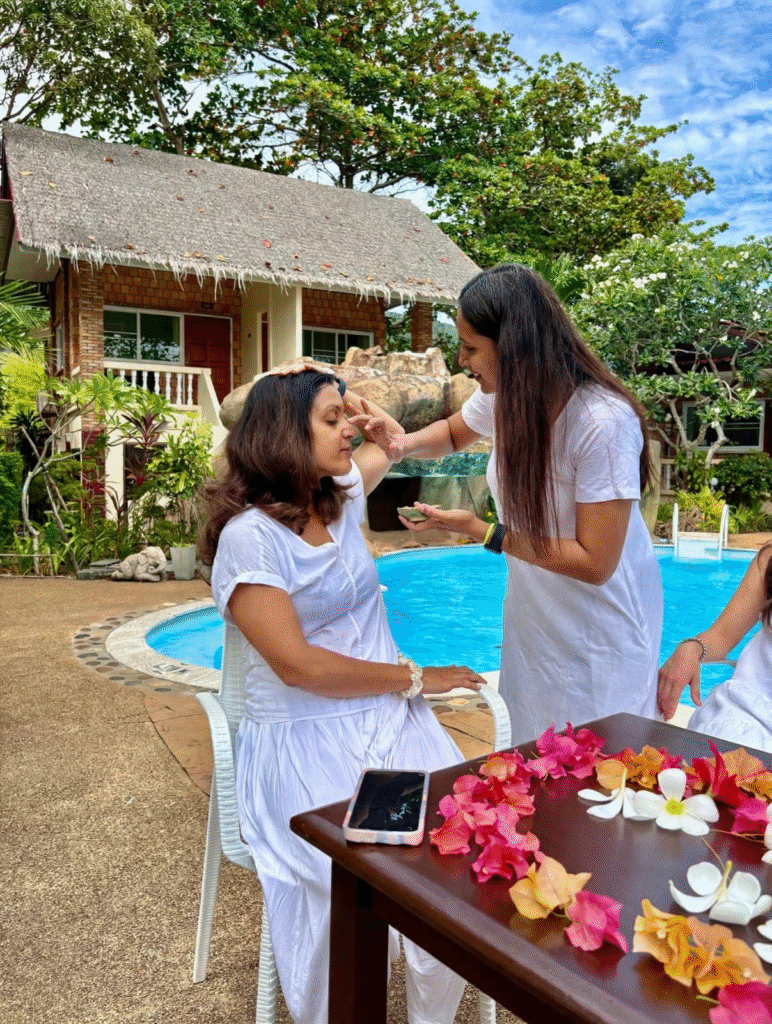
A yoga teacher training experience is not only about completing the curriculum. It is also about learning with other students, receiving individual guidance and developing confidence as a yoga teacher.
At Health Oasis Resort in Koh Samui, students have the opportunity to experience yoga training in a peaceful island environment. The training encourages practical participation, interaction with teachers and collaborative learning with fellow students.
What Students Experience During Training
- Advanced Yoga Practice: Students work on improving their asana practice, alignment, stability and understanding of advanced techniques.
- Personal Teacher Guidance: Teachers guide students during practice, help them understand corrections and support their teaching development.
- Group Learning: Students participate in discussions, practical teaching sessions and shared learning activities with their classmates.
Student Testimonials
I came to the Diksha Yoga School to better understand what I thought yoga was. I learned how small my understanding was. They gave me the tools to improve my practice whenever I go. They will also support me in the future. I don’t know if I will take a 300 hour course but if I do it will be with Diksha Yoga.
— Kyle Raisbeck, USA
An unforgettable experience – highly recommended!
I completed my 100-hour Yoga Teacher Training here as a complete beginner, and I couldn’t be happier with my decision!
From day one, I felt so welcomed. The teachers are highly knowledgeable and competent—this is the place where you learn true, authentic yoga! Everything was taught at my own pace, allowing me to learn and absorb so much.
The accommodation is absolutely beautiful and very clean. A huge highlight was the food—it was delicious and 100% vegetarian!
I would wholeheartedly recommend coming here to anyone looking for a meaningful yoga journey on Koh Samui. Thank you for everything ❤️
— Natalia Nonnenmann, Germany
Frequently Asked Questions
1. What is a 300-hour yoga teacher training?
A 300-hour yoga teacher training is an advanced programme that builds upon the knowledge and teaching foundations developed during a 200-hour course. It explores advanced asana, anatomy, pranayama, meditation, philosophy, sequencing and teaching methodology.
2. Can I join a 300-hour course after completing 200 hours?
Yes, provided your previous training meets the school’s entry requirements and the applicable registration requirements. Contact the school with your previous qualification details before applying.
3. How long is the 300-hour yoga teacher training in Koh Samui?
The residential programme at Diksha Yoga School lasts 28 days / 27 nights.
4. Where does the training take place?
The programme takes place at Health Oasis Resort in Koh Samui, Thailand.
5. What styles of yoga are included?
The advanced multi-style approach includes Hatha Yoga, Vinyasa Flow and Ashtanga foundations, together with pranayama, meditation, philosophy, anatomy, alignment and teaching methodology.
6. Will I get practical teaching experience?
Teaching methodology and practice teaching are important parts of advanced yoga education. Ask the admissions team for the detailed practicum, feedback and assessment structure for your selected intake.
7. Can I become an RYT 500 after completing the 300-hour course?
An eligible 300-hour programme can form part of the combined 500-hour Yoga Alliance pathway when completed alongside an eligible 200-hour training. You must also meet the applicable teaching-experience and registration requirements.
8. Is accommodation included in the course fee?
The published course information includes accommodation and meals. Private and twin-shared room options are available, subject to availability.
9. How much does the 300-hour programme cost?
The currently published fee is €3,400 for a twin-shared room and €3,800 for a private room. Check the schedule page for updates before booking.
10. Is an early-booking discount available?
The school publishes an early-booking offer of up to €100 for eligible bookings made at least two months before the course start date.
11. How do I reserve my place?
Contact Diksha Yoga School to confirm your eligibility, selected intake, room availability and payment terms. A booking deposit is required to secure your place.
12. Where is the 300-hour yoga teacher training held in Koh Samui?
The training is held at Health Oasis Resort near Bang Por Beach on the northern coast of Koh Samui, Thailand.
13. Is airport pickup available from Koh Samui International Airport?
Students can contact Diksha Yoga School to confirm airport pickup availability and transfer charges before arrival.
14. What is the daily schedule of the 300-hour programme?
The daily schedule includes meditation, asana practice, anatomy, yoga philosophy, teaching methodology and evening practice.
15. Are meals and accommodation included in the course fee?
Yes, the residential package includes accommodation and three vegetarian meals daily.
16. Do I need teaching experience before joining the 300-hour yoga teacher training?
You must have completed a recognised 200-hour Yoga Teacher Training course. Previous teaching experience is beneficial.
17. What is the difference between RYT 300 and RYT 500?
RYT 300 represents 300 additional training hours after a 200-hour course, while RYT 500 represents a combined 500-hour training pathway, subject to Yoga Alliance requirements.
Take the Next Step in Your Yoga Teaching Journey
Your 200-hour training gave you the foundation.
Your experience has helped you understand the responsibilities of teaching.
Now you have the opportunity to deepen your knowledge, refine your skills and develop a more thoughtful relationship with yoga.
The 300 Hour Yoga Teacher Training in Koh Samui, Thailand, at Diksha Yoga School offers 28 days dedicated to advanced yoga education, personal practice and professional development.
If you are ready to continue your journey, we would be happy to help you understand the programme and decide whether it is the right next step.
Explore the upcoming training dates and fees:
WhatsApp: +91 9130157393
Website: https://dikshayogaschool.com/
Ask us about the curriculum, your eligibility, accommodation options and the next available intake.
Continue learning. Refine your teaching. Deepen your understanding of yoga.